Marling Yoga: Mindful Practice for Musicians in 2026
Marling yoga refers to the mindful, introspective style of yoga practice associated with musician and creative professionals who need their practice to address both the physical demands of their craft and the mental weight of performance, creative pressure, and irregular schedules. It draws primarily from Yin yoga, Restorative yoga, and breathwork traditions that calm the nervous system, correct posture patterns, and support mental clarity without requiring athletic fitness as a starting point.
The connection between yoga and creative practice is supported by research. According to the National Center for Complementary and Integrative Health (NCCIH), yoga is practiced by more than 21 million adults in the United States, with stress and anxiety management cited most frequently as the primary motivation. For musicians specifically, documented rates of performance anxiety are high, with studies in music psychology indicating that more than 70 percent of professional musicians experience performance anxiety at some point in their careers.
This article covers the yoga styles, poses, breathing techniques, and home practice structures most relevant to musicians, writers, and creative professionals. You’ll find step-by-step pose instructions, research citations, modification guidance, and a clear weekly framework for building something consistent.
Marling Yoga: The Mindful Practice Behind the Music
Marling yoga is best understood as a mindful, low-intensity yoga practice that prioritizes nervous system regulation, postural awareness, and present-moment focus over athletic performance or physical fitness outcomes.
Laura Marling, the British singer-songwriter, has spoken publicly about yoga as a grounding practice in her life, specifically in the context of managing the psychological demands of touring, recording, and the creative process. She has described it as a tool for quieting mental noise rather than as a fitness regime. This positions her practice squarely within the Yin and Restorative yoga traditions, which are designed exactly for that purpose.
What distinguishes this type of practice from a typical gym yoga class is the intention behind it. A mindful yoga practice for a creative professional is not primarily about building strength or burning calories. It is about creating reliable daily contact with the body, slowing the breath, and releasing the physical and mental tension that accumulates through long hours of focused creative work.
The physical patterns that creative professionals carry into their yoga practice are specific: forward rounding of the thoracic spine, elevation and internal rotation of the shoulders, chronic tension in the trapezius and suboccipital muscles, and restricted mobility in the hips from long periods of sitting. A well-designed practice addresses all of these.
Key characteristics of a Marling yoga-style practice:
- Low to moderate physical intensity: accessible to practitioners at any fitness level.
- Long pose holds: typically 2 to 5 minutes per pose in Yin formats.
- Emphasis on breath: structured pranayama is as central as the physical poses.
- Home-practice friendly: requires minimal space and minimal props.
- Schedule-flexible: 20 to 40-minute sessions fit between creative work blocks.
Yoga for Musicians and Creatives: Why It Works
Yoga works for musicians and creative professionals because it directly addresses the three most common physical and psychological stressors of creative work: postural breakdown from sustained instrument playing or desk work, performance anxiety before and during high-stakes situations, and mental fatigue from the demands of sustained creative output.
Think of a guitarist who practices for four hours a day. The cervical spine is constantly in mild flexion. The trapezius is chronically elevated. The wrist flexors are under repetitive strain. The thoracic spine rounds forward as the hours accumulate. These are not random complaints. They are predictable biomechanical consequences of the instrument’s physical demands. Yoga poses that target each of these areas are not generic wellness activities. They are corrective physical interventions with documented effects.
For mental function, the research is equally direct. A study published in the Journal of Alternative and Complementary Medicine found that an 8-week yoga intervention produced measurable reductions in self-reported anxiety and improvements in mood scores in adults with high baseline stress levels. Musicians performing under pressure fit that demographic precisely.
The creative focus angle is less studied but plausible. Yoga’s documented effects on reducing cortisol and activating the parasympathetic nervous system create the physiological conditions associated with open, receptive mental states. Many musicians and writers describe post-yoga sessions as their most productive creative periods, not because yoga causes inspiration, but because reduced physiological arousal removes the interference that anxiety creates.
Yoga styles most relevant to musicians and creatives:
| Style | Pace | Primary Benefit for Creatives | Session Length |
|---|---|---|---|
| Yin yoga | Very slow | Connective tissue release, mental stillness | 45 to 75 minutes |
| Restorative yoga | Minimal movement | Deep nervous system recovery, burnout support | 45 to 60 minutes |
| Hatha yoga | Slow to moderate | Postural strength, flexibility, breath awareness | 45 to 60 minutes |
| Vinyasa yoga | Moderate to fast | Cardiovascular release, energy reset | 30 to 60 minutes |
Yin Yoga for Beginners: The Style Most Linked to Mindful Practice
Yin yoga is a slow-paced yoga style in which poses are held passively for 3 to 5 minutes each, targeting the connective tissue (fascia, ligaments, and joint capsules) rather than the superficial muscles.
This distinction matters. Most yoga styles work the muscles. Yin works what’s underneath the muscles. Connective tissue does not respond to short, dynamic stretches. It requires sustained, gentle pressure held over several minutes to encourage lengthening and increased range of motion. This is why Yin practitioners frequently report hip and lower back mobility improvements that standard active yoga doesn’t produce to the same degree.
For beginners, Yin yoga can feel surprising. The poses themselves look accessible, even simple. Lying on your back with the soles of your feet together (Supta Baddha Konasana, Reclined Bound Angle Pose) seems unremarkable in a photograph. Holding it for 4 minutes with deliberate breath awareness is an entirely different experience. The challenge of Yin yoga is mental and sensory, not athletic.
According to research published in Complementary Therapies in Medicine, participants who practiced Yin yoga for 5 weeks reported measurable reductions in stress and anxiety compared to a control group, with the largest effects found in participants with the highest baseline stress scores.
Pose Tip:
- In Yin yoga, stillness is the instruction. You’re not adjusting and deepening every 30 seconds as you might in active yoga. You set up the pose, find your comfortable edge, and stay there.
- Do not warm up before Yin yoga. The practice is specifically designed for cool, unstretched tissue. A heated warm-up before Yin removes the very condition the practice is designed to work with.
- Beginners should start with holds of 2 minutes and build to 4 to 5 minutes over several weeks as tolerance develops.
Key Takeaway: Yin yoga is the style that most directly delivers the stillness, connective tissue release, and nervous system calming that musicians and creatives are looking for, and it requires zero prior flexibility or fitness to begin.
Yoga and the Nervous System: What the Research Shows
Yoga measurably shifts the autonomic nervous system from sympathetic (fight-or-flight) dominance toward parasympathetic (rest-and-digest) activity, and this shift is the neurological foundation for yoga’s documented effects on stress, anxiety, and recovery.
The mechanism is not metaphorical. When you breathe slowly through the nose, hold a physical position without effort, and direct attention inward, you activate the vagus nerve, the primary pathway of the parasympathetic nervous system. Vagal activation slows heart rate, reduces cortisol secretion from the adrenal glands, and lowers the overall arousal state of the central nervous system.
The HPA axis (hypothalamic-pituitary-adrenal axis) governs the body’s stress response. Chronic activation of this system, which is common in musicians, touring artists, creative professionals under deadline pressure, and anyone managing performance anxiety, is associated with elevated cortisol, disrupted sleep, reduced immune function, and mood dysregulation.
The Harvard T.H. Chan School of Public Health has noted that mind-body practices including yoga show consistent associations with reduced cortisol levels in adults with high baseline stress. The effect is strongest in individuals who practice 3 or more times per week over at least an 8-week period.
A study published in the International Journal of Yoga found that structured pranayama practice, even without physical poses, produced statistically meaningful reductions in sympathetic nervous system markers over 8 weeks. This finding is particularly relevant for musicians or practitioners on the road who may not have space for a full physical practice but can always make time for ten minutes of structured breath work.
Key nervous system benefits documented in yoga research:
- Reduced resting heart rate after consistent practice over 8 to 12 weeks.
- Lower salivary cortisol in practitioners compared to matched non-practicing controls.
- Improved heart rate variability (HRV): a marker of parasympathetic function and overall nervous system resilience.
- Reduced amygdala reactivity to stressors, measured in neuroimaging studies of regular practitioners.
Yoga for Anxiety and Stress: Poses and Practices That Help
Yoga reduces anxiety and stress through a combination of slow breath regulation, sustained physical stillness, and the deliberate withdrawal of attention from external stimulation, all of which activate the parasympathetic nervous system.
Viparita Karani (Legs Up the Wall Pose) is one of the most accessible and well-documented stress-reduction poses in yoga. Lying on your back with legs extended up a wall creates mild passive inversion of the lower body. Blood pools gently away from the legs. The heart rate drops. The baroreceptors in the aortic arch detect the change in blood pressure distribution and signal the brain to reduce sympathetic output. The effect is measurable and starts within minutes.
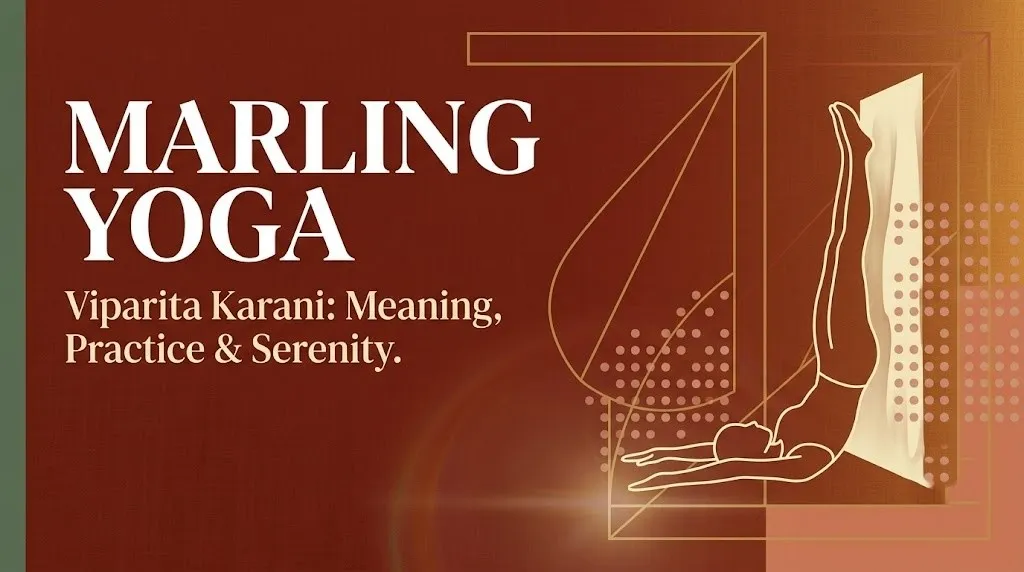
To practice Viparita Karani:
- Sit sideways next to a wall, hips as close to the base as comfortable.
- Swing your legs up the wall as you lower your back to the floor.
- Place a folded blanket under the sacrum for lumbar support if needed.
- Let arms rest at your sides, palms facing up.
- Close eyes and breathe slowly through the nose.
- Hold for 5 to 15 minutes.
Modification: If full leg extension is uncomfortable, place a bolster under the hips and bend the knees slightly. People with glaucoma or hiatal hernia should instead practice with legs elevated on a chair seat rather than fully up a wall.
Balasana (Child’s Pose) works differently. The gentle compression of the abdomen against the thighs provides mild stimulation of the vagus nerve through the gut-brain axis. Most practitioners find Child’s Pose immediately calming, which is why teachers cue it as a rest pose throughout class.
Yoga for Posture Correction: Addressing the Musician’s Body
Yoga for posture correction in musicians targets the specific muscular imbalances that develop from instrument playing: a chronically shortened pectoralis minor, an overstretched and weakened rhomboid group, and a forward-translated cervical spine that strains the suboccipital muscles and upper trapezius.
These are not abstract anatomy terms. They describe what happens physically to a guitar player who practices four hours a day, a cellist who spends years in left-rotation of the torso, or a pianist whose shoulders creep upward toward the ears during complex passages. The pattern is called upper crossed syndrome in physical therapy, and yoga is one of the most effective non-therapeutic approaches to addressing it through targeted movement.
Matsyasana (Fish Pose) is a foundational counterpose for musicians because it creates thoracic extension in a region that almost all musicians flex chronically. The pose opens the front of the chest, stretches the pectoralis major and anterior intercostals, and allows the thoracic vertebrae to move into extension against gravity.
To practice Matsyasana:
- Lie on your back with legs extended or knees bent, feet flat.
- Slide your hands under your glutes, palms down.
- Press into your elbows and forearms to lift your upper chest.
- Allow the head to drop gently back, or rest the crown of the head on the mat.
- Breathe slowly into the chest for 5 to 8 breath cycles.
- Press firmly through the elbows to lift the head before releasing.
Modification: Place a yoga block at its lowest height between the shoulder blades to provide passive support if pressing through the elbows is uncomfortable. This reduces the active demand and makes the pose accessible for anyone with shoulder or neck restrictions.
Key Takeaway: The physical patterns musicians carry from their instruments are predictable and addressable. A yoga practice designed around those specific imbalances is far more useful than a generic beginner class that treats all bodies the same.
Yoga for Forward Head Posture and Neck Pain
Yoga addresses forward head posture by strengthening the deep cervical flexors, lengthening the chronically shortened suboccipital and upper trapezius muscles, and improving thoracic extension to restore the natural cervical curve.
Forward head posture occurs when the head translates forward of the shoulders. For every inch the head moves forward, the effective weight on the cervical spine increases by approximately 10 pounds, according to data referenced by spine specialists and widely cited in physical therapy literature. This load accumulates across hours of practice, rehearsal, or desk work and becomes the structural basis for the chronic neck pain and headaches many musicians and creative workers report.
Marjaryasana-Bitilasana (Cat-Cow Pose) is the most accessible entry point for cervical and thoracic mobility in musicians. It creates a full spinal wave from the tailbone to the crown of the head, mobilizing vertebral segments that become stiff and compressed through sustained seated postures.
To practice Marjaryasana-Bitilasana:
- Begin on all fours with wrists under shoulders, knees under hips.
- Inhale: let the belly drop, lift the chest and tailbone (Cow Pose).
- Let the head lift naturally without straining the neck.
- Exhale: round the spine toward the ceiling, tuck the tailbone and chin (Cat Pose).
- Move slowly and deliberately through 8 to 10 breath cycles.
- Return to neutral and rest in Balasana (Child’s Pose) to complete.
Modification: If wrist pressure is uncomfortable, perform the sequence on fists or with forearms on the mat. People with acute cervical disc issues should keep the head in a neutral position rather than extending or flexing deeply in either direction, and should work with a physical therapist to identify their safe range.
Yoga for Tight Shoulders and Upper Back Tension
Yoga releases chronic upper back and shoulder tension by creating long, sustained stretches in the posterior deltoid, rhomboids, and upper trapezius while also building the strength in the lower and middle trapezius that most desk workers and musicians lack.
The common error in addressing shoulder tension is stretching without strengthening. Stretching the upper trapezius without strengthening the lower and middle trapezius simply leaves the shoulder girdle looser without improving the muscular coordination that keeps it properly positioned. Iyengar yoga tradition specifically addresses this by using props to create precise positioning that activates the stabilizing muscles alongside the stretch.
Garudasana arms (Eagle Arms) are one of the most effective shoulder-release techniques available for musicians. Crossing the arms at the elbows and wrapping the forearms creates a deep stretch across the entire posterior shoulder capsule, the infraspinatus, teres minor, and posterior deltoid. These are the muscles that become most compressed in string players and keyboardists.
To practice Garudasana arms:
- Sit comfortably in a chair or cross-legged on the floor.
- Extend both arms forward at shoulder height.
- Cross the right arm over the left at the elbows.
- Wrap the forearms and bring the palms toward each other or touch.
- Lift the elbows to shoulder height and draw them slightly away from the face.
- Hold for 5 to 8 breath cycles and repeat on the other side.
Modification: If crossing the forearms fully is not accessible, simply hug the opposite shoulders with each hand and draw the elbows upward. This variation delivers a similar stretch to the posterior shoulder with less forearm demand.
Yoga for Wrist and Hand Health in Musicians
Yoga maintains wrist and hand health in musicians by improving circulation, reducing tendon adhesion in the flexor and extensor compartments, and building the intrinsic hand strength that supports joint stability during playing.
The hands are the musician’s primary tool. Repetitive strain injuries in the flexor digitorum superficialis, flexor carpi radialis, and extensor carpi ulnaris are common in guitarists, pianists, and violinists. These injuries develop gradually, often over years, from the accumulation of microtrauma that does not have adequate time to resolve between practice sessions.
Yoga addresses wrist health primarily through two mechanisms: targeted stretching of the forearm flexor and extensor groups, and weight-bearing poses that build intrinsic wrist strength when practiced with correct alignment.
Wrist health sequence for musicians:
- Wrist flexor stretch: Extend one arm forward, palm up. Use the other hand to gently draw the fingers back toward the forearm. Hold 30 seconds each side.
- Wrist extensor stretch: Extend one arm forward, palm down. Gently draw the fingers toward the forearm with the other hand. Hold 30 seconds each side.
- Prayer position: Press palms together in front of the chest and gently lower the joined hands toward the waist, keeping palms together. Hold 15 to 20 seconds.
- Reverse prayer: Place the backs of the hands together behind the back and draw the joined hands upward. This is an advanced variation. Skip if any sharp sensation occurs in the wrists.
Safety note: Anyone experiencing tingling, numbness, or sharp wrist pain during these stretches should stop immediately. These symptoms may indicate nerve compression or an acute tendon issue that requires assessment by a hand specialist or physical therapist before continuing.
Modification for acute wrist soreness: replace weight-bearing poses like Adho Mukha Svanasana (Downward-Facing Dog) with the Dolphin variation (forearms on the mat) to remove compressive load on the wrist joint entirely.
Key Takeaway: Musicians’ physical complaints are specific and addressable with targeted yoga, not generic wellness sequences. Wrist health, shoulder tension, and neck pain each require their own pose solutions, not a one-size-fits-all beginner class.
Pranayama for Performance Anxiety and Creative Focus
Pranayama, the structured regulation of breath, is the most direct yoga tool for managing performance anxiety because it provides immediate, real-time control over the autonomic nervous system response that anxiety creates.
Performance anxiety in musicians manifests as elevated heart rate, shallow rapid breathing, cold extremities, and narrowed attentional focus. These are sympathetic nervous system responses. The breath is the one component of autonomic function that a person can voluntarily control in real time. Slowing and extending the exhale is the most direct available intervention.
Nadi Shodhana (alternate nostril breathing) is the pranayama technique most consistently recommended for pre-performance or high-anxiety situations. It involves alternating which nostril you breathe through using a specific hand position, and research suggests it produces measurable balance between the left and right hemispheres of the autonomic nervous system.
To practice Nadi Shodhana:
- Sit comfortably with the spine upright.
- Rest the left hand on the left knee, palm open.
- Bring the right hand to the face. Rest the index and middle fingers between the eyebrows.
- Close the right nostril with the right thumb. Inhale slowly through the left nostril for a count of 4.
- Close both nostrils. Hold for a count of 2.
- Release the right nostril. Exhale for a count of 4.
- Inhale through the right nostril for a count of 4.
- Close both nostrils. Hold for a count of 2.
- Release the left nostril. Exhale for a count of 4.
- This is one cycle. Practice 5 to 10 cycles before performance or during a creative work session.
According to a study published in the International Journal of Yoga, nadi shodhana practice over 4 weeks produced measurable reductions in self-reported anxiety and improvements in spatial memory scores in adult participants.
Modification: If the hand position feels awkward, simply breathe in through the nose for 4 counts and out for 6 counts without alternating nostrils. The extended exhale is the active mechanism. The nostril alternation enhances the effect but is not the only entry point.
Restorative Yoga for Burnout and Deep Recovery
Restorative yoga is a completely passive yoga format in which the body is fully supported by props in each pose, allowing the nervous system to enter a state of deep rest without any muscular effort whatsoever.
This distinction from Yin yoga is important. Yin yoga creates sensation through sustained passive stretch. Restorative yoga creates no sensation at all. The goal is the complete absence of physical effort and mental demand. Props (bolsters, blankets, blocks, straps, and eye pillows) are configured to support the body so precisely that every muscle can fully release.
For musicians and creatives experiencing burnout, a state of chronic depletion where motivation, concentration, and emotional resilience are all compromised, Restorative yoga is the appropriate intervention. More active practices ask something of the practitioner. Restorative yoga asks for nothing except willingness to lie still.
Supta Baddha Konasana (Reclined Bound Angle Pose) is the central Restorative yoga pose for most practitioners. A bolster supports the spine from the sacrum to the crown of the head. Blocks or folded blankets support each outer knee. The arms rest at 45 degrees from the body, palms up. The practitioner stays for 10 to 20 minutes with an eye pillow and dimmed lighting.
The NCCIH notes that Restorative yoga and similar mind-body practices show consistent associations with improved self-reported sleep quality and reduced physiological markers of chronic stress in adults who practice regularly over 8 weeks or more.
Modification: If a full bolster is not available, use a tightly rolled blanket or two firm pillows placed end to end. The spine support is the non-negotiable element. Everything else can be improvised.
How to Build a Home Yoga Practice from Scratch
Building a home yoga practice from scratch requires choosing one style, one time of day, and one commitment length, and repeating that combination for at least four consecutive weeks before evaluating whether to expand.
The mistake most beginners make is trying to build a complete, varied practice immediately. They buy six props, download four apps, and schedule hour-long daily sessions. By week two, the sessions have shortened. By week three, they’ve stopped. The reason is not lack of willpower. It is that the cognitive overhead of deciding what to practice, for how long, and with what resources exceeds the available mental energy after a day of creative work.
A minimal viable home yoga practice for musicians and creatives:
| Day | Session | Duration | What to Do |
|---|---|---|---|
| Monday | Yin yoga | 30 minutes | 4 to 5 long-held floor poses |
| Wednesday | Pranayama and Hatha | 25 minutes | 10 min breathwork, 15 min standing poses |
| Friday | Restorative yoga | 35 minutes | 3 to 4 fully supported poses |
| Weekend (one day) | Any | 20 minutes | Repeat what felt best during the week |
Three to four sessions per week at 25 to 35 minutes each is more sustainable than daily hour-long sessions for practitioners with full creative and professional schedules. Research supports this frequency as sufficient to produce measurable physical and mental adaptations over an 8-week period.
Savasana (Corpse Pose) closes every home session without exception. Set a timer for 5 minutes minimum. Lying still at the end is not optional downtime. It is the phase where the nervous system integrates the session’s effects.
Yoga Props for Home Practice: What You Actually Need
The props a home yoga practitioner actually needs are one non-slip mat, two blocks, one strap, and one blanket. A bolster becomes relevant once you commit to regular Restorative yoga practice.
Most people overbuy at the start and underbuy what actually matters. The single most important purchase is the mat. A mat with poor grip creates safety risk in standing poses and makes it harder to maintain alignment when palms or feet begin to slide. For home practice, a 6mm natural rubber mat or a TPE mat (thermoplastic elastomer) provides adequate grip without the expense of a premium yoga-specific brand.
Here is what each prop does and when it matters most:
- Two yoga blocks: bring the floor closer in standing forward folds, provide height under sitting bones in seated poses, and support the sacrum in certain Restorative positions. Foam blocks are fine for beginners. Cork blocks are more durable and provide better feedback.
- Yoga strap: extends reach in seated forward folds, supports bound poses in the arms and legs, and helps maintain alignment in hamstring stretches without requiring flexibility. A standard 6-foot cotton strap handles most beginner needs.
- Folded blanket: provides cushioning under knees in floor poses, warmth during Savasana, and elevation under sitting bones when the pelvis tips backward in seated poses. Two blankets are better than one.
- Bolster: essential for Restorative yoga. A bolster provides the full spinal support that makes long passive holds comfortable. Before buying, trial a tightly rolled set of blankets to confirm that Restorative practice suits you.
Pose Tip:
- Use blocks at their tallest height when first setting up a pose and lower them only when your range of motion genuinely allows it. Starting too low creates compensatory patterns.
- A strap with a D-ring buckle is significantly easier to adjust mid-pose than a plastic cam buckle.
- Wash your mat every two weeks if practicing regularly. Grip degrades with sweat and dust buildup.
Key Takeaway: A mat, two blocks, a strap, and a blanket cover everything a beginner home practitioner needs. Start with these four items and add a bolster only when Restorative yoga becomes a consistent part of your weekly routine.
How Often Should You Practice Yoga to Feel a Difference?
Practicing yoga 3 times per week for at least 8 consecutive weeks is the frequency and duration most consistently supported by research for producing noticeable physical and mental benefits in new practitioners.
This does not mean less frequent practice is worthless. Even one 30-minute session per week produces measurable effects on perceived stress and joint mobility over time. But the difference between once-weekly and three-times-weekly practice is substantial in terms of adaptation speed, consistency of nervous system effects, and the rate at which postural patterns change.
For musicians and creatives with irregular schedules, the most practical framework is to treat yoga sessions like practice sessions for your instrument: they go in the schedule first, not as what happens with leftover time. A 20-minute session that happens reliably is more valuable than a 60-minute session that happens when conditions are perfect.
Research published in Complementary Therapies in Medicine found that frequency mattered more than session duration for mental health outcomes. Practitioners attending 3 shorter sessions per week showed greater reductions in stress and anxiety scores than those attending one longer session per week, even when total weekly practice minutes were similar.
A practical frequency guide for beginners:
| Phase | Frequency | Session Length | Focus |
|---|---|---|---|
| Weeks 1 to 2 | 2 per week | 20 to 25 minutes | Learning poses and breath |
| Weeks 3 to 4 | 3 per week | 25 to 30 minutes | Building consistency |
| Weeks 5 to 8 | 3 per week | 30 to 40 minutes | Longer holds, style exploration |
| Week 9 onward | 3 to 5 per week | 30 to 45 minutes | Adding variety and depth |
Rest days are not wasted days. Connective tissue adaptation (the specific benefit of Yin yoga) occurs primarily during rest, not during the practice itself. Building in at least two days per week without structured yoga during the first month reduces the risk of overuse fatigue and keeps the practice feeling sustainable.
Frequently Asked Questions About Marling Yoga
What type of yoga does Laura Marling practice?
Laura Marling has described her yoga practice in interviews as a mindful, grounding routine rather than a specific named style.
Based on her public descriptions of using yoga for mental stillness and stress management, her practice aligns most closely with Yin yoga and Restorative yoga traditions.
Both styles emphasize passive holds, breath awareness, and nervous system calming over physical fitness or athletic challenge.
Is Yin yoga good for beginners with no flexibility?
Yin yoga is appropriate for beginners regardless of flexibility because the practice specifically targets connective tissue rather than muscular range of motion.
You do not need existing flexibility to benefit from Yin yoga. Props support the body in each pose so the experience is accessible at any starting point.
The challenge of Yin yoga for most beginners is mental, staying still for several minutes, not physical. That becomes easier with practice over the first few weeks.
Can yoga actually help with performance anxiety in musicians?
Yes. Research published in the Journal of Alternative and Complementary Medicine found that an 8-week yoga program produced measurable reductions in anxiety scores in adults with high baseline stress.
The mechanism is physiological: slow nasal breathing activates the parasympathetic nervous system and reduces the sympathetic arousal that creates anxiety symptoms.
Nadi Shodhana (alternate nostril breathing) is the most directly effective pranayama technique for pre-performance anxiety, and it can be practiced in any quiet space, including backstage.
What yoga poses are best for musicians with wrist or shoulder pain?
For wrist pain, Dolphin Pose (forearms on the mat) replaces Downward-Facing Dog and removes all compressive load from the wrist joint while preserving the shoulder and hamstring benefits of the pose.
For shoulder pain, Garudasana arms (Eagle Arms) stretches the posterior shoulder capsule, and Matsyasana (Fish Pose) opens the chest and counters the forward rounding that compresses the anterior shoulder.
Anyone experiencing sharp or radiating pain in the wrist or shoulder should have a physical therapist assess their specific pattern before continuing, because the appropriate modification depends on the underlying cause.
How do I start a home yoga practice with no equipment?
Start with a bath towel on a hardwood or carpeted floor as a temporary mat substitute and practice three poses: Balasana (Child’s Pose), Marjaryasana-Bitilasana (Cat-Cow Pose), and Viparita Karani (Legs Up the Wall Pose).
These three poses require no props, no flexibility, and no prior yoga knowledge. They address the core needs of a creative practitioner: lumbar release, spinal mobility, and nervous system calming.
Once you’ve practiced those three consistently for two weeks, invest in a mat and two blocks. Build from that foundation.
Start Small, Stay Consistent
Pick three poses from this article. Practice them tonight for 15 minutes on a towel on the floor. That’s the complete starting formula.
Tomorrow, do it again. Not because of discipline, but because 15 minutes of Legs Up the Wall and Child’s Pose genuinely changes how the rest of the evening feels. You’ll notice the difference in your first session.
Three sessions per week, 25 minutes each, for eight weeks. That’s the evidence-supported minimum for real change. Everything in this article will be waiting for you as you’re ready to add more.