Yoga Black Girl: A Real 2026 Guide to Practice and Health
Yoga black girl content has dominated wellness searches for years, but most of it stops at inspiration and never gets to instruction. This guide is different. It gives Black women the actual practice: poses with correct names, sequences built for real bodies, health science with named sources, and modifications that account for the biomechanical diversity that standard yoga content ignores.
Black women in the United States carry a disproportionate burden of chronic stress-related health conditions. According to the American Heart Association, Black women have higher rates of hypertension than any other demographic group in the country, and chronic stress is one of the primary contributing factors. Yoga, practiced with breathwork and intention, directly targets the stress-response system.
This guide covers yoga history for Black women, the strongest health research behind the practice, beginner poses and sequences, modifications for curvy bodies, mental health applications, and practical guidance for building a home practice that actually lasts. Start where you are. The mat meets you there.
Yoga Black Girl: What This Practice Looks Like in 2026
Yoga black girl practice in 2026 means Black women practicing yoga in studios, at home, online, and in community spaces that center their experience, their bodies, and their health needs without apology.
The image of yoga in mainstream media spent decades centering a narrow, predominantly white, thin, and highly flexible practitioner. That image created a barrier that was both cultural and physical. If no one who looks like you appears in the instruction, the implicit message is that the practice is not for you.
That has changed, and the change is documented. More Black-owned yoga studios, Black-led online platforms, and Black certified yoga teachers are producing content specifically for Black women and girls. The Yoga Alliance has publicly committed to diversity, equity, and inclusion initiatives that address the historical underrepresentation of Black practitioners and teachers in registered yoga training programs.
What this practice looks like today is specific and worth naming clearly:
- Black women practicing Vinyasa, Hatha, Restorative, and Kundalini yoga across all fitness levels
- Home practice as the primary format, particularly for those who have felt unwelcome in studio settings
- Sequences adapted for fuller hips, larger thighs, natural hair, and body proportions that diverge from the standard yoga instruction model
- Breathwork used specifically for stress regulation in response to documented chronic stress exposures unique to Black women’s lives
- Community as a practice element, not an afterthought
This guide is built on that foundation. Every section is written for the reader who has wondered whether yoga is actually for her. The answer is yes. Unreservedly.
Black Women and Yoga: A Brief History Worth Knowing
Yoga’s roots are South Asian, originating in ancient India with a lineage that spans thousands of years, and its arrival in the West has always involved cultural complexity that Black women deserve to understand clearly.
The yoga most people practice today, physical postures combined with breathwork, descends primarily from Hatha yoga traditions codified in the 15th century and further developed through teachers like T. Krishnamacharya in the 20th century. The practice was introduced to American audiences largely through white practitioners beginning in the mid-20th century, which shaped who the dominant yoga consumer became and who the instruction was designed for.
Black women have been practicing yoga since at least the 1960s, often quietly and without institutional recognition. Practitioners like Micheline Berry and organizations like Black Yoga Teachers Alliance have worked to establish and document a Black presence in yoga that predates and runs parallel to the mainstream commercial yoga industry.
Understanding this history matters for one practical reason: it contextualizes why so many Black women have felt like outsiders in yoga spaces that were never actually designed to exclude them from the practice itself, but were shaped by commercial and cultural forces that reflected broader inequities.
The practice of yoga, the actual discipline of breath, movement, and attention, belongs to no race and no commercial brand. Black women’s relationship with the mat is neither new nor borrowed. It is earned, present, and growing.
Why Yoga Is Especially Relevant for Black Women’s Health
Yoga is especially relevant for Black women’s health because the specific stress physiology that yoga addresses most directly, the chronic activation of the HPA axis (hypothalamic-pituitary-adrenal axis) and the resulting elevated cortisol load, maps directly onto the documented health burden Black women carry in disproportionate measure.
Researchers use the term allostatic load to describe the cumulative biological wear that results from chronic stress exposure. The Annals of the New York Academy of Sciences has published research linking high allostatic load to accelerated biological aging and increased risk for cardiovascular disease, metabolic conditions, and immune dysfunction. Studies examining allostatic load across racial groups consistently find elevated levels in Black women compared to white women of similar socioeconomic status, a pattern researchers attribute partly to chronic exposure to racial stressors across the lifespan.
The weathering hypothesis, developed by researcher Arline Geronimus at the University of Michigan, proposes that chronic social and environmental stressors cause Black women’s bodies to age biologically faster than their chronological age would predict. Yoga’s documented effect on cortisol reduction, heart rate variability (HRV) improvement, and parasympathetic nervous system activation addresses this stress physiology directly, at the biological level.
Specific health conditions with documented higher prevalence in Black women, and documented yoga intervention evidence, include:
- Hypertension: Higher prevalence in Black women than any other demographic group. Yoga reduces blood pressure.
- Anxiety and depression: Documented at higher rates in Black women seeking mental health services. Yoga reduces anxiety scores in controlled trials.
- Chronic pain: Including higher rates of fibromyalgia and musculoskeletal pain. Yoga improves pain tolerance and reduces pain interference.
- Sleep disorders: Documented in higher rates in Black women. Yoga, particularly Restorative practice, improves sleep onset and quality.
Key Takeaway: The health case for yoga among Black women is not generic. It maps directly onto the specific, documented stress-related health disparities that Black women face at higher rates, and the science behind how yoga addresses those conditions is real and named.
What the Science Says About Yoga and Stress in Black Women
Research on yoga and stress reduction in Black women specifically is growing, and what it shows is clear: yoga that combines physical movement with breathwork produces measurable reductions in the biological markers of chronic stress.
A 2020 study published in the Journal of Alternative and Complementary Medicine examined yoga interventions in predominantly Black adult women and found statistically meaningful reductions in perceived stress scores and blood pressure readings after an eight-week practice period. Participants practiced twice weekly for one hour per session, combining Hatha yoga postures with guided breathwork and a brief meditation at the close of each session.
According to the National Center for Complementary and Integrative Health (NCCIH), yoga is one of the most studied complementary practices for stress reduction and anxiety management, with a particularly strong evidence base for populations carrying high chronic stress loads. The NCCIH notes that yoga’s effect on the vagus nerve, which regulates the body’s transition from stress activation to recovery, is a primary mechanism behind its stress-reducing outcomes.
The key finding across multiple studies is that breathwork must be included for the stress benefits to be maximized. Posture-only yoga classes produce some benefit. Posture plus pranayama produces substantially more. This is one of the most actionable research findings for Black women building a home practice: even five minutes of slow, extended-exhale breathing at the start of a session changes what the practice does for the nervous system.
According to Harvard T.H. Chan School of Public Health health communication resources on stress and mind-body practices, practices that build interoceptive awareness, the ability to feel internal body states, have been shown to improve emotional regulation over time. Yoga is one of the most accessible interoceptive training tools available without clinical equipment.
Best Yoga Styles for Black Women Beginners
The best yoga style for Black women beginners depends on their primary goal, their current fitness level, and how much physical intensity they want from the practice at the outset.
No single style is the “correct” one. But some styles are genuinely more accessible and more relevant for beginners managing stress, seeking gentle physical conditioning, or building body awareness for the first time.
| Yoga Style | Pace | Intensity | Best For | Key Feature |
|---|---|---|---|---|
| Hatha | Slow to moderate | Low to moderate | Beginners, foundational learning | Individual pose focus with breath |
| Restorative | Still, supported | Very low | Stress, anxiety, recovery, sleep | Nervous system regulation via props |
| Yin | Slow, long holds | Low | Connective tissue, hip opening | 2 to 5-minute passive holds |
| Vinyasa | Moderate to fast | Moderate to high | Fitness-forward practitioners | Breath-linked movement sequences |
| Kundalini | Variable | Variable | Breathwork, mental clarity, energy | Pranayama and mantra emphasis |
| Iyengar | Slow | Low to moderate | Alignment precision, injury recovery | Extensive prop use |
For most beginners, Hatha yoga or Restorative yoga provides the gentlest entry point. Hatha builds physical vocabulary one pose at a time. Restorative uses props to support the body in complete stillness, which is particularly valuable for practitioners whose nervous systems are chronically activated and who need to practice the physiological experience of rest.
Vinyasa is a popular and valid choice for Black women who want more movement and cardiovascular engagement from their practice. The key for beginners is finding a Vinyasa teacher who emphasizes breath cueing and offers modifications, not just a fast-paced sequence that assumes prior experience.
How to Start a Black Girl Yoga Practice at Home
Starting a home yoga practice as a Black woman begins with three decisions: choosing a consistent time, identifying your starting sequence, and gathering the minimal equipment you actually need.
Home practice removes the barriers that studio yoga often creates. There is no self-consciousness about being the only Black woman in the room. No comparison to the practitioner next to you. No dress code, no commute, no membership fee. These are not small things. Research on exercise adherence consistently shows that accessibility and comfort with the environment are among the strongest predictors of whether a new physical practice continues past the first few weeks.
A realistic beginning structure for Black girl yoga at home:
- Choose three days per week. Not every day. Consistent three-day practice builds the neural habit faster than daily practice that burns out in two weeks.
- Start with 20-minute sessions. This is long enough to include a warm-up, three to four poses, and a Savasana. It is short enough to be genuinely doable.
- Pick one sequence and repeat it for two weeks before changing it. Repetition builds proprioceptive confidence. Changing the sequence every session prevents the nervous system from ever settling into the practice.
- End every session with at least 3 minutes of Savasana (Corpse Pose). This is not optional. The nervous system integration that happens in Savasana is where a significant portion of yoga’s stress-reducing effect occurs.
- Use your phone or a device for guided audio if silent practice feels uncomfortable initially. Guided sessions provide external pacing while you learn the rhythm of your own breath.
Modification note: If getting up from and down to the floor is difficult, start your entire practice from a chair. Chair yoga is a complete practice, not a lesser version of yoga.
The Best Yoga Poses for Black Women Beginners
The best yoga poses for Black women beginners are those that build body awareness, open the hips and chest, strengthen the posterior chain, and can be modified for a wide range of body types and flexibility levels.
Every pose below is listed with its Sanskrit name, English name, the primary muscles it works, and a modification for practitioners who need an alternative entry point.
Balasana (Child’s Pose)
Primary muscles: gluteus maximus, erector spinae (lengthened), hip external rotators. Joints: hip, knee, lumbar spine.
To practice Balasana:
- Begin kneeling with your big toes touching. Widen your knees to hip-width or wider.
- For practitioners with fuller abdomens or larger thighs, widen the knees to the edges of the mat.
- Sit your hips back toward your heels. Extend your arms forward on the mat.
- Rest your forehead on the mat or on stacked fists. Breathe slowly for 8 to 10 breaths.
- Release by pressing through your palms to rise.
Modification: Place a folded blanket between your thighs and calves to reduce knee compression. If hips do not reach heels, that is completely normal. Do not force the descent.
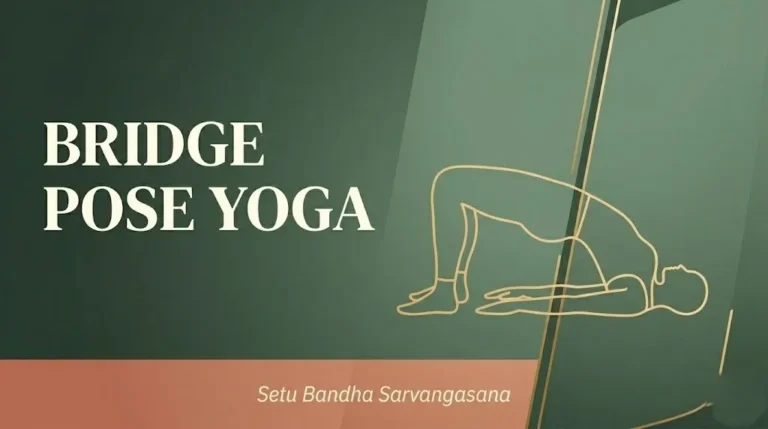
Setu Bandha Sarvangasana (Bridge Pose)
Primary muscles: gluteus maximus, hamstrings, erector spinae. Joints: hip, knee, lumbar spine.
To practice Bridge Pose:
- Lie on your back. Bend your knees, place feet flat on the floor hip-width apart.
- Press your feet down. Squeeze your gluteus maximus to lift your hips.
- Clasp hands beneath you or let arms rest at your sides, palms down.
- Hold for 5 to 8 breaths. Lower slowly on an exhale.
Modification: Place a yoga block under the sacrum at any height for a supported, passive version. This is especially useful for practitioners with lower back sensitivity.
Savasana (Corpse Pose)
Lie flat on your back. Let your legs fall open naturally. Arms rest slightly away from the body, palms up. Close your eyes. Stay for 3 to 10 minutes without moving intentionally.
Modification: Place a bolster or rolled blanket under the knees if the lower back feels uncomfortable lying fully flat.
Key Takeaway: Three poses practiced consistently with genuine breath awareness will build more body intelligence than twenty poses practiced without attention. Start with Child’s Pose, Bridge Pose, and Savasana. Build from there.
Yoga Sequences for Black Women: Morning and Evening Flows
A well-designed yoga sequence follows a physiological logic, not just an aesthetic one. The sequence should warm the joints, progressively deepen the work of the target area, and close with nervous system downregulation through Savasana or seated breath work.
Morning Flow: 20 Minutes
Purpose: Warm the spine, activate the posterior chain, set mental focus for the day.
- Sukhasana (Easy Seated Pose): Sit cross-legged. 5 slow diaphragmatic breaths. Eyes closed.
- Seated neck rolls: 3 circles each direction. Keep shoulders relaxed.
- Tadasana (Mountain Pose): Stand tall. 8 breaths. Full postural engagement.
- Utkatasana (Chair Pose): Bend knees, sink hips, reach arms overhead. 5 breaths. Repeat twice.
- Virabhadrasana I (Warrior I), right side: 5 breaths. Left side: 5 breaths.
- Virabhadrasana II (Warrior II), right side: 5 breaths. Left side: 5 breaths.
- Setu Bandha Sarvangasana (Bridge Pose): 5 breaths. 3 repetitions.
- Balasana (Child’s Pose): 8 breaths.
- Savasana (Corpse Pose): 3 minutes minimum.
Evening Flow: 20 Minutes
Purpose: Release tension from the hips and lower back. Downregulate the nervous system for sleep.
- Supta Baddha Konasana (Reclined Bound Angle Pose): Lie back, soles of feet together, knees wide. Blocks or blankets under both knees. 10 breaths.
- Supine knee-to-chest: each side, 8 breaths.
- Balasana (Child’s Pose): 10 breaths, knees wide.
- Uttanasana (Standing Forward Fold): Soft knees. Let the head hang. 8 breaths.
- Viparita Karani (Legs-Up-the-Wall Pose): Lie on your back, swing legs up the wall. 3 to 5 minutes.
- Savasana (Corpse Pose): 5 minutes with eyes covered.
Modification for all sequences: Every floor pose has a chair equivalent. Practice the same sequence seated if floor transitions are difficult.
Yoga for Black Women with Curves: Modifications That Work
Yoga for Black women with curves means adapting poses to accommodate fuller hips, larger thighs, a more pronounced lumbar curve, and a fuller abdomen, without treating any of those body features as problems to be worked around.
Think of modifications not as workarounds but as honest biomechanics. A fuller outer hip creates a wider range of natural hip abduction. That means some poses that are described as “challenging” for average-proportioned bodies actually feel more accessible in a curvier body. The reverse is also true: poses that assume a narrow hip width, like certain twisted seated poses, require more adjustment.
Practical modifications for common poses:
| Pose | Standard Version Issue | Curvy Body Modification |
|---|---|---|
| Balasana (Child’s Pose) | Torso blocked by fuller thighs | Widen knees to mat edge; use blanket under hips |
| Adho Mukha Svanasana (Downward-Facing Dog) | Fuller abdomen contacts thighs | Widen hands and feet slightly; soft bend in knees |
| Uttanasana (Standing Forward Fold) | Fuller abdomen limits torso descent | Widen feet to hip-width; fold over a block or chair |
| Supta Baddha Konasana (Reclined Bound Angle) | Adductor tightness prevents knee descent | Place blocks or blankets under both knees |
| Utkatasana (Chair Pose) | Lumber compression in deep squat | Keep squat shallower; arms forward rather than overhead |
| Virabhadrasana II (Warrior II) | Front thigh contacts abdomen | Widen the stance; use a chair seat under front thigh |
Safety note: Any modification that reduces pain, allows fuller breath, and maintains postural integrity is the correct modification for your body on that day. Modifications are not less yoga. They are more honest yoga.
According to Yoga Alliance instructor training standards, teachers are expected to offer at minimum one modification for each pose taught. If you are in a class where no modifications are offered and you are a curvy practitioner, that is a gap in the teaching, not in your body.
Yoga for Black Women’s Mental Health
Yoga supports mental health in Black women through a combination of breathwork, physical movement, and structured attention, and the mechanisms behind those effects are now well-documented in peer-reviewed literature.
A 2021 review published in Frontiers in Psychiatry examined 47 randomized controlled trials on yoga and mental health. The review found consistent reductions in anxiety and depressive symptoms across diverse adult populations. The strongest effects were seen when pranayama (breath regulation) was included in the intervention alongside physical postures.
For Black women specifically, mental health is complicated by what researchers call race-related stress, a category of chronic stressor that includes experiences of discrimination, hypervigilance in predominantly white spaces, and the emotional labor of navigating racist environments. These stressors activate the same HPA axis stress-response pathway as physical threats, and they are often chronic rather than acute.
Yoga addresses this through two primary mechanisms. First, breathwork directly activates the parasympathetic nervous system via vagal stimulation, reducing the physiological state of threat-readiness that chronic stress creates. Second, the practice of pratyahara (sense withdrawal), turning attention inward and away from external stimulation, provides a structured practice in disengaging from the external stressors that drive race-related hypervigilance.
Poses and practices with the strongest mental health evidence for stress and anxiety:
- Restorative yoga sequences held for 5 to 20 minutes per pose with full prop support
- Savasana (Corpse Pose) held for at least 5 minutes at the close of every session
- Nadi Shodhana (Alternate Nostril Breathing) practiced for 10 cycles before or after a sequence
- Supta Baddha Konasana (Reclined Bound Angle Pose) with bolsters and blankets for full hip support
Modification note: Practitioners experiencing acute anxiety or panic should begin breathwork gently and never practice breath retention if it increases anxiety symptoms. Extended exhale breathing (exhaling longer than the inhale) is the safest starting point and the most directly calming breath pattern.
Key Takeaway: Breathwork is not the bonus round of a yoga session for Black women managing chronic stress. It is the most evidence-backed mechanism through which yoga reduces the biological effects of race-related and chronic stress. Do not skip the pranayama.
Yoga for Black Women with Hypertension
Yoga is a supported complementary practice for hypertension, and this matters directly for Black women, who the American Heart Association identifies as the demographic group with the highest prevalence of hypertension in the United States.
A review published in the Journal of Alternative and Complementary Medicine found that yoga interventions that combined postures with pranayama reduced systolic blood pressure by an average of 5 mmHg in adults with mild to moderate hypertension. For context, a 5 mmHg reduction in systolic blood pressure is clinically meaningful and comparable to the effect of low-dose pharmacological intervention in mild hypertension cases.
The mechanism is not mysterious. Slow, paced breathing activates the vagus nerve and shifts the body toward parasympathetic dominance. Heart rate slows. Peripheral blood vessels dilate. Blood pressure falls. This effect begins within minutes of sustained slow breathing and builds cumulatively with regular practice.
Poses and practices appropriate for Black women managing hypertension:
- Gentle Hatha yoga with slow transitions and no breath holding
- Restorative yoga with full prop support and five-minute pose holds
- Diaphragmatic breathing and Nadi Shodhana (Alternate Nostril Breathing) as standalone practices
- Viparita Karani (Legs-Up-the-Wall Pose) for gentle venous return without cardiovascular strain
Poses to approach carefully with hypertension:
- Full inversions (headstand, shoulderstand) can transiently increase intracranial pressure. Avoid until blood pressure is well-managed and a physician familiar with your cardiovascular status has advised on safety.
- Breath retention practices (Kumbhaka) increase thoracic pressure temporarily. Not appropriate for practitioners with uncontrolled hypertension.
- Fast-paced Vinyasa or Ashtanga raises heart rate significantly. Begin with gentler styles and build intensity gradually as cardiovascular fitness improves.
If you are taking antihypertensive medication, monitoring blood pressure before and after yoga sessions during your first month of practice gives you real data on how the practice is affecting your readings.
Yoga and Natural Hair: What Black Women Actually Need to Know
Natural hair is a practical consideration for Black yoga practice, and no mainstream yoga content has ever addressed it honestly. This section does.
The challenge is straightforward. Many yoga sequences involve inversions, forward folds, headrests on the mat, and poses where the head is in contact with the floor. For Black women with natural hair in protective styles, locs, twists, braids, or large natural volume, these poses create friction, style disruption, and sometimes scalp tension that is genuinely distracting during practice.
Practical solutions by pose type and hair consideration:
- Savasana (Corpse Pose): Place a folded blanket or a silk scarf under the head to protect the nape and reduce friction on locs or twists. A silk pillowcase folded small works equally well.
- Adho Mukha Svanasana (Downward-Facing Dog): Hair falls forward. For practitioners with very large natural volume, a loose fabric headband holds the perimeter without disrupting the style.
- Balasana (Child’s Pose): The forehead rests on the mat. Locs, large twists, and braids that pull when bent forward can be gathered loosely at the nape with a soft scrunchie before class. Avoid tight ponytails that cause tension headaches during longer holds.
- Any mat-contact head pose: A microfiber mat towel under the head section provides slip-free surface contact that is less abrasive than standard mat material on protective styles.
- Post-practice: Inversions and sweating loosen braids and twists at the roots. Planning yoga sessions before a wash day reduces the stress of worrying about style integrity.
Pose Tip:
- Keep a silk or satin scarf in your yoga bag for Savasana head support.
- Loose, soft hair ties (no metal, no elastic bands) protect the nape during all floor sequences.
- Practice is the priority. Your hair will be fine. Choose whatever style holds you most comfortably.
Finding Yoga Community as a Black Woman in 2026
Finding yoga community as a Black woman in 2026 means looking for spaces, teachers, and online platforms where Black women’s bodies, health needs, and cultural experiences are centered rather than accommodated as an afterthought.
The options have expanded considerably since 2020. Black-owned yoga studios now operate in most major American cities. Black yoga teachers and platforms specifically for Black women operate online, making community accessible regardless of geographic location. Organizations like the Black Yoga Teachers Alliance exist specifically to support Black yoga instructors and connect Black practitioners with culturally aligned teachers.
What to look for in an inclusive yoga space:
- Teachers who offer modifications as a standard part of instruction, not as an exception for “beginners”
- Class imagery and marketing that reflects diverse body types, skin tones, hair textures, and ages
- A teacher who does not use the body of the most flexible student in the room as the implicit standard for the class
- Explicit language around accessibility, whether that means prop availability, chair yoga options, or beginner-paced instruction
- A community where questions about modifications are welcomed, not treated as interruptions
Online community options for Black women practicing yoga at home include subscription platforms specifically curated by Black instructors, YouTube channels with content made for Black women practitioners, and social communities on platforms where Black yogis share sequences, pose tips, and practice accountability.
Yoga Alliance’s directory allows filtering by teacher background and specialization. Searching for instructors who list cultural inclusivity, trauma-informed yoga, or community wellness as specializations is a practical starting point.
Key Takeaway: Community is not a luxury add-on to yoga practice. Research on exercise adherence consistently shows that social accountability and belonging in a practice community are among the strongest predictors of long-term consistency.
Black Girl Yoga for Women Over 50
Black girl yoga for women over 50 addresses a specific intersection of age-related physical changes, long-standing health conditions, and the particular joy of beginning or deepening a practice later in life with full knowledge of what your body has carried.
Women over 50 experience measurable changes in joint flexibility, bone density, balance, and cardiovascular recovery time. For Black women over 50, these age-related changes overlap with higher baseline rates of hypertension, osteoarthritis, and Type 2 diabetes, all of which yoga addresses as a complementary practice.
According to the National Center for Complementary and Integrative Health (NCCIH), yoga shows consistent benefit for older adults in balance improvement, fall prevention, chronic pain reduction, and sleep quality. All four of those outcomes are among the most clinically relevant for Black women over 50.
Recommended yoga approaches for this demographic:
- Chair yoga as a primary or supplementary format. All foundational poses have chair equivalents that eliminate floor transition risk.
- Hatha yoga with a slow pace that allows time for joint warm-up before deeper work.
- Restorative yoga with bolsters, blankets, and blocks for all floor poses to eliminate joint strain.
- Gentle balance work near a wall or chair. Poses like Vrksasana (Tree Pose) with one hand on the wall build proprioception and reduce fall risk over time.
Safety note for osteoporosis: Black women have lower rates of osteoporosis than white women, but the condition still occurs. Practitioners with low bone density should avoid extreme spinal flexion (deep forward folds with a rounded spine) and loaded spinal rotation. A physical therapist familiar with bone density management can provide specific clearance for pose categories.
The most important message for Black women over 50 who are new to yoga: your body does not need to be flexible to start. It needs to move. Yoga provides that movement safely, gently, and completely on your own terms.
Yoga Props Every Black Woman Beginner Should Own
The right yoga props make a practice genuinely safer, more comfortable, and more anatomically accurate, and they matter more for beginners than for experienced practitioners because beginners do not yet have the body awareness to compensate for missing support.
You do not need everything at once. Start with the two most impactful items and add from there.
| Prop | Why It Matters | Priority Level |
|---|---|---|
| Non-slip yoga mat (4 to 6mm) | Grip and joint cushioning for all floor poses | First purchase |
| Two yoga blocks (foam) | Brings the floor to you; supports alignment | First purchase |
| Yoga strap (6-foot cotton) | Bridges reach gaps in seated and supine poses | Second purchase |
| Folded blanket | Cushions knees, supports hips, warms Savasana | Any firm household blanket works |
| Bolster | Supports passive hip and chest opening in Restorative poses | Add when practicing Restorative regularly |
| Firm armless chair | Complete chair yoga alternative; balance support | Valuable for women over 50 or with floor challenges |
For Black women with larger bodies, a wider mat (at least 26 inches rather than the standard 24 inches) provides more surface area for poses that involve wide leg placement or extended arm positions. The standard 24-inch mat width was designed for an average body width that does not include fuller hip proportions, and practicing on a too-narrow mat creates unnecessary edge anxiety during wide-legged poses.
According to the American College of Sports Medicine (ACSM), exercise environment comfort directly affects perceived exertion and adherence. A mat that fits your body and props that actually support your poses are not luxuries. They are the conditions that make consistent practice possible.
Building a Sustainable Black Girl Yoga Practice at Home
A sustainable home yoga practice for Black women is built on four foundations: realistic session length, a fixed schedule, a sequence repeated long enough to build confidence, and an honest relationship with rest.
The most common reason new yogis stop practicing is not lack of motivation. It is unrealistic expectations about how much they should be doing. A 20-minute home practice done three times a week for six months produces more physical and mental health benefit than a 60-minute daily practice done for two weeks before burning out.
Building blocks of a sustainable practice:
- Session length: Start at 20 minutes. Add 5 minutes per month as the practice feels natural.
- Frequency: Three times per week is the minimum for neurological adaptation and stress reduction benefits.
- Sequence consistency: Practice the same sequence for at least four consecutive weeks before changing it. This is how proprioceptive confidence builds.
- Rest: Savasana is not the end of the practice. It is the practice. Never skip it, even when time is short.
- Honest self-assessment: Some days the body needs Restorative practice, not flow. Choosing the right style for the day is yoga intelligence, not weakness.
A study published in Complementary Therapies in Medicine found that self-directed home yoga practice produced mood, stress, and flexibility benefits comparable to instructor-led sessions when practitioners followed a structured sequence rather than improvising each session. This validates the single-sequence approach for home practice beginners.
Sustainability also means permission. Permission to practice in pajamas. Permission to modify every pose. Permission to play music you love during your sequence. Permission to stop and breathe when you need to. The practice belongs to you.
Frequently Asked Questions About Yoga Black Girl Practice
Is yoga good for Black women’s health?
Yes, yoga is well-supported as a complementary practice for several health conditions that disproportionately affect Black women, including hypertension, chronic stress, anxiety, and sleep disorders.
The American Heart Association recognizes chronic stress as a primary contributor to hypertension in Black women, and yoga directly targets the stress-response system through breathwork and movement.
Practicing yoga with pranayama included produces the strongest documented health benefits across all populations studied.
How do I start yoga as a Black woman beginner at home?
Start with three 20-minute sessions per week, using one consistent sequence for the first four weeks rather than changing it each time.
Choose a style that matches your goal: Hatha for foundational learning, Restorative for stress relief, or Vinyasa for more physical engagement.
You need only a non-slip mat and two yoga blocks to begin practicing safely at home.
What yoga poses are best for Black women with curves?
The most accessible and effective poses for curvy bodies include Balasana (Child’s Pose) with wide knees, Setu Bandha Sarvangasana (Bridge Pose), Supta Baddha Konasana (Reclined Bound Angle Pose) with blocks under the knees, and Virabhadrasana II (Warrior II) with a wider stance.
Modifications like widening the knees, using blocks to bring the floor closer, and softening the depth of any pose are not compromises. They are how the poses work correctly for your body.
Any teacher who does not offer modifications as a standard part of instruction is not teaching inclusively.
Can yoga help Black women with high blood pressure?
Yes, yoga that includes slow pranayama has been shown to reduce systolic blood pressure by a clinically meaningful margin in adults with mild to moderate hypertension.
The Journal of Alternative and Complementary Medicine published a review finding an average 5 mmHg systolic reduction in yoga practitioners with hypertension, comparable to low-dose pharmaceutical intervention.
Avoid full inversions and breath retention practices until blood pressure is well-managed and your cardiologist has reviewed your activity plan.
Where can Black women find inclusive yoga communities?
Black-owned studios in major cities, online platforms led by Black instructors, and organizations like the Black Yoga Teachers Alliance are the most direct routes to inclusive yoga community.
The Yoga Alliance directory allows filtering for instructors who specialize in culturally inclusive, trauma-informed, or community wellness yoga.
Online video platforms and social communities built specifically for Black women practitioners offer home practitioners the same sense of belonging without geographic limitation.
Your Practice, Your Terms
The mat does not have a dress code and it does not have a demographic requirement. Black girl yoga is not a subgenre of yoga. It is yoga, practiced by Black women, for their own bodies and their own health, on their own terms.
Start this week with three poses: Balasana (Child’s Pose), Setu Bandha Sarvangasana (Bridge Pose), and five minutes of Savasana (Corpse Pose). Do that three times. Notice what you feel.
That is the practice. Build from there.