Yoga Love: Poses, Science, and Practice Tips 2026
Yoga love is real, and it has a measurable biological basis. When people describe feeling calmer, more connected, and genuinely better after a yoga class, they are not imagining it.
The National Center for Complementary and Integrative Health (NCCIH) reports that yoga measurably reduces cortisol levels, supports the parasympathetic nervous system, and improves self-reported wellbeing across multiple controlled studies. These effects explain why so many people move from casual curiosity to deep, lasting commitment to yoga practice.
This article covers the science behind why yoga creates such strong emotional connection, the specific poses that support heart-opening and self-compassion, how to find the style that suits your personality, and practical strategies for building a practice you will genuinely want to return to.
What Is Yoga Love?
Yoga love refers to the deep emotional attachment and consistent motivation that many practitioners develop toward their yoga practice over time.
It is not a marketing phrase. It describes a real, observable phenomenon: people who begin yoga for fitness or flexibility often find themselves returning for reasons that go well beyond the physical. They describe feeling more at peace, more connected to their bodies, and more emotionally regulated on the days they practice.
This attachment forms through a combination of neurological, social, and somatic factors. Each yoga session activates the parasympathetic nervous system, which governs rest and recovery. Over time, the brain begins to associate the mat with safety, ease, and emotional regulation.
Quick Summary:
- Yoga love is the sustained emotional motivation to return to practice consistently
- It develops through repeated positive physical and emotional experiences on the mat
- It is supported by measurable neurological changes, not just personality or willpower
- It is available to anyone, regardless of flexibility, fitness level, or prior experience
The experience does not require a perfect practice or advanced poses. It requires enough positive repetition that the body and mind begin to expect, and want, what yoga delivers.
Why Do People Love Yoga?
People love yoga because it delivers physical, emotional, and community benefits that few other activities combine in a single practice.
Unlike purely physical exercise, yoga asks you to pay attention to your internal experience while you move. That attentional quality, the combination of body awareness and breath focus, activates neural pathways associated with present-moment awareness. Harvard Medical School research on mind-body practices has found that sustained present-moment attention reduces activity in the brain’s default mode network, the part responsible for rumination, worry, and self-criticism.
The variety within yoga also matters. A runner who falls out of love with running often has no alternative within that practice. A yoga practitioner who burns out on fast-paced Vinyasa can shift to Yin or Restorative yoga and find an entirely different experience using the same mat.
Reasons people consistently report loving yoga:
- Immediate physical relief from tension, especially in the hips, shoulders, and lower back
- A reliable way to shift out of a stressed or overwhelmed mental state
- The feeling of accomplishment when a previously difficult pose becomes accessible
- The social warmth of a consistent class community
- Body awareness that carries into daily life, including better posture and reduced habitual tension
- The adaptability of the practice: it scales with injury, age, energy, and emotion
Yoga and Emotional Wellbeing
Yoga supports emotional wellbeing by directly regulating the body’s stress response systems through movement, breath, and focused attention.
The mechanism is not mysterious. Slow, intentional breathing, especially ujjayi breath (victorious breath, a gentle constriction of the throat that creates an audible ocean-like sound), activates the vagus nerve. The vagus nerve is the primary pathway of the parasympathetic nervous system. Stimulating it shifts the body out of fight-or-flight and into rest-and-digest mode.
A 2017 study published in the International Journal of Yoga found that regular yoga practice was associated with measurable reductions in perceived stress and improvements in emotional regulation scores compared to control groups. These findings held across age groups and experience levels.
Think of the nervous system like a car idling too high. Yoga, specifically the breath coordination and slow deliberate movement, functions like adjusting the idle down. The engine runs smoother, cooler, and with far less wear.
| Emotional Challenge | How Yoga Addresses It |
|---|---|
| Chronic stress | Parasympathetic activation through breath and slow movement |
| Emotional reactivity | Attention training reduces automatic stress responses |
| Low mood | Physical movement increases serotonin and GABA levels |
| Disconnection from body | Somatic awareness built through pose-by-pose attention |
| Overwhelm | Structure of a class provides containment and predictability |
Modification note: For people managing acute emotional distress, Restorative yoga with supported poses and long holds is generally gentler than active Vinyasa practice.
Key Takeaway: Yoga love builds on biology. The parasympathetic activation from breath-coordinated movement creates real neurological shifts that make the body want to return to practice.
Yoga and Mental Health Benefits
Yoga has documented, research-supported effects on anxiety, depression, and overall psychological wellbeing.
The American Psychological Association notes that yoga is among the most studied complementary approaches to mental health, with evidence supporting its use alongside conventional treatment for anxiety and mild to moderate depression. This does not mean yoga replaces professional mental health care. It means it is a credible, evidence-informed addition to a broader support plan.
The neurochemical picture is specific. Research published in the Journal of Alternative and Complementary Medicine found that yoga practice increased GABA (gamma-aminobutyric acid) levels in the brain. GABA is the brain’s primary inhibitory neurotransmitter. Low GABA is associated with anxiety and depression. Yoga appears to raise it in ways comparable to some pharmacological interventions, without the side effects.
Serotonin and dopamine are also affected by physical movement and the mastery experiences yoga provides. Progressing from a wobbling first attempt at Vrksasana (Tree Pose) to a steady, confident hold is a small but real dopamine event for the brain.
Key mental health benefits with research support:
- Reduced anxiety symptoms across multiple study populations
- Improved depression scores in yoga vs. control group comparisons
- Better sleep quality, particularly with evening Restorative or Yin practice
- Reduced post-traumatic stress symptoms in trauma-informed yoga programs
- Improved cognitive focus and attention through meditation components
Anyone managing a diagnosed mental health condition should work with their healthcare provider when integrating yoga as a complement to existing treatment.
Yoga for Self-Love
Yoga for self-love means using yoga practice as a tool for building a kinder, more accepting relationship with your own body and inner experience.
Self-love in yoga is not a slogan. It is a practice of repeatedly choosing not to force, not to compete, and not to judge. Every time you modify a pose rather than push through pain, you are practicing self-respect. Every time you stay in Balasana (Child’s Pose) when the class moves to something demanding, you are practicing self-care.
Restorative yoga is particularly well suited to self-love work. Its long, supported holds, typically 3 to 10 minutes per pose, use props like bolsters, blankets, and blocks to hold the body in comfort. The practice asks nothing of you physically. It is the antithesis of performance.
According to the NCCIH, mindfulness-based practices including yoga have been shown to improve body image and reduce negative self-evaluation in adults across several controlled studies.
Poses that support self-love practice:
- Balasana (Child’s Pose): grounding, inward-facing, completely non-demanding
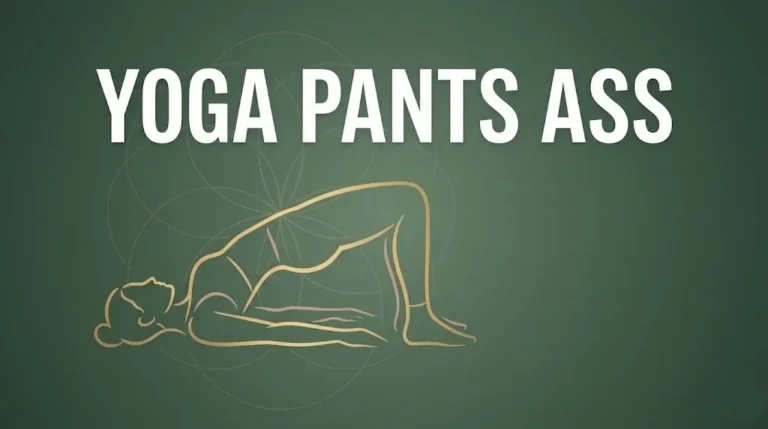
- Setu Bandha Sarvangasana (Bridge Pose): gentle heart lift, accessible to most bodies
- Supta Baddha Konasana (Reclined Bound Angle Pose): full-body release with bolster support
- Savasana (Corpse Pose): the practice of receiving stillness without agenda
Modification: For people with knee sensitivity in Child’s Pose, place a folded blanket between the thighs and calves. For tight hips in Reclined Bound Angle Pose, support the outer thighs with folded blankets.
Yoga for Self-Compassion
Yoga for self-compassion means deliberately practicing the same gentleness toward yourself during yoga that you would offer a good friend.
Self-compassion in yoga shows up in how you respond to difficulty. A tight hamstring is not a character flaw. A wobble in Vrksasana (Tree Pose) is not failure. The way you narrate your experience on the mat often mirrors how you narrate your experience in daily life.
Kristin Neff, a leading researcher on self-compassion at the University of Texas at Austin, identifies three components of self-compassion: self-kindness, common humanity, and mindfulness. Yoga, when practiced with attention and without self-judgment, trains all three simultaneously. You feel the discomfort of a difficult pose, recognize it as a shared human experience, and observe it without catastrophizing.
Research published in Complementary Therapies in Medicine found that yoga programs with an explicit self-compassion focus produced greater reductions in self-criticism and anxiety than standard fitness yoga programs over an eight-week period.
Practical ways to bring self-compassion into yoga:
- Choose the modification without apology
- Replace internal criticism with neutral observation: “That was hard” instead of “I’m terrible at this”
- Let Savasana (Corpse Pose) be as important as the active poses
- Practice on days when you feel least like it, but for shorter durations
- Use breath as the anchor when the mind becomes self-critical
Key Takeaway: Yoga for self-love and self-compassion is not passive feel-good content. It is a trainable skill that research shows reduces self-criticism and improves psychological wellbeing over consistent practice.
Heart-Opening Yoga Poses
Heart-opening yoga poses are backbends and chest-expanding positions that stretch the pectorals, anterior deltoids, and intercostal muscles while promoting thoracic spine extension.
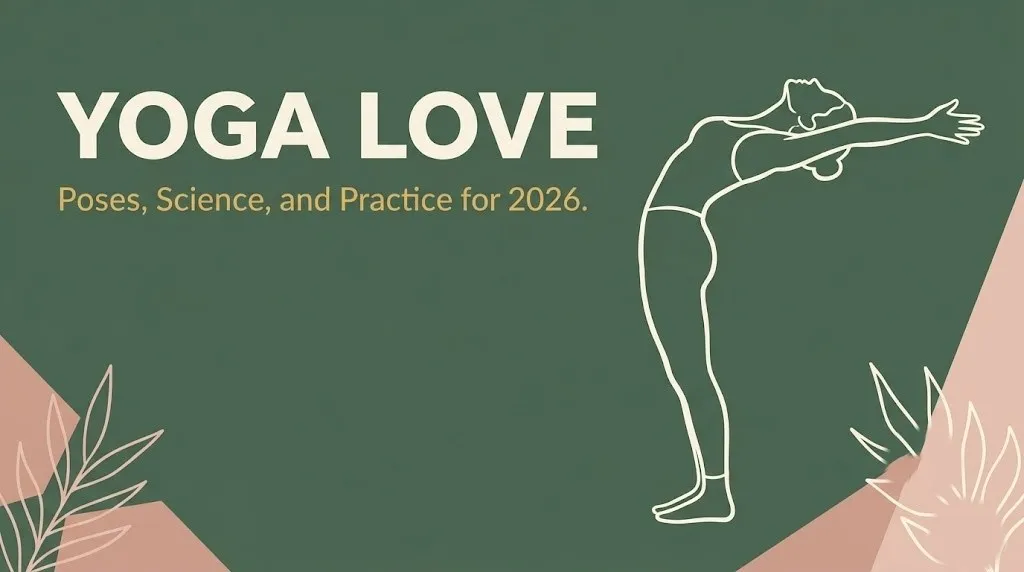
The term “heart-opening” is part physical, part metaphorical. Physically, these poses counteract the forward rounding (thoracic kyphosis) that develops from prolonged sitting, screen use, and stress-related posture. Emotionally, opening the chest is associated in yoga tradition with the Anahata chakra, the energy center associated with love, compassion, and connection.
Ustrasana (Camel Pose) is one of the deepest accessible backbends. It stretches the entire anterior chain from the hip flexors to the throat while strengthening the spinal extensors and rhomboids.
Bhujangasana (Cobra Pose) is gentler and more accessible. It develops thoracic extension and posterior shoulder strength. It is appropriate for beginners and for people with lower back sensitivity when kept low and lifted primarily through the back muscles rather than arm pressing.
| Pose | Sanskrit Name | Primary Stretch | Best For |
|---|---|---|---|
| Cobra Pose | Bhujangasana | Chest, anterior shoulders | Beginners, lower back sensitivity |
| Camel Pose | Ustrasana | Full anterior chain | Intermediate practitioners |
| Bridge Pose | Setu Bandha Sarvangasana | Chest, hip flexors | All levels |
| Melting Heart Pose | Anahatasana | Chest, latissimus dorsi | Upper back tightness |
| Fish Pose | Matsyasana | Chest, throat, intercostals | Intermediate, with neck support |
Modification for Camel Pose: Keep hands on the lower back with fingers pointing down rather than reaching for the heels. This reduces lumbar compression significantly. Anyone with a history of lumbar disc issues should work with this modification only.
A Yoga Self-Love Sequence to Try
A yoga self-love sequence is a short, intentional series of poses designed to support emotional grounding, body awareness, and chest-opening without physical demand or performance pressure.
This sequence takes approximately 20 to 25 minutes and is appropriate for all experience levels. Practice on a non-slip mat with a bolster or firm pillow, two blocks, and a blanket nearby.
To practice this self-love sequence:
- Balasana (Child’s Pose): 8 breaths. Arms extended forward or resting alongside the body. Forehead to mat or block.
- Marjaryasana/Bitilasana (Cat/Cow Pose): 8 breath cycles. Coordinate spinal movement with inhale and exhale.
- Bhujangasana (Cobra Pose): 5 breaths. Lift through the back muscles. Keep elbows soft. Low and supported.
- Anahatasana (Melting Heart Pose / Extended Puppy Pose): 8 breaths. Hips over knees, chest descending toward the mat. Use a block under the forehead if needed.
- Setu Bandha Sarvangasana (Bridge Pose): 6 breaths. Feet hip-width apart, knees over ankles. Arms alongside the body, pressing into the mat.
- Supta Baddha Konasana (Reclined Bound Angle Pose): 2 minutes. Soles of feet together, knees wide. Bolster under the spine if available.
- Savasana (Corpse Pose): 5 minutes minimum. No agenda. No fixing. Just receiving.
Modification for seniors or those with knee sensitivity: Place a folded blanket under the knees in Savasana and under the hips in Bridge Pose. In Child’s Pose, use a bolster under the torso for full support.
Finding Your Yoga Style
Finding your yoga style means identifying which of yoga’s many distinct practices best matches your body, personality, energy level, and goals.
This matters because Vinyasa and Restorative yoga share the word “yoga” but feel nothing alike. Vinyasa is movement-linked breath flow with a cardiovascular element. Restorative is completely still, prop-supported, and deeply passive. Sending a person who needs calming into a fast Vinyasa class, or a person who wants a workout into a Restorative class, is a mismatch that breeds dropout.
Hatha yoga is the broadest category, covering most pose-based yoga. Classes labeled Hatha are usually slower-paced, pose-by-pose, and good for beginners. Ashtanga follows a fixed sequence with a more athletic demand. Iyengar emphasizes precise alignment and uses props extensively, making it excellent for people with injuries or structural concerns.
| Yoga Style | Pace | Best For | Typical Class Length |
|---|---|---|---|
| Hatha | Slow to moderate | Beginners, alignment learning | 60 to 90 minutes |
| Vinyasa | Moderate to fast | Fitness-seekers, flow lovers | 45 to 75 minutes |
| Yin | Slow, long holds | Stress relief, deep tissue | 60 to 90 minutes |
| Restorative | Very slow, passive | Nervous system recovery, anxiety | 60 to 90 minutes |
| Ashtanga | Structured, athletic | Disciplined practitioners | 75 to 120 minutes |
| Iyengar | Slow, precise | Injury recovery, alignment | 60 to 90 minutes |
| Kundalini | Rhythmic, breath-focused | Spiritual seekers, energy work | 60 to 90 minutes |
Try at least two or three different styles before deciding yoga is or is not for you. The style mismatch problem is common and completely solvable.
Key Takeaway: Finding the right yoga style is as important as finding the right running shoe. A mismatch between your energy and a class format is not a sign you’re not a “yoga person”; it is a sign you need a different class.
Yoga Community and Connection
The yoga community is one of the most underestimated reasons people develop lasting love for their practice.
Group yoga practice creates social bonding through a combination of synchronized movement, shared physical challenge, and the calm collective state produced at the end of class. Oxytocin, the neurochemical associated with social bonding and trust, is released during synchronized physical activity. This is why practicing alongside others often feels different from practicing alone, even when no words are exchanged.
Research published in Complementary Therapies in Medicine found that people who practiced yoga in group settings reported higher satisfaction and greater consistency than those who practiced exclusively at home. The community component appears to be an independent factor in motivation and retention.
Studios like community-based practices across Dublin and similar urban areas, including waterfront locations, build their model around exactly this: the combination of physical practice and genuine human connection. The specific classes, teachers, and schedules matter less than whether a community feels welcoming and consistent.
Ways to build yoga community even without a local studio:
- Join a consistent weekly class and stay for conversation afterward
- Participate in online live-stream classes rather than on-demand recordings
- Attend yoga workshops, retreats, or charity events where practitioners gather
- Practice with a friend or partner even occasionally to introduce shared context
If in-person studio access is limited, many online communities offer live classes with built-in interaction. The social element does not require physical proximity.
How to Fall in Love With Yoga as a Beginner
Falling in love with yoga as a beginner requires lowering the barrier to entry and accumulating enough positive early experiences to build momentum.
The single biggest mistake beginners make is starting with the wrong class. A beginner who walks into a heated fast-paced Vinyasa class as their first yoga experience often leaves feeling confused, inadequate, and unlikely to return. The same person in a Hatha or gentle beginner class often has a completely different experience.
According to the American College of Sports Medicine, consistency in exercise adherence is highest when the initial experience is matched to the person’s current fitness level. Starting slightly below your capacity is more effective for habit formation than starting at your maximum.
Practical steps for beginners building yoga love:
- Start with a clearly labeled beginner or gentle class, not an all-levels or intermediate class
- Use props freely: blocks, straps, and blankets are not admissions of weakness
- Commit to at least six sessions before deciding whether yoga is for you
- Choose the same time slot each week to build a habitual cue
- Tell the teacher before class that you are new. Most will offer specific support.
- Do not compare your body or your poses to anyone else in the room
Modification note: Beginners with zero flexibility should start with Chair Yoga if standard floor poses feel inaccessible. Chair modifications exist for nearly every pose in a basic sequence.
Building a Consistent Yoga Practice
A consistent yoga practice is built on frequency, realistic scheduling, and habit architecture rather than motivation alone.
Motivation fluctuates. On the days you feel motivated to practice, you probably do not need encouragement. The practice needs to survive the days when you do not feel like it. That requires systems, not inspiration.
Research on habit formation, including work published by behavioral scientists at University College London, suggests that new habits require approximately 66 days of repetition on average to become automatic. For yoga, this means committing to a realistic frequency, three times per week is a reliable starting point, for roughly two to three months before the practice starts to feel automatic.
Steps for building a consistent practice:
- Schedule yoga sessions in your calendar as fixed appointments
- Choose a realistic session length: 20 to 30 minutes is more sustainable than 90 minutes three times weekly for a beginner
- Set up a dedicated practice space at home with your mat always visible
- Keep the first month’s practice shorter than you think it needs to be
- Track your practice with a simple notebook or habit-tracking app
- Allow flexible make-up days when planned sessions are missed, without guilt
People with inconsistent schedules do better with a “minimum viable practice” mindset. Even 10 minutes of intentional movement counts. Perfection is the enemy of consistency.
Key Takeaway: Building a consistent yoga practice runs on habit architecture, not willpower. Schedule it, shorten it, and make the barrier to starting as low as possible.
Home Yoga Practice Tips
A home yoga practice works when your environment, schedule, and practice format are designed to remove friction rather than create it.
The mat is the most important physical anchor. Keep it unrolled and visible in your practice space. A rolled-up mat stored in a closet has a surprising psychological weight. An open mat is an invitation. That one small difference changes daily follow-through rates.
Sound matters more than most people expect. Choosing a consistent playlist or ambient sound for practice creates an auditory cue that signals the nervous system to shift into practice mode. The same sound used repeatedly builds a conditioned response over time.
Home practice tips organized by category:
- Space: Dedicate one area of your home exclusively for yoga, even if small
- Props: Keep blocks, a strap, and a blanket within arm’s reach of your mat
- Scheduling: Morning practice before other demands is the most consistently sustainable slot for most people
- Format: Use a structured class video rather than improvising until you have at least six months of practice
- Duration: Start with 20-minute sessions. Extend when it feels natural, not obligatory.
- Distraction: Practice phone-free. Notifications during a forward fold are not compatible with parasympathetic activation.
Restorative and Yin styles work exceptionally well at home because they require minimal space and are less dependent on precise alignment feedback from a teacher.
Yoga for Stress Relief and Mood
Yoga reduces stress and improves mood through a combination of breath regulation, physical movement, and the neurochemical changes both produce.
Cortisol, the body’s primary stress hormone, is measurably reduced by yoga practice. A 2020 review published in Complementary Therapies in Medicine analyzed 25 studies on yoga and cortisol and found consistent reductions in cortisol levels following yoga sessions compared to control conditions. These reductions were larger in longer sessions and in practices that included both movement and breath-focused components.
For mood, the relationship between physical movement and serotonin is well established. Yin yoga and Restorative yoga have an additional mood advantage: their long passive holds allow the nervous system to shift into rest mode, which is where emotional processing and recovery happen most effectively.
| Yoga Style | Stress Relief Mechanism | Mood Benefit |
|---|---|---|
| Vinyasa | Physical exertion, breath synchronization | Endorphin and serotonin boost |
| Yin | Long passive holds, connective tissue release | Parasympathetic activation, emotional settling |
| Restorative | Fully supported stillness | Nervous system reset, anxiety reduction |
| Hatha | Balanced movement and breath | Moderate cortisol reduction, body ease |
| Kundalini | Breath patterns, repetitive movement | Energy regulation, emotional release |
For people managing chronic stress, practicing 3 to 4 times per week at a moderate intensity produces better cumulative cortisol reduction than single intense sessions. Consistency matters more than duration per session.
Yoga Motivation and Staying Consistent
Yoga motivation is not a fixed quantity you either have or do not have. It is a skill that can be built, designed, and protected.
The biggest motivation killers in yoga are perfectionism, comparison, and overcommitment. Perfectionism makes rest feel like failure. Comparison makes a beginner’s natural progression feel inadequate. Overcommitment creates a schedule so demanding that any missed session feels like the whole practice has collapsed.
The International Journal of Yoga has published research showing that practitioners who set process goals,”I will practice three times this week” versus outcome goals “I will master Sirsasana (Headstand) by December” report higher long-term satisfaction and lower dropout rates.
Practical motivation strategies that work:
- Set a process goal, not a pose goal
- Find a teacher whose voice and cuing style you genuinely enjoy
- Practice on low-energy days by choosing a gentle or restorative format rather than skipping
- Document your practice: a simple journal of how you felt before and after each session builds motivation through pattern recognition
- Connect with a practice partner or community for shared accountability
- Allow seasonal variation: your practice in January will and should look different from your practice in July
Motivation follows action more reliably than it precedes it. Starting with three minutes on the mat nearly always leads to twenty. The barrier is beginning, not continuing.
Frequently Asked Questions About Yoga Love
Why does yoga make you feel so good emotionally?
Yoga activates the parasympathetic nervous system through breath coordination, which shifts the body out of stress mode and into rest and recovery.
It also increases GABA, serotonin, and dopamine through physical movement and the mastery experiences that come with pose progression.
These neurochemical changes accumulate over consistent practice, which is why regular practitioners feel the effect more reliably than occasional ones.
What type of yoga is best for self-love and emotional healing?
Restorative yoga is the most well-suited style for self-love and emotional healing because its fully supported poses remove all physical demand.
Yin yoga is also effective, as its long passive holds allow deep nervous system settling and emotional processing.
Both styles work well at home with basic props and do not require prior yoga experience.
How do beginners build a yoga practice they actually stick with?
Start with a beginner-specific class, not an all-levels class, and commit to at least six sessions before evaluating whether yoga is working for you.
Schedule sessions at a fixed time each week and keep initial sessions short, around 20 minutes, to make the habit easy to maintain.
Removing friction, keeping your mat visible and unrolled, matters more than motivation for long-term consistency.
What are the best heart-opening yoga poses for emotional wellbeing?
Bhujangasana (Cobra Pose), Setu Bandha Sarvangasana (Bridge Pose), and Anahatasana (Melting Heart Pose) are the most accessible heart-opening poses for emotional wellbeing.
These poses stretch the chest, anterior deltoids, and intercostal muscles while promoting thoracic spine extension.
Cobra Pose is the gentlest starting point and appropriate for beginners and people with lower back sensitivity.
Can yoga help with anxiety and low mood?
Yes. Research published in the Journal of Alternative and Complementary Medicine found that yoga practice increased GABA levels in the brain, which is the primary inhibitory neurotransmitter associated with reduced anxiety.
The American Psychological Association recognizes yoga as a research-supported complementary approach for anxiety and mild to moderate depression.
Yoga does not replace professional treatment but is a well-evidenced addition to a broader mental health support plan.
Start with the self-love sequence in this article. Put your mat down tonight, set a 25-minute timer, and move through it without judgment.
Three times a week for six weeks. That is the window where yoga love tends to take root. Not because of willpower, but because the body starts recognizing what it feels like to be regulated, grounded, and genuinely cared for.
Your practice does not need to be perfect. It needs to be consistent.