Yoga Mat Reviews: Best Mats Tested and Rated for 2026
Reading yoga mat reviews without a framework for what actually matters is like buying running shoes without knowing if you overpronate. The right mat depends on your yoga style, your body, your joints, and your budget, not on which brand gets the most press.
Your choice of mat directly affects grip, joint protection, hygiene, and how comfortable your practice feels long term. The American College of Sports Medicine (ACSM) recognizes yoga as a valid form of exercise for flexibility, balance, and muscular endurance, and the surface you practice on affects the quality of every single session.
This guide covers every spec that matters: materials, thickness, grip, style-specific fit, and safety factors most reviews never mention. You will also find care guidance, price benchmarks, and a breakdown of what different types of practitioners actually need before spending a dollar.
Yoga Mat Reviews: What Actually Matters Before You Buy
The most important insight from any honest set of yoga mat reviews is this: no single mat is best for everyone. The criteria shift based on your practice style, body weight, joint health, and whether you practice in a hot studio or a cool living room.
Most published reviews test a handful of mats and rank them by overall performance. That approach helps if your needs match the reviewer’s. It fails if you have knee pain, practice Yin yoga, sweat heavily, or need a mat that fits in an airplane overhead bin.
Before reading any brand comparison, get clear on four things:
- Your yoga style: High-sweat styles like Vinyasa or Bikram/26&2 demand different grip properties than slow, floor-based styles like Restorative or Yin yoga
- Your joint concerns: Knees, wrists, and hips all have different cushioning needs
- Your body size: Standard mats (68 inches by 24 inches) do not work well for taller or broader practitioners
- Your budget range: Mat quality correlates with price up to about $100; above that, you are mostly paying for brand or aesthetics
Once you know those four things, every review you read becomes far more useful. The sections below give you the spec knowledge to evaluate any mat on the market.
| Factor | Why It Matters | What to Look For |
|---|---|---|
| Material | Affects grip, durability, off-gassing risk | Natural rubber, TPE, or certified PVC |
| Thickness | Determines joint cushioning | 4mm to 6mm for most; 6mm+ for seniors or knee issues |
| Texture | Controls grip in dry and wet conditions | Open-cell for sweat; textured surface for dry practice |
| Weight | Affects portability | Under 2 lbs for travel; 4 to 6 lbs for studio |
| Size | Determines whether you fit comfortably | 72 inches minimum for practitioners over 5’8″ |
How to Choose a Yoga Mat
Choosing a yoga mat means matching three variables: your body’s needs, your practice style, and the mat’s physical properties. Get those three aligned and the decision becomes straightforward.
Start with thickness. Practitioners with healthy joints and a dynamic practice generally do well with a 4mm mat, which provides enough cushioning without compressing under pressure. Practitioners with knee sensitivity, a history of joint injuries, or a preference for slow floor work benefit from 5mm to 6mm mats. Going thicker than 6mm can actually reduce stability in standing poses because the surface becomes too spongy.
Next, consider material. Natural rubber grips consistently in both dry and moderately sweaty conditions. PVC mats are durable and affordable but carry off-gassing concerns with cheaper versions. TPE (thermoplastic elastomer) is a middle-ground option: more environmentally stable than PVC and lighter than rubber.
Finally, think about size. The standard mat is 68 inches by 24 inches. If you are taller than 5’8″, consider a 72-inch or 74-inch mat. If you frequently move into wide-stance poses or practice Ashtanga with broad arm placements, a 26-inch width is worth the extra cost.
Quick Summary:
- Match thickness to your joint health, not just your experience level
- Choose material based on your sweat level and environmental priorities
- Size up if you are taller than 5’8″ or practice wide-stance styles
- Avoid mats under $20 for regular practice; they typically compress and lose grip within weeks
Yoga Mat Material Comparison
Yoga mat material is the single specification that most directly affects grip consistency, durability, safety, and environmental impact. The five main options each have distinct performance profiles.
Natural rubber is the top performer for grip. It grips in dry conditions and maintains traction as sweat builds. The surface is slightly textured, which also helps with proprioception in poses like Adho Mukha Svanasana (Downward-Facing Dog), where your hands need to sense the mat’s resistance to stay stable. The drawback: natural rubber is heavy (typically 5 to 7 lbs), and people with latex allergies must avoid it entirely.
PVC (polyvinyl chloride) is the most common material in budget mats. It is durable, easy to clean, and available in every thickness. The concern is off-gassing, particularly in cheaper versions. Low-quality PVC mats release volatile organic compounds (VOCs) when new, which creates a chemical smell and may irritate airways. Look for OEKO-TEX Standard 100 certification if buying PVC; it confirms the product has been tested against a list of harmful substances.
TPE (thermoplastic elastomer) offers a good middle ground. Lighter than rubber, more chemically stable than uncertified PVC, and available with decent grip. TPE mats typically weigh 2 to 3 lbs, making them a practical choice for practitioners who carry their mat to class.
| Material | Grip | Weight | Off-Gassing Risk | Latex Safe | Eco Profile |
|---|---|---|---|---|---|
| Natural Rubber | Excellent | Heavy (5-7 lbs) | Very low | No | High |
| PVC (certified) | Good | Medium (3-5 lbs) | Low (if certified) | Yes | Moderate |
| PVC (uncertified) | Good | Medium | High | Yes | Poor |
| TPE | Good | Light (2-3 lbs) | Low | Yes | Moderate |
| Cork over rubber | Very good | Medium (4-5 lbs) | Very low | No | High |
| Jute/natural fiber | Fair | Light (2-3 lbs) | Very low | Yes | High |
Key Takeaway: Your mat’s material determines grip, safety, and how long the mat lasts; natural rubber leads on performance, but OEKO-TEX certified TPE is the best option if you need a lighter or latex-safe alternative.
Yoga Mat Thickness Guide
Yoga mat thickness directly affects joint cushioning, balance, and stability during practice. The right thickness is not simply “thicker is better”; it depends on the type of yoga you practice and which joints need the most support.
Think of your mat’s foam layer like a running shoe sole. Too thin and every hard surface transmits directly into your joints. Too thick and your foot (or hand, or knee) cannot feel the ground clearly enough to balance. That proprioceptive feedback is how your nervous system keeps you stable in standing and balance poses.
The standard 4mm thickness suits most Vinyasa, Hatha, and Ashtanga practitioners. It cushions the wrists during Chaturanga Dandasana (Four-Limbed Staff Pose) and softens the knees during transitions without making the surface feel unstable.
For practitioners with knee osteoarthritis, a history of meniscus injury, or chronic hip pain, a 5mm to 6mm mat reduces impact on the joints during kneeling poses like Balasana (Child’s Pose). Physical therapists who work with yoga practitioners generally recommend adding a folded blanket under the knees even on a 6mm mat if pain persists during floor work.
| Thickness | Best For | Trade-Off |
|---|---|---|
| 2mm to 3mm | Travel, experienced practitioners | Minimal joint cushioning |
| 4mm | Most yoga styles, general practice | Standard balance of grip and cushion |
| 5mm | Beginners, light joint sensitivity | Slightly less ground feel |
| 6mm | Seniors, knee pain, floor-heavy practice | Reduces stability in standing balance poses |
| 8mm+ | Purely restorative or pilates use | Not recommended for standing yoga |
Modification note: If you practice on a 4mm mat and your knees ache during kneeling poses, place a folded blanket or a dedicated knee pad under the joint rather than switching to a thicker mat. This preserves standing balance while protecting the knee.
Yoga Mat Grip Comparison
Yoga mat grip refers to how well the mat’s surface resists slipping under your hands and feet during practice, both in dry conditions and as your skin becomes damp from sweat. Grip quality is the most common reason practitioners replace a mat before it wears out.
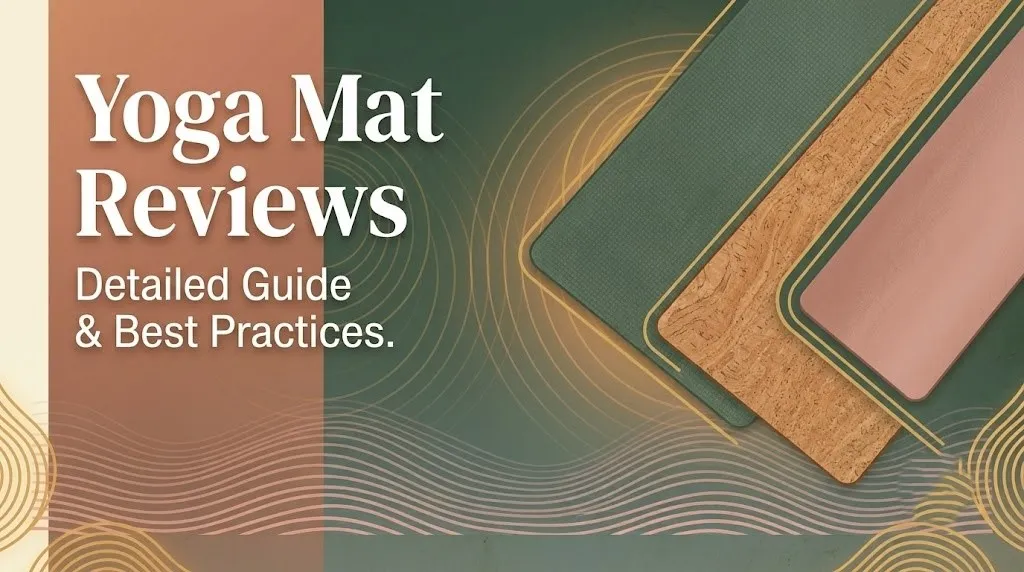
Grip works through two mechanisms: surface texture and material tackiness. A textured surface creates mechanical friction between skin and mat. Material tackiness creates a chemical adhesion that increases slightly with light moisture and degrades with heavy sweat or lotion residue.
Most closed-cell PVC mats rely on tackiness. They feel sticky when dry and become slippery when very wet. Open-cell natural rubber and some TPE mats reverse this: they grip better as moisture increases because the open cell structure absorbs a small amount of moisture and creates more surface contact.
For hot yoga, Bikram/26&2, or any practice where you sweat heavily, a mat with an open-cell surface or a rubber base with a microfiber top layer outperforms a standard PVC mat significantly. The microfiber layer absorbs sweat and actually grips harder the wetter it gets, similar to a microfiber sports towel.
- Dry conditions: Textured PVC and natural rubber both perform well
- Light sweat: Natural rubber maintains grip; PVC begins to slip
- Heavy sweat: Open-cell rubber or microfiber-top mats are the only reliable options
- After lotions or oils: Most mats lose grip; wash the mat before practice if you use body products
Important safety note: A slipping mat during Virabhadrasana I (Warrior I) or Adho Mukha Svanasana is not just uncomfortable; it creates fall risk, particularly for older practitioners. If your mat slips even slightly during practice, place it on a non-slip rug pad or replace it.
Best Yoga Mat for Beginners
The best yoga mat for beginners balances grip, moderate thickness, and easy maintenance without requiring a significant upfront investment. Beginners do not yet know which style they will commit to, so flexibility in the mat’s properties matters.
A 5mm TPE or entry-level natural rubber mat in the $30 to $60 range covers almost every beginner’s needs. It cushions the knees during learning phases when practitioners spend more time on the floor. It grips well enough for standing poses without demanding perfect foot placement from day one.
According to the National Center for Complementary and Integrative Health (NCCIH), yoga is generally safe for beginners when practiced with proper instruction. The mat’s role in that safety equation is often underestimated. A slipping mat sends a nervous, uncoordinated beginner off-balance. A mat that provides stable, consistent traction lets the beginner focus on learning the pose rather than managing fear of falling.
What beginners should look for:
- Thickness: 5mm for joint comfort during the learning curve
- Grip: Consistent in dry conditions (most beginner classes are not hot yoga)
- Length: At least 68 inches; 72 inches if you are taller than 5’7″
- Weight: Under 4 lbs so carrying to class stays manageable
- Price: $30 to $60 covers all practical needs without overspending before knowing your practice
What beginners should avoid:
- Ultra-thin travel mats (under 3mm): too little cushioning for learning poses
- Uncertified PVC mats under $20: poor grip longevity and off-gassing concerns
- Mats marketed as “premium grip” for hot yoga: unnecessary for a beginner’s first six months
Key Takeaway: Beginners need a stable, moderately cushioned mat in the $30 to $60 range, not the most expensive option, because your style preferences will shift as your practice develops.
Best Yoga Mat for Hot Yoga
The best yoga mat for hot yoga must maintain grip in conditions where your hands and feet are fully saturated with sweat, which eliminates most standard PVC mats from consideration. Grip failure during hot yoga is both a safety risk and a frustrating interruption to the flow of practice.
Hot yoga studios, including Bikram/26&2 and heated Vinyasa formats, typically maintain room temperatures between 95°F and 105°F. Within 15 to 20 minutes, most practitioners are producing sweat volumes that overwhelm a standard closed-cell mat’s traction capacity.
The two most effective mat types for hot yoga are:
- Open-cell natural rubber mats: The porous surface absorbs moisture and grips harder as sweat increases. These mats do require more thorough cleaning after each session because bacteria can colonize open cell structures if moisture is left sitting.
- Microfiber-top composite mats: A natural rubber base topped with a microfiber layer that absorbs sweat and creates friction similar to a grip towel. Many experienced hot yoga practitioners prefer these because they eliminate the need for a separate grip towel.
A dedicated hot yoga grip towel placed over a standard mat is a workable solution, but the towel bunches if it is not secured to the mat with corner clips or a non-slip backing.
| Mat Type | Hot Yoga Performance | Cleaning Frequency | Price Range |
|---|---|---|---|
| Standard PVC | Poor in heavy sweat | Weekly | $20 to $50 |
| Open-cell rubber | Excellent | After every session | $60 to $120 |
| Microfiber over rubber | Excellent | After every session | $80 to $150 |
| Cork over rubber | Very good | Weekly | $60 to $100 |
| TPE standard | Moderate | Weekly | $30 to $70 |
Safety note: After hot yoga sessions, mats need to dry completely before rolling them up. Rolling a damp mat traps moisture and accelerates bacterial growth, creating hygiene risks particularly for practitioners with skin sensitivity or open wounds.
Best Yoga Mat for Bad Knees
The best yoga mat for bad knees provides enough cushioning to reduce pressure on the knee joint during kneeling and transitional poses without making the surface so soft that standing balance is compromised. Joint protection in this context is a real biomechanical concern, not just a comfort preference.
During poses like Balasana (Child’s Pose), Anjaneyasana (Low Lunge), and tabletop position, the knee bears direct contact pressure with the mat. On a hard floor with a thin mat, that pressure can aggravate the infrapatellar fat pad, the patellar tendon, or inflamed bursa tissue in people with knee conditions. A mat in the 6mm range meaningfully reduces that point pressure.
That said, mat thickness alone is not enough for practitioners with moderate to severe knee conditions. A folded yoga blanket placed under the knee during any kneeling position distributes pressure across a larger surface area and reduces the load per square inch significantly.
A 2022 study published in the Journal of Alternative and Complementary Medicine found that yoga practitioners with knee osteoarthritis who used adequate padding during floor-based practice reported lower pain scores and higher session completion rates than those who practiced without padding. Participants used either thick mats or supplemental props like folded blankets or dedicated knee pads.
For practitioners with knee concerns, the optimal setup is:
- A 6mm mat as the base surface
- A folded yoga blanket under each knee during all kneeling poses
- Avoidance of poses that require deep knee flexion (such as Virasana, Hero Pose) until cleared by an orthopedic provider or a physical therapist familiar with yoga biomechanics
Best Yoga Mat for Seniors
The best yoga mat for seniors prioritizes joint cushioning, slip resistance on wood or tile floors, easy grip for getting up and down, and low weight for manageable transport. These priorities differ from general-population mat recommendations in meaningful ways.
Balance changes with age. The NCCIH reports that yoga improves balance and reduces fall risk in adults over 60, but that benefit requires a stable practice surface. A mat that slips even slightly on a smooth floor creates a fall hazard that outweighs any balance benefit from the practice itself.
For seniors, a non-slip bottom surface is non-negotiable. Natural rubber bases grip smooth wood and tile floors reliably. If the mat’s bottom surface feels smooth or plasticky to the touch, it needs a non-slip rug pad underneath before use.
What seniors should specifically look for in a mat:
- Thickness: 6mm minimum for knee and hip cushioning during floor transitions
- Non-slip bottom: Natural rubber or textured bottom surface; test it on your specific floor type
- Width: 26 inches rather than 24 inches provides more landing space for wider stances
- Weight: Under 3 lbs if the practitioner carries the mat independently
- Color contrast: Some seniors with visual changes benefit from mats with alignment lines printed on the surface; these provide reference points for hand and foot placement
Seniors should avoid:
- Ultra-thin travel mats (2mm to 3mm): inadequate joint protection for floor-based work
- Mats with a strong chemical smell: VOC off-gassing can irritate airways, which is particularly relevant for seniors with asthma or COPD
- Very heavy rubber mats (over 5 lbs): carrying them can be physically demanding
Key Takeaway: For seniors, grip on the floor and joint cushioning matter more than any brand name; test the mat on your actual floor surface and add a rug pad if the bottom surface feels smooth.
Best Eco-Friendly Yoga Mat
The best eco-friendly yoga mat uses materials that are either sustainably sourced, biodegradable, or produced without harmful chemicals. This category has grown significantly as more practitioners factor environmental impact into their purchasing decisions.
Natural rubber is the most commonly cited eco-friendly option because it comes from the Hevea brasiliensis tree, a renewable resource, and breaks down more readily than PVC at end of life. However, rubber harvesting and processing still have environmental footprints, and shipping heavy rubber mats internationally adds carbon cost.
Cork is the other standout material. Cork is harvested from the bark of cork oak trees without cutting the tree down, making it one of the most sustainably sourced materials in consumer products. Cork mats typically pair a cork surface layer with a rubber or TPE base. The surface is naturally antimicrobial, which reduces the need for chemical cleaners.
Certifications to look for when buying an eco-friendly mat:
- OEKO-TEX Standard 100: Confirms the product has been tested for over 100 harmful substances
- REACH compliance: Meets EU chemical safety regulations, often a strong indicator of lower chemical content
- FSC (Forest Stewardship Council): Relevant for natural rubber; confirms sustainable forest sourcing
- Biodegradable materials: TPE and natural rubber biodegrade faster than PVC; standard PVC can persist in landfills for hundreds of years
For practitioners who want the lowest environmental impact, a cork-over-rubber mat from an OEKO-TEX certified manufacturer currently represents the best available combination of sustainability and performance. These typically run $70 to $120.
Best Travel Yoga Mat
The best travel yoga mat is thin, lightweight, and folds or rolls into a compact form that fits inside luggage without exceeding carry-on dimensions. The trade-off is always cushioning: thinner mats protect joints less.
Most travel mats land in the 1.5mm to 3mm range and weigh 1 to 2 lbs. That is enough to define your practice space and provide basic traction on carpet or tile, but it is not enough to cushion knees or hips during extended floor work.
For practitioners who travel frequently and want to maintain their full practice on the road, the most practical solution is a 2mm travel mat for sessions focused on standing poses, Pranayama, and meditation, paired with a folded hotel towel under the knees for any floor-based work.
Foldable mats versus rollable mats each have a use case:
- Foldable mats: Compress smaller. Better for fitting inside a carry-on bag. The fold lines can become creases that affect surface flatness over time.
- Rollable ultra-thin mats: Roll tighter than standard mats. Generally have better grip surfaces. Store in a bag alongside clothing more easily than a bulky rolled mat.
| Feature | Travel Mat | Standard Mat |
|---|---|---|
| Thickness | 1.5mm to 3mm | 4mm to 6mm |
| Weight | 1 to 2 lbs | 3 to 7 lbs |
| Joint Cushioning | Minimal | Moderate to high |
| Grip Quality | Moderate | Good to excellent |
| Price Range | $20 to $60 | $30 to $150 |
| Best Use | Standing poses, travel sessions | Full home or studio practice |
Best Non-Toxic Yoga Mat
A non-toxic yoga mat is one made without chemicals that off-gas, leach into the skin, or create respiratory irritation during use. This matters most for practitioners who use their mat daily, practice in enclosed spaces, or have respiratory conditions, skin sensitivities, or chemical sensitivities.
Standard PVC mats contain plasticizers, stabilizers, and colorants that can off-gas volatile organic compounds (VOCs), particularly when the mat is new. That distinctive “new mat smell” is the off-gassing process. In well-ventilated spaces, this dissipates relatively quickly. In a small, closed room, it concentrates and may irritate airways.
The safest choice from a material safety perspective is a mat certified to OEKO-TEX Standard 100, which means an independent laboratory has tested every component of the mat against a list of over 100 harmful substances including formaldehyde, heavy metals, pesticides, and certain dyes.
Natural rubber mats made without synthetic additives, and TPE mats from manufacturers with OEKO-TEX or REACH certification, represent the practical field of non-toxic options. Cork surface mats are naturally antimicrobial without chemical treatment, which reduces the need for cleaning products on the mat’s surface.
Practitioners who should prioritize non-toxic mats specifically:
- Pregnant practitioners (during any trimester)
- Practitioners with asthma or chemical sensitivities
- Children and teens doing home yoga
- Seniors with respiratory conditions
- Anyone who practices face-down or on the mat surface for extended periods
If you already own a PVC mat and are concerned, air it out on a balcony or in a well-ventilated space for 48 to 72 hours before first use. Washing with a mild, pH-neutral soap and water also reduces surface chemical residue.
Key Takeaway: If you practice daily in an enclosed space, especially if you are pregnant or have respiratory sensitivities, an OEKO-TEX certified mat is worth the extra cost; the “new mat smell” you are trying to avoid is the off-gassing itself.
Yoga Mat for Yin Yoga and Restorative Practice
A yoga mat for Yin yoga or Restorative practice needs to prioritize floor comfort over grip performance, since these styles involve long holds in seated and supine positions rather than dynamic standing flows. The biomechanical demands are almost opposite to those of hot yoga or Vinyasa.
In Yin yoga, poses like Supta Baddha Konasana (Reclined Bound Angle) and Yin Dragon Pose (a deep hip flexor stretch) hold for 3 to 7 minutes. During that time, sustained pressure lands on the hips, sacrum, outer ankles, and inner knees. A thin mat creates meaningful discomfort in those areas over time.
For Restorative yoga, which uses bolsters, blankets, and blocks to fully support the body in passive positions, the mat serves primarily as a clean, non-slip base. The props carry most of the body weight. A 4mm to 5mm mat works well for most restorative sessions, with a bolster under the spine, a blanket under the knees, and blocks supporting the arms.
Recommended prop setup for a Yin or Restorative session:
- Place a 6mm mat or a standard mat with an additional folded blanket on top as your base
- Position a bolster for any pose requiring spinal support or hip elevation
- Keep two yoga blocks nearby for arm support and seated pose height adjustment
- Have a yoga strap available for bound or reaching poses where flexibility is limited
- Use a eye pillow during long Savasana holds to reduce light sensitivity and deepen the relaxation response
Practitioners with hypermobility should note that Yin yoga’s long hold times can overstretch already lax connective tissue. The goal in Yin is mild tension, not maximum depth. Stopping 10 to 20 percent before your end range is the appropriate approach, regardless of mat type.
How Long Does a Yoga Mat Last
A yoga mat typically lasts 1 to 5 years, depending on the material, how often you practice, how you clean it, and whether you store it properly. Material quality is the primary determinant of longevity.
Natural rubber mats, when cared for correctly, last 3 to 5 years with daily practice. PVC mats in the mid-price range (not ultra-budget) typically hold up for 2 to 3 years. Budget PVC mats under $20 often show significant grip degradation within 3 to 6 months of regular use.
The signs that a mat needs replacing include:
- Surface flaking or peeling: Foam or rubber breaking down; creates skin contact with degraded material
- Grip failure: Mat slips even after cleaning; surface texture has worn down
- Compression spots: Visible flat zones where the foam no longer rebounds; usually at the knees and heels
- Persistent odor despite cleaning: Bacterial colonization in the mat’s open-cell structure
- Visible tears or separation: Especially at edges or where the mat regularly bends
The way you store your mat matters more than most people realize. Rolling it loosely (rather than compressing tightly) and keeping it out of direct sunlight preserves the material’s elasticity. UV exposure from sunlight breaks down both rubber and PVC significantly faster than normal use does.
Storing a mat in a hot car regularly, particularly a rubber mat in summer heat, accelerates degradation and can cause the material to crack. A yoga mat bag or a shaded indoor spot extends mat life by years.
How to Clean a Yoga Mat
Cleaning a yoga mat correctly removes sweat, bacteria, and skin oils that degrade the material and create hygiene concerns, without using cleaners that strip the mat’s grip coating or break down the foam structure. The cleaning method depends on the mat’s material.
Most mats should be wiped down after every practice session and deep cleaned once every two to four weeks, depending on how much you sweat and whether you practice in bare feet or socks.
For natural rubber mats:
- Mix a few drops of mild, pH-neutral dish soap with water in a spray bottle
- Lightly mist the mat surface (do not soak it; rubber degrades with excessive moisture exposure)
- Wipe with a clean, damp microfiber cloth in circular motions
- Rinse the cloth and wipe again with plain water to remove soap residue
- Hang the mat to air dry completely in a shaded, well-ventilated area before rolling
- Never submerge a rubber mat in water; it damages the material
For PVC mats:
- Use a diluted white vinegar solution (1 part vinegar to 4 parts water) or a commercial mat cleaner
- Spray lightly across the surface
- Wipe with a damp cloth
- Allow to air dry flat or hanging before rolling
Do not use:
- Essential oils directly on rubber mats (degrades the material)
- Alcohol-based cleaners (strips grip coating from most mat types)
- Harsh disinfectants or bleach (damages foam structure)
- Machine washing (unless the manufacturer specifically approves it; most do not)
Key Takeaway: Clean your mat with a mild, pH-neutral solution after every sweaty session and let it dry completely before rolling; this one habit extends mat life significantly and prevents the bacterial buildup that causes persistent odor.
Yoga Mat Price and Value Guide
Yoga mat prices range from under $15 for the most basic PVC options to over $200 for premium natural rubber or specialty mats, and the relationship between price and performance is real up to about the $80 to $100 range. Above that, you are largely paying for brand prestige or aesthetic features.
The value sweet spot for most practitioners falls between $40 and $80. In that range, you can find OEKO-TEX certified TPE mats, entry-level natural rubber options, and mid-grade cork mats that will hold up to three to five practice sessions per week without significant grip or structural degradation.
Budget mats under $20 are a reasonable starting point for someone testing whether yoga is a practice they want to continue. They are not appropriate for regular practice because their grip fails quickly and their foam compresses unevenly, creating inconsistent cushioning within weeks.
| Price Tier | Typical Material | Expected Lifespan | Best For |
|---|---|---|---|
| Under $20 | Uncertified PVC | 3 to 6 months | Testing yoga for the first time |
| $20 to $40 | Entry PVC or basic TPE | 1 to 2 years | Beginners committing to regular practice |
| $40 to $80 | Certified TPE, entry rubber, cork | 2 to 4 years | Regular practitioners, home practice |
| $80 to $120 | Natural rubber, cork/rubber | 3 to 5 years | Serious practitioners, studio use |
| $120 to $200+ | Premium rubber, specialty materials | 4 to 6+ years | Daily practitioners, specific performance needs |
One cost consideration that reviews rarely mention: a good mat that lasts four years at $80 costs $20 per year. A cheap mat replaced every six months at $18 costs $36 per year and produces three times the waste. The economics of buying well once are straightforward.
Frequently Asked Questions About Yoga Mat Reviews
What is the best yoga mat for beginners in 2026?
The best yoga mat for beginners in 2026 is a 5mm TPE or entry-level natural rubber mat in the $30 to $60 price range.
This thickness balances joint cushioning with enough ground feel to learn standing poses safely.
Look for OEKO-TEX certification and a mat at least 68 inches long; choose 72 inches if you are taller than 5’7″.
How thick should a yoga mat be for someone with bad knees?
A yoga mat thickness of 6mm is generally recommended for practitioners with knee pain or a history of knee injury.
For additional protection during kneeling poses, place a folded yoga blanket under the knees even on a 6mm mat.
If knee pain during yoga persists, a physical therapist who works with yoga practitioners can assess whether your pose mechanics are contributing to the discomfort.
What is the difference between PVC and natural rubber yoga mats?
PVC mats are affordable, durable, and widely available, but cheaper versions off-gas volatile organic compounds (VOCs) and lose grip in heavy sweat.
Natural rubber mats grip better in moist conditions, are more environmentally sound, and typically last longer, but they are heavier and not suitable for anyone with a latex allergy.
For most practitioners without a latex allergy who want both performance and safety, natural rubber or OEKO-TEX certified TPE is the better long-term investment.
How long does a yoga mat typically last before you need to replace it?
Most yoga mats last 1 to 5 years depending on the material, cleaning frequency, and storage conditions.
Natural rubber mats last the longest with proper care (3 to 5 years); budget PVC mats often degrade within 3 to 6 months of regular use.
Signs you need a new mat include surface flaking, grip failure even after cleaning, and compressed flat spots at the knees or heels.
Is it safe to use a cheap PVC yoga mat every day?
Using an uncertified cheap PVC mat daily carries potential off-gassing risks, particularly in enclosed spaces.
Budget PVC mats may contain plasticizers and colorants not tested for skin or respiratory safety, which is a particular concern for daily users practicing in small rooms.
If daily practice is your goal, choose a mat with OEKO-TEX Standard 100 certification to confirm the materials have been independently tested for harmful substances.
Your mat is the one piece of equipment you contact during every single minute of practice. Choosing it thoughtfully takes 20 minutes and saves you from months of slipping, knee discomfort, or replacing a cheap mat twice a year.
Start with the spec that matters most for your situation: thickness if your joints are the concern, material if you sweat heavily or have sensitivities, size if you are taller or broader than the standard. Then set your budget and buy the best mat within that category, not the most famous brand name.
One reliable mat, properly maintained, is all you need for years of consistent practice. Take care of it and it will take care of your joints.