Aerial Yoga Houston: The 2026 Complete Class Guide
Aerial yoga Houston studios offer one of the most distinctive yoga experiences available in Texas, suspending practitioners in silk hammocks to practice yoga poses, inversions, and supported stretches both off and on the ground. Whether you are brand new to yoga or a mat practitioner curious about the hammock format, Houston has a range of studios and class levels that can accommodate your starting point.
The National Center for Complementary and Integrative Health (NCCIH) identifies yoga, including supported and therapeutic variations, as having documented benefits for flexibility, stress reduction, and musculoskeletal pain when practiced consistently. Aerial yoga’s hammock-supported inversions add a spinal decompression component that traditional mat yoga cannot replicate, making it a genuinely distinct physical experience rather than just a novelty variation.
This guide covers what aerial yoga actually involves at a biomechanical level, what the Houston studio market offers in 2026, how to prepare for your first class, what the research supports regarding specific health benefits, and who should approach the practice with caution or modifications. You will also get a clear comparison between aerial and mat yoga so you can make an informed decision about where it fits in your practice.
Aerial Yoga Houston: What It Is and What the City Offers
Aerial yoga Houston refers to yoga practice conducted using a soft silk or nylon hammock suspended from the ceiling at approximately hip height, allowing practitioners to support, suspend, or invert their bodies in ways that standard mat practice does not permit.
Houston’s aerial yoga market has grown steadily since the mid-2010s and in 2026 offers a diverse range of studio environments. The city’s size and spread mean studios are distributed across multiple neighborhoods including the Heights, Midtown, West University, River Oaks, and the Galleria area, making aerial yoga accessible to residents across most parts of the metro.
The hammock in aerial yoga is not a prop in the way a yoga block or strap is. It is the primary structural element of the practice. It can bear a practitioner’s full body weight and is typically rated to hold a minimum of 2,000 pounds. Every reputable aerial yoga studio in Houston performs regular hardware inspections on carabiners, ceiling mounts, and hammock fabric, and that inspection schedule should be available to students upon request.
Houston’s aerial yoga offerings span several formats:
| Format | What It Involves | Best For |
|---|---|---|
| Aerial yoga fundamentals | Slow-paced; hammock basics, seated and standing poses | Complete beginners |
| Aerial Vinyasa | Flowing sequence linking hammock poses with breath | Intermediate practitioners |
| Anti-gravity yoga | Trademarked format focused on inversions and decompression | Practitioners comfortable with inversions |
| Aerial Restorative | Fully supported passive hammock positions; no inversions | Stress relief, seniors, those with limitations |
| Aerial fitness | Strength-focused; incorporates pull-ups and aerial acrobatics | Fitness-oriented practitioners |
Best Aerial Yoga Studios in Houston TX: What to Look for
The best aerial yoga studios in Houston TX maintain equipment to certified safety standards, employ instructors with specific aerial yoga certifications beyond a general RYT 200, and offer dedicated beginner classes separate from mixed-level sessions.
Choosing a Houston aerial yoga studio on the basis of Instagram aesthetics or price alone is a poor framework for a practice that involves being suspended off the ground. The factors that genuinely determine your safety and experience are the teaching credentials, the equipment maintenance standards, the class size, and whether the studio differentiates beginner offerings from intermediate or advanced content.
What to verify before booking at any Houston aerial studio:
- Aerial-specific instructor certification: general Yoga Alliance RYT credentials do not cover aerial yoga. Look for instructors certified through aerial yoga-specific teacher training programs, many of which are recognized and listed by Yoga Alliance separately
- Equipment inspection records: reputable studios perform weekly or monthly hardware inspections on all hanging points, carabiners, and hammock fabric; ask when the last inspection occurred
- Maximum class capacity: aerial yoga classes should have one hammock per student with clear floor space between each rig; classes of more than 10 to 12 students per teacher are difficult to supervise safely for a beginner group
- Intro class format: the studio should offer a dedicated beginners’ session that teaches hammock entry and exit, basic safety protocols, and fundamental positions before any inversions are introduced
- Liability waiver transparency: waivers are standard; any studio that cannot explain their emergency protocols when asked is a concern
What Is Aerial Yoga and How Does It Differ from Mat Yoga?
Aerial yoga is a yoga practice that uses a suspended silk or nylon hammock to support the body in poses, enable inversions, and provide traction to the spine, distinguishing it from mat yoga in both the physical demands it creates and the effects it produces on the body.
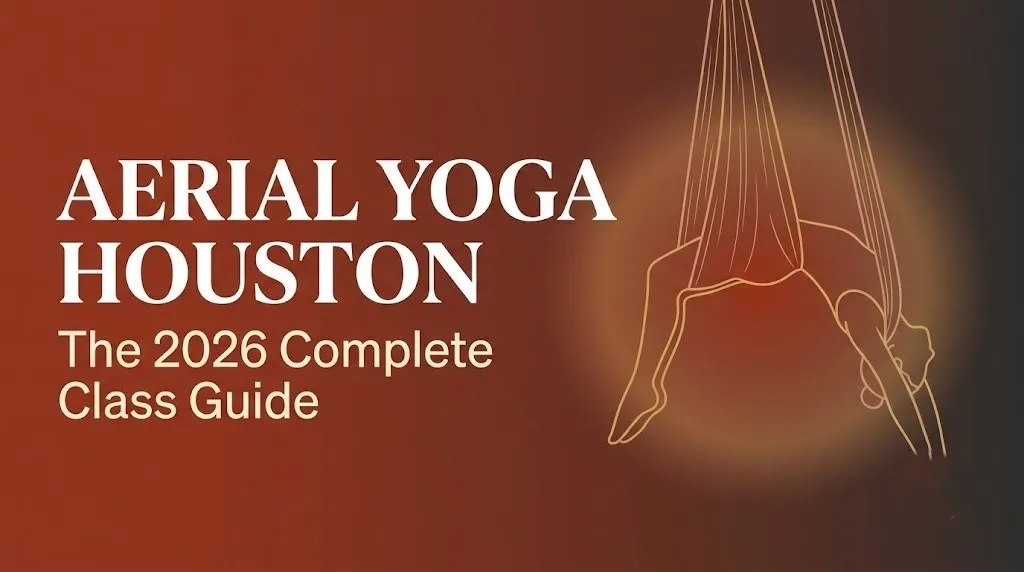
The most fundamental difference is gravitational load. In mat yoga, your body weight presses down through your joints and muscles toward the floor in every pose. The floor provides the stable surface your body pushes against. In aerial yoga, the hammock both supports weight and creates traction, pulling segments of the body in opposite directions simultaneously. This traction effect is most pronounced in suspended inversions, where the weight of the upper body and the hammock’s support of the hips create a gentle lengthening force through the lumbar and thoracic spine.
Think of it this way: mat yoga compresses your spine gently in some poses and lengthens it in others. Aerial yoga, specifically during inversions, applies consistent gravitational traction to the spine from the outside, the way a gentle pull from above creates space between structures that compression has been narrowing all day at a desk.
| Feature | Mat Yoga | Aerial Yoga |
|---|---|---|
| Primary load direction | Downward through joints | Traction and suspension |
| Inversion accessibility | Requires strength and balance | Supported by hammock |
| Spinal effect | Compression varies by pose | Decompression in inversions |
| Core demand | Active throughout | Active plus grip and stability |
| Balance challenge | Proprioceptive | Vestibular (moving surface) |
| Suitable for beginners | Yes with modifications | Yes in dedicated beginner class |
| Equipment needed at home | Mat, blocks, strap | Ceiling rig, certified hammock |
Key Takeaway: Aerial yoga is not just mat yoga with a prop. The hammock fundamentally changes how gravity acts on your body, creating decompression effects in inversions that mat practice cannot replicate and balance demands that require vestibular adaptation.
Aerial Yoga for Beginners in Houston: How to Prepare
Aerial yoga for beginners in Houston is accessible to most adults in reasonable health when they choose a studio offering a dedicated beginner class, arrive having eaten lightly, and communicate any physical limitations to the teacher before the session begins.
The learning curve in aerial yoga is real but not steep. The first three to five classes involve adapting to the unfamiliar sensory experience of being suspended and partly inverted. Many students feel mildly disoriented or experience brief nausea during their first inversion attempt. This is a normal vestibular system response to an unusual orientation and typically resolves quickly as the nervous system adapts.
What beginners consistently report finding more surprising than the inversions is the arm and shoulder demand. The hammock must be controlled with the hands and arms throughout a session. Gripping, pressing, and pulling the fabric engages the shoulder girdle, biceps, triceps, and serratus anterior in ways that a mat yoga practice does not. Expect mild upper body soreness after your first two or three classes.
How to prepare your body for a first aerial yoga class in Houston:
- Eat nothing for at least two hours before class; the inverted positions create significant abdominal pressure that is genuinely uncomfortable on a full stomach.
- Hydrate well in the hours before class; not immediately before, as a full bladder is equally uncomfortable in compression poses.
- Perform five minutes of gentle neck rolls and shoulder circles before class begins; the cervical spine and shoulder girdle are the primary structural load-bearers in aerial yoga.
- Tell the teacher about any wrist, shoulder, neck, or spinal history before class begins; these are the regions most relevant to aerial-specific modifications.
- Accept that resting in the hammock (seated or lying) is always an option during any part of the class; this is the aerial equivalent of Balasana (Child’s Pose) on the mat.
What to Wear to Aerial Yoga in Houston
Wear form-fitting, full-length athletic leggings and a fitted long-sleeved or cap-sleeved top to aerial yoga in Houston, because the hammock fabric contacts bare skin throughout the class and friction against exposed skin in inverted positions is genuinely uncomfortable and can cause bruising.
This is the clothing advice that most Houston aerial yoga guides bury or omit. The hammock is a nylon or silk fabric under significant tension. When your thighs, hips, or underarms contact that fabric in an inversion or a deep hip opener, the pressure against bare skin creates friction marks and, in more sustained positions, surface bruising similar to a rug burn.
Long leggings protect the thighs and the backs of the knees, which are the two most common contact points in hammock inversions. A fitted top that covers the underarm and side torso protects those areas in side-opening and overhead positions. Avoid loose or baggy clothing entirely. Excess fabric bunches into the hammock, distorts your positioning, and can catch unexpectedly during transitions.
What to wear and what to avoid for aerial yoga in Houston:
- Wear: full-length leggings (not cropped), fitted top with underarm coverage, sports bra with no metallic hardware, grip-toe socks or bare feet as the studio directs
- Avoid: shorts (exposed thigh skin contacts the hammock in inversions), tank tops with open underarms, any top with zippers or hard buttons, jewelry of any kind, heavy perfume or body oil (oil degrades hammock fabric and reduces grip)
- Houston heat note: Houston’s climate means you may arrive sweating; bring a change of top if you commute by foot or bike; damp fabric reduces grip on the hammock and increases slipping risk in weight-bearing positions
Aerial Yoga Houston Prices and Class Schedules
Aerial yoga classes in Houston typically cost between $20 and $35 per drop-in session in 2026, with monthly unlimited memberships ranging from $120 to $220 depending on studio location and class format.
Houston’s aerial yoga pricing sits slightly below the national average for major metropolitan markets, reflecting the city’s lower commercial real estate costs compared to coastal cities. That said, aerial yoga costs more than standard mat yoga classes in Houston because of the specialized equipment, smaller class sizes, and instructor certification requirements.
Typical Houston aerial yoga pricing structure in 2026:
| Option | Typical Price Range | Best For |
|---|---|---|
| Single drop-in class | $20 to $35 | First-time visitors, irregular schedules |
| 5-class pack | $90 to $150 | Testing a studio before committing |
| 10-class pack | $170 to $260 | Regular practice, no membership commitment |
| Monthly unlimited | $120 to $220 | Practitioners attending 3 or more classes per week |
| Intro offer (new students) | $30 to $60 for first week | Trying multiple studios before choosing one |
| Private aerial session | $75 to $150 per session | Custom instruction, injury recovery, special needs |
Most Houston aerial yoga studios offer early morning sessions beginning at 6:00 to 7:00 am and evening sessions through 7:30 or 8:00 pm, with weekend morning classes being the most popular and filling fastest. Book weekend classes at least 48 hours in advance at most studios.
Key Takeaway: Aerial yoga in Houston costs $20 to $35 per drop-in class, with intro offers making it affordable to try two or three studios before committing. Always use the intro offer before purchasing a class pack.
Aerial Yoga Benefits: What Research and Practice Support
Aerial yoga produces documented physical and psychological benefits including spinal decompression, improved flexibility, core strength development, and measurable stress reduction, with the inversion component adding a dimension that mat yoga cannot replicate.
The NCCIH notes that inversion-based practices, including those supported by equipment rather than body strength alone, have been studied for their effects on spinal traction and musculoskeletal pain. Supported inversions reduce the compressive load on intervertebral discs by reversing the gravitational direction typically applied through the spine during upright waking hours.
A study published in the Journal of Bodywork and Movement Therapies found that participants in a structured aerial yoga program over eight weeks showed improvements in spinal flexibility, shoulder range of motion, and self-reported pain levels compared to a control group. These findings align with what aerial yoga teachers and physical therapists who work with aerial practitioners observe clinically.
Documented benefits of aerial yoga practice:
- Spinal decompression: inverted positions create traction through the lumbar and thoracic spine, reducing disc compression accumulated from sitting and standing
- Improved flexibility: the hammock allows deeper hip, shoulder, and spinal stretches than most practitioners can achieve on the mat, by supporting body weight in the extended position
- Core strength development: controlling the hammock through transitions requires sustained engagement of the transversus abdominis, obliques, and multifidus
- Shoulder girdle strength: gripping and pressing the hammock develops the serratus anterior, rotator cuff, and posterior deltoid in ways that traditional yoga does not
- Stress and anxiety reduction: the aerial Savasana (Cocoon) position, fully suspended and enclosed in the hammock, is reported by practitioners and researchers to produce a profound parasympathetic nervous system response
Aerial Yoga for Back Pain and Spinal Decompression
Aerial yoga can relieve certain types of back pain through hammock-supported spinal decompression in inverted positions, but it requires careful selection of appropriate class format and teacher guidance to avoid aggravating existing spinal conditions.
The decompression mechanism is straightforward. When you are fully inverted in a hammock, with the hammock supporting your hips and your upper body hanging freely, the weight of the torso creates a gentle traction force through the lumbar spine. This separates the intervertebral discs slightly, reducing the compression that accumulates during seated desk work, standing, and walking throughout the day.
Research published in the Spine Journal and referenced in physical therapy literature supports the concept of inversion therapy for lumbar pain relief in specific populations, particularly those with disc-related pain in the absence of spinal instability or nerve compromise. However, not all back pain responds positively to inversion. Spinal stenosis, spondylolisthesis, and osteoporosis are conditions where inversion can worsen symptoms, not improve them.
The distinction matters enormously. Anyone with diagnosed spinal pathology should discuss aerial yoga specifically with a spine-specialized physical therapist or orthopedic physician before attending a class. A general physician’s clearance for “exercise” does not constitute clearance for inversion-based aerial yoga, which creates very different spinal loads than walking or swimming.
Back conditions and aerial yoga compatibility:
| Condition | Aerial Yoga Compatibility | Notes |
|---|---|---|
| General lower back tension | Generally beneficial | Use Aerial Restorative; avoid deep inversions initially |
| Lumbar disc bulge (non-surgical) | Potentially beneficial with guidance | Discuss with physical therapist; avoid extreme inversions |
| Spinal stenosis | Not recommended without specialist clearance | Inversion can worsen stenotic symptoms |
| Spondylolisthesis | Not recommended | Traction can stress the unstable segment |
| Post-surgical spine (recent) | Not appropriate | Wait minimum 12 months and obtain surgical team clearance |
| Osteoporosis | Modified Aerial Restorative only | Full inversions not appropriate |
Aerial Yoga Poses: Key Positions and What They Do
Aerial yoga poses span a range from fully grounded positions using the hammock as a support prop to fully suspended inversions where no part of the body touches the floor, with each category creating distinctly different muscular and structural demands.
Understanding what each class of aerial pose actually does to the body removes the mystery from the practice and helps practitioners make informed decisions about which positions to approach carefully and which to embrace.
Core aerial yoga positions and their biomechanical effects:
- Aerial Savasana (Cocoon): the practitioner is fully wrapped in the hammock at approximately 18 to 24 inches off the floor; all muscles are passive; vestibular input is minimal; the hammock’s gentle cocoon creates a proprioceptive input similar to swaddling, producing a documented parasympathetic response. Modification: keep the hammock loosely wrapped to allow full belly breathing throughout.
- Aerial Forward Fold (Uttanasana variation): hips rest in the hammock at hip height; torso hangs freely forward; the hamstrings, erector spinae, and sacroiliac joint receive consistent traction from body weight. Modification for tight hamstrings: keep the knees bent; the decompression effect occurs regardless of knee position.
- Aerial Backbend: the hammock sits under the lower thoracic spine; the practitioner opens the chest and drops the head back; the pectorals, anterior deltoids, and hip flexors are stretched; the thoracic extensors are released. Safety note: never allow the cervical spine to hang completely unsupported in this position; keep the head actively lifted or supported by a hand.
- Full Aerial Inversion: hips in the hammock, body fully inverted; creates lumbar and thoracic traction; engages the shoulder girdle isometrically to control position. See the safety section for full contraindication list.
- Aerial Warrior I (Virabhadrasana I variation): one foot on the floor, the other in the hammock for support; front knee bends into a lunge; the hammock assists balance and deepens the hip flexor stretch on the back leg.
Key Takeaway: Aerial yoga poses range from fully grounded hammock-assisted stretches to fully suspended inversions, and each category creates different structural demands. Beginners should master grounded and partially supported poses before attempting full inversions.
Aerial Yoga Core Strength and Flexibility Gains
Aerial yoga builds core strength through the constant demand of controlling the hammock during transitions and builds flexibility by supporting the body in positions that gravity and muscular tension typically prevent on the mat.
The core strength development in aerial yoga is different from what crunches, mat yoga, or Pilates produce. Controlling the hammock requires continuous, multi-directional core engagement rather than the sagittal-plane (forward-backward) engagement that most core exercises emphasize. The transversus abdominis, obliques, and multifidus all engage simultaneously to prevent the hammock from swinging or rotating during transitions.
According to research in Complementary Therapies in Medicine on yoga and core strength, sustained multi-directional core engagement during movement produces greater functional stability gains than isolated core exercises performed in fixed positions. Aerial yoga’s transitions between hammock positions create precisely this multi-directional demand repeatedly throughout a class.
Flexibility gains in aerial yoga are accelerated compared to mat yoga for a specific mechanical reason. The hammock supports the body’s weight in a stretched position, allowing the practitioner to remain in a deep stretch for longer without the muscular effort required to sustain the position on the mat. Think of the effort required to hold a standing split on the mat versus the ease of resting in a hammock-supported version of the same shape. The time under passive stretch produces connective tissue adaptation that active, muscularly loaded stretching cannot replicate as efficiently.
Modification for practitioners with existing core weakness: Begin with grounded hammock poses that require the feet to remain on the floor. Build hammock control through partially suspended positions before attempting fully suspended transitions.
Aerial Yoga for Stress and Mental Health
Aerial yoga produces measurable stress reduction effects through a combination of parasympathetic nervous system activation during supported inversions, the proprioceptive input of the cocoon position, and the focused attention required to navigate an unfamiliar movement environment.
A study published in Frontiers in Psychology on yoga and anxiety found that yoga practices combining physical movement, breath awareness, and novel sensory experiences (including inversions) produced greater reductions in state anxiety than yoga practiced in familiar, low-challenge environments. Aerial yoga’s combination of physical challenge, sensory novelty, and the deeply restful Cocoon position creates a full-spectrum stress response cycle: activation followed by deep parasympathetic rest.
The Aerial Savasana (Cocoon) position deserves specific attention in the mental health context. Being fully wrapped and suspended in a hammock at low height reduces visual and auditory input, eliminates the feeling of floor contact, and creates a gentle proprioceptive compression similar to weighted blanket research outcomes. Studies in sensory integration research have found that this type of deep pressure proprioceptive input reduces sympathetic nervous system activity and cortisol levels in both clinical and non-clinical populations.
Houston’s pace and heat make genuine nervous system recovery harder to access in daily life. Aerial yoga, particularly the Restorative aerial formats offered by several Houston studios, provides a structured environment for the kind of deep physiological rest that the parasympathetic system needs to balance chronic low-grade stress.
Modification for practitioners with anxiety about heights or inversions: Begin with Aerial Restorative classes where the hammock is kept at ground-adjacent height and full inversions are not included. Familiarizing the vestibular system with suspension before introducing inversion removes the most common anxiety trigger in aerial yoga.
Aerial Yoga Safety: Who Should and Should Not Practice
Aerial yoga is safe for most healthy adults when practiced at an appropriately credentialed studio with proper equipment, but several specific health conditions create genuine contraindications that no aerial yoga class can safely accommodate through modification alone.
The contraindications for aerial yoga are largely driven by the inversion component. Full inversions increase intracranial pressure and cardiovascular load in ways that create specific risks for people with certain conditions. These are not precautions that a teacher’s modification can address. They are physiological realities that the inverted position creates regardless of how gently the inversion is performed.
Absolute contraindications for aerial yoga (inversions specifically):
- Glaucoma: inversions increase intraocular pressure, which can worsen glaucomatous optic nerve damage; discuss any aerial yoga interest with your ophthalmologist before attending
- Unmanaged high blood pressure (hypertension): inversions increase cardiovascular demand and head pressure; managed hypertension under medical supervision may be acceptable in modified non-inversion aerial formats
- Recent spinal surgery: minimum 12-month waiting period plus surgical team clearance; traction from inversions creates forces not appropriate for surgically repaired spinal structures
- Vertigo or BPPV: the vestibular system disruption from inversion can trigger severe vertigo episodes; Aerial Restorative formats without inversions may be appropriate with medical guidance
- Pregnancy: full inversions are not appropriate during pregnancy; some Aerial Restorative formats may be modified safely with specialized prenatal aerial training, but only under a specifically prenatal-certified aerial instructor
- Osteoporosis: compression and traction forces in aerial positions create fracture risk in low bone density; non-inverted Aerial Restorative with expert modification only
Who benefits most from aerial yoga:
- People with general lower back tension from desk work
- Mat yoga practitioners plateaued in flexibility seeking new range
- People with anxiety seeking structured nervous system recovery
- Athletes seeking active recovery with novel movement patterns
- Beginners who find mat yoga intimidating (aerial yoga’s novelty levels the playing field)
Aerial Yoga for Seniors and Modified Practice
Aerial yoga is accessible to many older adults when practiced in an Aerial Restorative or modified beginner format, with inversions removed and the hammock used primarily for support and gentle decompression rather than suspension.
The American College of Sports Medicine recommends that adults over 65 include flexibility, balance, and strength training regularly. Aerial yoga, when appropriately modified, addresses all three. The hammock provides balance assistance during standing poses, allows deeper passive stretching than most seniors achieve on the mat, and requires enough upper body engagement to build shoulder girdle and core strength gradually.
The critical modification for older adults is removing full inversions from the practice. Aerial Restorative yoga, where the hammock is kept close to the floor and positions are fully supported and passive, is the most appropriate entry point for seniors and for any older adult with cardiovascular concerns, balance challenges, or bone density considerations.
Senior-appropriate aerial yoga modifications:
- Keep the hammock at hip height or lower for all poses, preventing accidental falls if balance is lost
- Use the hammock as a standing balance support rather than a suspension device: practice Tadasana (Mountain Pose) and basic standing poses with one hand lightly in the hammock
- Replace full aerial inversions with a partial recline: hips in the hammock at 30 to 45 degrees below horizontal provides gentle lumbar decompression without the full cardiovascular load of complete inversion
- Use the Cocoon position at floor-adjacent height (approximately 12 inches off the floor) for the restorative component
- Limit class duration to 45 minutes initially; aerial positions engage stabilizing muscles in unfamiliar patterns, and fatigue increases fall risk
Safety note for seniors with osteoporosis: Discuss aerial yoga specifically with a physical therapist specializing in bone health before attending any class. The compressive and traction forces in aerial positions, even modified ones, differ significantly from ground-based exercise and require individualized assessment.
Key Takeaway: Seniors and people with health conditions can often practice aerial yoga safely in Aerial Restorative formats, but full inversions carry real contraindications that require specialist clearance, not just instructor permission.
Aerial Yoga Teacher Credentials: What to Look for in Houston
An aerial yoga teacher in Houston should hold a standard Yoga Alliance RYT 200 or higher, plus a separate aerial yoga-specific certification from a recognized aerial teacher training program, because mat yoga training alone does not cover hammock rigging, weight-bearing safety, or aerial-specific modifications.
The credential gap in aerial yoga teaching is wider than in most yoga specialties. A general RYT 200 teaches basic yoga poses and sequencing. It does not address how to inspect a ceiling mount, how to calculate weight-bearing loads on a hammock rig, or how to recognize when a student’s position in the hammock creates a structural risk. Aerial yoga-specific certifications typically require 30 to 50 hours of aerial-specific training beyond the base yoga certification.
In Houston specifically, ask any aerial yoga teacher directly: what aerial certification do you hold and from which program? A teacher who holds both an RYT credential and an aerial-specific certification from a program that covers equipment safety, rigging inspection, and population-specific modifications is the minimum standard for practicing safely.
What to ask an aerial yoga teacher before your first class:
- What aerial certification do you hold, and does it cover equipment inspection and rigging safety?
- How often is the studio’s hardware inspected and by whom?
- What is your protocol if a student becomes dizzy or distressed during an inversion?
- Have you worked with students with my specific physical history or limitations before?
- What is the maximum number of students per teacher in a beginners’ class?
A teacher who answers these questions directly and specifically, without deflecting or minimizing, is worth trusting with your body in a suspended practice environment.
Aerial Yoga vs. Mat Yoga: How the Practices Compare
Aerial yoga and mat yoga are genuinely complementary practices rather than competing alternatives, with aerial yoga offering spinal decompression, supported inversions, and vestibular training that mat yoga cannot provide, while mat yoga offers more precise alignment training, broader style variety, and home practice accessibility that aerial yoga cannot match.
The two practices develop different physical capacities. Mat yoga develops ground-based proprioception, postural alignment, and the discipline of working with the body against a stable surface. Aerial yoga develops three-dimensional body awareness, hammock-specific upper body strength, and the ability to orient the body in space without a fixed reference point.
Practitioners who combine both report that aerial yoga opens body positions that then become more accessible on the mat, particularly in hip openers and backbends where the mat variety had plateaued. Conversely, mat yoga training provides the foundational body awareness that makes aerial yoga transitions more precise and controlled.
Practical comparison for choosing between or combining both:
| Factor | Mat Yoga | Aerial Yoga | Combined Practice |
|---|---|---|---|
| Home practice possible | Yes, minimal equipment | No, requires ceiling rig | Mat yoga at home, aerial in studio |
| Spinal decompression | Limited (some poses) | Yes (inversions) | Full spectrum |
| Inversion accessibility | Requires strength | Supported by hammock | Complementary |
| Style variety | Extensive | Limited | Broader overall |
| Cost per session | $15 to $30 | $20 to $35 | Higher but distinct benefits |
| Beginner accessibility | High | Moderate (dedicated class) | Sequential learning |
| Equipment needed at home | Mat, blocks, strap | Ceiling rig, hammock | Both sets |
The most practical recommendation for Houston practitioners: start with mat yoga to build body awareness and basic pose vocabulary, then add aerial yoga classes every one to two weeks as a complement. The two practices will accelerate each other’s benefits rather than competing for your time.
Frequently Asked Questions About Aerial Yoga Houston
What is aerial yoga and is it good for beginners?
Aerial yoga is a yoga practice using a suspended silk hammock to support the body in poses, inversions, and stretches both on and off the ground.
It is accessible for beginners when practiced in a dedicated beginners’ class at a properly equipped Houston studio, where no prior yoga experience is required.
The first one to three classes involve adapting to the unfamiliar sensory experience of suspension and mild inversion, which most students find manageable with a qualified instructor guiding them.
How much does aerial yoga cost in Houston?
A single drop-in aerial yoga class in Houston costs between $20 and $35 in 2026, depending on the studio and class format.
Monthly unlimited memberships range from approximately $120 to $220, with most studios offering an intro offer of a first week for $30 to $60 to let new students try the practice before committing.
Private aerial yoga sessions, useful for people with specific physical limitations or injuries, typically cost $75 to $150 per session.
Can aerial yoga help with back pain?
Aerial yoga can relieve certain types of lower back pain through hammock-supported spinal decompression during inversions, particularly for pain related to disc compression from sitting and standing.
Not all back conditions respond positively to inversion; spinal stenosis, spondylolisthesis, and recent surgical repair are specific conditions where inversion may worsen symptoms rather than relieve them.
Anyone with diagnosed spinal pathology should discuss aerial yoga specifically with a spine-specialized physical therapist before attending a class, because exercise clearance in general does not cover inversion-based traction.
Who should not do aerial yoga?
People with glaucoma, unmanaged high blood pressure, recent spinal surgery, vertigo or BPPV, active pregnancy, or osteoporosis should not practice aerial yoga without explicit specialist clearance.
These contraindications are driven by the inversion component, which increases intracranial pressure, cardiovascular load, and spinal traction in ways that create real physiological risks for these conditions.
Non-inversion Aerial Restorative formats may be appropriate for some of these populations under specifically qualified instruction, but this requires individual assessment rather than blanket class participation.
How is aerial yoga different from regular yoga?
Aerial yoga uses a suspended hammock to support, suspend, or invert the body, creating spinal decompression, vestibular training, and supported flexibility that mat yoga cannot produce.
Mat yoga develops ground-based proprioception and alignment precision across a broader range of styles including Hatha, Vinyasa, Yin, Ashtanga, and Restorative, with home practice accessibility that aerial yoga lacks.
The two practices are most effective when combined, with mat yoga providing alignment foundation and aerial yoga providing decompression and three-dimensional movement training.
Book the Class. Tell the Teacher Everything.
The single most useful thing you can do before your first aerial yoga class in Houston is call the studio, ask about their teacher’s aerial certification and equipment inspection schedule, and tell the teacher your complete physical history when you arrive.
After that, trust the process. Start with a fundamentals or beginner aerial class. Rest in the Cocoon position as long as you need. Skip any inversion that does not feel right on a given day.
Your first session is orientation. The real benefits build from the third class onward.