Yoga for High Blood Pressure: Poses and Practices 2026
Yoga for high blood pressure is one of the most well-researched complementary approaches to managing hypertension, with studies showing meaningful reductions in both systolic and diastolic readings through regular practice. The right poses, the right breathing techniques, and the right yoga style can all make a real difference, especially when combined with your existing medical treatment plan.
According to the World Health Organization, hypertension affects approximately 1.28 billion adults worldwide and remains the leading cause of premature death globally. The National Center for Complementary and Integrative Health (NCCIH) recognizes yoga as a practice with evidence supporting blood pressure reduction, particularly through its effects on the autonomic nervous system and stress response.
This article covers the science behind how yoga affects blood pressure, the specific poses and breathwork techniques most supported by research, which styles are safest for people with hypertension, and how to build a sustainable practice whether you are a beginner, a senior, or someone already on medication.
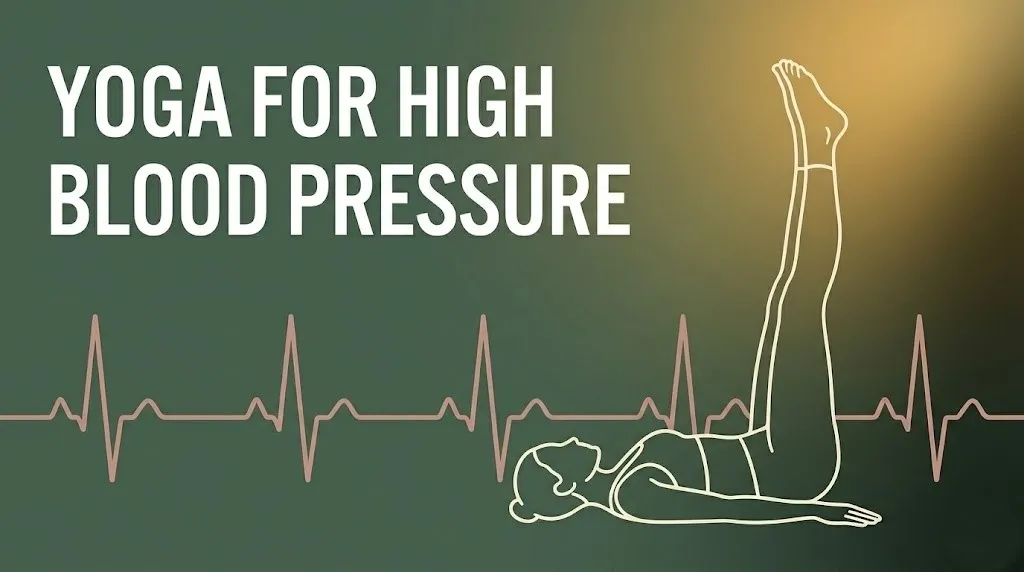
Yoga for High Blood Pressure
Yoga for high blood pressure works by activating the parasympathetic nervous system, reducing stress hormones like cortisol and adrenaline, and improving the flexibility of blood vessels, all of which contribute to lower blood pressure readings over time.
This is not a quick fix or a replacement for prescribed medication. What yoga offers is a clinically supported, low-risk complement to standard hypertension management. Research published in the Journal of Alternative and Complementary Medicine found that adults who practiced yoga regularly for 12 weeks showed reductions in systolic blood pressure averaging 5 to 10 mmHg and diastolic pressure averaging 4 to 7 mmHg.
Those numbers matter. A drop of just 5 mmHg in systolic pressure is associated with a reduced risk of stroke and heart disease, according to the American Heart Association (AHA). Yoga is not going to replace antihypertensive medication for everyone, but it has earned a legitimate place in a well-rounded cardiovascular health plan.
Key benefits for people with hypertension include:
- Stress reduction: Lowers circulating cortisol, which directly affects vascular tension
- Improved heart rate variability: A marker of better autonomic regulation and cardiovascular health
- Blood vessel elasticity: Regular practice supports healthier endothelial function
- Better sleep quality: Poor sleep worsens hypertension; yoga improves sleep architecture
- Weight management support: Relevant because excess body weight increases cardiovascular load
Modification note: If your blood pressure is currently above 180/120 mmHg, this is a hypertensive crisis. Delay starting a yoga practice and work with your cardiologist to stabilize readings before beginning any physical activity.
Can Yoga Lower Blood Pressure
Yes, yoga can lower blood pressure, and multiple peer-reviewed studies support this finding, particularly for people with mild to moderate hypertension.
A 2019 meta-analysis published in Complementary Therapies in Medicine analyzed 49 randomized controlled trials involving yoga and blood pressure. The analysis found that yoga produced statistically meaningful reductions in both systolic and diastolic pressure across diverse adult populations. The effect was strongest in studies where yoga included breathwork and meditation alongside physical poses.
This tells us something important: poses alone are only part of the picture. The breathing and relaxation components of yoga are not decorative additions. They are mechanisms. The NCCIH notes that mind-body practices including yoga show particular promise for cardiovascular conditions because they address the stress response pathway directly, not just the physical body.
Think of the cardiovascular system like a garden hose under pressure. Stress hormones act like someone squeezing the hose. Yoga practice, particularly its breathwork and relaxation elements, signals the nervous system to loosen that grip. The pressure drops because the underlying cause of the tension is being addressed.
| Yoga Component | Primary Mechanism | Blood Pressure Effect |
|---|---|---|
| Physical poses | Muscle relaxation, circulation improvement | Moderate reduction |
| Pranayama (breathwork) | Vagal nerve activation, CO2 regulation | Strong reduction |
| Meditation and Savasana | Cortisol reduction, sympathetic downregulation | Moderate to strong reduction |
| Combined practice | All three mechanisms together | Strongest effect overall |
Modification note: Beginners should start with a combined practice of at least 15 to 20 minutes of gentle poses plus 5 minutes of breathwork. Even this brief format shows measurable benefits in short-term studies.
How Yoga Affects Blood Pressure and the Nervous System
Yoga lowers blood pressure primarily by shifting the body from sympathetic nervous system dominance (the fight-or-flight state) to parasympathetic nervous system activation (the rest-and-digest state), which reduces vascular resistance and allows blood to flow with less force.
Your autonomic nervous system manages processes you cannot consciously control, including heart rate, breathing rate, and blood vessel diameter. Chronic stress keeps the sympathetic branch overactive, which constricts blood vessels and keeps pressure elevated even when no immediate threat is present.
Yoga interrupts this cycle through several overlapping pathways:
- Vagal nerve stimulation: Slow, controlled breathing activates the vagus nerve, which signals the heart to slow down and blood vessels to dilate
- Cortisol reduction: Research published in the International Journal of Yoga (2021) found that 8 weeks of regular yoga practice reduced morning cortisol levels by an average of 11%, a clinically meaningful shift
- Improved heart rate variability (HRV): Higher HRV is associated with better cardiovascular resilience. Yoga practices consistently improve HRV scores in adult populations
- Baroreceptor sensitivity: Regular yoga may improve the sensitivity of the baroreceptors in the carotid arteries, which are the sensors your body uses to regulate blood pressure in real time
This is why Savasana (Corpse Pose), which might look like doing nothing, is actually one of the most physiologically active moments in a yoga class from a blood pressure standpoint. The nervous system is actively recalibrating.
Safety note: People with autonomic neuropathy, a condition common in long-term diabetes that affects nerve signaling, should inform their healthcare provider before beginning yoga, as their nervous system’s response to positional changes may differ from typical patterns.
Key Takeaway: Yoga’s effect on blood pressure comes primarily from its impact on the nervous system, not just from physical movement. The breathwork and relaxation components are just as important as the poses.
Yoga to Reduce Blood Pressure Immediately
The fastest way yoga can reduce blood pressure is through slow, extended exhalation breathing combined with a restorative pose like Viparita Karani (Legs Up the Wall) or Balasana (Child’s Pose), which activates the parasympathetic nervous system within minutes.
The word “immediately” deserves honest treatment here. Yoga is not a substitute for emergency hypertension medication. If your blood pressure is dangerously elevated, the appropriate response is medical intervention. What yoga can do is produce measurable, rapid reductions in blood pressure through breathwork during a normal high-but-not-emergency reading.
A study published in the Journal of Clinical Hypertension found that slow breathing at a rate of 6 breaths per minute for 15 minutes produced immediate reductions in systolic blood pressure in adults with hypertension. That breathing rate, one full inhale-exhale cycle every 10 seconds, is exactly what structured pranayama practice produces.
For a fast, in-the-moment approach:
- Find a quiet space. Sit cross-legged or lie flat on your back.
- Place one hand on your chest and one on your belly.
- Inhale slowly through the nose for 4 counts, allowing the belly to rise.
- Exhale slowly through the nose for 6 to 8 counts, letting the belly fall completely.
- Repeat for 10 to 15 cycles without pausing between breaths.
- Rest in Savasana (Corpse Pose) for 5 minutes afterward.
This breathing ratio, where the exhale is longer than the inhale, is the specific pattern most associated with vagal activation and blood pressure reduction in the research literature.
Modification: Sit in a chair rather than on the floor if seated floor positions are uncomfortable. The breath pattern works equally well in any supported upright position.
Yoga Poses for High Blood Pressure
The best yoga poses for high blood pressure are forward folds, gentle inversions, and supine restorative positions because they calm the nervous system, reduce muscular tension, and avoid placing excess cardiovascular demand on the heart.
Not all poses are equal for people with hypertension. The ones that work best share common features: they encourage a relaxation response, they do not require breath-holding, and they do not involve large muscle groups working intensely against gravity.
Here are the most well-supported poses for blood pressure management:
| Pose (Sanskrit) | Pose (English) | Primary Effect | Hold Time |
|---|---|---|---|
| Viparita Karani | Legs Up the Wall | Venous return, relaxation | 5 to 10 minutes |
| Balasana | Child’s Pose | Calming, vagal activation | 1 to 3 minutes |
| Supta Baddha Konasana | Reclined Bound Angle | Hip opening, deep relaxation | 3 to 5 minutes |
| Uttanasana | Standing Forward Fold | Calming, gentle inversion | 1 to 2 minutes |
| Setu Bandhasana | Bridge Pose | Chest opening, mild backbend | 30 to 60 seconds |
| Paschimottanasana | Seated Forward Fold | Nervous system calming | 1 to 3 minutes |
| Savasana | Corpse Pose | Deep parasympathetic activation | 5 to 15 minutes |
Each of these poses shares a relaxation-forward orientation. None require intense muscular effort or breath-holding. They can all be modified with props.
Modification note: For Uttanasana (Standing Forward Fold), place your hands on a chair seat or yoga blocks if your hamstrings prevent a comfortable fold. The blood pressure benefit comes from the inward focus and slow breath, not from how far you reach.
Yoga Poses to Lower Blood Pressure
Yoga poses that most directly lower blood pressure are those performed slowly, held with awareness, and paired with extended exhalation breathing, rather than dynamic sequences requiring muscular effort and elevated heart rate.
The distinction matters. A Vinyasa class moving rapidly between poses elevates heart rate and temporarily raises blood pressure during the effort phase, just as any moderate aerobic exercise would. That is not harmful for most people with mild hypertension, but it is not the mechanism that produces resting blood pressure reduction.
The mechanism for resting blood pressure improvement comes from slow, held postures that give the nervous system time to shift states. Think of it like a thermostat: each held pose with extended breathing is a signal to your body that it is safe to lower the setting.
To practice Setu Bandhasana (Bridge Pose) for blood pressure:
- Lie on your back with knees bent, feet hip-width apart, arms alongside the body.
- Press both feet evenly into the floor, keeping the knees tracking directly over the second toe.
- Inhale and slowly lift the hips until the thighs are roughly parallel to the floor.
- Clasp the hands beneath the lower back or keep arms alongside the body for support.
- Hold for 5 to 8 breath cycles, breathing slowly and fully.
- Exhale and lower the spine one vertebra at a time back to the floor.
- Rest for 5 breaths before a second repetition.
Modification for beginners: Place a yoga block under the sacrum (the flat triangular bone at the base of the spine) for a supported version. This is called Supported Bridge and removes any muscular effort, making it purely restorative.
Safety note: Avoid pressing the neck hard into the floor. If you feel any pressure at the base of the skull, place a folded blanket under the upper back to adjust the angle.
Yoga Poses to Avoid With High Blood Pressure
People with high blood pressure should generally avoid full inversions, intense backbends, poses requiring breath retention, and any sequence that demands sustained muscular effort at maximum intensity, as these can temporarily spike blood pressure beyond safe ranges.
This is one of the most underserved topics in yoga content about hypertension, and it matters as much as knowing which poses to do.
Poses and practices to approach with caution or avoid:
- Sirsasana (Headstand): Full inversion with significant cranial blood pressure increase. Avoid until blood pressure is well-controlled and you have guidance from both a physician and an experienced yoga teacher.
- Sarvangasana (Shoulder Stand): Compresses the carotid arteries and jugular veins, disrupting normal pressure regulation in the head and neck.
- Halasana (Plow Pose): Shares the vascular risks of Shoulder Stand; avoid in the same conditions.
- Kumbhaka (Breath Retention): Holding the breath after inhalation raises intrathoracic pressure and spikes blood pressure. Avoid in any pranayama practice when hypertension is present.
- Kapalabhati (Skull-Shining Breath) and Bhastrika (Bellows Breath): These forceful breathing techniques stimulate the sympathetic nervous system and raise blood pressure temporarily. Not appropriate for hypertension.
- Hot yoga (Bikram/26&2) in uncontrolled hypertension: Heat causes vasodilation and fluid loss, which can lead to unpredictable blood pressure responses. If cleared by a cardiologist, some people with well-managed hypertension tolerate heated yoga, but it requires careful monitoring.
Modification: Replace any full inversion with Viparita Karani (Legs Up the Wall), which provides similar venous return benefits without the cranial pressure increase.
Key Takeaway: Knowing which poses to skip matters as much as knowing which ones to practice. Full inversions, breath retention, and forceful breathwork are the three categories most likely to spike blood pressure rather than reduce it.
Best Yoga Style for Hypertension
For people managing high blood pressure, Restorative yoga, Yin yoga, and gentle Hatha yoga are the three safest and most effective styles because they emphasize slow movement, long holds, and nervous system regulation rather than cardiovascular effort.
Choosing the right style is a decision that most yoga content about hypertension skips entirely. It should not be skipped. The style determines the pace, the intensity, the types of poses, and the overall physiological demand on your heart and blood vessels.
| Yoga Style | Intensity Level | Hypertension Safety | Notes |
|---|---|---|---|
| Restorative | Very low | Excellent | Prop-supported, no effort required |
| Yin | Low | Excellent | Long holds, floor-based, calming |
| Hatha (gentle) | Low to moderate | Very good | Traditional, slower-paced classes |
| Iyengar | Low to moderate | Very good | Prop-focused precision; ideal for beginners |
| Vinyasa (gentle) | Moderate | Good with modifications | Avoid power or fast-paced versions |
| Kundalini | Moderate | Moderate caution | Some breathwork is contraindicated |
| Ashtanga | High | Caution; get medical clearance | Intense sequences require cardiovascular tolerance |
| Bikram/Hot Yoga | High | Use only with medical clearance | Heat adds cardiovascular demand |
If you are new to yoga and managing hypertension, start with Restorative yoga or a gentle Hatha class labeled “beginner” or “slow flow.” These formats explicitly prioritize rest and recovery over exertion.
Iyengar yoga deserves specific mention for people with health conditions. Its emphasis on precise alignment and generous prop use means every pose can be adapted to your exact anatomy and physical limitations. Many Iyengar teachers have training in therapeutic applications.
Yoga Breathing Exercises for High Blood Pressure
Yoga breathing exercises reduce blood pressure by slowing the respiratory rate, extending the exhalation, and stimulating the vagus nerve, all of which shift the body toward parasympathetic dominance and reduce vascular resistance.
Breathwork is arguably the most underrated tool for blood pressure management within yoga. Most articles mention it briefly. The research, however, is substantial.
A 2021 systematic review in Complementary Therapies in Medicine found that slow-paced breathing (at or below 10 breaths per minute) produced significant reductions in blood pressure across multiple studies. The review noted that slow breathing techniques “could be recommended as a safe and effective non-pharmacological strategy for blood pressure reduction.”
The three safest and most effective breathing approaches for hypertension:
- Extended exhalation breathing: Inhale for 4 counts, exhale for 6 to 8 counts. The longer exhale is the key mechanism. It activates the vagal brake on heart rate.
- Nadi Shodhana (Alternate Nostril Breathing): Alternates airflow between nostrils, balancing nervous system activity. Use only without breath retention when hypertension is active.
- Bhramari (Bee Breath): Creates a gentle humming vibration during exhalation. The vibration stimulates the vagus nerve directly and has been shown to reduce both heart rate and blood pressure in short-term studies.
Safety note: Avoid any breathing exercise that involves forceful exhalation, rapid pumping movements, or breath retention after inhalation. These activate the sympathetic nervous system rather than calming it.
Modification for beginners: Start with just 5 minutes of extended exhalation breathing before adding Nadi Shodhana or Bhramari. Building comfort with breath control gradually produces better results than trying multiple techniques at once.
Pranayama for High Blood Pressure
Pranayama for high blood pressure should focus exclusively on calming, slow-breathing techniques, specifically Nadi Shodhana (Alternate Nostril Breathing) and Bhramari (Bee Breath), both of which have research support for reducing blood pressure and heart rate.
Nadi Shodhana is one of the most-studied pranayama techniques in the cardiovascular research literature. A study published in the International Journal of Yoga (2018) found that 4 weeks of daily Nadi Shodhana practice reduced systolic blood pressure by an average of 8 mmHg and diastolic by 5 mmHg in adults with mild hypertension.
To practice Nadi Shodhana (Alternate Nostril Breathing) without breath retention:
- Sit comfortably in a chair or cross-legged on the floor with the spine tall.
- Rest the left hand on the left knee with the palm up.
- Bring the right hand to the face. Place the right thumb beside the right nostril and the right ring finger beside the left nostril.
- Close the right nostril with the thumb. Inhale slowly through the left nostril for 4 counts.
- Close the left nostril with the ring finger. Open the right nostril. Exhale slowly through the right nostril for 6 counts.
- Inhale through the right nostril for 4 counts.
- Close the right nostril. Open the left. Exhale through the left for 6 counts. This completes one cycle.
- Continue for 5 to 10 cycles. Do not hold the breath at any point.
Safety note: Skip Kumbhaka (any form of breath retention, whether after inhalation or exhalation) entirely if your blood pressure is above 140/90. The increased intrathoracic pressure during retention can spike readings temporarily.
Modification for limited hand mobility: Rest both hands in your lap. Simply alternate focusing on breathing through each nostril without using the hand position. The mental attention still creates some of the balancing effect.
Key Takeaway: Nadi Shodhana practiced daily for as few as 4 weeks has measurable blood pressure benefits, but only when practiced without breath retention. Skip the Kumbhaka until your pressure is well-managed.
Restorative Yoga for Hypertension
Restorative yoga is the single most appropriate yoga format for people with hypertension because it uses props to fully support the body in relaxed positions, requires zero muscular effort, and holds poses long enough for the nervous system to completely shift into a parasympathetic state.
A typical Restorative practice involves holding five to six poses for 5 to 15 minutes each, with bolsters, blankets, blocks, and straps supporting every part of the body. The practitioner does not need to do anything except breathe and release tension. That format is exactly what the cardiovascular system needs during a high-stress period or when blood pressure needs consistent, gentle management.
The signature pose of Restorative yoga for hypertension is Supta Baddha Konasana (Reclined Bound Angle Pose):
- Sit on the floor with the soles of your feet together and knees falling outward.
- Place a bolster or rolled blanket lengthwise behind you along the spine.
- Slowly lower your back onto the bolster so your head, neck, and upper back are supported.
- Place yoga blocks or rolled blankets under both outer thighs for full support.
- Rest arms alongside the body, palms up.
- Close the eyes and breathe naturally for 5 to 10 minutes.
- To come out, bring knees together gently, roll to one side, and press up with the hands.
This pose opens the chest, encourages diaphragmatic breathing, and removes all compressive force from the abdominal organs and blood vessels. Research suggests that supported chest-opening postures held for more than 5 minutes produce measurable reductions in resting heart rate and subjective stress.
Modification: If lying on a bolster at floor level is not accessible, the same position can be recreated in a reclining chair with a pillow behind the back and cushions under the knees.
Chair Yoga for High Blood Pressure
Chair yoga for high blood pressure offers the same nervous system benefits as floor-based yoga but removes the barriers of floor access, balance challenges, and getting up and down from the ground repeatedly.
For practitioners who cannot easily move to and from the floor, chair yoga is not a lesser option. It is a fully legitimate practice format with its own research base. A 2017 study in the Journal of Alternative and Complementary Medicine found that chair-based yoga improved blood pressure outcomes in older adults comparably to mat-based yoga, with the added benefit of fewer fall-related safety concerns.
Key chair yoga poses and adaptations for blood pressure:
- Seated Balasana (Seated Child’s Pose variation): Sit at the edge of a sturdy chair. Hinge forward at the hips, draping the torso over the thighs with arms hanging down. Hold for 8 to 10 breaths with slow, extended exhalation.
- Seated Uttanasana (Seated Forward Fold): From the same position, allow the chest to rest on the thighs if comfortable. Releases the lower back and calms the nervous system.
- Seated Setu Bandhasana (Seated Bridge variation): Press both feet into the floor. Squeeze the glutes gently and lift the chest slightly while maintaining an extended exhale. A mild, seated version of the cardiovascular benefits.
- Seated Savasana: Sit back fully in the chair, feet flat, palms up on thighs, eyes closed. Breathe with extended exhalation for 5 minutes.
Prop note: Use a sturdy, non-wheeled chair with a flat seat and no armrests for the best range of motion and safety.
Yoga for High Blood Pressure Seniors
Seniors managing high blood pressure benefit most from short, gentle yoga sessions of 20 to 30 minutes that prioritize seated and supine poses, slow breathwork, and avoid any position requiring rapid transitions or significant balance challenges.
The intersection of aging and hypertension is common. The American Heart Association notes that more than 70% of adults over age 65 have hypertension. This population also often deals with reduced joint mobility, balance concerns, osteoporosis risk, and polypharmacy (taking multiple medications simultaneously). Yoga can address several of these concerns at once, but the format must be adapted accordingly.
Safety principles for senior practitioners with hypertension:
- Avoid rapid head position changes. Moving quickly from standing to seated or lifting the head suddenly can cause orthostatic hypotension, a sudden pressure drop that causes dizziness, in people on antihypertensive medications.
- Use props generously. A block, chair, or bolster under every body part that needs support is not a sign of weakness. It is good teaching.
- Keep sessions shorter and more frequent. Three 20-minute sessions per week produce comparable blood pressure benefits to one longer session, with lower fatigue and injury risk.
- Prioritize the floor-to-standing transition. Roll to the side, press up slowly, sit on the edge of the mat for a few breaths, then stand. Never shoot up from lying flat to standing.
- Monitor perceived exertion. A senior with hypertension should never feel breathless, flushed, or light-headed during yoga. If any of these occur, stop, rest in Savasana, and note the pattern before continuing.
Modification: All standing poses in a senior practice should be performed near a wall or chair. Virabhadrasana II (Warrior II) with one hand on a chair back is just as effective neurologically and far safer from a balance perspective.
Key Takeaway: Seniors with hypertension get the best results from short, frequent sessions (three times weekly) using props and wall support, with slow position transitions as a non-negotiable safety practice.
Yoga and Blood Pressure Medication
Practicing yoga while on blood pressure medication is generally safe, but certain medication types, particularly beta-blockers and calcium channel blockers, alter your body’s physical response to exercise in ways that every yoga practitioner on these drugs should understand.
Beta-blockers slow the heart rate. This means your heart rate during yoga will not rise to typical exercise levels, which can make perceived exertion feel misleading. You may feel physically capable of more than is appropriate, because the normal cardiac warning signals are muted.
ACE inhibitors and angiotensin receptor blockers (ARBs) can cause dehydration and electrolyte shifts with exercise-related sweating. Staying hydrated before and after yoga practice matters more for people on these medications.
Diuretics, prescribed to reduce fluid volume, also increase dehydration risk during heated or vigorous practice. These practitioners should be especially cautious in hot yoga formats.
Practical guidance for yoga practitioners on antihypertensive medication:
- Do not time yoga immediately after taking a new medication or adjusted dose. Blood pressure-lowering effects peak at different times for different drugs. Your prescribing physician can tell you when your medication reaches peak effect.
- Rise slowly from supine positions. Antihypertensive medications increase the risk of orthostatic hypotension. Always roll to the side, sit up slowly, and pause before standing.
- Track your readings. Taking blood pressure before and after practice for the first few weeks helps you understand how yoga interacts with your specific medication.
- Inform your yoga teacher about your condition and medication if attending a group class, so they can offer appropriate modifications without making a scene of it.
Safety note: If you feel dizzy, see dark spots, or experience a sudden severe headache during yoga, stop immediately. These are symptoms that require prompt medical evaluation, as they may indicate a blood pressure response that needs attention.
How Often Should You Do Yoga for Blood Pressure
Most research on yoga and blood pressure suggests practicing at least 3 times per week for a minimum of 8 to 12 weeks produces the most consistent and meaningful reductions in resting blood pressure readings.
Frequency matters more than duration per session for blood pressure outcomes. A 30-minute session three times per week outperforms a single 90-minute weekly class in terms of sustained nervous system regulation. This is because the parasympathetic effects of each session last roughly 24 to 48 hours, making regular short sessions more effective than infrequent long ones.
Here is a practical framework based on the research:
| Practice Frequency | Session Length | Expected Effect | Best For |
|---|---|---|---|
| Daily (7x per week) | 15 to 20 minutes | Strongest ongoing effect | Committed practitioners |
| 3 to 5x per week | 20 to 30 minutes | Strong, sustained reduction | Most adults managing hypertension |
| 2x per week | 30 to 45 minutes | Moderate benefit | Maintenance after initial improvements |
| 1x per week | 60 minutes | Mild benefit | Not sufficient as primary approach |
The NCCIH notes that yoga studies showing the strongest blood pressure outcomes used practice frequencies of at least 3 sessions per week with a minimum of 8 consecutive weeks before measuring outcomes.
Realistic starting point: If you are new to yoga and managing hypertension, begin with two 15-minute sessions per week. Add a third session in week three. Increase duration gradually in 5-minute increments rather than jumping to full-length classes immediately. Sustainability matters more than intensity at the start.
Yoga Sequence for Hypertension
A yoga sequence designed for hypertension should move from gentle seated warm-up through supported floor poses, include at least 5 minutes of slow breathwork, and end with a minimum of 10 minutes in Savasana (Corpse Pose) for full nervous system recovery.
Here is a 30-minute evidence-informed sequence suitable for beginners and people with mild to moderate hypertension:
Phase 1: Seated Warm-Up (5 minutes)
- Sit cross-legged or in a chair. Close the eyes and take 10 extended-exhalation breaths (4 count inhale, 6 to 8 count exhale).
- Gently roll the neck in slow half-circles, right ear to right shoulder, chin to chest, left ear to left shoulder. Repeat 3 times each direction.
- Clasp the hands and stretch the arms overhead on an inhale. Release on an exhale. Repeat 4 times.
Phase 2: Standing Poses (8 minutes)
- Tadasana (Mountain Pose): Stand tall with feet hip-width apart. Take 5 slow breaths, focusing on grounding through the feet and lengthening through the crown of the head.
- Uttanasana (Standing Forward Fold): Hinge at the hips and fold forward. Bend the knees generously. Let the head and neck hang completely. Hold for 8 breaths. Use blocks or chair if needed.
- Virabhadrasana II (Warrior II) with wall or chair support: Hold 5 breaths each side.
Phase 3: Floor Poses (10 minutes)
- Balasana (Child’s Pose): 2 minutes with arms extended or alongside the body.
- Setu Bandhasana (Bridge Pose) or Supported Bridge with a block: 2 rounds of 5 breaths each, with rest between.
- Supta Baddha Konasana (Reclined Bound Angle): 5 minutes with full bolster and block support.
Phase 4: Pranayama (5 minutes)
- Nadi Shodhana without retention: 8 cycles as described in the pranayama section.
Phase 5: Savasana (Corpse Pose) (10 minutes)
- Lie flat with a folded blanket under the knees and an eye pillow if available. Do nothing but breathe naturally. Stay for the full 10 minutes. This is where the blood pressure reduction consolidates.
Modification: Complete the entire sequence in a chair by adapting floor poses to seated versions as described in the Chair Yoga section.
Key Takeaway: A 30-minute sequence that ends with 10 minutes of Savasana and includes Nadi Shodhana is more effective for blood pressure than any single “best pose,” because the combined effect of movement, breath, and deep rest is what drives the real physiological change.
Frequently Asked Questions About Yoga for High Blood Pressure
Can yoga lower blood pressure fast?
Yoga can produce measurable blood pressure reductions within a single 15-minute session of slow breathing and restorative poses, according to short-term studies in the Journal of Clinical Hypertension.
The fastest effect comes from slow, extended-exhalation breathing at approximately 6 breaths per minute, which activates the vagal system and lowers vascular resistance within minutes.
For lasting resting blood pressure reduction, consistent practice over 8 to 12 weeks is what the research consistently supports.
Which yoga pose is best for lowering blood pressure immediately?
Viparita Karani (Legs Up the Wall) combined with slow breathing is the single pose most associated with rapid parasympathetic activation and blood pressure reduction.
The legs-elevated position improves venous return to the heart while the horizontal posture removes gravitational cardiovascular demand, creating ideal conditions for pressure to drop.
Hold it for 5 to 10 minutes with extended exhalation breathing for the strongest acute effect.
Is hot yoga safe if you have high blood pressure?
Hot yoga is not recommended for people with uncontrolled high blood pressure, as heat causes vasodilation and fluid loss that can produce unpredictable blood pressure responses.
The American College of Sports Medicine advises that exercising in high heat places additional demand on the cardiovascular system, particularly for people with existing hypertension.
If your blood pressure is well-controlled and your cardiologist has cleared vigorous exercise, discuss heated yoga specifically before attending.
How long does it take for yoga to lower blood pressure?
Most research shows measurable reductions in resting blood pressure after 8 to 12 weeks of regular practice, with sessions at least 3 times per week.
A 2019 meta-analysis in Complementary Therapies in Medicine found that yoga studies lasting longer than 8 weeks consistently produced stronger blood pressure reductions than shorter interventions.
Individual results vary based on baseline blood pressure, medication, lifestyle factors, and which type of yoga is practiced.
Should I do yoga if I am on blood pressure medication?
Yes, yoga is generally safe alongside blood pressure medication, and the two approaches are complementary rather than competing.
People on beta-blockers should be aware that their heart rate will not rise normally during practice, and people on diuretics should hydrate carefully and avoid hot yoga formats.
Before starting any new exercise practice while managing a cardiovascular condition, reviewing your activity plan with the physician managing your blood pressure helps ensure the safest approach.
Start Small, Then Build
Pick one pose from this guide. Just one. Viparita Karani (Legs Up the Wall) requires nothing but a wall and a blanket and takes five minutes. That is a real starting point, not a plan for someday.
Add the extended exhalation breathing, inhale for 4, exhale for 6 to 8, after your first week. Practice this combination three times a week for two months before measuring your results.
The research is clear, and so is the direction. Consistency at a gentle level beats intensity at an irregular one, every time.