Wildflower Yoga: Best Poses, Benefits & Getting Started
Wildflower yoga is an accessible, nature-connected approach to yoga practice that emphasizes grounding movement, breath awareness, and poses drawn from the rhythms of the natural world. Whether you’re searching for a wildflower yoga studio near you or looking to build a home practice inspired by this philosophy, this guide covers everything you need to begin with confidence.
The interest in nature-connected movement practices has grown steadily since 2020. According to the National Center for Complementary and Integrative Health (NCCIH), approximately 21 million Americans practiced yoga in recent years, with beginners and adults over 50 making up the fastest-growing groups.
This article walks through the core poses, the science behind the benefits, how to modify for your body, and exactly what to expect if you’re stepping onto the mat for the first time. You’ll find beginner-friendly instructions, prop recommendations, and honest guidance on safety throughout.
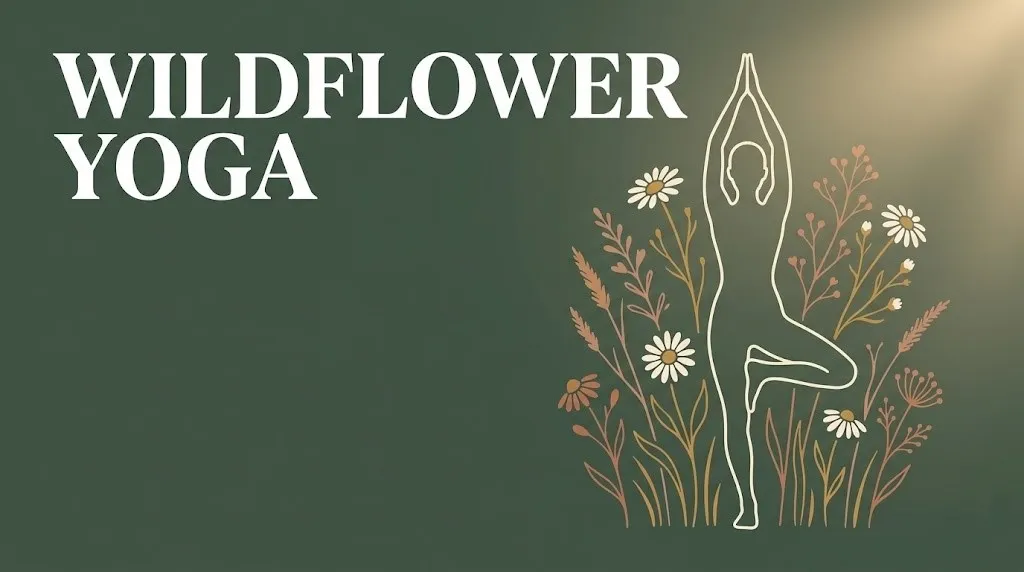
Wildflower Yoga
Wildflower yoga refers to a style and philosophy of yoga practice that prioritizes organic movement, seasonal awareness, and accessibility for all body types and experience levels. The name reflects the ethos: like wildflowers, the practice grows naturally where it is planted, without forcing, without straining.
Studios like Wildflower Yoga in Flemington, NJ and Wildflowers Yoga in other communities have popularized this approach. They typically offer a welcoming, non-competitive environment where beginner students feel as valued as advanced practitioners.
The practice draws from Hatha yoga and Restorative yoga as its primary foundations. Sequences tend to move at a slower, more deliberate pace than Vinyasa yoga, allowing students to settle into poses rather than flow quickly between them. The focus stays consistently on breath, sensation, and connection to the present moment.
What makes wildflower yoga distinct from a typical studio class is its intentional relationship with the natural world. Classes may be organized around seasonal themes, grounding postures, or the sensory experience of being outdoors or near natural elements. This is not a codified, trademarked style like Ashtanga yoga or Bikram yoga. It’s a teaching philosophy that different studios interpret through their own lens.
Who benefits most from a wildflower yoga approach:
- Beginners who feel intimidated by fast-paced or athletic yoga classes
- Adults over 50 looking for gentle, joint-friendly movement
- People managing anxiety, stress, or burnout
- Anyone drawn to the connection between movement, nature, and breath
What Is Wildflower Yoga
Wildflower yoga is a nature-inspired yoga practice built around grounded poses, mindful breathing, and a philosophy that values ease over effort. It is not a single fixed method but rather a teaching orientation that multiple studios and teachers have adopted independently.
The core distinction between wildflower yoga and more standardized yoga formats comes down to pace and intention. In a Vinyasa class, the goal is often breath-linked movement at a consistent rhythm. In wildflower yoga, the goal shifts toward allowing the body to move in response to its own sensations, guided by breath rather than a fixed tempo.
According to a study published in the Journal of Alternative and Complementary Medicine, slower, breath-centered yoga styles produce measurable reductions in cortisol, the body’s primary stress hormone. This is particularly relevant for the populations most drawn to wildflower yoga: people managing chronic stress, those returning to movement after a long break, and older adults.
The philosophy also borrows from ecotherapy, the evidence-informed practice of using the natural environment to support mental health. Wildflower yoga classes often incorporate nature imagery, outdoor practice, or seasonal sequencing that mirrors what’s happening in the natural world outside.
Quick Summary: What Sets Wildflower Yoga Apart
| Feature | Wildflower Yoga | Standard Vinyasa | Hot Yoga |
|---|---|---|---|
| Pace | Slow to moderate | Moderate to fast | Moderate to fast |
| Environment | Natural, calm | Studio, music-driven | Heated room |
| Primary focus | Breath, grounding | Flow, linking breath | Endurance, sweat |
| Best for | Beginners, seniors, stress | Active adults | Heat-tolerant adults |
| Intensity level | Low to moderate | Moderate to high | High |
Yoga Styles Explained
Understanding yoga styles helps you find the practice that fits your body, schedule, and goals. Wildflower yoga most closely aligns with Hatha yoga and Yin yoga, but knowing the full landscape of styles helps you choose wisely.
Hatha yoga refers to any yoga practice that uses physical postures (asanas) and breathing techniques (pranayama). Most beginner classes are Hatha-based. Poses are held for several breaths with time for instruction and alignment.
Vinyasa yoga links poses together in a flowing sequence. Each movement coordinates with an inhale or exhale. This style builds cardiovascular fitness alongside flexibility. It’s appropriate for people with some baseline strength and mobility.
Yin yoga targets the connective tissues, specifically the fascia, ligaments, and joint capsules. Poses are held passively for 3 to 5 minutes. The American College of Sports Medicine notes that sustained passive stretching can improve joint range of motion when practiced consistently over 8 weeks or more.
Restorative yoga uses props to support the body fully in each posture. It activates the parasympathetic nervous system, the “rest and digest” branch. This is among the most accessible forms of yoga for anyone managing pain, illness, fatigue, or high stress.
Iyengar yoga emphasizes precise alignment and extensive prop use. It is particularly useful for people with injuries or structural considerations, because the attention to form is exceptional.
Style Comparison for Beginners:
| Style | Intensity | Props Used | Best For |
|---|---|---|---|
| Hatha | Low to moderate | Occasional | New students, all ages |
| Vinyasa | Moderate to high | Minimal | Active beginners, fitness focus |
| Yin | Low | Blocks, bolsters | Flexibility, joint health |
| Restorative | Very low | Extensive | Stress, illness, recovery |
| Iyengar | Low to moderate | Extensive | Injury rehab, precision seekers |
Key Takeaway: Wildflower yoga is a slow, grounded, nature-inspired approach that draws from Hatha and Restorative traditions, making it one of the most beginner-friendly and stress-responsive styles you can practice.
Wildflower Yoga for Beginners
Beginners can practice wildflower yoga safely from day one, provided they start with foundational poses and respect the body’s current range of motion. The philosophy of this practice actively discourages pushing through discomfort, which makes it safer for new students than many other yoga styles.
The first principle beginners need to understand is the difference between sensation and pain. In yoga, a gentle stretch is normal and expected. Sharp, shooting, or joint-based pain is a signal to stop or modify immediately. Yoga teachers and physical therapists consistently use this distinction as the primary safety framework for new practitioners.
For a beginner’s first session, starting with three to five foundational poses is more effective than attempting a full sequence. Quality of attention matters more than quantity of movement at this stage. A single pose practiced with full breath awareness teaches more about yoga than fifteen poses rushed through.
Beginner Starter Sequence for Wildflower Yoga:
- Begin in Sukhasana (Easy Pose): Sit cross-legged on a folded blanket. Rest hands on knees. Close eyes and take 5 slow breaths.
- Move into Balasana (Child’s Pose): From hands and knees, sink hips back toward heels. Arms reach forward or rest alongside the body. Hold for 5 to 8 breaths.
- Rise slowly to Tadasana (Mountain Pose): Stand tall, feet hip-width apart. Ground through all four corners of each foot. Arms hang naturally. Take 3 breaths.
- Step into a gentle Virabhadrasana I (Warrior I): Step one foot back. Front knee bends over the ankle. Arms rise overhead. Hold 3 breaths per side.
- Return to the floor for Savasana (Corpse Pose): Lie flat on the back. Arms slightly away from the body. Eyes closed. Rest for 2 to 5 minutes.
Modification for limited mobility: Practice the entire sequence seated in a chair. A chair version of Warrior I can be done with one foot stepping forward while seated at the edge of the chair seat.
Nature-Inspired Yoga Practice
A nature-inspired yoga practice uses the imagery, rhythms, and sensory qualities of the natural world as the framework for movement, breathing, and meditation. This is the philosophical core that makes wildflower yoga distinct.
The connection between nature and wellbeing is well-documented. Research published in Frontiers in Psychology found that even brief exposure to natural environments reduces perceived stress and improves mood in adults. A nature-inspired yoga practice brings those benefits indoors through intentional imagery, grounding postures, and seasonal sequencing.
Seasonal yoga means organizing your practice around the rhythm of the natural year. Spring and summer practices tend to emphasize expansive, open poses: backbends, standing balances, heart-opening postures. Autumn and winter sequences shift toward grounding, inward movement and longer holds in forward folds and restorative poses.
Color and sensory awareness also play a role. Wildflower yoga teachers frequently invite students to visualize the quality of a specific natural element during a pose. Visualizing roots growing from the feet during Vrikshasana (Tree Pose), for example, is not just poetry. Research on motor imagery suggests that mental visualization during movement can improve proprioception and balance outcomes.
Elements of a Nature-Inspired Practice:
- Seasonal sequencing that mirrors the natural year
- Grounding postures drawn from earth, water, and tree imagery
- Breath practices that emphasize the rhythmic quality of the natural world
- Outdoor practice when weather and setting allow
- Use of natural props: sand, grass, wooden blocks, cotton blankets
Grounding Yoga Poses
Grounding yoga poses are postures that create a strong physical and mental connection to the earth, typically through contact with the floor, deliberate weight distribution, and steady breath. These are the backbone of any wildflower yoga sequence.
The concept of grounding in yoga is practical, not mystical. When you stand in Tadasana (Mountain Pose) and consciously press all four corners of each foot into the floor, you activate the intrinsic muscles of the foot, stabilize the ankle joint, and cue the entire kinetic chain from the ground up to engage. That’s what grounding means biomechanically.
According to a 2019 review in the International Journal of Yoga, standing and balance postures that emphasize foot contact and proprioceptive awareness show measurable improvement in postural stability in adults over 60. For older adults, grounding poses are not just philosophically meaningful. They are functionally protective.
Primary Grounding Poses in Wildflower Yoga:
| Pose (Sanskrit) | Pose (English) | Primary Ground Contact | Key Benefit |
|---|---|---|---|
| Tadasana | Mountain Pose | All four corners of both feet | Posture alignment, balance |
| Virabhadrasana II | Warrior II | Feet and rear outer edge | Hip strength, stability |
| Balasana | Child’s Pose | Shins, forehead, hands | Nervous system calm |
| Malasana | Garland Pose / Squat | Full foot or heel-elevated | Hip mobility, ankle flexibility |
| Vrikshasana | Tree Pose | Single foot, full press | Balance, hip abductor strength |
Modification for Tree Pose: If balance is a concern, place one hand on a wall. The foot of the bent leg can rest on the ankle or calf rather than the inner thigh. Never place it directly against the knee joint.
Outdoor Yoga Sequences
Outdoor yoga sequences are yoga practices performed in natural settings, adapted for uneven surfaces, natural light, and the sensory environment of the outdoors. They are a natural expression of the wildflower yoga philosophy.
Practicing yoga outside genuinely changes how the practice feels. The ground is rarely perfectly flat. Wind creates subtle balance challenges. Sun and temperature shift your body’s experience of each pose. These variations are not problems to solve. They are feedback that sharpens body awareness faster than a mirrored studio can.
The ACSM recommends that outdoor exercise, when performed mindfully, can offer both the physical benefits of movement and the psychological benefits of green space exposure. For yoga specifically, outdoor practice encourages a quality of attention that differs from indoor studio work: the senses stay more alert, and that alertness deepens proprioceptive awareness.
Outdoor Wildflower Yoga Sequence (30 Minutes):
- Sukhasana (Easy Pose) seated on grass or a mat: 3 minutes of breath awareness and grounding.
- Adho Mukha Svanasana (Downward-Facing Dog): From hands and knees, lift hips toward the sky. Press firmly through the full hand. Hold 5 breaths.
- Virabhadrasana I (Warrior I): Step right foot forward. Bend front knee. Reach arms overhead. Hold 5 breaths, switch sides.
- Vrikshasana (Tree Pose): Find a steady standing balance. Hold 3 to 5 breaths per side.
- Paschimottanasana (Seated Forward Fold): Sit on the ground. Extend legs forward. Hinge from the hips, not the waist, reaching toward feet. Hold 8 breaths.
- Savasana (Corpse Pose): Lie on a mat on the grass. Remain still for 5 minutes.
Safety note for outdoor practice: Uneven terrain increases ankle roll risk during standing poses. Choose a relatively flat surface. Always use a mat for seated and reclined poses, as ground temperature and insects can be distracting.
Key Takeaway: Grounding poses and outdoor sequences are not just feel-good additions to a yoga practice. They deliver measurable improvements in balance, posture, and stress response when practiced consistently.
Yoga for Stress Relief
Yoga is one of the most well-studied non-pharmacological tools for stress management, with research consistently showing it reduces cortisol, slows heart rate, and activates the parasympathetic nervous system. This is a central reason wildflower yoga draws the audience it does.
The mechanism is specific. Slow, diaphragmatic breathing, the kind taught in every yoga class, directly stimulates the vagus nerve. Vagal stimulation shifts the nervous system away from the fight-or-flight state and toward the rest-and-restore state. This is not a vague claim. It is a documented physiological pathway.
According to the National Center for Complementary and Integrative Health (NCCIH), research shows that yoga practice is associated with reduced anxiety, improved sleep quality, and lower self-reported stress levels across diverse adult populations. These effects are most consistent when yoga is practiced at least two to three times per week.
The poses most effective for stress relief share a common characteristic: they emphasize exhalation, forward flexion, or full-body contact with the ground. Forward folds like Uttanasana (Standing Forward Fold) and Balasana (Child’s Pose) quiet the nervous system more efficiently than backbends or vigorous standing sequences during periods of high stress.
Poses Most Associated with Stress Reduction:
- Balasana (Child’s Pose): Activates the parasympathetic response through forward flexion and breath
- Viparita Karani (Legs Up the Wall): Gentle inversion that reduces cortisol and supports venous return
- Savasana (Corpse Pose): Activates the body’s relaxation response when held for 5 to 10 minutes
- Sukhasana (Easy Pose) with breath focus: The act of controlled breathing alone measurably reduces heart rate variability markers of stress
Modification for high-stress states: If lying flat on the floor feels uncomfortable or activates anxiety, practice Viparita Karani (Legs Up the Wall) with a folded blanket under the hips. This gentle inversion can be practiced for 5 to 15 minutes safely by most adults.
Yoga Benefits Backed by Research
The benefits of yoga are backed by a substantial body of peer-reviewed research covering mental health, musculoskeletal function, cardiovascular health, and chronic disease management. The evidence is not anecdotal, and it is growing.
A meta-analysis published in the Journal of Alternative and Complementary Medicine reviewed 37 randomized controlled trials and found that yoga interventions produced statistically meaningful improvements in psychological wellbeing, including reduced depression and anxiety scores across healthy adults and clinical populations.
For physical health, research in Complementary Therapies in Medicine found that regular yoga practice, defined as two or more sessions per week over 8 to 12 weeks, improved flexibility, balance, and lower-body strength in adults aged 18 to 65. Balance improvements were particularly notable in adults over 55.
The cardiovascular effects of yoga are also documented. The Harvard T.H. Chan School of Public Health notes that regular yoga practice is associated with lower blood pressure, improved heart rate regulation, and reductions in inflammatory markers. These effects are most pronounced in Hatha and Restorative styles, which align directly with the wildflower yoga approach.
Summary of Research-Backed Benefits:
| Benefit Area | Evidence Level | Notable Source |
|---|---|---|
| Stress and cortisol reduction | Strong | NCCIH, multiple RCTs |
| Flexibility improvement | Strong | Complementary Therapies in Medicine |
| Balance and fall prevention | Moderate to strong | International Journal of Yoga |
| Anxiety and depression reduction | Moderate to strong | Journal of Alt. and Complementary Medicine |
| Blood pressure improvement | Moderate | Harvard T.H. Chan School of Public Health |
| Sleep quality improvement | Moderate | NCCIH |
Important context: These findings describe population-level trends, not guaranteed individual outcomes. The strength of benefit is influenced by practice frequency, style, duration, and individual health factors.
Yoga for Flexibility and Strength
Yoga builds both flexibility and functional strength simultaneously, which distinguishes it from stretching alone or resistance training alone. This dual effect is one reason it is so effective for long-term physical health maintenance.
Flexibility in yoga is not just about how far you can reach. It refers to the usable range of motion in a joint under load, what physical therapists call “functional mobility.” Uttanasana (Standing Forward Fold) and Janu Sirsasana (Head-to-Knee Forward Fold) target the hamstrings and thoracic spine, improving functional flexibility that translates to everyday movement.
Strength gains come from isometric and eccentric muscle work. In Virabhadrasana II (Warrior II), the quadriceps, glutes, and hip abductors work isometrically to hold the position. The longer you hold the pose, the more muscular endurance you build. Research in the International Journal of Yoga found that 12 weeks of Hatha yoga practice produced measurable increases in lower-body muscular endurance in previously sedentary adults.
Key Poses for Flexibility and Strength:
| Pose (Sanskrit) | Pose (English) | Flexibility Target | Strength Target |
|---|---|---|---|
| Adho Mukha Svanasana | Downward-Facing Dog | Hamstrings, calves, thoracic spine | Shoulders, core, wrists |
| Virabhadrasana I | Warrior I | Hip flexors, thoracic extension | Quadriceps, glutes |
| Virabhadrasana II | Warrior II | Inner thighs, hip rotators | Quadriceps, hip abductors |
| Phalakasana | Plank Pose | Wrist extensors | Core, shoulders, glutes |
| Paschimottanasana | Seated Forward Fold | Hamstrings, lower back | Core (active flexion) |
Modification for tight hamstrings: In Paschimottanasana (Seated Forward Fold), sit on a folded blanket to tilt the pelvis forward. Place a yoga strap around the feet instead of reaching with the hands. Bend the knees slightly. This keeps the spine long and the stretch in the correct tissue.
Key Takeaway: Yoga’s combination of isometric strength work and sustained stretching produces both flexibility and functional strength gains that research consistently documents after 8 to 12 weeks of regular practice.
Yoga for Anxiety and Calm
Yoga is one of the most accessible, evidence-informed practices for managing anxiety, primarily because it works on the nervous system directly through breath and movement rather than requiring medication or extensive training. This is a central appeal of wildflower yoga for its core audience.
The breath is the fastest lever you have over your nervous system. Nadi Shodhana pranayama, commonly called alternate nostril breathing, has been studied specifically for its effects on autonomic nervous system balance. A study published in the International Journal of Yoga found that a 4-week practice of Nadi Shodhana significantly improved both heart rate variability and self-reported anxiety levels in healthy adults.
The poses themselves also matter. Inversions and forward folds consistently show stronger parasympathetic activation than backward bends. For someone practicing yoga specifically to calm anxiety, a sequence built around Balasana (Child’s Pose), Viparita Karani (Legs Up the Wall), and extended Savasana (Corpse Pose) will typically produce more immediate relief than a vigorous standing sequence.
How to Practice Nadi Shodhana (Alternate Nostril Breathing):
- Sit comfortably in Sukhasana (Easy Pose) or on a chair.
- Rest the left hand on the left knee. Bring the right hand to the face.
- Place the right thumb over the right nostril. Inhale slowly through the left nostril for a count of 4.
- Close both nostrils. Hold the breath gently for a count of 2.
- Release the right nostril. Exhale slowly through the right nostril for a count of 6.
- Inhale through the right nostril for a count of 4.
- Close both nostrils, hold for 2 counts.
- Release the left nostril. Exhale for a count of 6.
- This completes one round. Practice 5 to 10 rounds.
Caution: If breath retention causes any dizziness or discomfort, eliminate the hold and simply alternate the inhale and exhale without pausing. People with uncontrolled hypertension should avoid breath retention exercises and speak with their cardiologist before beginning pranayama practice.
Yoga Modifications for Seniors
Yoga is safe and beneficial for adults over 60 when poses are properly modified for age-related changes in balance, joint mobility, and connective tissue flexibility. Wildflower yoga’s slow, deliberate pace makes it particularly well-suited to senior practitioners.
The body changes that matter most for seniors in yoga are these: reduced proprioception (the body’s ability to sense its own position in space), decreased bone density in some adults, and reduced elasticity in tendons and ligaments. A good yoga teacher accounts for all three when designing a senior-appropriate class.
According to a 2022 review in the International Journal of Yoga, yoga interventions specifically designed for older adults showed improvements in balance, gait speed, and fall risk reduction after 10 to 12 weeks of twice-weekly practice. Balance improvement is among the most clinically meaningful outcomes, given that falls are a leading cause of injury-related hospitalization in adults over 65.
Senior-Friendly Modifications Table:
| Standard Pose | Senior Modification | Prop Used |
|---|---|---|
| Tadasana (Mountain Pose) | Stand near a wall for support | Wall |
| Vrikshasana (Tree Pose) | Foot at ankle, hand on wall | Wall |
| Virabhadrasana I (Warrior I) | Chair-supported version | Chair |
| Balasana (Child’s Pose) | Blanket under knees, props under forehead | Blanket, block |
| Adho Mukha Svanasana (Down Dog) | Hands on chair seat, body at 45-degree angle | Chair |
| Savasana (Corpse Pose) | Bolster under knees for lower back relief | Bolster |
Safety note for seniors: Anyone with osteoporosis should avoid deep forward folds that flex the spine under load, as these can increase fracture risk at the thoracic vertebrae. A physical therapist familiar with yoga can advise on which poses to modify or avoid based on individual bone density readings.
Yoga Props for Beginners
Yoga props are physical tools that help every student, not just beginners, access poses safely, comfortably, and with better alignment. Blocks, straps, bolsters, blankets, and the wall are the most common.
The misconception that using props is a sign of weakness is one of the most counterproductive ideas in yoga culture. Props are tools of precision. In Iyengar yoga, which places more emphasis on prop use than any other established style, even experienced practitioners use props to deepen alignment, not just accommodate limitations.
A yoga block placed under the hand in Trikonasana (Triangle Pose) lets the practitioner keep the spine long and the chest open, rather than collapsing to reach the floor. That modified version is biomechanically superior to the floor-touch version performed with a rounded spine.
Beginner’s Prop Guide:
| Prop | Primary Use | Cost Range (2026) | Good For |
|---|---|---|---|
| Yoga block (2 recommended) | Support for hands, hips, seated poses | $10 to $25 each | All beginners |
| Yoga strap | Extend reach in forward folds, bind modifications | $8 to $20 | Tight hamstrings, limited shoulder mobility |
| Bolster | Full support in restorative poses | $40 to $80 | Restorative practice, back support |
| Folded blanket | Cushion under knees, hips, or head | Already owned | Seniors, knee sensitivity |
| Wall | Balance support, inversion support | Free | Everyone, especially seniors |
Tips for buying your first props:
- Start with two blocks and one strap. These cover 80% of beginner modification needs.
- Cork blocks are firmer and more durable. Foam blocks are lighter and softer for seated poses.
- A strap should be at least 6 feet long. Eight feet is more versatile.
- A wall works as well as any block for balance poses. You already have one.
Key Takeaway: Props are precision tools, not training wheels. Using a block under your hand in Triangle Pose is more correct form than reaching the floor with a rounded spine.
Restorative Yoga at Home
Restorative yoga at home is one of the most accessible and effective practices you can build, requiring minimal equipment and producing measurable stress reduction benefits within a single session. It is a natural home practice for anyone drawn to the wildflower yoga philosophy.
Restorative yoga differs from stretching in one key way: the goal is complete muscular release, not active stretching. Props support the body so fully that no muscular effort is needed to maintain a position. The nervous system reads this as safe and begins to shift toward parasympathetic dominance, the physiological state associated with healing and recovery.
A study in Complementary Therapies in Medicine found that an 8-week restorative yoga program reduced perceived stress scores by an average of 20% in healthy adults compared to a waitlist control group. The sessions in the study were 60 minutes each, twice weekly, and used five to six poses per session.
Home Restorative Sequence (45 to 60 Minutes):
- Supported Balasana (Child’s Pose): Place a bolster or stacked blankets lengthwise under the torso. Rest your forehead on the prop. Arms alongside the body. Hold 5 minutes.
- Supta Baddha Konasana (Reclined Bound Angle): Lie on your back. Place the soles of the feet together and let knees fall open. Support each knee with a folded blanket. Bolster or blanket under the spine if desired. Hold 10 minutes.
- Viparita Karani (Legs Up the Wall): Sit sideways against the wall. Swing legs up as you lie back. A folded blanket under the hips elevates the pelvis slightly. Hold 10 to 15 minutes.
- Supported Savasana (Corpse Pose): Lie flat. Bolster under the knees. Blanket over the body. Eye pillow if desired. Rest 10 minutes minimum.
Modification note: For people with tight hamstrings or lower back sensitivity, in Viparita Karani (Legs Up the Wall), move the hips slightly away from the wall to reduce tension in the backs of the legs. Bending the knees slightly also works.
How to Start a Yoga Practice at Home
Starting a home yoga practice requires three things: a space, a mat, and a consistent schedule. Everything else is secondary. The wildflower yoga philosophy is particularly well-suited to home practice because it doesn’t depend on studio equipment or a crowded class.
The most common mistake beginners make when starting at home is attempting to follow a 60-minute video when they have no established movement habit. Research on habit formation, including work published in the European Journal of Social Psychology, suggests that 10 to 20-minute daily sessions are far more likely to become consistent habits than longer, less frequent sessions.
Start with 15 minutes, three times per week. That is enough to feel a real difference in stress levels, sleep quality, and body awareness within two to three weeks. Add time gradually as the habit solidifies.
Starting Your Home Wildflower Yoga Practice:
- Choose a consistent time: morning, lunch, or before bed. Attach it to an existing habit.
- Clear a space at least 6 feet by 4 feet. A yoga mat defines this space.
- Begin with the 5-pose beginner sequence outlined earlier in this article. Spend 3 to 5 minutes per pose.
- End every session with at least 2 minutes of Savasana (Corpse Pose). This is not optional. It is when the nervous system integrates the practice.
- Practice 3 days per week for 4 weeks before adding more sessions or longer holds.
- After 4 weeks, introduce one restorative session per week as your fourth practice day.
What you actually need:
- One yoga mat (a non-slip mat, approximately $25 to $60)
- Two yoga blocks
- One strap
- One quiet, temperature-comfortable space
- One folded blanket
What you do not need: a subscription app, perfect flexibility, special clothing, or prior experience.
Frequently Asked Questions About Wildflower Yoga
What is wildflower yoga and how is it different from other yoga styles?
Wildflower yoga is a nature-inspired, slow-paced yoga practice that emphasizes grounding movement, breath awareness, and accessibility for all levels.
It draws primarily from Hatha and Restorative yoga traditions, distinguishing itself from more athletic styles like Vinyasa or Ashtanga by prioritizing ease and sensory connection over pace and performance.
Studios named Wildflower Yoga or Wildflowers Yoga typically share this welcoming, non-competitive teaching philosophy.
Can complete beginners practice wildflower yoga safely?
Yes, complete beginners can practice wildflower yoga safely from their first session.
The practice’s slow pace, emphasis on breath, and encouragement of props and modifications make it one of the most beginner-appropriate yoga approaches available.
Starting with 15-minute sessions three times per week and using blocks and a strap for support reduces injury risk and builds confidence quickly.
What yoga poses are best for a nature-inspired yoga practice?
The best poses for a nature-inspired yoga practice are grounding, standing, and restorative postures that create strong physical contact with the earth.
Tadasana (Mountain Pose), Vrikshasana (Tree Pose), Balasana (Child’s Pose), and Viparita Karani (Legs Up the Wall) are all foundational to this approach.
Pairing these poses with slow, diaphragmatic breathing amplifies their grounding and calming effects.
How often should I practice yoga to feel real benefits?
According to the National Center for Complementary and Integrative Health, practicing yoga two to three times per week produces measurable benefits in stress reduction, flexibility, and sleep quality.
Research suggests that 8 to 12 weeks of consistent practice at this frequency is when most adults notice meaningful physical and mental changes.
Starting with three 15-minute sessions per week is a realistic and research-supported entry point.
What props do I need to start a wildflower yoga practice at home?
Two yoga blocks, one yoga strap, and a non-slip mat are the only props you need to start a wildflower yoga home practice.
A folded household blanket substitutes for a bolster in restorative poses, and a wall provides free balance support for standing postures.
More props can be added over time, but these basics cover the full range of beginner modifications.
Starting a wildflower yoga practice does not require the perfect studio, the perfect body, or any particular level of flexibility. It requires a mat, a few breaths, and the willingness to meet your body where it is today.
Pick one pose from this guide and spend five minutes with it today. Not tomorrow. Not after you buy the right props or find the right class. Today, in your living room, in whatever you’re wearing.
The practice grows exactly where you plant it.