Yoga Room Astoria: Complete Class and Pose Guide 2026
A yoga room in Astoria offers one of the most accessible entry points into yoga in all of Queens, with class formats that work for commuters, beginners, seniors, and people managing chronic tension from desk jobs. Whether you’re choosing a studio class or building a home practice around it, Astoria’s yoga community gives you real options at almost every experience level.
The National Center for Complementary and Integrative Health (NCCIH) reports that yoga is one of the most widely practiced complementary health approaches in the United States, with more than 21 million adults participating regularly. Urban populations are driving much of that growth, as people in dense cities increasingly use yoga to counter the physical and mental toll of commuting, sedentary work, and chronic low-grade stress.
This guide covers which yoga styles suit beginners in Astoria, which poses to learn first, what the research says about yoga’s physical and mental health effects, how to prepare for your first class, and how to build a short home practice in a New York apartment. Nothing here is vague. Everything is practical.
What Is Yoga Room Astoria and Who Is It Designed For
A yoga room in Astoria refers to any studio or dedicated practice space in the Astoria neighborhood of Queens, NY, where structured yoga classes are offered across multiple formats, skill levels, and schedules.
Astoria is one of the most ethnically and demographically diverse neighborhoods in the United States. Its yoga studios reflect that diversity. You’ll find class options for complete beginners who have never touched a mat, for experienced practitioners looking for advanced Vinyasa flows, for seniors managing joint stiffness, and for commuters who want a 6:00 AM class before the N or W train.
The “yoga room” concept in Astoria typically means an intimate, community-oriented studio rather than a large commercial gym. Classes tend to be smaller, instruction tends to be more hands-on, and the environment tends to be less intimidating for first-timers than a chain fitness facility.
Who benefits most from yoga room classes in Astoria:
- Office workers and remote workers dealing with chronic neck, shoulder, and lower back tension
- Residents dealing with urban stress, anxiety, or disrupted sleep
- Adults over 50 managing joint mobility decline or reduced balance
- Complete beginners who feel intimidated by larger NYC studios
- People returning to exercise after injury or extended inactivity
The one question that matters most before booking: which yoga style fits your body and situation right now. That choice determines almost everything about your first experience.
Yoga Classes in Queens: What to Know Before You Book
Yoga classes in Queens span a wide range of styles, prices, schedules, and skill levels, and understanding the basic structure of the Queens yoga market helps you avoid mismatched expectations on your first visit.
Most Queens yoga studios offer both drop-in and membership options. Drop-in rates in the Queens area typically range from $18 to $30 per class. Monthly unlimited memberships range from $99 to $180 depending on the studio’s format and amenities. Introductory offers, often structured as two weeks of unlimited classes for $30 to $40, are common and worth using before committing to a membership.
Class lengths vary by format. Most active yoga classes run 60 to 75 minutes. Restorative and Yin classes may run 75 to 90 minutes because poses are held much longer. Knowing this before you book prevents schedule conflicts and removes the temptation to leave before the final rest pose.
Practical things to confirm before booking any Queens yoga class:
- Whether the class is heated or unheated
- Whether props such as blocks and straps are provided or you need to bring your own
- Whether it is a beginner-specific class or an all-levels class
- Whether the teacher uses Sanskrit pose names, English names, or both
- The studio’s cancellation policy for reservations made online
Booking in advance is standard at most Astoria studios. Walk-in spots exist but are not guaranteed, particularly for popular morning and evening classes.
Best Yoga Styles for Beginners in Astoria and Queens
The best yoga style for a beginner in Astoria depends on their current physical condition, their primary goal, and how much physical challenge they want in their first few weeks.
Most experienced yoga teachers recommend that complete beginners start with Hatha yoga or gentle yoga before moving to faster, more demanding formats. These slower-paced classes teach you the foundational poses, alignment principles, and breath awareness needed to practice any other style safely.
| Yoga Style | Pace | Best Starting Point For | What Beginners Experience |
|---|---|---|---|
| Hatha | Slow to moderate | Absolute beginners | Individual poses held several breaths; clear alignment instruction |
| Gentle Yoga | Slow | Seniors, injury recovery, beginners | Fully accessible modifications; minimal physical demand |
| Vinyasa | Moderate to vigorous | Some experience helpful | Flowing sequences linked with breath; higher cardiovascular demand |
| Yin | Very slow | Stress, flexibility, joint health | Passive poses held 3 to 5 minutes; floor-based; deeply releasing |
| Restorative | Extremely slow | Anxiety, exhaustion, chronic pain | Fully supported poses using bolsters and blankets; complete rest |
| Chair Yoga | Slow | Seniors, limited mobility | All poses adapted to a sturdy chair; no floor work required |
For most people new to yoga in Queens, a four-week commitment to Hatha or gentle yoga builds enough body literacy and pose knowledge to enjoy any other style later without feeling lost.
Key Takeaway: Choosing the wrong yoga style on your first visit is the most common reason beginners quit early. Match the style to your current body, not to the most intense-sounding class on the schedule.
How Hatha Yoga, Vinyasa, and Yin Yoga Differ from Each Other
Hatha yoga is a foundational practice that holds individual poses for multiple breath cycles, with clear instruction between each transition. In a studio setting, a Hatha class gives you time to understand what each pose is doing to your body before you move to the next one.
Vinyasa yoga links poses together in breath-synchronized sequences. The transition between poses, often a Chaturanga Dandasana (Four-Limbed Staff Pose) to upward dog to downward dog, becomes as important as the pose itself. The pace is faster, the cardiovascular demand is higher, and the class moves continuously without long pauses. Vinyasa requires more upper body strength and body awareness than most beginners have on day one.
Yin yoga is a separate category from both. It targets connective tissues: the fascia, ligaments, and joint capsules rather than the muscles. Poses are held passively for three to five minutes with no muscular effort. The goal is a slow, gentle mechanical stress on deep tissues to improve joint mobility over time. Think of your connective tissue like a cold stick of butter. Muscle responds to quick heat. Connective tissue changes only under sustained, patient pressure.
The practical difference for a Queens beginner:
- Hatha teaches you what poses are and how to do them
- Vinyasa teaches you how to link them dynamically
- Yin teaches the tissues underneath the muscles to release
A study published in the International Journal of Yoga found that both Hatha and Yin practices produced measurable improvements in perceived stress and flexibility compared to sedentary controls, through different physiological pathways.
What to Expect at Your First Yoga Class in Astoria
Your first yoga class at an Astoria studio will typically begin with two to three minutes of seated stillness and intentional breathing before any physical movement begins. This centering period is not wasted time. It signals to the nervous system that the next hour is different from the rest of the day.
A standard 60-minute beginner class structure in an Astoria yoga room:
- Seated centering and breath awareness (2 to 3 minutes)
- Warm-up: gentle neck rolls, seated spinal movements, Cat-Cow variations (5 to 8 minutes)
- Sun salutation variations adapted for beginners (8 to 12 minutes)
- Standing pose sequence: Warrior variations, balance poses, hip openers (20 to 25 minutes)
- Floor sequence: core work, seated stretches, spinal twists (10 to 15 minutes)
- Savasana (Corpse Pose): final rest, non-negotiable (5 to 7 minutes)
Three things consistently surprise first-time students. The pace is slower than they imagined. The stillness in Savasana is harder than any pose. And they leave feeling noticeably calmer than they arrived, a response attributable to the parasympathetic nervous system activation that breath-synchronized movement produces.
Arrive 10 to 15 minutes before class starts. Introduce yourself to the teacher. Tell them specifically if you have shoulder, wrist, lower back, or knee concerns. A well-trained Astoria yoga teacher will offer verbal modifications during class at each relevant pose. You should never feel like you have to push through pain to keep up.
Essential Yoga Poses Every Beginner in Queens Should Learn First
Learning six foundational poses before your first class gives you the baseline vocabulary to follow any beginner session at any Astoria studio without confusion.
Tadasana (Mountain Pose): Stand with feet hip-distance apart, weight evenly distributed, spine tall, arms relaxed at the sides. This is the reference point for all standing poses. It trains postural alignment and body awareness before any movement begins.
Balasana (Child’s Pose): Kneel, lower the hips toward the heels, extend the arms forward along the mat. Stretches the latissimus dorsi, gluteus maximus, and hip external rotators. Modification: place a folded blanket between the backs of the thighs and calves if the knees are uncomfortable.
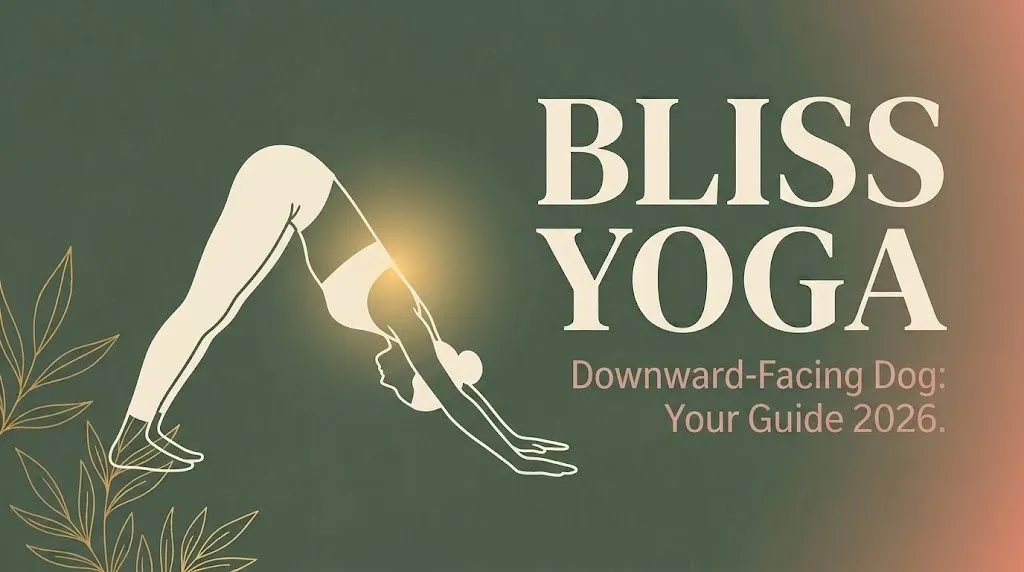
Adho Mukha Svanasana (Downward-Facing Dog): From hands and knees, press the floor away, lift the hips up and back. The full body opens: hamstrings, calves, deltoids, and the entire spine. Modification: keep the knees generously bent if the lower back rounds. Straight legs are never the priority.
Setu Bandha Sarvangasana (Bridge Pose): Lie on your back, knees bent, feet flat on the floor. Press the heels down and lift the hips. Strengthens gluteus maximus and hamstrings; lengthens hip flexors. Modification: place a block under the sacrum for a supported, passive version that requires no muscular effort.
Malasana (Garland Pose): A deep squat with feet wider than hip-distance, heels on the floor if possible, palms pressed together at the chest. Targets hip external rotators and ankle dorsiflexors. Modification: place a rolled blanket or folded mat under the heels if they lift off the floor.
Savasana (Corpse Pose): Lie flat on the back, arms slightly away from the sides, palms facing up. This is conscious rest, not sleep. Every class ends here. Never skip it.
Pose Tip:
- In Downward Dog, bent knees with a long spine beats straight legs with a rounded back
- Use Balasana anytime a pose feels overwhelming during class
- Hold each pose for 3 to 5 breath cycles before releasing, roughly 15 to 30 seconds
Key Takeaway: These six poses appear in virtually every beginner yoga class in Astoria. Knowing them before you walk in removes 80% of the confusion that makes first classes feel overwhelming.
Beginner Yoga Sequence: A Step-by-Step Flow for New Students
A home practice sequence for Queens beginners should run 20 to 30 minutes and use only poses you’ve already learned in class. Practicing unfamiliar poses without teacher guidance creates alignment errors that are harder to unlearn later.
To practice this beginner home sequence:
- Sukhasana (Easy Seat): Sit cross-legged on your mat. Close your eyes. Take five slow nasal breaths to settle before moving.
- Cat-Cow (Marjaryasana-Bitilasana): Come to hands and knees. Inhale, drop the belly, lift the gaze (Cow). Exhale, round the spine upward (Cat). Eight rounds. Warms the lumbar and thoracic spine.
- Adho Mukha Svanasana (Downward-Facing Dog): Hold five breaths. Pedal the heels alternately to warm the calves. Keep knees bent as needed.
- Uttanasana (Standing Forward Fold): Walk feet toward hands, stand, fold the torso over the legs. Bend knees generously. Let the head hang. Hold five breaths.
- Virabhadrasana I (Warrior I): Step the right foot forward, back heel angled 45 degrees. Raise both arms overhead. Hold five breaths. Repeat on the left. Strengthens quadriceps and opens hip flexors.
- Virabhadrasana II (Warrior II): From Warrior I, open hips and arms to the side. Front knee over front ankle. Hold five breaths each side. Builds gluteus medius strength.
- Malasana (Garland Pose): Drop into a squat, feet wider than hips, palms pressed together. Hold ten breaths. Heels on blanket if needed.
- Setu Bandha Sarvangasana (Bridge Pose): Lie on your back. Press feet, lift hips. Five breaths. Lower slowly.
- Supta Matsyendrasana (Supine Spinal Twist): Draw the right knee to the chest, let it cross to the left. Arms wide. Five breaths each side. Releases the piriformis and lower back.
- Savasana (Corpse Pose): Lie flat. Stay a minimum of five minutes.
Modification: Replace Warrior I with a chair-supported version if balance is unstable. Place hands on the back of a sturdy chair rather than raising arms overhead.
Yoga Benefits for Desk Workers and City Commuters
Yoga addresses the specific physical damage that office work and subway commuting inflict on the body better than almost any other single practice available to a Queens resident.
Sitting for eight or more hours compresses the lumbar spine, shortens the hip flexors (particularly the psoas), tightens the thoracic spine into a rounded position, and strains the cervical spine from forward head posture. Commuting adds the mechanical stress of standing on crowded trains with limited ability to shift position. By the time most Astoria office workers reach home, their bodies have spent ten or more hours in compression.
Think of the psoas muscle like a thick rubber band wrapped around the front of the spine. Sitting keeps it contracted all day. After months of this, it stops fully releasing even when you stand. Yoga poses that extend the hip, especially Virabhadrasana I (Warrior I) and Setu Bandha Sarvangasana (Bridge Pose), are the direct antidote.
According to the Harvard T.H. Chan School of Public Health, yoga and mindful movement practices are among the evidence-based strategies for reducing musculoskeletal symptoms associated with prolonged sitting. Regular practice improves both the structural and neurological aspects of postural dysfunction.
Benefits specifically relevant to desk workers and commuters include:
- Reduced cervical spine tension from forward head posture correction
- Lengthened hip flexors and psoas through extension-based poses
- Improved thoracic spine mobility through backbending and twisting sequences
- Better posture awareness that transfers to seated work and standing on trains
- Reduced mental fatigue through parasympathetic nervous system activation after practice
Yoga for Stress and Anxiety: What the Research Says
Yoga reduces stress and anxiety by activating the parasympathetic nervous system, which governs the body’s rest, digestion, and recovery functions, while simultaneously reducing circulating cortisol, the primary stress hormone.
A review of 52 randomized controlled trials published in Complementary Therapies in Medicine found that yoga interventions produced measurable reductions in anxiety symptoms across diverse adult populations, including generalized anxiety, clinical anxiety, and stress-related insomnia. The strongest effects were observed in practices combining physical poses with controlled breathing.
This finding matters practically for Astoria residents. Urban environments produce chronic low-grade stress through noise, crowding, pace, and commute friction. The cumulative cortisol load of NYC daily life is real, and it accumulates in the body over time in ways that affect sleep, digestion, immune function, and mental clarity.
A 2016 study in the Journal of Alternative and Complementary Medicine found that a single session of yoga reduced self-reported state anxiety and tension more effectively than a matched session of quiet reading in healthy adults. The effect was present even in people new to the practice.
Restorative yoga and Yin yoga are the most targeted styles for anxiety reduction because both formats emphasize passive holds that give the nervous system sustained time in a non-threat state. But even an active Hatha or Vinyasa session produces measurable post-class cortisol reduction when it includes a proper Savasana (Corpse Pose) rest period at the end.
Key Takeaway: Yoga’s stress-reduction effect is not vague or anecdotal. It is documented by multiple randomized controlled trials, and it works partly through the breath and partly through the physical practice itself.
Yoga for Back Pain and Tight Hips: Poses That Help
Yoga reduces lower back pain by strengthening the muscles that support the lumbar spine while improving flexibility in the hip flexors and hamstrings, the two muscle groups most commonly implicated in chronic lower back tension among desk workers.
According to the National Center for Complementary and Integrative Health (NCCIH), clinical trials have found yoga to be an effective approach for chronic lower back pain, with benefits comparable to physical therapy interventions and clearly better outcomes than no treatment.
Three yoga poses with strong evidence for back pain relief:
- Setu Bandha Sarvangasana (Bridge Pose): Strengthens gluteus maximus and hamstrings; creates active lengthening of hip flexors. This directly addresses the gluteal weakness and hip flexor tightness pattern that underlies most desk-related back pain.
- Adho Mukha Svanasana (Downward-Facing Dog): Decompresses the lumbar spine by creating traction through the posterior chain. Modification: use bent knees to protect the lower back until hamstring flexibility improves.
- Supta Padangusthasana (Reclining Hand-to-Big-Toe Pose): Targets the hamstrings without loading the spine. Lie on the back, extend one leg toward the ceiling, hold with a strap. The spine stays flat and safe while the hamstring receives a sustained, controlled stretch.
For tight hips specifically, Malasana (Garland Pose) and seated hip external rotation stretches address the piriformis and hip external rotators that become chronically shortened in people who sit for most of the day.
Safety note: People with herniated discs, spinal stenosis, or sciatica should work with a physical therapist or spine-specialist before starting yoga, as certain forward folds and deep twists can aggravate specific spinal conditions. A well-trained yoga teacher can adapt any class once they know the diagnosis.
Yoga for Seniors in Queens: Safe Modifications and Class Options
Yoga is safe and genuinely beneficial for most seniors when practiced with appropriate modifications and taught by an instructor with experience working with older adults. The key is matching the practice to the body, not pushing the body to match the practice.
The American College of Sports Medicine (ACSM) recommends balance and flexibility training for adults over 65 at least two days per week. Yoga addresses both simultaneously, and also builds the functional leg strength that supports fall prevention, one of the most medically prioritized outcomes in senior health.
| Pose | Standard Version | Senior Modification |
|---|---|---|
| Tadasana (Mountain Pose) | Standing on mat | Near a wall for support |
| Vrikshasana (Tree Pose) | One foot on inner thigh | Toe touching floor; hand on wall |
| Virabhadrasana II (Warrior II) | Full lunge depth | Shallower stance; chair nearby |
| Adho Mukha Svanasana (Downward Dog) | Full inversion | Modified at wall, hands at hip height |
| Balasana (Child’s Pose) | Hips to heels | Blanket behind knees; seated forward fold as substitute |
| Savasana (Corpse Pose) | Lying flat on floor | Supported on bolster; chair for knees if needed |
Specific concerns for seniors in Queens yoga studios:
- Bone density: People with osteoporosis should avoid deep spinal flexion (rounded forward folds) and aggressive spinal rotation, as these positions can stress vertebral bodies
- Balance: Any standing balance pose should be practiced near a wall or with a chair until stability improves
- Wrist loading: Poses requiring full weight on the wrists can be modified to forearms or fists
Chair yoga classes, increasingly available across Queens, eliminate floor work entirely and adapt every pose to a seated or standing-beside-chair position.
Yoga Props and Equipment for Beginners in Astoria
A beginner starting yoga in Astoria needs four items to practice safely and comfortably. Most Astoria studios provide props during class, but owning your own makes home practice possible and removes the hygiene concern of shared equipment.
The four beginner essentials:
- Yoga mat: Choose 4mm to 6mm thickness with a non-slip surface. Beginners benefit from slightly more cushioning, particularly for the knees in kneeling poses and the wrists in weight-bearing positions. In a New York apartment, a 6mm mat on hardwood floors prevents bruising.
- Two yoga blocks: Dense foam or cork. Blocks are not a sign of limited ability. They bring the floor closer to your hands in standing forward folds, support the hips in seated poses, and make alignment achievable when flexibility is still developing.
- Yoga strap: A six-foot cotton or nylon strap extends your reach in poses like Supta Padangusthasana (Reclining Hand-to-Big-Toe Pose). It prevents gripping the leg and rounding the spine, which is exactly what you want to avoid.
- Yoga blanket: A firm, tightly woven blanket supports seated poses, elevates the hips above the knees in cross-legged positions, and cushions kneeling poses. For New York winters, it also makes Savasana significantly more comfortable.
| Prop | Primary Use | Who Needs It Most |
|---|---|---|
| Mat (4 to 6mm) | Non-slip surface, joint cushioning | Everyone, especially on NYC hardwood floors |
| Blocks (2) | Alignment support, floor accessibility | Beginners, people with tight hamstrings |
| Strap | Extended reach, spine protection | Beginners, seniors, tight hamstrings or shoulders |
| Blanket | Cushion, elevation, Savasana warmth | Seniors, people with knee or hip sensitivity |
| Bolster | Full-body support in Restorative poses | Anxiety management, Restorative practice |
A bolster is helpful but not immediately necessary. Introduce it when you begin Restorative or Yin yoga, where it becomes close to indispensable.
Key Takeaway: Two blocks and a strap cost less than one yoga class and make every beginner session safer and more effective. They are not optional accessories; they are functional alignment tools.
How Often Should You Take Yoga Classes Each Week
Three yoga sessions per week is the standard recommendation for beginners who want to build measurable strength, flexibility, and stress-management capacity within 60 to 90 days of starting.
The American College of Sports Medicine recommends flexibility and balance training at least two to three days per week for adults. Yoga meets both criteria simultaneously while also addressing breath control and mental focus. Two sessions per week maintain your current level. One session keeps yoga in your life but produces slower physical adaptation.
For Astoria residents managing full commutes and packed schedules, three sessions of 30 to 60 minutes each is realistic. These don’t all need to be studio classes. One or two studio sessions combined with one or two 20-minute home practices produces equivalent progress to three studio classes, particularly in the first 12 weeks.
A practical Queens schedule for beginners:
- Tuesday: 60-minute Hatha class at local studio before or after commute
- Thursday: 20-minute home practice using a basic sequence
- Saturday or Sunday: 60-minute Yin or Restorative class for recovery and deeper flexibility work
Recovery between active sessions matters. The ACSM recommends 48 hours of recovery between vigorous exercise sessions for untrained individuals. Alternating an active Vinyasa class with a passive Yin session respects this principle while keeping the practice consistent across the week.
Yoga Breathing Techniques (Pranayama) for Urban Stress Relief
Pranayama refers to the conscious regulation of breath in yoga practice, and it is not an optional spiritual add-on. Breath work is the mechanism through which yoga most directly changes the state of the nervous system, which is why it matters especially for Queens residents managing high-stimulus urban environments.
Three pranayama techniques accessible to complete beginners:
Diaphragmatic breathing (belly breathing): Place one hand on the chest, one on the belly. Breathe so only the belly hand rises. This activates the diaphragm fully, increases tidal volume, and engages the parasympathetic nervous system. Practice three to five minutes before any yoga session, or on the subway home, or before sleep.
Ujjayi pranayama (ocean breath): Breathe slowly and deeply through the nose with a gentle throat constriction that produces a soft oceanic sound. Used during active yoga classes to regulate pace and maintain internal focus. A four-count inhale matched to a four-count exhale is a practical starting ratio.
Nadi Shodhana (alternate nostril breathing): Close the right nostril with the right thumb, inhale through the left for four counts. Close both briefly. Open the right nostril, exhale for four counts. Inhale through the right. Switch. Repeat for five to ten cycles.
A 2018 review published in the International Journal of Yoga found that alternate nostril breathing produced measurable reductions in resting heart rate and self-reported perceived stress in healthy adults over a six-week practice period.
Safety note: If any pranayama practice causes dizziness or shortness of breath, return to normal breathing immediately. People with respiratory conditions including asthma or COPD should introduce breath retention practices only with guidance from both their healthcare provider and a qualified yoga teacher.
Building a Home Yoga Practice in a Small NYC Apartment
A home yoga practice in a New York apartment is entirely feasible if you accept one practical constraint: you need a six-by-four-foot clear floor space, which most Astoria apartments can produce with minimal furniture rearrangement.
The home practice reinforces what you learn in studio classes, prevents muscle tightening between sessions, and makes yoga accessible on days when the commute, the rain, or the schedule makes getting to a studio genuinely impossible.
Practical steps for starting a home practice in a Queens apartment:
- Identify your space. A cleared living room corner, a bedroom with the bed pushed in, or even a hallway works. The mat is six feet long. That is the only requirement.
- Choose a consistent time. Morning before coffee works for many people because it requires no schedule negotiation. Evening works for people who need the wind-down effect more than the wake-up benefit.
- Start with 15 minutes. Use only poses you have already learned in class. Do not attempt unfamiliar poses from online videos without foundational instruction first.
- Use a timer. Set it for your session length and place it out of eyeline. Checking a phone clock breaks the mental continuity of the practice.
- End every session with at least three minutes of Savasana (Corpse Pose). On a wooden floor, place a folded blanket under the head and a rolled blanket under the knees. The nervous system integration that happens during this rest period is part of the practice, not extra.
- Add five minutes per week until you reach 30 to 35 minutes per home session.
Storage tip for small apartments: a yoga mat rolled and standing upright in a corner takes the same floor space as an umbrella. Blocks stack. A strap coils. No dedicated room is necessary.
Common Beginner Yoga Mistakes and How Queens Teachers Fix Them
The most common beginner yoga mistakes are not about flexibility or strength. They are about breath, approach, and the assumption that difficulty means you’re doing something wrong.
Holding the breath during hard poses: This is universal among beginners. When Utkatasana (Chair Pose) gets intense, most people grip and hold. Breath holding activates the sympathetic nervous system and increases muscle tension. The correction every Queens teacher gives: exhale into the difficulty. The exhale releases muscular gripping and reestablishes nervous system calm.
Forcing range of motion with momentum: Swinging into a forward fold rather than hinging slowly does not develop flexibility. It bypasses the neuromuscular feedback that produces safe range of motion over time. Slow deliberate movement into a stretch position, held for three to five breaths, produces measurably better outcomes than bouncing or rushing.
Skipping Savasana: This is the most commonly shortened element of yoga class. Research published in Complementary Therapies in Medicine has documented that the post-practice rest period is when the parasympathetic nervous system consolidates the calming effects of the session. Leaving early removes a meaningful portion of the stress-reduction benefit.
Using a mat that’s too thin: In a New York apartment with hardwood or tile floors, a 2mm travel mat means bruised knees within ten minutes. Beginners need at least 4mm. People with sensitive joints benefit from 6mm.
Additional mistakes to avoid:
- Starting with an advanced or hot class because it sounds more effective
- Comparing pose depth to more experienced students in the room
- Practicing on a full stomach within 90 minutes of a meal
- Ignoring persistent wrist or shoulder discomfort rather than asking for a modification
Frequently Asked Questions About Yoga Room Astoria
Is the Yoga Room in Astoria good for complete beginners?
Yes, yoga rooms in Astoria consistently offer beginner-friendly classes that provide modifications and props for students at every starting point.
Most Astoria studios label their classes by level, with “beginner,” “all-levels,” or “foundations” classes specifically designed for people who have never practiced yoga before.
Arriving 10 minutes early and telling the teacher it’s your first class ensures you get the most relevant modifications throughout the session.
What type of yoga class should I take first in Queens?
A Hatha yoga or gentle yoga class is the best first choice for most beginners in Queens, because the slower pace gives you time to learn poses without being overwhelmed by transitions.
These classes teach foundational alignment and breathing patterns that make every other yoga style more accessible later.
After four to six weeks of foundational classes, most students feel ready to try Vinyasa or a more dynamic format without feeling lost.
How much do yoga classes in Astoria Queens typically cost?
Drop-in yoga classes in Astoria and Queens generally range from $18 to $30 per session.
Monthly unlimited memberships typically range from $99 to $180 depending on the studio and class format.
Most Astoria studios offer introductory packages, often two weeks of unlimited classes for $30 to $40, which is the most cost-effective way to try a studio before committing.
Can yoga help with back pain from sitting at a desk all day?
Yes, research supports yoga as an effective approach for reducing chronic lower back pain caused by prolonged sitting and postural dysfunction.
According to the National Center for Complementary and Integrative Health (NCCIH), yoga has been found in clinical trials to produce back pain outcomes comparable to physical therapy, with benefits maintained at follow-up assessments.
Poses that strengthen the glutes, lengthen the hip flexors, and decompress the lumbar spine are particularly effective for desk-related back tension.
What do I need to bring to my first yoga class in Astoria?
Bring comfortable, stretchy clothing, a water bottle, and bare feet: shoes and socks are removed before entering any yoga studio.
Most Astoria yoga rooms provide mats and props for new students, but call ahead to confirm because some smaller studios have limited rental inventory.
Arrive 10 to 15 minutes early, introduce yourself to the teacher, and mention any specific injuries or physical limitations before class begins.
Start Small, Stay Consistent, Let the Practice Build
The most practical thing you can take from this guide is also the simplest. Find one class, at one studio, that fits your schedule this week. Go once. Tell the teacher what your body is dealing with.
Three sessions per week is the goal eventually. But one session, done this week, with a teacher who knows your name and your shoulder situation, is worth more than a six-month plan you haven’t started yet.
Bring your blocks. Stay for Savasana. Come back next week.