Universal Power Yoga: Your 2026 Complete Practice Guide
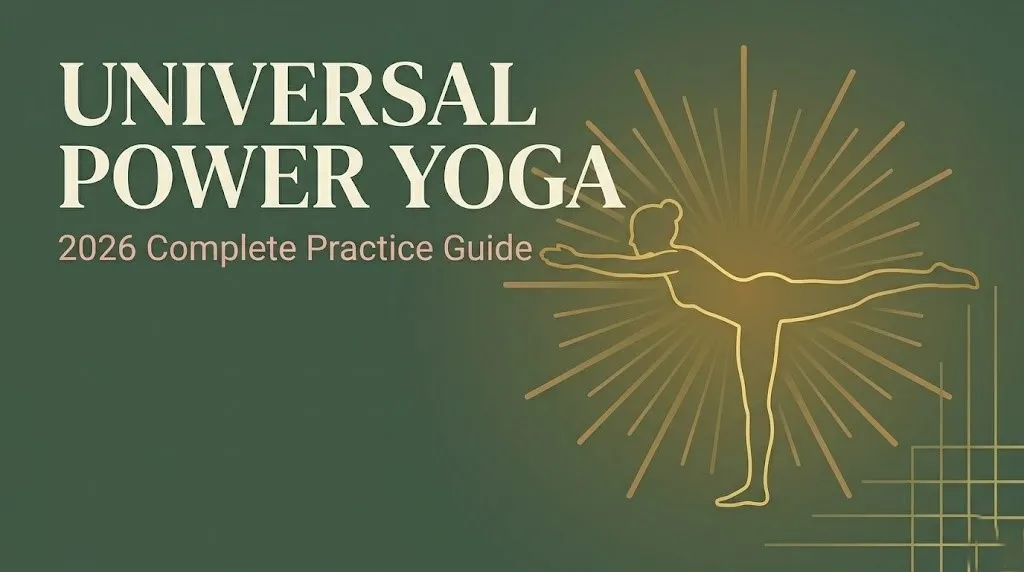
Universal power yoga is a Baptiste-inspired, physically demanding yoga style that builds strength, cardiovascular endurance, and mental focus through continuous breath-linked movement sequences, practiced in a heated room. Whether you are considering your first class at a UPY studio or building a home power yoga practice from scratch, this guide gives you an honest, research-grounded picture of what the practice involves and whether it fits your body and goals.
Power yoga’s popularity has grown steadily, and for good reason. According to the National Center for Complementary and Integrative Health (NCCIH), yoga practiced at higher intensities produces measurable improvements in cardiovascular function, muscular endurance, and stress hormone regulation, outcomes that less demanding styles take longer to produce. Those benefits come with real physical demands, and understanding both sides is what separates a sustainable practice from an avoidable injury.
This guide covers the methodology behind universal power yoga, how it compares to other styles, what your first class will actually feel like, which poses form the core of the practice, who benefits most, who should proceed carefully, and how to build a foundation before stepping into a full UPY class. Local practitioners in Westwood and Norwood, MA will also find specific studio guidance here.
Universal Power Yoga: What It Is and Why It Matters
Universal power yoga refers to a Baptiste-inspired power yoga practice that prioritizes physical challenge, breath awareness, and mental presence within a structured, heated class format. The “universal” in the name signals that the practice is designed to be accessible across a range of fitness levels, body types, and experience backgrounds, not reserved for elite athletes or advanced yogis.
Universal Power Yoga (UPY) as a studio brand operates multiple locations in the greater Boston area, including studios in Westwood and Norwood, Massachusetts. The practice draws from the Baptiste Power Yoga methodology developed by Baron Baptiste, which itself synthesizes elements of Ashtanga yoga, Iyengar yoga, and Bikram yoga into a flowing, heated, sequences-based system. The “power” element comes from the muscular demand of moving continuously through standing poses, balances, and arm-supported transitions.
What sets UPY apart from generic “power yoga” classes at mainstream gyms is the depth of sequencing philosophy. A UPY class is not random flow. It follows an intentional warm-up arc, a peak pose progression, a strength-building middle sequence, and a deliberate cool-down and floor series. Each section of the class serves a different physiological purpose.
Key Characteristics of Universal Power Yoga:
- Heated room: Typically 85 to 95 degrees Fahrenheit, which increases tissue pliability and cardiovascular demand
- Continuous movement: Breath-linked transitions reduce rest intervals between poses
- Strength focus: Upper body, core, and lower body poses are weighted throughout the sequence
- Baptiste methodology: Five pillars including presence, heat, breath, gaze (drishti), and physical posture
- All-levels framing: Modifications are offered, but the base pace is more demanding than standard Hatha
What Is Power Yoga and How Does It Work?
Power yoga is a physically vigorous yoga style that links poses continuously through breath-directed movement, creating cardiovascular and muscular demand that standard Hatha or Yin yoga does not produce. It works by sustaining muscular engagement across long sequences of standing, balancing, and strength poses without significant rest intervals between them.
The physiological mechanism is straightforward. When you hold Virabhadrasana I (Warrior I) for five breath cycles and then flow immediately into Virabhadrasana II (Warrior II) and then into a balance or lunge, your quadriceps, glutes, hip flexors, and core stabilizers maintain continuous tension. Over a 60 to 75 minute class, this sustained muscular demand produces both local muscular fatigue and a whole-body aerobic response.
Think of power yoga like interval training for the whole body with a breath-based timing system instead of a clock. You are never completely resting between efforts, and the breath becomes the pacing mechanism that prevents the session from tipping into either pure relaxation or pure cardiovascular exertion. That balance between effort and awareness is what makes power yoga distinct from gym-based circuit training even when the muscular demands are comparable.
The heat amplifies every aspect of the practice. Warmer connective tissue allows deeper access to poses. Increased cardiovascular demand from the thermal environment adds aerobic stimulus on top of the muscular work. And the concentration required to breathe steadily in a heated, physically demanding environment is a mental training component that carries real-world benefits.
How Power Yoga Works Physiologically:
| System | What Happens During Power Yoga | Time Frame |
|---|---|---|
| Cardiovascular | Heart rate elevates to 55 to 80% of max | Within first 10 minutes |
| Muscular | Sustained isometric and isotonic contractions | Throughout class |
| Nervous system | Sympathetic activation during effort; parasympathetic during Savasana | Cyclical through class |
| Connective tissue | Increased pliability from heat and movement | Session by session |
| Respiratory | Ujjayi breath regulates effort and activates parasympathetic response | Throughout class |
UPY Yoga: The Baptiste-Inspired Approach
UPY yoga follows the Baptiste Power Yoga framework, which organizes every class around five core elements: presence (focused attention on the current moment), heat (an externally heated room plus the internal heat generated by continuous movement), breath (Ujjayi pranayama as the continuous throughline), gaze (drishti) (focused eye points that support balance and concentration), and posture (precise alignment within dynamic movement).
The Baptiste methodology differs from general Vinyasa yoga in one important way: it is intentionally systematic. Every class in the Baptiste tradition follows a recognizable sequence arc, even when individual pose choices vary. Warm-up poses build body temperature and joint mobility. Standing sequences build strength and balance. Floor sequences address hip opening, backbending, twisting, and core work. Savasana closes the practice with a deliberate nervous system reset.
This systematic approach is why many practitioners describe UPY classes as feeling different from generic power yoga classes at large fitness studios. The sequencing logic has a purpose at each stage, and experienced UPY teachers communicate that purpose through cueing rather than just calling pose names. You understand why you are doing each section, which makes the challenge of a 75-minute class feel purposeful rather than arbitrary.
The Yoga Alliance requires minimum teacher training standards for registered instructors, but Baptiste-trained teachers typically complete additional methodology-specific training on top of their 200 or 500-hour RYT certification. This additional training matters for the quality of cueing and the safety of sequencing you’ll receive in a well-run UPY class.
UPY Class Structure:
| Class Phase | Duration | What Happens | Purpose |
|---|---|---|---|
| Opening and warm-up | 10 to 15 minutes | Centering breath, Sun Salutations A and B | Build heat, establish breath, warm joints |
| Standing sequence | 20 to 25 minutes | Warriors, balances, lunges | Strength, balance, cardiovascular demand |
| Peak pose progression | 5 to 10 minutes | Inversion, arm balance, or deep backbend | Skill and intensity culmination |
| Floor sequence | 15 to 20 minutes | Hip openers, twists, core, backbends | Release, mobility, counter-balance |
| Savasana | 5 to 10 minutes | Complete stillness | Nervous system integration and reset |
Key Takeaway: Universal power yoga is not random flow. Its Baptiste-inspired structure follows a deliberate physiological arc from warm-up through peak intensity to cool-down, and that sequencing logic is what produces consistent results across diverse bodies and fitness levels.
Power Yoga vs Vinyasa Yoga: What Is the Real Difference?
Power yoga and Vinyasa yoga share the same foundational DNA: both link breath to movement and flow continuously between poses. The differences lie in intensity, structure, and intent, and those differences matter when choosing which practice fits your body and goals.
Vinyasa yoga is a broad category that includes everything from gentle flow classes to vigorous athletic sequences. The defining feature of Vinyasa is breath-synchronized movement: each inhale and exhale corresponds to a specific transition or pose. Temperature, pace, and intensity vary widely depending on the teacher and studio. A “gentle Vinyasa” class and a “power Vinyasa” class can feel completely different despite sharing the same style name.
Power yoga is a subcategory of Vinyasa that specifies higher intensity, stronger muscular engagement, and typically a heated environment. It draws more directly from Ashtanga yoga‘s structure and emphasizes physical conditioning alongside traditional yoga elements. The pace in a power yoga class is consistently faster than a standard Vinyasa class, with fewer extended holds and more continuous movement between challenging poses.
Power Yoga vs Vinyasa: Side-by-Side Comparison:
| Factor | Power Yoga | Standard Vinyasa |
|---|---|---|
| Pace | Fast, continuous | Moderate to fast, variable |
| Room temperature | Usually heated (85 to 95°F) | Often unheated or lightly warmed |
| Physical intensity | High | Low to high (class-dependent) |
| Structure | Systematic, arc-based | Variable by teacher |
| Cardiovascular demand | Moderate to vigorous | Light to moderate |
| Beginner accessibility | Lower without preparation | Higher |
| Muscular strength focus | Primary | Secondary to flow |
| Best for | Fitness, strength, stress resilience | Breath awareness, flexibility, variety |
If you are choosing between the two as a beginner, a gentle or moderate Vinyasa class is a more forgiving starting point. Once you have a foundation of basic pose shapes, breathing mechanics, and flow transitions, power yoga becomes significantly more manageable and more rewarding.
What to Expect in Your First Power Yoga Class
Your first power yoga class will be harder than you expect and more interesting than you fear. That is an honest summary from every experienced power yoga teacher I have spoken with, and it matches the research on perceived exertion in heated yoga formats.
The first 15 minutes will feel manageable. Surya Namaskar A (Sun Salutation A) and Surya Namaskar B (Sun Salutation B) form the standard warm-up in most power yoga classes, and these sequences, while continuous, are familiar enough that most people with any yoga background can follow them. The room temperature and the pace together will be the novel element, not the individual poses.
By the standing sequence, your heart rate will be elevated and you will likely be sweating. This is expected and appropriate. The standing sequence typically includes Virabhadrasana I (Warrior I), Virabhadrasana II (Warrior II), Utkatasana (Chair Pose), and various lunges and balances, held for five breath cycles each and connected by flowing transitions. The sustained muscular demand in this section is where most beginners first feel challenged.
What to Expect Timeline for a 75-Minute UPY Class:
| Minute | What Is Happening | Your Experience |
|---|---|---|
| 0 to 10 | Centering, opening breath, start of warm-up | Manageable; focus on breath |
| 10 to 25 | Sun Salutations A and B, building heat | Increasingly warm; heart rate rising |
| 25 to 45 | Full standing sequence, Warriors, balances | Challenging; legs may fatigue |
| 45 to 55 | Peak pose (arm balance, inversion, or backbend) | Highest demand; modification is always appropriate |
| 55 to 70 | Floor sequence: hips, twists, core, backbends | Relief from standing; different muscular demands |
| 70 to 75 | Savasana | Pronounced relaxation response; do not skip this |
Modification: If you feel dizzy, lose your breath, or cannot maintain form in any pose, rest in Balasana (Child’s Pose) immediately. This is not optional. Child’s Pose is an active and appropriate choice in every power yoga class, including at UPY studios where teachers expect and welcome it.
Power Yoga Benefits for Body and Mind
Power yoga produces measurable benefits across multiple body systems when practiced consistently, and the evidence base is stronger than most casual wellness articles suggest. The combination of physical demand, heat, and deliberate breathwork creates outcomes that neither standard strength training nor passive yoga styles produce independently.
According to a review published in the Journal of Alternative and Complementary Medicine, yoga practices involving sustained physical effort and breath regulation produced measurable improvements in muscular strength, cardiorespiratory fitness, and psychological stress markers across multiple study populations. Power yoga’s intensity profile places it squarely within the range of practice that produces these outcomes.
Body composition changes are real and documented when power yoga replaces more passive forms of exercise. A 75-minute power yoga session elevates the heart rate into the 55 to 80 percent maximum heart rate range, which the American College of Sports Medicine (ACSM) classifies as moderate to vigorous aerobic intensity. Over weeks and months of consistent practice, this level of aerobic stimulus contributes to improved cardiovascular efficiency and healthy weight management.
Documented Power Yoga Benefits:
| Benefit | Mechanism | Evidence Level |
|---|---|---|
| Muscular strength and endurance | Sustained isometric and dynamic muscle engagement | Moderate to strong |
| Cardiovascular conditioning | Heart rate elevation in aerobic range | Moderate |
| Flexibility and range of motion | Heat plus active stretching | Strong |
| Stress reduction | Breath regulation, cortisol reduction, parasympathetic activation | Strong |
| Improved balance and proprioception | Standing balance poses and single-leg work | Moderate |
| Body composition support | Caloric expenditure plus muscle development | Moderate |
| Concentration and focus | Drishti practice and sustained breath attention | Preliminary to moderate |
Power Yoga and Cardiovascular Health
Power yoga provides genuine cardiovascular training stimulus that most standard yoga styles do not, and this is one of its most clinically meaningful distinctions for adults who want both the flexibility and mindfulness benefits of yoga and the aerobic conditioning benefits of more vigorous exercise.
The American College of Sports Medicine (ACSM) recommends that adults accumulate at least 150 minutes per week of moderate-intensity aerobic activity or 75 minutes of vigorous-intensity activity for cardiovascular health maintenance. A 75-minute power yoga session at full intensity qualifies as moderate to vigorous aerobic activity for most healthy adults, making two sessions per week a meaningful contribution to those guidelines.
The mechanism is heat plus sustained movement. The combination elevates cardiac output in a way that unheated, slow-paced yoga cannot replicate. Heart rate in a full power yoga class reaches levels comparable to brisk walking or light jogging for most practitioners, according to research published in the Journal of Strength and Conditioning Research on heated yoga formats.
There is an important caution here: the cardiovascular demand of power yoga is real enough that people with pre-existing heart conditions, uncontrolled hypertension, or recent cardiac events should discuss the specific demands of this practice with their cardiologist before attending. The combination of heat and vigorous effort requires a cardiovascular system that can adapt to both simultaneously.
Cardiovascular Training Comparison:
| Activity | Average Heart Rate (% of Max) | ACSM Classification | Weekly Dose for Heart Health |
|---|---|---|---|
| Power yoga (full class) | 55 to 80% | Moderate to vigorous | 2 sessions (150 min) |
| Standard Hatha yoga | 35 to 50% | Light to moderate | 3 to 5 sessions |
| Brisk walking | 50 to 70% | Moderate | 5 days, 30 min each |
| Light jogging | 60 to 75% | Moderate to vigorous | 3 days, 25 min each |
| Yin yoga | 30 to 40% | Light | Not primarily cardiovascular |
Key Takeaway: Power yoga qualifies as moderate to vigorous aerobic exercise by ACSM standards, which means two full power yoga sessions per week can meaningfully contribute to cardiovascular health goals alongside its flexibility and strength benefits.
Power Yoga for Strength and Core Stability
Power yoga builds functional strength through sustained bodyweight loading rather than isolated muscle training, and the strength it develops transfers directly to daily movement patterns in ways that machine-based gym training often does not.
The key strength mechanism in power yoga is time under tension. Holding Utkatasana (Chair Pose) for five breath cycles while maintaining a tall spine and engaged core places the quadriceps, glutes, and erector spinae under sustained load for 20 to 30 seconds per hold. Repeat this across multiple rounds of a standing sequence, and you have accumulated several minutes of quadriceps and glute loading within a single class.
Chaturanga Dandasana (Four-Limbed Staff Pose) is the upper body strength cornerstone of every power yoga class. When performed correctly, it engages the triceps, pectorals, serratus anterior, and core stabilizers simultaneously in an eccentric lowering pattern. Most practitioners who lack upper body strength skip or collapse through Chaturanga, which is both a missed training opportunity and a common injury source. Practicing the lowering phase slowly, over a three to four count, builds strength faster than rushing through it.
Navasana (Boat Pose) targets the hip flexors and rectus abdominis in a way that most core exercises miss. The challenge of holding the legs and torso off the ground while maintaining spinal extension rather than rounding the lower back requires both hip flexor strength and genuine spinal stabilization, not just abdominal bracing.
Core Strength Progression in Power Yoga:
- Begin with Navasana (Boat Pose) with bent knees and hands supporting the backs of the thighs
- Progress to straight-arm Navasana with bent knees and shins parallel to the floor
- Progress to full straight-leg Navasana with arms extended parallel to the floor
- Add Navasana to Ardha Navasana (Half Boat Pose) repetitions for dynamic core training
- Integrate Navasana into full Vinyasa transitions as strength allows
Modification for Beginners: Lower from Plank to the floor with knees down rather than performing full Chaturanga Dandasana until you can hold a forearm plank for 45 seconds with stable hips. This prerequisite strength level makes Chaturanga safe and productive rather than a form collapse.
Power Yoga for Flexibility
Power yoga improves flexibility through active stretching: you are lengthening muscles while simultaneously engaging others, which produces different neurological and connective tissue adaptations than passive stretching in Yin or Restorative yoga.
The distinction matters because active flexibility, the range of motion you can access under your own muscular control, is more functionally useful than passive flexibility, which is the range you can reach when an external force (gravity, a strap, or a teacher’s hands) assists you. Power yoga builds active flexibility throughout its standing sequence, where poses like Trikonasana (Triangle Pose) and Parivrtta Trikonasana (Revolved Triangle Pose) require the hamstrings, adductors, obliques, and quadratus lumborum to both lengthen and stabilize simultaneously.
Research published in the International Journal of Yoga found that yoga practitioners who engaged in active yoga styles showed greater improvements in functional flexibility measures, specifically standing reach and dynamic hip range of motion, compared to those practicing primarily passive styles. The heat in a power yoga class adds to this by increasing connective tissue pliability before active stretching begins.
Active Flexibility Focus Areas in Power Yoga:
| Body Area | Key Poses | Muscles Targeted |
|---|---|---|
| Hamstrings | Triangle Pose, Pyramid Pose, Standing Forward Fold | Biceps femoris, semitendinosus |
| Hip flexors | Warrior I, Low Lunge, Crescent Lunge | Iliopsoas, rectus femoris |
| Thoracic spine | Camel Pose, Wheel Pose, Cobra | Thoracic extensors, pectorals |
| Hips and glutes | Pigeon Pose, Figure Four, Lizard Pose | Piriformis, gluteus medius |
| Shoulders | Eagle Pose, Cow Face Arms, Reverse Prayer | Posterior deltoid, rotator cuff |
Modification: For practitioners with very tight hamstrings, use a block under the hand in all standing lateral poses and keep the front knee soft in standing forward folds. Forcing hamstring length in a heated power class is a common injury path for people with chronically tight posterior chains.
Key Takeaway: Power yoga builds active flexibility that transfers to real-world movement, not just the passive range you achieve in a Yin class. The combination of heat and muscular engagement produces flexibility gains that persist outside the studio.
Power Yoga and Mental Health
Power yoga produces measurable mental health benefits through two distinct pathways: the physiological effects of sustained physical effort followed by deliberate rest, and the psychological training of sustaining focused attention under discomfort.
According to a 2021 review published in Complementary Therapies in Medicine, yoga practices that combined vigorous physical movement with controlled breathing produced statistically meaningful reductions in anxiety and depression symptom scores across multiple adult populations. The review found that the breath regulation component was independently predictive of mental health outcomes, not just the physical exertion. This finding matters for power yoga specifically because Ujjayi breath (the audible nasal breath used throughout the practice) is a continuous mental health intervention woven into every moment of the class.
The psychological challenge of power yoga is worth addressing directly. Staying present, breathing steadily, and making skillful decisions about when to hold a pose and when to modify under physical stress is a genuine cognitive and emotional training practice. It teaches the nervous system to remain regulated under pressure in a way that purely passive relaxation practices do not. Many practitioners describe this as the most practically useful aspect of the practice for managing stress outside the studio.
Savasana (Corpse Pose) at the end of a power yoga class produces a pronounced parasympathetic nervous system response because the contrast between sustained effort and complete stillness is so marked. This response includes measurable reductions in heart rate, blood pressure, and cortisol levels in the minutes following vigorous practice.
Mental Health Benefits of Power Yoga:
- Cortisol reduction: Physical effort followed by Savasana rest produces measurable cortisol normalization
- Anxiety symptom reduction: Breath regulation during practice trains parasympathetic response
- Improved mood: Aerobic intensity stimulates endorphin release during and after class
- Enhanced focus and concentration: Drishti (gaze point) practice and breath attention build sustained concentration
- Stress resilience: Maintaining composure under physical challenge trains the same neural pathways used in daily stress management
How to Build Up to Power Yoga as a Beginner
Building up to power yoga requires developing three foundational capacities before your first full class: basic pose literacy, upper body strength sufficient for repeated Chaturanga transitions, and cardiovascular base fitness adequate for sustained moderate effort.
Most beginners underestimate the upper body demand. A standard 75-minute power yoga class may include 20 to 30 Chaturanga Dandasana repetitions across multiple Sun Salutations and flow transitions. Attempting these without adequate tricep, shoulder, and core strength leads to either form collapse (shoulder injury risk) or exhaustion within the first 20 minutes. Building a specific prep practice is genuinely useful before your first UPY class.
The prep phase should run for 4 to 6 weeks if you are starting from no yoga background. Two to three sessions per week of a standard Hatha or beginner Vinyasa class builds pose recognition, breathing habits, and joint mobility. Add three to four sets of forearm planks held for 30 to 45 seconds per session to build the core and shoulder stability that Chaturanga requires.
6-Week Power Yoga Beginner Build-Up Plan:
| Week | Practice | Specific Focus |
|---|---|---|
| 1 to 2 | Beginner Hatha, 2x per week | Pose names, basic alignment, Ujjayi breath |
| 3 to 4 | Beginner Vinyasa, 2x per week | Flow transitions, Sun Salutations A and B |
| 4 to 5 | Add forearm plank practice (3x per week) | Upper body and core strength for Chaturanga |
| 5 to 6 | Attend one moderate power yoga or heated Vinyasa class | Test pace and heat tolerance |
| Week 7 | First full UPY or power yoga class | Modified where needed; rest in Child’s Pose freely |
Modification: There is no shame in taking a beginner Vinyasa class at a UPY studio before joining a full power yoga session. Many UPY studios offer introductory classes and new student packages specifically designed to bridge this gap.
Power Yoga Poses and Sequences
The core poses in a power yoga sequence are drawn primarily from Ashtanga yoga‘s primary and secondary series, filtered through the Baptiste methodology’s emphasis on accessibility and presence rather than strict sequential adherence.
Surya Namaskar A (Sun Salutation A) is the foundation of every power yoga warm-up. It links Tadasana (Mountain Pose), a standing forward fold (Uttanasana), a half-lift (Ardha Uttanasana), a plank, Chaturanga Dandasana, Urdhva Mukha Svanasana (Upward-Facing Dog), and Adho Mukha Svanasana (Downward-Facing Dog) into a continuous breath-linked cycle. One full round takes approximately 8 to 10 breath cycles.
Surya Namaskar B (Sun Salutation B) adds Utkatasana (Chair Pose) and Virabhadrasana I (Warrior I) into the sequence, increasing the lower body muscular demand and the duration of each round. Sun Salutation B is where most beginners first notice the cardiovascular component of power yoga.
A Core Power Yoga Sequence to Practice at Home:
- Tadasana (Mountain Pose): Stand tall, feet hip-width apart, arms at sides; take 5 slow breaths to center
- Sun Salutation A: Complete 3 full rounds at a slow breath pace before increasing speed
- Virabhadrasana I (Warrior I): Right foot forward, back foot angled 45 degrees, arms overhead; hold 5 breaths; switch sides
- Virabhadrasana II (Warrior II): From Warrior I, open the hips to the left, extend arms; hold 5 breaths; switch sides
- Utkatasana (Chair Pose): Feet together, sit back deeply, arms overhead; hold 5 to 8 breaths
- Navasana (Boat Pose): Seated, legs and torso lifted to form a V; hold 5 breaths; lower; repeat 3 times
- Setu Bandhasana (Bridge Pose): Lie on back, feet flat, lift hips; hold 5 breaths; lower slowly
- Supta Matsyendrasana (Supine Spinal Twist): Lie on back, draw right knee across body; hold 8 breaths each side
- Savasana (Corpse Pose): Complete stillness for minimum 5 minutes
Modification: Replace Chaturanga Dandasana with a slow lowering from Plank to the floor on bent knees until upper body strength allows the full expression.
Power Yoga Safety and Who Should Be Cautious
Power yoga is not appropriate for every body in every condition, and stating this clearly is more useful than the “all levels welcome” marketing language that accompanies most studio promotions. The physical demands are real, and the heat adds physiological complexity that changes the risk profile compared to unheated yoga.
People who should approach power yoga with specific caution include:
- Those with active or recent lower back injuries: The repeated Chaturanga-to-Upward Dog transitions load the lumbar spine in extension, which can aggravate herniated discs or spinal stenosis. Anyone with a diagnosed lumbar disc condition should discuss the pose demands with a spine-aware physical therapist before attending.
- Those with shoulder injuries or rotator cuff problems: Chaturanga Dandasana is a leading yoga injury source for the shoulder when performed without adequate strength. Skipping or modifying this pose during recovery is always appropriate and should be explicitly communicated to the teacher before class.
- Those with uncontrolled hypertension or cardiovascular conditions: The combination of heat and vigorous effort raises cardiovascular demand meaningfully. Medical clearance from the treating cardiologist is a practical step, not a formality, for anyone with Stage 2 hypertension or a cardiac history.
- Pregnant practitioners: Power yoga is generally contraindicated after the first trimester due to the heat, the supine poses, the inversion elements, and the intensity level. Prenatal yoga in a room-temperature environment is the appropriate alternative.
- People with multiple sclerosis: Heat worsens neurological symptoms in MS (Uhthoff’s phenomenon). Power yoga’s heated environment is a direct contraindication for most MS practitioners.
- First-timers in any heated environment: Heat naivety creates syncope (fainting) risk. Anyone new to heated yoga should start with one beginner heated class before attempting a full power yoga session.
Absolute Contraindications for Power Yoga:
| Condition | Why Power Yoga Is Contraindicated | Alternative |
|---|---|---|
| Pregnancy (after first trimester) | Heat, inversions, supine poses, intensity | Prenatal yoga (unheated) |
| Multiple sclerosis | Heat worsens neurological symptoms | Gentle Hatha, Restorative |
| Active fever or infection | Elevated core temperature adds to existing thermal stress | Rest; resume after recovery |
| Recent abdominal surgery | Core-intensive poses stress the surgical site | Restorative yoga post-clearance |
| Severe osteoporosis | Loaded spinal flexion and extension create fracture risk | Chair yoga, Iyengar with props |
Power Yoga for Seniors and Special Populations
Power yoga is accessible to older adults and special populations when appropriately modified, but the standard UPY class format requires more adaptation for this group than for younger, fully mobile practitioners. The key is matching the intensity and heat to the individual’s cardiovascular fitness and joint health, not applying a one-size approach.
Older adults who want the strength, balance, and cardiovascular benefits of power yoga without the full heat and pace demands of a standard UPY class should look for “gentle power yoga” or “warm yoga” options that many studios now offer. These formats reduce the room temperature to 80 to 85 degrees Fahrenheit, pace the transitions more slowly, and provide more detailed modification guidance throughout the class.
The balance component of power yoga is particularly valuable for adults over 65. Virabhadrasana III (Warrior III) and Vrikshasana (Tree Pose) both require single-leg balance and proprioceptive awareness that directly reduces fall risk when practiced consistently. According to a 2020 study published in the International Journal of Yoga, older adults who practiced balance-focused yoga twice weekly for 12 weeks showed measurable improvements in static and dynamic balance measures compared to controls.
Senior-Friendly Modifications for Power Yoga Poses:
| Pose | Full Version | Senior Modification |
|---|---|---|
| Chaturanga Dandasana | Full lowering from plank | Lower to floor from knees; skip transition |
| Virabhadrasana III | Arms extended, free-standing | Hands on chair back or wall |
| Utkatasana | Deep squat, arms overhead | Shallow sit, hands on hips |
| Navasana | Full V-sit with straight legs | Bent knees, hands behind thighs |
| Adho Mukha Svanasana | Full inverted V | Forearms on floor (Dolphin) or hands on chair |
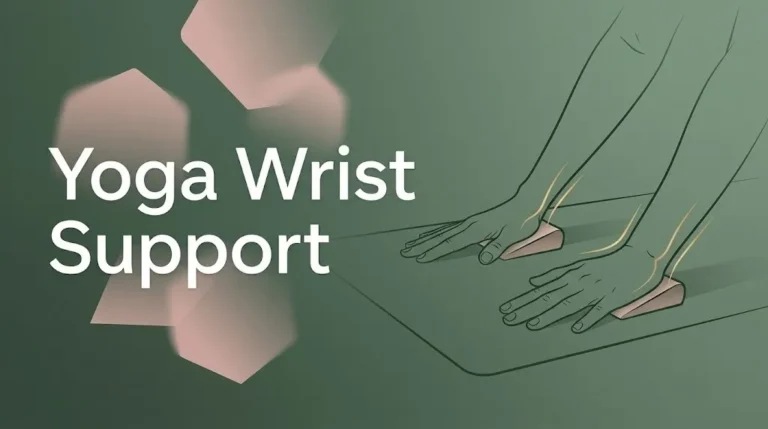
Modification: Seniors with wrist arthritis or carpal tunnel syndrome should use fists or push-up handles for any weight-bearing hand poses. Wrist pain during yoga is almost always modifiable without eliminating the pose entirely.
Key Takeaway: Power yoga is adaptable for seniors and special populations when the intensity, heat, and pose depth are adjusted to the individual’s actual physical capacity. The balance and strength benefits are most relevant for older adults and are well-supported by research.
How Often Should You Practice Power Yoga?
Most yoga teachers and exercise science guidelines recommend two to three power yoga sessions per week as the optimal frequency for building strength, flexibility, and cardiovascular fitness while allowing adequate recovery between sessions.
The American College of Sports Medicine (ACSM) recommends that adults performing vigorous-intensity exercise allow at least one full recovery day between sessions to permit muscular repair and prevent overuse injury. Power yoga qualifies as vigorous exercise for most practitioners, particularly in its heated format, which means daily power yoga without rest days carries real overuse injury risk, especially for the wrists, shoulders, and lower back.
Beginners should start with one session per week for the first two to four weeks, filling in the remaining days with gentler practices. The combination of heat acclimation, new movement patterns, and muscular loading creates a significant adaptation demand on multiple systems simultaneously. Giving each system time to recover before the next session produces faster overall progress than pushing through fatigue.
Experienced practitioners who practice power yoga three or more times per week typically add Yin yoga, Restorative yoga, or standard walking on off days rather than complete rest. This approach maintains mobility and recovery without adding additional high-intensity loading.
Weekly Practice Schedule Options:
| Experience Level | Power Yoga Sessions | Complementary Practice | Rest Days |
|---|---|---|---|
| Complete beginner | 1 per week | 1 beginner Hatha or Vinyasa | 5 |
| Building foundation | 2 per week | 1 Yin or Restorative | 4 |
| Established practitioner | 3 per week | 1 Yin, 1 gentle walk | 3 |
| Advanced practitioner | 4 per week | 1 to 2 Yin or Restorative | 2 to 3 |
Yoga in Westwood and Norwood: Finding the Right Class
Yoga in Westwood and Norwood, Massachusetts is anchored in part by the Universal Power Yoga studio locations that serve these communities, but local practitioners have a range of options depending on their experience level, schedule, and specific practice goals.
When evaluating any yoga studio in Westwood or Norwood, the most useful question to ask is whether the studio offers a structured new-student pathway. A quality yoga studio does not simply drop first-timers into a 75-minute power class and hope for the best. Look for introductory workshops, beginner series, or new student packages that include orientation to the specific style, the room temperature, and the modification options available within each class format.
Teacher credentials are worth checking. The Yoga Alliance maintains a public registry of registered yoga schools (RYS) and registered yoga teachers (RYT). Teachers with 200-hour RYT credentials have met minimum training standards. Teachers with 500-hour RYT credentials have completed more advanced training that typically includes deeper anatomy, therapeutic applications, and teaching methodology. For heated power yoga specifically, teachers who have completed Baptiste training hold a methodology-specific credential on top of their base Yoga Alliance registration.
What to Look for in a Westwood or Norwood Yoga Studio:
| Factor | What to Ask or Check |
|---|---|
| Class level range | Does the studio offer beginner, intermediate, and advanced levels? |
| Teacher credentials | Yoga Alliance RYT-200 or 500; Baptiste-certified for UPY studios |
| New student program | Orientation, intro pricing, beginner-specific classes |
| Room temperature | Exact Fahrenheit for heated classes; non-heated options available? |
| Class size | Smaller classes allow more individual attention and modification guidance |
| Studio culture | Is resting in Child’s Pose actively encouraged or implicitly discouraged? |
| Schedule flexibility | Early morning, evening, and weekend options for working adults |
Local practitioners in the Westwood and Norwood area who are new to power yoga should specifically ask whether the studio offers a “foundations” or “essentials” class in addition to standard power yoga. These introductory formats teach the core poses and transitions of the power yoga sequence at a slower pace, which dramatically improves both safety and enjoyment in subsequent full classes.
Frequently Asked Questions About Universal Power Yoga
What is Universal Power Yoga and is it good for beginners?
Universal Power Yoga is a Baptiste-inspired heated yoga practice that combines continuous breath-linked movement with deliberate strength and balance sequencing in a room heated to 85 to 95 degrees Fahrenheit.
It is accessible to beginners, but it requires more preparation than a standard Hatha or gentle Vinyasa class due to the pace, heat, and upper body demands of repeated Chaturanga transitions.
Beginners benefit most from attending a beginner Vinyasa or foundations class at a UPY studio before joining a full power yoga session.
How is power yoga different from Vinyasa yoga?
Power yoga is a more physically intense subcategory of Vinyasa yoga, distinguished by a higher base pace, a heated room, stronger emphasis on muscular strength, and a systematic sequencing structure drawn from the Baptiste methodology.
Standard Vinyasa yoga varies widely in intensity by class and teacher; power yoga maintains a consistently higher physical demand throughout the session.
The cardiovascular component in power yoga is also more pronounced, with heart rates typically reaching 55 to 80 percent of maximum in a full class.
How many times a week should I do power yoga?
Most yoga teachers and the American College of Sports Medicine recommend two to three power yoga sessions per week for established practitioners, with at least one full rest or recovery day between sessions.
Beginners should start with one session per week for the first month while building strength and heat tolerance on off days with gentler practices.
Daily power yoga without recovery days carries overuse injury risk, particularly for the wrists, shoulders, and lower back.
Is power yoga safe if I have back pain?
Power yoga can be appropriate for people managing chronic lower back pain, but it depends entirely on the nature and severity of the condition.
The NCCIH recognizes yoga as one of the most evidence-supported non-pharmaceutical approaches to chronic lower back pain, but power yoga’s repeated spinal extension in Chaturanga-to-Upward Dog transitions can aggravate herniated discs or active sciatica.
Anyone with a diagnosed spinal condition should discuss the specific demands of power yoga with the treating physical therapist before attending a full class.
What should I do to prepare for my first power yoga class?
The most useful preparation for a first power yoga class is building upper body strength sufficient for modified Chaturanga, establishing a consistent Ujjayi breathing habit, and pre-hydrating fully in the 24 hours before class.
Attend two to three beginner Vinyasa classes first to build pose recognition and flow transitions before adding the heat and pace of a full power yoga session.
Bring a full-length mat towel, at least 750 milliliters of water, and arrive 10 minutes early to acclimate to the heated room before the session begins.
Closing
Power yoga rewards the practitioners who prepare for it and stay honest with themselves inside the room. The ones who progress fastest are not the most athletic. They are the ones who breathe steadily, rest when they need to, and come back consistently.
Start with one class this week. Modify every Chaturanga until your form is clean. Rest in Balasana (Child’s Pose) the moment your breath becomes strained. Then come back two days later and notice what has changed.
That consistency, three months from now, is where the real results live.