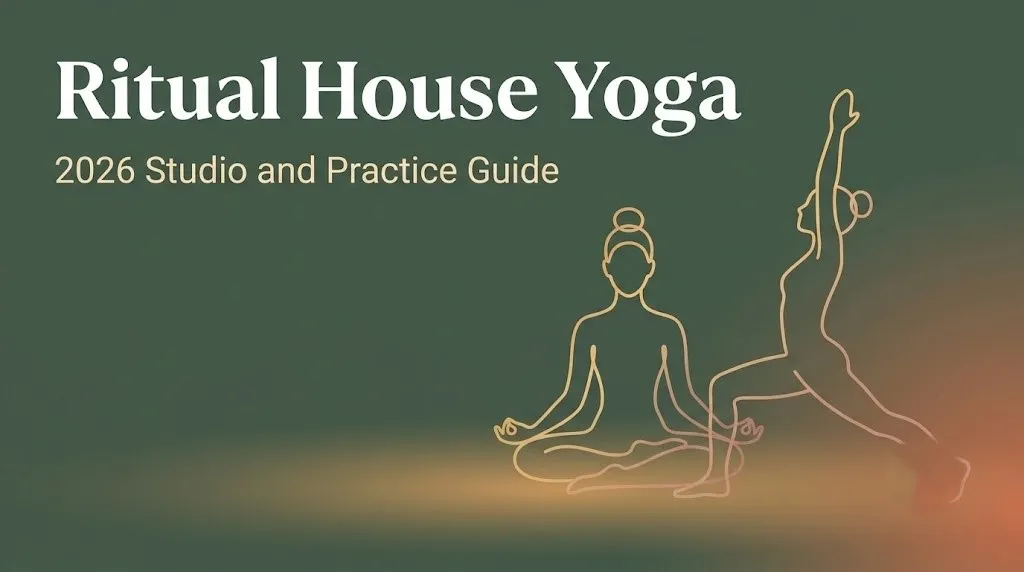
What Is Ritual House Yoga? Classes and Style Guide 2026
Ritual house yoga is a boutique studio approach that treats yoga practice as a consistent, intentional routine rather than an occasional fitness class, and the distinction matters more than it sounds. Students who attend a dedicated yoga studio environment with smaller classes, certified instructors, and a clear teaching philosophy show measurably better outcomes for flexibility, stress reduction, and long-term practice consistency than those who drop in sporadically.
The National Center for Complementary and Integrative Health (NCCIH) identifies yoga as one of the most widely practiced complementary health approaches among American adults, with documented benefits spanning musculoskeletal pain, anxiety, sleep quality, and cardiovascular health markers. Those benefits accumulate over weeks and months of consistent practice, not after a single session.
This guide covers what ritual house yoga means as both a studio concept and a personal practice philosophy. You’ll learn which class styles fit your body and goals, what the research says about building a consistent yoga ritual, and how to walk into your first boutique studio class feeling prepared rather than anxious.
Ritual House Yoga: What This Studio Concept Offers
Ritual house yoga refers to a boutique yoga studio model that prioritizes intentional, community-centered practice over high-volume class throughput. The word “ritual” signals a specific teaching philosophy: that yoga is most effective when practiced with regularity, presence, and purpose rather than as a casual fitness supplement.
Boutique studios operating under this philosophy typically offer smaller class sizes, a curated selection of class styles, and a closer teacher-student relationship than large-format gym yoga programs. That structure isn’t marketing language. It reflects a genuine difference in how instruction is delivered and how quickly students develop a safe, effective practice.
The studio layout in a ritual-focused space is also intentional. Rooms are designed to minimize distraction and support inward focus. Lighting, temperature, and acoustic quality are managed as part of the practice environment, not afterthoughts.
What distinguishes a ritual house yoga studio:
- Class sizes typically capped at 15 to 20 students for individualized instruction
- Props stocked and maintained for all levels without extra charge
- Class schedules built around consistent morning, midday, and evening slots to support habit formation
- Teacher credentials verified through Yoga Alliance RYT-200 or higher standards
- A defined philosophy that connects each class type to a specific outcome
Yoga Alliance recommends that students verify instructor credentials before beginning a new studio practice. RYT-200 represents the minimum training standard; specialty classes for therapeutic, senior, or prenatal populations should be led by instructors with additional advanced certification.
What Is Ritual House Yoga Studio: The Boutique Model Explained
A ritual house yoga studio is a small, independently operated yoga space that centers its identity around intentional community practice, curated class programming, and a high instructor-to-student ratio. Unlike a gym’s yoga annex or a large-chain studio with revolving teacher rosters, a ritual house model builds its culture around specific teachers and a consistent studio philosophy.
The boutique yoga market has grown steadily since 2018, reflecting a broader shift away from generic group fitness toward specialized, instructor-led wellness experiences. Students at boutique studios consistently report higher satisfaction with instruction quality and greater long-term practice consistency than those in large-format fitness environments, according to industry surveys referenced by Yoga Alliance in its annual teacher and studio reports.
The “house” aspect of the name carries real meaning. These studios are often designed to feel like a considered home space rather than a commercial gym floor. The intention is that arriving at the studio feels like crossing a threshold into a different kind of attention, one where the practice itself is the point.
Boutique yoga studio vs. large-chain yoga formats:
| Feature | Ritual House Style Boutique | Large Chain or Gym Yoga |
|---|---|---|
| Class size | 12 to 20 students | 25 to 40 students |
| Teacher consistency | Same instructors weekly | Rotating roster |
| Prop availability | Full set provided free | Often limited or extra cost |
| Philosophy alignment | Consistent across classes | Varies by instructor |
| Community feel | High; teachers know students | Low; anonymity common |
| Instruction depth | Individual cues offered | Generalized group cuing |
That comparison isn’t meant to dismiss large studios. It’s meant to help you understand what you’re choosing and why your choice affects your experience.
What Is Ritual Yoga Practice: Philosophy, Intention, and Consistency
Ritual yoga practice means treating your time on the mat as a structured, recurring commitment that carries the same weight and regularity as sleep, meals, or any other fundamental self-care practice. It is not simply “doing yoga frequently.” It involves showing up at a consistent time, with a consistent intention, and letting the accumulation of those sessions produce physical and mental change over weeks and months.
The concept draws from yoga’s classical roots in Abhyasa, a Sanskrit term meaning consistent, dedicated practice over time. Ancient yoga texts including the Yoga Sutras of Patanjali describe Abhyasa as the foundation of all genuine progress in practice. Modern research supports this principle from a neuroscience angle: habit formation requires consistent repetition in a consistent context, and a studio with a set schedule and familiar environment is exactly that context.
Think of building a yoga ritual like seasoning a cast iron pan. One use does nothing. Fifty uses in the same conditions, with the same care, create something that performs reliably and gets better with each session.
What ritual practice looks like in weekly terms:
| Practice Frequency | Typical Outcomes Over 8 Weeks | Best Style Match |
|---|---|---|
| Once per week | Some flexibility improvement, mild mood lift | Any style |
| Twice per week | Noticeable strength and stress reduction gains | Hatha or Vinyasa |
| Three times per week | Measurable cortisol reduction, improved sleep quality | Mixed styles |
| Four to five times per week | Deepened body awareness, sustained anxiety reduction | Varied styles with recovery days |
The Journal of Alternative and Complementary Medicine found that adults practicing yoga three or more times per week over eight weeks showed significantly greater reductions in perceived stress and anxiety than those practicing once per week, with the dose-response relationship holding consistently across multiple study populations.
Key Takeaway: Ritual yoga practice is defined by consistency and intention across weeks and months, not by intensity or duration of individual sessions. Three sessions per week for eight weeks is the research-supported threshold where most outcomes become measurable.
How to Build a Yoga Ritual: Structure That Creates Lasting Practice
Building a yoga ritual means designing a practice schedule that works with your existing daily rhythms, not against them. The most common mistake new students make is picking ambitious session counts, five days a week, an hour each time, and collapsing within three weeks because the commitment is unsustainable.
Start with three sessions per week at a fixed time. Same days. Same time. This repetition encodes the behavior into a contextual habit loop, meaning your body and mind begin to anticipate and prepare for the practice rather than requiring willpower to initiate it each time. That’s not motivational advice. It’s basic behavioral neuroscience.
The Harvard T.H. Chan School of Public Health notes that consistent mind-body practices including yoga show the strongest outcomes when embedded into a stable daily routine rather than approached as supplementary or optional activity. Stability of timing matters as much as frequency.
A practical six-week ritual-building structure:
- Weeks 1 and 2: Attend three classes per week. Focus on learning the studio environment and the foundational poses. Don’t chase intensity.
- Weeks 3 and 4: Add one home practice day between studio sessions. Use fifteen minutes of breath work and three to five poses you already know.
- Weeks 5 and 6: Evaluate your recovery. If you feel consistently restored rather than depleted, add a fourth studio session. If not, hold at three and add depth rather than volume.
Modification note: Students managing chronic fatigue, autoimmune conditions, or post-surgical recovery should build a ritual around Restorative or Yin yoga only in the first four to six weeks. The goal is nervous system regulation, not physical exertion. The exertion can come later when the system has more reserve.
Boutique Yoga Studio vs. Gym Yoga Class: What Actually Differs
A boutique yoga studio delivers a fundamentally different practice environment than a gym yoga class, and the difference affects how quickly you learn, how safe you are, and whether you keep coming back. This is not opinion. It is a function of class size, instructor continuity, and studio design.
In a gym yoga class, the instructor is often managing thirty-five or more students across a wide range of abilities in a room designed for other activities. Individual alignment cues are rare. Props may be unavailable. The teacher may change week to week, which means the pedagogical approach changes too, making consistent skill development difficult.
A boutique studio structures around the opposite priorities. Smaller classes allow teachers to physically observe and verbally cue each student’s alignment. Instructors often remember individual students’ injury histories, physical limitations, and progress. That continuity is where genuine learning happens.
Who benefits most from a boutique yoga studio environment:
- Beginners who need individual attention to learn safe alignment
- Students returning after injury who require modifications in real time
- Adults managing chronic conditions who need a teacher aware of their health history
- Practitioners who have plateaued in larger class settings
- Seniors who need a lower student-to-teacher ratio for safety
Pose Tip for new boutique studio students:
- Tell the teacher your name and one physical concern before your first class.
- Accept every prop offered. Props in a boutique studio are given based on observation, not guesswork.
- Return to the same class with the same teacher for at least four sessions before evaluating whether the style works for you.
Ritual House Yoga Classes and Styles: Choosing What Fits Your Body
Ritual house yoga studios typically offer four to six core class styles, each targeting distinct physical and psychological outcomes. Choosing the right one is less about your experience level and more about what your body actually needs right now.
Vinyasa is the most commonly offered style in boutique studios. It links breath to movement in a flowing sequence that builds strength, cardiovascular endurance, and body coordination simultaneously. If you are physically active and want yoga to challenge you, Vinyasa is usually the appropriate entry point.
Yin yoga targets the connective tissue, specifically the fascia and joint capsules surrounding the hips, pelvis, and spine, through long passive holds of three to five minutes. It’s the style most consistently recommended by physical therapists for students with chronic tension, hypermobility, or the specific tightness that comes from years of sitting.
Restorative yoga goes further into passivity. Every pose is fully supported by props. The practice is designed to activate the parasympathetic nervous system, what the body needs to shift out of chronic stress activation. It is not a workout. It is a nervous system reset, and it has genuine clinical support.
Ritual house yoga class styles compared:
| Style | Intensity | Hold Duration | Primary Target | Best For |
|---|---|---|---|---|
| Vinyasa | Moderate to high | 1 to 3 breaths per pose | Strength, coordination, cardio | Active adults, athletes |
| Hatha | Low to moderate | 5 to 8 breaths per pose | Alignment, breath, foundation | Beginners, all levels |
| Yin | Very low | 3 to 5 minutes per pose | Connective tissue, joints | Chronic tension, recovery |
| Restorative | Passive | 5 to 20 minutes per pose | Nervous system, deep rest | Stress, fatigue, trauma recovery |
| Meditation | Passive | Full session | Mind, attention, nervous system | Anxiety, cognitive clarity |
Key Takeaway: Class style selection should be based on what your body and nervous system actually need, not what sounds most impressive or most familiar. Yin and Restorative are frequently the most therapeutic choices and the most underappreciated ones.
Vinyasa Yoga for Ritual Practice: Flow, Breath, and Athletic Consistency
Vinyasa yoga is a practice style that connects each inhale and exhale to a specific movement, creating a continuous, rhythmically paced sequence from warm-up through peak poses and into a cool-down. In a ritual context, Vinyasa works well as a consistent practice because its structure is repeatable: the same breath-movement logic applies every session, which allows students to measure progress clearly over time.
The cardiovascular demand of Vinyasa is real. A well-taught 60-minute Vinyasa class keeps heart rate elevated throughout the strength and peak phases, producing aerobic conditioning alongside the flexibility and body awareness benefits. For students who struggle to maintain a separate cardio practice, Vinyasa can carry much of that load.
The foundation of every Vinyasa class is ujjayi pranayama (Victorious Breath / Ocean Breath), a nasal breathing pattern with a slight glottal constriction that produces a soft, steady sound. Learning this breath before your first Vinyasa class removes the most common source of confusion for new students: not knowing when to inhale versus when to exhale during transitions.
To practice the Vinyasa Sun Salutation core sequence:
- Begin in Tadasana (Mountain Pose). Stand tall, feet together or hip-width. Inhale, raise arms overhead.
- Exhale into Uttanasana (Standing Forward Fold). Hinge at the hips, knees soft.
- Inhale, half-lift. Spine parallel to the floor. Hands on shins or fingertips.
- Exhale, step back to Adho Mukha Svanasana (Downward-Facing Dog). Hold 3 breaths.
- Inhale forward to Phalakasana (High Plank). Shoulders over wrists.
- Exhale to Chaturanga Dandasana (Four-Limbed Staff Pose) or lower to the mat.
- Inhale to Urdhva Mukha Svanasana (Upward-Facing Dog) or Bhujangasana (Cobra Pose).
- Exhale back to Adho Mukha Svanasana. Hold 5 breaths.
- Walk or jump feet to hands. Inhale to half-lift. Exhale to full forward fold.
- Inhale, rise to Tadasana. Exhale, hands to heart.
Modification note: In step 6, drop both knees to the mat during the lowering phase if shoulder or core strength is still developing. In step 7, Bhujangasana (Cobra Pose) is the appropriate modification over Upward-Facing Dog for anyone with lumbar sensitivity or wrist weakness.
Yin Yoga and Restorative Yoga for Stress Relief: The Science Behind Stillness
Yin yoga and Restorative yoga both reduce stress by activating the parasympathetic nervous system, but they do so through different mechanisms and at different depths. Understanding the distinction helps you choose the right one for where your body is on any given week.
Yin yoga targets the deep connective tissue layers, fascia, joint capsules, and ligaments, through sustained passive compression and tension holds. Poses are held for three to five minutes. The physical discomfort of these holds is real and intentional. The goal is not to hurt but to apply enough sustained pressure to encourage fascial remodeling and joint mobility over weeks of regular practice.
Think of tense fascia like cold taffy. Quick, forceful pulling tears it. Slow, sustained gentle pressure allows it to soften and lengthen. That’s the physical logic of Yin, and it’s why students with chronic hip tightness, lower back stiffness, or years of sedentary behavior often respond to Yin more quickly than to any other style.
Restorative yoga removes even the gentle physical stress of Yin. Every pose is fully supported by bolsters, blankets, and blocks so the body needs zero muscular effort to maintain the shape. The practice targets the vagus nerve, the primary neural pathway of parasympathetic activation. Slow, fully supported breathing in a warm, quiet environment produces measurable reductions in cortisol and heart rate within a single session.
A 2021 review published in Complementary Therapies in Medicine found that yoga interventions incorporating passive or restorative components showed the largest reductions in salivary cortisol among adults with high baseline stress, outperforming active yoga styles in stress hormone modulation specifically.
Modification note for Yin holds: If three-minute holds feel overwhelming initially, start at ninety seconds and build by thirty seconds each week. For students with hypermobility, reduce hold intensity and focus on muscular engagement around the joint rather than passive sinking. A teacher with Yin-specific training should guide hypermobile students through this adjustment.
Yoga for Beginners at a Boutique Studio: What to Know Before You Go
The best starting class for a complete beginner at a ritual house yoga studio is a designated beginner Hatha yoga class or an introductory Vinyasa series specifically labeled for new students. Both formats move slowly enough for teachers to explain each pose’s alignment and breath pattern before advancing.
The mistake most beginners make is attending a drop-in flow class before they know the foundational poses. In a flow class, the teacher cues transitions quickly, assuming students know where their hands and feet should be before the breath directs movement. Without that foundation, beginners spend class looking around to copy neighbors rather than learning.
The American College of Sports Medicine notes that yoga can be safely introduced to previously sedentary adults without a prior fitness conditioning requirement, as long as the class structure includes individualized modifications and teachers actively monitor student form. That standard is more reliably met in boutique studios than in high-volume settings.
Foundational poses every beginner will practice in their first ritual house yoga class:
| Pose (English) | Sanskrit Name | What It Builds |
|---|---|---|
| Mountain Pose | Tadasana | Body awareness, neutral alignment |
| Child’s Pose | Balasana | Rest, hip and spinal release |
| Downward-Facing Dog | Adho Mukha Svanasana | Full-body lengthening, shoulder strength |
| Warrior I | Virabhadrasana I | Hip opening, lower body strength |
| Bridge Pose | Setu Bandha Sarvangasana | Glute activation, spinal extension |
| Reclining Bound Angle | Supta Baddha Konasana | Hip opening, parasympathetic activation |
| Corpse Pose | Savasana | Integration, nervous system rest |
Modification note: In Balasana (Child’s Pose), place a folded blanket between the thighs and calves if knee pressure is uncomfortable. Widen the knees to hip-width or beyond if the belly or chest makes a narrow-knee position awkward. There is no single correct shape for this pose because body proportions vary.
Key Takeaway: Beginning in a designated beginner class at a boutique studio, rather than a drop-in flow class, is the most reliable way to build safe foundational habits that support every more advanced class you’ll ever attend.
What to Expect at Your First Ritual House Yoga Class
Your first ritual house yoga class will feel unfamiliar in physical and social ways simultaneously, and knowing that in advance takes most of the anxiety out of it. Here is what actually happens from the moment you arrive.
You’ll enter a space that is quieter and more intentionally designed than a gym. Remove your shoes at the door. Collect your props, typically two blocks, one strap, and one blanket, from the storage area the teacher or studio staff will point you toward. Set up your mat with enough room to extend your arms fully in both directions without touching neighboring mats.
Before class begins, introduce yourself to the teacher. Mention one physical limitation or goal. A phrase like “I have tight hamstrings and this is my first yoga class” gives a trained teacher everything they need to offer you targeted modifications throughout the session.
First class preparation checklist:
- Arrive 10 to 15 minutes early to set up and speak with the teacher
- Wear fitted clothing that allows full leg and arm movement
- Bring a personal yoga mat if you have one (studio mats are available to borrow)
- Bring a water bottle, especially for Vinyasa or any heated class
- Eat lightly or not at all in the 90 minutes before class
- Turn off your phone completely before entering the practice room
The class will close with Savasana (Corpse Pose), typically five to ten minutes of complete stillness lying on the mat. Don’t skip it. This portion of class is where the nervous system integrates everything the practice has produced. Leaving early means leaving before the most restorative part.
Yoga Ritual for Mental Health and Stress: What the Evidence Shows
A consistent yoga ritual produces measurable mental health benefits through at least three documented physiological pathways: cortisol reduction, vagal tone improvement, and prefrontal cortex activation during mindful movement. These are not vague wellness claims. They are mechanisms documented across dozens of peer-reviewed studies.
Cortisol is the primary stress hormone. Chronic elevation of cortisol, which is common in adults managing sustained work, caregiving, or financial pressure, is associated with disrupted sleep, impaired immune function, and mood dysregulation. Yoga practice consistently reduces salivary and urinary cortisol in controlled studies.
According to the NCCIH, yoga has been evaluated in clinical settings for anxiety, depression, post-traumatic stress, and stress-related insomnia, with evidence strong enough to support its use as a complementary approach alongside standard care. The organization specifically notes that the combination of physical movement, breath regulation, and focused attention is what distinguishes yoga’s mental health effects from exercise alone.
Mental health benefits documented across multiple studies:
- Reduced perceived stress scores after 8 weeks of regular practice
- Improved sleep onset and sleep quality in adults with insomnia
- Lower self-reported anxiety in clinical and non-clinical populations
- Improved mood and emotional regulation in adults with mild-to-moderate depression
- Reduced rumination and cognitive reactivity in stress-prone individuals
Modification note: Students with diagnosed anxiety disorders, PTSD, or trauma histories may find certain yoga environments or poses activating rather than calming. Trauma-sensitive yoga, taught by instructors with specific training in this approach, is the appropriate adaptation. Invitations rather than directives, choice over instruction, and no hands-on adjustments without explicit consent are the key features of trauma-informed practice.
Yoga for Back Pain with Intentional Practice: Poses and Principles
Yoga is one of the most studied non-pharmacological approaches to chronic low back pain. The American College of Physicians included yoga in its 2017 clinical practice guideline as a first-line recommendation for chronic low back pain, alongside physical therapy and spinal manipulation. That recommendation reflects a substantial evidence base, not general wellness enthusiasm.
When practiced consistently as a ritual, yoga addresses back pain through three overlapping mechanisms. It strengthens the deep spinal stabilizers, specifically the multifidus and transverse abdominis muscles. It reduces the chronic muscular guarding that develops when the nervous system stays in a prolonged alert state. And it improves proprioception, the body’s ability to sense its own position, which is often disrupted in people with chronic back pain.
A short ritual yoga sequence for back care:
- Balasana (Child’s Pose): Kneel on the mat. Sit hips toward heels, arms extended forward. Forehead rests on the mat or a block. Hold 8 to 10 slow nasal breaths.
- Setu Bandha Sarvangasana (Bridge Pose): Lie on the back, knees bent, feet flat and hip-width. Press evenly through both feet and lift the hips slowly. Hold 5 breaths. Lower vertebra by vertebra.
- Supta Matsyendrasana (Supine Spinal Twist): From your back, draw one knee to the chest and guide it across the body. Keep both shoulders grounded. Hold 8 breaths per side.
- Viparita Karani (Legs Up the Wall): Sit sideways to a wall, swing legs up the wall, lie back. Hold 5 to 10 minutes. Completely passive.
- Savasana (Corpse Pose): Extend fully. Rest for 5 minutes minimum.
Safety note: Adults managing an acute lumbar disc herniation should avoid deep forward folds and loaded spinal flexion until a spine specialist has assessed their specific situation and offered clearance for yoga practice.
Morning Yoga Ritual vs. Evening Yoga Ritual: Which One Actually Works Better
Morning yoga rituals and evening yoga rituals produce different physiological effects, and both are worth understanding before you decide which time slot to prioritize. Neither is universally superior. The better choice depends on your sleep patterns, schedule, and what you’re asking yoga to do for you.
A morning yoga practice engages the body when cortisol naturally peaks, typically within 30 to 45 minutes of waking. This is the cortisol awakening response, and it primes the body for physical activity. A morning Vinyasa or Hatha session during this window capitalizes on natural physiological readiness and sets a parasympathetic baseline for the rest of the day.
An evening yoga practice, particularly Yin or Restorative, works with the body’s natural shift toward parasympathetic dominance as light decreases. Research published in the International Journal of Yoga found that evening yoga practice, particularly breath-focused and restorative sessions, improved sleep onset and sleep quality in adults with mild insomnia more consistently than morning practice did for the same population.
Morning vs. evening yoga practice comparison:
| Factor | Morning Practice | Evening Practice |
|---|---|---|
| Cortisol alignment | High natural cortisol; body is primed | Lower cortisol; body prefers gentler input |
| Best style match | Vinyasa, Hatha, Sun Salutations | Yin, Restorative, Yoga Nidra |
| Primary benefit | Energy, focus, daily stress resilience | Sleep quality, nervous system recovery |
| Who benefits most | Active adults, students, morning people | Shift workers, high-stress professionals, insomniacs |
| Intensity range | Moderate to high | Low to passive |
The best morning or evening ritual is the one you actually practice consistently. A ten-minute morning sequence done daily beats an ambitious sixty-minute session that happens twice a month.
Key Takeaway: Morning yoga supports energy and daily stress resilience through active styles; evening yoga supports sleep and recovery through passive styles. Match the time of day to the style, not just to your schedule.
Yoga Breathing Techniques for Ritual Practice: The Engine Behind Every Class
Pranayama, the Sanskrit collective term for yoga breathing practices, is the most underexplained component of yoga instruction across every studio level. Most classes incorporate breath cuing without actually teaching the mechanics. Understanding three foundational breathing techniques before you establish your ritual practice will improve every session you attend.
The breath is not optional in yoga. It regulates the pace of movement in Vinyasa, activates the parasympathetic nervous system in Restorative, and anchors attention during meditation. Without deliberate breath control, yoga becomes a stretching class with good intentions but limited depth.
Three pranayama techniques for ritual yoga practice:
- Diaphragmatic Breathing (Belly Breathing): Place one hand on the belly. Inhale through the nose, belly rises first before the chest expands. Exhale fully. This is the resting breath used in Savasana and all passive poses. Practice for 5 minutes before sleep to activate the parasympathetic response.
- Ujjayi Pranayama (Victorious Breath / Ocean Breath): Inhale and exhale through the nose with a gentle constriction at the back of the throat, producing a soft ocean-wave sound audible only to you. This breath creates internal warmth and sets the rhythmic tempo for Vinyasa flow. Most students need two to four weeks of daily practice before it becomes automatic.
- Nadi Shodhana (Alternate Nostril Breathing): Using the right hand, close the right nostril with the thumb. Inhale left. Close both. Open right. Exhale right. Inhale right. Close both. Open left. Exhale left. That is one full cycle. Practice five to ten cycles before morning or evening meditation.
A study published in the International Journal of Yoga found that six weeks of daily Nadi Shodhana practice produced measurable reductions in resting heart rate and systolic blood pressure in healthy adults, with effects appearing as early as week three.
Modification note: If breath retention between nostril switches feels uncomfortable or produces lightheadedness, remove the retention entirely. Practice the alternating inhale-exhale pattern without holding until the rhythm stabilizes over one to two weeks of daily practice.
Frequently Asked Questions About Ritual House Yoga
What is Ritual House yoga and who is it for?
Ritual house yoga is a boutique studio approach to yoga practice that emphasizes consistency, intentional instruction, and a curated community environment over high-volume class throughput.
It is designed for adults at any experience level who want to develop a sustainable, well-taught yoga practice rather than attending occasional drop-in fitness classes.
The model works particularly well for beginners, returning practitioners, and people using yoga to manage a specific health condition.
What should I wear and bring to my first class at a ritual yoga studio?
Wear fitted, stretchy clothing that allows your full range of motion in both standing and floor poses without riding up or restricting movement.
Bring a personal yoga mat if you own one, a water bottle, and a small hand towel if you run warm.
Most boutique studios provide blocks, straps, and blankets, so you don’t need to purchase props before your first session.
Is ritual yoga practice better in the morning or evening?
Neither morning nor evening is universally better. The right time depends on what you’re asking yoga to do for you.
Morning Vinyasa or Hatha capitalizes on natural cortisol levels for energy and focus; evening Yin or Restorative supports sleep quality and nervous system recovery.
The most effective ritual is the one practiced at the same time consistently, because timing regularity accelerates habit formation.
How often should I practice yoga at a boutique studio to see real results?
Three sessions per week is the most research-supported frequency for new yoga students seeking measurable physical and mental health outcomes.
Research published in the Journal of Alternative and Complementary Medicine found that practicing three or more times per week over eight weeks produces greater stress and anxiety reductions than once-weekly practice.
After six to eight consistent weeks, evaluate your recovery quality and adjust frequency based on how your body responds, not based on enthusiasm alone.
Can a consistent yoga ritual actually help with stress and anxiety?
Yes. The NCCIH recognizes yoga as a well-supported complementary approach for anxiety and stress-related conditions based on a substantial body of clinical evidence.
The combination of breath regulation, mindful movement, and parasympathetic activation distinguishes yoga’s stress effects from those of exercise alone.
Eight weeks of practice at three sessions per week is the minimum duration where most controlled studies observe measurable reductions in perceived stress and anxiety scores.
The Practice Is the Point
The most practical thing this article can offer you is this: a ritual yoga practice built on three consistent sessions per week, inside a studio where the teacher knows your name and your physical history, is more effective than any single impressive class you’ll ever attend.
Start with one class this week. A beginner Hatha or Yin session at a boutique studio will teach you more in sixty minutes than a drop-in flow class where you spend the whole time lost. Return to that same class three times before you decide anything.
Build from there. The practice compounds like interest. The longer and more consistently you show up, the more it gives back.