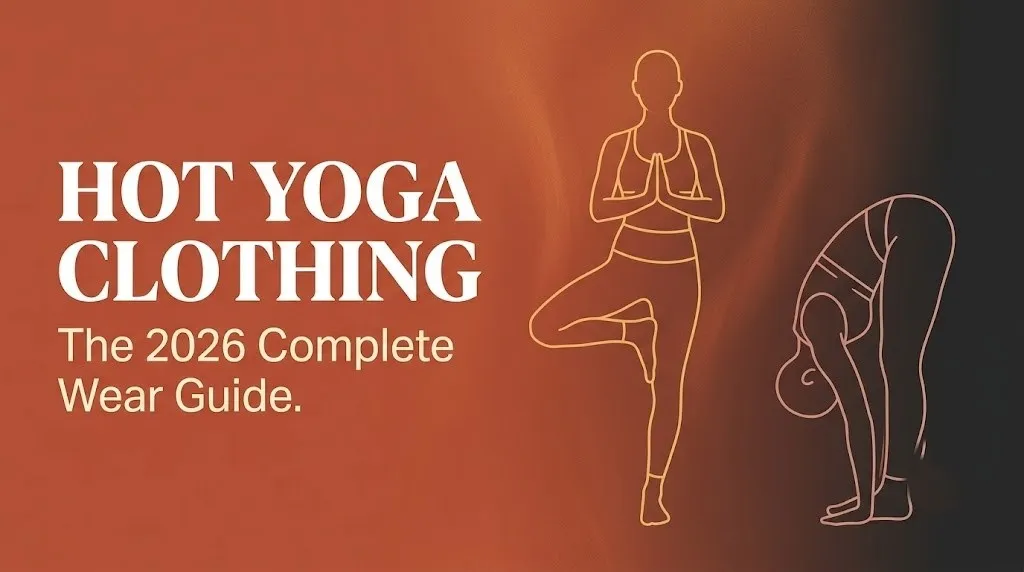
Hot Yoga Clothing: The 2026 Complete Wear Guide
Hot yoga clothing is not standard activewear worn in a warmer room. It is a specific category of athletic apparel designed to manage intense sweat output, maintain opacity under heat stress, and stay anchored through the wide range of movements in a heated yoga class. Choosing the wrong fabric or fit creates discomfort, distraction, and in some cases genuine safety concerns.
The American College of Sports Medicine notes that exercising in environments heated to 95 to 105 degrees Fahrenheit significantly increases cardiovascular demand and sweat rate compared to room-temperature exercise, and that appropriate clothing is a direct factor in how effectively the body regulates its core temperature during that exertion. What you wear to hot yoga is a health decision as much as a style one.
This guide covers everything from fabric science and pose-specific demands to style options, brand guidance, population-specific needs, and care practices that keep your hot yoga clothes performing class after class.
Hot Yoga Clothing: What You Actually Need and Why It Matters
Hot yoga clothing refers to athletic apparel specifically chosen for the thermal environment of heated yoga studios, which typically maintain room temperatures between 95 and 105 degrees Fahrenheit, requiring fabrics that manage high sweat output while maintaining grip, opacity, and secure fit throughout a 60 to 90-minute session.
The difference between yoga clothing and hot yoga clothing is not primarily aesthetic. It is functional. A legging that performs excellently in a room-temperature Hatha yoga class may become a slippery, clingy, heat-trapping problem the moment that same class moves into a 100-degree room. The fabric’s moisture behavior, its opacity under saturation, and its ability to stay anchored during sweat-soaked movement all change dramatically under heat stress.
Hot yoga is practiced in several formats in 2026. Bikram/26&2 yoga uses a fixed sequence of 26 poses in a room heated to exactly 105 degrees Fahrenheit with 40 percent humidity. Heated Vinyasa yoga typically uses rooms at 85 to 95 degrees with lower humidity. Infrared-heated yoga studios maintain similar temperatures using infrared panels rather than forced hot air. Each format produces different sweat volumes and different clothing demands.
| Format | Temperature | Humidity | Sweat Volume | Clothing Priority |
|---|---|---|---|---|
| Bikram/26&2 | 105°F | 40% | Very high | Maximum moisture-wicking, minimal coverage |
| Heated Vinyasa | 85 to 95°F | Low to moderate | High | Moisture-wicking, secure fit |
| Infrared heated yoga | 90 to 100°F | Low | Moderate to high | Wicking, lightweight |
| Warm yoga | 80 to 85°F | Low | Moderate | Standard performance fabric |
What to Wear to Hot Yoga for the First Time
For your first hot yoga class, wear minimal, fitted athletic clothing in a moisture-wicking synthetic fabric: a high-waist legging or fitted short, a sports bra or fitted crop top, and nothing with metal hardware, heavy cotton, or loose fabric that can shift during movement.
First-time hot yoga practitioners are often surprised by how much they sweat and how quickly clothing that felt comfortable in the dressing room becomes uncomfortable in the studio. The instinct to wear more clothing for modesty or warmth works against you in a heated room. Light, minimal, and fitted is the practical framework that serves beginners best.
Arrive hydrated and with your clothing already chosen and worn, not just packed. Changing into hot yoga clothes at a heated studio before class is more difficult than it sounds because the rooms often have limited, warm changing areas. Wearing your outfit to the studio and removing outer layers is simpler.
First class packing list for hot yoga:
- A high-waist fitted legging or fitted short in nylon-spandex (minimum 80 percent nylon)
- A sports bra or fitted crop top with no metal underwire or hardware
- Grip-toe socks or bare feet as the studio permits
- A small, dedicated hot yoga towel for the mat; a full-length microfiber mat towel is ideal
- A 24-ounce or larger water bottle filled before arrival; hydrate during the session as needed
- A fresh change of clothes for after class; you will be soaked through your hot yoga outfit by the end
Modification for first-time practitioners who are nervous about coverage: A high-waist legging with a fitted crop top that overlaps the waistband provides both coverage and function. You do not need to wear a sports bra only; a fitted crop with built-in support covers more and performs equally well if the fabric meets the moisture-wicking standard.
Best Fabric for Hot Yoga Clothing: The Science of Staying Cool
The best fabric for hot yoga clothing is a high-percentage nylon-spandex blend or a polyester-spandex blend with an open or semi-open knit structure, because these materials wick sweat away from the skin surface faster than any natural fiber and maintain opacity even when saturated.
The body’s primary cooling mechanism in a hot yoga room is evaporative cooling: sweat evaporates from the skin surface and carries heat away from the body. Fabric that holds sweat against the skin rather than allowing it to evaporate interferes directly with this cooling mechanism. According to research in the Journal of Sports Sciences, synthetic moisture-wicking fabrics produce significantly lower skin surface temperatures during vigorous exercise in heated environments compared to natural fibers like cotton, because they transport moisture to the fabric’s outer surface where evaporation can occur.
Cotton is the worst choice for hot yoga, despite being a popular activewear material in other contexts. Cotton absorbs moisture and holds it against the skin rather than wicking it away, becoming progressively heavier, less flexible, and less breathable as sweat accumulates. A cotton shirt in a Bikram/26&2 class can absorb enough sweat to add noticeable weight and restriction by mid-class.
Fabric performance in hot yoga environments:
| Fabric | Wicking Speed | Opacity When Wet | Weight Change with Sweat | Hot Yoga Appropriate |
|---|---|---|---|---|
| Nylon-spandex (80-20) | Excellent | Excellent | Minimal | Yes: first choice |
| Polyester-spandex (80-20) | Very good | Good to excellent | Minimal | Yes: solid choice |
| Bamboo-spandex | Moderate | Good | Moderate | No: too slow to wick |
| Cotton-spandex | Poor | Good when dry | Significant | No: holds moisture |
| Microfiber over rubber | Excellent (activates wet) | Excellent | Minimal | Yes: for mat towels |
The nylon percentage is the key variable. Fabrics with 75 percent or higher nylon content wick fastest, maintain opacity most reliably under saturation, and return to their original shape after repeated sweating and washing cycles.
Key Takeaway: Cotton fails in hot yoga because it holds sweat against the skin instead of wicking it away. Choose 80 percent or higher nylon-spandex for hot yoga clothing and you solve most clothing performance problems before they start.
Hot Yoga Leggings: What Works and What Fails Under Heat
Hot yoga leggings must maintain opacity when fully saturated with sweat, stay anchored at the waistband through repeated forward folds and inversions, and be constructed from a nylon-spandex blend with at least 20 percent elastane content to retain their shape through an entire heated session.
The opacity test is the most important quality check for hot yoga leggings specifically. Many leggings that appear opaque on a store shelf or in a standard squat test become transparent when the fabric is stretched while wet. In a hot yoga class, your leggings will be both stretched and saturated simultaneously, and a teacher or studio mirror will reveal any transparency issue immediately.
Waistband behavior matters more in hot yoga than in any other yoga format. The combination of heat, sweat, and repeated forward bending creates mechanical conditions that cause mid-rise waistbands to roll or fold consistently. A wide, high waistband of at least two to three inches that sits at or above the navel distributes that bending force and stays anchored far more reliably than a narrower or mid-rise waistband.
Specific hot yoga poses test leggings most severely:
- Dandayamana Janushirasana (Standing Head-to-Knee Pose): the waistband must stay put as the torso folds completely parallel to the floor; mid-rise bands roll down here
- Uttanasana (Standing Forward Bend): the lower back and waistband area are fully exposed to view; opacity is tested at maximum stretch
- Utkatasana (Chair Pose): the seated angle creates rear stress on the fabric; cheap fabrics bunch or pull down at the back
Modification for practitioners with waistband sensitivity: A seamless high-waist legging with a bonded rather than stitched waistband edge eliminates the hard elastic band edge that digs into the skin during seated and forward-folded poses in hot conditions.
Hot Yoga Sports Bra: Support, Coverage, and Heat Performance
The best hot yoga sports bra is a racerback or crossback style in a high-nylon-content fabric without metal underwire, removable padding with ventilation, and a band that stays anchored without rolling during poses like Adho Mukha Svanasana (Downward-Facing Dog).
Metal underwire is the single most important thing to avoid in a hot yoga sports bra. Metal conducts heat. In a 100-degree room during 60 minutes of practice, metal underwire becomes uncomfortably hot against the skin and can cause localized heat discomfort that distracts from practice and can create skin irritation under sustained contact.
Support level must match your body’s needs and your practice intensity. Bikram/26&2 is not a high-impact class in the way that running is, but it involves standing sequences with balance work and forward folds that create significant bra shift risk if support is inadequate. A compression bra works well for smaller cup sizes. An encapsulation bra with high nylon-content soft cups is better for larger cup sizes where compression alone does not provide adequate support.
Removable padding in hot yoga bras deserves attention. Foam padding that is not perforated or ventilated traps heat between the foam and the skin, reducing the body’s ability to dissipate heat from the chest wall. Look for perforated foam inserts or skip the padding entirely if coverage rather than shape is the goal.
Hot yoga sports bra checklist:
- No metal underwire
- High nylon-content fabric (75 percent or higher)
- Racerback, crossback, or wide-strap design for shoulder stability in balance poses
- Perforated or removable foam cups if included
- Band that does not roll at the underbust in forward-folded positions
- Machine-washable and odor-resistant construction
Hot Yoga Shorts: Who Should Wear Them and How to Choose
Hot yoga shorts are the preferred bottom for many experienced Bikram/26&2 practitioners and for anyone practicing in higher-humidity heated rooms, because less fabric covering the legs produces significantly more efficient sweat evaporation from the lower body.
The traditional Bikram/26&2 class is the format most associated with minimal clothing, and for physiological reasons that go beyond aesthetics. The 105-degree, 40 percent humidity environment produces sustained, high-volume sweating from the entire body surface. Leggings covering the full leg retain heat and sweat against the thigh and calf, reducing the lower leg’s surface area available for evaporative cooling.
Shorts for hot yoga must be fitted enough to stay in place during inverted or wide-legged poses without riding up uncomfortably. Think of a loose athletic short as a liability in Utkatasana (Chair Pose): the wide leg opening creates friction points and fabric bunching in the hip crease that a fitted short or legging eliminates.
Short length and coverage guide for hot yoga:
| Length | Coverage | Best For | Watch Out For |
|---|---|---|---|
| 2 to 3 inch inseam (very short) | Minimal | Experienced Bikram practitioners in high-humidity rooms | May require grip shorts or non-slip lining |
| 4 to 5 inch inseam (short) | Moderate | Most hot yoga formats, balanced coverage | Check fabric opacity in seated poses |
| 6 to 7 inch inseam (mid-length) | Good | Beginners, practitioners preferring more coverage | More sweat retention than shorter options |
| Capri (cropped legging) | High | Moderate-heat formats, practitioners with thigh sensitivity | More fabric than true shorts in high-heat rooms |
Modification for practitioners uncertain about shorts: Wear fitted mid-length shorts (5 to 6 inch inseam) for your first class. This provides coverage while allowing much more leg skin for evaporative cooling than a full legging.
Key Takeaway: Hot yoga shorts are not just a style preference. In high-humidity Bikram rooms, reducing leg coverage is a thermoregulation strategy that keeps the body cooler more efficiently than full-length leggings.
Sexy Yoga Outfits and Flattering Yoga Wear: How to Balance Style and Function
A flattering and stylish hot yoga outfit is one that fits the body confidently, performs under heat and sweat, and reflects the practitioner’s personal style without sacrificing the fabric performance that the heated environment demands.
The search for outfits that are both functional and attractive is entirely legitimate. The yoga clothing market has moved substantially toward designs that prioritize both performance and aesthetic in the past decade, and there is no reason a hot yoga outfit cannot be both technically excellent and visually appealing. The functional requirements simply need to be met first.
High-waist designs are both flattering and functional for hot yoga. They smooth the midsection, provide waistband stability, and eliminate the gap between top and bottom that occurs in forward folds and inversions. A coordinated set in a consistent color and fabric produces a polished appearance alongside the performance benefits of matched material.
Color choice carries a practical consideration in hot yoga. Lighter colors, particularly light grey and white, show sweat saturation and potential opacity issues most clearly. For hot yoga, medium to dark solid colors provide more reliable visual coverage as the fabric saturates. Prints and patterns can also obscure sweat saturation while adding visual interest.
Styling principles for hot yoga outfits:
- High waist legging or short plus matching crop: the set approach eliminates gap concerns and creates a cohesive look
- Minimal layers: one bottom and one top is the functional maximum; layering in heat creates the same fabric-against-skin heat trap that cotton does
- Solid dark or medium colors or bold prints: both manage sweat visibility better than light neutrals
- Fitted but not restrictive: clothing that fits well against the body moves with you rather than against you, and looks more considered than either too tight or too loose
Bikram Yoga Clothing: What the 26&2 Format Requires
Bikram yoga clothing must accommodate a fixed sequence of 26 poses and two breathing exercises practiced in a 105-degree, 40 percent humidity room, which means minimal coverage, maximum moisture-wicking fabric, and no metal hardware of any kind.
The Bikram/26&2 format is the most demanding hot yoga environment from a clothing perspective. The combination of extreme heat and high humidity means the body’s evaporative cooling mechanism is already partially impaired by the ambient moisture in the air. Clothing that reduces the skin surface area available for evaporation compounds that challenge further.
Traditional Bikram yoga dress code favors minimal coverage. Women typically wear a sports bra or fitted crop top with tight shorts or bikini bottoms. Men typically wear fitted shorts. These conventions exist because of the physiological demands of the format, not cultural preference. More experienced Bikram practitioners tend to wear less, not more, as they understand what the heat environment requires.
Dandayamana Janushirasana (Standing Head-to-Knee Pose) is the most clothing-testing pose in the Bikram sequence. The pose requires locking the standing knee, rounding the spine forward, and bringing the forehead toward the knee of the lifted leg. A waistband that rolls in this position interrupts the pose and becomes a repeated distraction across the 60-class sequence.
Modification for Bikram beginners uncomfortable with minimal coverage: A fitted mid-length short and a fitted racerback crop top provides significantly more coverage than traditional Bikram attire while still meeting the fabric performance requirements. Prioritize comfort and confidence in your first several classes before reducing coverage further.
What Not to Wear to Hot Yoga: Clothing Mistakes That Affect Safety
The clothing items to avoid in hot yoga are anything that traps heat against the skin, any metal hardware that conducts heat, any loose fabric that shifts during poses, and any natural fiber that absorbs rather than wicks moisture.
These are not minor comfort issues. In a room heated to 95 to 105 degrees Fahrenheit, clothing that impairs the body’s thermoregulation capacity contributes directly to the risk of heat-related illness. According to Harvard T.H. Chan School of Public Health research on exercise in heated environments, core temperature elevation during exercise in hot conditions is accelerated by clothing that reduces sweat evaporation from the skin surface.
What to leave at home for any hot yoga class:
- Cotton anything: T-shirts, shorts, socks; cotton holds sweat against the skin and becomes heavy and restrictive as saturation increases
- Metal underwire bras: underwire conducts heat and becomes uncomfortably warm in sustained high-temperature environments
- Loose or baggy clothing: excess fabric bunches in poses, reduces the skin surface area available for evaporative cooling, and can catch unexpectedly during transitions
- Perfume or heavily scented body products: enclosed heated rooms amplify any scent, creating discomfort for practitioners with respiratory sensitivity
- Full zip-up jackets or hoodies: worn into the studio; remove all outer layers before entering the hot room
- Non-athletic socks: if worn, only thin grip-toe athletic socks; heavy cotton socks retain heat at the feet and reduce proprioceptive feedback
Safety note specific to thermoregulation: If you begin to feel dizzy, nauseous, or unusually disoriented during a hot yoga class, these are signals of potential heat stress. Leave the heated room, sit or lie on the cooler studio floor outside, and cool down before deciding whether to return. No yoga pose is worth continuing through genuine heat illness warning signs.
Key Takeaway: Avoiding cotton, metal hardware, and loose fabric in hot yoga is not just a style choice. Each of these items directly impairs thermoregulation and increases the risk of heat discomfort or heat-related illness in a 95 to 105-degree room.
Hot Yoga Clothing for Beginners: What to Buy First
Beginners should buy one functional hot yoga outfit before their first class: a high-waist nylon-spandex legging or fitted short, plus a moisture-wicking sports bra or fitted crop top, totaling approximately $40 to $80 for a reliable starter set.
The beginner mistake in hot yoga clothing is either over-investing in a premium specialized set before knowing whether the format suits them, or wearing regular gym clothes to the first class and discovering the hard way why fabric selection matters in heat.
A middle path serves beginners best: one quality functional set that meets the technical requirements without the premium price of specialist hot yoga brands. The technical requirements are simple: high nylon content (75 percent or more), high-waist construction, no metal hardware, minimal coverage relative to your comfort level. Any activewear that meets these criteria will perform adequately for the first several months of hot yoga practice.
Beginner hot yoga clothing buying framework:
- Bottom: high-waist legging or fitted short in 80 percent nylon-20 percent spandex; test opacity in a squat and forward fold before buying
- Top: racerback sports bra or fitted crop top in the same fabric content; no metal underwire; built-in support appropriate for your size
- Towel: a microfiber mat towel or standard microfiber gym towel; place it on your yoga mat before class begins; this is not optional in Bikram and highly recommended in heated Vinyasa
- Water bottle: at least 24 ounces, ideally insulated; bring more water than you think you need
After four to six classes, you will know your sweat volume, your preferred coverage level, and whether you want to invest in a specialized brand. Buy that second set based on what your first experience taught you, not on what looked good online before you had practiced.
Hot Yoga Workout Clothes for Plus Size and Curvy Practitioners
The best hot yoga workout clothes for plus size and curvy practitioners provide reliable opacity in extended sizes, a wide structured waistband that does not fold or cut in during poses, and fabric that maintains grip at the mat contact points without requiring constant adjustment.
The opacity problem in plus-size hot yoga clothing is real and worth naming directly. Many brands that produce adequate-opacity fabric in standard sizes use the same fabric with a larger pattern cut, which changes the stretch ratio and can create transparency at full extension. Reputable plus-size athletic wear brands test fabric opacity across their full size range, from XS through 4X, before releasing a product. Look for brands that explicitly state opacity testing across extended sizes.
Waistband construction in larger sizes matters more because the mechanical forces on the waistband during movement are proportionally greater. A thin elastic waistband that holds position in a size small may roll or fold repeatedly in a size 2X, creating a distraction every time a forward fold is performed. A wide, double-layer or power-mesh waistband distributes the bending force across a larger surface area and stays put.
The NCCIH identifies yoga as accessible to people of all body sizes and notes that practice-appropriate clothing contributes to adherence and comfort in yoga participation. Clothing that requires repeated adjustment during class, regardless of body size, breaks the breath-movement connection that makes yoga practice effective.
Plus size hot yoga clothing priorities:
- Opacity tested and guaranteed across extended size range
- Wide waistband (minimum 3 inches) with structured construction
- Full gusset construction at the crotch seam to prevent stress and restriction in wide-leg poses
- Length options: many plus-size practitioners find 7/8-length leggings more comfortable than full-length in hot yoga because the cropped length allows ankle-level evaporative cooling
- Brands that size inclusively through 4X or 5X with full proportional patterning, not scaled-up standard patterns
Hot Yoga Clothing for Older Adults and Thermoregulation Considerations
Older adults practicing hot yoga need clothing that supports their body’s less efficient thermoregulation while providing coverage and security in balance poses, specifically lightweight, maximum-wicking fabric with high-waist construction and coverage appropriate to their comfort level.
The American College of Sports Medicine notes that adults over 65 experience reduced thermoregulatory efficiency during exercise in heated environments, including slower sweat response onset, reduced maximal sweat rate, and less effective peripheral blood vessel dilation for heat dissipation. These physiological changes mean that older hot yoga practitioners are at higher risk of heat-related illness than younger practitioners in the same class, and their clothing choices can either support or further impair their body’s cooling efforts.
For older adults, the clothing principles that apply to all hot yoga practitioners apply with greater urgency. Maximum-wicking fabric reduces the thermal burden on a less efficient sweating response. Minimal, well-fitted coverage ensures that what skin-surface cooling the body can generate is not blocked by unnecessary fabric. Comfortable, secure fit reduces the distraction of clothing adjustment, which is especially relevant in balance poses where focused attention matters for fall prevention.
Specific clothing modifications for older hot yoga practitioners:
- Fitted capri-length legging over full-length: provides knee coverage without the full leg heat retention of a full-length legging
- Comfortable bra with no metal hardware: metal discomfort is exacerbated by heat and prolonged wear; soft-cup construction without underwire is the most comfortable option
- Bring a change of clothes and a light layer for after class: the rapid cooling that occurs when leaving a heated room can feel dramatic for older adults; having warm layers available for post-class transition matters more than for younger practitioners
Safety note: Older adults who are new to hot yoga should consult with a cardiologist or internist if they have any cardiovascular history before attending a heated class, because the cardiovascular demand of exercise in a 95 to 105-degree room is meaningfully higher than in a room-temperature setting.
Key Takeaway: For older adults, hot yoga clothing is not a style decision but a thermoregulation support tool. Maximum-wicking minimal fabric reduces the burden on a less efficient cooling system and allows safer participation in heated practice.
Hot Yoga Thermoregulation: Why Clothing Choice Is a Health Decision
Hot yoga thermoregulation refers to the body’s active process of managing core temperature during exercise in a heated environment, and clothing directly affects how efficiently that process works by either facilitating or impeding sweat evaporation from the skin surface.
The body maintains core temperature through several mechanisms during exercise: increased sweating, peripheral vasodilation (routing blood to the skin for surface cooling), and respiratory heat loss. In a Bikram/26&2 or heated Vinyasa environment, sweating is the dominant mechanism because the room temperature is above body temperature, making convective and radiative cooling ineffective or even reversed.
Sweat evaporation is the key. Sweat that evaporates from the skin surface removes heat from the body. Sweat that is absorbed by fabric and held against the skin does not evaporate and therefore does not cool. This is why fabric choice in hot yoga is a physiological variable, not just a comfort one. According to research in the Textile Research Journal, synthetic wicking fabrics transport sweat to the outer surface of the fabric at three to five times the rate of natural cotton fibers, producing measurably lower skin temperatures in heated exercise conditions.
The signs that your clothing is impairing thermoregulation include: feeling unusually hot despite sweating heavily, sweat pooling inside clothing rather than dripping freely, and clothing feeling progressively heavier and more restrictive as the class continues. Each of these signals indicates that the fabric is holding moisture rather than transporting it.
Warning signs that clothing is creating heat risk:
- Nausea or dizziness that increases as the class continues
- Heavy, soaked clothing that feels like it is trapping heat
- Skin redness or rash where fabric contacts skin persistently
- Feeling much hotter than other practitioners in the same class wearing minimal clothing
Ripple Yoga and Other Hot Yoga Clothing Brands: What to Look For
Ripple Yoga Wear is an Australian brand that has developed a strong following specifically among Bikram/26&2 practitioners for its minimal, high-wicking designs, and it represents the category of specialist hot yoga brands that prioritize physiological performance in extreme heat over general activewear versatility.
Ripple Yoga Wear produces bottoms and tops specifically engineered for Bikram and heated yoga environments, with fabric compositions and construction approaches designed for maximum sweat management in high-humidity, high-temperature studios. Their product line focuses on minimal-coverage designs that align with the traditional Bikram yoga dress culture.
When evaluating any hot yoga clothing brand, the criteria that separate specialist hot yoga brands from general activewear brands are:
- Temperature-specific fabric engineering: specialist brands specify performance at temperatures above 90 degrees Fahrenheit; general activewear brands specify performance at standard workout temperatures
- Opacity testing under sweat saturation: specialist brands test garment opacity when the fabric is wet, not just when dry
- Minimal hardware policy: specialist hot yoga brands eliminate metal fasteners from their entire range rather than offering it as an option
- Waistband performance under thermal stress: specialist brands test waistband stability specifically in forward-fold positions rather than just in standard squat testing
Other brands with strong hot yoga clothing lines include those with a documented focus on high-performance, heat-specific fabric engineering. When assessing any brand’s hot yoga claim, look for documented fabric composition (75 percent or higher nylon content), opacity testing methodology, and whether the product was designed specifically for heated yoga or simply repositioned from general athletic wear.
How to Wash and Care for Hot Yoga Clothing
Hot yoga clothing should be washed in cold water on a delicate cycle without fabric softener, then air-dried completely before the next use, because the combination of sweat, heat exposure, and the bacteria that accumulate in hot yoga sessions requires cleaning after every use.
Post-class care is where most hot yoga practitioners lose their clothing’s performance prematurely. The mistakes are predictable: leaving sweaty clothing in a bag or hamper for more than a few hours allows bacteria to degrade the fabric fibers and create persistent odor that washing cannot fully remove. Washing with fabric softener coats the moisture-wicking fibers and progressively reduces their wicking capacity. Machine drying with heat degrades spandex and elastane content, reducing the garment’s stretch and recovery.
Hot yoga clothing care protocol:
- Remove clothing from your bag immediately after class; do not leave damp, bacteria-laden fabric sealed in a gym bag for hours
- Rinse in cold water if you cannot wash immediately; this dilutes the sweat and bacteria concentration without setting stains
- Wash in cold water on a delicate cycle within 24 hours of practice
- Use a small amount of technical fabric detergent or plain detergent without optical brighteners; avoid fabric softener entirely
- Add one half cup of white vinegar to the rinse cycle to neutralize odor-causing bacteria without coating the fibers
- Air dry completely; never machine dry hot yoga clothing; the elastane degradation from a single high-heat drying cycle can reduce the garment’s functional lifespan by months
Most high-quality hot yoga garments with proper care last 18 months to three years with five or more practices per week, and three to five years with two to three practices per week.
Hot Yoga Studio Clothing Etiquette: What Most Studios Expect
Most hot yoga studios expect practitioners to wear fitted, minimal, sweat-appropriate clothing, avoid strong scents, remove shoes at the studio entrance, and use a yoga mat towel to prevent sweat from saturating the studio’s rental mat surfaces.
Studio etiquette around clothing is practical rather than prescriptive in most cases. The conventions exist because of the shared heated space: strong perfume or body lotion in an enclosed hot room affects every practitioner’s breathing. Loose clothing that drips sweat when adjusted affects the mat and floor space around you. Clothing with embellishments like studs or zippers can damage studio mat surfaces when practitioners lie down in Savasana (Corpse Pose).
Standard hot yoga studio clothing expectations:
- Arrive in clean hot yoga clothing, not workout clothes from a previous activity
- No strong perfume, heavy body lotion, or scented products; these amplify in the heated room
- Fitted clothing that does not drip sweat during normal adjustment; a yoga mat towel absorbs sweat before it reaches the mat or floor
- No shoes inside the studio or changing area; most hot yoga studios have designated shoe areas at entry
- A dedicated yoga mat towel is required at most Bikram/26&2 studios and strongly recommended at heated Vinyasa studios
- Bring enough water to hydrate throughout the class without needing to leave the room during the session
Some studios have specific modesty standards, particularly around minimal coverage styles. When in doubt, check the studio’s website or call ahead. Most studios describe their clothing culture in their new student FAQs, and what is standard at a dedicated Bikram studio may differ from what is expected at a heated flow class at a general wellness studio.
Frequently Asked Questions About Hot Yoga Clothing
What should I wear to hot yoga for the first time?
Wear a high-waist nylon-spandex legging or fitted short paired with a sports bra or fitted crop top without metal underwire for your first hot yoga class.
Avoid cotton, loose fabric, and any top with metal hardware; choose the minimal, fitted, moisture-wicking option when in doubt.
Bring a microfiber mat towel and at least 24 ounces of water regardless of which clothing you choose.
What is the best fabric for hot yoga clothing?
A nylon-spandex blend with at least 75 to 80 percent nylon content is the best fabric for hot yoga because it wicks sweat to the surface for evaporation rather than absorbing it against the skin.
Polyester-spandex is a close second, performing well in moderate-heat formats but slightly less efficiently than high-nylon blends in the highest-humidity Bikram environments.
Avoid cotton entirely; it holds sweat against the skin, reduces evaporative cooling, and becomes progressively heavier and more restrictive as the class continues.
Can I wear regular leggings to hot yoga?
Regular leggings can work in hot yoga if they are made from a high-nylon-content, moisture-wicking fabric, but many standard gym leggings are made from fabrics that become sheer, heavy, or restrictive under heat and sweat saturation.
Test any legging for opacity in a wet-fabric condition before wearing it to hot yoga: dampen the fabric and stretch it in front of a light to check for sheerness.
If your current leggings are cotton-blend, polyester-cotton, or thicker compression fabric, they are not appropriate for a 95 to 105-degree yoga room.
What should I not wear to hot yoga?
Never wear cotton, metal underwire bras, loose or baggy tops, heavy gym shoes into the practice room, or strong perfume or scented body lotion to a hot yoga class.
Cotton holds sweat against the skin and impairs thermoregulation; metal hardware conducts heat and causes discomfort under sustained heat exposure.
Loose fabric reduces the skin surface area available for evaporative cooling and shifts during poses, creating both distraction and a sweat-dripping problem for your mat and floor space.
Do hot yoga studios have dress codes?
Most hot yoga studios do not have strict formal dress codes, but they do have practical expectations: fitted moisture-wicking clothing, no shoes in the practice room, no strong scents, and a yoga mat towel.
Dedicated Bikram/26&2 studios typically have a culture of minimal coverage that is more specific than general heated yoga studios, where moderately fitted activewear is the norm.
Check the studio’s website or new student information before your first class; most studios describe their clothing culture and any specific requirements in their FAQ section.
Dress for the Room, Not the Street
Choose your fabric first. Everything else follows from there. High-nylon content, high-waist construction, no metal hardware. That is your hot yoga clothing framework, and it works regardless of the style, color, or brand you choose within it.
Buy one good set. Wear it. Let the practice tell you what you need to adjust after four or five classes.
Then refine from experience rather than from marketing.