Grounding Yoga Poses: Complete Sequences and Guide 2026
Grounding yoga poses are specific postures that calm the nervous system, reduce anxiety, and create a felt sense of stability by directing physical and mental attention downward, toward the earth and the body’s contact with it. If you feel scattered, overstimulated, or caught in anxious thought loops, a short sequence of these poses can shift your physiological state within minutes by engaging the parasympathetic nervous system through breath, weight-bearing, and proprioceptive feedback.
The National Center for Complementary and Integrative Health (NCCIH) consistently includes yoga among the evidence-based approaches for anxiety and stress management, with multiple controlled studies showing reductions in cortisol and self-reported stress after regular practice. The physical act of pressing your feet firmly into the floor during a yoga pose is not metaphorical. It is a measurable neurological input that changes how your brain and body respond to threat signals.
This guide covers the physiological science behind grounding, the specific poses that work best and why, complete morning and evening sequences, breath techniques to pair with the poses, and clear modifications for beginners, seniors, and people managing anxiety or physical limitations.
What Are Grounding Yoga Poses?
Grounding yoga poses are postures that emphasize physical connection to the earth, steady breathing, and downward energetic awareness to calm the nervous system and reduce mental restlessness.
The category includes standing poses where the feet press firmly into the floor, seated poses where the sitting bones root into the ground, and floor poses where the body surrenders its weight entirely to gravity. What these poses share is not a single physical shape but a common physiological effect: they activate proprioceptive receptors in the feet, legs, and hips, sending calming signals through the nervous system that reduce the body’s stress-response activation.
The practice is particularly useful for people who experience anxiety, overthinking, or a chronic sense of being “in their head” rather than present in their body. Grounding poses do not require advanced flexibility or years of practice. Many of the most effective ones are structurally accessible to complete beginners.
Grounding yoga poses by category:
| Category | Examples | Primary Effect |
|---|---|---|
| Standing weight-bearing | Mountain Pose, Tree Pose, Warrior I | Proprioceptive activation, lower body strength |
| Floor and seated | Child’s Pose, Bound Angle Pose | Parasympathetic activation, hip release |
| Forward folds | Standing Forward Bend, Seated Forward Fold | Nervous system calming, hamstring lengthening |
| Restorative | Reclining Bound Angle, Legs Up the Wall | Deep parasympathetic response, full-body rest |
| Yoga squat | Garland Pose | Hip opening, ankle mobility, earth connection |
What Does Grounding Mean in Yoga?
In yoga, grounding refers to the deliberate cultivation of physical stability, sensory awareness of body-earth contact, and a mental quality of presence that counteracts anxiety, dissociation, or scattered thinking.
The concept draws from both ancient yogic philosophy and modern somatic psychology. In classical yoga, the earth element is associated with the root chakra (Muladhara), located at the base of the spine, governing the sense of safety, stability, and belonging. In contemporary therapeutic yoga, grounding refers to the somatic practice of bringing attention into the physical body and its contact with the ground, a technique used in trauma-informed yoga, anxiety management, and mindfulness-based stress reduction.
The two frameworks point to the same practical reality: when the mind is dysregulated, restoring attention to physical sensation, particularly the feet, legs, and sitting bones, creates a measurable calming effect. This is not philosophy or placebo. It is the nervous system responding to sensory input that signals safety.
What grounding yoga is not: It is not a passive or gentle practice by definition. Warrior poses are deeply grounding. Standing sequences demand muscular engagement and concentrated attention. Grounding is a quality of focus and downward energy, not a synonym for “easy” or “restorative.”
Key elements of a grounding yoga practice:
- Deliberate foot contact with the floor, spreading the toes actively
- Slow exhalations to activate the parasympathetic branch of the autonomic nervous system
- Attention to physical sensations of weight, pressure, and gravity
- Held poses with sufficient duration to allow proprioceptive feedback to register
- Minimal or no distractions; a quiet environment amplifies the grounding effect
The Science of Grounding: How Yoga Calms the Nervous System
Yoga produces measurable grounding effects by activating the parasympathetic nervous system through three converging mechanisms: slow nasal breathing, proprioceptive input from weight-bearing poses, and interoceptive awareness cultivated through mindful attention to body sensation.
The autonomic nervous system has two primary branches. The sympathetic branch activates the body’s fight-or-flight response: elevated heart rate, increased cortisol, narrowed perceptual focus. The parasympathetic branch activates rest, digestion, and recovery: slowed heart rate, reduced cortisol, expanded awareness. Anxiety, stress, and overwhelm are states of sympathetic dominance. Grounding yoga poses shift the balance toward parasympathetic dominance through specific physical inputs.
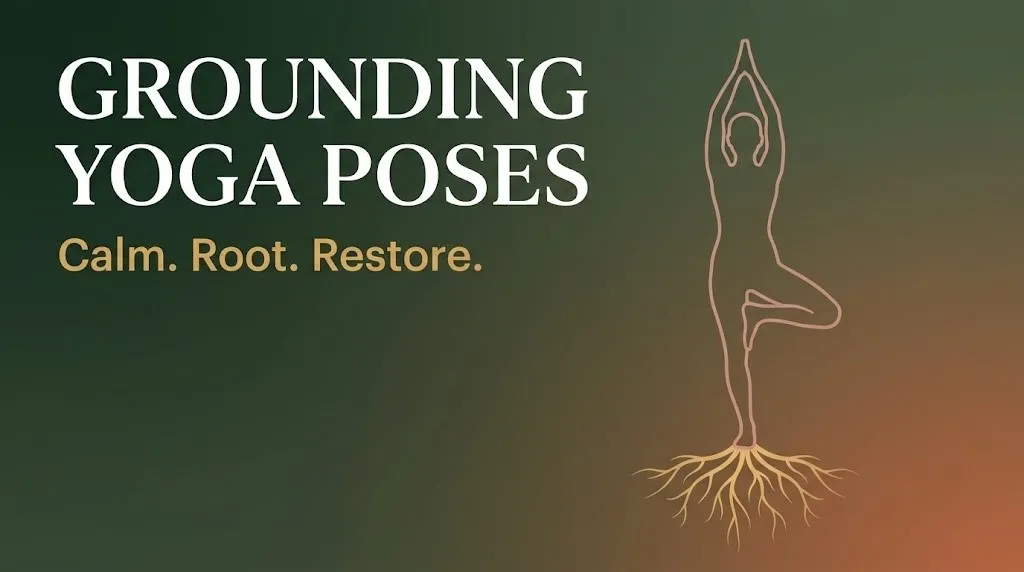
Proprioception is the body’s sense of its own position in space, received through receptors in muscles, joints, and connective tissue. When you press your feet firmly into the floor in Tadasana (Mountain Pose), those proprioceptive receptors fire signals that the nervous system interprets as physical stability. That signal of stability has a direct calming effect on stress circuits in the brain.
According to the NCCIH, yoga practices that combine breath regulation, physical postures, and focused attention consistently produce reductions in anxiety symptom scores, with some studies showing effects after a single session of 20 to 30 minutes. This is why grounding yoga produces a noticeable result even in a first practice.
The three-part grounding mechanism:
- Proprioception: Physical pressure through the feet and sitting bones signals safety to the nervous system
- Parasympathetic breath: Long, slow exhalations activate the vagus nerve and reduce cortisol output
- Interoception: Attention to internal body sensation shifts awareness away from anxious thought loops
Key Takeaway: Grounding yoga calms anxiety by activating the parasympathetic nervous system through three simultaneous mechanisms: proprioceptive pressure from the floor, slow exhalation breath patterns, and focused internal body awareness.
Root Chakra and Grounding Yoga: The Connection Explained
The root chakra, called Muladhara in Sanskrit, is the first of the seven classical energy centers in yogic anatomy, located at the base of the spine and associated with the earth element, physical safety, survival instincts, and the felt sense of belonging.
When the root chakra is described as “imbalanced” in yoga philosophy, it corresponds practically to feelings of fear, anxiety, instability, disconnection from the body, and difficulty completing basic life functions. When it is described as stable, it corresponds to feelings of safety, calm confidence, and physical presence. These are not just spiritual metaphors. They map closely to what neuroscience describes as low and high vagal tone states.
Poses that ground through the feet, hips, and lower body are traditionally associated with Muladhara activation because they bring awareness and energy into the body’s lower half, countering the upward-moving quality of anxious mental energy. Standing poses, squats, and seated hip openers all direct attention downward and inward.
You do not need to engage with the chakra framework to practice grounding yoga effectively. The physiological effects of these poses are measurable regardless of the philosophical lens through which you approach them. The Muladhara concept simply provides a useful organizing framework for understanding why lower-body, earth-connected poses feel different from arm balances or inversions.
Root chakra yoga poses and their physical focus:
- Tadasana (Mountain Pose): Feet, ankles, legs; foundational earth connection
- Malasana (Garland Pose): Hips, ankles, pelvic floor; deep earth contact
- Virabhadrasana I (Warrior I): Legs, hips, core; rooted strength
- Balasana (Child’s Pose): Full body surrender to gravity; complete earth contact
- Baddha Konasana (Bound Angle Pose): Inner thighs, hips, sitting bones; seated earth connection
Best Standing Grounding Yoga Poses
Standing grounding yoga poses are the most effective entry point for reducing acute anxiety or mental restlessness because they combine active muscle engagement with strong proprioceptive foot-floor contact, creating both physical and neurological stability simultaneously.
Tadasana (Mountain Pose) is the foundational grounding pose in virtually every yoga tradition. Despite its apparent simplicity, it is one of the most anatomically instructive poses in the standing repertoire. The entire practice of standing grounding begins here.
To practice Tadasana (Mountain Pose):
- Stand with feet hip-width apart. Spread the toes actively. Ground through the four corners of each foot: big toe mound, little toe mound, inner heel, outer heel.
- Engage the inner thighs gently toward each other. Do not lock the knees.
- Draw the lower belly in and up lightly. Lengthen through the crown of the head.
- Let the arms hang naturally at the sides, palms forward.
- Breathe slowly through the nose. Hold for 5 to 10 full breath cycles, approximately 30 to 60 seconds.
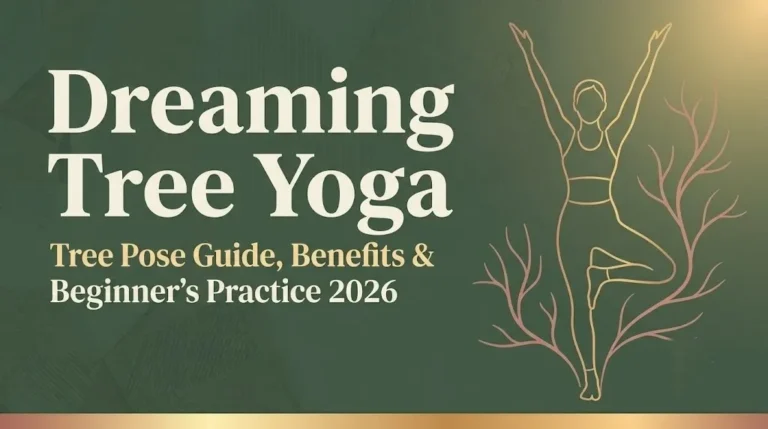
Vrikshasana (Tree Pose) adds the dimension of single-leg balance, which dramatically increases proprioceptive demand and focuses the mind more effectively than double-leg standing poses.
Modification for Tadasana: If standing for extended periods causes discomfort in the feet or lower back, stand with the back lightly against a wall. The wall provides additional proprioceptive input and reduces balance demand. For seniors, holding a chair back is a valid and equally effective modification.
Modification for Tree Pose: Place the raised foot on the inner calf, not the knee. For anyone with significant balance challenges, keep the toes of the raised foot lightly on the floor as a “kickstand.”
Seated and Floor Grounding Yoga Poses
Seated and floor grounding yoga poses shift the base of support from the feet to the sitting bones, hips, and entire lower body, creating a broader and more stable physical foundation that supports deeper nervous system release than most standing poses.
Baddha Konasana (Bound Angle Pose) is one of the most accessible and effective floor grounding poses. The hip-opening quality of the pose reduces chronic tension in the hip external rotators, which accumulate stress from prolonged sitting and emotional tension. The sitting bones press firmly into the earth throughout.
To practice Baddha Konasana (Bound Angle Pose):
- Sit on the floor with legs extended. Bring the soles of the feet together, allowing the knees to fall open.
- Hold the feet or ankles with both hands. Sit tall through the spine.
- Press the sitting bones down firmly. Let the inner thighs release toward the floor without forcing.
- Inhale to lengthen the spine. Exhale to soften the hips.
- Hold for 5 to 8 breath cycles, approximately 30 to 60 seconds. Release slowly.
Malasana (Garland Pose) is a deep yoga squat that brings the hips, ankles, and feet into close contact with the floor. It is one of the most grounding shapes in the human movement repertoire.
Modification for Baddha Konasana: Sit on a folded blanket or yoga block to tilt the pelvis forward and reduce strain in the inner groins. For anyone with acute hip pain, widen the distance between the feet and reduce the depth of the knee opening.
Modification for Malasana: Place a folded blanket under the heels if they lift from the floor. For people with knee pain, skip this pose and substitute a supported seated hip opener instead.
Key Takeaway: Floor and seated grounding poses work by pressing the sitting bones and hips into the earth, which broadens the proprioceptive surface area and supports a more complete parasympathetic response than standing poses alone.
Forward Fold Yoga Poses for Grounding
Forward fold poses are among the most reliably calming shapes in yoga because the physical act of folding the upper body toward the lower body reverses the upward tension pattern of stress while simultaneously stretching the hamstrings, erector spinae, and calves that accumulate the most physical holding from anxiety and chronic fight-or-flight activation.
Uttanasana (Standing Forward Bend) is the primary standing forward fold. In this pose, the crown of the head hangs toward the earth, inverting the habitual upright tension pattern of an anxious nervous system. Blood flow increases gently to the head. The posterior chain lengthens. The breath naturally deepens.
Paschimottanasana (Seated Forward Fold) is the floor equivalent. With the legs extended and the torso folding forward over the thighs, the entire back body from the heels to the base of the skull receives a long, sustained lengthening. This pose is particularly effective for evening grounding before sleep.
Think of the forward fold as a full-body exhale. The body literally curves in the same direction the breath moves on a long exhale: forward and downward. Practicing forward folds with an emphasis on the exhale deepens both the physical and nervous system effects simultaneously.
To practice Uttanasana (Standing Forward Bend):
- Stand in Tadasana. Feet hip-width apart.
- Inhale: lengthen the spine tall.
- Exhale: hinge from the hips, folding forward. Bend the knees generously.
- Let the head hang heavy. Rest hands on the floor, shins, or blocks.
- Hold for 5 to 8 breaths. Release on an inhale, rising slowly.
Modification: For anyone with lower back sensitivity, keep a substantial bend in the knees and place hands on blocks to avoid rounding the lumbar spine under load.
Warrior Poses for Grounding and Stability
Warrior poses are grounding yoga poses that combine the earth-connected stability of deep leg engagement with the physical strength and psychological confidence of an upright, expansive upper body, making them uniquely effective for practitioners who need both calming and empowerment.
Virabhadrasana I (Warrior I) demands deep rooting through both feet simultaneously: the front foot presses into the floor through all four corners, and the back foot presses firmly into the mat at a 45-degree angle. This bilateral foot pressure generates strong proprioceptive input while the upright torso and raised arms counter the internal-collapse pattern of anxiety.
Virabhadrasana II (Warrior II) shifts from the forward-facing orientation of Warrior I to a wide-open lateral stance. The gaze is steady and focused. The arms extend horizontally. Both legs root firmly downward. This pose is particularly effective for practitioners who need grounding alongside a sense of personal agency and strength.
To practice Virabhadrasana II (Warrior II):
- Stand with feet wide apart, approximately 3 to 4 feet. Turn the right foot out 90 degrees, the left foot in 15 degrees.
- Extend the arms horizontally, palms down. Gaze over the right fingertips.
- Exhale: bend the right knee toward 90 degrees, keeping it stacked over the right ankle.
- Press both feet firmly into the floor. Engage the inner thighs.
- Hold for 5 to 8 breath cycles. Repeat on the left side.
Modification for both Warrior poses: Reduce the depth of the front knee bend to 45 degrees if the knee, hip, or ankle signals discomfort. For seniors, use a shorter stance width and hold a chair back with the forward hand for stability.
Grounding Yoga Sequence: A Complete Morning Practice
A complete morning grounding yoga sequence uses 15 to 20 minutes to shift the nervous system from the transitional state between sleep and waking into alert, calm, embodied presence, using breath, standing poses, and floor work in a purposeful order.
The sequence below moves from the floor upward, beginning with breath and body awareness before adding physical demand. This order respects the nervous system’s morning state rather than jarring it into high-intensity movement immediately.
Complete morning grounding sequence (15 to 20 minutes):
- Dirga pranayama (Three-Part Breath): 10 breath cycles lying on the back. Fills the belly, ribcage, and chest sequentially on each inhale.
- Baddha Konasana (Bound Angle Pose): 5 breaths. Seated on a folded blanket.
- Balasana (Child’s Pose): 8 breaths. Wide-knee variation.
- Marjaryasana and Bitilasana (Cat and Cow Poses): 8 breath cycles. Gentle spinal mobilization.
- Tadasana (Mountain Pose): 10 breaths. Deliberate foot-floor connection.
- Vrikshasana (Tree Pose): 5 breaths each side.
- Virabhadrasana I (Warrior I): 5 breaths each side.
- Uttanasana (Standing Forward Bend): 8 breaths. Knees soft.
- Malasana (Garland Pose): 8 breaths. Blanket under heels if needed.
- Savasana (Corpse Pose): 3 to 5 minutes. Let the practice integrate.
Modification: The entire standing portion of this sequence can be practiced seated in a chair or supported against a wall for practitioners with balance limitations or early morning joint stiffness.
Key Takeaway: A morning grounding yoga sequence works best when it moves from floor-based breath work upward into standing poses, giving the nervous system a gradual, progressive on-ramp rather than demanding full engagement immediately on waking.
Grounding Yoga Before Bed: An Evening Sequence
An evening grounding yoga sequence uses slower, more passive shapes than a morning practice, prioritizing parasympathetic activation and full-body surrender over muscular engagement and proprioceptive stimulation.
The goal of evening grounding yoga is different from morning practice. In the morning, you are building presence and energy. In the evening, you are releasing the day’s accumulated tension and preparing the nervous system for sleep. This distinction changes every choice in the sequence: the poses are more passive, the holds are longer, and the breath emphasis shifts entirely to the exhale.
Research published in the Journal of Alternative and Complementary Medicine found that yoga practices emphasizing parasympathetic activation, including slow breathing, forward folds, and passive floor poses, improved sleep quality scores and reduced pre-sleep anxiety in adult participants over 8 weeks of regular practice.
Complete evening grounding sequence (20 minutes):
- Nadi Shodhana (Alternate Nostril Breath): 10 cycles. Balances left and right hemispheres.
- Supta Baddha Konasana (Reclining Bound Angle Pose): 3 minutes. Bolster or blanket under the spine.
- Janu Sirsasana (Head to Knee Pose): 2 minutes each side. Gentle forward fold.
- Paschimottanasana (Seated Forward Fold): 2 minutes. Generous knee bend; strap around feet if needed.
- Setu Bandhasana (Bridge Pose): 8 breaths. Gentle spinal extension before full release.
- Supta Matsyendrasana (Supine Spinal Twist): 2 minutes each side. Full release of erector spinae.
- Viparita Karani (Legs Up the Wall): 5 minutes. Passive inversion for nervous system reset.
- Savasana (Corpse Pose): 5 minutes minimum. No timer pressure.
Modification: Replace Legs Up the Wall with Supta Baddha Konasana (Reclining Bound Angle Pose) if the hamstrings or lower back resist the straight-leg inversion.
Pranayama for Grounding: Breath Techniques That Work
Pranayama for grounding works by extending the exhalation phase of the breath, which directly stimulates the vagus nerve and shifts the autonomic nervous system toward parasympathetic dominance within several breath cycles.
The most effective grounding breath technique is the extended exhale ratio: breathing in for a count of 4 and out for a count of 6 to 8. This ratio creates a state called cardiac coherence, where heart rate variability synchronizes with the breath cycle, a measurable marker of parasympathetic activation. You do not need special equipment to access this state. You need only your nose and a deliberate count.
Ujjayi pranayama (victorious breath) adds the dimension of audible breath regulation. The slight throat constriction that characterizes Ujjayi creates resistance that slows the breath automatically, extends the exhalation naturally, and provides a sensory focus point (the sound) that reduces mental wandering during grounding poses.
Nadi Shodhana (alternate nostril breath) is the most commonly cited pranayama technique for balancing the nervous system. Research published in the International Journal of Yoga found that Nadi Shodhana produced measurable reductions in anxiety scores and improvements in autonomic balance compared to control groups after 4 weeks of daily practice.
To practice extended exhale breathing:
- Sit comfortably with the spine tall. Close the mouth.
- Inhale through the nose for a count of 4.
- Exhale through the nose for a count of 6. Let the exhale be smooth and complete.
- Pause naturally at the bottom of the exhale without forcing.
- Repeat for 10 full cycles before beginning any grounding pose sequence.
Modification: If an exhale of 6 feels strained, begin with 4 in and 5 out. Extend the ratio gradually over several weeks as the breath capacity expands.
Grounding Yoga for Anxiety and Stress Relief
Grounding yoga for anxiety specifically targets the physiological mechanisms that maintain the anxiety state: elevated cortisol, sympathetic nervous system activation, shallow chest breathing, and reduced body awareness.
According to the NCCIH, yoga practice produces reductions in anxiety symptom severity comparable to other well-established behavioral interventions, with the strongest effects appearing in practices that combine physical movement, breath regulation, and focused attention simultaneously. Grounding-oriented yoga sequences hit all three of these elements.
The specific poses that produce the most reliable anxiety-reducing effects are those with the longest body-floor contact, the deepest hip involvement, and the greatest potential for exhale extension. Balasana (Child’s Pose) combines all three: the forehead rests on the earth, the hips fold toward the heels, and the forward-folded position naturally encourages long, deep exhalations.
For practitioners managing clinical anxiety, trauma-informed yoga teachers recommend an additional approach: making the entry into and exit from grounding poses voluntary and self-paced rather than teacher-directed. Practitioners with anxiety and PTSD benefit from having full control over when they enter and exit each shape. Any pose held past the point of voluntary comfort becomes activating rather than grounding.
Grounding poses ranked by anxiety-calming effect (based on research patterns):
- Balasana (Child’s Pose): Highest. Full body earth contact plus forward fold.
- Supta Baddha Konasana (Reclining Bound Angle Pose): High. Complete passivity with hip opening.
- Viparita Karani (Legs Up the Wall): High. Passive inversion with complete rest.
- Paschimottanasana (Seated Forward Fold): Moderate to High. Hamstring release plus forward fold.
- Tadasana (Mountain Pose): Moderate. Active proprioception plus breath focus.
Key Takeaway: For anxiety specifically, the most effective grounding poses combine maximum floor contact, hip opening, and a forward fold orientation that supports long exhalations; Child’s Pose and Reclining Bound Angle Pose consistently outperform standing poses in producing parasympathetic shift within a single session.
Grounding Yoga for Beginners: Where to Start
Grounding yoga for beginners is accessible from day one because the most effective grounding poses require no flexibility, no strength prerequisites, and no prior yoga experience to practice safely and beneficially.
The beginner’s best starting point is a three-pose sequence practiced daily for 10 minutes: Tadasana (Mountain Pose) for 1 minute, Balasana (Child’s Pose) for 2 minutes, and Supta Baddha Konasana (Reclining Bound Angle Pose) for 3 minutes, followed by 4 minutes of Savasana (Corpse Pose). This 10-minute sequence covers standing proprioception, forward fold, hip opening, and complete rest in a format that requires no equipment beyond a mat and a blanket.
The most common beginner mistake in grounding yoga is rushing through poses without allowing the nervous system time to respond. The grounding effect is not immediate in the way that stretching a tight muscle is immediate. It takes several breaths for the parasympathetic shift to register. Holding each pose for at least 5 to 8 breath cycles before releasing gives the body the time it needs to transition.
Beginner grounding yoga: 10-minute starter sequence:
- Tadasana (Mountain Pose): 1 minute. Focus entirely on foot-floor contact.
- Balasana (Child’s Pose): 2 minutes. Wide-knee variation. Forehead on a block if the floor feels too far.
- Baddha Konasana (Bound Angle Pose): 2 minutes. On a folded blanket.
- Supta Baddha Konasana (Reclining Bound Angle Pose): 3 minutes. Blanket under each knee.
- Savasana (Corpse Pose): 2 minutes. No movement. No adjustment.
Grounding Yoga Modifications for Seniors and Limited Mobility
Grounding yoga for seniors and practitioners with limited mobility requires replacing floor transitions and deep flexion poses with chair-supported or wall-supported alternatives that preserve the grounding effect while eliminating fall risk and joint compression.
The most effective chair grounding pose is chair-supported Mountain Pose: seated upright at the front edge of a sturdy chair, feet flat on the floor hip-width apart, hands resting on the thighs. This position creates the same foot-floor proprioceptive input as standing Tadasana while completely eliminating balance demand. The breath focus remains identical.
Forward folding is accessible from a chair as a seated forward bend: from the chair-supported Mountain Pose, hinge at the hips on an exhale and let the torso fold toward the thighs. Keep the spine as long as possible. This produces the same calming forward fold effect as standing Uttanasana without requiring floor transfer.
Grounding yoga modifications by situation:
| Situation | Standard Pose | Senior or Limited Mobility Modification |
|---|---|---|
| Balance challenges | Vrikshasana (Tree Pose) | Seated tree: ankle on opposite thigh while seated |
| Knee pain or restriction | Malasana (Garland Pose) | Skip; substitute wide-leg seated forward fold |
| Floor transfer difficulty | Balasana (Child’s Pose) | Seated forward fold over chair; arms on table |
| Hip replacement | Baddha Konasana (Bound Angle Pose) | Seated with feet flat, gentle hip rotation only |
| Osteoporosis | Paschimottanasana (Forward Fold) | Slight forward hinge only; avoid deep spinal flexion |
| Wrist pain | Weight-bearing floor poses | Forearm or fist support; or skip to floor poses |
General senior guidance: Warm up the ankles and feet before any standing grounding practice by circling the ankles and pressing through the toes. Cold feet and ankles reduce proprioceptive sensitivity, which is the primary physical mechanism behind grounding yoga’s calming effect.
Yin Yoga and Restorative Yoga for Deep Grounding
Yin yoga and Restorative yoga produce the deepest grounding effects of any yoga format because they hold poses for extended durations (3 to 20 minutes) with full muscular release, creating the most prolonged and complete parasympathetic activation available through yoga practice.
Yin yoga applies sustained passive holds of 3 to 5 minutes per pose to connective tissue in the hips, pelvis, and lower spine. Because these areas carry the most chronic stress-pattern tension in the body, their sustained release produces a grounding effect that is both physical (hip flexor and outer hip lengthening) and neurological (extended parasympathetic activation through long holds and deep exhalations).
Restorative yoga removes all muscular effort through prop support: bolsters, blankets, blocks, and straps position the body in passive shapes where no muscles need to work to maintain the pose. The result is the deepest possible parasympathetic activation available through physical practice. According to research published in Complementary Therapies in Medicine, restorative yoga produced greater reductions in evening cortisol levels than active yoga in adult women over a 10-week practice period.
Most effective Yin and Restorative grounding poses:
- Yin Dragon Pose (low lunge variation held passively): 3 minutes each side; deep iliopsoas release
- Yin Butterfly (Baddha Konasana held passively): 4 minutes; inner thigh and hip release
- Restorative Supported Bridge: Bolster under sacrum; 5 minutes; gentle spinal extension
- Restorative Supta Baddha Konasana: Bolster along spine; blankets under knees; 10 minutes
- Viparita Karani (Legs Up the Wall): 5 to 10 minutes; the single most accessible deep restorative pose
Modification: In any Yin pose, reduce the intensity by decreasing the range of the shape, not by shortening the hold time. The duration is what produces the connective tissue response. A shallower shape held for 3 minutes is more beneficial than a deep shape held for 30 seconds.
How Long Should You Hold Grounding Yoga Poses?
The optimal hold duration for grounding yoga poses depends on the style of practice: active standing and seated poses benefit from 5 to 10 breath cycles (30 to 60 seconds), while passive floor and restorative poses require 3 to 10 minutes to produce meaningful nervous system and connective tissue effects.
The nervous system does not respond immediately to grounding input. The parasympathetic shift that grounding yoga produces requires several breath cycles to register. Research patterns in yoga and breathwork studies consistently show that minimum hold times of 30 seconds are needed for measurable autonomic nervous system changes in active poses, while 3 minutes or more are needed in passive Yin and Restorative contexts for connective tissue adaptation.
Yoga teachers and physical therapists generally recommend building hold times gradually over weeks rather than starting at maximum duration. Beginning at 30 seconds per pose and extending by 10 seconds per week allows the body to adapt without the frustration or discomfort that forces early release from poses before their effects can register.
Hold time guide by pose type:
| Pose Type | Minimum Hold | Optimal Hold | Maximum Recommended |
|---|---|---|---|
| Active standing (Mountain, Warriors) | 5 breaths / 30 sec | 8 to 10 breaths / 60 sec | 2 to 3 minutes |
| Seated hip openers (Bound Angle) | 5 breaths / 30 sec | 8 to 10 breaths / 60 sec | 3 minutes |
| Active forward folds | 5 breaths / 30 sec | 8 breaths / 60 sec | 2 minutes |
| Yin poses | 2 minutes | 3 to 5 minutes | 7 minutes |
| Restorative poses | 3 minutes | 5 to 10 minutes | 20 minutes |
| Savasana (Corpse Pose) | 3 minutes | 5 to 10 minutes | No maximum |
One practical note: The temptation to shorten holds before they complete is the most common practice error in grounding yoga. The uncomfortable minute between “I want to come out” and “something just shifted” is often where the most meaningful grounding effect occurs.
Frequently Asked Questions About Grounding Yoga Poses
What yoga poses are best for grounding and anxiety?
The best grounding yoga poses for anxiety are Balasana (Child’s Pose), Tadasana (Mountain Pose), Supta Baddha Konasana (Reclining Bound Angle Pose), and Viparita Karani (Legs Up the Wall).
These poses combine maximum floor contact, hip opening, and forward fold orientation, which together activate the parasympathetic nervous system most efficiently.
For acute anxiety, starting with Child’s Pose for 2 to 3 minutes with slow nasal exhalations produces the fastest nervous system calming of any single yoga pose.
How long should I hold grounding yoga poses to feel the effect?
Active grounding poses like Mountain Pose or Warrior II should be held for at least 5 to 8 breath cycles, roughly 30 to 60 seconds, to produce a measurable calming effect.
Passive floor poses like Reclining Bound Angle or Legs Up the Wall require a minimum of 3 minutes to produce meaningful parasympathetic activation and connective tissue release.
The first 60 seconds of any grounding pose is often the least effective; the shift tends to happen between minutes 2 and 3 in longer holds.
Can grounding yoga help with anxiety and stress?
Yes, grounding yoga helps with anxiety and stress by activating the parasympathetic nervous system through slow breathing, proprioceptive floor contact, and sustained physical attention to body sensation.
The National Center for Complementary and Integrative Health (NCCIH) cites yoga as an evidence-based approach for anxiety management, with multiple studies showing reductions in cortisol and anxiety symptom scores after regular practice.
People managing clinical anxiety should practice grounding yoga as a complement to, not a replacement for, professional mental health support.
What is the difference between grounding yoga and regular yoga?
Grounding yoga is not a separate yoga style but an intention applied to any yoga format, specifically the intention to cultivate physical earth connection, lower-body stability, and parasympathetic nervous system activation through the practice.
Any yoga class, whether Hatha, Yin, or Restorative, can be made more grounding by emphasizing foot-floor contact, extended exhalations, lower-body poses, and longer hold times.
Regular yoga classes without a grounding intention may include the same poses but without the breath emphasis, hold duration, or sensory focus that produce the calming effect.
Is grounding yoga safe for beginners with no experience?
Grounding yoga is among the most accessible yoga approaches for complete beginners because its most effective poses require no flexibility, no strength, and no prior yoga knowledge.
Balasana (Child’s Pose), Tadasana (Mountain Pose), and Supta Baddha Konasana (Reclining Bound Angle Pose) are appropriate for first-session beginners and can be modified with blankets and blocks to suit any body.
The primary beginner safety consideration is not physical difficulty but hold duration: allow at least 5 breath cycles per pose to give the nervous system time to respond before releasing.
Wrapping Up
Start today with three poses. Tadasana for one minute. Balasana for two minutes. Supta Baddha Konasana for three minutes. That ten-minute sequence, practiced three to four times per week, is enough to produce measurable nervous system changes within a few weeks.
Use props freely. A blanket under the sitting bones, blocks under the hands in forward folds, bolsters under the knees in reclining poses. The prop doesn’t reduce the benefit. It makes the benefit available.
Stay in the pose one breath longer than you want to. That’s where the grounding actually happens.
Meta Desc: Grounding yoga poses calm the nervous system and reduce anxiety. Get the best poses, morning and evening sequences, and beginner modifications here.
Meta Desc Chars: 150/159
Focus Keywords: grounding yoga poses, yoga poses for grounding, grounding yoga sequence, yoga sequence for grounding, grounding yoga for anxiety