Black Cat Yoga: Cat Pose Guide and Libertyville Tips 2026
Black cat yoga refers to both a welcoming community yoga studio in Libertyville, Illinois and a rich tradition of cat-inspired spinal mobility poses centered on Marjaryasana (Cat Pose) and its paired movement with Bitilasana (Cow Pose). Whether you are searching for a local studio or trying to understand these foundational poses more deeply, you are in the right place.
Cat-based spinal movements are among the most frequently recommended exercises in both yoga and physical therapy for adults with back stiffness, poor posture, and sedentary lifestyles. The National Center for Complementary and Integrative Health (NCCIH) recognizes yoga-based spinal mobility practices as evidence-supported approaches for reducing chronic lower back pain and improving functional movement.
This guide covers the full anatomy of cat pose, step-by-step technique, modifications for beginners, seniors, and prenatal practitioners, the science behind spinal benefits, a connected warm-up sequence, and practical tips for anyone stepping into a community yoga studio in Libertyville for the first time.
What Is Black Cat Yoga and the Cat Pose
Black cat yoga refers simultaneously to a specific yoga studio community in Libertyville, Illinois and to a family of yoga poses built around the spinal flexion movement of Marjaryasana (Cat Pose), one of yoga’s most foundational and widely taught movements.
Marjaryasana takes its name from the Sanskrit word “marjara,” meaning cat. The pose mimics the full-body arch a cat makes when stretching. In yoga practice, this translates to a deliberate, breath-linked rounding of the entire spine from the tailbone through the cervical vertebrae.
Cat pose is most commonly practiced as part of the paired movement Marjaryasana-Bitilasana (Cat-Cow), where spinal flexion on the exhale (Cat) alternates with spinal extension on the inhale (Cow). This rhythmic, breath-coordinated movement is used as a warm-up in virtually every Hatha yoga, Vinyasa yoga, and Restorative yoga class taught worldwide.
The “black cat” variation is a creative teaching term used in some yoga communities to describe a deeper, more sustained version of Marjaryasana, where the practitioner holds the full spinal flexion for several breath cycles rather than flowing immediately into extension. This static hold increases the demand on the abdominal muscles and offers a longer passive lengthening of the erector spinae.
Key facts about cat pose in yoga:
- Primary action: full spinal flexion from lumbar through cervical vertebrae
- Breath pattern: exhale deepens the shape; inhale releases it
- Used in: Hatha, Vinyasa, Restorative, Yin, prenatal, and chair yoga
- Sanskrit name: Marjaryasana (single pose) or Marjaryasana-Bitilasana (paired movement)
- Prop options: blanket under knees, forearms on the mat, chair seat
Black Cat Yoga Libertyville: What Local Students Should Know
Black Cat Yoga in Libertyville, Illinois is a community-focused yoga studio serving the northern Chicago suburbs, offering classes for students at all experience levels, from first-timers to long-term practitioners.
Libertyville is a Lake County community with a growing wellness culture. Local yoga studios in this area typically offer a mix of Hatha yoga, Vinyasa flow, Restorative yoga, and chair yoga to serve the range of age groups and fitness levels in the suburban community. Black Cat Yoga’s name reflects both the playfulness of the cat pose tradition and the independent, community-rooted spirit of a neighborhood studio.
For local students considering their first class, the most practical step is choosing the right class type before you arrive. General beginner classes labeled “Level 1,” “Fundamentals,” or “Gentle Yoga” are the appropriate entry points. Drop-in pricing for community studios in the Chicago suburb market typically ranges from $15 to $25 per class, with monthly memberships reducing that cost substantially.
What to bring to a first class at a community studio:
- A yoga mat, or plan to rent one at the studio (typically $2 to $5)
- Water in a bottle you can close completely
- Comfortable, non-restrictive clothing you can move freely in
- Socks to change into after class in cooler weather
- Arrive 10 to 15 minutes early to introduce yourself to the teacher and mention any injuries or limitations
The teacher-student relationship at a community studio like Black Cat Yoga is informal and accessible. Telling the teacher about a bad knee, a stiff lower back, or a history of neck issues before class starts is not a burden. It is expected, and it helps the teacher offer you appropriate modifications throughout the session.
Marjaryasana (Cat Pose): Anatomy and How It Works
Marjaryasana (Cat Pose) works by moving the entire spine into flexion simultaneously, from the sacrum through the lumbar and thoracic vertebrae to the cervical spine, producing a full spinal arch that mobilizes every spinal segment in the same motion.
This is not just a stretch. Cat pose produces what physical therapists call segmental spinal mobility, meaning each vertebral joint moves through its available range rather than the body compensating by loading one segment while others remain stiff. Most people who sit for long hours develop what movement researchers call “segmental stiffness,” where certain spinal levels move easily while adjacent levels barely move at all. Cat pose systematically addresses this.
The primary muscles working during Marjaryasana are:
- Rectus abdominis: Contracts to pull the sternum toward the pubic bone, creating the rounded shape
- Transverse abdominis: Provides deep core compression that supports the lumbar rounding
- Erector spinae: Lengthens under eccentric load as the spine rounds, providing controlled deceleration
- Multifidus: Small deep spinal muscles that stabilize individual vertebral joints during the movement
- Scapular stabilizers (serratus anterior, lower trapezius): Maintain shoulder blade position as the thoracic spine rounds
According to the Spine Journal, controlled spinal flexion exercises performed with conscious breath coordination help maintain intervertebral disc hydration and segmental joint lubrication in adults with sedentary occupations. Cat pose is among the exercises physical therapists reference when prescribing home-based spinal mobility programs.
Key Takeaway: Cat pose is not just a yoga warm-up. It is a segmental spinal mobilization exercise that every person who sits at a desk for more than four hours a day should be doing consistently.
Cat-Cow Yoga: The Paired Movement Explained
Marjaryasana-Bitilasana (Cat-Cow) is a paired spinal movement where Marjaryasana (Cat Pose) on the exhale alternates with Bitilasana (Cow Pose) on the inhale, creating a rhythmic, breath-linked mobilization of the entire spine through its two primary planes of movement.
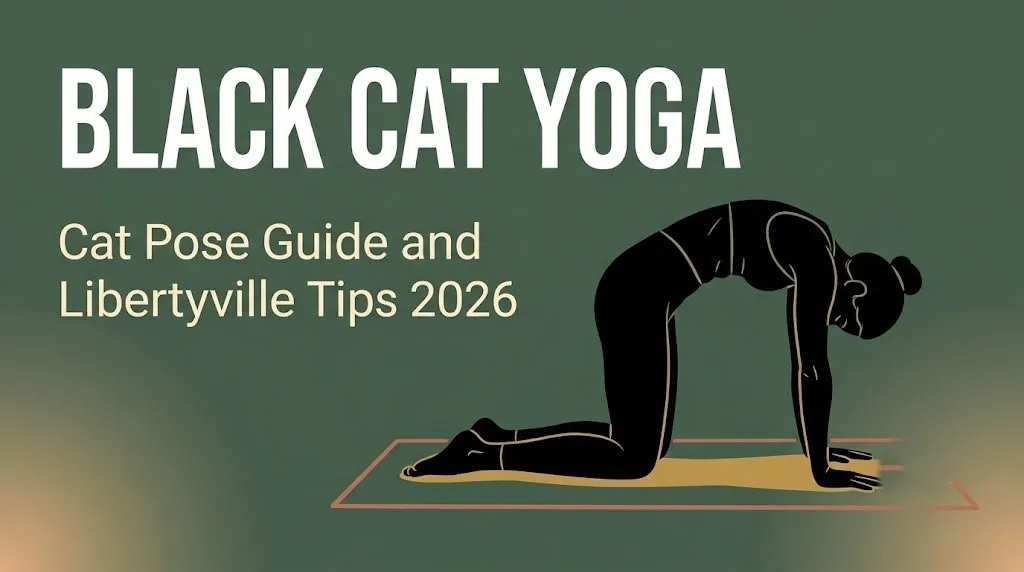
Cat-Cow is not two separate poses placed next to each other. It is a single continuous movement pattern where the breath drives the transition. The inhale creates spinal extension (Cow): the belly drops, the chest lifts, and the tailbone rises. The exhale creates spinal flexion (Cat): the belly draws in, the spine rounds toward the ceiling, and the tailbone tucks.
Think of the spine like a garden hose. When it is kinked in one direction for too long, flow is restricted. Cat-Cow systematically runs the hose through its full range, restoring circulation to the spinal joints and surrounding soft tissue. People who practice Cat-Cow for 5 to 10 cycles every morning consistently report reduced morning stiffness, though the mechanism is the joint mobilization itself rather than any single breath pattern.
Cat-Cow: What Each Phase Does
| Phase | Pose | Breath | Spine Action | Primary Muscles Working |
|---|---|---|---|---|
| Cow | Bitilasana | Inhale | Extension: belly drops, chest lifts | Erector spinae, gluteus maximus |
| Cat | Marjaryasana | Exhale | Flexion: spine rounds, belly draws in | Rectus abdominis, transverse abdominis |
The transition speed between Cat and Cow should match your breath. Rushing the movement disconnects breath from motion, which removes one of the primary benefits: teaching the nervous system to associate controlled breathing with controlled movement. This is why yoga teachers often cue “let the breath lead” rather than “move faster.”
How to Do Cat Pose Step by Step
Marjaryasana (Cat Pose) is practiced from a hands-and-knees position, with the movement initiated by the breath rather than by forcing the spine into shape.
To practice Marjaryasana (Cat Pose):
- Begin on hands and knees with wrists directly under shoulders and knees directly under hips.
- Spread the fingers wide, pressing evenly through all four corners of each hand.
- Set a neutral spine: back flat, gaze toward the mat, no sagging or arching.
- Begin to exhale slowly through the nose.
- As you exhale, draw the navel in and up toward the spine.
- Continue rounding: tuck the tailbone toward the floor, round the thoracic spine toward the ceiling.
- Allow the chin to drop gently toward the chest, following the spinal curve naturally.
- Hold the full Cat shape for 3 to 5 breath cycles if practicing the static black cat variation, or release immediately into Cow if practicing Cat-Cow flow.
- To release: inhale and either return to neutral or move into Bitilasana (Cow Pose).
Pose Tip:
- Do not force the chin to the chest. Let the cervical spine follow the thoracic movement naturally.
- Press the floor away through your hands to prevent the elbows from bowing outward.
- The rounding comes from the spine, not from collapsing the shoulders inward.
- Modification for wrist pain: make fists on the mat, or lower to forearms with elbows under shoulders.
Safety note: People with acute cervical spine injuries should keep the head and neck in a neutral position throughout, avoiding the chin-to-chest movement until cleared by a physical therapist.
Cat Pose Yoga Benefits for Spine and Posture
Cat pose produces documented, specific benefits for spinal health, posture, and nervous system regulation, not just a general sense of feeling stretched.
At the spinal level, the rhythmic flexion of Cat pose stimulates synovial fluid production within the facet joints of the spine. These small joints connect adjacent vertebrae and allow controlled rotation and extension. Synovial fluid acts as both lubricant and nutrient transport medium for the joint cartilage. Long periods of static sitting reduce synovial fluid circulation; cat pose restores it.
For posture, cat pose specifically addresses thoracic kyphosis, the forward-rounded upper back posture common in desk workers and people who spend hours looking at screens. The intentional rounding in Cat pose actually teaches the thoracic spine that it can flex fully, which is a precondition for being able to extend fully in the opposite direction. You cannot improve thoracic extension without first restoring controlled thoracic flexion range.
Benefits of regular cat pose practice:
- Spinal segmental mobility: Each vertebral level moves through its available range rather than stiffening
- Intervertebral disc health: Rhythmic compression and decompression helps maintain disc hydration
- Core activation: The exhale-driven abdominal engagement trains the deep stabilizing muscles of the lumbar spine
- Nervous system regulation: Breath-linked movement activates the parasympathetic nervous system, reducing stress response
- Posture improvement: Restores thoracic mobility needed for upright seated and standing alignment
- Shoulder blade control: Requires active serratus anterior engagement, improving scapular stability over time
A study published in the International Journal of Yoga found that yoga-based spinal mobility practices performed three times weekly over eight weeks produced measurable improvements in spinal range of motion and self-reported back comfort in sedentary adults.
Cat Pose for Back Pain: What the Research Says
Cat pose and the Cat-Cow sequence are among the most consistently recommended yoga-based exercises for adults managing chronic lower back pain, with a research base that supports their inclusion in rehabilitation programs.
The NCCIH states that yoga, including movement-based practices emphasizing spinal mobility and core engagement, has been shown to reduce chronic lower back pain and improve functional movement in adults. Cat-Cow specifically appears in multiple physical therapy protocol studies as a home exercise for lumbar stabilization programs.
The mechanism behind cat pose’s benefit for back pain has two primary components. First, the active abdominal engagement in the Cat phase (exhale, navel to spine) trains the transverse abdominis and multifidus, the deep stabilizing muscles that research consistently identifies as weakened or inhibited in people with chronic lower back pain. Second, the full-range spinal movement reduces the guarding patterns that develop when the back muscles have been in protective tension for extended periods.
Research note from the Journal of Alternative and Complementary Medicine: A systematic review of yoga interventions for chronic lower back pain found that yoga programs producing the most consistent improvement in pain and disability included spinal mobility components (cat-cow being among the most cited), practiced three to five times per week over a minimum of eight weeks.
People with the following conditions should modify rather than avoid cat pose:
- Disc herniation: Limit the depth of flexion; avoid any position that increases leg or foot symptoms
- Spinal stenosis: Flexion may be more comfortable than extension; full Cat may feel better than full Cow
- Spondylolisthesis: Reduce range in both directions; focus on gentle rhythmic movement rather than end-range positions
- Osteoporosis: Practice with a physical therapist’s input before adding spinal flexion exercises independently
Key Takeaway: Cat pose and Cat-Cow are not just warm-up fillers. They are functional rehabilitation tools supported by research, particularly for the two populations who need them most: desk workers and people with chronic lower back pain.
Cat Pose Modifications for Beginners and Seniors
Cat pose is accessible to the vast majority of bodies with appropriate modifications, and most people benefit from a modified version before attempting the full floor-based pose.
For beginners, the most common barrier is wrist discomfort in the hands-and-knees position. This is not a reason to avoid the pose. It is a reason to modify the wrist load. Making fists on the mat rather than placing flat hands reduces the extension angle at the wrist joint significantly. Placing a folded blanket under the heels of the hands also reduces wrist extension by creating a slight elevation under the lower palm.
Seniors often find the hands-and-knees position challenging because of knee sensitivity, limited hip flexion, or difficulty getting to and from the floor. For this group, the supine pelvic tilt is a functional equivalent: lying on the back with knees bent and feet flat, tilting the pelvis to flatten the lower back against the mat mimics the lumbar flexion component of Cat pose without any floor-based weight-bearing.
Modifications by situation:
| Situation | Modification | Key Alignment Note |
|---|---|---|
| Wrist pain or injury | Make fists or lower to forearms | Elbows stay under shoulders |
| Knee pain on the mat | Fold blanket under knees | Keep hips over knees |
| Limited floor mobility | Chair cat pose or supine pelvic tilt | See chair section below |
| Tight thoracic spine | Reduce range; focus on lumbar rounding first | Do not force upper back |
| Neck injury | Keep head neutral; skip chin tuck | Eyes gaze at mat |
| Tight shoulders | Allow slight elbow bend; do not lock joints | Maintain even hand pressure |
Cat Pose Chair Modification for Limited Mobility
The chair modification of cat pose makes the benefits of spinal flexion and core engagement available to anyone who cannot safely move to the floor and back up, including people with severe arthritis, hip or knee replacements, balance disorders, or significant lower body weakness.
To practice chair cat pose:
- Sit toward the front half of a sturdy, non-wheeled chair with feet flat on the floor, hip-width apart.
- Place both hands on the thighs just above the knees.
- Set a neutral spine: sit tall, ears over shoulders, shoulders over hips.
- Begin to exhale slowly through the nose.
- As you exhale, draw the lower belly gently inward.
- Round the lumbar spine, then the thoracic spine, allowing the upper back to curve.
- Let the chin drop gently toward the chest, following the spinal curve.
- Hold for 2 to 3 breath cycles with slow nasal breathing.
- On an inhale, reverse the movement: lift the chest, extend the thoracic spine gently, return to neutral.
- Repeat for 6 to 8 cycles.
Modification for people with limited spinal range of motion: Reduce the range of movement in both directions. Even a 10 to 20 percent range of the full spinal motion produces benefit, because the goal is rhythmic movement rather than end-range positioning.
The chair version is appropriate for yoga in senior living facilities, workplace wellness programs, and any setting where floor-based practice is not accessible. The American College of Sports Medicine includes seated spinal mobility exercises in its recommendations for physical activity programs for older adults.
Cat Pose for Prenatal Yoga
Cat pose is one of the most widely recommended prenatal yoga movements, with specific benefits for the pregnant body that extend beyond general spinal mobility.
During pregnancy, the growing uterus shifts the center of gravity forward, increasing the anterior tilt of the pelvis and placing additional load on the lumbar spine. This is why lower back pain affects an estimated 50 to 80 percent of pregnant women at some point during their pregnancy, according to data cited in obstetric physiotherapy literature. Cat pose directly addresses this by moving the lumbar spine out of its exaggerated extension, temporarily reducing the compressive load on the posterior lumbar joints.
In the second and third trimesters, the hands-and-knees position itself is therapeutic because it shifts the weight of the uterus away from the major blood vessels of the lower abdomen. This is one reason prenatal yoga teachers use tabletop-based sequences (including cat pose) extensively in the second and third trimester.
Safety guidance for prenatal cat pose:
- First trimester: Full cat pose is generally appropriate. Avoid breath-holding at any phase.
- Second trimester: Avoid deep compression of the abdomen. Keep the belly relaxed and hanging naturally in the Cat shape rather than actively drawing it inward.
- Third trimester: Use cat pose for gentle spinal mobility. Do not cue strong abdominal engagement in this phase. Focus on the spinal movement rather than core activation.
- Wrist sensitivity: Common in pregnancy due to fluid changes. Use forearm modification as needed.
- Always practice prenatal yoga with a teacher who holds specific prenatal yoga certification rather than attending general-population classes without guidance.
Key Takeaway: For pregnant students, the hands-and-knees cat pose position is not just useful for spinal mobility. The position itself provides relief from the cardiovascular compression that supine lying creates in the second and third trimesters.
Cat Pose Common Mistakes and Alignment Fixes
The most common mistakes in cat pose reduce both its therapeutic value and its safety, and most of them are invisible to the practitioner without a teacher’s cue or a mirror.
Mistake 1: Leading with the neck rather than the thoracic spine. Many beginners drop the chin first and round the cervical spine before the thoracic and lumbar spine have moved. This creates excessive cervical flexion without thoracic involvement. The fix: initiate the movement from the tailbone first. Let the lumbar round, then the thoracic, and allow the head to follow last.
Mistake 2: Collapsing into the shoulder joints. When the scapulae wing outward and the chest sinks passively, the shoulder joints bear load they are not designed for. The fix: press the floor away through both hands throughout the pose. This activates the serratus anterior and keeps the scapulae properly positioned on the rib cage.
Mistake 3: Holding the breath in Cat. Cat pose is driven by the exhale. Holding the breath prevents the diaphragm from relaxing and blocks the abdominal muscles from fully engaging. The fix: breathe out completely before attempting to deepen the shape.
Mistake 4: Bowing the elbows outward. This is a sign that the triceps and shoulder external rotators are not engaged. The fix: think of gently rotating the inner elbows forward so they face each other without locking the joint.
Mistake 5: Moving too fast. Fast cat-cow loses the breath connection and becomes pure repetitive motion with no segmental control. The fix: match one full breath cycle to one full movement cycle, even if that feels uncomfortably slow at first.
Pose Tip:
- Tuck the tailbone first to initiate the Cat shape from below.
- Press the mat away to keep the shoulder blades from winging.
- Exhale fully before trying to deepen the rounding.
- Modification for hypermobile practitioners: use less range deliberately to train neuromuscular control rather than end-range flexibility.
Cat-Cow as a Warm-Up Sequence
Cat-Cow is the most effective spinal warm-up sequence for yoga practice because it prepares every spinal segment, the surrounding musculature, and the breath pattern before any standing or weight-bearing pose is attempted.
A standard Hatha yoga or Vinyasa yoga class uses Cat-Cow as the first movement after coming to the mat because it serves multiple simultaneous functions. It warms the spinal joints through their full range. It activates the deep core stabilizers. It begins the breath-to-movement coordination that defines the rest of the practice. And it gives the teacher an immediate read on where each student is holding tension.
A complete Cat-Cow warm-up sequence for beginners:
- Begin in hands-and-knees (tabletop) position. Take 3 neutral breaths, establishing even hand pressure and a flat back.
- Flow through 6 to 8 Cat-Cow cycles slowly, matching one full breath to one full movement.
- Hold Cat (Marjaryasana) for 3 breath cycles to deepen the abdominal engagement.
- Return to neutral tabletop. Take 2 breaths.
- Move into Balasana (Child’s Pose) for 5 breath cycles to integrate the spinal length created by Cat-Cow.
- Return to tabletop. The spine is now ready for standing and weight-bearing sequences.
This six-step sequence takes approximately 3 to 4 minutes and can stand alone as a morning practice when a full yoga session is not possible. Yoga teachers and physical therapists generally recommend this sequence for anyone experiencing morning stiffness in the lumbar or thoracic spine.
Yoga Poses That Pair Well with Cat Pose
Cat pose functions most effectively within a sequence that progresses logically from spinal flexion into related movements, building mobile, stable spinal mechanics rather than treating the pose as an isolated stretch.
Bitilasana (Cow Pose) is the natural partner. Together, Cat and Cow create the full spinal mobility cycle. No other sequence starter does this as efficiently.
Balasana (Child’s Pose) deepens the spinal flexion created in Cat pose. After Cat-Cow, moving into Child’s Pose allows the lumbar erectors to release further and the hips to shift backward, creating traction through the entire posterior chain.
Chakravakasana (Sunbird Pose), also called Bird-Dog in physical therapy, extends the Cat-Cow sequence into rotational and contralateral loading. From tabletop, extending the opposite arm and leg while maintaining a neutral spine challenges the deep stabilizers trained in Cat pose.
Anahatasana (Heart Melting Pose), sometimes called Puppy Pose, continues from tabletop by walking the hands forward and allowing the chest to lower toward the mat, creating a deep thoracic extension stretch that complements the flexion work of Cat pose.
Adho Mukha Svanasana (Downward-Facing Dog) is the natural peak of a tabletop-based warm-up sequence, transitioning from the horizontal spinal mobility work into a full-body weight-bearing inversion that reinforces thoracic extension and hamstring length.
Sequence progression table:
| Pose | Sanskrit Name | Function in Sequence | Hold Duration |
|---|---|---|---|
| Cat-Cow | Marjaryasana-Bitilasana | Full spinal flexion-extension warm-up | 6-8 cycles |
| Child’s Pose | Balasana | Posterior chain release, lumbar decompression | 5 breath cycles |
| Sunbird / Bird-Dog | Chakravakasana | Core stability, rotational control | 3-5 breaths per side |
| Heart Melting | Anahatasana | Thoracic extension, shoulder opening | 5-10 breath cycles |
| Downward Dog | Adho Mukha Svanasana | Full-body integration, hamstring lengthening | 5 breath cycles |
First Yoga Class at a Community Studio: What to Expect
Your first yoga class at a community studio like Black Cat Yoga in Libertyville should feel welcoming, not intimidating, and the more you know beforehand, the more you will get out of it.
Community studios are intentionally different from large gym yoga studios. Class sizes are smaller, typically 8 to 16 students per session. Teachers know returning students by name. The atmosphere prioritizes inclusion over performance. This is the environment where most people build a lasting practice, because the social accountability and individual attention are available in ways a large fitness facility cannot provide.
The class itself follows a predictable structure in most Hatha and beginner Vinyasa formats:
- Opening: 3 to 5 minutes of settling in, breath awareness, setting an intention
- Warm-up: Cat-Cow, gentle spinal mobility, and joint warm-up movements, typically 8 to 12 minutes
- Standing sequence: 15 to 25 minutes of standing poses, including balance work
- Floor sequence: 10 to 15 minutes of seated or lying poses targeting hips, hamstrings, and spine
- Savasana (Corpse Pose): 5 to 10 minutes of full stillness at the end. This is not optional napping. It is the integration phase where the nervous system absorbs the work of the session.
If a pose does not feel right in your body on any given day, skip it or take Child’s Pose. Every competent yoga teacher will tell you this on your first class. Taking a rest when needed is not a sign of weakness. It is a sign that you understand how yoga actually works.
Frequently Asked Questions About Black Cat Yoga
What is black cat yoga?
Black cat yoga refers both to a community yoga studio in Libertyville, Illinois and to a cat-inspired yoga practice centered on Marjaryasana (Cat Pose) and related spinal mobility movements.
The “black cat” pose specifically describes a sustained, held version of Marjaryasana where the full spinal flexion is maintained for several breath cycles rather than flowing immediately into extension.
Both the studio and the pose tradition emphasize accessible, community-focused practice suitable for all experience levels.
What does cat pose do for your back?
Cat pose moves the entire spine through spinal flexion, mobilizing each vertebral segment, stimulating synovial fluid in the facet joints, and activating the deep core stabilizing muscles of the lumbar spine.
Regular practice of Marjaryasana helps reduce the segmental stiffness that develops from prolonged sitting and supports the intervertebral disc hydration that spinal movement promotes.
The NCCIH cites yoga-based spinal mobility practices, including cat-cow sequences, as evidence-supported approaches for chronic lower back pain management.
How do you do cat-cow pose correctly?
Begin on hands and knees with wrists under shoulders and knees under hips, then exhale to round the spine into Cat and inhale to extend the spine into Cow.
The breath must lead the movement: the exhale triggers the spinal rounding in Cat, and the inhale triggers the extension in Cow, at a pace slow enough that the movement matches the breath completely.
Common mistakes include moving too fast, dropping the chin before the thoracic spine has moved, and holding the breath, all of which reduce the therapeutic benefit of the sequence.
Is cat pose safe during pregnancy?
Cat pose is generally considered safe throughout pregnancy and is one of the most widely used movements in prenatal yoga classes.
In the second and third trimesters, avoid strong abdominal compression in the Cat phase; instead, focus on the spinal movement while keeping the belly relaxed and hanging naturally.
Prenatal yoga should be practiced with a teacher holding specific prenatal certification, particularly in the third trimester when positioning and sequencing require individualized assessment.
What should I bring to my first yoga class in Libertyville?
Bring a yoga mat, water in a sealed bottle, and comfortable non-restrictive clothing you can move in freely.
Most community studios in Libertyville rent mats for $2 to $5 if you do not yet own one, and some include mat rental in the drop-in price.
Arrive at least 10 minutes early to speak with the teacher about any injuries or limitations before class begins.
Cat pose is one of those movements that looks deceptively simple from the outside. On the inside, practiced with breath and intention, it is doing meaningful work: mobilizing joints, activating deep stabilizers, and training the nervous system to move more freely.
Start with six slow Cat-Cow cycles tomorrow morning before you get out of bed or right after. That is your first practical step. If you are in the Libertyville area, walking into a community studio like Black Cat Yoga and telling the teacher it is your first time is the next one.
Your spine will thank both choices.