Aerial Yoga Swing: The Complete Beginner’s Guide 2026
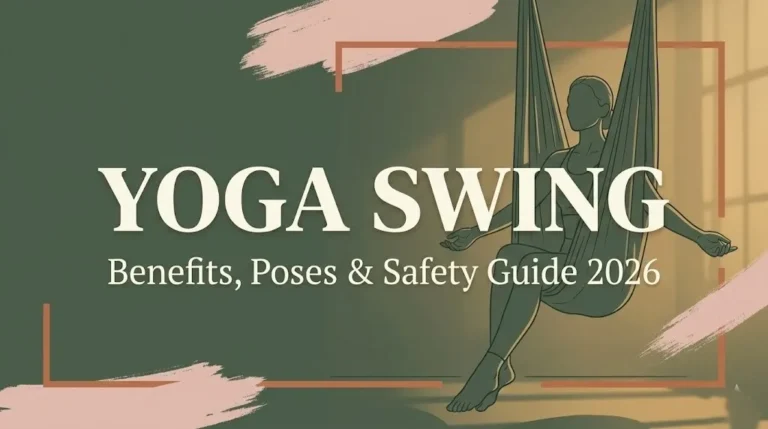
An aerial yoga swing is a fabric hammock suspended from a ceiling or frame that supports the body during yoga poses, allowing full or partial suspension, spinal decompression, and inversion without the strength demands of traditional acrobatics. Used correctly with properly installed hardware, a yoga hammock swing brings a genuine and well-researched set of physical benefits to both home and studio practice.
Interest in aerial yoga has grown consistently over the past decade. According to Yoga Alliance, aerial and anti-gravity yoga are among the fastest-growing specialty formats in certified yoga teacher training programs globally, reflecting real and sustained demand rather than passing trend. The practice has moved well beyond novelty into documented therapeutic and fitness applications.
This guide covers everything a new practitioner needs: how to choose the right aerial yoga silk hammock, how to install it safely, the research-backed benefits, step-by-step beginner poses, breathing techniques, clear contraindications, modifications for seniors, and a realistic practice schedule. Nothing is overstated. Everything is grounded in what the equipment and the body can actually do.
Aerial Yoga Swing
An aerial yoga swing is a suspended fabric apparatus, typically made from nylon tricot or parachute-grade nylon, designed to support the full body weight of a practitioner during yoga poses, stretching, and therapeutic inversions. It functions as both a prop and a support structure, replacing the role that a wall, block, or strap plays in traditional mat-based practice.
The term “aerial yoga swing” is used interchangeably with yoga hammock, silk swing, yoga sling, and aerial yoga silk in most retail and practice contexts. These terms describe the same basic apparatus. Minor differences exist between specific product designs, including handle placement, fabric width, and swing point configuration, but the core function is identical.
What makes this apparatus distinct from a standard yoga prop is its ability to fully suspend the practitioner off the ground. This creates a three-dimensional movement environment. The body can move in planes that a mat-based practice simply cannot access, particularly for spinal decompression and hip mobility work in traction.
Key structural elements of a standard aerial yoga swing include:
- Main fabric panel: 2.75 to 3 meters of nylon tricot or aerial-grade fabric, typically rated to hold 300 to 600 pounds depending on manufacturer specifications
- Suspension ropes or daisy chains: Adjustable-length rigging connecting the fabric to the anchor point above
- Carabiners: Steel or aluminum locking hardware rated to a minimum of 2,000 pounds force (look for CE EN 362 certification)
- Ceiling anchor or steel frame: The structural attachment point, which must support the full dynamic load of the practitioner in motion
Understanding these components before purchasing prevents the most common and dangerous mistake beginners make: buying a low-cost swing with unrated hardware and mounting it to an inadequate anchor.
What Is Aerial Yoga
Aerial yoga is a hybrid yoga practice that uses a suspended fabric hammock or swing to support, modify, and extend yoga poses, allowing practitioners to experience traction, inversion, and deeper ranges of motion than are typically available on a mat alone. It is not circus performance. It is structured physical practice with a defined safety framework and documented health applications.
The modern form of aerial yoga was formalized by Christopher Harrison, a Broadway choreographer and gymnast, who developed the AntiGravity yoga system in the early 2000s. Harrison’s framework combined traditional yoga poses, Pilates principles, calisthenics, and aerial arts into a practice accessible to non-acrobats. The AntiGravity system remains one of the most widely taught aerial yoga formats globally and is the foundation most studio-based aerial yoga programs reference.
Aerial yoga draws from multiple yoga traditions. Restorative aerial poses, where the practitioner rests in the hammock with no active muscular work required, mirror the principles of Restorative yoga. Active aerial sequences that link breath to movement reference Vinyasa yoga principles. Passive long-hold hip and spinal work in the swing shares structural characteristics with Yin yoga.
What aerial yoga is not:
- Aerial silks performance, which requires upper body strength, specific acrobatic training, and vertical climbing skill
- A beginner form of traditional yoga. It requires some baseline body awareness before safely managing an unstable suspended surface
- A replacement for mat-based yoga practice. It works best as a complement to an existing practice
Aerial Yoga vs Traditional Yoga and Aerial Silks
Aerial yoga occupies a distinct position between traditional mat-based yoga and aerial arts performance, sharing characteristics of both while functioning differently from either. Understanding these distinctions helps practitioners choose the right practice for their goals and physical starting point.
Traditional mat yoga is practiced on a stable, ground-level surface. Gravity works against the practitioner in most poses. Flexibility and strength gains come from working against that gravitational resistance. Inversions like Sirsasana (Headstand) and Adho Mukha Vrksasana (Handstand) require significant shoulder and core strength to achieve safely without support.
Aerial yoga with a swing uses the suspended fabric to either assist or challenge the practitioner. In supported inversion poses, the swing reduces the strength demand significantly. In core work sequences, the unstable surface increases the proprioceptive challenge beyond what a mat provides. The same pose can be made easier or harder depending on how the swing is used.
Aerial silks are a performance art discipline. Practitioners climb, wrap, and drop from fabric suspended at significant heights using upper body and core strength developed over years of training. This is not the same apparatus or the same practice as aerial yoga. Aerial silks require specialized coaching and are not suitable as a home practice for beginners.
| Practice | Surface | Inversion Access | Strength Requirement | Best For |
|---|---|---|---|---|
| Traditional mat yoga | Stable, floor-level | Requires skill | Moderate to high | All levels, established practice |
| Aerial yoga swing | Suspended, unstable | Assisted, accessible | Low to moderate | Back pain, core work, decompression |
| Aerial silks performance | Vertical suspended fabric | Advanced, unassisted | Very high | Trained aerialists, performance |
| Restorative mat yoga | Stable, heavily propped | Rarely | Very low | Recovery, nervous system regulation |
Key Takeaway: An aerial yoga swing makes inversions and spinal decompression accessible to practitioners who lack the strength for traditional unsupported inversions, while aerial silks performance is an entirely different discipline requiring years of specialized training.
Best Aerial Yoga Hammock
The best aerial yoga hammock for home use in 2026 combines a high-quality nylon tricot fabric rated to at least 300 pounds, CE-certified locking carabiners, adjustable daisy chain rigging, and fabric dimensions of at least 2.75 meters in length to accommodate most adult body sizes in full inversion and resting poses.
Fabric material matters more than most buyers realize. Nylon tricot is the standard for aerial yoga because it has a four-way stretch that gently conforms to the body’s curves, distributes pressure evenly across contact points, and resists tearing under dynamic load. Cheaper polyester or cotton alternatives do not have the same stretch characteristics and can create uncomfortable pressure points during inversion.
When evaluating any aerial yoga hammock, check these specifications before purchasing:
- Weight capacity: Minimum 300 pounds for solo practice. Look for products that list tested dynamic load, not just static load
- Fabric width: At least 2.75 meters in working length from attachment point to lowest hang point
- Carabiner rating: Steel locking carabiners rated to a minimum of 2,000 pounds force, certified to CE EN 362 standard
- Daisy chain or extension strap: Must be adjustable to set the correct hanging height for your space and body
- Stitching quality: Double or triple-stitched hems at all stress points. Single-stitched seams are a disqualifying safety failure
Color and aesthetics are irrelevant to safety. A beautifully colored swing with inadequate hardware is a genuine injury risk. A plain swing with certified components is the correct choice every time.
Aerial Yoga Kit and What It Includes
A complete aerial yoga kit includes everything needed to set up and begin practicing safely without sourcing components separately, and understanding what a kit should contain prevents the common mistake of buying a swing with inadequate or missing hardware.
A quality aerial yoga kit contains:
- The fabric swing: Nylon tricot panel in the correct dimensions
- 2 daisy chains or extension straps: One per anchor point, adjustable for hanging height
- 2 locking steel carabiners: Rated to minimum 2,000 pounds each
- 2 ceiling mount hooks or screw eyes: With corresponding lag bolts for structural anchor installation
- Instruction manual: Including installation guidance and weight limits clearly stated
What most budget kits leave out, and why it matters:
- Crash mat or yoga mat: Strongly recommended for beginners learning inversions. A fall from even 18 inches onto a hard floor causes injury
- Daisy chain extensions: Standard kits fit ceiling heights between 7.5 and 9 feet. If your ceiling is higher, you need additional length
- Installation hardware rated for actual structural loads: Many kits include decorative hooks, not load-rated rigging hardware
Yoga teachers and physical therapists who incorporate aerial yoga into their sessions generally recommend purchasing a purpose-built aerial yoga kit from a supplier that lists explicit weight capacity and hardware certifications, rather than assembling components from general hardware stores where load ratings are not specific to dynamic aerial use.
Aerial Yoga Swing Installation Safety
Safe aerial yoga swing installation requires anchoring to a structural ceiling joist, steel beam, or purpose-built freestanding frame rated to at least 1,500 to 2,000 pounds of dynamic load per anchor point. This is the single most important safety requirement in the entire practice, and it is the most frequently mishandled.
A single practitioner applying dynamic force in a swing does not simply exert their static body weight. Swinging movements, drops into the hammock, and inversion transitions multiply the load through lever mechanics. Structural engineers generally cite a minimum 4:1 safety factor for overhead suspension points, meaning a 150-pound practitioner needs an anchor rated to at least 600 pounds at minimum safety factors, and significantly more in practice.
Safe installation guidelines include:
- Locate a ceiling joist first: Use a stud finder before drilling. Drywall or plaster alone cannot support any dynamic load
- Use lag bolts, not wood screws: Lag bolts (minimum 3/8 inch diameter, 3 inches into the joist) provide the necessary shear strength
- Install a purpose-built aerial yoga ceiling mount: Products designed specifically for this use have rated load capacities on their packaging
- For apartment or rented spaces: Use a freestanding steel aerial yoga frame. These frames are designed for dynamic load and require no permanent installation
- Check hardware before every session: Inspect carabiners for gate function, daisy chains for fraying, and anchor points for any movement or creaking
Never install a swing from:
- Drywall anchors alone
- Decorative ceiling hooks sold for hanging plants
- Any anchor point that has not been explicitly load-rated for overhead suspension use
If there is any uncertainty about a ceiling’s structural capacity, a licensed contractor assessment before installation is the correct step, not an optional one.
Key Takeaway: The anchor is the only component in aerial yoga practice that can cause catastrophic failure. Verify structural load ratings before the first session and re-inspect before every use.
Aerial Yoga Benefits
Aerial yoga offers a well-documented range of physical and mental health benefits, with the strongest evidence supporting spinal decompression, core activation, flexibility improvement, and stress reduction through parasympathetic nervous system engagement.
According to a study published in the Journal of Alternative and Complementary Medicine, participants who completed a 6-week aerial yoga program showed measurable improvements in flexibility, balance, and self-reported psychological well-being compared to a control group. The aerial support element allowed participants to access deeper ranges of motion than mat-based practice in the same time period.
Physical benefits with research or physiological support include:
- Spinal decompression: Full body inversion in the swing allows gravity to create traction on the intervertebral discs, reducing compressive load on the lumbar and thoracic spine
- Core strength development: The unstable suspension surface activates deep core stabilizers, including the transverse abdominis and multifidus, more consistently than stable-surface mat practice for equivalent pose holds
- Shoulder girdle mobility: Hanging from the swing in supported positions restores shoulder joint space and lengthens the pectoralis minor and anterior deltoid muscles that become compressed in people who sit at desks
- Balance and proprioception: Practicing on an unstable surface trains the vestibular system and proprioceptive nerve endings, improving overall balance quality
- Cardiovascular conditioning: Active aerial yoga sequences raise heart rate into a moderate aerobic training zone, comparable to a brisk walk
Psychological benefits are also measurable. Research suggests that inversion practice and rhythmic swinging motion activate the parasympathetic nervous system and reduce perceived stress scores in practitioners, though more longitudinal study is needed to establish precise mechanisms.
Aerial Yoga Spinal Decompression and Back Pain
Aerial yoga provides spinal decompression through controlled inversion in the hammock, which uses the practitioner’s own body weight to create gentle traction on the lumbar and thoracic vertebrae. This is distinct from mechanical traction devices and is driven by gravity rather than external force.
The mechanism is straightforward. When the body is inverted in the swing, gravitational pull acts in the opposite direction to its normal compressive effect on the spine. The intervertebral discs, which function like hydraulic cushions between vertebrae, experience reduced compressive load during inversion. This creates space and allows fluid rehydration of disc tissue, which is why many practitioners report immediate post-inversion relief from lower back pressure.
A study published in Complementary Therapies in Medicine found that a structured 12-week aerial yoga program produced measurable reductions in self-reported chronic lower back pain in adult participants, with improvements sustained at a 6-week follow-up assessment.
For people managing lower back tightness or general spinal stiffness, the most accessible aerial yoga decompression practice is a supported Viparita Karani (Legs Up the Wall) variation in the swing, where the hips rest in the hammock at hip height while the upper body hangs downward in a gentle supported inversion.
Pose Tip:
- Keep the cervical spine (neck) in a neutral position during any inversion. Do not crank the head back or forward
- Allow the weight of the upper body to create the traction. Do not push or pull
- People managing acute disc herniation, recent spinal surgery, or spinal stenosis should work with a physical therapist before attempting any inverted practice in the swing
Aerial Yoga Core Strength
Aerial yoga builds core strength through proprioceptive instability, meaning the swing’s movement forces the deep core muscles to activate continuously to maintain position, in a way that stable-surface mat practice cannot replicate for equivalent poses.
Think of balancing on a mat versus balancing on a paddleboard in calm water. The paddleboard requires constant micro-corrections from the stabilizer muscles even when you feel still. The aerial yoga swing works on the same principle. Poses that feel stable on the mat become a genuine neuromuscular challenge when the surface beneath you is swinging.
The primary core muscles engaged during aerial yoga include:
- Transverse abdominis: The deepest abdominal layer, which functions as the body’s natural weight belt and activates reflexively on an unstable surface
- Multifidus: Small deep spinal muscles running along the vertebrae, critical for lumbar stability
- Erector spinae: The long muscles running alongside the spine, engaged in extension and stabilization during most aerial poses
- Obliques: External and internal oblique muscles engaged during rotation and lateral stability in the swing
- Pelvic floor: Activated during inversion and suspension as a postural stabilizer in coordination with the transverse abdominis
The American College of Sports Medicine notes that instability training, which includes suspension-based exercise, increases core muscle activation compared to equivalent exercises on stable surfaces. Aerial yoga applies this same instability principle within a yoga movement framework.
For beginners, core fatigue arrives faster in the swing than on a mat. Starting with shorter sessions of 20 to 30 minutes prevents the loss of postural control that leads to compensation injuries.
Key Takeaway: Aerial yoga builds deep core strength through the unstable swing surface, not just through specific core exercises, which means even resting and stretching poses demand more from your stabilizers than the same shapes on a mat.
Aerial Yoga Poses for Beginners
Beginner aerial yoga poses focus on developing familiarity with the swing’s movement, building trust in the fabric’s support, and learning how to distribute body weight through the hammock before attempting any inversion or dynamic movement.
The three most important principles for beginners in every aerial pose are: keep at least one point of contact with the floor or the swing fabric at all times initially, use the breath to release rather than forcing deeper range, and never rush transitions.
| Pose (Sanskrit + English) | Swing Position | Primary Benefit | Beginner Safety Note |
|---|---|---|---|
| Tadasana (Mountain Pose) in swing | Hammock at hip height, standing with back supported | Body awareness, weight distribution | Keep feet on floor; do not fully suspend |
| Uttanasana (Standing Forward Fold) | Hips in hammock, upper body hanging | Lumbar decompression, hamstring release | Bend knees generously; allow passive release |
| Viparita Karani (Legs in Swing) | Hips supported, legs elevated | Venous return, hip flexor release | Do not fully invert on first session |
| Setu Bandha Sarvangasana (Bridge in Swing) | Upper back in hammock, feet on floor | Spinal extension, glute activation | Ensure hammock is stable before releasing hands |
| Savasana (Corpse Pose) in hammock | Full body weight in fabric, cocooned | Nervous system recovery | Check hammock height before fully releasing |
People with vertigo should skip all poses where the head drops below the heart level until vestibular symptoms are assessed by a neurologist or otolaryngologist, since inversion can temporarily worsen balance disturbance.
The most accessible first aerial yoga pose for complete beginners is a seated hammock position with both feet on the floor, simply experiencing how the fabric distributes weight and responds to movement.
Aerial Yoga Sequence at Home
A safe and structured aerial yoga sequence at home moves from grounding through to gentle inversion and then recovery, following the same arc as a well-designed mat practice but accounting for the added variables of the swing’s movement and the body’s response to partial suspension.
Before beginning, verify your swing height: the lowest point of the fabric should hang at approximately hip height when you are standing. This allows most beginner poses to be accessed with one foot on the ground for stability.
To practice this beginner aerial yoga home sequence:
- Seated grounding: Sit in the hammock with both feet flat on the floor. Take 10 diaphragmatic breaths, allowing the fabric to support the full weight of the hips and lower back.
- Hip circles: Still seated, place hands on the hammock edges and draw slow circles with the hips. 8 circles each direction. This acclimatizes the vestibular system to movement in the swing.
- Standing forward fold (Uttanasana): Step inside the hammock. Position it across the hip crease. Hinge forward and allow the upper body to hang. Hold for 5 to 8 breaths. Bend knees generously.
- Supported lunge: From standing inside the hammock, step one foot back into a low lunge with the front hip supported by the fabric. Hold 5 breaths per side.
- Legs elevated (Viparita Karani variation): Sit on the hammock, lean back, and bring both legs up through the fabric so the backs of the knees drape over the hammock edge. Hang for 8 to 10 breaths. This is a gentle partial inversion only.
- Bridge pose (Setu Bandha Sarvangasana variation): Lie under the hammock with the upper back resting on the fabric at shoulder blade height. Feet flat on the floor. Press through the feet and lift the hips. Hold 5 breaths. Repeat twice.
- Hammock Savasana (Corpse Pose): Climb fully into the hammock. Wrap the fabric around the body for a cocooned resting position. Rest for 5 to 7 minutes. This is non-negotiable. The nervous system recovery phase is where the practice integrates.
Total time: approximately 30 to 40 minutes. Practice this sequence twice per week for the first four weeks before adding new poses.
Aerial Yoga Breathing Techniques
Aerial yoga breathing adapts standard pranayama practice to account for the physiological changes that occur during suspension, particularly during inversion, where the relationship between the diaphragm and abdominal organs shifts as the body moves through different angles relative to gravity.
Diaphragmatic breathing is the foundation. In the swing, whether seated, supported, or partially inverted, the diaphragm must work against the shifting weight of abdominal contents. Breathing into the belly expands correctly in upright positions. In partial inversion, the breath naturally redirects more into the chest as the abdomen is pulled toward the face by gravity. This is normal and not a technique error.
Ujjayi pranayama is the most appropriate breath technique for active aerial yoga sequences. The soft constriction at the back of the throat anchors focus during balance-demanding suspension poses, where the temptation to hold the breath is strong. Breath holding during active suspension increases intra-abdominal pressure and reduces stability rather than improving it.
The 4-7-8 breathing pattern is well-suited to the resting phases of aerial practice, particularly during the hammock Savasana (Corpse Pose) phase. Inhale for 4 counts, retain for 7, exhale for 8. Research published in the International Journal of Yoga has associated this pattern with measurable reductions in acute stress response markers.
For inversions specifically:
- Begin the inversion on an exhale. Exhaling first reduces intra-cranial pressure slightly during the position change
- Once inverted, breathe slowly and deliberately. Avoid forced or rapid breathing
- Exit the inversion on an exhale and remain still for 3 to 5 breaths before standing upright to allow blood pressure to equalize
People with cardiovascular conditions that affect blood pressure regulation should discuss inverted breathing adaptations with their cardiologist before practicing any aerial inversion.
Key Takeaway: Breath holding in the swing reduces stability and increases injury risk. Ujjayi breath throughout active aerial sequences is functional safety practice, not just technique preference.
Aerial Yoga Contraindications
Aerial yoga contraindications are specific medical and physical conditions that make certain elements of the practice, particularly inversion poses, unsafe regardless of experience level or technique quality. These are not optional cautions. They are genuine physiological incompatibilities.
According to the National Center for Complementary and Integrative Health, inversion-based practices carry specific risks for populations with conditions that alter intracranial or intraocular pressure, cardiovascular regulation, or spinal structural integrity.
Absolute contraindications for aerial yoga inversion poses include:
- Glaucoma: Inversion increases intraocular pressure, which can worsen optic nerve damage in people with this condition
- Uncontrolled hypertension: Inverted positions increase blood pressure at the head. People with poorly controlled high blood pressure face additional cardiovascular risk
- Acute disc herniation: Active disc pathology, particularly in the cervical or lumbar spine, can be worsened by traction forces in inversion
- Recent spinal surgery: Any surgical fusion, disc replacement, or decompression procedure requires explicit clearance from the operating surgeon before attempting suspension practice
- Pregnancy beyond the first trimester: Full inversion poses are contraindicated due to the risk of positioning the baby unfavorably and the altered cardiovascular demands of pregnancy
- Vertigo or inner ear disorders: Inversion and swing movement can significantly worsen vestibular symptoms
- Severe osteoporosis: The compressive forces during certain aerial poses can exceed safe load limits for osteoporotic bone
Aerial yoga without inversion, meaning seated, partially supported, and bridge-based poses only, remains accessible to some of these populations. Anyone in these categories should work with a certified aerial yoga teacher who has specific training in adaptive aerial practice before beginning any home setup.
Aerial Yoga for Seniors
Aerial yoga for seniors is a viable and increasingly studied practice when inversions are modified or eliminated, and when the swing is used primarily for support, balance assistance, and gentle spinal decompression rather than dynamic suspension. The practice is not one-size-fits-all for older adults, and the modifications required are specific and important.
The primary physical considerations for seniors in aerial yoga practice include reduced bone density, decreased joint stability, slower vestibular adaptation to position changes, and the cardiovascular caution required around inverted positions. None of these make aerial yoga categorically inappropriate. They make thoughtful adaptation essential.
A study published in the Journal of Alternative and Complementary Medicine found that chair-assisted and suspension-assisted yoga practices in adults over 60 showed measurable improvements in balance, functional strength, and self-reported quality of life. The aerial swing’s ability to provide support in standing balance poses makes it a genuinely useful tool for older practitioners working on fall prevention.
Safe aerial yoga adaptations for seniors include:
- Use the swing at hip height as a balance support for standing poses, not as a suspension device
- Eliminate all full inversions unless explicitly cleared by a physician familiar with the practitioner’s cardiovascular status and bone density
- Limit sessions to 20 to 30 minutes until tolerance for the swing’s instability is established
- Always practice near a wall or with a spotter present during the first several sessions
- Prioritize the cocoon Savasana (Corpse Pose) in the hammock as a restorative element rather than an inversion recovery tool
Seniors with diagnosed osteoporosis should avoid any aerial pose that places the cervical spine in a flexed or compressed position, as these forces can exceed safe load thresholds for vertebral bone.
How Often Should You Practice Aerial Yoga
Beginners should practice aerial yoga two to three times per week, with at least one full rest day between sessions, to allow the deep core and shoulder stabilizer muscles time to recover from the novel demands of suspension training.
The American College of Sports Medicine recommends that adults engage in muscle-strengthening activities targeting all major muscle groups at least two days per week. Aerial yoga, when practiced actively, meets this guideline while simultaneously addressing flexibility and balance. Two sessions per week is the minimum effective dose for measurable progress. Three sessions per week produces faster adaptation.
A realistic progression schedule for aerial yoga beginners:
| Weeks | Frequency | Session Length | Focus |
|---|---|---|---|
| 1 to 4 | 2 times per week | 20 to 30 minutes | Familiarization, grounding poses, no inversions |
| 5 to 8 | 2 to 3 times per week | 30 to 40 minutes | Add gentle partial inversions, core sequences |
| 9 to 12 | 3 times per week | 40 to 50 minutes | Full sequence with inversions, breathing work |
| 12 and beyond | 3 to 4 times per week | 50 to 60 minutes | Progressive skill development, variety |
Daily aerial yoga practice is not recommended for beginners. The shoulder girdle, wrist extensors, and deep core stabilizers need recovery time to adapt. Muscle soreness in the upper back and shoulders is common in the first two weeks and is a reliable indicator that these muscles are working in new ways.
Rest days can include mat-based Yin yoga or Restorative yoga to maintain flexibility without adding suspension load to recovering tissues. This pairing works well because the passive long-hold nature of Yin practice complements the active instability demands of aerial work without stressing the same systems twice.
Frequently Asked Questions About Aerial Yoga Swings
What is an aerial yoga swing and how is it different from aerial silks?
An aerial yoga swing is a wide fabric hammock suspended from a single or double anchor point, designed to support the body during yoga poses and therapeutic inversions.
Aerial silks are narrow vertical fabric panels used in performance acrobatics, requiring practitioners to climb, wrap, and drop using significant upper body strength developed over years of training.
The two apparatuses share a fabric material but have entirely different uses, safety requirements, and skill demands, and aerial yoga swings are the only appropriate choice for home yoga practice.
How much weight can an aerial yoga swing hold?
Most aerial yoga swings are rated to hold 300 to 600 pounds of static load, but the relevant safety number is the dynamic load rating of the anchor hardware, not just the fabric.
Look for carabiners rated to a minimum of 2,000 pounds and ceiling anchors installed into structural joists, not drywall, to ensure the full system can handle real-world movement forces.
Always verify the complete system rating, including fabric, rigging, hardware, and anchor, not just the fabric capacity listed on the product page.
Can I install an aerial yoga swing at home safely?
Yes, a home aerial yoga swing installation is safe when anchored into a structural ceiling joist using lag bolts and load-rated aerial hardware, or when using a purpose-built freestanding steel frame.
Never use drywall anchors, decorative ceiling hooks, or plant-hanging hardware, as none of these are rated for the dynamic loads created by a person moving in a swing.
If you rent your space or are uncertain about your ceiling structure, a freestanding aerial yoga frame is the safest and most practical home solution.
Is aerial yoga good for back pain and spinal decompression?
Aerial yoga can support lower back pain management through gentle spinal decompression during supported inversion poses, where gravity creates mild traction on the lumbar vertebrae.
A study published in Complementary Therapies in Medicine found measurable reductions in chronic lower back pain in participants who completed a structured 12-week aerial yoga program.
People managing acute disc herniation, recent spinal surgery, or spinal stenosis should work with both a physical therapist and a certified aerial yoga instructor before attempting any inverted aerial poses.
How often should a beginner practice aerial yoga?
Beginners should practice aerial yoga two times per week for the first four weeks, allowing the shoulder stabilizers and deep core muscles to adapt to suspension demands between sessions.
After four weeks of consistent practice, adding a third session per week is appropriate for most people who are not experiencing ongoing shoulder or wrist soreness.
Daily aerial yoga is not recommended for beginners because the stabilizer muscles that suspension training targets require recovery time to strengthen, not just more exposure.
Start where your ceiling allows and your body is ready. For most beginners, that means two sessions per week with the hammock at hip height, both feet on the floor, and no inversions for the first month.
The swing will still work. You’ll build core strength, shoulder mobility, and body awareness in the fabric before you ever need to leave the ground. Add inversions when you trust your anchor, know your breath, and can maintain spinal alignment without thinking about it.
That foundation is what makes aerial yoga sustainable instead of just spectacular.