Proper Yoga Attire: What to Wear to Any Class in 2026
Proper yoga attire means clothing that moves with your body, stays in place during inversions, and does not restrict your range of motion. Getting it right matters more than most beginners expect, and it has very little to do with looking stylish on the mat.
The American College of Sports Medicine notes that exercise clothing affects thermoregulation, range of motion, and perceived exertion during physical activity. The wrong outfit can limit how deeply you move in poses or cause unnecessary self-consciousness that pulls you out of your practice.
This guide covers every category of yoga attire: fabric science, fit, style-specific needs, gender-specific options, population considerations, and the specific items you should leave at home. Whether this is your first class or your hundredth, you will leave knowing exactly what to put on.
Proper Yoga Attire: What the Basics Actually Mean
Proper yoga attire refers to form-fitting or close-to-body clothing made from stretchy, breathable fabric that allows full joint range of motion without shifting or slipping during movement. That is the clearest definition you will find anywhere.
The three non-negotiables are stretch, breathability, and security. Stretch lets you reach full range in poses like Adho Mukha Svanasana (Downward-Facing Dog) without fabric pulling tight across the hips or shoulders. Breathability keeps your core temperature regulated. Security means your waistband stays up and your top stays down.
Yoga is practiced barefoot on a mat, often with poses that invert the hips above the heart or require teachers to visually check spinal alignment. Loose, billowing fabric obscures those alignment cues. Form-fitting pieces let your instructor see whether your hips are square in Virabhadrasana II (Warrior II) or whether your lower back is rounding in a forward fold.
| Attire Feature | Why It Matters in Yoga |
|---|---|
| Four-way stretch fabric | Full hip and shoulder range of motion |
| Fitted waistband | Stays secure in inversions and standing poses |
| Breathable weave | Regulates temperature across all yoga styles |
| Flat seams | Reduces pressure points during floor poses |
| Opaque fabric | Maintains comfort and coverage in deep bends |
What to Wear to Yoga Class: The Core Outfit
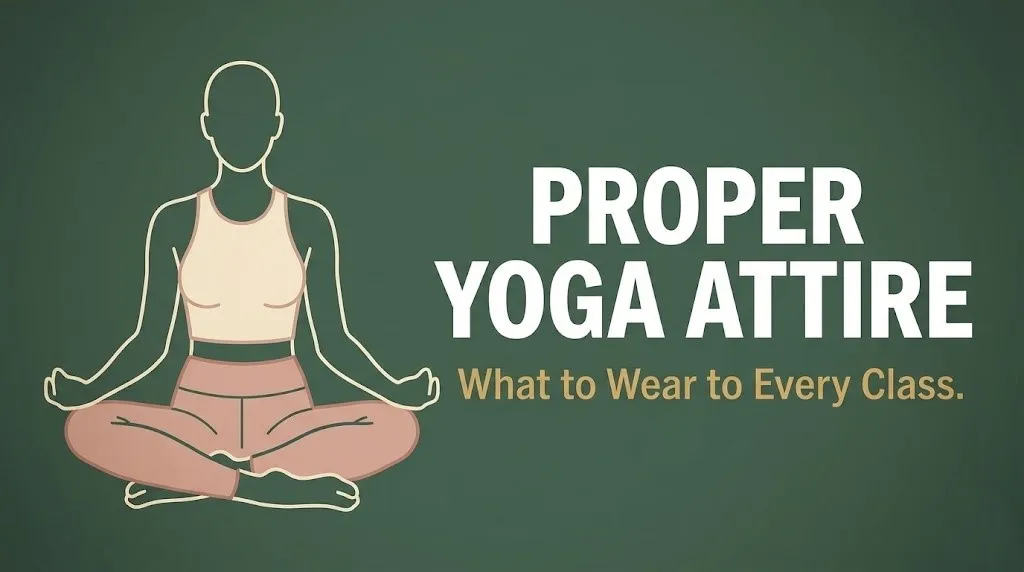
The standard yoga class outfit for most practitioners is a pair of fitted yoga leggings or yoga pants paired with a fitted or semi-fitted top, worn without shoes or socks unless the studio requires grip socks. That combination works across most yoga styles and experience levels.
For your bottoms, mid-rise or high-rise leggings are the most popular choice. High-rise styles stay in place during forward folds and inversions. Mid-rise works well if you prefer a slightly less compressive feel around the abdomen.
For your top, a fitted tank top or a semi-fitted short-sleeve shirt works for most classes. Avoid tops with loose fabric around the torso. In poses like Chaturanga Dandasana (Four-Limbed Staff Pose), a loose shirt falls forward and can distract you or obscure your own view of your arm position.
Quick Summary:
- Bottoms: High-rise or mid-rise fitted leggings or yoga pants
- Top: Fitted tank, racerback, or short-sleeve shirt
- Undergarments: Supportive sports bra, seamless underwear or none
- Feet: Bare feet on the mat; grip socks optional
- Extras: A hair tie if your hair is longer than chin length
What to Wear to Yoga for the First Time
If this is your first yoga class, wear whatever stretchy athletic clothing you already own. You do not need to buy anything new before your first session.
A pair of fitted gym leggings, athletic shorts, or even fitted sweatpants works perfectly for a beginner Hatha or Vinyasa class. Pair it with a fitted t-shirt or tank top. The goal is to move freely without adjusting your clothing every few minutes.
What matters most on your first day is that you can sit cross-legged, fold forward, reach overhead, and lie flat on your back without your clothing restricting any of those movements. Test your outfit at home before you go. Do a forward fold. Sit cross-legged. Raise both arms overhead. If anything pulls, rides up, or feels uncomfortable, swap it out.
Pose Tip:
- Avoid brand-new stiff denim or thick khakis for obvious reasons
- Skip shirts with metal zippers or hardware that press into the mat
- Choose clothing you have worn and washed at least once so the fit is known
- If you tend to run warm, choose a lighter layer on top you can remove
What Do People Wear to Yoga: Real Class Observations
Most people in a yoga class wear fitted leggings or yoga pants, a fitted top, and bare feet. That is the most accurate answer based on what certified yoga instructors observe across classes at studios worldwide.
In a typical Hatha or Vinyasa yoga class, you will see a mix of high-waisted leggings, capri-length yoga pants, fitted tanks, and sports bras worn as tops. Men typically wear fitted athletic shorts or jogger-style yoga pants with a fitted short-sleeve shirt or no shirt at all.
In Restorative or Yin yoga, more practitioners wear looser, softer clothing since those classes involve long holds on the floor with bolsters and blankets. In Bikram or 26&2 yoga, the room runs at 105 degrees Fahrenheit with 40 percent humidity, so practitioners wear minimal clothing.
| Yoga Style | Most Common Attire Observed |
|---|---|
| Hatha | High-rise leggings, fitted tank or t-shirt |
| Vinyasa | Leggings or shorts, sports bra or fitted top |
| Ashtanga | Close-fitting shorts or capris, fitted top |
| Yin / Restorative | Soft leggings, long-sleeve tops, warm layers |
| Bikram / 26&2 | Shorts, sports bra, minimal coverage |
| Iyengar | Fitted shorts or capris, fitted top |
| Kundalini | White or light-colored loose natural-fiber clothing |
Yoga Outfit for Beginners: What to Buy First
A beginner yoga outfit does not need to be expensive. The three pieces that give you the most value are a reliable pair of leggings, a supportive sports bra, and a fitted tank top.
For leggings, look for four-way stretch fabric with a high-rise waistband and a gusset (a diamond-shaped panel in the crotch seam). The gusset prevents the seam from pulling in deep hip-opening poses like Balasana (Child’s Pose) or a wide-legged forward fold. Budget options from athletic brands often work just as well as premium options for beginners.
For your top, a racerback tank top gives your shoulders the full range of motion needed for overhead poses. A non-racerback tank can feel restrictive when you reach both arms overhead in poses like Virabhadrasana I (Warrior I).
Beginner Starter Kit:
- 1 to 2 pairs of high-rise yoga leggings with a gusset
- 1 medium-support sports bra (light to medium impact level for most yoga styles)
- 2 fitted tank tops or t-shirts
- 1 light zip-up or long-sleeve layer for Savasana at the end of class
- Bare feet or a pair of grip yoga socks for shared studio mats
Key Takeaway: You do not need specialty yoga clothing to start practicing. Form-fitting athletic wear you already own will work fine for your first several classes. Invest in proper yoga-specific pieces only after you know which style you enjoy most.
What Clothes to Wear When Doing Yoga by Style
The right yoga attire changes significantly depending on which style of yoga you practice. This is the one piece of guidance almost every other source skips entirely.
Ashtanga yoga is an athletic, heat-building practice with a fixed sequence of poses. It demands close-fitting, sweat-wicking fabric. Loose clothing moves constantly and can get caught in arm-balances or jumps. Short fitted shorts or capri leggings with a fitted sports bra or tank work well.
Iyengar yoga uses props extensively and focuses on precise alignment. Teachers will manually adjust your position. Close-fitting clothing is necessary so the teacher can see and access the joints they are working with. Avoid loose layers in this style.
Kundalini yoga has its own tradition around white clothing and head coverings. Practitioners believe white fabric supports energetic clarity. Loose natural-fiber pieces in white or off-white are standard. This is one style where form-fitting athletic wear is not the norm.
| Yoga Style | Recommended Fit | Recommended Fabric |
|---|---|---|
| Ashtanga | Close-fitting | Moisture-wicking synthetic |
| Hatha | Fitted to semi-fitted | Cotton blend or synthetic |
| Vinyasa | Fitted | Four-way stretch synthetic |
| Iyengar | Close-fitting | Any stretch fabric |
| Yin | Loose to semi-fitted | Soft cotton or bamboo |
| Restorative | Loose, warm layers | Fleece, cotton, bamboo |
| Kundalini | Loose, natural fiber | Cotton, linen, hemp |
| Bikram / 26&2 | Minimal, form-fitting | Quick-dry synthetic |
What to Wear to Hot Yoga
For hot yoga, specifically Bikram or 26&2 yoga practiced at 105 degrees Fahrenheit, you need the least amount of clothing that still allows you to feel covered and comfortable. The heat makes performance fabric critical.
Women typically wear shorts and a sports bra or a fitted tank. Men wear fitted athletic shorts and often practice shirtless. The clothing needs to manage significant sweat output. According to research published in the Journal of Alternative and Complementary Medicine, practitioners in hot yoga classes can lose between 1 and 2 liters of fluid per class through sweat, which means fabric that holds moisture against the skin creates discomfort quickly.
Choose quick-dry polyester or nylon blends. Cotton is the wrong choice for hot yoga. Wet cotton becomes heavy, clings, and does not release heat efficiently. Look for fabrics labeled moisture-wicking or quick-dry.
Hot Yoga Attire Checklist:
- Minimal, form-fitting bottoms (shorts for most practitioners)
- Sports bra or fitted tank top
- Moisture-wicking, quick-dry synthetic fabric only
- A large microfiber towel for your mat (mandatory in most studios)
- A second small towel for your face and hands
- Clean dry clothes to change into immediately after class
What to Wear to Yin and Restorative Yoga
For Yin yoga and Restorative yoga, comfort and warmth matter more than performance fabric. Both styles involve long holds in floor-based poses supported by props like bolsters, blankets, and blocks.
Yin yoga holds poses for three to five minutes at a time. Your muscles cool down, your body temperature drops, and you want to be genuinely warm. Soft leggings, a fitted long-sleeve shirt, and a light hoodie are practical. Many practitioners bring a pair of cozy warm socks to wear during floor holds.
Restorative yoga is even more stationary. You are supported in gentle reclined shapes for up to twenty minutes per pose, often covered with a blanket. This is the one yoga style where softer, looser fabric is genuinely better than performance athletic wear.
Pose Tip:
- Avoid tight waistbands in Yin; they become uncomfortable during twenty-minute holds
- Layer a soft hoodie you can remove as the class progresses
- Grip socks are useful here since many Restorative classes skip the mat entirely
- Natural fibers like cotton and bamboo feel better against skin during long floor holds
Key Takeaway: Yoga style drives attire choice more than any other factor. Hot yoga demands minimal quick-dry fabric; Yin and Restorative yoga call for warmth and layering; Ashtanga needs close-fitting sweat-wicking pieces.
What Fabric Is Best for Yoga Clothes
The best fabric for yoga clothes is a nylon or polyester blend with spandex (also called elastane), which provides four-way stretch, moisture-wicking properties, and durability across many washes. That combination outperforms cotton for most active yoga styles.
Spandex, which makes up typically 10 to 20 percent of yoga legging fabric, creates the stretch that allows full hip and spinal range of motion without the fabric returning to a shorter length. Nylon blends are softer against skin and more resistant to pilling than polyester. Polyester blends tend to be less expensive and dry faster.
Cotton has its place in gentler styles like Yin, Restorative, and Kundalini. Pure cotton is soft and non-irritating for sensitive skin. However, it absorbs sweat and holds it against the body, which is uncomfortable in warmer classes and can cool the body too quickly in heated rooms.
Bamboo fabric is an emerging option for yoga practitioners with sensitive skin or eczema. It is naturally temperature-regulating, anti-odor, and soft. Several independent labs have confirmed bamboo fabric’s skin-friendly properties, though it is less durable than synthetic blends.
| Fabric Type | Best For | Avoid For |
|---|---|---|
| Nylon-spandex blend | All active yoga styles | N/A |
| Polyester-spandex blend | Hot yoga, Vinyasa | Sensitive skin |
| Cotton | Yin, Restorative, Kundalini | Hot yoga, Bikram |
| Bamboo blend | Sensitive skin, gentle yoga | High-intensity styles |
| Recycled polyester | Eco-conscious practitioners | Not recommended for very hot styles |
How Tight Should Yoga Pants Be
Yoga pants should be snug enough to stay in place through all ranges of motion but loose enough that you can slide two fingers under the waistband without effort. That is the practical fit test most experienced yoga teachers use.
The biggest mistake beginners make is choosing pants that are either too tight or too loose. Pants that are too tight restrict hip flexor and hamstring range of motion and can make sitting cross-legged for extended periods uncomfortable. Pants that are too loose slide down during forward folds or inversions, which pulls attention away from the practice.
High-rise waistbands are the most secure option for most practitioners. They stay put in Utkatasana (Chair Pose), in headstands, and in standing balance poses without constant readjusting. A fold-over waistband gives you the option to adjust compression around the abdomen.
Compression yoga leggings, which offer more resistance than standard leggings, are popular among practitioners managing knee instability or mild joint hypermobility. Physical therapists and sports medicine professionals note that graduated compression around the thigh and calf can support venous return during extended standing sequences. If you have a diagnosed circulation condition, discussing specific compression levels with a medical professional before choosing high-compression leggings is a reasonable step.
Can You Wear Shorts to Yoga
You can absolutely wear shorts to yoga, and they are an excellent choice for many practitioners and styles. The key is choosing the right type of shorts.
Athletic shorts that sit mid-thigh and have a built-in liner or compression short underneath work best. Loose basketball-style shorts create problems in hip-opening poses. In Trikonasana (Triangle Pose) or wide-legged forward folds, loose shorts can expose more than intended or bunch up in ways that distract you. A liner or fitted compression layer underneath solves both issues.
Running shorts and cycling shorts are also popular in yoga. Running shorts dry quickly and allow full leg movement. Cycling shorts provide light compression through the thighs and hamstrings, which some practitioners find supportive during standing sequences.
Avoid shorts with metal rivets, thick waistbands, belt loops, or cargo pockets. Lying on a hard pocket edge during floor work is genuinely uncomfortable and can leave marks on the skin.
Shorts Work Best For:
- Hot yoga and Bikram / 26&2 style classes
- Ashtanga classes where heat builds quickly
- Male practitioners who prefer less compression
- Warm studio environments year-round
Key Takeaway: Fabric science is the hidden factor in yoga attire decisions. Nylon-spandex blends outperform cotton in active styles; bamboo works beautifully for sensitive skin; and proper fit means snug without restricting, using the two-finger waistband test.
Yoga Bra vs Sports Bra for Yoga
For yoga, you want a yoga-specific bra or a low-to-medium impact sports bra rather than the high-impact bras designed for running or high-intensity interval training. The biomechanics of yoga do not require maximum breast tissue compression.
High-impact sports bras designed for running compress heavily to minimize bounce. In yoga, that degree of compression is unnecessary and can feel restrictive through the full shoulder and chest range of motion required in poses like Virabhadrasana I (Warrior I) or back bends. A lighter support structure allows the ribcage to expand fully with each breath.
Yoga-specific bras typically feature a racerback or crossback design, a wider underbust band, and medium support. Removable pads give you shape options without committing to a specific look. For larger cup sizes, a supportive underwire bra worn under a fitted tank is a common and practical solution that many instructors recommend.
The Harvard T.H. Chan School of Public Health notes that clothing that restricts chest expansion can subtly reduce tidal volume (the amount of air moved per breath). Breath is foundational to yoga practice, and constricting your ribcage even slightly affects the quality of pranayama (breath control techniques) during class.
Bra Selection Guide:
- Cup sizes A to B: Yoga-specific bralette or light-support racerback bra
- Cup sizes C to D: Medium-support yoga bra with a wider underbust band
- Cup sizes D and above: Supportive underwire bra under a fitted tank top
- Nursing or postpartum: Nursing-compatible sports bra with front clasps
Layering for Yoga Class
Layering for yoga means having at least one piece you can remove as your body warms up during class. The standard approach is a light long-sleeve layer or zip-up hoodie worn over your core outfit, removed after the opening warm-up.
Most yoga classes begin with gentle seated or floor-based poses before building into standing sequences. Body temperature rises steadily through the class. Starting with a warm layer and removing it after ten to fifteen minutes keeps you comfortable across both the cool opening and the warmer middle sections.
At the end of class, during Savasana (Corpse Pose), body temperature drops sharply as the practice winds down. Many practitioners get genuinely cold during this five to fifteen minute final rest. Pulling your long-sleeve layer back on before lying down is a practical habit worth building.
According to the National Center for Complementary and Integrative Health (NCCIH), thermal comfort during relaxation practices has a direct effect on the nervous system’s ability to shift toward a parasympathetic (rest and digest) state. Being cold during Savasana works against the goal of the pose.
Layering Suggestions:
- A thin zip-up hoodie or light long-sleeve shirt for the opening and closing
- Warm socks to add during floor holds in Yin or Restorative classes
- A small blanket brought from home for Restorative classes
- Skip thick hoodies or fleece for active Vinyasa or Ashtanga classes
Yoga Attire for Seniors and People with Limited Mobility
Seniors and practitioners with limited mobility need yoga attire that prioritizes ease of dressing, joint comfort, and temperature regulation above performance aesthetics. The right clothing removes one more barrier to showing up on the mat.
Pull-on waistbands without drawstrings or hooks are the most accessible option. Elastic waistbands that sit below the navel tend to be less compressive and easier to manage for anyone with arthritis in the hands or reduced grip strength. Wide-leg yoga pants or softer tracksuit-style bottoms work well for chair yoga and gentle yoga formats where deep hip flexion is not required.
For the upper body, loose-fitting or semi-fitted tops with wide armholes are easier to put on and allow shoulder movement without restriction. Avoid tight necklines that can feel constricting during breathwork or reclined poses.
According to Yoga Alliance, chair yoga and gentle yoga programs designed for seniors are among the fastest-growing formats in studio and community center settings. Instructors in these programs specifically recommend attire that allows easy visual access to joints for alignment correction without needing extremely form-fitting garments.
Warmth is a particular consideration for older practitioners. Circulation changes with age, and seniors often feel cold more easily during floor-based or restorative work. Layered natural-fiber pieces and warm socks are especially useful.
Modification Note: For practitioners using wheelchairs or managing lower-body conditions like edema or lymphedema, loose-leg pants with no tight calf or ankle cuffs are recommended. Discuss compression garment needs with a certified lymphedema therapist or your treating physician before class.
Yoga Clothing for Pregnancy
During pregnancy, proper yoga attire means clothing with a forgiving, expandable waistband, full belly coverage in dynamic poses, and breathable fabric that keeps the core body temperature stable. Overheating during pregnancy is a known risk factor, and clothing plays a direct role in thermoregulation.
Maternity yoga leggings have an over-bump waistband or a fold-down panel that sits comfortably across the growing abdomen. Standard athletic leggings can be worn in early pregnancy, but the waistband will begin to press uncomfortably against the lower abdomen by the second trimester.
Loose, breathable tops are practical in prenatal yoga since belly coverage becomes a practical need rather than an aesthetic preference. Fitted maternity tanks with built-in shelf bras are popular for prenatal practitioners.
The NCCIH notes that prenatal yoga, when practiced appropriately, is associated with lower levels of perceived stress and improved birth outcomes in several studies. Clothing that allows both comfort and range of motion supports consistent practice throughout pregnancy.
Hot yoga of any kind is not recommended during pregnancy. The core body temperature risks associated with Bikram or 26&2 yoga are well-documented in obstetric literature. A healthcare provider who knows your pregnancy history is the right person to confirm what yoga formats and intensities are appropriate for your specific situation.
Prenatal Attire Checklist:
- Over-bump maternity yoga leggings or fold-panel styles
- Loose or semi-fitted maternity tank with belly coverage
- Breathable, light-colored fabric (dark fabric absorbs more heat)
- Non-compressive waistband, especially in second and third trimesters
- Warm socks and a light blanket for Savasana
Key Takeaway: Population-specific attire choices matter. Seniors benefit from pull-on waistbands and warm layers; pregnant practitioners need non-compressive belly-covering pieces and breathable light fabric; both groups should avoid overheating.
What Not to Wear to Yoga Class
Several common clothing choices actively interfere with safe, comfortable yoga practice. Knowing what to leave at home is as useful as knowing what to bring.
Jeans or stiff pants are the obvious one. Any fabric without significant stretch prevents the range of motion required even in a beginner class. Loose athletic shorts without a liner can expose the inner thigh or groin in poses like Balasana (Child’s Pose) or wide-legged seated folds.
Tops with metal hardware (zippers, clasps, decorative rings) press painfully into the mat during floor poses. Long, loose tops or dresses obscure your own view of your body alignment and obstruct your teacher’s ability to offer corrections.
Heavy perfume or strongly scented products is a genuine studio etiquette note. Yoga studios ask practitioners to arrive fragrance-free because many people practice with their face near the mat and strong scents cause headaches or breathing difficulty during pranayama for sensitive practitioners.
What to Avoid:
- Jeans, khakis, or any non-stretch fabric
- Loose shorts without a liner for dynamic or open-hip classes
- Tops with metal hardware, long zippers, or back clasps
- Oversized, billowing shirts or dresses
- Heavy perfume, heavily scented lotions, or essential oils applied generously
- New stiff clothing worn without washing at least once first
- Street shoes or rubber-soled shoes on the mat surface
Do You Wear Shoes to Yoga
Yoga is practiced barefoot. No shoes, no socks with grip pads, in standard studio classes. That is the universal convention across every yoga style and most yoga traditions worldwide.
The barefoot practice is not arbitrary. Direct contact between the foot and the mat surface gives proprioceptive feedback, which is the body’s ability to sense its own position in space. In standing balance poses like Vrksasana (Tree Pose), the pressure sensors in the soles of the feet communicate constantly with the central nervous system to maintain balance. Shoes or thick socks muffle that signal significantly.
The exception is grip yoga socks, which are thin socks with rubber nubs on the sole. These are useful in specific situations: for practitioners with fungal sensitivities who use shared studio mats, for older adults whose skin tears easily on rough mat surfaces, or for anyone practicing in a very cold room where bare feet become uncomfortable.
Some Restorative and Yin classes, particularly those taught in community settings without dedicated yoga mats, also use grip socks as standard equipment.
When Grip Socks Are Appropriate:
- Shared studio mat situations when personal hygiene is a concern
- Cold rooms or outdoor winter yoga
- Practitioners with plantar sensitivity, diabetic neuropathy, or foot conditions
- Chair yoga where the floor surface may be slippery
Yoga Attire for Men
Men’s yoga attire follows the same principles as general yoga clothing: close-fitting, breathable, and secure through a full range of motion. The practical choices are fewer than they are for women, but the decisions still matter.
Fitted athletic shorts that sit above the knee are the most popular choice for male practitioners. Longer shorts restrict hip movement in seated cross-legged positions. Shorts with a built-in compression liner are the most practical option since they stay in place through all ranges of motion.
Fitted jogger-style yoga pants are growing in popularity among male practitioners. They provide coverage in colder studios and work well for Yin or Restorative classes. Look for four-way stretch fabric and an adjustable drawstring waistband.
A fitted short-sleeve or long-sleeve athletic shirt works for most styles. Some male practitioners in Vinyasa and Ashtanga practice shirtless since the heat builds significantly in those styles. Most studios allow this without issue.
According to a 2023 survey referenced by Yoga Alliance, men now make up approximately 28 percent of yoga practitioners in the United States, up from 20 percent a decade ago. Apparel companies have responded with dedicated men’s yoga lines that address fit proportions specific to male bodies.
Men’s Quick Guide:
- Fitted shorts above the knee with built-in compression liner
- Fitted jogger pants for cooler studios or Yin classes
- Fitted short-sleeve or long-sleeve shirt, or no shirt in hot styles
- Four-way stretch fabric across all garments
- Secure waistband with a drawstring for adjustability
- Bare feet standard; grip socks optional in cold rooms
Key Takeaway: Bare feet are the standard across almost all yoga styles for real biomechanical reasons. Grip socks are a legitimate option for specific situations, and men’s yoga attire has expanded significantly to meet a growing male yoga population.
Frequently Asked Questions About Proper Yoga Attire
What should I wear to yoga class as a beginner?
Wear fitted, stretchy athletic clothing you already own, such as leggings or fitted athletic shorts and a fitted tank top or t-shirt.
You do not need to buy anything special before your first class.
The only requirement is that the clothing allows you to sit cross-legged, fold forward, and reach your arms overhead without pulling or riding up.
Can I wear regular leggings to yoga?
Regular leggings work for yoga as long as they have enough stretch to allow full hip and leg range of motion.
Check that the fabric is opaque (not see-through) when you bend forward, which is easy to test at home before class.
If they have a secure waistband and do not slip down during movement, they are entirely adequate for most beginner yoga classes.
Do you wear shoes or socks to yoga class?
Yoga is practiced barefoot in almost every studio setting around the world.
Grip yoga socks are an acceptable alternative if you are using a shared studio mat or if a cold room makes bare feet uncomfortable.
Regular socks without grip nubs are slippery on a yoga mat and should be avoided during standing poses.
What is the best fabric for yoga clothes?
A nylon or polyester blend with 15 to 20 percent spandex is the best fabric for most active yoga styles.
It provides four-way stretch, wicks moisture away from the skin, and holds its shape wash after wash.
For gentler styles like Yin or Restorative, soft cotton or bamboo fabric is a comfortable and skin-friendly alternative.
Is there a dress code for yoga class?
Most yoga studios do not have a formal dress code, but there is a strong universal convention around close-fitting, non-restrictive athletic clothing and bare feet.
Kundalini yoga is the notable exception, where white natural-fiber clothing is a traditional practice norm.
When in doubt, call the studio before your first class to ask what most practitioners wear for their specific style of class.
Stepping onto the Mat with Confidence
The most important thing about what you wear to yoga is that it lets you forget about what you are wearing. When your outfit moves with you, stays in place, and keeps you comfortable through the full temperature arc of a class, it disappears. That is the goal.
Start with what you own. Test it at home with a forward fold, a cross-legged seat, and arms stretched overhead. If it passes those three checks, it works. Add style-specific pieces only after you know which format you practice most.
A well-chosen outfit removes one small distraction from a practice that works best when your full attention is on your breath and your body.