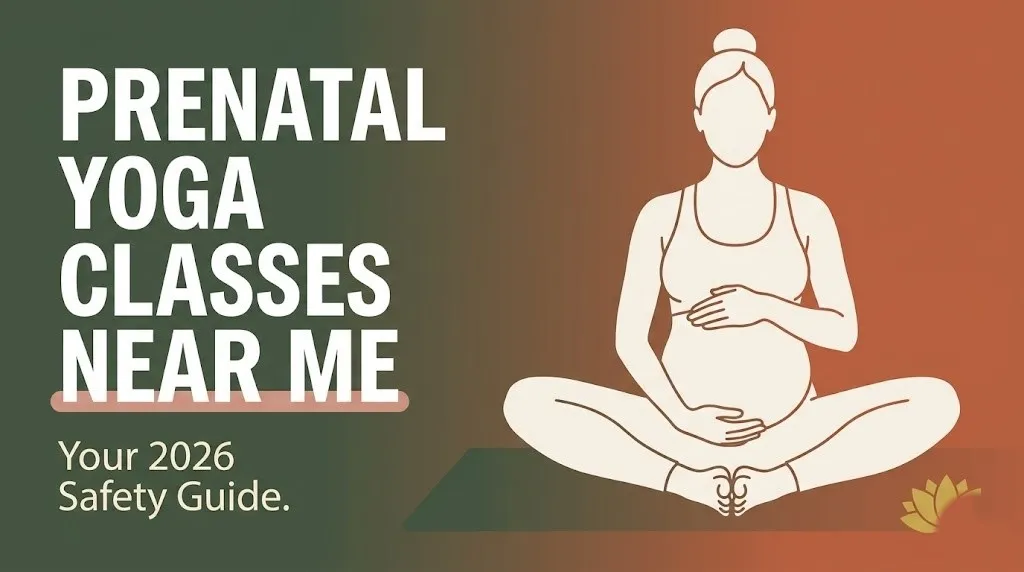
Prenatal Yoga Classes Near Me: Your 2026 Safety Guide
Searching for prenatal yoga classes near you is one of the smartest things you can do during pregnancy, and the good news is that for most healthy pregnancies, yoga is both safe and genuinely beneficial. The American College of Obstetricians and Gynecologists (ACOG) states that modified yoga is one of the safest exercise options available to pregnant women, supporting flexibility, stress management, and focused breathing.
The research backing prenatal yoga has grown substantially through 2024 and 2025. A 2025 randomized controlled trial published in the Journal of Perinatal Medicine found that yoga during pregnancy influenced labor outcomes, including reductions in reported pain intensity and improvements in maternal psychological resilience. That is not a vague wellness claim. That is measurable clinical data.
This guide covers everything you need to make a confident, informed choice: what prenatal yoga actually is, how it differs from regular yoga, what the research says about each benefit, how to practice safely through each trimester, which poses to skip, and how to identify a genuinely qualified instructor. Whether you are eight weeks pregnant or thirty-two weeks along, this is where to start.
Prenatal Yoga Classes Near Me: What You Need to Know First
When searching for prenatal yoga classes near you, the single most important filter is instructor qualification, not studio aesthetics, class price, or schedule convenience. A certified prenatal yoga teacher understands pregnancy anatomy, trimester-specific restrictions, and how to modify every pose for a changing body. A general yoga instructor, even a skilled one, may not have that training.
Prenatal yoga classes are offered at dedicated prenatal studios, general yoga studios that host specialized sessions, hospital-affiliated wellness centers, YMCA and community recreation facilities, and online platforms with live instruction. In 2026, the rise of high-quality live-streamed classes has expanded access significantly for people in areas with limited local options.
Before you book any class, confirm two things: that the class is specifically labeled “prenatal” (not just “gentle” or “yoga for all”), and that the instructor holds a recognized prenatal yoga credential. You will learn exactly what to look for in the final section of this guide.
| Class Type | Best For | Typical Temperature | Session Length |
|---|---|---|---|
| Dedicated prenatal yoga class | Any trimester, all experience levels | Room temperature only | 60 to 75 minutes |
| General yoga with modifications | Experienced yogis with instructor guidance | Room temperature | 60 minutes |
| Hospital-based prenatal yoga | High-risk or medically monitored pregnancies | Room temperature | 45 to 60 minutes |
| Online live prenatal yoga | Limited local options, home practice preference | Self-managed environment | 30 to 60 minutes |
| Partner prenatal yoga | Second or third trimester, with a support person | Room temperature | 75 to 90 minutes |
What Is Prenatal Yoga?
Prenatal yoga is a specifically adapted yoga practice designed to support the physical and psychological needs of pregnancy from the first trimester through delivery preparation. It combines modified yoga postures, breathwork (pranayama), and relaxation techniques, all structured around the physiological realities of a pregnant body.
It is not simply “gentle yoga” attended by pregnant people. That distinction matters. Prenatal yoga sequences are deliberately constructed to avoid poses that compress the abdomen, restrict circulation, or place excessive load on destabilized ligaments. The pacing, depth, and sequencing reflect trimester-specific anatomy. A good prenatal class feels purposeful and intelligent, not just slow or easy.
According to the National Center for Complementary and Integrative Health (NCCIH), yoga broadly supports physical balance, flexibility, and mental well-being. Prenatal yoga applies those principles within a framework of maternal safety, where every choice is filtered through the question: does this serve both the pregnant practitioner and the developing baby?
| Feature | Prenatal Yoga | General Yoga Class |
|---|---|---|
| Sequencing | Trimester-aware, belly-friendly | Standard for general population |
| Instructor Training | Prenatal certification (RPYT or equivalent) | General RYT-200 or higher |
| Poses | Abdominal-safe, modified for balance shifts | Full range, not pregnancy-filtered |
| Props Used | Bolster, block, blanket, wall are standard | Props optional, less central |
| Temperature | Always room temperature | May include heated formats |
| Supine Poses | Avoided or limited after 20 weeks | Standard in most sequences |
Prenatal Yoga vs Regular Yoga
Prenatal yoga differs from regular yoga in ways that go beyond simply skipping a few poses. The entire approach to intensity, depth, balance, and breathwork shifts to account for pregnancy’s profound physiological changes.
The most important difference involves relaxin, a hormone produced throughout pregnancy that increases ligament laxity to allow the pelvis to widen for birth. This is beneficial for delivery. It is also a source of injury risk in yoga, because ligaments that are more pliable than usual can be overstretched before the practitioner feels pain. Regular yoga classes encourage practitioners to find their edge and deepen into poses. Prenatal yoga explicitly does the opposite: it teaches practitioners to stay well short of maximum range.
Think of relaxin’s effect like this: your body’s internal tensioning cables are deliberately loosened. The joints they stabilize, particularly the sacroiliac joint, symphysis pubis, and hip joint, move more freely. That sounds helpful. In practice, it means reaching “further than usual” in a hip stretch is a reliable way to irritate a joint that is already under extra stress.
A 2022 meta-analysis published in the International Journal of Environmental Research and Public Health, examining prenatal yoga versus other physical activities, found prenatal yoga superior for depression and anxiety reduction compared to moderate walking or standard exercise alone. Regular yoga classes were not analyzed as equivalent due to the absence of pregnancy-specific modifications.
When to Start Prenatal Yoga
Most certified prenatal yoga instructors and obstetric guidelines support starting prenatal yoga at any point during a healthy pregnancy, including the first trimester, once your ob-gyn or midwife has confirmed that physical activity is appropriate for you.
The first trimester comes with real physical challenges: nausea, fatigue, breast tenderness, and dizziness are common. Some practitioners find it easier to begin in the second trimester, between 14 and 27 weeks, when energy returns and the belly has not yet altered balance significantly. Others find that gentle prenatal movement in the first trimester helps manage nausea and anxiety before the relief of the second trimester arrives.
ACOG recommends that pregnant women aim for at least 150 minutes of moderate-intensity physical activity weekly. Prenatal yoga typically qualifies as moderate-intensity exercise. Starting a practice of two to three 60-minute sessions per week meets this guideline comfortably while also building the breath awareness and body familiarity that support labor.
Pose Tip:
- If you are in the first trimester with significant nausea, choose a class time when your nausea is least intense (often mid-morning for many pregnant women).
- Begin with shorter sessions (30 to 45 minutes) if energy is limited and build to full 60-minute classes as stamina develops.
- Always inform your instructor about your trimester and any current symptoms before class begins.
Key Takeaway: You can start prenatal yoga as early as your first trimester once your care provider clears you for physical activity, and ACOG supports at least 150 minutes of weekly moderate exercise throughout a healthy pregnancy.
Prenatal Yoga Benefits
Prenatal yoga delivers documented benefits across physical, psychological, and labor-related outcomes, with a strong and growing body of research backing each category.
The American College of Obstetricians and Gynecologists notes that yoga during pregnancy reduces stress, improves flexibility, and supports focused breathing. These broad categories are backed by specific evidence.
Key benefits documented in peer-reviewed research:
- Reduced anxiety and depression: A 2022 systematic review and meta-analysis published in the International Journal of Environmental Research and Public Health found prenatal yoga effective for reducing depression and anxiety during pregnancy.
- Shorter labor and lower cesarean rates: A clinical trial cited in pregnancy research literature found prenatal yoga reduced labor induction rates, preterm delivery rates, and cesarean section rates while improving newborn APGAR scores.
- Back pain relief: Research suggests yoga consistently reduces pregnancy-related lumbar spine pain and pelvic girdle pain, two of the most commonly reported discomforts from the second trimester onward.
- Improved psychological resilience: A 2025 study published in the Journal of Perinatal Medicine found prenatal yoga exercise reduced stress levels and improved psychological resilience scores in participating pregnant women.
- Better sleep quality: Studies indicate that pranayama-based practices in prenatal yoga improve sleep duration and quality during pregnancy, a period when sleep disruption is nearly universal.
- Pelvic floor awareness: Prenatal yoga classes that include pelvic floor cueing support the muscular preparation needed for both vaginal delivery and postpartum recovery.
Prenatal Yoga and Labor Pain
Prenatal yoga actively prepares the body and mind for labor pain, and the evidence connecting the two is among the strongest in the field. A clinical trial found prenatal yoga reduced labor induction rates, preterm delivery, cesarean sections, and time in labor. It also improved newborn outcomes and APGAR scores.
The mechanism is both physical and psychological. On the physical side, prenatal yoga builds endurance in the hip flexors, gluteus medius, and pelvic floor muscles, all structures that bear significant load during labor. Poses like Malasana (Garland Pose) and Baddha Konasana (Bound Angle Pose / Butterfly Pose) open the pelvis and strengthen the adductors and inner thighs in preparation for the demands of active labor.
On the psychological side, ujjayi pranayama (victorious breath) practiced consistently in prenatal yoga teaches the nervous system to stay regulated under sustained discomfort. Research from a 2025 randomized controlled trial found that women with prenatal yoga experience demonstrated better cardiorespiratory adaptation to psychological stress than those who only walked for exercise. That capacity to breathe through intensity rather than brace against it is exactly what helps in labor.
Modification note: In the second and third trimester, Malasana (Garland Pose) may require heel elevation on a folded blanket if the ankles cannot reach the floor flat. People with symphysis pubis dysfunction (SPD) should avoid wide-leg squatting entirely and work with a pelvic health physiotherapist before attempting deep hip-opening poses.
Prenatal Yoga and Anxiety During Pregnancy
Prenatal yoga reduces anxiety during pregnancy through a combination of breath regulation, physical movement, and the social support structure of a community class. Fear and anxiety during labour reduce women’s self-confidence and empowerment. Yoga is a body-mind practice that lowers maternal fear and anxiety and helps relax pelvic floor muscles during labour.
The physiological basis of yoga’s anxiety effect lies in the autonomic nervous system. Regular practice of nadi shodhana pranayama (alternate nostril breathing) activates the parasympathetic branch of the nervous system, counteracting the stress-driven sympathetic response. When practiced consistently through pregnancy, this pattern of activation becomes more accessible under real-world stress.
A large review of 29 studies involving prenatal yoga found that yoga during pregnancy reduced anxiety, depression, and perceived stress. This finding held across different yoga styles and session frequencies, suggesting that the practice itself, rather than a specific format, drives the benefit.
Group prenatal classes add a dimension that home practice or non-specialized classes cannot replicate: shared experience. Being in a room with other pregnant people practicing the same poses, facing the same discomforts, and breathing together creates social reinforcement that independently supports mental health. Yoga teachers and perinatal health researchers generally describe this community effect as one of prenatal yoga’s most underrated benefits.
Modification for acute anxiety: If anxiety makes group settings overwhelming in the first trimester, beginning with a one-on-one session with a certified prenatal instructor before joining a group class is a genuinely sound approach. The instructor can assess your specific needs and build familiarity before a more social environment feels manageable.
Key Takeaway: The combination of breath regulation, physical movement, and community connection in a prenatal yoga class addresses pregnancy anxiety through multiple overlapping mechanisms that no single strategy can replicate alone.
Prenatal Yoga and Back Pain
Prenatal yoga relieves pregnancy-related back pain primarily by strengthening the muscles that support the lumbar spine and sacroiliac joint while simultaneously releasing the hip flexors and thoracic rotators that tighten as posture shifts with a growing belly.
Back pain affects the majority of pregnant people at some point between the second and third trimester. As the uterus grows forward, the center of gravity shifts anteriorly, which creates an exaggerated lumbar curve (lordosis). The surrounding muscles, particularly the erector spinae and quadratus lumborum, work harder to keep the torso upright. Over time, they fatigue and become painful.
Marjaryasana-Bitilasana (Cat-Cow Stretch) is the most commonly taught pose for pregnancy-related back pain, and with good reason. This spinal mobility sequence gently mobilizes the thoracic and lumbar spine through flexion and mild extension without loading the joints under compression. The rhythmic breath-movement link also activates the transverse abdominis, the deep core stabilizer that, when engaged, reduces load transfer to the lower back.
To practice Marjaryasana-Bitilasana (Cat-Cow Stretch) safely during pregnancy:
- Come to hands and knees with wrists directly under shoulders and knees under hips.
- Distribute weight evenly across all ten fingers and press into the knuckles.
- Inhale: gently lift the tailbone and soften the belly toward the floor (Cow). Keep the neck long. Do not crank the head back.
- Exhale: round the spine upward and draw the navel gently toward the spine (Cat). Tuck the chin softly.
- Move slowly. Each cycle should last 4 to 6 seconds.
- Practice 8 to 10 breath cycles. Rest in a neutral tabletop position between rounds.
Modification for wrist discomfort: Rest on fisted hands or on forearms rather than flat palms. This reduces wrist extension load, which increases as body weight shifts forward with pregnancy.
Prenatal Yoga and Pelvic Floor
Prenatal yoga supports the pelvic floor through a combination of targeted awareness cues, specific poses that promote functional strength and coordination, and breathwork that teaches the pelvic floor to move dynamically with the breath.
The pelvic floor is a group of muscles, fascia, and ligaments that form the base of the pelvis. During pregnancy, these structures bear the increasing weight of the growing uterus and baby. After delivery, their condition significantly influences recovery speed and the risk of urinary incontinence or prolapse. Prenatal yoga that actively includes pelvic floor cueing addresses this directly.
Many general yoga classes cue “engage your core” or “lift your pelvic floor,” often in ways that create chronic tension rather than functional coordination. A well-trained prenatal yoga teacher understands that the pelvic floor needs to be able to relax as well as contract. Bearing-down practice, learning to release rather than grip, is as important for labor preparation as strengthening.
Poses that specifically support pelvic floor function and awareness in prenatal yoga:
- Baddha Konasana (Bound Angle Pose / Butterfly Pose): Opens the inner thighs and adductors, creating space in the pelvic bowl. Sitting on a folded blanket prevents the pelvis from tucking under.
- Supta Baddha Konasana (Reclined Bound Angle Pose): A supported version using a bolster under the spine. Allows complete pelvic floor release in a fully supported position. Safe through the second trimester; transition to side-lying after 20 weeks.
- Malasana (Garland Pose / Squat): When performed with heel support and proper hip width, this pose encourages eccentric pelvic floor lengthening and perineal awareness. Contraindicated for people with SPD or pubic pain.
Modification: Anyone with a history of pelvic floor dysfunction, prolapse, or SPD during pregnancy should work with a pelvic health physiotherapist alongside their prenatal yoga practice rather than relying on yoga alone.
Key Takeaway: Pelvic floor health in prenatal yoga is about both strengthening and releasing, and a good prenatal instructor will teach both, not just the contraction side.
Prenatal Yoga First Trimester
The first trimester, weeks 1 through 13, is the time when prenatal yoga needs to be its most gentle, low-intensity, and hormonally aware. The embryo is developing rapidly. Fatigue and nausea are often at their peak. The body is flooded with progesterone and human chorionic gonadotropin (hCG), which drive both the nausea and the profound exhaustion many people experience.
This is also the trimester when most practitioners are most anxious. Many wait until after their first ultrasound to begin a class, which is entirely reasonable. Others find the community and the movement help them cope with the uncertainty of early pregnancy.
The first trimester is a critical period for implantation and early fetal development. Common symptoms include nausea, fatigue, dizziness, and breast tenderness. Yoga during this phase should emphasize grounding, gentle movement, and the cultivation of a calm, meditative practice.
| First Trimester Pose | Primary Benefit | Key Cue |
|---|---|---|
| Marjaryasana-Bitilasana (Cat-Cow) | Spinal mobility, lower back relief | Slow and breath-led |
| Balasana (Child’s Pose) | Rest, nervous system regulation | Knees wide to accommodate belly |
| Virabhadrasana II (Warrior II) | Leg strength, hip stability | Keep front knee over second toe |
| Baddha Konasana (Butterfly Pose) | Hip opening, pelvic floor awareness | Sit on blanket if pelvis tucks |
| Parsva Savasana (Side-Lying Corpse Pose) | Deep relaxation, left-side circulation | Bolster between knees |
Safety note for first trimester: Avoid inversions, intense twists, and poses that place the abdomen under any compression. Deep twisting can put pressure on the uterus during the critical period of early implantation and organ development.
Prenatal Yoga Second Trimester
The second trimester, weeks 14 through 27, is typically the most comfortable and most physically capable period for prenatal yoga. Energy returns for most people. Nausea often subsides. The belly is visible but has not yet altered balance dramatically.
This is the trimester most prenatal yoga teachers describe as the “sweet spot.” You can participate in most standing poses with proper modifications, hip-opening sequences feel more accessible, and the social dimension of a group class becomes genuinely enjoyable rather than exhausting.
Balance requires attention beginning around week 20. The growing belly shifts the center of gravity forward and outward, which affects proprioception. Single-leg balance poses like Vrikshasana (Tree Pose) should be practiced near a wall or with a chair for support. The sacroiliac joint and symphysis pubis are now under more stress due to both the baby’s weight and the continued presence of relaxin.
During pregnancy, the body produces a hormone called relaxin, which increases flexibility in ligaments to allow the body to have ample room for the growing fetus and to prepare the hips for delivery. Relaxin can reduce the stability of joints because ligaments connect the bones in a joint. This means the second trimester is the time to be most vigilant about not “going further” in a pose just because the body feels more open.
Modification: Poses performed lying flat on the back (supine poses) should begin to be transitioned to a left-side-lying position or propped at a 30 to 45 degree incline using a bolster as the second trimester progresses. Lying flat compresses the inferior vena cava, the major vein returning blood from the lower body to the heart, which can cause dizziness, lightheadedness, and a drop in fetal oxygen delivery.
Prenatal Yoga Third Trimester
The third trimester, weeks 28 through 40, calls for the most conservative and most supportive prenatal yoga practice. Balance has shifted significantly. Shortness of breath is common as the uterus presses against the diaphragm. Sleep is often disrupted. The focus of the practice shifts meaningfully toward labor preparation: breathwork, hip mobility, and pelvic floor awareness take center stage.
Supine poses should be fully replaced with left-side-lying alternatives by week 28. Parsva Savasana (Side-Lying Corpse Pose) with a bolster or folded blanket between the knees becomes the primary rest pose, replacing Savasana (Corpse Pose) on the back entirely. It is recommended to avoid lying flat on your back for longer than 90 seconds after the 20th week of pregnancy.
Deep squatting, when the pelvis is appropriately positioned, becomes more beneficial in the third trimester rather than less. Malasana (Garland Pose) practiced with heel support opens the outlet of the pelvis and encourages the baby into an optimal head-down position. Hip-opening poses like Baddha Konasana (Butterfly Pose) and Upavistha Konasana (Wide-Angle Seated Forward Fold) supported on a bolster create space in the pelvic bowl without requiring balance or abdominal compression.
| Third Trimester Focus | Pose Option | Props Needed |
|---|---|---|
| Pelvic opening | Malasana (Garland Pose) | Blanket under heels, wall for support |
| Hip release | Baddha Konasana (Butterfly Pose) | Bolster under spine if reclined |
| Spinal mobility | Marjaryasana-Bitilasana (Cat-Cow) | Blanket under knees |
| Labor breath practice | Ujjayi pranayama seated or kneeling | Bolster to sit on |
| Deep rest and relaxation | Parsva Savasana (Side-Lying Corpse Pose) | Bolster between knees, blanket under head |
Modification for edema: If foot and ankle swelling is present, elevate the legs up a wall in a gentle Viparita Karani (Legs-Up-The-Wall Pose) variation for five to ten minutes after class. Inform your instructor and your ob-gyn if swelling is sudden, one-sided, or accompanied by headache.
Key Takeaway: The third trimester is not the time to push harder in yoga. It is the time to practice exactly what you will need in labor: conscious breath, hip mobility, and the skill of staying calm under sustained physical demand.
Prenatal Yoga Poses
The best prenatal yoga poses are those that safely strengthen the structures under the most stress during pregnancy while maintaining full range of motion in the hips, pelvis, and spine. Every pose listed here is appropriate for most healthy pregnancies with the modifications noted.
Marjaryasana-Bitilasana (Cat-Cow Stretch): Mobilizes the entire spine. Reduces lumbar and thoracic tension. Activates the transverse abdominis. Practice in every trimester.
Baddha Konasana (Bound Angle / Butterfly Pose): Opens inner thighs and pelvic floor. Improves circulation to the pelvic region. Sit on a folded blanket to keep the pelvis neutral.
Balasana (Child’s Pose): Rests the nervous system. Stretches the lumbar spine and hips. Widen the knees to accommodate the belly. Use a bolster between the thighs if needed.
Virabhadrasana II (Warrior II): Builds leg and hip strength for the demands of labor. Teaches pelvic stability. Shorten the stance if balance is challenged.
Malasana (Garland Pose / Squat): Opens the pelvic outlet. Encourages fetal positioning. Use heel support and a wall. Avoid with symphysis pubis dysfunction.
Setu Bandhasana (Bridge Pose): Strengthens the gluteus maximus, posterior chain, and pelvic floor. Lift only to a comfortable height. Stop after 20 weeks or transition to a supported version with a block under the sacrum.
Parsva Savasana (Side-Lying Corpse Pose): The primary resting and final relaxation pose from the second trimester onward. Left-side preference supports circulation.
Modification for all poses: A prenatal yoga bolster is the single most useful prop throughout pregnancy. It supports the spine in reclined poses, elevates the sit bones in seated poses, and provides belly support in certain side-lying positions. If you practice at home, a rolled blanket is an effective substitute.
Prenatal Yoga Poses to Avoid
Several categories of yoga poses carry genuine risk during pregnancy and should be avoided or replaced with safer alternatives in any trimester.
Avoid postures that place direct pressure on the abdomen, such as Cobra, Locust, and Bow Pose. These belly-down poses are contraindicated from the moment the belly begins to show, typically around 10 to 12 weeks for first-time pregnancies.
Poses to avoid or replace during pregnancy:
- Prone (belly-down) poses: Bhujangasana (Cobra Pose), Salabhasana (Locust Pose), Dhanurasana (Bow Pose). These apply direct pressure to the abdomen. Replace with supported chest-opening poses using a bolster.
- Deep closed twists: Ardha Matsyendrasana (Half Lord of the Fishes Pose) and similar postures that compress the abdominal cavity. Replace with open twists where the belly rotates away from the thigh rather than into it.
- Inversions: Sirsasana (Headstand), Adho Mukha Vrksasana (Handstand), Sarvangasana (Shoulder Stand). These risk falls and compromise circulation. Even experienced yogis should avoid during pregnancy.
- Flat supine poses after 20 weeks: Savasana (Corpse Pose) lying flat. Replace with Parsva Savasana (Side-Lying Corpse Pose).
- Hot yoga in any form: ACOG advises against hot yoga due to the risk of overheating. There is a concern about an elevated core temperature causing neural tube defects, spontaneous abortion, and other abnormalities when you are expecting.
- Intense backbends: Urdhva Dhanurasana (Wheel / Upward Bow Pose). The abdominal stretch and lumbar compression are inappropriate after the first trimester.
- Strong Pranayama techniques: Kapalabhati (Skull-Shining Breath) and Bhastrika (Bellows Breath) involve rapid, forceful abdominal contractions. Avoid entirely during pregnancy.
Prenatal Yoga Safety
Prenatal yoga is safe for most healthy pregnancies when practiced in classes specifically designed for pregnant participants, led by a qualified instructor, and at a room-temperature environment.
The American College of Obstetricians and Gynecologists states that modified yoga is one of the safest exercises for pregnant women. That word “modified” is the operative one. The safety comes from the modifications, not from yoga being inherently safe in any form.
Stop immediately if you experience vaginal bleeding, dizziness, chest pain, shortness of breath before exertion, headache, muscle weakness, calf swelling, or amniotic fluid leakage (ACOG, 2024).
Conditions that prevent prenatal yoga without specific medical clearance:
- Placenta previa: The placenta covers part or all of the cervical opening. Physical exertion risks bleeding.
- Preeclampsia: A pregnancy complication involving high blood pressure and organ stress. Exercise is typically restricted.
- Cerclage: A surgical stitch closing the cervix to prevent preterm birth. Physical exertion is restricted.
- High-risk multiple pregnancy: Twins or triplets with elevated preterm risk may require exercise restriction.
- Preterm labor risk: Any history or current risk of preterm contractions.
- Severe anemia: Reduces the blood’s oxygen-carrying capacity, making physical exertion risky.
Prenatal yoga is suitable for most pregnant women, including beginners, as recommended by ACOG. However, it’s not safe for those with certain conditions like heart disease, placenta previa, preeclampsia, or preterm labor risk.
Anyone managing one of these conditions should discuss the appropriateness of prenatal yoga specifically with their obstetric care team before attending any class.
Key Takeaway: Prenatal yoga’s safety record is strong, but it depends entirely on appropriate modifications, a qualified instructor, and your own ob-gyn confirming that physical activity is cleared for your specific pregnancy.
How to Find a Certified Prenatal Yoga Instructor
The credential you are looking for when choosing a prenatal yoga class is RPYT, which stands for Registered Prenatal Yoga Teacher, the designation issued through Yoga Alliance to teachers who have completed specialized training in prenatal anatomy, pregnancy-specific modifications, breathwork for labor preparation, and postpartum support.
Registered Prenatal Yoga Teacher: Designed for teachers who want to support expecting parents with training in prenatal anatomy, mindful movement, and breathwork for pregnancy and postpartum. An RPYT has completed a base RYT-200 certification plus an additional 85-hour prenatal specialization that covers pregnancy anatomy and physiology, trimester-specific sequencing, contraindications, and supervised teaching practice with pregnant students.
A general RYT-200 teacher, meaning someone who has only completed the standard 200-hour training, has not necessarily received prenatal-specific instruction. Many wonderful general yoga teachers care deeply about their pregnant students and do research modifications independently. But the RPYT credential tells you someone has been formally trained, examined, and registered for this specific population.
How to verify a teacher’s credential:
- Ask the instructor directly: “Do you hold an RPYT or equivalent prenatal certification?”
- Ask which training program they completed and how many hours it included.
- Check Yoga Alliance’s public directory, where RPYT teachers are listed by name and location.
- Ask whether their training included supervised teaching hours with pregnant students specifically.
| Credential | What It Means | Prenatal-Specific Training |
|---|---|---|
| RYT-200 | 200-hour general yoga training | Not guaranteed |
| RYT-500 | 500-hour advanced yoga training | Not guaranteed |
| RPYT | Registered Prenatal Yoga Teacher (Yoga Alliance) | Yes, specifically prenatal |
| E-RYT + RPYT | Experienced teacher with prenatal specialization | Yes, highest level |
| No credential listed | No verified training standard | Unknown, proceed with caution |
What to bring to your first prenatal yoga class:
- A full-size non-slip yoga mat
- A long yoga strap (for seated forward folds that the belly limits)
- Two yoga blocks
- A small blanket (for knee padding and roll support)
- A bolster (studios usually provide these; confirm in advance)
- A large water bottle
- Comfortable, stretchy clothing that accommodates your belly
How often to practice: Yoga teachers and perinatal health researchers generally recommend two to three sessions per week throughout pregnancy. This frequency aligns with ACOG’s guidance for 150 minutes of weekly moderate-intensity activity and provides enough consistency to build the breath-body connection that supports labor preparation.
Frequently Asked Questions About Prenatal Yoga Classes Near Me
Is prenatal yoga safe in the first trimester?
Prenatal yoga is safe in the first trimester for most healthy pregnancies once your ob-gyn or midwife confirms that physical activity is appropriate for you.
The key is choosing a class specifically designed for pregnancy, taught by an RPYT-certified instructor, held at room temperature, and focused on gentle movement rather than intensity.
Avoid poses that compress the abdomen, require strong abdominal effort, or involve inversions at any point during the first trimester.
How often should I do prenatal yoga during pregnancy?
Two to three prenatal yoga sessions per week is the frequency most commonly recommended by prenatal yoga teachers and perinatal health researchers.
This aligns with ACOG’s guideline of at least 150 minutes of moderate-intensity physical activity weekly during pregnancy.
Start with two sessions and add a third as your energy and comfort allow, particularly as the second trimester brings more stamina.
Can I do prenatal yoga with no yoga experience?
Yes, prenatal yoga classes are designed for all fitness and experience levels, including complete beginners.
Prenatal yoga is designed for all fitness levels, including complete beginners. These classes focus on gentle techniques and safe postures specifically modified for pregnancy, making them accessible regardless of previous yoga experience.
Tell your instructor before class that you are new to yoga so they can offer extra guidance on alignment and breath.
What is the difference between prenatal yoga and regular yoga?
Prenatal yoga is structured around pregnancy-specific anatomy, including the effects of relaxin on ligament laxity, the growing belly’s impact on balance, and the need to avoid poses that compress the abdomen or restrict circulation.
Regular yoga classes follow a standard sequence designed for the general adult population and may include poses, temperatures, and intensity levels that are not appropriate for pregnancy.
The instructor’s credential matters as much as the class label: an RPYT teacher brings formal training in these distinctions that a general yoga instructor may not have.
What should I bring to my first prenatal yoga class?
Bring a non-slip yoga mat, two blocks, a yoga strap, a water bottle, and a small blanket to your first prenatal yoga class.
Most studios provide bolsters, but confirm this before arriving, as a bolster is the most useful prop for third-trimester practice and supported relaxation poses.
Wear comfortable, stretchy clothing that accommodates your belly and allows easy movement without restricting the waist.
Start with one class this week. Not a home video, not a general yoga session, not “something similar.” One proper prenatal yoga class, in person if possible, led by an RPYT-certified instructor.
Tell the teacher your trimester and any current discomforts before class begins. That conversation takes two minutes and changes the quality of your entire session. A good prenatal yoga teacher will adapt what you do in real time based on that information.
Your body is doing something extraordinary. The practice you build between now and your birth day will serve you well beyond the mat.