Soulshine Yoga: Poses, Benefits & Beginner Guide 2026
Soulshine yoga is a warmth-centered, community-focused yoga approach that blends uplifting sequencing, intentional breathwork, and accessible movement to cultivate both physical ease and emotional steadiness. It is not a single trademarked method but a philosophy of practice shared across studios in communities like Jonesboro AR, Wethersfield CT, and Essex VT, each bringing their own flavor to a fundamentally welcoming, all-levels experience.
The National Center for Complementary and Integrative Health (NCCIH) identifies yoga as an evidence-supported practice for reducing anxiety, improving sleep, and managing chronic pain. Research published in the International Journal of Yoga has documented measurable reductions in cortisol and improvements in heart rate variability after consistent slow-paced yoga practice across diverse adult populations.
This guide covers exactly what soulshine yoga is, how it works in the body, which poses form the foundation of the practice, how to begin at home, and what to realistically expect in a community soulshine yoga studio. No fluff. Just the information you need to step on the mat with confidence.
What Is Soulshine Yoga
Soulshine yoga is a yoga practice style built around the idea that movement, breath, and community together produce a felt sense of inner radiance and ease that extends beyond the mat into daily life.
The term “soulshine” draws from the same well as the word “sunshine”: something that warms from the outside in, or in this case, something that warms from the inside out. In practice, this means classes tend to emphasize uplifting sequences, accessible modifications, teacher warmth, and breathwork that activates rather than depletes. It sits closest to Hatha yoga and Vinyasa yoga in its physical execution, but with a distinctly community-forward and emotionally inclusive intention.
Soulshine yoga classes typically flow through a warm-up phase, a standing sequence building energy and focus, a floor-based deepening phase, and a closing relaxation. The pace is moderate. Transitions are deliberate. Teachers generally offer modifications in every pose. The emphasis is on feeling the practice rather than perfecting a shape.
| Feature | Soulshine Yoga | Vinyasa Yoga | Yin Yoga |
|---|---|---|---|
| Pace | Moderate, intentional | Moderate to fast | Very slow |
| Hold time per pose | 3 to 8 breaths | 3 to 5 breaths | 3 to 5 minutes |
| Community emphasis | High | Moderate | Low |
| Breathwork focus | High | Moderate | Moderate |
| Props used | Optional, encouraged | Rarely | Essential |
| Primary goal | Inner warmth, community, ease | Strength and flow | Deep tissue release |
| Best for | All levels, beginners, emotional wellness | Fitness, flow, energy | Injury recovery, deep flexibility |
This practice is genuinely suitable for most adults regardless of yoga experience, physical fitness, or flexibility. The philosophy demands inclusivity, not performance.
Soulshine Yoga Philosophy and Meaning
The philosophy behind soulshine yoga centers on the Sanskrit concept of Tejomaya, which refers to the inner luminosity or radiance that yogic traditions describe as the body’s natural state beneath stress, tension, and distraction.
This is not a spiritual abstraction for practitioners. It shows up concretely in how a soulshine yoga class is structured. Teachers open with a deliberate intention-setting practice. Breathwork is woven into movement, not tacked on as an afterthought. The closing Savasana (Corpse Pose) is treated as a full and equal part of the practice, not a five-minute formality before rolling up the mat.
Soulshine yoga also draws from bhavana, a Sanskrit term meaning “cultivation” or “calling something into being.” In practical terms, a class might open with a short verbal meditation on what the practitioner wants to cultivate that day: steadiness, softness, clarity, or warmth. This is not unusual in yoga, but it is more consistently centered in soulshine yoga culture than in a standard fitness-oriented Vinyasa class.
The philosophical through-line is this: the practice is not about fixing the body. It is about remembering that ease is already available. That distinction shapes every teaching choice a soulshine yoga teacher makes.
Quick Summary:
- Tejomaya: inner luminosity, the natural radiance beneath tension and distraction
- Bhavana: cultivation of a specific quality through deliberate intention
- The practical aim: access ease that already exists, rather than building toward a future state
- Community and warmth are structural, not incidental, features of the philosophy
Soulshine Yoga Benefits
Soulshine yoga delivers physical, neurological, and emotional benefits that are well-supported by research on comparable slow-to-moderate yoga styles.
A 2019 study published in the International Journal of Yoga found that regular yoga practice combining breathwork, moderate sequencing, and guided relaxation produced a 38% reduction in perceived stress scores over eight weeks in adults with moderate-to-high baseline stress levels. Soulshine yoga’s structure maps directly onto this intervention format.
The physical benefits accumulate in the body’s connective tissue, joint range of motion, and postural muscles over time. Think of the thoracic spine like a series of stacked rings that have been held in a forward-compressed position by hours of desk posture. Soulshine yoga’s standing sequences and backbend poses gradually coax those rings back toward their natural stacked alignment, reducing the downstream strain on the neck and lower back.
Benefits documented across soulshine yoga and closely related Hatha and community yoga formats include:
- Reduced cortisol and stress hormone output over consistent weeks of practice
- Improved sleep onset and sleep quality, particularly in adults with stress-related insomnia
- Greater range of motion in the hips, hamstrings, and thoracic spine over six to twelve weeks
- Improved postural awareness and reduced forward head position
- Strengthened posterior chain muscles including the gluteus maximus, erector spinae, and hamstrings
- Documented reduction in anxiety scores in adults practicing two to three times per week
- Increased sense of social belonging and reduced loneliness in community class formats, per research from Harvard T.H. Chan School of Public Health on group exercise participation
The American College of Sports Medicine notes that yoga practiced two to three times per week produces measurable flexibility improvements within six to eight weeks, with strength gains in supporting musculature following shortly after.
Soulshine Yoga and the Nervous System
Soulshine yoga directly engages the autonomic nervous system, using breath, movement rhythm, and intention to shift practitioners from sympathetic dominance (stress activation) into parasympathetic recovery.
Most adults accumulate a significant daily load of sympathetic nervous system activation: alert postures, shallow chest breathing, and sustained muscular tension. The body treats this as a threat environment, even when the threat is a deadline rather than a predator. The physiological cost is identical either way.
Soulshine yoga interrupts this pattern through three coordinated mechanisms. First, synchronized breathing with movement slows the breath rate below twelve cycles per minute, which is the threshold where the vagus nerve begins to register safety and initiate a parasympathetic shift. Second, the deliberate, moderate pace of transitions removes the urgency cue from the nervous system. Third, community presence in a class environment adds a co-regulatory layer: being near calm, focused bodies actually helps regulate your own nervous system, through a mechanism researchers call social co-regulation.
Research published in PLOS ONE confirmed that slow breathing at approximately six breath cycles per minute maximally activates vagal tone. A single session of yoga-style breathing produced measurable heart rate variability improvements within twenty minutes.
| Nervous System Response | Trigger | Soulshine Yoga’s Counter |
|---|---|---|
| Elevated cortisol | Chronic stress, urgency | Slow breath, intentional pacing |
| Shallow chest breathing | Anxiety, alertness | Diaphragmatic breath cues throughout class |
| Muscle tension accumulation | Fight-or-flight readiness | Sustained holds with gravity-led release |
| Social isolation effect | Working alone, screen time | Community class environment, co-regulation |
| Elevated resting heart rate | Chronic sympathetic load | Parasympathetic activation through exhale extension |
Key Takeaway: Soulshine yoga’s warmth and community orientation are not just feel-good extras. They are active physiological tools. Shared breath, deliberate pacing, and co-regulation in a group setting change how your nervous system responds to stress, both during class and after.
Soulshine Yoga and Mental Health
Soulshine yoga has measurable positive effects on mental health outcomes, particularly for anxiety, low mood, emotional regulation, and stress-related burnout.
According to the National Center for Complementary and Integrative Health, yoga practices that combine breath awareness, moderate movement, and community or guided relaxation elements consistently reduce self-reported anxiety and depression scores across diverse adult populations. Effects were most pronounced in people practicing at least twice per week for eight or more consecutive weeks.
The neurochemical mechanism is worth understanding. GABA (gamma-aminobutyric acid) is the brain’s primary inhibitory neurotransmitter. Low GABA levels are associated with anxiety, poor sleep, and mood instability. A study published in the Journal of Alternative and Complementary Medicine used MRI spectroscopy to document a 27% increase in brain GABA levels following a single yoga session compared to a walking control group. This finding has been replicated using slow-to-moderate yoga formats similar to soulshine yoga.
Soulshine yoga’s community dimension adds another layer of mental health protection. Social connectedness is one of the most consistently documented buffers against depression and anxiety in the psychological research literature. A community yoga class, practiced with the same group over weeks and months, creates exactly the kind of low-stakes, consistent social contact that research identifies as protective.
The practice also builds what clinicians call interoceptive awareness: the skill of noticing internal physical states (tight jaw, shallow breath, elevated heart rate) before they escalate into anxiety or emotional reactivity. This is a teachable, trainable skill, and soulshine yoga’s emphasis on breath-body connection makes it an effective training environment for exactly that capacity.
Soulshine Yoga Poses
Soulshine yoga draws its core poses from Hatha and Vinyasa traditions, emphasizing a full-body arc from grounding to energizing to releasing.
The following poses form the typical foundation of a soulshine yoga class. Each appears with its Sanskrit name on first use, its primary target area, and one key alignment note.
Key poses and what they target:
- Tadasana (Mountain Pose): Full postural alignment, tibialis anterior, gluteus medius, erector spinae. Stand with feet hip-width apart, inner thighs gently drawn back, crown of the head lifting. Avoid locking the knees.
- Surya Namaskar (Sun Salutation): Full-body warm-up sequence engaging quadriceps, hamstrings, hip flexors, shoulder stabilizers, and erector spinae. Beginners replace Chaturanga Dandasana (Four-Limbed Staff Pose) with a knees-down modification.
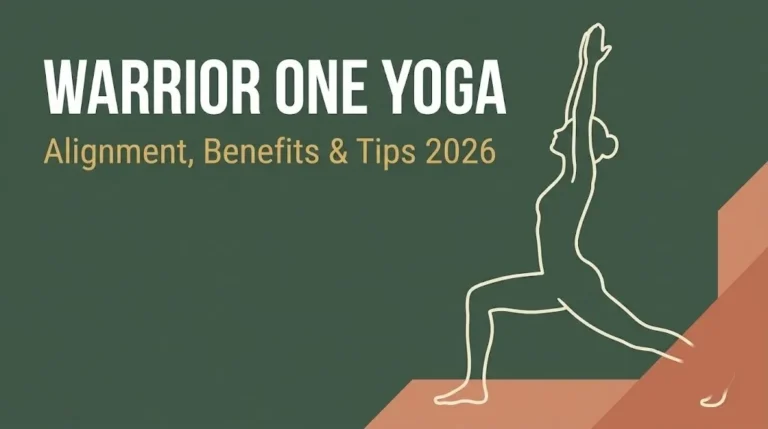
- Virabhadrasana I (Warrior I Pose): Hip flexors, quadriceps, gluteus maximus, erector spinae. Front knee tracks over the second toe. Back heel presses firmly into the mat.
- Virabhadrasana II (Warrior II Pose): Hip adductors, quadriceps, shoulder stabilizers. Arms extend horizontally at shoulder height. Avoid letting the front knee drift inward.
- Utthita Trikonasana (Extended Triangle Pose): Hamstrings, hip adductors, obliques, thoracic rotators. Place the lower hand on a block rather than forcing it to the floor.
- Adho Mukha Svanasana (Downward-Facing Dog): Hamstrings, calves, serratus anterior, erector spinae. Slight bend in the knees is always appropriate. Wrist pain: practice on fists or forearms.
- Setu Bandha Sarvangasana (Bridge Pose): Gluteus maximus, hamstrings, erector spinae. Feet hip-width apart and parallel. A block under the sacrum creates a supported, passive version.
- Balasana (Child’s Pose): Gluteus maximus, hip rotators, erector spinae (passive release). Knees wide, arms extended or resting alongside the body. Block under the forehead if the floor is too far.
- Savasana (Corpse Pose): Full passive release of all postural muscles. Bolster under the knees for anyone with low back sensitivity.
Safety note: No pose in this list should produce joint pain, sharp sensations, or nerve-related symptoms. Dull muscular sensation during holds is normal. Anything sharp or electrical is a signal to ease out and adjust.
Soulshine Yoga Sequence
A well-constructed soulshine yoga sequence moves through four phases: grounding, energizing, deepening, and releasing.
The following is a complete beginner-to-intermediate soulshine yoga sequence designed for 50 to 60 minutes. Hold standing poses for 5 to 8 breath cycles. Hold floor poses for 3 to 5 minutes unless noted.
To practice this soulshine yoga sequence:
- Tadasana (Mountain Pose) for 2 minutes. Stand at the top of your mat with feet hip-width apart. Close the eyes. Take ten slow natural breaths. Set a brief intention for the practice.
- Neck rolls and shoulder circles for 1 minute. Three slow circles in each direction. Inhale to expand, exhale to release tension.
- Three rounds of Surya Namaskar (Sun Salutation) at a slow, breath-linked pace. Each round takes approximately 90 seconds at a deliberate pace. Beginners use knees-down modifications throughout.
- Virabhadrasana I (Warrior I Pose) for 6 breaths per side. Step the left foot back. Press the back heel down. Reach the arms overhead. Switch sides.
- Virabhadrasana II (Warrior II Pose) for 6 breaths per side. From Warrior I, open the hips and arms to face the long edge of the mat. Front knee over the ankle.
- Utthita Trikonasana (Extended Triangle Pose) for 5 breaths per side. Straighten the front leg. Extend the torso over the front leg. Lower hand to shin, block, or floor.
- Adho Mukha Svanasana (Downward-Facing Dog) for 8 breaths. Pedal the heels alternately for the first three breaths to release the calf muscles.
- Setu Bandha Sarvangasana (Bridge Pose) for 5 breaths or 3 minutes supported. Active version: feet hip-width, press through the heels to lift the hips. Supported version: block under the sacrum.
- Balasana (Child’s Pose) for 3 to 5 minutes. Arms alongside the body for maximum shoulder release. Knees wide, big toes touching.
- Supine spinal twist for 3 minutes per side. Lie on the back, draw one knee into the chest, and guide it across the body. Arm out to the side at shoulder height.
- Savasana (Corpse Pose) for 8 to 12 minutes. Bolster under the knees. Eyes closed. No adjustments after settling. This is the most important pose in the sequence.
Modification for the full sequence: If floor transitions are difficult, replace steps 8 through 10 with seated chair versions. Seated Bridge is achieved by pressing the feet into the floor and lifting the hips from a chair seat.
Soulshine Yoga Breathing Techniques
Breathwork in soulshine yoga is not decorative. It is the primary tool through which the practice produces its physiological and emotional effects.
Two techniques anchor most soulshine yoga sessions. Both are accessible without prior experience and produce measurable results within a single practice.
Ujjayi breath (Victorious Breath) is created by gently constricting the back of the throat while breathing through the nose. The result is a soft, steady sound on both the inhale and exhale, similar to the sound of distant ocean waves. Ujjayi breath naturally slows the breath cycle, extending each exhale and activating the parasympathetic nervous system.
To practice Ujjayi breath during a soulshine yoga sequence:
- Inhale through the nose for a count of 4, creating the slight throat constriction.
- Hold briefly at the top of the inhale for 1 count.
- Exhale through the nose for a count of 6, maintaining the soft audible sound.
- Pause at the bottom of the exhale for 1 count before the next inhale.
- Maintain this rhythm throughout standing poses, transitions, and floor holds.
Nadi Shodhana (Alternate Nostril Breathing) is a pranayama technique with a well-documented track record. Research published in the International Journal of Yoga found that ten minutes of Nadi Shodhana significantly reduced both heart rate and blood pressure compared to baseline measurements in healthy adults.
To practice Nadi Shodhana before or after a soulshine yoga session:
- Sit in Sukhasana (Easy Pose) or in a chair with feet flat on the floor.
- Rest the left hand on the left knee. Bring the right hand to the nose.
- Close the right nostril with the right thumb. Inhale through the left nostril for 4 counts.
- Close both nostrils. Pause for 2 counts.
- Release the right nostril. Exhale slowly through the right for 6 to 8 counts.
- Inhale through the right nostril for 4 counts. Close both. Pause. Exhale through the left.
- This completes one cycle. Practice 5 to 10 cycles.
Modification: Either technique can be practiced seated in a chair with back support if floor sitting is uncomfortable. The physiological effects are not reduced by the seated position.
Key Takeaway: In soulshine yoga, breath is not a background detail. Ujjayi and Nadi Shodhana are the mechanisms that shift your physiology from stressed to settled. Learning them takes ten minutes. The effects on your nervous system are measurable within a single session.
Soulshine Yoga Modifications for Beginners
Soulshine yoga is genuinely beginner-friendly, but “friendly” still requires knowing which adjustments make each pose sustainable for a body that has not yet built the strength or range of motion that experienced practitioners have.
The most common beginner barriers are: tight hamstrings in forward folds, insufficient upper body strength for Chaturanga-based transitions, wrist sensitivity in weight-bearing poses, and hip tightness that makes seated floor poses uncomfortable. All four are solvable with the right props and approach.
| Pose | Common Beginner Issue | Modification |
|---|---|---|
| Surya Namaskar (Sun Salutation) | Insufficient strength for Chaturanga | Drop knees to floor; perform Bhujangasana (Cobra) instead |
| Adho Mukha Svanasana (Downward-Facing Dog) | Tight hamstrings, rounded spine | Generous knee bend; walk hands further forward |
| Utthita Trikonasana (Extended Triangle Pose) | Hand cannot reach floor | Block under lower hand at any height |
| Virabhadrasana I (Warrior I Pose) | Back heel lifts or knee strain | Reduce front knee bend depth; heel-to-arch alignment instead of heel-to-heel |
| Balasana (Child’s Pose) | Knee discomfort or hips don’t reach heels | Folded blanket behind knees; block under forehead |
| Savasana (Corpse Pose) | Low back discomfort flat | Bolster or rolled blanket under knees |
| Seated poses | Hip tightness, sacroiliac strain | Sit on a folded blanket to tilt pelvis forward |
Beginners should start with two sessions per week and thirty-minute session lengths. Building slowly over four to six weeks allows the body to adapt without the soreness that discourages new practitioners.
One widely repeated mistake: trying to match the practitioner on the next mat. Soulshine yoga culture actively discourages this. Your starting point is your starting point. Three breath cycles in Virabhadrasana II (Warrior II Pose) is a complete, valid practice. Build from there.
Soulshine Yoga for Seniors
Soulshine yoga is one of the most appropriate yoga formats for adults over 60, combining low-impact movement, supported poses, gentle breathwork, and community warmth into a format that aging bodies genuinely need and benefit from.
The Harvard T.H. Chan School of Public Health cites regular yoga practice in older adults as associated with reduced fall risk, improved balance scores, and measurable lower-body strength gains over twelve consecutive weeks. The community element of soulshine yoga adds a social dimension that is independently documented as protective against cognitive decline and depression in older adults.
Specific physical considerations for seniors in a soulshine yoga class:
- Bone density changes: Avoid extreme spinal flexion or deep unsupported forward folds in adults with diagnosed osteoporosis. A physical therapist familiar with your bone density history is worth consulting before beginning if osteoporosis is present.
- Joint cartilage changes: Reduce hold times in standing poses to three to four breaths rather than six to eight. Longer holds under load can aggravate arthritic joints.
- Balance and proprioception: Practice standing poses near a wall or chair for additional support. Tadasana (Mountain Pose) with one hand on a wall is a complete and safe version of the pose.
- Recovery time: Seniors typically need longer Savasana holds, ten to fifteen minutes rather than eight. This is not a compromise. It is the correct prescription for an older nervous system.
Poses particularly beneficial for seniors in a soulshine yoga context:
- Setu Bandha Sarvangasana (Bridge Pose) on a block: extends the thoracic spine, counters age-related forward rounding
- Viparita Karani (Legs-Up-the-Wall Pose): improves venous return, reduces ankle and foot swelling
- Balasana (Child’s Pose): decompresses the lumbar spine with zero balance demand
- Chair-based versions of all standing sequences when floor transitions are not appropriate
Soulshine Yoga for Back Pain and Chronic Pain
Soulshine yoga can be an effective, evidence-supported tool for managing low back pain and generalized chronic musculoskeletal pain when practiced with appropriate modifications and pacing.
A 2017 review published in Annals of Internal Medicine found that yoga was as effective as physical therapy for reducing low back pain intensity and improving functional ability over a twelve-week period. The yoga interventions in that review used slow, posture-based formats directly comparable to soulshine yoga’s structure.
The key for people with back pain is managing spinal load throughout the practice. That means:
- Always supporting the lumbar spine in floor poses with a blanket, bolster, or block.
- Prioritizing decompression poses: Viparita Karani (Legs-Up-the-Wall Pose), supported Setu Bandha Sarvangasana (Bridge Pose) on a block, and wide-knee Balasana (Child’s Pose).
- Avoiding deep unsupported forward folds when the lumbar spine rounds significantly under load.
- Treating Savasana (Corpse Pose) as an active therapeutic intervention: bolster under the knees reduces lumbar compression by approximately 30 degrees of hip flexion, meaningfully reducing disc pressure in the prone position.
For sacroiliac joint pain, asymmetrical standing poses like Utthita Trikonasana (Extended Triangle Pose) or Virabhadrasana II (Warrior II Pose) should be approached cautiously. Shorten hold times and avoid locking the pelvis in an asymmetrical position under significant load.
For disc-related pain or spinal stenosis, skip or heavily modify deep forward folds. Focus the practice on gentle backbending, decompression poses, and breathwork. If you are working with a physical therapist for a diagnosed spinal condition, sharing your intended soulshine yoga sequence allows them to flag anything that conflicts with your current rehabilitation plan.
What to skip during a pain flare:
- Deep unsupported forward folds
- Loaded spinal twists with a locked pelvis
- Prone backbends during acute episodes
- Any pose that produces radiating leg pain or nerve symptoms
Key Takeaway: For back pain, the props in soulshine yoga are doing real clinical work, not just making the class more comfortable. A bolster under your knees in Savasana and a block under your sacrum in Bridge Pose are evidence-supported load management strategies. Use them every session, not just when it hurts.
Soulshine Yoga Props and Equipment
Props in soulshine yoga are not signs of weakness or inexperience. They are the tools that make long holds safe, position the body correctly when mobility is limited, and allow the nervous system to release completely rather than partially.
Without adequate prop support, muscles continue to hold residual tension to stabilize an uncomfortable position. That low-level muscular contraction maintains mild sympathetic nervous system activation. The whole point of soulshine yoga is to interrupt that pattern. Props make the interruption complete.
| Prop | Primary Use in Soulshine Yoga | Why It Matters |
|---|---|---|
| Yoga mat | Non-slip base for all floor and standing work | Grip prevents injury; defined space creates practice boundary |
| Yoga blocks (2) | Under lower hand in Triangle; under sacrum in Bridge; under forehead in Child’s Pose | Creates height, reduces strain, corrects alignment |
| Yoga bolster | Under knees in Savasana; under spine in backbends; under hips in seated poses | Allows complete passive release without joint discomfort |
| Yoga blanket (2) | Under hips for seated poses; behind knees; over the body in Savasana | Warmth activates parasympathetic response; joint padding removes distraction |
| Yoga strap | Around arches in forward folds; around extended foot | Extends reach without muscular strain or rounding |
| Chair (armless, stable) | Seated modifications; hand support in standing poses | Removes floor-access barrier; appropriate for seniors and anyone with limited mobility |
| Wall | Support in standing poses; surface for Viparita Karani | Passive resistance for leg elevation or balance support |
Budget-conscious practitioners can improvise effectively: firm sofa cushions replace bolsters, thick folded bath towels replace blankets, and stacked hardcover books replace blocks. A quality non-slip mat is the one item worth purchasing properly, as surface grip directly affects safety in standing poses.
Soulshine Yoga Home Practice Setup
Building a home soulshine yoga practice requires less space, less equipment, and less planning than most people assume. The primary challenge is environmental: creating a consistent space and time that signals the nervous system to shift into practice mode.
The physical space requirement is approximately 6 feet by 8 feet, enough room for a full mat plus arm and leg extensions in all directions. That fits comfortably in most living rooms, bedrooms, or spare spaces.
Environmental factors that support a soulshine yoga home practice:
- Temperature: 68 to 72 degrees Fahrenheit supports muscular release. Cold rooms trigger thermoregulatory tension, working directly against the practice goal.
- Lighting: Dim or indirect. Overhead bright lighting promotes alertness, not ease. A lamp in one corner or natural late-afternoon light works well for morning or evening sessions.
- Sound: Silence, very soft ambient sound, or gentle instrumental music at low volume. Music with lyrics re-engages the analytical mind during long holds.
- Phone: Fully silenced and out of sight. The visual prompt of a notification appearing on a phone screen reactivates the sympathetic nervous system within seconds of noticing it.
- Consistency: Same time, same space, every session matters more than session length. Research published in the European Journal of Social Psychology found that location and time consistency reduces the effort required to initiate a behavior by approximately 40% over a twelve-week period.
Quick Summary for Home Setup:
- Minimum 6×8 foot floor space, cleared of tripping hazards
- One mat, one bolster or large firm cushion, two blocks or stacked books, one or two blankets
- Dim, warm lighting; comfortable temperature; no visible phone notifications
- Choose one consistent time slot daily and protect it as you would any appointment
Soulshine Yoga Class What to Expect: Jonesboro AR, Wethersfield CT, and Essex VT
Soulshine yoga classes in community studios like those in Jonesboro AR, Wethersfield CT, and Essex VT share a consistent structure, even when the specific teachers and studio personalities differ.
A typical soulshine yoga class runs 60 to 75 minutes. The first five minutes involve a brief settling period: arriving on the mat, an opening intention or breathwork round, and a teacher-led grounding sequence. This is not wasted time. It is the transition signal that tells your nervous system the session has begun.
What to realistically expect in your first class:
- A warm, informal welcome from the teacher. Soulshine yoga culture is genuinely inclusive and non-competitive. You will not be expected to perform.
- An all-levels format with verbal modifications offered throughout. Teachers will cue block use, strap options, and chair alternatives as a standard part of instruction.
- Music that is consistent in tempo with the movement pace. Slower sections use quieter music. The closing Savasana is typically accompanied by silence or very soft ambient sound.
- Physical contact adjustments offered but never assumed. Teachers generally ask about touch preferences before a class or use opt-in signaling systems.
What to bring to your first soulshine yoga class:
- A yoga mat (most studios have loaner mats, but personal mats are more hygienic)
- Water in a non-spill container
- Comfortable, non-restrictive clothing that moves with the body
- A small blanket or ask the studio if one is provided
- Bare feet (socks are optional for warm-up and Savasana)
- An open attitude about using props. Block use is not corrective. It is intelligent.
| Location | Climate Consideration | Class Style Notes |
|---|---|---|
| Jonesboro, AR | Hot, humid summers | Studios typically air-conditioned; bring water; summer morning classes popular |
| Wethersfield, CT | Cold winters, mild summers | Layered clothing for early morning classes; studios tend to run slightly warmer |
| Essex, VT | Cold, long winters | Blankets used more frequently; evening classes often emphasize restorative elements |
Studios in all three locations generally follow the same soulshine yoga framework: all-levels, community-centered, modification-forward, and breath-anchored. The regional personality shows up in the culture of the room, not the structure of the practice.
Key Takeaway: Your first soulshine yoga class in Jonesboro, Wethersfield, or Essex will feel more like a community gathering than a fitness class. That is the point. Bring water, leave performance expectations at the door, and treat the props as your teachers.
Frequently Asked Questions About Soulshine Yoga
What makes soulshine yoga different from other yoga styles?
Soulshine yoga is distinguished by its community-forward philosophy, uplifting sequencing, and consistent emphasis on breath-body connection over athletic performance.
Unlike Vinyasa yoga, which prioritizes flow and physical challenge, soulshine yoga builds the practice around warmth, inclusivity, and the cultivation of inner steadiness.
The deliberate intention-setting at the start of each class and the extended Savasana at the end are structural features that distinguish it from a generic fitness yoga class.
Can complete beginners attend a soulshine yoga class?
Yes. Soulshine yoga is one of the most beginner-accessible yoga approaches available.
Teachers offer modifications in every pose, props are available and actively encouraged, and the community culture discourages any form of comparison between practitioners.
Start with a 60-minute all-levels class and inform the teacher before class that you are new. They will direct extra attention to your setup.
How often should I practice soulshine yoga to feel results?
Most yoga teachers and physical therapists recommend two to three sessions per week for new practitioners to build familiarity and physical adaptation.
Research published in the International Journal of Yoga found measurable stress reduction and flexibility improvements after eight weeks of yoga practiced three times per week.
Consistency matters more than session length. A 30-minute practice three times per week outperforms a 90-minute session once a week for building lasting physical and neurological change.
Is soulshine yoga good for back pain?
Yes, when practiced with appropriate modifications and prop support.
A 2017 review in Annals of Internal Medicine found yoga as effective as physical therapy for reducing low back pain over twelve weeks.
Prioritize decompression poses, use a bolster under the knees in Savasana, and avoid unsupported deep forward folds until a physical therapist familiar with your specific condition has cleared you for them.
What should I bring to my first soulshine yoga class?
Bring a yoga mat, water in a non-spill container, and comfortable non-restrictive clothing.
Most studios provide blocks and blankets, but calling ahead to confirm saves a first-day scramble.
Arrive five to ten minutes early so the teacher can orient you to the space, note your experience level, and set you up with any props you’ll need before class begins.
Your Practice Starts with One Session
Soulshine yoga does not ask you to be flexible, experienced, or physically confident. It asks you to show up, breathe with intention, and stay present long enough for the practice to do its work. That is accessible to almost every body, at almost every starting point.
Pick one entry point this week. A 30-minute home session using the sequence in this guide, or your first class at a soulshine yoga studio in your area, both count. Both work.
Three sessions per week, practiced consistently over six to eight weeks, is enough to produce real, measurable changes in how your body feels and how your nervous system responds to daily stress. Start there. Adjust as you go.