Butterfly Pose Yoga: How to Do It and Why It Works
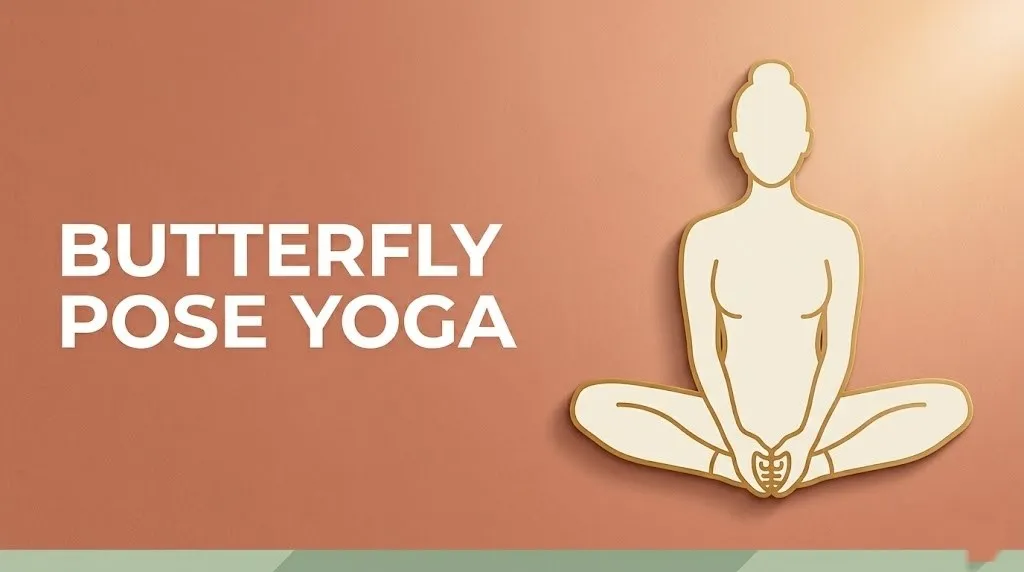
Butterfly pose yoga, formally called Baddha Konasana in Sanskrit, is a seated hip-opening pose that stretches the inner thighs, groin, and hip external rotators. Done correctly with good spinal alignment, it is one of the most accessible and anatomically targeted hip openers in any yoga practice.
Hip tightness is one of the most common physical complaints among adults. According to the National Center for Complementary and Integrative Health, yoga practiced consistently improves flexibility and reduces musculoskeletal discomfort in adults across age groups, and poses like Baddha Konasana are frequently included in yoga-based pain management programs for exactly that reason.
This article covers the correct technique, the specific muscles involved, the science behind the benefits, and a complete modification ladder from beginner to advanced. You’ll also find specific guidance for pregnancy, knee sensitivity, back pain, pelvic floor health, and Yin yoga practice.
Butterfly Pose Yoga
Butterfly pose yoga is a seated, floor-based pose in which the soles of the feet press together, the knees fall outward toward the floor, and the spine stays upright or hinges forward from the hips. It is one of the most practiced hip openers across Hatha, Yin, Restorative, and Ashtanga yoga styles.
The pose is sometimes called the “flapping butterfly” when the practitioner gently bounces or flaps the knees up and down. That dynamic version and the static held version are actually doing different things. The held version targets the adductors and hip external rotators through sustained passive stretch. The flapping version creates rhythmic traction at the hip joint, which some teachers use for synovial fluid circulation rather than deep connective tissue release.
Most yoga classes include butterfly pose as part of a hip-opening sequence, a cooldown, or a yin hold. It appears in prenatal yoga, senior yoga, athletic recovery sequences, and general beginner flows. That breadth reflects both its safety profile and its genuine effectiveness at reaching tissues that upright poses don’t easily access.
Pose Tip:
- Sit on the front edge of a folded blanket if the lower back rounds immediately when you sit on the floor.
- Never force the knees downward with your hands. Let gravity and breath do the work.
- Beginners: keep the feet farther from the groin, not closer. Distance reduces intensity safely.
Butterfly Pose Sanskrit Name and Meaning
Baddha Konasana is the correct Sanskrit name for butterfly pose, and each word in the name carries specific meaning. “Baddha” means bound or restrained. “Kona” means angle. “Asana” means pose or seat. Together, the name translates as Bound Angle Pose.
The English name “butterfly pose” is informal and widely used in Western yoga classes, particularly with children and beginners. It describes the visual image of the bent knees falling outward like wings. In formal yoga traditions, especially Ashtanga yoga and Iyengar yoga, the pose is always referred to as Baddha Konasana.
Some teachers also call this pose Cobbler’s Pose, referencing the traditional seated position used by cobblers (shoemakers) in South Asia, who sat with feet pressed together while working. That cultural context is worth knowing. The pose was not designed for stretching in a modern fitness sense. It was a natural resting position for people whose daily work required it.
Understanding the Sanskrit root matters for one practical reason. When you search “Baddha Konasana” in yoga apps, class descriptions, or anatomy textbooks, you’ll find accurate, detailed information. Searching “butterfly pose” often returns general beginner content with less anatomical precision.
Key entities associated with this pose in yoga literature include its appearance in B.K.S. Iyengar’s “Light on Yoga” and its place as a primary seated pose in the Ashtanga primary series.
How to Do Butterfly Pose Step by Step
To practice Baddha Konasana (Butterfly Pose / Bound Angle Pose) correctly, follow these numbered steps:
- Sit on the floor with both legs extended in front of you in Dandasana (Staff Pose). Press both sit bones evenly into the floor.
- Bend both knees and draw the soles of your feet together. Let the outer edges of your feet rest on the floor.
- Draw your heels toward your pelvis. The closer they are, the more intense the stretch. Start with feet 12 to 18 inches from the groin if you are new to the pose.
- Hold the outer edges of both feet with your hands. Gently press your thumbs into the arches of your feet to open the soles.
- Inhale and lengthen through the crown of your head. Feel the spine grow tall.
- Exhale and allow the knees to release toward the floor. Do not press them down. Gravity does this work over time.
- If folding forward, hinge at the hips, not the lower back. Keep the spine long. Lower the chest toward the feet, not the chin toward the chest.
- Hold for 5 to 10 breaths in a dynamic class, or 2 to 5 minutes in Yin yoga or a restorative hold.
- To release, inhale and slowly lift the chest. Use your hands to draw the knees back toward center. Extend both legs back into Dandasana.
Modification for tight hips: Sit on a folded blanket or yoga block to tilt the pelvis forward. This reduces lumbar rounding immediately and makes the pose safer.
Modification for knee discomfort: Place a folded blanket or yoga block under each knee for support. This removes the weight of the legs from the inner knee ligaments.
Butterfly Pose Muscles Worked
Butterfly pose primarily targets the adductor muscle group, the inner thigh muscles responsible for pulling the leg toward the body’s midline. These are among the most chronically tight and undertrained muscles in adults who sit for long periods or do predominantly forward-moving exercise like running or cycling.
The five muscles of the adductor group worked in this pose are:
- Adductor longus: The most visible adductor. Runs from the pubic bone to the mid-femur. Stretched under the weight of the thigh in external rotation.
- Adductor magnus: The largest and deepest adductor. Also functions as a hip extensor. Stretched significantly in Baddha Konasana.
- Adductor brevis: Short adductor connecting the pubic bone to the upper femur. Stretched in hip abduction and external rotation.
- Gracilis: A long, thin muscle running the full length of the inner thigh into the lower leg. Crossed at two joints (hip and knee), making it sensitive to overstretching.
- Pectineus: A short flat muscle at the very top of the inner thigh. Often the first place of sensation when beginning this pose.
Beyond the adductors, butterfly pose also stretches the hip external rotators, particularly the piriformis and obturator externus. These muscles rotate the femur outward in the hip socket and become chronically shortened in people who drive frequently, sit with legs crossed, or do repetitive unilateral sports.
The pelvic floor also responds to this pose. The external rotation and abduction of the femur creates a natural lengthening stimulus through the pelvic floor musculature, which is one reason the pose appears frequently in prenatal and pelvic health yoga programs.
Butterfly Pose Benefits
Butterfly pose offers a range of well-documented physical and neurological benefits that go well beyond a simple inner thigh stretch. The benefits accumulate with consistent practice over weeks, not from a single session.
A study published in the Journal of Bodywork and Movement Therapies found that regular yoga practice incorporating sustained hip-opening poses produced measurable improvements in hip range of motion and reductions in adductor tightness in sedentary adults after eight weeks.
Key benefits by category:
- Hip mobility: Releases the adductors and hip external rotators, improving range of motion for walking, running, squatting, and seated activity.
- Groin and inner thigh flexibility: Directly lengthens the adductor group through sustained passive stretch, which is more effective for long-term flexibility than brief dynamic stretching.
- Lower back relief: A mobile hip joint reduces compensatory movement in the lumbar spine. Many men and women with chronic lower back tension find it eases significantly after consistent hip-opening practice.
- Pelvic floor release: The combination of hip abduction and external rotation creates a gentle lengthening stimulus through the pelvic floor, beneficial for those with pelvic floor tension.
- Nervous system regulation: Held positions combined with diaphragmatic breathing activate the parasympathetic nervous system. This reduces cortisol and supports recovery.
- Menstrual discomfort relief: Yoga teachers and pelvic health practitioners commonly recommend Baddha Konasana for cramping and pelvic congestion, though individual results vary.
- Kidney and bladder stimulation: In traditional yoga anatomy, this pose is said to stimulate the kidneys, ovaries, and prostate gland, though these claims come from traditional texts rather than modern research.
Key Takeaway: Butterfly pose works by stretching five distinct adductor muscles simultaneously while also releasing the hip external rotators. It is not a simple “groin stretch.” It is a precisely targeted hip-opening position with documented flexibility and nervous system benefits.
Butterfly Pose for Beginners
Butterfly pose is accessible to most beginners, but “accessible” does not mean it will be comfortable right away. Men, people who sit for long periods, runners, and cyclists commonly find this pose among the most challenging hip openers when they first begin yoga.
The most common beginner mistake is drawing the feet too close to the groin before the hips have enough range to allow it. This forces the pelvis into a posterior tilt, rounds the lower back, and shifts the stretch away from the adductors and onto the lumbar spine, where you don’t want it.
A better beginner entry point is feet 12 to 18 inches from the groin, sitting on a folded blanket, with no forward fold at all. Sitting upright and breathing in this position for 5 to 10 breaths trains the hip external rotators first. Forward folding comes later, after the hip joint has more freedom.
Beginner Butterfly Pose Checklist:
- Sit bones pressing evenly into the floor or blanket
- Feet together, outer edges resting on the floor
- Knees released outward but not forced down
- Spine tall, not rounded
- Breath slow and nasal throughout
- No gripping in the jaw, shoulders, or hands
- Hold 5 to 8 breath cycles to start
Progress markers for beginners: After two to four weeks of consistent practice three times per week, most beginners notice their knees releasing several inches closer to the floor without forcing. That is connective tissue adaptation, not just muscle relaxation.
Modification for complete beginners with very tight hips: Sit with your back against a wall for spinal support. Let the wall hold you upright while you focus on releasing the hips without fighting to maintain posture simultaneously.
Butterfly Pose Modifications With Props
Props are not a beginner shortcut. They are precision tools that allow the pose to work correctly for your specific body. Every prop option listed here serves a specific biomechanical purpose.
| Prop | Placement | Purpose |
|---|---|---|
| Folded blanket | Under both sit bones | Tilts pelvis forward, reduces lumbar rounding |
| Yoga block (low height) | Under each knee | Reduces inner knee ligament load, makes long holds sustainable |
| Yoga block (medium height) | Under each knee | Increases knee support for very tight hips where knees are high |
| Bolster | Under the chest in forward fold | Allows passive forward fold without muscular effort |
| Bolster (vertical) | Along the spine in reclined version | Supports thoracic spine in Supta Baddha Konasana |
| Yoga strap | Looped around waist and feet | Holds the feet in place without gripping, frees hands |
| Wall | Behind the back | Provides upright postural support for beginners |
The most underused prop combination for this pose is a blanket under the sit bones combined with blocks under both knees. Together, these two adjustments create a fully supported butterfly position that can be held for three to five minutes without strain. That duration is where genuine connective tissue change begins.
Modification for seniors or people with limited floor access: Practice the pose seated in a chair. Sit at the chair’s edge, bring the outer edges of both feet to rest on the floor, and allow the knees to fall outward as far as is comfortable. This is sometimes called a seated butterfly chair variation and captures much of the adductor stretch without floor work.
Advanced Butterfly Pose Variations
Advanced butterfly pose variations demand greater hip range of motion, spinal flexibility, and body awareness than the standard version. These are not appropriate for beginners or for people actively managing hip impingement, groin strain, or sacroiliac dysfunction.
The three main advanced variations are:
1. Full Forward Fold in Baddha Konasana (Baddha Konasana with Uttanasana):
Hinge deeply from the hips until the forehead, nose, or chin approaches the floor. Feet remain pressed together. The spine stays long rather than rounding. This requires significant adductor and posterior hip flexibility.
2. Dynamic Butterfly (Flapping Variation):
From the standard position, gently allow the knees to rise and fall rhythmically, like wings. This is not a stretch. It is a joint mobilization technique. The movement circulates synovial fluid in the hip joint and is used in warm-up sequences and therapeutic contexts rather than flexibility training.
3. Baddha Konasana Forward Fold with Chin to Floor:
The most advanced expression. Hands release from the feet and extend forward on the floor. The chest rests on the feet or the floor. This requires years of consistent hip-opening practice and is seen primarily in advanced Ashtanga practice.
| Variation | Level | Primary Target | Hold Duration |
|---|---|---|---|
| Upright hold, feet at mid-distance | Beginner | Adductors, posture | 5 to 10 breaths |
| Gentle forward fold, chest above feet | Intermediate | Adductors, hamstrings | 5 to 10 breaths |
| Full forward fold, forehead to floor | Advanced | Deep adductors, thoracic flexion | 5 to 10 breaths |
| Dynamic flapping | All levels | Joint mobilization | 30 to 60 seconds |
| Chin to floor full expression | Advanced plus | Full hip and spinal flexibility | 5 breaths |
Safety note for advanced variations: Never attempt full forward fold if you feel sharp or pinching sensation at the front of the hip joint. That sensation indicates femoral impingement, not a stretch you should push through.
Key Takeaway: The forward fold in butterfly pose should always hinge from the hips, not the lower back. If your lower back rounds before your chest lowers, you need more height under your sit bones, not more effort.
Reclined Butterfly Pose (Supta Baddha Konasana)
Supta Baddha Konasana, known in English as Reclined Bound Angle Pose, is the lying-down version of butterfly pose and one of the most deeply relaxing positions in any yoga practice. “Supta” means reclined or lying down in Sanskrit.
In this version, the practitioner lies on the back, presses the soles of the feet together, and allows the knees to fall outward toward the floor. Gravity does all the work. There is no active effort to press the knees down or hold the spine upright. This makes it ideal for Restorative yoga, cool-downs, sleep preparation, and anyone who cannot comfortably sit upright on the floor.
To practice Supta Baddha Konasana:
- Lie on your back with knees bent and feet flat on the floor.
- Press the soles of your feet together and slide them toward your pelvis.
- Allow both knees to fall outward toward the floor.
- Rest your arms alongside your body, palms facing up, or place one hand on the belly.
- Close your eyes and breathe naturally.
- Hold for 2 to 10 minutes, depending on the context.
- To release, use your hands to draw both knees back to center. Roll gently to one side before sitting up.
According to the National Center for Complementary and Integrative Health, Restorative yoga practices, of which Supta Baddha Konasana is a core pose, have measurable effects on the parasympathetic nervous system, reducing resting heart rate and cortisol levels in adults practicing consistently.
Modification for lower back sensitivity: Place a folded blanket under the lumbar spine if the lower back lifts off the floor uncomfortably in this position. A bolster placed vertically along the spine is also highly effective and allows longer holds.
Butterfly Pose for Tight Hips and Hip Flexors
Butterfly pose is one of the most direct tools for addressing tight hips in adults who sit for extended periods, though it targets a different part of the hip than most people expect. It releases the adductors and external rotators, not the hip flexors directly.
Think of the inner thigh adductors as cables that run from the pubic bone down to the inner femur. When these cables shorten from years of sitting with legs parallel or from repetitive forward movement, they pull the femur inward and restrict the hip’s ability to rotate externally. Butterfly pose gradually lengthens those cables by holding the femur in external rotation under a sustained, low-load stretch.
For tight hip flexors specifically, Virabhadrasana I (Warrior I) and Anjaneyasana (Low Lunge Pose) are more direct. Butterfly pose complements those poses by releasing the adductors that often co-restrict hip mobility.
Runners and cyclists benefit particularly from this pose. Both activities train the hip in a narrow range of sagittal plane (forward-backward) movement. Over time, the adductors and external rotators adapt to that narrow range, restricting lateral and rotational hip mobility. Butterfly pose directly counters that pattern.
Practical sequence for tight hips:
- Begin with Supta Baddha Konasana (reclined version) for 3 minutes
- Move to upright Baddha Konasana with blanket under sit bones for 5 breaths
- Progress to gentle forward fold for 5 to 8 breaths
- End with Upavistha Konasana (Wide-Angle Seated Forward Fold) for 5 breaths on each side
Modification for men with very tight adductors: Start with feet 18 to 24 inches from the groin. Do not attempt any forward fold in the first two weeks. Simply sit upright and breathe. The hip range will increase before the forward fold becomes appropriate.
Butterfly Pose for Back Pain and Sciatica
Butterfly pose can relieve certain types of lower back pain and sciatica by releasing the hip structures that pull on the lumbar spine and sacroiliac joint. However, it is not appropriate for all types of back pain, and the distinction matters.
The connection between hip tightness and lower back pain is well established. When the adductors and external rotators are chronically tight, the pelvis tilts and the lumbar spine compensates. Releasing those hip muscles can reduce the mechanical load on the lower back directly. A study published in the International Journal of Yoga found that yoga programs including hip-opening poses reduced chronic lower back pain scores in participants after eight weeks of twice-weekly practice.
For sciatica specifically, butterfly pose is useful when the sciatic irritation originates from piriformis syndrome, where the piriformis muscle compresses the sciatic nerve. Baddha Konasana stretches the piriformis through external hip rotation, which can reduce that compression.
If the sciatica originates from lumbar disc herniation at L4-L5 or L5-S1, deep forward folding in butterfly pose may aggravate symptoms. In that case, practice only the upright seated version or the reclined version, avoiding any forward fold until cleared by a physical therapist who understands yoga mechanics.
Safety note: Sharp, shooting, or electric pain down the leg during butterfly pose is a signal to stop and assess. That type of sensation in a hip-opening pose can indicate nerve involvement that requires professional evaluation before continuing.
Modification for lower back sensitivity: Practice only Supta Baddha Konasana (reclined version) until the upright seated version can be maintained with a neutral lumbar curve. The reclined version removes spinal loading entirely.
Key Takeaway: Butterfly pose relieves lower back pain linked to hip tightness and piriformis-related sciatica, but it may aggravate back pain from disc herniation if forward folding is included. Know your cause before you practice.
Butterfly Pose for Pelvic Floor Health
Butterfly pose is one of the few yoga poses with a direct, anatomically grounded connection to pelvic floor health. The pelvic floor is a group of muscles spanning the base of the pelvis, and its function depends heavily on the mobility and tension of the surrounding hip structures.
When the hip external rotators and adductors are chronically tight, they can increase resting tension in the pelvic floor muscles through fascial and muscular connections at the ischial tuberosities and pubic rami. Butterfly pose, by releasing those surrounding structures, creates a gentle secondary lengthening stimulus through the pelvic floor.
Pelvic health physical therapists frequently recommend Baddha Konasana for clients with hypertonic (overly tight) pelvic floors, including those experiencing pelvic pain, certain types of urinary urgency, or pain with sitting. The pose is used as a relaxation technique, not a strengthening exercise.
According to research described in the Journal of Alternative and Complementary Medicine, yoga-based interventions that include hip-opening poses have shown benefit for women with pelvic floor dysfunction, including reduced pain and improved pelvic muscle coordination.
The most effective version of butterfly pose for pelvic floor release is the reclined version, Supta Baddha Konasana, held for three to five minutes with slow diaphragmatic breathing. The diaphragm and pelvic floor move together in a coordinated rhythm during breathing. Long, slow exhales in this position actively encourage pelvic floor release.
Modification for those with hypermobile pelvic joints: Use blocks under both knees and avoid any forward fold. Hypermobility at the pubic symphysis or sacroiliac joint requires less range, not more. Hold the pose in a supported mid-range position.
Butterfly Pose in Pregnancy
Butterfly pose is considered one of the safest and most beneficial yoga poses during an uncomplicated pregnancy, particularly in the second and third trimesters. It prepares the pelvic floor and hip structures for labor and delivery while remaining accessible through most of pregnancy.
The pose opens the pelvis and inner groin, areas that bear increasing load as the baby grows. Maintaining hip mobility and pelvic floor suppleness throughout pregnancy is associated with greater comfort in late pregnancy and more functional pelvic mechanics during delivery. Yoga Alliance-registered prenatal yoga teachers consistently include Baddha Konasana in standard prenatal sequences.
However, pregnancy-specific modifications are important:
| Trimester | Recommended Version | Key Modifications |
|---|---|---|
| First trimester | Standard upright Baddha Konasana | Blanket under sit bones; no deep forward fold |
| Second trimester | Upright with blanket and blocks under knees | Avoid lying flat for extended periods |
| Third trimester | Supta Baddha Konasana with bolster under spine | Bolster keeps head above heart; reduces vena cava compression |
| Postpartum | Gentle reclined version | Avoid deep adductor stretching until cleared by midwife or OB |
Women experiencing pelvic girdle pain or symphysis pubis dysfunction during pregnancy should approach butterfly pose cautiously. The pose places the hip in external rotation and abduction, which can aggravate symphysis pubis dysfunction in some cases. A pelvic health physiotherapist should evaluate the pose within the context of any active pelvic girdle pain before it is practiced.
Modification for late pregnancy: Never lie flat on the back for more than a few minutes after the 20th week. Use a bolster or rolled blanket under the thoracic spine to keep the chest elevated in the reclined version.
Butterfly Pose in Yin and Restorative Yoga
Butterfly pose is a core pose in both Yin yoga and Restorative yoga, but the two styles use it differently, and understanding that distinction helps you get far more from each practice.
In Yin yoga, poses are held for two to five minutes in a relatively passive state with moderate tension. The goal is to create a sustained, low-load stress on the connective tissue (fascia, ligaments, joint capsule) rather than the muscles. Baddha Konasana in a Yin context is held long enough to feel the connective tissue begin to yield, which takes longer than muscle yielding. The practitioner remains still and breathes slowly without fidgeting out of the discomfort.
In Restorative yoga, every pose is fully supported by props so that no muscular effort is required. Supta Baddha Konasana with a bolster under the spine, blocks under the knees, and a blanket over the body is a classic restorative setup. The nervous system response in a fully supported restorative pose is distinctly different from a Yin hold: there is almost no physical challenge, only structured rest.
A 2018 study published in Complementary Therapies in Medicine found that restorative yoga practice twice weekly reduced self-reported fatigue and improved sleep quality in adults with chronic stress. Supta Baddha Konasana was among the primary poses used.
Yin and Restorative are often grouped together or confused. The key difference: Yin creates mild to moderate sensation as a feature. Restorative eliminates sensation as a goal.
Modification for beginners entering Yin yoga: Start with two-minute holds in Baddha Konasana before progressing to five-minute holds. The tissue response is present at two minutes. Longer holds increase intensity. Build gradually.
Key Takeaway: In Yin yoga, butterfly pose is a connective tissue challenge held with moderate sensation. In Restorative yoga, it is a fully supported nervous system reset. Both are valuable, and they are not interchangeable.
Why Does Butterfly Pose Hurt My Knees
Knee discomfort in butterfly pose is common and usually stems from one of three causes, each with a specific solution.
The most common cause is that the practitioner is allowing the full weight of the leg to pull on the medial (inner) knee ligaments, specifically the medial collateral ligament (MCL). In butterfly pose, the knee is bent and the leg is externally rotated. The MCL bears load in this position. If the adductors and external rotators are very tight, the knee hangs in an unsupported position and the MCL takes strain.
The fix is straightforward. Place a folded blanket or a yoga block under each knee. This removes the hanging weight from the ligament immediately. Most knee discomfort in this pose resolves completely with this one adjustment.
The second cause is that the practitioner is pressing the knees downward, either with their hands or by actively contracting the hip external rotators. This creates compression at the knee rather than release at the hip. The pose should always be passive at the knee. Gravity moves the knees, not muscular effort.
The third cause is pre-existing knee pathology, including meniscal tears, MCL sprains, or chondromalacia patellae. In these cases, the external rotation and abduction demand of the pose may be genuinely contraindicated in its full expression.
Contraindications for butterfly pose at the knee:
- Active MCL sprain or recent MCL reconstruction
- Medial meniscal tear (may be appropriate in limited range with full support)
- Severe knee osteoarthritis with medial compartment involvement
- Post-knee replacement (follow surgeon’s specific range-of-motion restrictions)
Modification for all knee concerns: Always use blocks or blankets under the knees. Never press the knees toward the floor manually. If discomfort persists with full support, practice only the reclined version or skip this pose until the knee condition has been evaluated.
How Long to Hold Butterfly Pose
How long you hold butterfly pose depends entirely on your goal and the yoga context you are practicing in. There is no single correct answer, and different hold durations produce different physical effects.
Here is a clear reference guide:
| Goal | Context | Recommended Hold | Effect |
|---|---|---|---|
| General warm-up | Hatha or Vinyasa class | 5 to 8 breaths (30 to 60 seconds) | Joint preparation, synovial circulation |
| Flexibility training | Active stretching | 30 to 60 seconds, 2 to 3 repetitions | Muscle lengthening through sustained stretch reflex |
| Connective tissue work | Yin yoga | 2 to 5 minutes | Fascial and ligamentous remodeling over time |
| Full nervous system rest | Restorative yoga | 5 to 10 minutes | Parasympathetic activation, cortisol reduction |
| Cool-down after running | Athletic recovery | 90 seconds to 2 minutes | Adductor recovery, post-exercise hip mobility |
| Prenatal practice | Prenatal yoga | 1 to 3 minutes with full support | Pelvic preparation, groin mobility |
The American College of Sports Medicine recommends holding static stretches for 15 to 60 seconds for general flexibility benefit. For connective tissue-targeted work, yoga teachers and physical therapists generally agree that holds of two minutes or longer are needed, which is why Yin yoga uses these durations deliberately.
One practical note: the first 30 to 60 seconds of any held hip-opening pose feels most intense. If you can breathe slowly and release the urge to leave the pose, the sensation typically softens between 60 and 90 seconds. That softening is the muscle releasing. It is a feature, not a warning.
Modification for beginners on hold duration: Start with 5-breath holds (approximately 30 seconds). Add 5 breaths per week until you reach the duration appropriate for your goal. Never force yourself through pain to achieve a longer hold. Time spent in correct, supported alignment is always more valuable than time spent gripping through discomfort.
Frequently Asked Questions About Butterfly Pose Yoga
What is butterfly pose good for in yoga?
Butterfly pose stretches the adductor muscles of the inner thigh, releases the hip external rotators, and gently stimulates the pelvic floor.
It is commonly used for hip mobility, lower back tension relief, pelvic floor health, prenatal preparation, and as a cool-down pose in athletic recovery sequences.
Consistent practice three or more times per week produces measurable flexibility improvements in most people within four to six weeks.
Is butterfly pose the same as Baddha Konasana?
Yes, butterfly pose and Baddha Konasana (Bound Angle Pose) are the same pose.
“Butterfly pose” is the informal English name used widely in Western yoga classes and with children, while Baddha Konasana is the correct Sanskrit name used in formal yoga traditions including Ashtanga and Iyengar yoga.
The reclined version of the same pose has its own Sanskrit name: Supta Baddha Konasana (Reclined Bound Angle Pose).
How long should you hold butterfly pose for results?
For general flexibility, hold butterfly pose for 30 to 60 seconds, which matches the American College of Sports Medicine’s recommendation for static stretch duration.
For connective tissue and fascial work in Yin yoga, holds of 2 to 5 minutes are appropriate and produce a deeper, longer-lasting range of motion response.
Beginners should start with 5-breath holds and build duration gradually over several weeks.
Can I do butterfly pose if I have bad knees?
Most people with knee concerns can practice butterfly pose safely by placing yoga blocks or folded blankets under both knees for support.
This modification removes the hanging weight from the medial collateral ligament, which is the most common cause of knee discomfort in this pose.
People with active MCL sprains, recent meniscal tears, or post-knee replacement should confirm the appropriate range of motion with their physical therapist before practicing.
Is butterfly pose safe during pregnancy?
Butterfly pose is generally considered safe and beneficial during uncomplicated pregnancies, particularly in the second and third trimesters.
In the third trimester, use a bolster under the spine in the reclined version rather than lying flat, to avoid vena cava compression.
Women with pelvic girdle pain or symphysis pubis dysfunction should consult a pelvic health physiotherapist before practicing, as the hip external rotation demand of this pose may not be appropriate for their specific condition.
Butterfly pose is worth mastering because it reaches the adductors and external rotators in a way that almost no other common exercise does. Start with the upright seated version today, with a folded blanket under your sit bones and blocks under your knees if needed.
Practice three times this week. Hold each side for 5 breaths to start. Let gravity do the work and breathe slowly through the nose.
The hips open gradually. They don’t open from one session or from forcing. They open from coming back, consistently, with patience and the right support