Soluna Yoga: Solar and Lunar Practice Guide for 2026
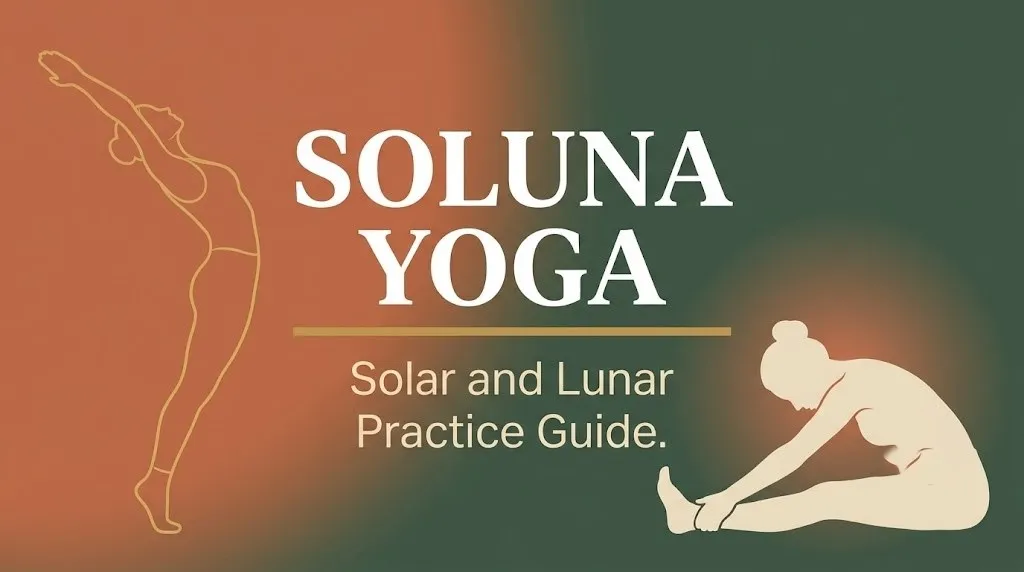
Soluna yoga is a practice philosophy that combines solar (sun-based) and lunar (moon-based) yoga principles to balance activation and rest within a single practice framework. The name itself is a contraction of “sol” (sun) and “luna” (moon), and it reflects one of yoga’s oldest organizing ideas: that movement, breath, and stillness each have their time.
The concept is not new, but the research supporting it is growing. According to the National Center for Complementary and Integrative Health, yoga practices that include both dynamic movement and deliberate rest show measurable effects on autonomic nervous system regulation, including shifts in heart rate variability that indicate improved stress resilience.
This guide covers the full picture: what Soluna yoga is, how the solar and lunar sides of the practice differ, which poses belong where, how breathwork completes the system, and how to build a weekly practice that uses both. Whether you are managing low energy, chronic stress, or simply want more intention behind your mat time, this is the framework that makes it make sense.
Soluna Yoga: What It Is and Why It Matters
Soluna yoga refers to a practice approach that intentionally combines yang-quality (solar, activating) and yin-quality (lunar, calming) yoga within a structured or complementary practice design.
The word “Soluna” comes from the Latin roots for sun and moon. In yoga tradition, this duality has deep roots. The word “Hatha” itself is composed of “Ha” (sun) and “Tha” (moon), making the solar-lunar balance a foundational principle of classical Hatha yoga practice, not a modern invention.
What makes Soluna yoga distinct as a named approach is its deliberate attention to the ratio and timing of each quality. A Soluna-informed practice is not simply a yoga class that includes both active and passive poses. It is a framework that asks: what does this body need right now, solar activation or lunar restoration, and how do we sequence those qualities with intention?
Key concepts underpinning Soluna yoga:
- Solar (Ha) quality: dynamic movement, heat generation, muscular engagement, breath retention, morning energy
- Lunar (Tha) quality: stillness, surrender, passive stretching, cooling breath, evening restoration
- Hatha duality: the original organizing principle of classical yoga, balancing opposing forces in one practice
- Prana flow: the idea that energy moves differently through active versus passive states, regulated through breathwork and posture
For home practitioners, this framework is practical. It gives you a reason to choose your practice based on your energy level rather than a fixed routine.
What Is Solar and Lunar Yoga?
Solar yoga refers to dynamic, heat-generating yoga practice that activates the sympathetic and parasympathetic nervous systems through muscular effort and rhythmic breath. Lunar yoga refers to passive, cooling, and restorative practice that supports nervous system downregulation and tissue recovery.
These are not two separate yoga styles. They are two poles of a spectrum that every yoga practice moves along. A fast Vinyasa class is deeply solar. A Yin yoga session held in long passive postures is deeply lunar. Most classes sit somewhere between.
| Quality | Solar Yoga | Lunar Yoga |
|---|---|---|
| Pace | Dynamic, rhythmic, flowing | Slow, held, still |
| Breath focus | Ujjayi breath, retention, activation | Long exhales, soft breath, release |
| Primary nervous system effect | Energizing, alerting | Calming, restorative |
| Primary tissue target | Muscles, cardiovascular system | Connective tissue, fascia, joints |
| Best time of day | Morning or early afternoon | Late afternoon or evening |
| Yoga style examples | Vinyasa, Ashtanga, Power yoga | Yin, Restorative, Hatha slow flow |
Understanding this spectrum helps you make smarter choices about your practice. Practicing a vigorous solar sequence at 9 pm is likely to raise your cortisol levels and disrupt sleep. A lunar sequence before bed supports melatonin production and genuine rest.
Sun and Moon Yoga Philosophy
The sun and moon yoga philosophy draws from the classical Indian framework of Ha-Tha duality, which describes the human body as a field where opposing energies must be balanced for optimal function.
In this system, the sun principle governs the right side of the body, the Pingala nadi (the solar energy channel in yogic anatomy), and the qualities of heat, effort, clarity, and outward movement. The moon principle governs the left side of the body, the Ida nadi (the lunar energy channel), and the qualities of coolness, receptivity, inward attention, and rest.
This is not metaphor for its own sake. Modern physiology offers a parallel framework. The sympathetic nervous system drives activation and outward response, much like the solar principle. The parasympathetic nervous system drives recovery and inward repair, much like the lunar principle. Research published in the Journal of Alternative and Complementary Medicine has found that yoga practices combining active sequencing with extended relaxation show greater improvements in heart rate variability than either active or passive practice alone.
The sun and moon philosophy also informs practice timing. Ancient yoga texts recommend solar practices during the bright half of the lunar cycle and lunar practices during the dark half. Modern practitioners adapt this more practically: solar practice in the morning when cortisol is naturally higher, lunar practice in the evening when the body is preparing for sleep.
Key Takeaway: Soluna yoga is rooted in Hatha yoga’s oldest organizing principle: that the sun and moon qualities of a practice must be balanced deliberately, not left to chance.
Solar Yoga Poses and Sequences
Solar yoga poses are standing postures, backbends, and dynamic transitions that build heat, engage large muscle groups, and activate the cardiovascular and muscular systems.
Solar poses are generally held for shorter durations (three to five breath cycles) and linked through flowing transitions. They target the quadriceps, hamstrings, glutes, erector spinae, deltoids, and core stabilizers. The breath in solar practice is rhythmic and often audible, using Ujjayi pranayama (victorious breath) to sustain internal heat.
Core solar poses to know:
- Virabhadrasana I (Warrior I): Deep hip flexor and quadriceps engagement. Develops standing strength and concentration.
- Virabhadrasana II (Warrior II): Hip abductor and inner thigh work. Builds lateral stability.
- Utkatasana (Chair Pose): Intense quadriceps and core activation. Generates heat rapidly.
- Bhujangasana (Cobra Pose): Spinal extension, erector spinae strengthening. Solar quality through backbending.
- Adho Mukha Svanasana (Downward-Facing Dog): Full-body engagement. Shoulder, hamstring, and calf lengthening with active arm and core work.
Modification for beginners: Reduce the depth of standing poses by keeping a shorter stance. In Virabhadrasana I, a shorter distance between the feet reduces hip flexor demand. In Utkatasana, limit the squat to a comfortable range rather than aiming for thighs parallel to the floor.
Safety note: People with knee instability should avoid deep squats in Utkatasana and ensure their knee tracks over the second toe (not collapsing inward) in all Warrior variations.
Lunar Yoga Poses and Sequences
Lunar yoga poses are floor-based, hip-opening, forward-folding, and fully supported postures that encourage the nervous system to downshift from activation into recovery.
These poses are generally held for longer durations, from one to five minutes in Yin practice, and use gravity and time rather than muscular effort to create change. The primary target is connective tissue, including fascia, joint capsules, and ligaments, rather than the muscular system.
Core lunar poses to know:
- Balasana (Child’s Pose): Gentle hip and lower back release. Quiets the nervous system through the forward fold position.
- Supta Baddha Konasana (Reclined Bound Angle Pose): Inner thigh and hip flexor opening. Deeply passive. Excellent with bolster support.
- Paschimottanasana (Seated Forward Fold): Hamstring and spinal lengthening. Lunar quality through the inward, surrendered shape.
- Viparita Karani (Legs-Up-the-Wall Pose): Passive inversion. Supports venous return and nervous system calming.
- Savasana (Corpse Pose): Complete rest. The final and most purely lunar pose in any practice.
Modification for people with limited mobility: In Supta Baddha Konasana, place yoga blocks or rolled blankets under each knee to reduce the demand on the inner groin and hip capsule. In Paschimottanasana, use a strap looped around the feet to keep the spine long rather than rounding deeply.
According to research published in Complementary Therapies in Medicine, extended passive yoga postures held for two minutes or longer show measurable increases in parasympathetic nervous system tone, including reduced respiratory rate and blood pressure.
Surya Namaskar for Solar Energy
Surya Namaskar (Sun Salutation) is the foundational solar sequence in yoga practice. It is a linked series of twelve postures performed in a flowing, breath-synchronized rhythm designed to warm the body, build cardiovascular capacity, and activate the entire muscular system.
Surya Namaskar is not a single pose. It is a sequence, and the quality of the practice depends entirely on the quality of breath-movement coordination. Rushing through it defeats the solar purpose. Each transition should be driven by either an inhale (opening, expanding, extending) or an exhale (folding, grounding, stabilizing).
To practice a modified Surya Namaskar A:
- Stand in Tadasana (Mountain Pose) with feet hip-width apart and hands at the heart in Anjali mudra (prayer position).
- Inhale: sweep the arms overhead into Urdhva Hastasana (Upward Salute), lengthening through the spine.
- Exhale: fold forward into Uttanasana (Standing Forward Fold), bending the knees generously if the hamstrings are tight.
- Inhale: lengthen the spine into a flat back, hands on the shins or blocks in Ardha Uttanasana (Half Standing Forward Fold).
- Exhale: step or jump back to Plank Pose, maintaining a straight line from crown to heels.
- Exhale: lower to Chaturanga Dandasana (Four-Limbed Staff Pose) or lower all the way to the floor if the pose is too demanding.
- Inhale: press into Bhujangasana (Cobra Pose) or Urdhva Mukha Svanasana (Upward-Facing Dog).
- Exhale: lift the hips into Adho Mukha Svanasana (Downward-Facing Dog), hold for five breaths.
- Inhale: step or jump the feet forward to meet the hands.
- Exhale: fold fully into Uttanasana.
- Inhale: rise to Urdhva Hastasana.
- Exhale: return to Tadasana.
Modification for beginners and wrist sensitivity: Substitute Chaturanga with knees-down lowering. Replace full Plank with a kneeling Plank if shoulder girdle strength is still developing.
Key Takeaway: Surya Namaskar is the most complete solar practice tool in yoga because it combines breath, movement, and full-body activation in a single repeatable sequence that can be calibrated to any level.
Chandra Namaskar for Lunar Energy
Chandra Namaskar (Moon Salutation) is the lunar counterpart to Surya Namaskar. Where the Sun Salutation moves in a forward and backward plane, the Moon Salutation moves primarily side to side, tracing the lateral arc associated with lunar movement.
Chandra Namaskar is slower, wider, and more grounding than Surya Namaskar. It targets the hip adductors, hip abductors, inner thighs, and lateral spinal muscles through side-opening postures and deep lateral lunges. The pace is meditative. Each pose is held for two to three breaths rather than one.
To practice a foundational Chandra Namaskar:
- Begin in Tadasana (Mountain Pose), hands at the heart.
- Inhale: raise the arms overhead, palms together.
- Exhale: side bend to the right in Chandrasana (Crescent Pose), feeling the left side body open.
- Inhale: return to center, arms overhead.
- Exhale: step the right foot wide into Utthita Trikonasana (Extended Triangle Pose), right hand lowering toward the shin or a block.
- Inhale: transition into Parsvakonasana (Extended Side Angle Pose), right forearm on the right thigh.
- Exhale: deepen into Anjaneyasana (Low Lunge), right knee on the floor, arms framing the front leg.
- Inhale: shift into Malasana (Garland Pose/Squat), feet wide, heels grounded or supported on a rolled blanket.
- Mirror the sequence on the left side.
- Return to Tadasana, hands to heart.
Modification for hip sensitivity: In deep lateral lunge positions, use blocks under the hands to reduce hip compression. For anyone with knee concerns, practice all lunge postures with the back knee lowered to the floor.
Surya Bhedana and Chandra Bhedana Pranayama
Surya Bhedana pranayama (right-nostril breathing) is a solar breathwork practice that activates the sympathetic nervous system and increases mental alertness. Chandra Bhedana pranayama (left-nostril breathing) is its lunar counterpart, activating the parasympathetic response and encouraging calm.
These are the breathwork tools that make Soluna yoga a complete system. Poses shape the body. Breath shapes the nervous system. Together, they work from two directions toward the same outcome: a body that can move between activation and rest with skill and intention.
Surya Bhedana technique:
- Sit comfortably with the spine tall.
- Close the left nostril with the right ring finger.
- Inhale slowly and fully through the right nostril only.
- Close both nostrils briefly, then release the breath through the left nostril.
- Repeat for six to twelve rounds.
Chandra Bhedana technique:
- Sit comfortably with the spine tall.
- Close the right nostril with the right thumb.
- Inhale slowly and fully through the left nostril only.
- Close both nostrils briefly, then release the breath through the right nostril.
- Repeat for six to twelve rounds.
Research published in the International Journal of Yoga found that unilateral nostril breathing practices alter hemispheric brain activity and autonomic tone in ways consistent with the traditional solar-lunar framework: right-nostril breathing correlates with left-hemisphere activation and sympathetic arousal, while left-nostril breathing correlates with right-hemisphere activation and parasympathetic calming.
Safety note: Avoid breath retention (kumbhaka) if you have high blood pressure, cardiovascular conditions, or are pregnant, unless you are working with a qualified pranayama teacher who is aware of your health history.
Nadi Shodhana for Solar-Lunar Balance
Nadi Shodhana pranayama (alternate nostril breathing) is the breathwork practice that brings the solar and lunar channels into equilibrium, making it the balancing bridge between the two poles of Soluna practice.
“Nadi” means channel in Sanskrit. “Shodhana” means purification or cleansing. The practice alternates breath between the right nostril (Pingala, solar channel) and the left nostril (Ida, lunar channel) in an even, rhythmic pattern.
To practice Nadi Shodhana:
- Sit in a comfortable seated position with the spine upright.
- Rest the left hand on the left knee. Bring the right hand to Vishnu mudra: fold the index and middle fingers toward the palm, keeping the thumb, ring finger, and little finger extended.
- Close the right nostril with the right thumb. Inhale through the left nostril for a count of four.
- Close both nostrils. Hold briefly.
- Release the right nostril. Exhale through the right nostril for a count of four.
- Inhale through the right nostril for a count of four.
- Close both nostrils. Hold briefly.
- Release the left nostril. Exhale through the left nostril for a count of four.
- This completes one full round. Practice five to ten rounds to begin.
Modification for beginners: Skip the breath retention entirely. Simply alternate the inhale and exhale between nostrils without any pause. This is a fully valid and effective version of the practice.
According to a review published in the International Journal of Yoga, Nadi Shodhana practiced regularly over four to eight weeks shows measurable improvements in respiratory function, heart rate variability, and self-reported stress levels.
Key Takeaway: The breathwork side of Soluna yoga is as important as the movement side. Surya Bhedana activates, Chandra Bhedana calms, and Nadi Shodhana balances. Knowing which tool to use when is what makes a practice genuinely intelligent.
Yoga for Nervous System Balance
Yoga for nervous system balance works by alternating between activating and calming practices to train the autonomic nervous system to shift more efficiently between its sympathetic (action) and parasympathetic (recovery) states.
Think of the autonomic nervous system like a dimmer switch rather than an on-off toggle. Most people are stuck at one setting: either chronically over-activated (anxious, wired, unable to rest) or chronically under-activated (fatigued, flat, unable to focus). Soluna practice works the dimmer, teaching the nervous system how to move across its full range.
According to the National Center for Complementary and Integrative Health, yoga is one of the most studied complementary practices for autonomic nervous system regulation, with evidence supporting its use in managing conditions that involve sympathetic overdrive, including anxiety disorders, hypertension, and chronic stress.
The nervous system benefits most from a practice that includes both:
- Dynamic movement that challenges and then releases muscular and cardiovascular effort
- Extended stillness that gives the parasympathetic system time to complete its calming response
A 20-minute Soluna session that includes ten minutes of solar sequencing followed by ten minutes of lunar postures with long exhale breathwork will, over time, improve the speed and quality of your nervous system’s recovery response.
Yoga for Energy and Fatigue
Yoga for energy and fatigue works by addressing two separate problems: the kind of fatigue that comes from physical depletion and the kind that comes from nervous system dysregulation.
These require different approaches. Physical fatigue responds well to gentle solar practice: short, rhythmic movement that increases circulation without depleting energy reserves further. Nervous system fatigue, the kind that follows chronic stress or poor sleep, responds better to lunar practice that reduces cortisol, supports parasympathetic tone, and allows the body’s recovery systems to do their work.
Research published in Complementary Therapies in Medicine found that yoga interventions reduced fatigue scores in participants with chronic fatigue conditions, with restorative and Yin-style sessions showing the strongest effects for people with adrenal and nervous system-related exhaustion.
Matching your practice to your fatigue type:
| Fatigue Type | Likely Cause | Better Practice Choice |
|---|---|---|
| Physical tiredness after exercise | Muscular depletion | Gentle lunar: Yin, Restorative |
| Afternoon energy slump | Circadian dip, blood sugar | Short solar: 5 to 10 minutes, standing poses |
| Wired but tired | Cortisol dysregulation | Lunar with Chandra Bhedana breath |
| Morning sluggishness | Slow sympathetic activation | Solar: Surya Namaskar, three to five rounds |
| Burnout and exhaustion | Chronic stress, adrenal dysregulation | Full lunar practice plus Nadi Shodhana |
If fatigue is persistent and unexplained, working with a physician to rule out thyroid, iron, or sleep conditions before designing a yoga practice is worth doing, not because yoga cannot help, but because knowing the cause makes your practice more effective.
Yoga for Stress and Anxiety Relief
Yoga for stress and anxiety relief works through measurable changes in cortisol levels, heart rate variability, and brain activity patterns associated with the stress response.
The lunar side of Soluna yoga is particularly effective for anxiety management. Long-held, passive postures activate the vagus nerve, the primary nerve of the parasympathetic nervous system. Extended exhale breathing, the kind emphasized in lunar Chandra Bhedana and Nadi Shodhana practice, increases vagal tone and reduces the physiological symptoms of anxiety: racing heart, shallow breathing, muscular tension.
A study published in the Journal of Alternative and Complementary Medicine found that eight weeks of yoga practice produced significant reductions in anxiety scores and cortisol levels compared to a control group, with participants who included breathwork showing the strongest outcomes.
Pose Tip for anxiety-focused practice:
- Hold Balasana (Child’s Pose) for two to three minutes with the forehead resting on the mat or a folded blanket
- Practice Viparita Karani (Legs-Up-the-Wall Pose) for five minutes as a daily non-negotiable
- Use a yoga bolster under the spine in Supta Baddha Konasana to fully support the body and remove all muscular effort
- Extend your exhale to twice the length of your inhale: inhale for four counts, exhale for eight
Safety note: For people managing clinical anxiety or PTSD, yoga practice is most effective when introduced as a complement to professional mental health care. A trauma-informed yoga teacher can adapt the practice to avoid poses or cues that trigger hypervigilance.
Key Takeaway: The lunar side of Soluna yoga targets anxiety and stress through vagal nerve activation, extended exhale breathing, and passive postures. These are not relaxation tricks. They are physiological tools with research backing.
Morning Yoga Sequence for Solar Activation
A morning solar yoga sequence should run fifteen to thirty minutes and prioritize full-body warming, joint mobilization, and breath-linked movement before transitioning into standing poses or Surya Namaskar.
Morning is the optimal time for solar practice because cortisol levels peak naturally in the first one to two hours after waking, making the body primed for movement and mental activation. Working with this natural rhythm rather than against it makes the practice more effective and less effortful.
A practical 20-minute morning solar sequence:
- Balasana (Child’s Pose): Two minutes. Wake up the breath. Gently mobilize the lower back.
- Marjaryasana-Bitilasana (Cat-Cow Pose): Ten rounds. Warm the spine. Synchronize breath and movement.
- Adho Mukha Svanasana (Downward-Facing Dog): Hold five breaths, then pedal the heels gently to warm the calves and hamstrings.
- Surya Namaskar A: Three to five rounds. Let the first round be slow and exploratory. Build pace gradually.
- Virabhadrasana I and II (Warrior I and II): Three breaths each side. Build lateral and frontal hip strength.
- Utkatasana (Chair Pose): Five breaths. Final heat-building posture.
- Uttanasana (Standing Forward Fold): One minute. Transition to stillness.
- Tadasana (Mountain Pose): One minute. Feel the effects of the sequence before moving into your day.
Modification for morning stiffness: Spend an extra two minutes in Cat-Cow before progressing. Warm joints move better. Rushing the warm-up is the most common morning yoga mistake.
Evening Yoga Sequence for Lunar Restoration
An evening lunar yoga sequence should run twenty to forty-five minutes and focus entirely on releasing accumulated muscular tension, calming the nervous system, and preparing the body’s physiological systems for sleep.
The biggest mistake in evening yoga is practicing anything too dynamic within ninety minutes of bed. Solar sequencing raises core body temperature and cortisol. Both of those work against sleep onset. Evening practice should do the opposite: lower arousal, extend breath, soften tissue.
A practical 30-minute evening lunar sequence:
- Viparita Karani (Legs-Up-the-Wall Pose): Five minutes. Immediate nervous system downshift. Supports venous return from the lower limbs.
- Supta Baddha Konasana (Reclined Bound Angle Pose): Three to five minutes. Inner thigh and hip flexor release. Use bolster or blocks under the knees.
- Supported Paschimottanasana (Seated Forward Fold): Three minutes. Use a strap or rest the forehead on a bolster. Full surrender.
- Chandra Namaskar (Moon Salutation): One to two slow rounds. Lateral body opening. Keep transitions gentle and unhurried.
- Supta Matsyendrasana (Supine Spinal Twist): Two minutes per side. Releases the thoracic and lumbar spine. Massages the abdominal organs.
- Chandra Bhedana pranayama: Eight rounds. Left-nostril breathing to activate the parasympathetic response.
- Savasana (Corpse Pose): Five to ten minutes minimum. Non-negotiable. Cover with a blanket. Eye pillow optional.
Modification for people with lower back sensitivity: In Supta Matsyendrasana, place a folded blanket between the knees and reduce the rotation to a range that feels like release, not strain.
Harvard T.H. Chan School of Public Health research on sleep hygiene notes that body temperature drop in the hour before bed is one of the strongest signals for sleep onset. Passive yoga postures in an evening practice support this natural cooling process.
Frequently Asked Questions About Soluna Yoga
What does Soluna yoga mean?
Soluna yoga refers to a practice philosophy that combines solar (sun) and lunar (moon) yoga principles to balance activation and rest.
The name comes from the Latin words “sol” (sun) and “luna” (moon), reflecting the classical Hatha yoga idea that a complete practice addresses both energizing and calming qualities.
In practice, it means alternating between dynamic movement sequences and passive, restorative postures within a structured weekly or daily practice framework.
What is the difference between solar and lunar yoga?
Solar yoga uses dynamic movement, standing poses, and activating breathwork to build heat and energy. Lunar yoga uses slow, passive postures and calming breath to support recovery and rest.
The two approaches target different body systems: solar practice primarily works the muscular and cardiovascular systems, while lunar practice primarily targets connective tissue and the parasympathetic nervous system.
Most practitioners benefit from including both in their weekly routine rather than choosing one exclusively.
What time of day should I do solar versus lunar yoga?
Solar yoga is best practiced in the morning or early afternoon, when cortisol levels are naturally higher and the body is primed for movement and activation.
Lunar yoga is most effective in the late afternoon or evening, when the body is naturally shifting toward rest and parasympathetic dominance.
Practicing solar sequences within ninety minutes of bed is likely to raise arousal and interfere with sleep onset.
Can beginners practice Chandra Namaskar?
Yes, beginners can practice Chandra Namaskar with modifications including shorter stances, lowered back knee in lunge positions, and yoga blocks under the hands for support.
The Moon Salutation moves more slowly than Surya Namaskar and includes more held lateral postures, which makes it generally more accessible for people new to standing pose sequences.
Start with one full round and rest in Balasana (Child’s Pose) afterward before adding more repetitions.
What breathing technique is used in Soluna yoga?
Soluna yoga uses three primary breathing techniques: Surya Bhedana (right-nostril breath) for solar activation, Chandra Bhedana (left-nostril breath) for lunar calming, and Nadi Shodhana (alternate nostril breathing) for balance between both states.
Ujjayi pranayama (victorious breath, a slightly constricted throat breath) is used during dynamic solar sequences to maintain internal heat and focus.
Nadi Shodhana is the most widely applicable technique for daily use because it supports both activation and calming depending on the current state of the nervous system.
Bringing It All Together
Start with the part of this practice that your body needs most right now. If you are running on empty, begin with the evening lunar sequence and Chandra Bhedana breath for one week. If you are sluggish and foggy in the mornings, try three rounds of Surya Namaskar before breakfast.
The goal of Soluna yoga is not to do everything at once. It is to build a genuine, responsive relationship with your practice. Some weeks will be mostly solar. Some will be mostly lunar. Over time, you will learn to read what your nervous system is asking for.
Pick one sequence from this guide and practice it three times this week. That is the whole instruction.