Vibe Power Yoga Guide: Poses, Benefits, and Safety Tips
Vibe power yoga is an athletically demanding yoga practice that combines the strength and flow of traditional Power Vinyasa with music-integrated pacing, an accessible studio culture, and a mood-forward approach that makes intense yoga feel energizing rather than punishing. Whether you’re searching for a studio in Allentown, PA or building a practice at home, understanding what this style actually involves on the mat is the first practical step.
The demand for this type of yoga is real. According to the National Center for Complementary and Integrative Health (NCCIH), yoga participation among adults aged 25 to 54 has grown steadily, with strength-building and stress reduction ranking as the two primary motivators for that age group. Vibe power yoga sits directly at the intersection of both goals.
This guide covers what vibe power yoga is and how it differs from other styles, the specific poses and alignment cues involved, how to modify for beginners and injury, what the research says about power yoga’s physical and mental benefits, and how to find or build the right practice in or around Allentown, Pennsylvania.
What Is Vibe Power Yoga?
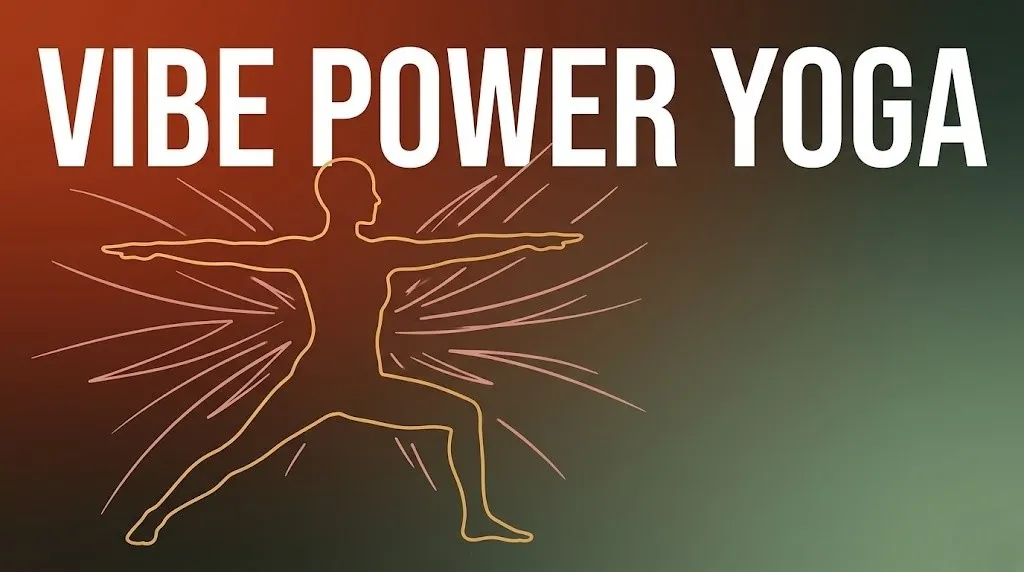
Vibe power yoga is a music-integrated, athletically demanding yoga style that draws its poses and flow structure from Power Vinyasa yoga while layering in a curated sound environment, an accessible teaching culture, and a pace calibrated to the emotional arc of the class.
The word “power” in this context has a specific meaning. Power yoga, as a distinct style, was popularized in the United States in the 1990s by teachers including Bryan Kest and Beryl Bender Birch, who adapted the Ashtanga yoga primary series into a freer, non-fixed sequence format. The result was a physically demanding practice with more creative freedom than traditional Ashtanga allows.
The “vibe” layer changes how that intensity is delivered. Where a traditional Power Vinyasa class might feel clinical or competitive, a vibe power yoga class uses intentional music, a more conversational teacher style, and explicit normalization of modifications and rest to make the same physical demands feel supportive rather than punishing.
What defines a vibe power yoga experience:
- Poses sourced from the Power Vinyasa and Ashtanga traditions, including Chaturanga Dandasana (Four-Limbed Staff Pose), Adho Mukha Svanasana (Downward-Facing Dog), and Navasana (Boat Pose)
- Music sequenced intentionally to match the energy curve of the class
- Modifications offered as standard practice, not exceptions
- A teacher style that is direct and body-affirming rather than performance-focused
- Class lengths that typically run 60 to 75 minutes
This is not a soft or passive practice. Expect to sweat, to challenge your upper body and core significantly, and to feel your legs the next morning. What changes is the atmosphere in which that challenge happens.
Vibe Power Yoga vs Traditional Yoga Styles
Vibe power yoga sits between the disciplined structure of Ashtanga yoga and the creative freedom of open Vinyasa, and it is more physically demanding than Hatha, Yin, or Restorative yoga in almost every category.
Understanding the difference matters before you walk into a class. Someone expecting a gentle stretch session in a vibe power yoga class will be caught off guard. Someone expecting the rigid fixed-sequence repetition of Ashtanga will find more variety.
| Style | Pace | Intensity | Fixed Sequence? | Music Typical? | Best For |
|---|---|---|---|---|---|
| Ashtanga | Fast, disciplined | Very high | Yes | No | Experienced, disciplined practitioners |
| Power Vinyasa | Fast | High | No | Sometimes | Active adults, intermediate level |
| Vibe Power Yoga | Moderate to fast | High | No | Yes, intentionally | Active beginners to intermediate |
| Hatha | Slow to moderate | Low to moderate | No | Rarely | All levels, alignment focus |
| Yin | Very slow | Low | No | Occasionally | Flexibility, connective tissue |
| Restorative | Passive | Very low | No | Occasionally | Recovery, stress, seniors |
The practical difference you will feel most clearly is in the arm and core demands. Chaturanga Dandasana (Four-Limbed Staff Pose), which appears in every Surya Namaskar (Sun Salutation) in power yoga, requires significant tricep, shoulder, and core strength. In Hatha yoga, you might hold a pose and breathe. In vibe power yoga, you transition through demanding positions repeatedly over the course of an hour.
That distinction is important for injury prevention, not just for setting expectations. People with wrist, shoulder, or lower back conditions need to know this before choosing their class.
Benefits of Vibe Power Yoga for Body and Mind
Vibe power yoga builds muscular strength and endurance, improves cardiovascular fitness, increases flexibility, and reduces stress through a practice that combines all three physiological mechanisms simultaneously: resistance, cardiovascular load, and breathwork-induced nervous system regulation.
The American College of Sports Medicine notes that yoga-based exercise that includes sustained muscular engagement, balance challenges, and breath regulation meets criteria for both flexibility training and moderate-intensity physical activity, depending on the class pace and structure. Power yoga classes, including vibe formats, generally fall into the moderate-intensity category.
A study published in the International Journal of Yoga found that practitioners who completed an eight-week power yoga program showed measurable improvements in upper body strength, core endurance, and flexibility compared to baseline. The same study noted reductions in self-reported stress and anxiety scores over the same period.
Key physical benefits of consistent vibe power yoga practice:
- Increased tricep, shoulder, and serratus anterior strength through repeated Chaturanga transitions
- Strengthened core stabilizers (transverse abdominis and multifidus) through plank-based holds and balance poses
- Improved hip flexor length and hamstring flexibility through standing sequences and forward folds
- Enhanced cardiovascular efficiency through sustained moderate-intensity movement over 60-minute sessions
- Better proprioception and balance from single-leg and arm-balance poses
Key mental and neurological benefits:
- Reduced cortisol levels after single sessions, supported by research in the Journal of Alternative and Complementary Medicine
- Improved mood and reduced anxiety with consistent twice-weekly practice
- Enhanced mental focus and working memory, as found in a Frontiers in Psychology study on yoga and cognitive performance
Key Takeaway: Vibe power yoga builds real strength, cardiovascular fitness, and flexibility simultaneously, and the research on power yoga’s stress and anxiety benefits is as strong as its evidence for physical conditioning.
Yoga Allentown PA: Finding the Right Studio
Finding the right yoga studio in Allentown, PA means evaluating teacher credentials, class type clarity, modification availability, and scheduling flexibility before committing to a membership or class pack.
Allentown and the broader Lehigh Valley area have a growing yoga community that spans everything from hot power yoga studios to gentle Hatha and Restorative spaces. The challenge for a newcomer is not lack of options but lack of information about which option matches their specific needs.
The first evaluation criterion is teacher credentials. Yoga Alliance registers teachers at the RYT-200 (200-hour trained) and RYT-500 (500-hour trained) levels. For power yoga specifically, which involves high-load transitions and balance challenges, a teacher with additional training in anatomy, injury modification, or Baptiste Power Yoga methodology adds meaningful safety knowledge to the class.
Second, look at how the studio describes its class levels. A studio that labels every class “all levels” without defining what that means is a red flag for beginners. Legitimate power yoga classes at the beginner level should explicitly state that Chaturanga will be modified or that blocks will be available.
What to evaluate when choosing a yoga studio in Allentown:
| Criterion | What to Check | Red Flags |
|---|---|---|
| Teacher credentials | RYT-200 minimum; RYT-500 preferred for power yoga | No Yoga Alliance credentials listed |
| Class level descriptions | Beginner, intermediate, advanced defined separately | “All levels” with no further description |
| Modification culture | Are modifications demonstrated at the front? | Modifications only offered to injured students |
| New student options | Drop-in rate or 2-week intro offer | Memberships only, no trial period |
| Class size | Under 15 students for best individual attention | No class size information available |
| Studio temperature | Specified for hot vs. room-temperature classes | No temperature disclosure |
Allentown’s seasonal population of working adults and families means most studios offer both morning and evening class times. Confirm schedule flexibility before purchasing a class pack.
Vibe Yoga Allentown: What to Look For
Vibe yoga in Allentown refers to studios that prioritize a music-integrated, welcoming, and community-oriented yoga experience, typically offering Power Vinyasa or Hatha-based classes in a modern studio environment distinct from traditional or silent yoga spaces.
The “vibe” element changes the social and sensory experience of a yoga class without changing the poses themselves. What that means practically for an Allentown student is that the studio atmosphere matters as much as the class content when choosing a home studio.
Studios in the Lehigh Valley area that align with the vibe yoga approach typically share these characteristics:
- Music plays throughout class, not just during warm-up
- The front desk staff greets new students and offers a studio orientation
- Teachers introduce themselves before class and invite students to share any physical considerations
- The space is designed for accessibility: blocks and straps are visible and available without asking
- The class ends with a genuine Savasana (Corpse Pose) of at least five minutes
Questions to ask any Allentown yoga studio before your first class:
- What yoga style is this specifically, and what is the difference from your other class types?
- How does the teacher handle students who need to modify Chaturanga?
- Is there an orientation session or intro class for new students?
- What is the room temperature for this class?
- Is there a new student special or drop-in rate before I commit to a membership?
A studio that answers these questions clearly and without defensiveness is demonstrating exactly the accessibility-first culture that vibe power yoga should embody.
Power Yoga for Strength and Core Development
Power yoga builds functional strength, particularly in the upper body, core, and posterior chain, through repeated weight-bearing transitions and sustained muscular holds that create genuine training stimulus for the shoulder girdle, triceps, and abdominal stabilizers.
The primary strength mechanism in power yoga is isometric and eccentric loading. Every time you lower from Phalakasana (Plank Pose) to Chaturanga Dandasana (Four-Limbed Staff Pose), your triceps, anterior deltoids, and serratus anterior are working eccentrically under significant load. Repeat that transition six to ten times in a single class and the cumulative training effect on those muscles is real.
Navasana (Boat Pose) is the core-development centerpiece of most power yoga sequences:
To practice Navasana (Boat Pose):
- Sit on your mat with knees bent and feet flat on the floor.
- Place your hands behind your thighs. Sit tall through the spine.
- Lean back slightly until your torso is at approximately a 45-degree angle from the floor.
- On an exhale, lift your feet off the mat. Shins parallel to the floor for the modified version.
- For the full pose, extend your legs straight. Arms reach forward, parallel to the floor.
- Keep your spine long. Do not let the lower back round aggressively.
- Hold for 3 to 5 breaths. Release feet to the floor on an exhale.
Pose Tip:
- The bent-knee modification is the correct starting position for most beginners, not a lesser option.
- If your lower back hurts in this pose, return to the bent-knee version with hands behind thighs.
- People with lumbar disc conditions should skip full Navasana and substitute Setu Bandha Sarvangasana (Bridge Pose) for posterior chain and core work.
Key Takeaway: Power yoga’s strength benefits come from the volume of weight-bearing transitions through Chaturanga and Plank, not just from individual pose holds. The accumulation across a full class creates real upper body and core training stimulus.
Power Yoga for Flexibility and Range of Motion
Power yoga improves flexibility through dynamic stretching within flowing sequences, increasing range of motion in the hip flexors, hamstrings, thoracic spine, and shoulder girdle more effectively than static stretching alone for many active adults.
The flexibility gains in power yoga are different from those in Yin or Restorative yoga. Yin targets connective tissue through long passive holds. Power yoga targets muscle length and joint mobility through active movement, asking muscles to lengthen while they are also producing force. That combination, called active flexibility, transfers more directly to athletic movement patterns and functional daily activities.
Think of your thoracic spine like a door hinge that has been left closed all winter. The stiffness is not just in the hinge itself; it is in all the tissue around it that has adapted to that closed position. Power yoga’s repeated spinal extension and rotation sequences open that hinge actively, building both flexibility and the muscular endurance to maintain that openness.
According to research published in Complementary Therapies in Medicine, practitioners who completed eight weeks of power-style yoga showed improvements in hamstring flexibility of approximately 10 to 14 percent compared to baseline measurements, with additional gains in shoulder mobility and thoracic rotation.
Key flexibility targets in vibe power yoga:
- Hip flexors and iliopsoas: Addressed in Anjaneyasana (Low Lunge) and Warrior transitions
- Hamstrings: Worked in forward folds and Uttanasana (Standing Forward Bend)
- Thoracic spine: Mobilized through backbend and twist sequences
- Anterior shoulder and pectorals: Opened in Urdhva Mukha Svanasana (Upward-Facing Dog)
Modification: Students with severe hamstring tightness should keep a generous bend in both knees during forward folds and use yoga blocks under the hands to reduce the reach distance.
Vibe Power Yoga Poses and Alignment Basics
The foundational poses in vibe power yoga come from the Ashtanga and Power Vinyasa traditions, and correct alignment in those poses matters more in a fast-paced class than in a slow one because transitions happen quickly and errors compound.
In a slower Hatha class, you have time to notice and correct a misalignment before it becomes a problem. In a power class, you might pass through Chaturanga Dandasana (Four-Limbed Staff Pose) three times in two minutes. If your elbows flare outward every time, that is six to ten repetitions of abnormal shoulder loading per class.
To practice Chaturanga Dandasana (Four-Limbed Staff Pose) correctly:
- Begin in Phalakasana (Plank Pose) with wrists under shoulders and body in a straight line.
- Hug your elbows toward your ribs. Do not let them flare outward past 45 degrees.
- On an exhale, lower your body as one unit toward the floor.
- Stop when your elbows reach a 90-degree angle. Upper arms should be parallel to the floor.
- Keep your hips at the same height as your shoulders throughout the lowering.
- Transition to Urdhva Mukha Svanasana (Upward-Facing Dog) on the inhale, or lower fully to the mat.
Pose Tip:
- If your hips drop before your chest in this pose, your core is not yet strong enough for full Chaturanga. Place your knees on the mat for a modified version with identical arm mechanics.
- Safety caution: Do not practice full Chaturanga with active wrist pain, a recent shoulder injury, or a rotator cuff tear. Substitute a modified push-up to the knees or go directly to Cobra.
- Beginners should practice the knee-modified version for the first four to six weeks before attempting the full variation.
Power Yoga Breathwork and Pacing
Power yoga uses Ujjayi breath (ocean-sounding breath) as the primary pacing tool, linking each inhale to a specific movement and each exhale to the next transition, so that breath rhythm governs the speed of the entire class.
Ujjayi pranayama is produced by slightly constricting the back of the throat while breathing through the nose. It creates an audible, wave-like sound on both inhale and exhale. In a power yoga class, that sound serves as both a pacing signal and an anchor for attention when the physical demands become distracting.
The breath-movement link is specific. Inhales typically accompany expansive, upward, or lengthening movements: rising from a forward fold, opening the arms in Warrior II, lifting from Chaturanga into Upward Dog. Exhales accompany contracting, grounding, or lowering movements: folding forward, lowering from Plank to Chaturanga, pressing hips back to Downward Dog.
To practice Ujjayi breath before a power session:
- Sit in a comfortable position with a tall spine.
- Inhale slowly through both nostrils for 4 counts.
- On the exhale, lightly constrict the back of your throat and breathe out through your nose for 4 counts.
- The sound should resemble the ocean from inside a seashell: soft, steady, and continuous.
- Practice 8 to 10 cycles before standing to begin your sequence.
According to the International Journal of Yoga, Ujjayi breathing activates the parasympathetic nervous system while also supporting sustained aerobic effort, making it uniquely suited to the dual demands of an intense yoga practice.
Modification: If throat constriction produces coughing or tightness, breathe slowly through the nose without the constriction. The pacing function of the breath matters more than the audible sound for beginners.
Key Takeaway: In vibe power yoga, breath is not decoration. Ujjayi breath sets the pace of every transition, and learning to match movement to breath before you worry about perfecting individual poses is the most important early skill to develop.
Beginner Power Yoga Sequence
A beginner vibe power yoga sequence is a 20 to 30-minute flow of foundational standing and floor poses practiced at a moderate pace with modifications available for every transition, designed to build strength and body awareness before progressing to full-intensity power classes.
This sequence introduces the core movement patterns of power yoga without the high-frequency Chaturanga transitions of an advanced class. Practice it three times per week for four to six weeks before attempting a full vibe power yoga class.
Beginner Vibe Power Yoga Sequence:
- Balasana (Child’s Pose): Start face down, arms long, hips toward heels. Hold 8 breaths to establish Ujjayi breath.
- Bitilasana/Marjaryasana (Cow/Cat Pose): 6 breath cycles. Warm the spine.
- Adho Mukha Svanasana (Downward-Facing Dog): Hold 5 breaths. Pedal the heels gently. Press through all ten fingertips.
- Phalakasana (Plank Pose): Hold 3 to 5 breaths. Core engaged. Hips level.
- Modified Chaturanga: Lower knees to the mat, then lower chest with elbows tracking back. 3 repetitions.
- Bhujangasana (Cobra Pose): Low cobra with forearms on the mat. Hold 5 breaths. No weight on hands.
- Anjaneyasana (Low Lunge), right side: Right foot forward, left knee down. Lift the torso. Hold 5 breaths.
- Anjaneyasana (Low Lunge), left side: Repeat. Hold 5 breaths.
- Virabhadrasana II (Warrior II), right side: Open stance, arms extended. Hold 5 breaths.
- Virabhadrasana II (Warrior II), left side: Repeat. Hold 5 breaths.
- Utkatasana (Chair Pose): Feet hip-width. Sink hips back. Arms overhead. Hold 5 breaths.
- Uttanasana (Standing Forward Bend): Fold forward with knees generously bent. Hold 8 breaths.
- Savasana (Corpse Pose): 8 to 10 minutes. Non-negotiable.
Modification: In Downward-Facing Dog, bend both knees freely if hamstrings are tight. Prioritize a flat back over straight legs.
Power Yoga Modifications and Who Should Avoid It
Power yoga requires meaningful modification or avoidance for people with wrist injuries, rotator cuff tears, active herniated lumbar discs, acute knee conditions, and unmanaged cardiovascular conditions because the physical demands of the practice are genuinely high.
This is the section that most power yoga content skips entirely. That is a mistake. Chaturanga is one of the most commonly executed yoga poses and one of the most commonly performed incorrectly. A single class can involve eight to twelve Chaturanga transitions. For someone with wrist impingement or a shoulder injury, that volume without modification produces cumulative damage, not fitness.
| Condition | Poses to Modify or Avoid | Safe Substitution |
|---|---|---|
| Wrist injury or carpal tunnel | Chaturanga, Plank, Downward Dog | Fists on mat, forearm plank, dolphin pose |
| Rotator cuff tear or impingement | Full Chaturanga, overhead arm positions | Knee-modified Chaturanga; reduce arm elevation |
| Herniated lumbar disc | Full Navasana, deep forward folds | Bent-knee Navasana, hands on thighs; gentle forward folds |
| Acute knee injury | Utkatasana (Chair Pose), deep lunges | Reduce squat depth; shorten lunge stance |
| High blood pressure | Vigorous inversions, fast breath patterns | Slow the pace; skip inversions; use Ujjayi only |
| Pregnancy (second and third trimester) | Prone backbends, deep twists, full Navasana | Side-lying modifications; prenatal class recommended |
People with unmanaged cardiovascular conditions should discuss vigorous yoga practice with their cardiologist before joining a power yoga class, because the sustained moderate-intensity cardiovascular load in a 60-minute session is a real physiological stimulus that warrants medical context.
Key Takeaway: Chaturanga modifications are not optional for beginners or people with wrist and shoulder conditions. They are the safety standard, and any studio that treats modification as a last resort rather than a starting point is not adequately serving its students.
What to Expect in a Vibe Power Yoga Class
A vibe power yoga class in Allentown or anywhere typically runs 60 to 75 minutes, opens with breathwork and a warm-up, builds through multiple sun salutation rounds and standing sequences, challenges core and balance in the peak section, and closes with a floor cool-down and Savasana.
The structure is more predictable than it might feel in your first class. Once you know the arc, you know when to pace yourself and when to push. Most vibe power yoga classes follow this rough structure:
- Opening (5 to 8 minutes): Breathwork, grounding, intention setting. Music at a slow, calm tempo.
- Warm-up (8 to 12 minutes): Cat/Cow, Downward Dog, Sun Salutation A rounds at a moderate pace.
- Standing sequence (20 to 25 minutes): Warrior series, balance poses, lateral poses. Music building in energy.
- Peak poses (10 to 15 minutes): Arm balances, deeper backbends, Navasana (Boat Pose), or core work. Highest-intensity phase.
- Cool-down (10 to 12 minutes): Hip openers, spinal twists, hamstring stretches. Music softening.
- Savasana (5 to 10 minutes): Complete rest. Non-negotiable in any well-taught class.
What to bring to a vibe power yoga class in Allentown:
- A non-slip yoga mat (many studios provide them; call ahead)
- A full-size grip towel for the mat if the class is heated
- A water bottle for before and after class
- Fitted, moisture-wicking clothing that stays in place during inversions
- Yoga blocks if the studio does not provide them (most do)
Arrive 10 to 15 minutes early. Tell the teacher about any wrist, shoulder, back, or knee concerns before class begins.
Vibe Power Yoga for Stress Relief and Mental Focus
Vibe power yoga reduces stress and sharpens mental focus through the combined effect of sustained physical effort, rhythmic breathwork, music-driven dopamine response, and the mindfulness demands of balance and complex movement sequences.
Stress does not only live in your thoughts. It lives in the tension in your shoulders, in the shallow breath you’ve been taking all day, in the tight hip flexors that have been braced since your last difficult meeting. Power yoga addresses all of those simultaneously. The physical effort burns through acute stress hormones. The breath regulation trains the nervous system. The music shifts emotional state.
A 2020 study in Frontiers in Psychology found that a single yoga session improved working memory scores and executive function compared to aerobic exercise alone, suggesting that the combination of mindful movement and breathwork produces cognitive benefits beyond what physical effort alone provides.
The balance and sequencing demands of power yoga also require genuine present-moment focus. You cannot think about tomorrow’s meeting while holding Virabhadrasana III (Warrior III) on one leg. That enforced attention is precisely what makes yoga a mental training practice, not just a physical one.
For Allentown practitioners managing work stress or anxiety, twice-weekly vibe power yoga sessions provide:
- Acute cortisol reduction within a single session
- Improved heart rate variability (a marker of nervous system resilience) over four to eight weeks of consistent practice
- Social connection through group class participation, which research in Frontiers in Psychology associates with improved mental health outcomes
How Often Should You Practice Vibe Power Yoga?
Practicing vibe power yoga two to three times per week is the frequency most supported by research for building strength, improving flexibility, and sustaining stress-reduction benefits without overtraining or accumulating joint stress.
Power yoga is a higher-intensity practice than Hatha or Yin. That distinction matters for recovery planning. The same connective tissue and muscular adaptation that makes power yoga effective also requires adequate rest between sessions. Daily power yoga from the outset is a common beginner error that leads to overuse injuries in the wrists, shoulders, and lower back.
The American College of Sports Medicine recommends that moderate-intensity resistance and flexibility training be performed two to three days per week with at least one rest day between sessions. Power yoga meets that criteria. Following the same guideline is both the research-supported and practically sustainable approach.
A realistic progression for new vibe power yoga practitioners:
| Phase | Sessions Per Week | Session Type | Duration |
|---|---|---|---|
| Weeks 1 to 3 | 1 to 2 | Beginner sequence or foundations class | 25 to 40 minutes |
| Weeks 4 to 8 | 2 | Mix of beginner class and one full class | 40 to 60 minutes |
| Weeks 9 to 16 | 2 to 3 | Full vibe power yoga classes | 60 to 75 minutes |
| Beyond week 16 | 3 to 4 | Mix of power, Yin, and Restorative | Varies |
Adding a Yin yoga or Restorative yoga session between power yoga days is one of the most effective strategies for accelerating flexibility gains while allowing the muscular system to recover. The connective tissue work in Yin complements the active flexibility built in power yoga without adding muscular load.
Building a Vibe Power Yoga Routine at Home
A sustainable vibe power yoga home routine requires four elements: a clear practice space with adequate floor room, a purpose-built music playlist, a short sequence you can execute from memory, and a consistent weekly time slot.
Home power yoga without a teacher requires more self-awareness than studio practice. There is no one to correct your Chaturanga or remind you to modify. That responsibility shifts entirely to you, which means building good habits from the start matters more, not less, in a home context.
The minimum space requirement for a vibe power yoga home practice is roughly six feet by four feet of clear floor space. You need room to move into Virabhadrasana II (Warrior II) at full wingspan, lower to the floor, and stand back up without bumping furniture.
Setting up a practical vibe power yoga home practice:
- Practice space: Consistent corner or room. Mat left out rather than stored to reduce activation energy.
- Playlist: Build a 45 to 60-minute playlist with a clear energy arc: slow opening, building middle, softer close, near-silent Savasana.
- Anchor sequence: The beginner sequence from the earlier section of this article is your default practice for weeks one through six. Know it well enough to do it without a screen.
- Props visible and accessible: Blocks and a strap within arm’s reach. If you have to find them, you will skip using them.
- Self-correction habit: Film yourself in Chaturanga at least once per month. You will see alignment errors you cannot feel.
The single biggest predictor of home practice success is whether you practice at the same time and in the same place each session. Context-based habit formation means the environment becomes the trigger over time, and you stop needing motivation to start.
Key Takeaway: Home vibe power yoga is fully achievable with a six-foot clear space, a 45-minute playlist, and a beginner sequence you know by memory. The environmental setup matters as much as the sequence itself for long-term consistency.
Frequently Asked Questions About Vibe Power Yoga
What exactly is vibe power yoga and how is it different from regular yoga?
Vibe power yoga is a music-integrated, athletically demanding yoga style that combines Power Vinyasa yoga’s strength and flow demands with a welcoming, mood-forward class atmosphere and intentional music sequencing.
It differs from standard Hatha yoga in intensity and pace, and from traditional Ashtanga yoga in its creative freedom and accessible culture.
The “vibe” element refers to the emotional and sensory experience of the class: music, atmosphere, and teacher communication style, not a separate certified system.
Is vibe power yoga good for beginners in Allentown PA?
Vibe power yoga is accessible to beginners who start with a clearly labeled foundations or beginner power yoga class rather than a full-intensity session.
The key is choosing a studio where Chaturanga modifications are standard practice, not exceptions, and speaking to the teacher before class about any physical limitations.
Beginners should practice a modified sequence for four to six weeks before attempting full-intensity transitions like unmodified Chaturanga Dandasana.
How many times a week should I do vibe power yoga?
Two to three sessions per week is the frequency most supported by research and most commonly recommended by experienced yoga teachers for power yoga practitioners.
The American College of Sports Medicine recommends at least one rest day between moderate-intensity resistance and flexibility sessions, which power yoga qualifies as.
Adding a Yin or Restorative yoga session between power days accelerates flexibility gains while allowing muscular recovery.
What should I bring to a vibe power yoga class?
Bring a non-slip yoga mat, a full-size grip towel if the class is heated, a water bottle, fitted moisture-wicking clothing, and any information about physical injuries or conditions to share with your teacher.
Most Allentown studios provide yoga blocks and straps, but calling ahead to confirm is worthwhile if you rely on specific props.
Arrive 10 to 15 minutes early to introduce yourself to the teacher and mention any wrist, shoulder, or back concerns before class begins.
Is power yoga safe for people with back or wrist pain?
Power yoga requires specific modifications for people with wrist pain, wrist injuries, or carpal tunnel syndrome, including using fists on the mat or forearm plank in place of standard Chaturanga.
For back pain, the safety depends on the type and cause: lumbar disc conditions generally require modifications to Navasana and forward folds, while general muscular back tightness often responds well to yoga with proper guidance.
Anyone with a diagnosed spinal or wrist condition should work with a yoga therapist registered with the International Association of Yoga Therapists (IAYT) to identify safe ranges before joining a group power yoga class.
Show Up, Modify Intelligently, Build From There
Vibe power yoga rewards consistency more than perfection. Your Chaturanga does not need to be flawless on day one. Your Navasana does not need straight legs in your first month. What matters is that you show up twice a week, tell your teacher what your body needs, and use the modifications without apology.
If you’re in Allentown, find a studio whose teachers have verifiable credentials and whose class descriptions actually define what “beginner” means. Take the intro offer. Talk to the teacher. Let the first two weeks be about learning the room, not performing.
Three sessions from now, your upper body will tell you this practice is real. That is the beginning of something worth building.