River Yoga: Outdoor Practice, Poses and Benefits 2026
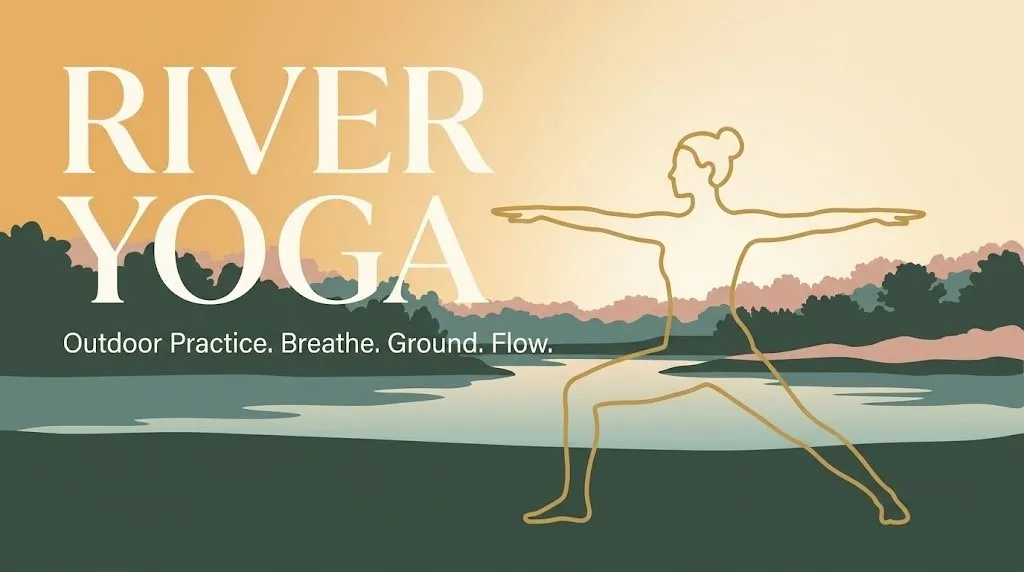
River yoga is the practice of traditional yoga poses, breathwork, and mindful movement in outdoor natural settings near rivers, streams, or any flowing body of water. It draws on the same foundational principles as any yoga style but uses the natural environment as both setting and sensory anchor.
Practicing yoga near water is not just a scenic choice. Research published in Frontiers in Psychology shows that exposure to natural blue spaces, including rivers, lakes, and coastlines, measurably reduces cortisol levels and self-reported stress compared to equivalent time spent in urban indoor environments. That is the physiology behind why a riverside session often feels qualitatively different from the same practice done on a studio floor.
This guide covers what river yoga is, how it compares to indoor practice, which poses work best outdoors, how to stay safe on natural terrain, and how seniors and beginners can adapt every element of the practice for their specific needs.
What Is River Yoga?
River yoga is the practice of yoga poses, breathwork, and meditation in natural outdoor environments situated near rivers, streams, or flowing water. It is not a codified yoga style with fixed rules in the way Ashtanga yoga or Iyengar yoga are. It is better understood as a practice context that shapes how familiar poses are selected, sequenced, and modified.
The practice can draw from Hatha yoga, Vinyasa yoga, Yin yoga, or Restorative yoga depending on the practitioner’s preference and physical condition. What makes it river yoga specifically is the outdoor surface, the natural soundscape, the absence of controlled props, and the deliberate use of the water environment as a sensory focus during breathwork and meditation.
Some river yoga sessions take place on flat grass or packed earth beside a river. Others are practiced on flat rocks, sandy riverbanks, or on a paddleboard on the water itself. Each surface demands different choices from the practitioner in terms of balance, stability, and pose selection.
Pose Tip:
- River yoga is not a style, it is a setting. Bring your existing yoga knowledge and adapt it to the environment.
- The sounds of moving water serve as a natural focus point for breath awareness.
- Standing balance poses, grounding poses, and seated breathwork are the most naturally suited to the outdoor context.
River Yoga vs. Indoor Yoga: What Actually Changes?
River yoga differs from indoor yoga primarily in surface stability, sensory environment, temperature variability, and the absence of standard props. These four differences require deliberate adaptations to your pose selection and sequencing.
Indoor yoga happens on a flat, predictable, temperature-controlled surface with mats, blocks, straps, bolsters, and walls available as tools. The sensory environment is managed: no wind, no sun, no insects, no unexpected sounds. That predictability is useful for beginners learning alignment from scratch.
Outdoors, none of that predictability exists. The ground may slope. Grass compresses differently than a mat. Rocks are irregular. Wind changes your balance mid-pose. Sunlight affects your eyes in forward folds and inversions. These are not problems to solve. They are inputs that sharpen proprioception and demand genuine present-moment awareness.
| Feature | River Yoga Outdoors | Indoor Studio Yoga |
|---|---|---|
| Surface | Grass, earth, rock, sand, paddleboard | Flat mat on hard or sprung floor |
| Stability | Variable, demands active balance | Consistent and predictable |
| Temperature | Weather-dependent | Climate-controlled |
| Props available | Limited, substitutes required | Full range of blocks, straps, bolsters |
| Sensory environment | Rich: water, wind, birdsong, sunlight | Controlled: music, dim lighting |
| Balance challenge | Increased (terrain variability) | Baseline |
| Breath work context | Enhanced by fresh air and natural sound | Studio air, ambient sound |
Neither context is superior. Experienced practitioners often rotate between both to get different neuromuscular and psychological benefits from each.
River Yoga Benefits for Mind and Body
River yoga produces a range of physical and psychological benefits by combining the documented effects of regular yoga practice with the additional neurological benefits of natural outdoor environments. These two layers of benefit are distinct and they compound each other.
The physical benefits of yoga itself are well-documented. According to the National Center for Complementary and Integrative Health (NCCIH), consistent yoga practice is associated with improved flexibility, increased muscle strength, enhanced balance, and reductions in chronic low back pain. These outcomes apply equally to outdoor and indoor practice.
The outdoor layer adds something specific. Natural environments reduce activity in the prefrontal cortex region associated with rumination and self-referential thinking. A 2019 study published in the Journal of Environmental Psychology found that people who spent time in natural settings reported lower perceived stress and improved mood compared to matched time in urban environments. When that natural setting is active yoga practice, the combined effect on the nervous system is measurably stronger than either element alone.
Key physical and psychological benefits documented in research include:
- Improved spinal flexibility and hip mobility from regular pose practice
- Increased proprioceptive challenge from variable outdoor surfaces, building better balance over time
- Reduced cortisol levels from both yoga breathing and nature exposure
- Enhanced mood and emotional regulation from natural setting effects on the prefrontal cortex
- Improved sleep quality, particularly when practice includes slow breathwork outdoors in the evening
- Stronger attention and focus after sessions in natural environments, consistent with attention restoration theory
- Better vitamin D synthesis from appropriate outdoor sun exposure during practice
River Yoga and the Blue Mind Science
The term “blue mind” refers to the mildly meditative, deeply calm mental state that humans enter when near, in, on, or under water. Marine biologist Wallace J. Nichols popularized this concept in his research, drawing on neuroscience to explain why water environments uniquely affect human brain states.
Research published in Health and Place found that people living closer to coastlines and water bodies reported better mental health outcomes, even after controlling for socioeconomic factors. The mechanism involves the default mode network of the brain. Water environments reduce overactivation of this network, which is the neural system responsible for mind-wandering, anxiety, and rumination.
For yoga practice, this matters enormously. The first challenge most beginners face is not physical. It is the inability to quiet mental noise long enough to feel what the body is doing. A riverside setting reduces that mental noise passively, without requiring the practitioner to do anything beyond being present in the location.
According to Frontiers in Psychology, natural blue space environments, including rivers, produce measurable reductions in sympathetic nervous system activation within 10 to 15 minutes of exposure. Combined with yoga’s own parasympathetic activation through breath regulation, a riverside session can bring the nervous system to a calm, receptive state significantly faster than an indoor session alone.
This is not motivation for choosing outdoor practice over indoor practice. It is an explanation of why the experience feels different and why some practitioners find it easier to access stillness outdoors than on a studio floor.
Key Takeaway: River yoga works through two compounding mechanisms: the physiological effects of yoga itself, plus the measurable brain-calming effects of blue space environments on cortisol and the default mode network.
River Yoga for Beginners: Where to Start
Beginners should start river yoga with three to four grounding poses on flat, stable ground near the water’s edge before attempting any balance or standing poses. That is the entire first session.
The instinct for most beginners is to replicate what they have seen in photos: dramatic poses on rocks above rushing water. Start on the flattest, driest, most stable surface you can find near the river. A grassy bank, a wide flat rock, or packed earth near the shoreline all work well for a first session.
Bring your yoga mat if the surface allows it. A mat on grass provides familiar grip and cushioning for knees in floor poses. On soft earth or sand, a mat may bunch or sink. In those cases, a towel or thin blanket provides minimal cushioning without creating instability.
Getting started in river yoga as a beginner:
- Choose a flat, dry surface at least 3 meters from the water’s edge for your first several sessions
- Practice at a time when the light is not directly in your eyes (early morning or late afternoon works well)
- Start with poses you already know and trust on a studio mat
- Bring more water than you think you need. Outdoor practice accelerates dehydration even in mild weather.
- Tell someone where you are going. Solo outdoor practice in remote areas requires basic safety awareness.
- Begin with Sukhasana (Easy Seated Pose) and 3 to 5 minutes of breath awareness before any movement
Research published in the International Journal of Yoga consistently shows that shorter, consistent sessions produce better adherence in new practitioners than occasional long ones. Aim for 20 minutes outdoors rather than pushing for a 60-minute session your first time out.
River Yoga Poses: Step-by-Step Instructions
The best river yoga poses prioritize stability, grounding, and breath awareness over flexibility demands or balance challenges. These three poses form the core of any outdoor riverside practice.
Tadasana (Mountain Pose)
To practice Tadasana outdoors:
- Stand with feet hip-width apart on your flattest available surface.
- Press all four corners of each foot firmly into the ground.
- Engage the quadriceps gently without locking the knees.
- Lengthen the spine upward while keeping the shoulders relaxed.
- Let your arms hang with palms facing forward.
- Close your eyes or soften your gaze toward the water.
- Take 6 to 8 slow breaths. Feel the ground beneath you on every exhale.
Modification: If the ground is uneven, keep eyes open with a soft gaze on a fixed point at eye level. Practice near a tree you can touch for balance support if needed.
Vrksasana (Tree Pose)
To practice Vrksasana outdoors:
- Begin in Tadasana on your flattest available surface.
- Shift weight onto your left foot. Keep a micro-bend in the standing knee.
- Place the sole of your right foot on your inner left thigh or inner left calf. Never on the inner knee.
- Bring palms together at the chest or extend arms overhead.
- Fix your gaze on a stationary point on the ground or at eye level.
- Hold for 5 breaths. Switch sides.
Modification: Keep the raised foot touching the ground lightly for balance (kickstand variation). Outdoors, place one hand on a nearby tree trunk or use a trekking pole for support.
Adho Mukha Svanasana (Downward-Facing Dog)
To practice Adho Mukha Svanasana outdoors:
- Start on hands and knees. Place your mat or towel on the flattest ground available.
- Tuck toes under and press the hips back and upward.
- Press firmly through the palms. Spread fingers wide to distribute weight evenly.
- Lengthen the spine. Keep knees slightly bent if the hamstrings are tight.
- Let the head hang heavy. Gaze toward your navel or between your feet.
- Hold for 5 to 8 breaths. Lower knees to release.
Modification: On soft or uneven ground, practice on forearms instead of palms (Dolphin Pose variation) to remove wrist loading. On grass, place a folded towel under each palm for added grip.
Building a River Yoga Sequence for Outdoor Practice
A complete river yoga sequence should move through five movement categories: grounding, spinal mobility, hip opening, standing balance, and rest. In an outdoor setting, grounding and rest take on extra importance.
Start seated or lying down to feel the earth. End with Savasana or a supported supine pose long enough for the nervous system to integrate the practice. Rushing from the final pose directly into daily activity eliminates the neurological consolidation that outdoor yoga can provide.
| Order | Pose | Sanskrit Name | Outdoor Hold Time | Category |
|---|---|---|---|---|
| 1 | Easy Seated Pose with breath | Sukhasana | 3 to 5 minutes | Grounding |
| 2 | Cat-Cow | Marjaryasana-Bitilasana | 8 to 10 cycles | Spinal mobility |
| 3 | Child’s Pose | Balasana | 6 to 8 breaths | Spinal flexion |
| 4 | Downward-Facing Dog | Adho Mukha Svanasana | 6 to 8 breaths | Full body |
| 5 | Warrior II | Virabhadrasana II | 5 breaths per side | Hip opening, strength |
| 6 | Triangle Pose | Trikonasana | 4 breaths per side | Lateral stretch |
| 7 | Tree Pose | Vrksasana | 5 breaths per side | Standing balance |
| 8 | Mountain Pose with breath | Tadasana | 6 slow breaths | Grounding |
| 9 | Seated Forward Fold | Paschimottanasana | 8 to 10 breaths | Hamstring release |
| 10 | Corpse Pose | Savasana | 5 to 8 minutes | Integration and rest |
Adapt hold times based on weather. In cool temperatures, move through poses more quickly to maintain muscle warmth. In heat above 28 degrees Celsius, reduce standing pose holds and increase time in seated and lying-down poses to manage cardiovascular load.
Key Takeaway: A well-built river yoga sequence starts grounded on the earth and ends in Savasana long enough for the nervous system to consolidate the practice. Cutting the rest period short defeats a core purpose of outdoor practice.
River Yoga Breathing Techniques
Breathing outdoors during yoga practice is measurably different from breathing in a heated or air-conditioned studio. Fresh outdoor air, particularly near moving water, carries higher negative ion concentrations than indoor air. Research published in International Journal of Molecular Sciences suggests that higher ambient negative ion levels are associated with reduced serotonin turnover, which may contribute to improved mood and reduced anxiety. This is a preliminary finding, not a definitive mechanism, but it supports what experienced outdoor practitioners consistently report: breathing near water simply feels different.
Three breath techniques work particularly well in a river yoga context.
1. Ujjayi breath (ocean breath): A soft constriction at the back of the throat creates a gentle audible sound that mimics the sound of water. Outdoors near a river, ujjayi breath can be used as an acoustic bridge between the practitioner’s internal state and the natural soundscape around them. It is most useful during moving sequences.
2. Nadi Shodhana (alternate nostril breathing): This pranayama technique involves alternating breath through each nostril using the right hand. It is documented to reduce heart rate and blood pressure and is particularly suited to the beginning or end of an outdoor session when seated. The bilateral nature of the breath pattern is thought to promote neural balance between the left and right hemispheres.
3. Extended exhale breathing: A 4-count inhale paired with a 6-count exhale activates the vagus nerve and promotes parasympathetic nervous system dominance. Near water, the sound of the river provides a natural rhythm that many practitioners find easier to sync their breath to than music or a teacher’s voice.
| Technique | When to Use It Outdoors | Primary Effect |
|---|---|---|
| Ujjayi breath | During moving sequences | Focus, heat regulation, rhythm |
| Nadi Shodhana | Opening and closing seated practice | Heart rate reduction, neural balance |
| Extended exhale | During still holds and Savasana | Cortisol reduction, vagal activation |
How River Yoga Helps with Stress and Mental Health
River yoga reduces stress through three simultaneous mechanisms: the parasympathetic activation of slow breathing, the cortisol-lowering effects of nature exposure, and the attentional restoration that natural environments provide.
Think of stress like background noise playing in a room where you are trying to concentrate. Indoor yoga turns the volume down. River yoga turns the volume down and also changes the room. The natural environment handles a portion of the nervous system regulation that, indoors, the practitioner has to manage entirely through breath and intention.
According to a 2019 study in the Journal of Environmental Psychology, spending at least 20 minutes in a natural setting produced measurable reductions in salivary cortisol. When that time included physical movement, the stress reduction effect was stronger than passive sitting in the same environment.
Attention restoration theory, developed by researchers Rachel and Stephen Kaplan, proposes that natural environments restore the directed attention capacity that daily life depletes. Urban and indoor environments demand continuous voluntary attention, which fatigues over time. Natural environments engage involuntary attention through sounds, movement, and visual complexity, allowing the directed attention system to recover. This is part of why a riverside yoga session often produces a mental clarity effect that outlasts the physical practice itself.
For people managing anxiety or chronic stress, a Yoga Alliance-aligned teacher recommends combining a 20-to-30-minute outdoor yoga session with 5 minutes of Nadi Shodhana at the close, specifically for its documented effect on reducing sympathetic nervous system activation.
River Yoga for Seniors
River yoga is accessible and appropriate for older adults when practiced on stable, flat surfaces with appropriate modifications and honest assessment of terrain before beginning. The outdoor setting adds balance challenge, which is both a benefit and a risk factor requiring thoughtful management.
The Harvard T.H. Chan School of Public Health notes that balance training is one of the most clinically meaningful interventions for fall prevention in adults over 65. Yoga’s standing poses, including Vrksasana (Tree Pose) and Virabhadrasana II (Warrior II Pose), directly train the balance systems involved in fall prevention. Practicing these poses on slightly variable ground amplifies the proprioceptive benefit without dramatically increasing injury risk when done carefully.
Seniors should prioritize surface selection before any other outdoor yoga decision. A wide, flat, grassy bank with no incline is the appropriate starting surface. Sloped ground, wet rocks, and sandy surfaces present meaningful fall risks for older adults with reduced ankle mobility or vestibular changes.
Outdoor modifications specifically for seniors:
- Use a trekking pole or sturdy walking stick as a balance prop for all standing poses
- Practice Tadasana (Mountain Pose) and Tree Pose with back against a tree for initial balance support
- Reduce standing pose hold times to 3 to 4 breaths outdoors on any surface that is not completely flat
- Bring a folded blanket for knee cushioning in seated ground poses
- Avoid outdoor sessions in temperatures above 30 degrees Celsius or below 10 degrees Celsius without appropriate layering
- Seniors managing osteoporosis should avoid seated forward folds with aggressive spinal rounding outdoors, where the risk of a stumble adds to the fall calculation
Key Takeaway: Seniors benefit from the proprioceptive and balance-building aspects of outdoor yoga, but surface selection is the most critical safety variable. Flat, dry ground comes before any other consideration.
Can River Yoga Help with Back Pain?
River yoga can support chronic lower back pain management when practiced on stable surfaces using spine-appropriate poses, correct alignment, and outdoor-specific modifications. The nature setting adds a stress-reduction component that may benefit the nervous system’s pain processing.
The NCCIH identifies yoga as one of the better-supported complementary approaches for chronic low back pain, with evidence from multiple randomized controlled trials. The key mechanisms are improved spinal mobility, strengthened deep stabilizing muscles (primarily the multifidus and transverse abdominis), and reduced cortisol, which is a hormone that amplifies pain sensitivity when chronically elevated.
Outdoors, the specific challenge for people with back pain is ground surface. Soft grass that gives unevenly can cause compensating shifts in the pelvis during standing poses, which may aggravate lower back pain. People managing active back pain should practice on the flattest, firmest natural surface available.
The best river yoga poses for lower back care:
- Balasana (Child’s Pose): Decompresses the lumbar spine. Use a folded blanket under the hips if they do not reach the heels.
- Marjaryasana-Bitilasana (Cat-Cow Pose): Mobilizes the thoracic and lumbar spine gently. Keep the Cow position gentle outdoors to avoid exaggerated lumbar extension on uneven wrist placement.
- Paschimottanasana (Seated Forward Fold): Lengthens the hamstrings and gently tractions the lumbar spine. Sit on a folded blanket to tilt the pelvis forward if the lower back rounds under load.
- Sukhasana (Easy Seated Pose): Sit on a folded blanket for elevation if sitting on flat ground causes the lumbar spine to collapse into flexion.
People with a herniated disc or spinal stenosis diagnosis should confirm with their treating physical therapist which of these poses are appropriate before taking any of them outdoors where modification props are limited.
River Yoga Modifications and Outdoor Props
Outdoor river yoga requires creative substitutions for the props that are standard in studio practice. The good news is that most common prop functions can be replicated with items you already own or find in the natural environment.
The most common prop problem outdoors is the yoga block. Blocks bring the floor closer to the hands in forward folds and lunges, preventing the compensating hip shift that leads to injury. Outdoors, a firmly folded jacket, a thick book in a waterproof bag, or a flat stable rock of appropriate height all serve this function.
According to the Yoga Alliance, props are not optional for practitioners with limited flexibility or strength. They are precision alignment tools. Skipping props outdoors because you do not have studio equipment is one of the most common sources of outdoor yoga injury.
| Studio Prop | Outdoor Substitute | Best Used For |
|---|---|---|
| Yoga block | Firmly folded jacket or thick towel | Forward folds, seated poses, low lunges |
| Yoga strap | A belt, a long scarf, or a resistance band | Hamstring stretches, shoulder openers |
| Yoga bolster | Rolled sleeping pad or firm backpack | Restorative poses, knee support in Savasana |
| Folded blanket | A folded fleece jacket or doubled beach towel | Knee padding, hip elevation in seated poses |
| Wall | Tree trunk, large flat rock face, or fence post | Standing balance, supported standing poses |
| Yoga mat | Thick beach towel, grass on flat ground | Surface traction and knee cushioning |
When no substitutes are available, choose only seated and lying-down poses. Standing poses without adequate surface traction should not be attempted on sloped, wet, or loose ground.
Practicing River Yoga on Uneven Ground and Natural Surfaces
Practicing yoga on uneven ground trains the proprioceptive system, the network of sensors in the muscles, joints, and skin that tells the body where it is in space, more effectively than flat indoor surfaces. This is both the main benefit and the main challenge of outdoor yoga.
Think of proprioception like the GPS in a car. On smooth roads, it updates relatively slowly because the changes are predictable. On rough terrain, it updates constantly. That constant updating is what builds better balance, joint awareness, and movement efficiency over time. Outdoor yoga is essentially proprioceptive training with added breathwork.
On grass, the main variable is compression. Grass compresses unevenly under foot and hand pressure, particularly when wet or when the ground beneath it is soft. In standing poses, this means the ankle stabilizers work considerably harder than on a flat mat. This is beneficial for most people and is a known risk for those with recent ankle sprains or chronic ankle instability.
Safety rules for uneven outdoor surfaces:
- Assess the ground before placing your mat. Press your heel into it. If it sinks more than 2 centimeters, choose a different spot.
- Never practice standing balance poses on wet rocks without grip footwear or a non-slip mat surface.
- On sandy riverbanks, practice only floor-level and seated poses. Sand compresses unpredictably under foot and creates excessive ankle inversion risk in standing poses.
- On packed earth, standing poses and gentle flows are appropriate. Forward folds work well with a prop for hand placement.
- On flat rocks, ensure the surface is completely dry and not algae-covered before any weight bearing.
Key Takeaway: Uneven outdoor surfaces build proprioception faster than flat studio floors, but they require honest terrain assessment before every session. The rule is simple: if you would not trust the surface under normal walking conditions, do not practice standing yoga poses on it.
River Yoga Safety and Contraindications
River yoga carries specific safety considerations that indoor yoga does not, and addressing them honestly before you step onto the riverbank is the difference between a beneficial practice and an avoidable injury.
The most frequent outdoor yoga injuries are ankle sprains from uneven terrain, wrist strain from unstable palm placement on natural surfaces, and sunburn or heat illness from practicing during peak UV hours without protection. None of these are unique to yoga. All are avoidable with basic planning.
Specific safety protocols for river yoga:
- Time of day: Practice between 7 and 10 a.m. or after 4 p.m. to avoid peak UV exposure (typically 10 a.m. to 4 p.m. in most climates).
- Sunscreen: Apply reef-safe sunscreen 20 minutes before outdoor practice. Sweating during yoga washes chemical sunscreens off quickly. Reapply if the session exceeds 60 minutes.
- Hydration: Bring at least 500 ml of water for every 30 minutes of outdoor practice in temperatures above 20 degrees Celsius.
- Water proximity: Practice at least 3 meters from the water’s edge. Sloped banks near water are among the most common sites for accidental slips during yoga sessions.
- Wildlife awareness: Check the practice area for insects, particularly stinging or biting species. In tick-endemic regions, choose sunny, dry grass over shaded areas near water.
- Weather monitoring: Do not practice outdoors during lightning risk, high wind conditions, or when rain has made surfaces wet.
Specific contraindications for outdoor river yoga:
- Active ankle sprains or instability: Outdoor surfaces dramatically increase re-injury risk. Practice indoors until the joint is fully rehabilitated.
- Uncontrolled hypertension: Heat and exertion outdoors add cardiovascular load. Someone managing blood pressure with medication should discuss outdoor exercise with their prescribing physician before beginning.
- Severe balance disorders: Vestibular conditions that affect balance make uneven outdoor terrain a fall risk. A physical therapist familiar with balance rehabilitation can advise on appropriate surfaces.
- Open wounds or skin infections: Outdoor environments near water introduce bacterial and fungal exposure risks to compromised skin.
River Yoga Cool-Down and Nature-Based Relaxation
The final 5 to 10 minutes of any river yoga session are where the practice’s most distinctive benefits are consolidated. The combination of still, supine postures and natural outdoor sensory input produces a specific quality of rest that experienced practitioners describe as qualitatively different from indoor Savasana.
A 2020 meta-analysis published in the Journal of Alternative and Complementary Medicine found that yoga practices including extended supine rest significantly improved self-reported relaxation, sleep quality, and mood compared to control groups. In outdoor settings, these effects appear to be enhanced by the continued background input of natural soundscapes during rest.
The best cool-down sequence for river yoga:
- From your last standing or seated pose, come to lying on your back on your mat or towel.
- Draw both knees to the chest and gently rock side to side for 4 to 6 breaths.
- Release legs long. This is Savasana (Corpse Pose).
- Place a folded jacket or blanket under the knees to release lumbar spine tension.
- Let arms rest slightly away from the body, palms facing up.
- Close your eyes. Let your breath return to its natural rhythm.
- Remain still for a minimum of 5 minutes. Eight minutes is better.
Modification for practitioners who find lying flat uncomfortable outdoors: practice Viparita Karani (Legs Up the Wall) using a tree trunk or a large flat-faced rock as the “wall.” Place the hips close to the base, legs resting on the surface, and hold for 3 to 5 minutes.
Listening to the river during Savasana is not passive. It engages the involuntary attention system in a way that gives the directed attention system complete rest. That is exactly the state the nervous system needs after any mindful movement practice.
Frequently Asked Questions About River Yoga
What exactly is river yoga and how is it different from regular yoga?
River yoga is the practice of yoga poses, breathwork, and meditation in outdoor natural settings near rivers or other flowing water.
It uses the same poses as any yoga style but adapts them to natural surfaces, variable terrain, and the sensory environment of being near water.
The primary differences from indoor yoga are surface instability, limited props, weather exposure, and the documented neurological effects of natural blue space environments on stress and attention.
Is river yoga safe for beginners who have never practiced outdoors?
River yoga is safe for beginners who start on a flat, stable surface near the water’s edge and use poses they already know from an indoor practice.
If you are entirely new to yoga, learning foundational pose alignment indoors first before taking the practice outside reduces injury risk significantly.
Beginning outdoors with seated breathwork, Cat-Cow, and Child’s Pose on a flat grassy bank requires no prior experience and presents minimal safety risk.
What do I need to bring for a river yoga session outdoors?
The minimum kit for a river yoga session includes a yoga mat or thick towel, 500 ml of water per 30 minutes of planned practice, sunscreen, and one folded blanket or jacket for prop use.
A yoga strap or belt covers most stretching modifications when standard props are unavailable.
Trekking poles are a useful addition for seniors or anyone practicing on variable terrain who needs standing balance support.
Can seniors do river yoga safely?
Seniors can practice river yoga safely when they select flat, dry, non-sloped surfaces and use trekking poles or a nearby tree for balance support during standing poses.
The Harvard T.H. Chan School of Public Health recognizes balance training through yoga as a meaningful strategy for fall prevention in older adults, and outdoor yoga on variable terrain amplifies this benefit.
Seniors with osteoporosis, recent joint replacement, or active vestibular conditions should work with a physical therapist to identify appropriate surface types and pose modifications before practicing outdoors independently.
What are the best yoga poses to practice near a river?
The best river yoga poses are Tadasana (Mountain Pose), Vrksasana (Tree Pose), Adho Mukha Svanasana (Downward-Facing Dog), Virabhadrasana II (Warrior II Pose), Paschimottanasana (Seated Forward Fold), and Savasana (Corpse Pose).
These poses prioritize grounding, stability, and breath awareness over complex balance or flexibility demands, making them well-suited to natural outdoor surfaces.
Seated and lying poses are generally safer on variable outdoor terrain than deep balance challenges or inversions, particularly for beginners and older adults.
Take Your Practice Outside
River yoga does not require a special class, a studio membership, or advanced flexibility. It requires a flat patch of ground near water, the poses you already know, and the willingness to adapt them to the environment in front of you.
Start this week with Sukhasana (Easy Seated Pose) beside any river, stream, or lake. Spend 5 minutes listening to the water while following your breath. Add Tadasana (Mountain Pose) and Cat-Cow. Finish with Savasana for 5 minutes. That is a complete river yoga session.
The environment does a significant portion of the work. You just have to show up to it.