Balance Yoga Center San Jose: Styles and Classes 2026
A balance yoga center in San Jose is a studio where the practice is designed to improve both physical stability and mental equilibrium, drawing on yoga’s documented effects on the neuromuscular and nervous systems. Whether you are searching for a local studio, a specific style, or a way to practice balance yoga at home, the San Jose area offers more options than most residents realize.
Yoga’s benefits for physical balance are not just anecdotal. The National Center for Complementary and Integrative Health (NCCIH) has reviewed multiple trials showing that regular yoga practice reduces fall risk in older adults and improves postural control across all age groups. These are measurable, documented outcomes.
This guide covers the yoga styles available in San Jose, how to choose the right studio, which poses and sequences most effectively train balance, what seniors and beginners should know before their first class, and the science behind how yoga retrains the body’s balancing systems.
What Is a Balance Yoga Center and What to Expect
A balance yoga center is a studio or program that places physical stability, postural control, and mental focus at the center of its teaching approach, rather than treating balance as a secondary benefit of general yoga practice. The emphasis shows up in class structure, pose selection, and instructor cueing.
Not every studio that uses “balance” in its name explicitly programs balance-specific training. Some use the word to convey a philosophy of equilibrium between effort and ease, body and mind, strength and flexibility. Both interpretations are valid. Knowing which type of studio you are visiting helps set the right expectations.
What a genuine balance-focused yoga center typically offers:
- Classes structured around single-leg balance poses and progressive balance challenges
- Props including blocks, straps, and wall space for supported balance training
- Instructors trained in yoga therapy or with backgrounds in physical therapy and fall prevention
- Beginner and senior-specific tracks with modified versions of every pose
- Class formats spanning multiple styles, including Hatha, Iyengar, and Restorative yoga
San Jose’s yoga community includes studios that fit this description closely, particularly in neighborhoods near the Willow Glen, Almaden Valley, and Santana Row areas where wellness-focused programming is concentrated.
Pose Tip:
- Ask any studio whether their balance-focused classes use props for supported poses.
- Look for instructors holding a 200-hour or 500-hour Yoga Alliance registration.
- If you have a specific health concern like osteoporosis or vertigo, ask whether the studio offers specialized modifications before booking.
Yoga Studio San Jose: How to Choose the Right One
The right yoga studio in San Jose depends on your specific goals, physical condition, preferred learning environment, and practical constraints like location, schedule, and budget. With dozens of options across the city, a few clear criteria narrow the choice quickly.
San Jose’s studio options range from boutique neighborhood spaces with 10 to 15 students per class to larger wellness centers offering 20-plus classes per week across multiple styles. Boutique studios typically provide more individualized instruction, which matters most for beginners and anyone working around an injury or health condition.
Key criteria for evaluating a San Jose yoga studio:
- Instructor credentials: Yoga Alliance registered teachers complete minimum 200-hour training. Studios should display instructor credentials clearly.
- Class size: Smaller classes (10 to 15 students) allow for hands-on adjustments and verbal modifications.
- Style variety: A studio offering Hatha, Vinyasa, Yin, and Restorative yoga can meet changing needs as your practice develops.
- Trial options: Most reputable San Jose studios offer a new student special, typically 30 days of unlimited classes at a reduced rate.
- Accessibility: Confirm that the studio has accessible parking, ground-level entry, and props available for rent or loan.
| Studio Size | Class Cap | Best For | Typical Pricing |
|---|---|---|---|
| Boutique | 10 to 15 | Beginners, seniors, injury rehab | Higher per class; memberships available |
| Mid-size | 15 to 25 | All levels; variety of styles | Mid-range; monthly memberships |
| Large wellness center | 25 to 40+ | Experienced practitioners; variety seekers | Lower per class; high volume |
The Yoga Alliance recommends that students ask specifically about instructor experience with their health conditions before attending specialized classes. This is especially relevant for seniors, prenatal practitioners, and anyone managing a chronic condition.
Yoga Classes San Jose: Styles, Formats, and What They Offer
San Jose yoga classes span the full spectrum of styles, from slow therapeutic Restorative yoga to the athletic demands of Ashtanga and Vinyasa, with most studios concentrating their programming on Hatha, Vinyasa, Yin, and Restorative as core offerings.
Understanding the difference between styles before you book prevents the common beginner mistake of landing in a class that does not match your current fitness level or flexibility. A first-time yoga student who walks into an intermediate Vinyasa class without prior experience is likely to feel overwhelmed and less likely to return.
| Yoga Style | Pace | Temperature | Primary Goal | Best For |
|---|---|---|---|---|
| Hatha | Slow to moderate | Room temp | Alignment, foundational poses | Beginners, seniors |
| Vinyasa | Moderate to fast | Room temp | Strength, endurance, flow | Intermediate to advanced |
| Yin | Very slow (3 to 5 min holds) | Room temp or cool | Deep connective tissue release | All levels; stress and recovery |
| Restorative | Passive holds | Room temp | Nervous system recovery | Injury recovery, anxiety, seniors |
| Iyengar | Slow, prop-focused | Room temp | Precise alignment | Beginners, injury rehab, seniors |
| Ashtanga | Fast, fixed sequence | Room temp | Athletic strength and flexibility | Experienced practitioners |
| Kundalini | Variable | Room temp | Breathwork, nervous system, spirituality | Spiritual seekers, stress management |
San Jose studios near the downtown and Willow Glen areas tend to concentrate on Vinyasa and Hatha as their primary formats, with Yin and Restorative sessions offered in evening time slots.
Key Takeaway: Choose your San Jose yoga class based on pace and goal first, not studio name; a beginner in Hatha will develop faster than a beginner thrown into Vinyasa without preparation.
Yoga for Balance and Stability: What It Actually Means
Yoga for balance and stability refers to a practice approach that specifically trains the body’s postural control systems through single-leg poses, slow transitions, and sustained isometric holds that challenge the ankle, hip, and core stabilizer muscles. This is distinct from general yoga, which improves balance as a secondary outcome.
Balance in the body depends on three systems working simultaneously: the visual system (what your eyes tell your brain about your position), the vestibular system (balance signals from the inner ear), and the somatosensory system (proprioceptive feedback from your joints and muscles). Yoga trains all three, but it targets the somatosensory system most directly.
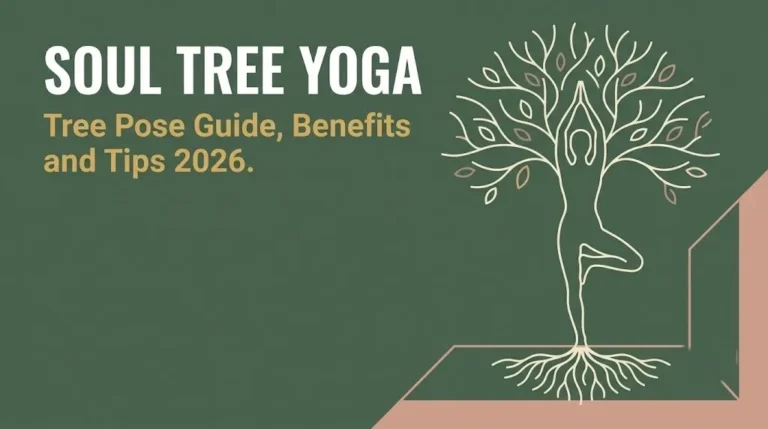
When you hold Vrksasana (Tree Pose) on one leg for 5 to 8 breaths, your tibialis anterior, peroneus longus, and gluteus medius are working continuously to prevent the ankle and hip from collapsing. That sustained muscular demand is functional balance training. It is not just stretching.
The somatosensory training effect is cumulative. Think of balance training like calibrating a sensitive instrument: each session fine-tunes the feedback loop between your joints and your brain. Over weeks of consistent practice, that feedback becomes faster and more accurate.
According to a 2015 study published in the International Journal of Yoga, participants who practiced yoga for 12 weeks showed improvements in single-leg balance scores comparable to those seen in dedicated physical therapy balance programs. That finding supports using yoga as a standalone or complementary balance intervention.
What Type of Yoga Is Best for Balance
Iyengar yoga and Hatha yoga are the two styles most consistently recommended for improving physical balance, because both prioritize precise alignment, prop use, and sustained holds that directly train the postural control system. Vinyasa yoga also builds balance, but its faster pace makes it less effective as a starting point for balance-specific training.
Iyengar yoga, developed by B.K.S. Iyengar, is particularly well-suited to balance work because it uses props extensively and holds poses long enough to develop the specific muscular patterns needed for postural stability. Instructors trained in Iyengar methodology are taught to identify and correct the specific alignment errors that cause balance to fail.
| Style | Balance Training Focus | Props Used | Hold Duration | Recommended For |
|---|---|---|---|---|
| Iyengar | Very high; alignment-specific | Blocks, straps, chairs, walls | 30 seconds to 2 minutes | Beginners, seniors, injury rehab |
| Hatha | High; foundational balance poses | Blocks, straps | 5 to 10 breaths | All levels |
| Vinyasa | Moderate; balance through flow | Minimal | 1 to 3 breaths | Intermediate practitioners |
| Yin | Low for standing balance; high for hip stability | Bolsters, blocks | 3 to 5 minutes | Hip and lower body stability |
| Restorative | Very low for dynamic balance; nervous system focus | Bolsters, blankets | 5 to 20 minutes | Recovery and stress management |
For San Jose practitioners specifically focused on improving standing balance and fall prevention, starting with Iyengar or Hatha yoga two to three times per week and adding Yin yoga for hip stability on recovery days produces the most systematic improvement.
How Does Yoga Improve Balance
Yoga improves balance by repeatedly challenging the body’s postural control system through unstable single-leg positions, narrow stance poses, and slow transitions that force the ankle stabilizers, hip abductors, and deep core muscles to engage and adapt. The improvement is neuromuscular, not just muscular.
Every time you wobble in Virabhadrasana III (Warrior III) and recover without falling, your nervous system records that correction. Over hundreds of repetitions across weeks of practice, those corrections become faster and more automatic. The body learns, at a neurological level, how to right itself under increasingly varied conditions.
The role of the vestibular system is worth understanding here. Closing your eyes during standing poses, as some teachers instruct, removes visual input and forces the vestibular and somatosensory systems to work harder. This is the yoga equivalent of a balance board exercise. It is a real training stimulus, not a mindfulness cue.
The American College of Sports Medicine (ACSM) identifies proprioceptive training as a standard component of fall prevention and rehabilitation programs. Yoga’s single-leg balance poses provide this stimulus in a weight-bearing, functional context.
Modification: If you find single-leg poses destabilizing initially, practice near a wall with fingertips available as a light touch support. Even a fingertip on a wall reduces fall risk while preserving the balance training stimulus.
Key Takeaway: Yoga improves balance through neurological adaptation, not just muscle strengthening; every wobble and recovery in a standing pose is the actual training mechanism at work.
Yoga Poses for Balance: The 7 Most Effective
The seven most effective yoga poses for balance training target the ankle stabilizers, gluteus medius, and core while challenging the vestibular and proprioceptive systems through sustained single-leg or narrow-base holds.
| Pose | Sanskrit | English | Primary Balance System | Hold Time |
|---|---|---|---|---|
| Tree Pose | Vrksasana | Tree Pose | Ankle stabilizers, hip abductors | 5 to 8 breaths per side |
| Warrior III | Virabhadrasana III | Warrior III | Gluteus medius, hamstrings | 5 breaths per side |
| Half Moon Pose | Ardha Chandrasana | Half Moon Pose | Hip abductors, core, ankle | 5 breaths per side |
| Eagle Pose | Garudasana | Eagle Pose | Peroneals, core, focus | 5 to 8 breaths per side |
| Mountain Pose | Tadasana | Mountain Pose | Full body postural alignment | 10 breaths |
| Dancer’s Pose | Natarajasana | Dancer’s Pose | Hip flexors, core, shoulder | 5 breaths per side |
| Chair Pose | Utkatasana | Chair Pose | Quads, glutes, ankle stability | 8 breaths |
To practice Vrksasana (Tree Pose) with proper balance training stimulus:
- Stand in Tadasana (Mountain Pose). Feel all four corners of your feet pressing evenly.
- Shift your weight onto your left foot. Lift your right foot off the floor.
- Place your right foot on your left inner calf or inner thigh. Never press into the knee joint.
- Press your foot and leg together. Both forces create stability.
- Bring your hands to your heart or extend arms overhead.
- Fix your gaze on one still point at eye level. Hold for 5 to 8 breaths.
- Lower your foot on an exhale. Pause in Tadasana. Switch sides.
Modification for beginners: Keep the toes of the lifted foot on the floor beside the standing foot. Rest hands on a wall or chair back. This maintains the balance training stimulus while eliminating fall risk.
Modification for seniors: Use a chair for hand support throughout. Even with support, the single-leg weight shift provides meaningful balance training.
Yoga Sequence for Balance You Can Do at Home
A home yoga sequence for balance should run 20 to 35 minutes and build progressively from foundational standing poses to more challenging single-leg positions, then close with hip stability and cool-down work. Do not skip the warm-up phase. Cold ankles and hips are the most common reason for poor balance in yoga.
Warm-Up Phase (5 minutes):
- Tadasana (Mountain Pose): Stand quietly for 10 breaths. Feel each foot pressing the floor.
- Slow ankle circles: 8 rotations each direction, each foot.
- Gentle hip circles in a wide stance: 8 each direction.
Main Balance Training Phase (20 minutes):
- Utkatasana (Chair Pose): 8 breaths. Ground through heels.
- Vrksasana (Tree Pose): 6 breaths per side. Foot on calf or inner thigh.
- Virabhadrasana I (Warrior I): 6 breaths per side. Front knee over ankle.
- Virabhadrasana III (Warrior III): 5 breaths per side. Wall available if needed.
- Ardha Chandrasana (Half Moon Pose): 5 breaths per side. Block under bottom hand.
- Garudasana (Eagle Pose): 6 breaths per side. Chair available if needed.
- Natarajasana (Dancer’s Pose): 4 breaths per side. Wall support for beginners.
Cool-Down Phase (8 minutes):
- Eka Pada Rajakapotasana (Pigeon Pose): 90 seconds per side for hip stability.
- Supta Matsyendrasana (Supine Spinal Twist): 1 minute per side.
- Savasana (Corpse Pose): 5 minutes.
| Practitioner Level | Peak Phase Modification | Support Tools |
|---|---|---|
| Beginner | Reduce hold times to 3 to 4 breaths | Wall, chair |
| Intermediate | Full sequence as written | Block for Half Moon |
| Senior | Practice seated or supported versions | Chair throughout |
Yoga for Beginners in San Jose: Where to Start
Beginners in San Jose should start with a Hatha or beginner-specific Vinyasa class in a studio that clearly labels class levels and offers props as a standard part of the session, not an afterthought. The city has strong options for new students, but the class level system varies between studios.
The most common beginner mistake is choosing a class by schedule convenience rather than appropriate difficulty level. A class labeled “all levels” at a busy studio may move at a pace that overwhelms someone completely new to yoga. Explicitly labeled “beginner” or “foundations” classes are a safer starting point.
What to do before your first class in San Jose:
- Arrive 10 to 15 minutes early. Tell the instructor you are new. They can offer cues and adjustments specific to your starting point.
- Bring your own mat if possible. Studio rental mats vary in grip quality. A 4mm PVC mat is a good beginner choice.
- Wear form-fitting clothing that does not slide during forward folds and inversions.
- Eat lightly. A full meal two to three hours before class is standard.
- Expect to feel uncertain. The first three classes are orientation, not performance.
The Yoga Alliance recommends that studios clearly communicate class difficulty levels to new students and that instructors check in with newcomers before class begins. If a studio does not do this, it is a sign that beginner-specific support may not be a priority there.
Key Takeaway: San Jose beginners get the most from their first classes by choosing explicitly labeled beginner or foundations sessions and telling the instructor they are new before the first pose begins.
Yoga for Seniors in San Jose: What to Look For
Yoga for seniors in San Jose works best in small classes taught by instructors with specific training in age-related movement limitations, where chair yoga, wall support, and prop use are integrated into every session as standard practice. These classes exist in San Jose, but you need to know what to ask for when booking.
The physiological changes that come with aging, including reduced ankle dorsiflexion, decreased proprioceptive sensitivity, and changes in bone density, require specific teaching adaptations that not every yoga instructor is trained to provide. A general “all levels” class does not reliably accommodate these needs.
Key features to look for in a San Jose senior yoga class:
- Chair yoga availability for seated modifications of standing poses
- Smaller class sizes (8 to 12 students maximum)
- Instructors with yoga therapy training or specific senior yoga certifications
- No rapid transitions between floor and standing positions
- Emphasis on balance poses with wall or chair support built in, not optional
According to a 2021 study published in the Journal of Alternative and Complementary Medicine, older adults who practiced yoga twice per week for 12 weeks showed improvements in both static and dynamic balance scores. Dynamic balance, the ability to maintain control while moving, is most relevant for fall risk reduction in daily life.
Seniors with osteoporosis should seek instructors familiar with osteoporosis-specific contraindications, particularly regarding spinal flexion poses like seated forward folds and supine curl-ups, which can increase vertebral fracture risk. A healthcare provider who knows your bone density history can help identify which pose categories to avoid.
Yoga for Fall Prevention: What the Research Shows
Yoga reduces fall risk in older adults by strengthening the ankle stabilizers, improving single-leg balance time, and training the reactive postural control responses that prevent a stumble from becoming a fall. The evidence for this is among the strongest in yoga research.
A 2019 systematic review published in Complementary Therapies in Medicine analyzed 10 randomized controlled trials and found that yoga practice reduced fall incidence among older adults by an average of 27% compared to control groups. Participants practiced yoga for as few as two sessions per week over 12 weeks to see measurable risk reduction.
The mechanism is not mysterious. Falls most often occur when a sudden perturbation, a curb, a wet floor, an unexpected step, exceeds the body’s reactive capacity. Yoga’s balance poses repeatedly simulate small perturbations during each held position. Every micro-adjustment your body makes in Tree Pose is practice for exactly that reactive scenario.
Balance-specific poses most strongly associated with fall prevention outcomes:
- Vrksasana (Tree Pose): Trains single-leg stability and ankle control
- Virabhadrasana III (Warrior III): Challenges dynamic postural control
- Garudasana (Eagle Pose): Trains narrow-base balance and lower limb proprioception
- Utkatasana (Chair Pose): Builds the quad and glute strength needed for sit-to-stand safety
For San Jose seniors specifically, Iyengar yoga classes with wall props are the most consistently recommended format by physical therapists working in fall prevention programs.
Yoga for Core Strength: The Balance Connection
Core strength and balance are inseparable in yoga because the deep core muscles (specifically the transversus abdominis, multifidus, and pelvic floor) provide the stable base from which every balance pose is controlled. Without core engagement, single-leg poses collapse inward at the hip regardless of ankle strength.
The core muscles that matter most for balance are not the superficial “six-pack” muscles. The transversus abdominis wraps the abdomen like a corset and provides internal stability to the lumbar spine. The multifidus runs along the spine and controls segmental spinal stability. Both are trained through sustained holds in poses like Virabhadrasana III (Warrior III) and Ardha Chandrasana (Half Moon Pose).
Yoga poses most effective for deep core training relevant to balance:
- Navasana (Boat Pose): Loads hip flexors and core simultaneously
- Phalakasana (Plank Pose): Isometric full-body core engagement
- Vasisthasana (Side Plank Pose): Lateral core and hip abductor challenge
- Virabhadrasana III (Warrior III): Core stabilization during unilateral hip extension
Harvard T.H. Chan School of Public Health identifies core stability training as a key component of healthy aging because it protects the lumbar spine and supports functional movement patterns including walking, stair climbing, and balance recovery.
Modification for beginners: Practice Boat Pose with knees bent and feet flat on the floor. This reduces hip flexor demand while maintaining core engagement. Progress to straight legs only when you can hold the bent-knee version for 8 breaths without the lower back rounding.
Key Takeaway: Core strength is the foundation of balance in every standing yoga pose; training the transversus abdominis and multifidus through sustained holds is more effective than doing crunches.
Yoga for Anxiety in San Jose: Which Styles Help Most
Restorative yoga and Yin yoga are the most effective yoga styles for anxiety reduction, because both activate the parasympathetic nervous system through sustained passive holds, supported positions, and regulated breath, producing measurable reductions in cortisol and heart rate variability.
San Jose’s yoga studios increasingly offer dedicated anxiety-focused and stress reduction classes, particularly in studios near the tech industry corridors where practitioner demand for nervous system regulation is high. These classes typically combine long-held postures with pranayama techniques.
The physiological basis is well-documented. A 2018 study published in the Journal of Alternative and Complementary Medicine found that 8 weeks of restorative yoga practice reduced salivary cortisol levels by an average of 14% compared to baseline, alongside self-reported reductions in anxiety symptoms.
The breathing component matters as much as the poses. Nadi Shodhana (alternate nostril breathing), commonly taught in anxiety-focused yoga classes, directly stimulates the parasympathetic nervous system by creating a pattern of slow, regulated breathing that lowers heart rate and reduces sympathetic activation.
| Breathing Technique | Sanskrit Name | Effect on Anxiety | Difficulty Level |
|---|---|---|---|
| Alternate Nostril | Nadi Shodhana | Reduces sympathetic activation | Beginner-accessible |
| Ocean Breath | Ujjayi pranayama | Slows breath rate; grounds focus | Beginner-accessible |
| 4-7-8 Breath | Not traditional Sanskrit | Reduces acute anxiety response | Beginner-accessible |
| Box Breathing | Not traditional Sanskrit | Regulates autonomic response | Beginner-accessible |
For San Jose practitioners managing anxiety, a schedule of two Yin or Restorative sessions per week plus one gentle Hatha session produces more consistent nervous system benefits than one intense class per week.
Yoga for Flexibility in San Jose: Setting Realistic Expectations
Yoga improves flexibility through a combination of passive tissue lengthening in slower styles and active lengthening under load in more dynamic styles, and the degree of improvement depends far more on practice consistency than on class intensity or style. San Jose practitioners often overestimate how quickly flexibility changes occur.
Connective tissue (fascia, tendons, and ligaments) changes slowly. Muscle tissue can lengthen noticeably within a few weeks of consistent stretching. But the hip capsule, hamstring tendons, and thoracic fascia, the structures most responsible for the “I am not flexible enough for yoga” feeling, can take three to six months of regular practice to show measurable improvement.
Yin yoga produces the strongest flexibility outcomes for connective tissue because its 3 to 5 minute holds create a sustained passive load on fascia rather than just the muscle belly. Hatha yoga improves active flexibility, the ability to move through range of motion under your own muscular control, which is more functionally relevant for daily life.
Realistic flexibility timelines for San Jose practitioners:
- Weeks 1 to 4: Reduced muscle tension; better perceived range of motion after class
- Months 1 to 3: Measurable hamstring and hip flexor lengthening; improved forward fold depth
- Months 3 to 6: Connective tissue adaptation; more permanent joint mobility gains
- 6 months+: Continued improvement with consistent practice; plateau is common and normal
People with hypermobility spectrum disorders or Ehlers-Danlos syndrome should approach flexibility-focused yoga with caution. More range of motion is not always better when joint stability is already compromised. A yoga therapist or physical therapist familiar with hypermobility can identify which poses to emphasize and which to limit.
Yoga for Proprioception: Training the Body’s Sensing System
Proprioception refers to the body’s ability to sense its own position, movement, and force in space, and yoga is one of the most effective tools for training this system because it continuously challenges the body to maintain awareness of joint angles, muscle tension, and postural alignment in unstable positions.
The proprioceptive system is built from mechanoreceptors in the joints, muscles, and skin. These receptors send constant position information to the brain. As we age, or after injury, proprioceptive sensitivity decreases. Yoga provides a targeted, progressive way to retrain it.
Single-leg balance poses are proprioceptive training at its most direct. When you stand on one foot in Vrksasana (Tree Pose), your ankle joint mechanoreceptors fire continuously to send position data to the cerebellum. The wobbles you feel are not failure. They are the sensory feedback loop actively working.
According to research published in the Physical Therapy Journal, yoga-based proprioceptive training programs show outcomes comparable to conventional balance rehabilitation in reducing ankle instability and improving dynamic postural control. This positions yoga as a legitimate clinical complement, not just a wellness practice.
To train proprioception most effectively through yoga:
- Slow your transitions. Moving between poses quickly allows momentum to substitute for proprioceptive control.
- Close your eyes in standing poses. Removing visual input forces the vestibular and proprioceptive systems to work harder.
- Practice on uneven surfaces. A folded blanket under your standing foot adds proprioceptive challenge in poses like Tree Pose.
- Hold poses longer. The proprioceptive training effect increases with time under load. Hold balance poses for at least 5 to 8 breaths.
- Focus on the standing foot. Feel every part of the foot contacting the floor. This increases sensory attention to the primary balance joint.
Modification: For practitioners with peripheral neuropathy or significant proprioceptive deficit from injury, always practice near a wall or with a chair available. Reduced sensory feedback increases fall risk in unstable positions.
Key Takeaway: Yoga trains proprioception most effectively through slow transitions, long holds, and occasional eye-closing during balance poses; the wobbles are the workout, not a sign of poor ability.
Frequently Asked Questions About Balance Yoga Center San Jose
What is Balance Yoga Center in San Jose known for?
Balance Yoga Center in San Jose is known for offering yoga classes that emphasize physical stability, alignment, and practice options for all levels from beginners to experienced practitioners.
The studio typically offers a range of styles including Hatha, Vinyasa, and Yin, with prop use integrated into sessions for accessible modifications.
New students are encouraged to try a beginner or foundations class before moving into faster-paced formats.
What type of yoga is best for improving balance?
Iyengar yoga and Hatha yoga are most effective for improving balance because they use props, precise alignment cues, and longer holds that specifically train the ankle stabilizers and postural control system.
Vinyasa yoga improves balance as well, but its faster pace is less effective for targeted balance training, especially for beginners.
Adding Yin yoga to a weekly routine supports hip stability, which underpins most standing balance poses.
Is yoga good for seniors who want to prevent falls?
Yes, yoga is one of the most well-supported non-pharmacological interventions for fall prevention in older adults.
A 2019 review in Complementary Therapies in Medicine found that yoga practice reduced fall incidence by an average of 27% in older adults who practiced two sessions per week over 12 weeks.
Chair-supported and Iyengar-style classes are the safest starting points for seniors with balance concerns.
How many times a week should I do yoga to improve my balance?
Yoga teachers and exercise scientists generally recommend practicing balance-focused yoga two to three times per week for measurable improvement in postural control.
Research suggests that 12 weeks of consistent practice at that frequency produces outcomes comparable to formal physical therapy balance programs.
Practicing more frequently with alternating intensities (one harder, one gentler session) is safe and may accelerate progress.
What should a beginner bring to their first yoga class in San Jose?
Bring a yoga mat, a water bottle, and comfortable, form-fitting clothing that does not slide during poses.
Most San Jose studios offer mat and prop rentals, but personal mats provide better grip consistency than shared equipment.
Arrive 10 to 15 minutes early and tell the instructor you are new so they can offer appropriate modifications throughout the class.
Balance, in yoga and in life, builds through repetition and patience, not through intensity. The ankle’s tiny corrections in Tree Pose, the core firing to hold Warrior III, the breath steadying during a wobble: these are the actual training.
Start with one balance pose this week. Vrksasana (Tree Pose) held for 5 breaths per side is enough for day one. Practice it three times this week. Next week, add a second pose. Build from there.
San Jose has the studios, the instructors, and the class options to support exactly this kind of practice. The only step left is booking the class or rolling out the mat.