Yoga Trapeze: Complete Guide to Poses and Benefits 2026
A yogaaeze is a fabric aerial yoga swing suspended from an overhead anchor point, used for spinal decompression, inversion practice, flexibility training, and supported aerial yoga poses that are not possible on a standard mat. If you have been curious about what these hanging contraptions actually do for the body, the honest answer is: quite a lot, when used correctly and safely.
Interest in yoga trapeze practice has grown substantially alongside the broader aerial yoga movement. The NCCIH categorizes yoga broadly as a mind-body health practice with documented benefits for back pain, flexibility, and stress reduction. Adding aerial suspension to that practice base introduces mechanical traction, a tool long used in physical therapy for spinal decompression, into a yoga context.
This guide covers what a yoga trapeze actually is, how it differs from a yoga swing or aerial hammock, what the science says about its benefits, how to set one up safely at home, which poses to start with, who should be careful, and how seniors and beginners can access the practice without risk. All of it is organized so you can use it immediately.
What Is a Yoga Trapeze?
A yoga trapeze is a fabric hammock-style swing suspended from a ceiling, beam, or freestanding frame, designed to support the body during inverted, suspended, and partially supported yoga poses.
The equipment consists of a central hammock panel, typically made from high-density nylon or parachute silk, with two adjustable side handles at different heights and two lower ankle stirrups that allow the feet and legs to be secured during full inversions. That multi-handle configuration is what distinguishes a yoga trapeze from simpler aerial yoga formats.
The design serves several distinct purposes. The main fabric panel supports the lower back and hips during spinal decompression hangs. The upper handles support arm and shoulder work at different heights. The lower stirrups allow the feet to hook in for inverted postures where the practitioner hangs completely upside down, supported entirely by the ankles and feet.
Yoga trapeze practice draws from aerial circus arts, traditional yoga inversions, and physical therapy-based traction methods. The result is a practice that feels genuinely different from mat yoga in terms of what the body can access and release when gravity is working in a different relationship to the skeleton.
Weight capacity matters. Most commercial yoga trapezes are rated for between 300 and 500 pounds of dynamic load. Checking the load rating of both the trapeze itself and the ceiling anchor hardware before use is not optional. It is the single most important safety step in the entire setup process.
Yoga Trapeze vs. Yoga Swing vs. Aerial Yoga Hammock
A yoga trapeze, a yoga swing, and an aerial yoga hammock are three related but distinct pieces of equipment that are often confused because retailers and studios use the terms interchangeably.
Understanding the differences helps you choose the right equipment for your goals and prevents the frustration of purchasing something that does not support the practice you intended.
| Equipment | Construction | Primary Use | Handles and Stirrups | Best For |
|---|---|---|---|---|
| Yoga Trapeze | Central fabric panel plus multiple handles at different heights plus ankle stirrups | Full inversions, spinal decompression, multi-level arm work | Yes: upper handles and lower ankle stirrups | Back pain, inversion practice, structured aerial yoga |
| Yoga Swing | Simpler sling design, usually two main fabric pieces | Supported poses, gentle inversions, seated work | Varies; usually two handles, no stirrups | General flexibility, supported forward folds, light inversions |
| Aerial Yoga Hammock | Single wide piece of fabric, no handles or stirrups typically | Flowing aerial yoga sequences, wrapping poses, group class format | None; relies on fabric wrapping | Aerial yoga classes, flow sequences, flexibility |
The yoga trapeze is the most structured and versatile of the three. The aerial hammock is the most flowing and fabric-dependent. The yoga swing sits between them in terms of supported structure.
For home use targeting back pain relief and spinal decompression specifically, a yoga trapeze with ankle stirrups and multiple handle heights is the most clinically appropriate choice because it allows graduated inversion rather than requiring full immediate commitment to an upside-down position.
Yoga Trapeze Benefits for the Spine and Body
The yoga trapeze produces benefits across multiple body systems: the intervertebral discs, the paraspinal muscles, the shoulder girdle, the hip flexors, and the nervous system’s stress response.
The most commonly cited benefit is spinal decompression. When the body hangs inverted or semi-inverted from a yoga trapeze, gravity applies traction to the spinal column in the opposite direction from standing and sitting. The intervertebral discs, which are compressed by gravitational load throughout the waking day, absorb fluid from surrounding tissue during traction. Research published in the Spine Journal has documented that mechanical traction reduces intradiscal pressure, which may create conditions for disc rehydration over time with consistent practice.
The benefits extend beyond the spine. Inverted and suspended positions in the trapeze also create passive lengthening in the erector spinae and multifidus muscles, which are chronically shortened and overactive in most people who sit for extended periods. Think of those muscles like overworked cables on a suspension bridge: releasing them under controlled conditions reduces the chronic tension that contributes to low back pain.
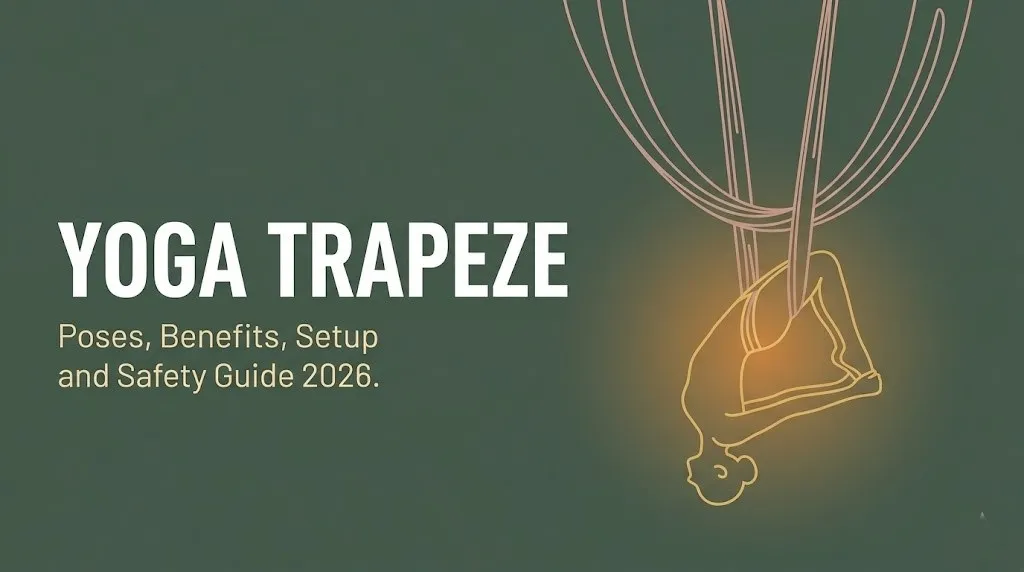
Key documented and practice-supported benefits include:
- Spinal decompression: Traction reduces compressive load on intervertebral discs and facet joints
- Paraspinal muscle release: Passive lengthening of erector spinae and multifidus in inverted positions
- Shoulder girdle mobility: Upper handle work stretches the latissimus dorsi and thoracolumbar fascia
- Hip flexor lengthening: Inverted and backbend positions passively stretch the hip flexors and iliopsoas
- Core strengthening: Maintaining position in the trapeze requires sustained engagement of the transverse abdominis and obliques
- Stress reduction: According to the NCCIH, inversion and supported yoga practices activate the parasympathetic nervous system, reducing perceived stress
Key Takeaway: The yoga trapeze’s primary physical value is spinal decompression through gravity-assisted traction, combined with passive release of the chronically shortened paraspinal muscles that contribute to most common back pain patterns.
Is a Yoga Trapeze Good for Back Pain?
A yoga trapeze can help relieve certain types of back pain by creating mechanical traction that reduces compressive load on the lumbar discs and facet joints, but its suitability depends entirely on the specific cause of your back pain.
The distinction matters significantly. Compression-related lower back pain, caused by prolonged sitting, disc narrowing from aging, or mild disc bulge without nerve impingement, may respond well to the decompression effects of gentle inversion in a yoga trapeze. The Physical Therapy Journal has published research on lumbar traction as a therapeutic intervention, finding it most beneficial for patients with disc-related pain and radiating leg symptoms at moderate severity.
Pain from other causes responds differently. Spinal stenosis, where the spinal canal is narrowed and nerve roots are compressed, may actually worsen with certain traction positions depending on the direction of motion. Spondylolisthesis, where one vertebra has slipped forward on another, requires careful assessment before any traction or inversion. People with either condition should confirm with their spine specialist before using a yoga trapeze.
The most conservative starting approach for back pain:
- Begin with a semi-inversion only. Sit in the trapeze fabric with hips supported and feet touching the floor. Let gravity begin the decompression gently.
- Hold for 1 to 2 minutes maximum on your first session. Assess how the spine responds over the following 24 hours.
- Progress to a steeper angle only after several sessions at the gentle angle produce no adverse response.
- Never begin with a full 90-degree inversion if back pain is your reason for using the trapeze.
What Muscles Does a Yoga Trapeze Work?
A yoga trapeze works a broader range of muscles than most people expect, engaging both the muscles that actively support positions and the muscles that passively release and lengthen during suspended holds.
The primary muscles working actively during yoga trapeze practice depend on the position being held. Inverted positions require the core stabilizers, specifically the transverse abdominis, obliques, and multifidus, to maintain alignment against gravitational pull. Upper handle work engages the latissimus dorsi, trapezius, rhomboids, and rotator cuff muscles of the shoulder.
Muscles that experience passive lengthening during trapeze practice include:
- Erector spinae and multifidus: Release under gravitational traction in inverted positions
- Iliopsoas and hip flexors: Lengthen in supported backbend and inverted positions
- Thoracolumbar fascia: The dense connective tissue sheet connecting the lumbar spine and pelvis releases during forward-hang positions
- Hamstrings: Experience passive stretching during forward-fold variations supported by the fabric
- Posterior shoulder capsule: Releases during overhead reach positions on the upper handles
- Intercostal muscles: The ribcage expands more fully in suspended positions, training respiratory muscle flexibility
According to the Journal of Alternative and Complementary Medicine, aerial yoga practices that include both active and passive phases produce greater improvements in core strength and spinal flexibility than mat-based yoga alone when practiced over an eight-week period.
The combination of active engagement and passive release makes the yoga trapeze unique as a training tool. Very few mat exercises produce the same simultaneous demand on the core stabilizers while allowing the larger paraspinal muscles to release completely.
How to Set Up a Yoga Trapeze at Home
Setting up a yoga trapeze at home safely requires three things: a structurally sound overhead anchor, load-rated hardware between the anchor and the trapeze, and a clear understanding of the weight load the system must support.
The anchor point is the most important variable in the entire setup. A yoga trapeze in full inversion can generate dynamic loads of two to three times body weight due to swinging motion and sudden load shifts. This means a practitioner weighing 150 pounds may apply loads of 300 to 450 pounds to the anchor point during dynamic use. The anchor must be rated accordingly.
Common anchor options and their requirements:
| Anchor Type | Load Rating Needed | Pros | Cons |
|---|---|---|---|
| Ceiling joist (wood) | Joist must handle 300-plus pounds | Permanent, stable | Requires locating joist accurately; professional installation recommended |
| Beam clamp (exposed beam) | Beam must be structural; clamp rated to 500-plus pounds | Removable, clean installation | Not suitable for decorative beams |
| Freestanding yoga trapeze stand | Stand rated to manufacturer specification | No ceiling modification needed | Takes floor space; limits swinging range |
| Door frame mount | Very limited; generally not recommended for full inversions | Cheapest option | Insufficient for dynamic loading; safety risk |
To set up a yoga trapeze safely:
- Locate a structural ceiling joist using a stud finder. Do not anchor to drywall alone.
- Install a ceiling mount plate rated to at least 500 pounds directly into the joist using lag bolts of the appropriate diameter.
- Attach a locking carabiner rated to at least 500 pounds to the mount plate.
- Thread the yoga trapeze daisy chain through the carabiner and adjust height so that the main fabric panel sits at hip height when you stand beneath it.
- Test the mount before full use: hang your full body weight gently for 30 seconds before attempting any dynamic movement.
Key Takeaway: The anchor point and hardware, not the trapeze fabric itself, are the safety-critical elements of home yoga trapeze setup. Use load-rated carabiners and structural joist anchors, and never mount to drywall or decorative beams.
Yoga Trapeze Poses for Beginners
Beginner yoga trapeze poses focus on building comfort with the fabric, developing basic body awareness in a suspended environment, and accessing spinal decompression without requiring full inversion.
No beginner should attempt a full inversion on their first session. The progression from seated work to partial inversion to full inversion typically takes several weeks of consistent practice.
To practice the Aerial Supported Hip Hang (Beginner Spinal Decompression):
- Stand with the main fabric panel behind you at hip height.
- Sit back into the fabric so it supports the hips and lower back. Feet remain on the floor.
- Hold the upper handles lightly for balance. Do not grip tightly.
- Breathe slowly and allow the lower spine to release downward with gravity.
- Hold for 1 to 3 minutes. Inhale to sit upright before releasing.
To practice Aerial Uttanasana (Supported Forward Fold):
- Stand facing the trapeze with the fabric at hip height.
- Place the hip crease against the fabric so it supports the pelvis.
- Hinge forward at the hips, letting the upper body hang toward the floor.
- Arms hang freely or reach for the lower handles. Knees may be soft.
- Breathe into the lower back. Hold for 5 to 8 breaths.
- Engage the core, press into the fabric with the hips, and rise slowly.
Modification for limited hamstring flexibility: Keep a generous bend in the knees throughout the forward fold to protect the hamstring attachments at the sitting bones.
Pose Tip:
- Never release into a forward fold without a slow, controlled return
- Keep the core lightly engaged even in passive positions
- Beginners should have a second person present during the first three sessions
Aerial Yoga Trapeze Poses for Intermediate Students
Intermediate yoga trapeze poses build on beginner comfort with the fabric and begin to include partial inversions, hip-opening shapes, and upper body strength work on the handles.
The progression from beginner to intermediate is marked by one key shift: the practitioner begins to trust the fabric and hardware enough to release more of their body weight into the trapeze rather than maintaining floor contact.
To practice Aerial Anjaneyasana (Supported Low Lunge in Trapeze):
- Stand facing the trapeze. Place one foot in the lower ankle stirrup, keeping the leg extended behind you.
- Lower the back knee toward the floor while the front foot remains on the ground.
- The stirrup supports the back foot at hip height, creating a deep hip flexor stretch.
- Inhale to lengthen the spine. Raise the arms overhead or hold the upper handles.
- Hold for 5 to 8 breaths. Step the foot out of the stirrup and switch sides.
To practice Aerial Setu Bandhasana (Bridge Pose in Trapeze):
- Sit in the main fabric panel with both hips supported.
- Lean back gradually until the upper back is supported by the fabric and the hips lift.
- Place feet on the floor hip-width apart. Press into the feet and lift the hips further.
- Hold the upper handles lightly for stability.
- Hold for 5 breaths. Lower slowly on an exhale.
Modification for shoulder sensitivity: Keep the arms down alongside the body rather than reaching overhead. Reduce the angle of the backbend by keeping the hips lower.
Safety note: People with acute lumbar extension-intolerant conditions should avoid the bridge variation in the trapeze until cleared by a physical therapist.
Yoga Trapeze Inversion: How Long to Hang and How to Do It Safely
A full yoga trapeze inversion means hanging completely upside down from the ankle stirrups, with the spine decompressing under the full weight of the upper body, and it should be approached as a graduated skill rather than an immediate goal.
The physiological rationale for inversion is straightforward: in a full inversion, gravitational force pulls the upper body away from the lower body, creating traction across the entire spinal column. Research published in the Spine Journal has found that sustained lumbar traction of sufficient magnitude reduces intradiscal pressure measurably, and inversion at angles above 60 degrees produces the greatest traction force.
To practice a full inversion in the yoga trapeze:
- Lower the ankle stirrups so they sit at approximately knee height when you stand beneath the trapeze.
- Sit in the main fabric panel and lean back until fully reclined.
- Hook both feet into the ankle stirrups securely. Use the stirrups at the arch of the foot, not the toes.
- Use the upper handles to stabilize as you gradually shift more weight onto the stirrups.
- Release the handles slowly. Let the upper body hang freely.
- Breathe slowly. Hold for 30 seconds on your first full inversion.
- To come up: reach for the upper handles, engage the core, and use arm strength to return to upright. Do not use momentum alone.
Time guidelines for inversion holds:
| Experience Level | Recommended Hold Time | Frequency |
|---|---|---|
| Beginner (first 4 weeks) | 30 seconds maximum | 1 to 2 times per session |
| Intermediate (weeks 4 to 12) | 1 to 3 minutes | 2 to 3 times per session |
| Experienced | 3 to 5 minutes | As needed |
Never exceed 5 minutes of continuous full inversion without specific guidance from a yoga therapist or physical therapist.
Key Takeaway: Full inversion in a yoga trapeze should be built gradually over weeks, starting at 30 seconds and increasing only when shorter holds produce no adverse response in the 24 hours that follow.
Yoga Trapeze for Flexibility and Mobility
The yoga trapeze improves flexibility and mobility through a mechanism that mat-based yoga cannot replicate: gravity-assisted passive lengthening of muscles and connective tissue without the need for active muscular effort to maintain the stretch.
On a mat, a forward fold requires the practitioner to hold themselves in the stretch using the hip flexors and core as counterforces against gravity. In the trapeze, the fabric supports the pelvis and allows the entire posterior chain, from the heel tendons through the hamstrings and gluteal muscles into the thoracolumbar fascia and erector spinae, to release simultaneously without any muscular holding.
This passive lengthening is particularly effective for the thoracic spine, which tends toward rigidity in people who work at desks or spend long hours driving. Supported backbend positions in the trapeze allow the thoracic vertebrae to extend gradually under gravity with the upper back fully cradled by the fabric, reducing the muscular guarding that prevents thoracic extension during active mat-based backbends.
Research in the Journal of Alternative and Complementary Medicine comparing aerial yoga practitioners with mat yoga practitioners over eight weeks found that the aerial group showed greater improvements in spinal flexibility and hip mobility, attributed to the gravity-assistance component of the aerial format.
For targeted flexibility work:
- Hamstrings: Aerial Uttanasana (Supported Forward Fold) held for 2 to 3 minutes
- Hip flexors: Aerial Anjaneyasana (Low Lunge in stirrups) held for 1 to 2 minutes per side
- Thoracic spine: Supported backbend in the fabric, arms overhead on upper handles, held 1 to 2 minutes
- Lateral body: Side stretch holding one upper handle, leaning away, held 1 minute per side
Yoga Trapeze for Seniors
Seniors can practice yoga trapeze safely with appropriate modifications, and the format offers specific advantages for older adults that mat yoga does not, including the ability to decompress the spine without bearing body weight on the hands, wrists, or knees.
The primary benefits for seniors center on the passive nature of the decompression work. Older adults with arthritic wrists, knee pain, or reduced upper body strength often find mat-based inversions inaccessible. The yoga trapeze allows spinal traction and lower body elevation without requiring those joints to bear load.
According to a review published in Complementary Therapies in Medicine, yoga interventions in adults over 60 showed improvements in balance, spinal flexibility, and quality-of-life measures with low adverse event rates when classes were appropriately adapted. Aerial yoga adaptations for seniors share those potential benefits when approached conservatively.
Senior-specific modifications for yoga trapeze practice:
| Pose | Standard Version | Senior Modification | Reason |
|---|---|---|---|
| Spinal Hang | Full inversion from ankle stirrups | Semi-inversion with hips in fabric, feet near floor | Avoids cardiovascular stress of full inversion |
| Forward Fold | Full hang with legs straight | Gentle hinge with knees bent, fabric at mid-thigh | Protects hamstring attachments and sacroiliac joint |
| Bridge in Fabric | Full backbend with feet on floor | Very small hip lift, hands on fabric for control | Protects lumbar extension in osteoporotic spines |
| Seated Decompression | Hands-free seated hang | Hands lightly holding upper handles | Maintains confidence and fall prevention |
Seniors with osteoporosis should avoid full inversions and deep backbends entirely. The compressive forces during a rapid return from inversion can exceed bone tolerance in a significantly demineralized spine. A gentle semi-inversion with consistent fabric support is both safe and effective for decompression purposes.
Yoga Trapeze Safety: Who Should Avoid It?
The yoga trapeze is contraindicated for several specific conditions, and knowing your contraindication status before attempting any inversion is genuinely more important than any pose instruction in this guide.
Full inversion places specific demands on the cardiovascular and neurological systems that are safe for healthy adults but dangerous for individuals with certain conditions. The primary risk is the rapid shift of blood toward the head that occurs during inversion, which elevates intraocular pressure, increases intracranial pressure transiently, and raises blood pressure simultaneously.
Absolute contraindications for yoga trapeze inversion:
- Glaucoma: Intraocular pressure rises during inversion; in glaucoma patients, this can accelerate optic nerve damage
- Uncontrolled hypertension: Inversion raises blood pressure further; cardiovascular risk is elevated
- Retinal detachment or recent eye surgery: Pressure changes during inversion are contraindicated
- Pregnancy beyond the first trimester: Inversion poses specific risks to placental blood flow and fetal positioning
- Recent stroke or brain aneurysm: Increased intracranial pressure during inversion is contraindicated
- Severe spinal instability or fracture: Traction forces may worsen structural compromise
- Active disc herniation with neurological symptoms: Inversion may increase nerve root compression in certain positions
Conditions requiring professional guidance before use:
- Moderate disc herniation without neurological symptoms
- Spinal stenosis
- Spondylolisthesis
- Significant osteoporosis
- Vertigo or vestibular disorders
- Post-spinal surgery within 12 months
Safety note: People with any of the absolute contraindications listed above should not use a yoga trapeze for inversion under any circumstances. For those in the “requires guidance” category, working with a physical therapist who specializes in spinal conditions before beginning trapeze practice is the medically appropriate step.
Key Takeaway: The absolute contraindications for yoga trapeze inversion, particularly glaucoma, uncontrolled hypertension, and pregnancy beyond the first trimester, are non-negotiable. The fabric feels forgiving but the physiology of full inversion is not.
Yoga Trapeze vs. Inversion Table: Which Is Better?
A yoga trapeze and an inversion table both deliver spinal decompression through gravity-assisted traction, but they differ substantially in mechanism, range of motion, cost, and what they demand from the user’s body.
An inversion table is a motorized or gravity-tilted flat board that rotates the entire body backward from a standing position. The body is secured at the ankles and the table tilts to the desired angle. No physical strength or skill is required beyond standing on the table and adjusting the angle. It is a purely passive decompression tool.
A yoga trapeze requires the user to actively manage their body position, engage the core during transitions, and develop skill with the fabric and handles over time. It is both a decompression tool and a movement practice.
| Feature | Inversion Table | Yoga Trapeze |
|---|---|---|
| Decompression mechanism | Passive gravity traction, full-body tilt | Gravity traction plus active position management |
| Skill requirement | Minimal | Moderate; requires practice and progression |
| Range of motion | Limited to inversion angle only | Full range: inversions, forward folds, backbends, lateral work |
| Space requirement | Large footprint | Smaller; hangs from single ceiling point |
| Cost range | $100 to $500 | $70 to $200 for trapeze; $100 to $500 for stand |
| Additional benefits | Decompression only | Decompression plus flexibility, strength, stress reduction |
| Ease for seniors | Higher; minimal strength needed | Moderate; modifications available |
| Research support | Stronger for acute traction therapy | Growing; aerial yoga research base developing |
For someone whose only goal is passive lumbar traction, an inversion table is simpler and requires less learning. For someone who wants decompression alongside an active yoga practice with flexibility and strength benefits, a yoga trapeze delivers significantly more value per use.
How to Choose the Best Yoga Trapeze Swing
Choosing the right yoga trapeze swing requires evaluating five specific variables: fabric material, weight capacity, handle configuration, hardware quality, and whether the setup suits your home environment.
Fabric material determines durability, grip, and comfort. The two primary options are:
- Nylon fabric: More durable, easier to clean, slightly slippery when sweating. Better for long-term use and heavier load cycles.
- Cotton or cotton-blend fabric: More comfortable against bare skin, better grip, less durable over time. Better for shorter sessions and skin sensitivity.
The handle and stirrup configuration determines what poses you can actually practice:
- Two upper handles at fixed heights: Limits shoulder and overhead work
- Two upper handles plus adjustable daisy chain: Allows handle heights to be varied, enabling more shoulder mobility work
- Two lower ankle stirrups: Required for full inversions; without these, you cannot safely hang inverted
Hardware is the least glamorous and most important purchase decision. When buying a yoga trapeze:
- Confirm the fabric weight rating is stated clearly. Minimum 300 pounds for most adults; 450 to 500 pounds preferred.
- Confirm included hardware is load-rated. Carabiners should specify a minimum breaking strength, not just a suggested weight.
- A freestanding stand rated to the same capacity as the trapeze is the safest home option for renters or those who cannot mount to a ceiling joist.
- Avoid kits that include no hardware specifications or that use generic carabiners without ratings.
The cheapest options on general retail platforms often lack hardware specifications. That omission is a meaningful safety signal, not a minor marketing oversight.
Frequently Asked Questions About Yoga Trapeze
What is a yoga trapeze and what is it used for?
A yoga trapeze is a fabric aerial swing suspended from an overhead anchor point, used for spinal decompression, inversion practice, flexibility training, and supported yoga poses.
It includes a main fabric panel, upper handles at multiple heights, and lower ankle stirrups that allow full body inversion without floor contact.
Yoga trapeze practice draws from aerial arts, traditional yoga inversions, and physical therapy-based traction methods to create a practice that addresses back pain, spinal mobility, and full-body flexibility simultaneously.
Is a yoga trapeze good for back pain and spinal decompression?
A yoga trapeze can help relieve compression-related back pain by creating gravitational traction that reduces load on the intervertebral discs and facet joints.
Research published in the Spine Journal has documented that mechanical traction reduces intradiscal pressure, which supports the theoretical basis for yoga trapeze decompression work.
However, yoga trapeze inversion is not appropriate for all back pain types; people with spinal stenosis, spondylolisthesis, or active disc herniation with neurological symptoms should assess their suitability with a spine specialist before using one.
How do you hang a yoga trapeze safely at home?
The safest home installation anchors a load-rated ceiling mount plate directly into a structural ceiling joist using lag bolts, connected to the trapeze daisy chain with a locking carabiner rated to at least 500 pounds.
A freestanding yoga trapeze stand rated to the manufacturer’s stated capacity is the best alternative for renters or spaces where ceiling mounting is not possible.
Never mount a yoga trapeze to drywall alone, decorative beams, or door frames, as none of these surfaces can safely support the dynamic loads generated during inversion use.
How long should a beginner hang in a yoga trapeze?
Beginners should limit full inversion holds to 30 seconds maximum during their first session and assess how the spine responds over the following 24 hours before increasing duration.
Most yoga teachers and physical therapists generally recommend building inversion time gradually over several weeks, progressing from 30 seconds to 1 to 3 minutes only after shorter holds produce no adverse response.
The total inversion time per session for beginners should not exceed 2 to 3 minutes across all holds combined until a consistent practice of several weeks has been established.
Can seniors use a yoga trapeze safely?
Seniors can use a yoga trapeze safely with appropriate modifications, focusing on semi-inversions with hip support rather than full ankle-stirrup inversions, particularly in the early stages of practice.
The passive decompression benefits of the trapeze are accessible to older adults without the wrist, knee, or upper body demands that make mat-based inversions challenging for aging joints.
Seniors with osteoporosis should avoid full inversions and rapid position changes; a physical therapist familiar with spinal conditions can advise on which trapeze positions are appropriate for specific bone density levels.
Hang There. You’ve Got This.
The yoga trapeze looks more complicated than it is. Start with the seated hip hang. Hold it for two minutes. Notice what your lower back does when gravity is working in its favor instead of against it.
That single position is where most back pain sufferers first feel genuine relief from a yoga trapeze. Build from there: add the forward fold, then a partial inversion, then a full hang when the body is ready.
Progress in weeks, not sessions. The spine responds slowly to traction. Give it time, do it consistently, and install the anchor hardware correctly the first time.