Waxhaw Yoga: Complete Beginner’s Class Guide for 2026
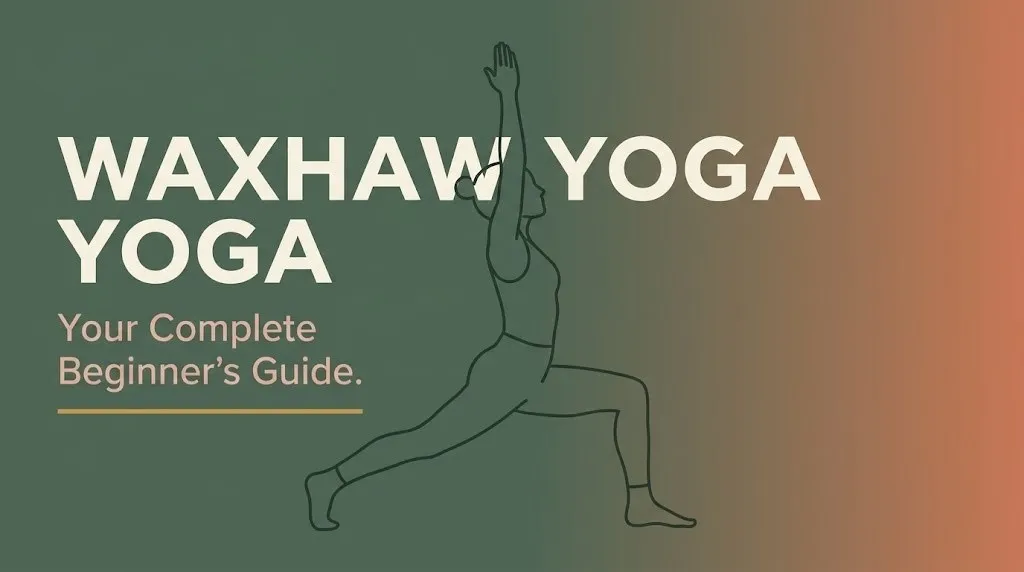
Waxhaw yoga is more than a local trend: it’s a practical, research-supported practice that people of all ages and fitness levels are using to manage stress, improve mobility, and feel better in their bodies. Whether you’re stepping onto a mat for the first time or returning after years away, Waxhaw, NC has real options for you.
The National Center for Complementary and Integrative Health (NCCIH) reports that yoga is one of the most commonly used complementary health practices in the United States, with more than 21 million adults practicing regularly as of recent national survey data. That number continues to grow, and for good reason.
This guide covers everything a beginner needs before their first class. You’ll learn which yoga style fits your body and goals. You’ll get pose instructions, prop guidance, safety notes, and real research on what yoga actually does for your health.
What Is Waxhaw Yoga and Who Is It For
Waxhaw yoga refers to yoga classes, studios, and home practices available to residents of Waxhaw, NC and the surrounding Union County area. It includes everything from beginner-friendly Hatha and Restorative sessions to more dynamic Vinyasa flows.
Yoga itself is a mind-body practice rooted in ancient Indian tradition. In a modern fitness and wellness context, it combines physical poses (asanas), breath control (pranayama), and focused attention to improve strength, flexibility, and mental calm. It is not a religion, and you do not need to adopt any particular belief system to benefit from it.
The practice works for a wide range of people. A 45-year-old office worker with lower back tightness, a retired teacher with arthritic knees, a college student managing anxiety, and a parent looking for a low-impact workout can all find a yoga format that fits.
Who benefits most from a local yoga practice like Waxhaw’s:
- Beginners with no prior fitness experience
- Adults over 50 managing joint stiffness or reduced balance
- People dealing with chronic stress, anxiety, or disrupted sleep
- Anyone recovering from mild to moderate musculoskeletal injuries (with appropriate medical guidance from a physical therapist or physician familiar with their case)
- Runners, cyclists, and weightlifters who need more mobility work
The one thing yoga is not: a one-size-fits-all practice. Choosing the right style matters enormously, especially at the start.
Best Yoga Styles for Beginners in Waxhaw, NC
The best yoga style for a beginner in Waxhaw depends on their physical condition, stress level, and what they want from practice. Most beginners do best starting with Hatha yoga or Restorative yoga before moving into faster-paced formats.
Local studios in and around Waxhaw typically offer several class formats. Understanding what each one involves prevents disappointment and reduces injury risk. Jumping into a Vinyasa class with no prior experience is like running a 5K before you’ve walked a mile.
| Yoga Style | Pace | Best For | What to Expect |
|---|---|---|---|
| Hatha | Slow to moderate | Absolute beginners | Individual poses held for several breaths; foundational alignment |
| Vinyasa | Moderate to fast | Some experience helpful | Flowing sequences linked with breath; more cardiovascular demand |
| Yin | Very slow | Flexibility, stress, joint health | Passive poses held 3 to 5 minutes; floor-based; deeply relaxing |
| Restorative | Extremely gentle | Injury recovery, exhaustion, anxiety | Fully supported poses using bolsters and blankets; held 5 to 20 minutes |
| Chair Yoga | Slow | Seniors, limited mobility | All poses adapted to a sturdy chair; no floor work required |
| Gentle Yoga | Slow to moderate | Seniors, beginners, joint issues | Modified poses with emphasis on ease and safety |
For most people starting yoga in Waxhaw, a four-week commitment to Hatha or gentle yoga builds the body literacy needed to enjoy any other style later.
How Hatha Yoga Differs from Vinyasa and Yin Yoga
Hatha yoga is a broad term that refers to any yoga practice emphasizing physical poses. In a studio context, a class labeled “Hatha” is usually slower-paced, with each pose held individually for three to eight breaths before transitioning.
Vinyasa yoga links poses together in continuous, breath-synchronized sequences. The transition itself, often a plank-to-low-push-up movement called Chaturanga Dandasana, is part of the workout. Heart rate rises. Sweat happens. Vinyasa demands significantly more shoulder and core strength than beginners typically have at the start.
Yin yoga is its own category entirely. It targets the connective tissues: fascia, ligaments, and joint capsules, rather than the muscles. Poses are held passively for three to five minutes. There is no muscular effort. The goal is a slow, gentle stress on the connective tissue to improve joint mobility over time.
The distinction matters practically:
- Hatha builds pose knowledge and alignment awareness
- Vinyasa builds strength, cardiovascular fitness, and flow
- Yin builds flexibility at the joint level and promotes parasympathetic nervous system recovery
A 2019 review published in the International Journal of Yoga found that both Hatha and Yin practices significantly improved perceived stress and flexibility markers compared to control groups, though through different physiological mechanisms.
Beginners who are tired, stressed, or dealing with chronic pain typically respond better to Hatha or Yin first. Those who want a more energetic workout can progress toward Vinyasa after six to eight weeks of foundational work.
Essential Beginner Yoga Poses to Learn First
Every beginner should learn a core set of foundational poses before attempting any class sequence. These poses appear in almost every yoga style and build the body awareness needed to practice safely.
Tadasana (Mountain Pose): The base of all standing poses. Stand with feet hip-distance apart, weight evenly distributed, spine tall. Activates postural muscles along the spine and teaches body alignment.
Balasana (Child’s Pose): A resting pose. Kneel, lower hips toward heels, extend arms forward. Stretches the latissimus dorsi, gluteus maximus, and hip external rotators. Modification: place a folded blanket behind the knees if they are uncomfortable.
Adho Mukha Svanasana (Downward-Facing Dog): From hands and knees, press the floor away and lift hips up and back. Stretches hamstrings, calves, and the entire back body. Modification: bend knees generously if the lower back rounds.
Setu Bandha Sarvangasana (Bridge Pose): Lie on your back, knees bent, feet flat. Press feet down, lift hips. Strengthens gluteus maximus and hamstrings, lengthens hip flexors. Modification: place a block under the sacrum for a fully supported, passive version.
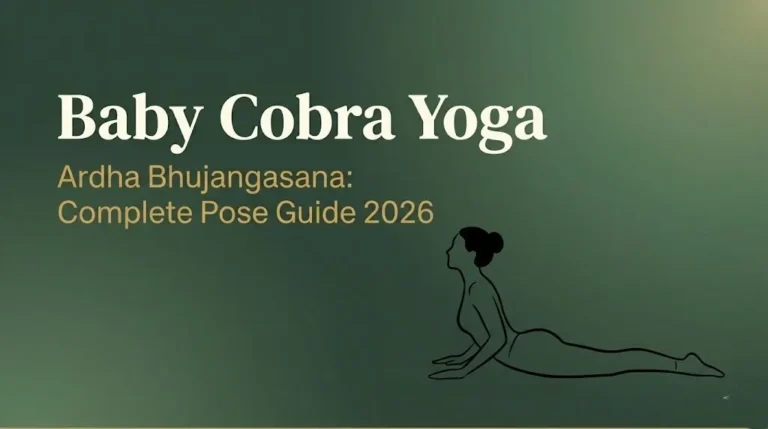
Bhujangasana (Cobra Pose): Lie on your stomach, place hands under shoulders, press gently into the floor to lift the chest. Strengthens the erector spinae, opens the chest. Modification: keep elbows bent and lift only a few inches if the lower back is sensitive.
Savasana (Corpse Pose): Lie flat on your back, arms relaxed by your sides. This is not sleeping. It is active rest that allows the nervous system to integrate the practice. Never skip it.
Pose Tip:
- Learn Tadasana before any standing pose
- Use Balasana anytime you feel overwhelmed during class
- Modify Downward Dog with bent knees until hamstring flexibility improves
- Hold each pose 3 to 5 breath cycles to start, roughly 15 to 30 seconds
Key Takeaway: Starting with six foundational poses gives you enough body awareness to walk into any beginner yoga class in Waxhaw and follow along safely, regardless of your flexibility level.
Step-by-Step Beginner Yoga Sequence for Your First Week
A structured beginner sequence for your first week of Waxhaw yoga should take 20 to 30 minutes and use only poses you feel physically safe in. Consistency over three sessions per week beats one long, exhausting session.
Here is a complete beginner sequence to follow at home or as preparation for a studio class:
- Start in Sukhasana (Easy Seat): Sit cross-legged on your mat. Close your eyes. Take five slow breaths to settle your nervous system.
- Neck rolls: Gently roll the head in a half circle from left shoulder to right shoulder. Three times each direction. Never roll the head backward.
- Cat-Cow (Marjaryasana-Bitilasana): Come to hands and knees. Inhale, drop the belly and lift the head (Cow). Exhale, round the spine to the ceiling (Cat). Repeat eight times. Warms the lumbar spine and thoracic spine.
- Adho Mukha Svanasana (Downward-Facing Dog): Hold five breaths. Pedal the heels alternately to warm the calves.
- Virabhadrasana I (Warrior I): Step the right foot forward, left foot angled 45 degrees back. Bend the front knee over the ankle. Raise both arms. Hold five breaths. Repeat on the left. Strengthens quadriceps, gluteus medius, and opens the hip flexors.
- Setu Bandha Sarvangasana (Bridge Pose): Lie on your back. Five breaths up, lower slowly.
- Balasana (Child’s Pose): Hold one minute. Breathe into the lower back.
- Supine twist: From your back, draw the right knee to the chest, let it fall across the body to the left. Arms wide. Hold five breaths each side. Releases the piriformis and lower back.
- Savasana (Corpse Pose): Lie flat. Stay for five minutes minimum.
Modification: Replace Warrior I with a chair-supported version if balance is an issue. Place both hands on the back of a sturdy chair instead of raising the arms overhead.
How Yoga Helps with Back Pain: What Research Says
Yoga reduces back pain by strengthening the muscles that support the lumbar spine while simultaneously improving flexibility in the hip flexors and hamstrings, which are the two muscle groups most commonly implicated in chronic lower back tension.
According to the National Center for Complementary and Integrative Health (NCCIH), clinical trials have found yoga to be an effective approach for chronic lower back pain, with benefits comparable to other exercise interventions and significantly better outcomes than no treatment.
A 2017 clinical trial published in Annals of Internal Medicine found that yoga was as effective as physical therapy for reducing chronic lower back pain in adults after 12 weeks, with improvements maintained at a 52-week follow-up. This is among the most cited studies in this area.
The mechanism is not mysterious. Lower back pain often results from weak core stabilizers (transverse abdominis, multifidus) combined with tight hip flexors that tilt the pelvis forward. Yoga addresses both. Bhujangasana (Cobra Pose) strengthens the posterior chain. Setu Bandha Sarvangasana (Bridge Pose) activates the glutes and lengthens the hip flexors. Supta Padangusthasana (Reclining Hand-to-Big-Toe Pose) targets the hamstrings without loading the spine.
Safety note: People with herniated discs, spinal stenosis, or sciatica should get guidance from a physical therapist or spine-specialist physician before starting yoga. Deep forward folds and seated twists can aggravate certain spinal conditions.
The right poses can genuinely help. The wrong ones can worsen symptoms. A qualified yoga teacher familiar with spinal health can adapt any class for back pain.
Yoga for Anxiety and Stress Relief: The Science
Yoga reduces anxiety and stress by activating the parasympathetic nervous system, the branch responsible for rest, digestion, and recovery, while simultaneously reducing cortisol, the body’s primary stress hormone.
The Harvard T.H. Chan School of Public Health has highlighted yoga and mindful movement as evidence-based strategies for managing chronic stress. Multiple studies show that even a single yoga session reduces salivary cortisol levels measurably.
A review of 52 randomized controlled trials published in Complementary Therapies in Medicine found that yoga interventions significantly reduced anxiety symptoms across diverse populations, including clinical anxiety, generalized anxiety, and stress-related insomnia. The effect was strongest in practices that combined physical poses with breath work.
This is where breath-focused styles like Hatha, Yin, and Restorative yoga have a measurable edge over purely strength-based or cardio yoga styles. The Ujjayi breath (ocean breath), a slow nasal breath with a gentle throat constriction, directly engages the vagus nerve, which governs the parasympathetic response.
Think of the nervous system like a car engine running at 4,000 RPM in a parking lot. Yoga, specifically the breath component, is the signal to downshift. The physical poses add the structural release that makes that downshift feel complete.
Restorative poses like Supta Baddha Konasana (Reclining Bound Angle Pose), fully supported with bolsters and blankets, are particularly effective for anxiety. There is no effort required. The body simply rests in a supported, open position while the nervous system recalibrates.
Yoga for Seniors: Safe Modifications and What to Expect
Yoga is safe and beneficial for most seniors when practiced with appropriate modifications and taught by an instructor experienced with older adults. The key word is “appropriate.”
The American College of Sports Medicine (ACSM) recommends balance and flexibility training for adults over 65 at least two days per week. Yoga directly addresses both, along with functional strength that supports daily movement.
The biggest concerns for seniors in yoga are:
- Balance challenges: Standing poses on one leg, like Vrikshasana (Tree Pose), should always be practiced near a wall or chair for seniors new to balance work
- Bone density: People with osteoporosis should avoid deep spinal flexion (forward folds that round the back) and extreme spinal rotation, as these positions can stress vertebral bodies
- Joint range of motion: Arthritis in the hips or knees may limit how deep certain poses can go. That is expected. Depth is not the goal. Comfort and function are.
- Wrist sensitivity: Poses requiring weight bearing on the hands (Downward Dog, plank) can be modified to forearms or fists
| Pose | Standard Version | Senior Modification |
|---|---|---|
| Tadasana (Mountain Pose) | Standing on mat | Standing near a wall for support |
| Vrikshasana (Tree Pose) | One foot on inner thigh | Toe touch to floor, hand on wall |
| Virabhadrasana II (Warrior II) | Full lunge depth | Shallower stance, chair nearby |
| Adho Mukha Svanasana (Downward Dog) | Full inversion | Modified against a wall at 45 degrees |
| Balasana (Child’s Pose) | Hips to heels | Blanket behind knees; seated forward fold as alternative |
Gentle yoga and chair yoga classes, increasingly available at Waxhaw area studios, are specifically designed for this population.
Key Takeaway: Yoga’s benefits for back pain, anxiety, and senior mobility are not vague wellness claims. They are documented by the NCCIH, ACSM, and multiple peer-reviewed clinical trials. The research is real.
Yoga for Flexibility: How Long Before You See Results
Most people notice measurable flexibility improvements within four to eight weeks of consistent yoga practice, typically practicing three times per week. Early gains come primarily from neurological adaptation, not structural tissue change.
Your muscles don’t immediately lengthen. What changes first is your nervous system’s tolerance for the stretch sensation. It stops sending an urgent “danger” signal as quickly. That allows you to move further into a pose with less discomfort.
A 2016 study published in the Journal of Bodywork and Movement Therapies found that eight weeks of yoga practice produced statistically measurable improvements in hamstring flexibility and spinal mobility in previously sedentary adults. Three sessions per week produced better outcomes than one.
Connective tissue adaptation, the deeper structural change to fascia and joint capsules, takes longer. This is why Yin yoga practitioners often say they didn’t notice significant hip flexibility changes until three to six months in.
Realistic timeline for beginners:
| Timeframe | What Typically Changes |
|---|---|
| Week 1 to 2 | Reduced muscle soreness, better body awareness |
| Week 3 to 4 | Noticeable ease in basic poses; hamstrings feel less tight |
| Week 5 to 8 | Measurable increase in range of motion in hips and spine |
| Month 3 to 6 | Deeper connective tissue flexibility; sustained joint mobility gains |
| 6 months and beyond | Structural adaptations; significant functional improvement |
The most important factor is not how flexible you start. It is whether you show up consistently. A person who practices three times a week for two months will outpace someone who practices intensely for one week.
Yoga Props and Equipment Every Beginner Needs
A beginner starting yoga in Waxhaw needs only four items to practice safely and comfortably at home. Studios typically provide props, but owning your own makes home practice possible and more hygienic.
The four essentials:
- Yoga mat: Look for 4mm to 6mm thickness with a non-slip surface. A thicker mat (6mm) provides more joint cushioning for sensitive knees and wrists. Beginner practitioners tend to do better with slightly more padding.
- Yoga blocks (two): Dense foam or cork blocks bring the floor closer to you. They are not a sign of weakness. They are how proper alignment becomes accessible for people with tight hamstrings or limited hip mobility.
- Yoga strap (one): A six-foot cotton strap extends your reach in poses like Supta Padangusthasana (Reclining Hand-to-Big-Toe Pose). It prevents you from gripping your leg and rounding your spine.
- Yoga blanket: A firm, folded blanket supports seated poses, props the hips above the knees in cross-legged positions, and cushions the knees in kneeling poses.
| Prop | Primary Use | Who Needs It Most |
|---|---|---|
| Mat (4 to 6mm) | Non-slip surface, joint cushioning | Everyone |
| Blocks (2) | Bring floor closer, support alignment | Beginners, people with tight hamstrings |
| Strap | Extend reach, maintain straight limbs | Beginners, seniors, people with shoulder tightness |
| Blanket | Cushion, elevation, support | Seniors, people with knee or hip sensitivity |
| Bolster | Full body support in Restorative poses | Anxiety management, back pain, Restorative practice |
A bolster is helpful but not strictly necessary to start. If you practice Restorative yoga, it becomes close to indispensable.
How Often Should You Practice Yoga Each Week
Most yoga teachers and physical therapists recommend three sessions per week for consistent, measurable progress in a beginner. Two sessions maintain fitness without much forward progress. One session is better than none but produces slower results.
The American College of Sports Medicine recommends flexibility training two to three days per week for adults seeking improved range of motion. Yoga meets this standard while also training balance, body awareness, and breath control simultaneously.
Daily practice is possible and beneficial, but it requires variation. Alternating a more active session (Hatha or Vinyasa) with a gentler session (Yin or Restorative) gives the body time to recover while keeping the practice consistent. Doing a demanding sequence every single day without recovery sessions is a common cause of shoulder and wrist overuse issues in newer practitioners.
Practical weekly schedule for beginners:
- Monday: 25-minute Hatha session focusing on standing poses
- Wednesday: 20-minute Yin session targeting hips and hamstrings
- Friday or Saturday: 30-minute beginner Vinyasa or gentle yoga class
Rest days are not lost days. Muscle adaptation and nervous system recalibration happen during recovery, not during practice. A day of walking, gentle stretching, or complete rest between yoga sessions is part of the training.
Key Takeaway: Three yoga sessions per week, mixing active and gentle styles, produces better results and fewer injuries than practicing intensely every day without recovery built in.
What to Expect at Your First Yoga Class in Waxhaw
Your first yoga class in Waxhaw will likely begin with a brief centering period: a minute or two of seated stillness or simple breathing before movement starts. Most classes run 60 to 75 minutes.
A typical beginner class structure looks like this:
- Seated or lying centering (2 to 5 minutes)
- Warm-up poses: Cat-Cow, seated neck rolls, gentle spinal movement (5 to 10 minutes)
- Standing pose sequence: typically two to four poses held for multiple breath cycles (20 to 25 minutes)
- Floor pose sequence: seated and reclined poses targeting hips, hamstrings, and back (15 to 20 minutes)
- Savasana (Corpse Pose): final rest (5 to 10 minutes)
What surprises most first-time students: the pace is slower than they expected, the quiet is more challenging than the poses, and they leave feeling noticeably more relaxed than they arrived.
Practical things to do before your first class:
- Arrive 10 to 15 minutes early to meet the teacher and mention any injuries
- Avoid a heavy meal for two hours beforehand
- Wear comfortable, stretchy clothing. You do not need special yoga clothes.
- Remove your shoes at the door. Yoga is practiced barefoot.
- Tell your teacher if you have knee, back, wrist, or shoulder concerns. A good instructor will offer modifications.
Do not worry about being “flexible enough.” No one walks into their first yoga class flexible. Flexibility is the outcome, not the prerequisite.
Chair Yoga: Poses and Benefits for Limited Mobility
Chair yoga is a fully adapted yoga practice performed seated in or standing beside a sturdy chair. It provides all the core benefits of traditional yoga, including improved balance, joint mobility, and stress reduction, without requiring floor work or deep range of motion.
A 2017 study published in the Journal of Alternative and Complementary Medicine found that chair yoga significantly reduced pain and fatigue in older adults with osteoarthritis of the lower extremity over an eight-week period. Participants reported improved physical function and better sleep.
Chair yoga is appropriate for:
- Adults with balance impairments or fall risk
- People with severe arthritis limiting floor movement
- Anyone recovering from lower-body surgery or injury (with appropriate physician clearance)
- Older adults who are intimidated by traditional mat yoga
Basic chair yoga poses:
- Seated Mountain Pose: Sit tall at the edge of a chair. Feet flat on the floor, hip-distance apart. Spine lifted. Breathe five slow cycles. Activates postural awareness.
- Seated Cat-Cow: Place hands on thighs. Inhale, arch the back and lift the chest. Exhale, round the spine. Repeat eight times. Warms the thoracic spine.
- Seated Warrior I: Sit sideways on the chair, right leg extended behind with toes on the floor. Raise both arms overhead. Hold five breaths. Repeat on the left side.
- Seated Forward Fold: Sit at the chair’s edge. Hinge forward at the hips (not the waist) and let the torso drop toward the thighs. Hold ten breaths. Stretches the lumbar spine and hamstrings.
- Seated Twist: Sit tall, place right hand on left knee, left hand behind you on the chair. Inhale to lengthen, exhale to rotate gently. Five breaths each side.
Yoga Breathing Techniques (Pranayama) for Beginners
Pranayama refers to the practice of conscious breath regulation in yoga. It is not an optional add-on. Breath control is considered a foundational component of yoga practice, directly affecting the nervous system, heart rate, and mental state.
Three pranayama techniques are accessible to beginners:
1. Diaphragmatic breathing (belly breathing): Place one hand on the chest, one on the belly. Breathe so only the belly hand rises. This activates the diaphragm fully and engages the parasympathetic nervous system. Practice 3 to 5 minutes before any yoga session.
2. Ujjayi breath (ocean breath): Breathe slowly through the nose with a slight constriction at the back of the throat, producing a soft ocean sound. Used during active yoga poses. It slows the breath, maintains focus, and regulates exertion. Typical rhythm: four-count inhale, four-count exhale.
3. Nadi Shodhana (alternate nostril breathing): Close the right nostril with the right thumb, inhale through the left for four counts. Close both nostrils briefly. Open the right nostril, exhale for four counts. Inhale through the right. Switch. This technique is widely used before meditation and has been studied for its effect on reducing blood pressure.
According to a 2018 review in the International Journal of Yoga, pranayama practices including Nadi Shodhana produced measurable reductions in resting heart rate and perceived stress in healthy adults over a six-week practice period.
Safety note: If pranayama causes dizziness or shortness of breath, return to normal breathing immediately. People with respiratory conditions like asthma or COPD should introduce breath retention techniques only with guidance from both their healthcare provider and a qualified yoga teacher.
Key Takeaway: Pranayama is not decoration. The breath component of yoga is what separates it from generic stretching, and research confirms it drives a significant portion of yoga’s stress-reduction benefits.
Building a Home Yoga Practice to Complement Studio Classes
A home yoga practice reinforces what you learn in studio classes and accelerates progress significantly. Even 15 to 20 minutes three times per week at home, between studio sessions, compounds the benefits.
Setting up a consistent home practice requires three things: a dedicated space (even a small corner of a room), a consistent time, and a structure you can repeat.
Practical steps for starting a home practice:
- Choose a consistent time. Morning practice before coffee works well for many people because it bypasses decision fatigue.
- Clear a 6-foot by 4-foot space. You need room for your mat and arms extended to either side.
- Start with a 15-minute sequence using only poses you already know from class. Do not try new poses at home without proper instruction first.
- Use a timer instead of watching the clock. Set it for your total session length and a reminder at the midpoint.
- End every home session with at least three minutes of Savasana (Corpse Pose). This is where nervous system integration happens.
- Gradually add five minutes per week until you reach 30 to 40 minutes per session.
Props make home practice safer and more effective. Blocks prevent compensations in poses. A strap prevents rounding the spine during hamstring stretches. A folded blanket under the hips in seated poses keeps the pelvis neutral.
Home practice also gives you a chance to hold poses longer than a group class allows. A five-minute hold in Balasana (Child’s Pose) at home is something a 60-minute group class rarely provides.
Common Yoga Mistakes Beginners Make and How to Fix Them
The most common beginner yoga mistakes are not about the poses themselves. They are about approach, breath, and ego.
Holding the breath: This is the single most universal beginner error. When a pose feels hard, most people grip and hold their breath. This activates the sympathetic nervous system and increases muscle tension. The fix: exhale into difficulty. Breath always comes first.
Forcing depth: Trying to look like the most advanced person in the room causes injuries. Adho Mukha Svanasana (Downward-Facing Dog) with a rounded lower back does more harm than a bent-knee version done correctly. Depth is irrelevant. Alignment is everything.
Skipping Savasana: Many beginners leave before Savasana (Corpse Pose) because it feels like “doing nothing.” Research published in Complementary Therapies in Medicine has noted that the final rest period is when the nervous system consolidates the stress-reducing effects of the session. Leaving early eliminates a meaningful portion of the benefit.
Using too thin a mat: A 2mm travel mat on a hard floor means bruised knees and wrist discomfort within minutes. Beginners need at least 4mm. People with sensitive joints benefit from 6mm.
Comparing bodies: Yoga poses look different on every body. Hip socket anatomy, leg length, torso-to-arm ratio, and joint structure all affect how a pose appears. A person with naturally loose hips will fold forward easily. This tells you nothing about whether they are practicing better than you.
Additional mistakes to avoid:
- Starting with an advanced class because you want a challenge
- Practicing on a full stomach
- Ignoring pain and pushing through it (discomfort and sensation are normal; sharp, stabbing, or joint pain is not)
- Wearing thick socks that reduce grip on the mat
Frequently Asked Questions About Waxhaw Yoga
Is yoga good for complete beginners with no flexibility?
Yoga is specifically designed for people who lack flexibility, not just those who already have it.
Flexibility is the result of consistent yoga practice, not the requirement for starting.
A beginner yoga class in Waxhaw will always include modifications and prop options so you can participate safely at your current range of motion.
What type of yoga is best for stress and anxiety?
Restorative yoga and Yin yoga are the most effective styles for reducing anxiety and stress because they directly activate the parasympathetic nervous system.
Both styles emphasize supported, passive poses combined with slow breathing, which research published in Complementary Therapies in Medicine links to measurable cortisol reduction.
Hatha yoga is also a strong choice if you want light physical activity combined with the calming effect of breathwork.
How many times a week should a beginner do yoga?
Three sessions per week produces the most consistent progress for beginners, based on general exercise science guidelines from the American College of Sports Medicine.
Two sessions maintain current fitness levels without much forward progress.
Start with two if three feels overwhelming, and add a third session after four weeks once your body has adapted.
Can seniors with joint pain do yoga safely?
Yes, seniors with joint pain can practice yoga safely with proper modifications and ideally with a teacher experienced in senior populations.
Chair yoga eliminates all floor work and adapts every pose to a seated or standing-beside-chair position, making it appropriate for most mobility levels.
Before starting, seniors managing osteoporosis, recent joint surgery, or significant balance impairment should discuss yoga with their medical provider to identify which pose categories to avoid.
What do I need to bring to my first yoga class in Waxhaw?
Bring comfortable, stretchy clothing, a water bottle, and bare feet (shoes are removed before entering the practice space).
Most Waxhaw yoga studios provide mats and props for new students, but you can bring your own mat if you prefer.
Arrive 10 to 15 minutes early to introduce yourself to the teacher and mention any physical limitations or injuries before class begins.
Start Where You Are, Not Where You Think You Should Be
Waxhaw yoga offers something for everyone who is willing to show up. The poses are learnable. The research on benefits is real. The modifications exist precisely so that no one has to sit on the sidelines.
Pick one style from this guide that feels like a genuine fit for your body right now. Try three sessions before you judge it. Use a block when you need one. Exhale when the pose gets hard.
The mat is there every time you come back to it. That consistency is what builds everything else.