423 Yoga: Beginner Guide to Styles, Poses and Benefits
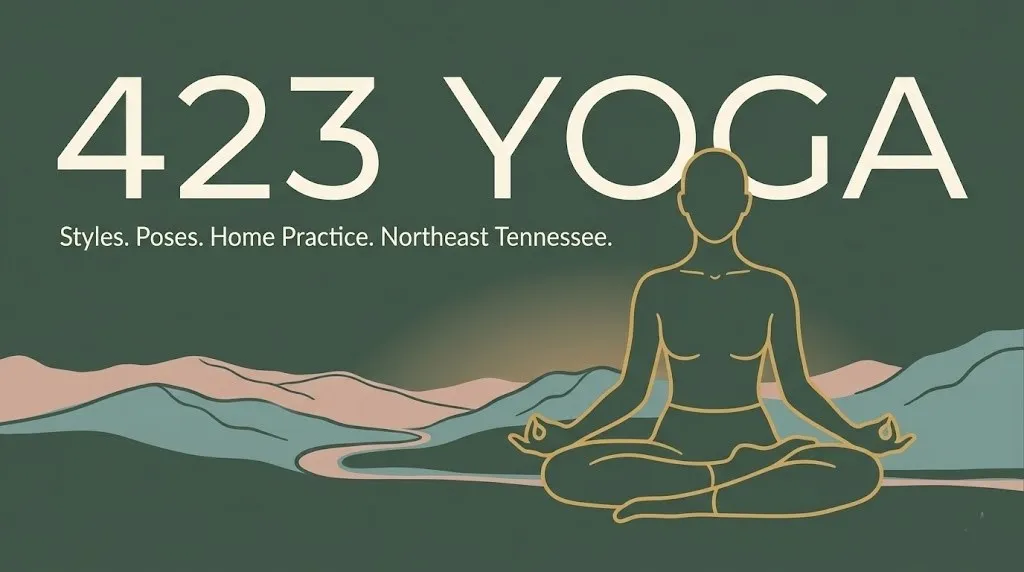
The term “423 yoga” refers to yoga classes, studios, and home practice options serving the 423 area code of northeastern Tennessee, including Chattanooga, Johnson City, Kingsport, and the broader Tri-Cities region. Whether you want to find a studio or build a home practice that works between studio visits, this guide covers everything you need to make an informed start.
Yoga is one of the most widely adopted complementary health practices in the United States. According to the National Center for Complementary and Integrative Health (NCCIH), over 21 million American adults practice yoga regularly, with home practice becoming increasingly common as an adjunct to or replacement for studio attendance.
This guide explains which yoga styles are available in the 423 region, how each one differs from the others, which poses beginners should start with, how to build a home practice without equipment, and how people managing back pain, stress, or aging-related changes can adapt safely.
What Is 423 Yoga and Who Is It For?
“423 yoga” describes the yoga practice community, studios, and classes located in Tennessee’s 423 area code, covering Chattanooga, Johnson City, Kingsport, Bristol, and surrounding communities in the Appalachian foothills of northeastern Tennessee.
The 423 region has a genuinely diverse yoga scene. Studios in Chattanooga’s Southside neighborhood tend to offer Vinyasa and hot yoga formats. The Tri-Cities area of Johnson City, Kingsport, and Bristol has a stronger base of Hatha, Restorative, and community yoga options. Rural and suburban practitioners across the region increasingly rely on home practice, either as a primary option or to supplement occasional studio attendance.
Who is yoga in the 423 area for? Practically everyone. The region’s population includes a large healthcare and manufacturing workforce managing occupational stress and physical strain, a substantial outdoor recreation community (hikers, cyclists, and paddlers) dealing with muscle tightness and recovery needs, and a significant and growing senior population seeking low-impact mobility and balance training.
Yoga has no physical prerequisite. Flexibility is a product of yoga practice, not a requirement for starting it. The Yoga Alliance consistently notes that one of the most common beginner misconceptions is that you need to be flexible to do yoga. You do not. You just need to show up.
Pose Tip:
- New to yoga in the 423 area? Start with one studio trial class and one 20-minute home session per week before committing to a schedule.
- Ask studios explicitly whether their beginner class is appropriate for someone with zero prior yoga experience.
- Most studios in the 423 region offer at least one drop-in class option so you can try before buying a membership.
Yoga Styles Guide for 423 Region Beginners
The yoga styles available at 423 area studios range from gentle, accessible formats to physically demanding practices, and knowing the difference before you walk through a studio door saves both time and discomfort.
The six most commonly offered styles in the 423 region are Hatha yoga, Vinyasa yoga, Restorative yoga, Yin yoga, hot yoga (also called Bikram or 26&2 yoga), and gentle yoga. These are distinct practices with different physical demands, sequencing approaches, and outcomes. Calling them all “yoga” without distinguishing between them is like calling all running “cardio” without noting the difference between a 5K jog and a marathon.
Understanding what each offers before you attend your first class prevents two of the most common beginner mistakes: choosing a class that is too physically demanding for your current fitness level, and quitting yoga entirely after one uncomfortable experience that could have been avoided by starting with a better-matched style.
| Style | Pace | Physical Demand | Best For |
|---|---|---|---|
| Hatha | Slow to moderate | Low to moderate | Beginners learning foundational poses |
| Vinyasa | Moderate to fast | Moderate to high | People with some fitness base |
| Restorative | Very slow | Very low (passive) | Stress, recovery, insomnia |
| Yin | Slow | Low (deep holds) | Joint flexibility, fascia release |
| Hot yoga (26&2) | Structured | High (heat adds load) | Experienced practitioners in good health |
| Gentle yoga | Slow | Low | Seniors, injury recovery, chronic pain |
Start with Hatha, gentle, or Restorative yoga if you are brand new, managing a health condition, or returning after years away from movement practice.
Hatha vs. Vinyasa vs. Restorative Yoga Explained
Hatha yoga is the parent category from which most modern yoga styles descend, and in class settings it refers to a slower, pose-focused practice where each position is held for several breath cycles before transitioning. It is the most appropriate starting point for the majority of 423 area beginners.
Vinyasa yoga links poses together through breath-coordinated transitions, creating a flowing, continuous sequence. The pace is faster than Hatha, and the cardiovascular demand is higher. A study published in the International Journal of Yoga found that Vinyasa classes produce heart rate responses comparable to moderate-intensity aerobic exercise in healthy adults. This is relevant for beginners to understand: Vinyasa is not passive. It requires a baseline of movement confidence that most beginners need several weeks of Hatha practice to develop.
Restorative yoga occupies the opposite end of the effort spectrum. Poses are fully supported by props (bolsters, blankets, blocks) and held passively for 5 to 20 minutes each. The muscular engagement is minimal. The goal is complete nervous system downregulation. According to the Journal of Alternative and Complementary Medicine, Restorative yoga produces measurable reductions in cortisol and improvements in self-reported anxiety comparable to meditation-only interventions.
Think of the three styles like gears on a car. Hatha is second gear: controlled, moderate, building skill. Vinyasa is fourth or fifth gear: efficient, demanding, requiring you to already know the road. Restorative is neutral: completely still, letting the engine cool down.
| Feature | Hatha | Vinyasa | Restorative |
|---|---|---|---|
| Pose transitions | Slow, one at a time | Breath-linked, flowing | None or minimal |
| Hold times | 3 to 8 breaths | 1 to 3 breaths | 5 to 20 minutes |
| Props needed | Occasional | Rarely | Extensively |
| Appropriate for | Beginners, all levels | Moderate fitness base | Stress, recovery, seniors |
| Heat level | Room temperature | Room temperature | Room temperature |
Key Takeaway: Beginners in the 423 area should start with Hatha or gentle yoga before attempting Vinyasa, and should try at least one Restorative class within the first month to understand how yoga works at the slower end of the spectrum.
Yoga for Beginners at Home in the 423 Area
Home yoga practice in the 423 area is a practical choice for anyone who lives outside Chattanooga’s urban core, works irregular hours, or simply prefers learning at their own pace before entering a class setting.
Starting yoga at home requires three things: a flat, non-slip surface of roughly 6 feet by 4 feet, a consistent time slot you can protect most days of the week, and realistic expectations about how long it takes to feel competent. Most practitioners need four to six weeks of regular short sessions before yoga starts to feel natural rather than awkward.
The most common home yoga mistake is starting with a 60-minute online class. Research published in the International Journal of Yoga suggests that shorter daily sessions produce significantly better adherence in new practitioners than longer infrequent sessions. Start with 15 to 20 minutes. Add time as the practice becomes familiar.
What you actually need for home practice:
- A yoga mat, or a non-slip area rug on a hard floor (carpet works for most floor poses)
- A folded blanket for knee cushioning and prop support
- One foam yoga block (the single most useful prop for beginners)
- A wall for balance support in standing poses
- A consistent time: morning before obligations accumulate, or evening within 90 minutes of sleep
You do not need online subscriptions, special clothing, or an entire prop collection to begin. The mat, the block, and the blanket cover approximately 80% of what you’ll need in your first six months.
Beginner Yoga Poses: Step-by-Step Instructions
Every beginner yoga practice in the 423 region, whether at a studio or at home, should be built on the same five foundational poses. These cover the spine, hips, and nervous system with low injury risk.
Tadasana (Mountain Pose)
To practice Tadasana:
- Stand with feet hip-width apart. Press all four corners of each foot into the floor.
- Engage the quadriceps gently. Do not lock the knees.
- Lengthen the spine upward. Keep the shoulders relaxed, not pulled back forcefully.
- Let your arms hang with palms facing forward.
- Close your eyes or fix a soft gaze on one point ahead.
- Hold for 6 to 8 slow breaths.
Modification: Stand with your back lightly touching a wall for postural feedback. Seniors and those with balance challenges should keep eyes open throughout.
Balasana (Child’s Pose)
To practice Balasana:
- Kneel with knees hip-width apart and big toes touching behind you.
- Sit hips back toward heels as far as comfortable.
- Walk hands forward until arms are fully extended on the floor.
- Rest forehead on the mat or on a folded blanket.
- Breathe into the lower back. Feel the lumbar spine expand on each inhale.
- Hold for 5 to 8 breaths. Walk hands back and rise slowly.
Modification: Place a folded blanket between the thighs and calves if the hips do not reach the heels. Use a block under the forehead if the neck is uncomfortable in full extension.
Marjaryasana-Bitilasana (Cat-Cow Pose)
To practice Cat-Cow:
- Come to hands and knees. Wrists under shoulders, knees under hips.
- On an inhale: drop the belly, lift the tailbone, open the chest. This is Cow.
- On an exhale: press the floor away, round the spine toward the ceiling, drop the chin. This is Cat.
- Let breath drive the movement. Move slowly through 8 to 10 cycles.
Modification: Make fists instead of flat palms if wrists are uncomfortable. Place a folded blanket under knees on hard floors.
Building a Yoga Sequence for Daily Home Practice
A complete daily home yoga sequence for beginners should address spinal mobility, hip flexibility, standing stability, and nervous system rest. You do not need to cover all four every day. Rotating emphasis across the week produces better long-term results than repeating the identical sequence daily.
Below is a 25-minute beginner sequence suitable for home practice anywhere in the 423 area.
| Order | Pose | Sanskrit Name | Hold Time | Focus |
|---|---|---|---|---|
| 1 | Easy Seated Pose with breath | Sukhasana | 2 to 3 minutes | Grounding, breath awareness |
| 2 | Cat-Cow | Marjaryasana-Bitilasana | 8 to 10 cycles | Spinal mobility |
| 3 | Child’s Pose | Balasana | 6 to 8 breaths | Hip opener, spinal rest |
| 4 | Downward-Facing Dog | Adho Mukha Svanasana | 5 to 6 breaths | Full body |
| 5 | Mountain Pose | Tadasana | 6 breaths | Grounding |
| 6 | Warrior I | Virabhadrasana I | 4 to 5 breaths per side | Hip flexor opening, strength |
| 7 | Seated Forward Fold | Paschimottanasana | 6 to 8 breaths | Hamstring lengthening |
| 8 | Reclined Bound Angle | Supta Baddha Konasana | 2 to 3 minutes | Hip release, rest |
| 9 | Corpse Pose | Savasana | 4 to 5 minutes | Integration, nervous system rest |
According to the Yoga Alliance, a consistent 20-to-25-minute daily practice produces better flexibility and stress outcomes over 8 weeks than twice-weekly hour-long sessions. Frequency matters more than duration, particularly in the first three months.
Key Takeaway: A 25-minute daily home sequence covering spinal mobility, hip opening, standing strength, and Savasana is more effective for beginners than occasional long sessions. Start short. Stay consistent.
Yoga Benefits for Mind and Body
Yoga produces documented benefits across the musculoskeletal, cardiovascular, nervous, and endocrine systems when practiced consistently. These are not marketing claims. They are outcomes supported by peer-reviewed research across multiple institutions.
According to the NCCIH, yoga’s strongest evidence base covers four areas: reduction of chronic low back pain, improvement in anxiety and depressive symptoms, enhancement of balance and proprioception in older adults, and improved sleep quality. These four areas directly match the most common health concerns reported by adults in the 423 region.
The physical benefits accumulate gradually. Flexibility improvements are typically noticeable after 4 to 6 weeks of regular practice. Balance improvements are measurable after 8 weeks in most research protocols. Strength gains from poses like Virabhadrasana I (Warrior I Pose) and Adho Mukha Svanasana (Downward-Facing Dog) are modest compared to resistance training but contribute meaningfully to functional daily movement.
Key documented physical and mental benefits include:
- Reduced lumbar spine stiffness and improved spinal range of motion
- Lengthened hamstrings and hip flexors with consistent practice over 6 to 12 weeks
- Improved balance and proprioception, particularly relevant for older adults and hikers
- Reduced cortisol and markers of systemic inflammation after single sessions
- Improved sleep onset and sleep continuity with evening practice including slow breathwork
- Reduced self-reported anxiety and depression scores in controlled yoga intervention studies
- Lower resting heart rate in regular practitioners compared to matched non-practitioners
How Yoga Helps with Stress and Mental Health
Yoga reduces stress through a specific physiological pathway: slow, extended exhalation activates the vagus nerve, which signals the heart to slow down and the body to shift from sympathetic (stress) to parasympathetic (rest and digest) nervous system dominance.
This is not a metaphor for relaxation. It is a measurable physiological process. When you exhale for longer than you inhale, the vagal brake engages, heart rate slows, cortisol secretion decreases, and the body’s perceived threat response diminishes. A single 20-minute yoga session with sustained slow breathing produces this effect within the session itself.
A 2019 review published in Complementary Therapies in Medicine analyzed 37 controlled trials on yoga and mental health. Researchers found consistent moderate-to-strong effects on anxiety, depressive symptoms, and cortisol in populations that included working adults, seniors, and people managing chronic health conditions. These are exactly the populations that make up a large portion of the 423 region’s yoga community.
The mental health benefits are not limited to high-stress clinical populations. Recreational practitioners who practice Restorative yoga or Yin yoga one to two times per week report meaningful improvements in perceived stress and mood, even without accompanying physical intensity. For 423 area residents managing healthcare-sector or manufacturing-sector occupational stress, this is directly relevant.
Pose Tip:
- For stress relief, extend the exhale to 1 to 2 counts longer than the inhale throughout each pose.
- Try a 4-count inhale and 6-count exhale in Savasana or Child’s Pose for maximum parasympathetic effect.
- This breath ratio is the most reliably documented breath pattern for acute cortisol reduction in yoga research.
Yoga Breathing Techniques for Beginners
Breathing in yoga is not decorative. The breath is the primary instrument of the practice, and learning two or three specific techniques at the start produces noticeably better outcomes than simply “breathing naturally.”
1. Diaphragmatic breathing is the starting point. Place one hand on the chest and one on the belly. Breathe so the belly-hand rises first and more. The chest should move minimally. This signals the nervous system that the body is calm and respiration is efficient. Most adults in sedentary occupations have habituated to chest breathing, which maintains a low-level stress signal throughout the day.
2. Ujjayi breath (ocean breath or victorious breath) involves a slight constriction at the back of the throat that creates a soft, audible sound on both the inhale and exhale. It is used most effectively during moving sequences. The sound gives the practitioner an audio anchor that keeps attention in the present moment rather than wandering to task lists or schedule concerns.
3. Nadi Shodhana (alternate nostril breathing) is a pranayama technique in which you alternate breathing through each nostril using a hand mudra. Research published in the International Journal of Yoga found that Nadi Shodhana reduces heart rate, blood pressure, and perceived stress markers more effectively than control conditions in healthy adults. It is best practiced seated at the beginning or end of a session.
| Technique | Sanskrit Name | When to Use | Primary Benefit |
|---|---|---|---|
| Belly breathing | Diaphragmatic pranayama | All poses, all times | Baseline nervous system calm |
| Ocean breath | Ujjayi pranayama | Moving sequences | Focus, pacing, heat regulation |
| Alternate nostril | Nadi Shodhana | Opening and closing seated | Heart rate reduction, neural balance |
Key Takeaway: Learning diaphragmatic breathing in week one of yoga practice produces faster benefit than any flexibility improvement. The breath is the fastest route to the nervous system, and the nervous system is where yoga’s most documented effects occur.
Yoga for Seniors in the 423 Region
Yoga is one of the most well-supported movement practices for adults over 60, and seniors in northeastern Tennessee have access to an increasingly strong gentle yoga and chair yoga offering across the 423 region’s studios and community centers.
The Harvard T.H. Chan School of Public Health identifies yoga as a meaningful tool for balance improvement, fall risk reduction, and pain management in older adults. A 2022 review in Complementary Therapies in Medicine found that yoga practiced two to three times per week for eight or more weeks measurably reduced fall risk scores in community-dwelling older adults. Fall prevention is one of the most clinically meaningful outcomes for seniors, and yoga directly trains the balance and proprioception systems involved.
Joints change with age. Cartilage thins. Synovial fluid production slows. This means seniors need shorter hold times in standing poses, more cushioning under knees in floor poses, and a preference for wall support over free-standing balance challenges until stability is established.
Chair yoga is the most accessible starting point for seniors in the 423 area who have not moved regularly in years or who are managing significant joint limitations.
Chair yoga adaptations for common poses:
- Seated Tadasana (Mountain Pose): Sit at the edge of a sturdy chair with feet flat on the floor, spine tall, hands resting on thighs. Practice diaphragmatic breathing for 2 minutes.
- Seated Cat-Cow: From the same chair position, arch and round the back with breath coordination. 8 to 10 cycles.
- Seated Forward Fold: Hinge forward at the hips with a straight back. Hands rest on shins. Hold 4 to 5 breaths. Do not aggressively round the spine.
- Seated Warrior I arms: Keep feet on the floor and lift arms overhead on the inhale, lengthening the spine. Hold 3 to 4 breaths. Lower on exhale.
Seniors with osteoporosis should avoid aggressive spinal rounding in any format. Those with recent hip or knee replacement should confirm appropriate movement ranges with their orthopedic surgeon or physical therapist before attending any yoga class, including chair format.
Yoga for Back Pain and Occupational Stress
Yoga is one of the best-supported non-pharmacological approaches for chronic lower back pain, and this is directly relevant for the 423 region’s large population of healthcare workers, manufacturing employees, and desk-based professionals.
The NCCIH identifies yoga for chronic low back pain as having sufficient research evidence to consider it an effective complementary approach. The key mechanisms are improved spinal mobility, strengthened deep stabilizing muscles (primarily the multifidus and transverse abdominis), and reduced cortisol, which is a hormone that heightens pain sensitivity when chronically elevated. Occupational stress directly elevates cortisol, which means yoga’s dual action on both the spine and the stress response is particularly relevant for workers managing physically or emotionally demanding jobs.
The best yoga poses for lower back care include:
- Balasana (Child’s Pose): Gently decompresses the lumbar spine. Use a blanket under the hips if they do not reach the heels.
- Marjaryasana-Bitilasana (Cat-Cow Pose): Mobilizes all spinal segments. Keep the Cow position gentle to avoid excessive lumbar extension.
- Supta Baddha Konasana (Reclined Bound Angle Pose): Releases the hip external rotators and reduces sacroiliac joint tension. Place blocks or rolled blankets under both thighs if the knees are far from the floor.
- Paschimottanasana (Seated Forward Fold): Lengthens the hamstrings and gently tractions the lumbar spine. Sit on a folded blanket to tilt the pelvis forward if the lower back rounds under load.
Healthcare workers with active sciatica should avoid deep forward folds during acute flare periods. A physical therapist familiar with yoga-based movement can help identify which specific poses are safe during different phases of sciatic nerve irritation.
Key Takeaway: Yoga for back pain works through two simultaneous mechanisms: improving spinal mobility and reducing cortisol-driven pain amplification. For 423 area workers managing occupational stress, these two effects compound each other in ways that purely physical treatment does not replicate.
Yoga Modifications and Props Guide
Props are not beginner training wheels. They are precision alignment tools that allow the correct muscles to engage without compensating elsewhere. Every serious yoga teacher in the 423 region will tell you the same thing: props make the pose work, not the opposite.
The most common prop avoidance mistake is skipping a block in a forward fold because using one “feels like cheating.” When the hands cannot comfortably reach the floor in a standing forward fold, the practitioner’s hips shift backward to compensate, the lower back rounds under load, and the hamstrings do not actually lengthen. A block under the hands removes that compensation entirely.
According to the Yoga Alliance, appropriate prop use is a core competency in yoga teacher training, recognized as integral to safe alignment rather than optional modification.
| Prop | Function | Best Used For |
|---|---|---|
| Foam block | Brings floor closer to hands | Forward folds, low lunges, seated poses |
| Cork block | Firmer height support | Poses requiring stable hand placement |
| Yoga strap | Extends reach | Hamstring stretches, shoulder openers |
| Bolster | Full passive body support | Restorative poses, Savasana |
| Folded blanket | Pads joints, elevates hips | Knee support, seated hip elevation |
| Chair | Full body weight support | Chair yoga, standing balance |
| Wall | Alignment feedback and balance | Standing poses, supported inversions |
The one prop every home practitioner in the 423 area should own first is a foam block. It costs less than most yoga class drop-in fees and solves more alignment problems than any other single piece of equipment.
Yoga for Tight Hips and Outdoor Recovery
Tight hips are the most commonly reported physical complaint among yoga practitioners in outdoor recreation communities, and northeastern Tennessee’s Appalachian Trail access, cycling infrastructure, and river sports culture make this directly relevant to the 423 yoga community.
Hiking, trail running, and cycling all demand repetitive hip flexor and hip external rotator loading in a shortened position. Think of the hip flexors like a thick rubber band that has been held contracted for hours on a steep uphill climb. When the trail ends, those muscles do not automatically return to their resting length. Without deliberate stretching and hip-opening work, that chronic shortening accumulates over days and weeks into the familiar “locked-up hips” feeling that limits stride length, causes lower back fatigue, and reduces overall movement quality.
Yoga poses specifically effective for post-outdoor-activity hip recovery:
- Eka Pada Rajakapotasana (Pigeon Pose): Deeply stretches the piriformis and hip external rotators. Use a block or folded blanket under the front hip if the pelvis tips sideways.
- Anjaneyasana (Low Lunge): Lengthens the iliopsoas (hip flexors) of the back leg. Keep the back knee on a blanket and the front knee aligned over the ankle.
- Supta Kapotasana (Reclined Pigeon / Figure Four Stretch): The supine version of Pigeon. Lie on your back, cross one ankle over the opposite thigh, and draw both legs toward the chest. Much safer for people with active knee pain.
- Baddha Konasana (Bound Angle Pose): Sit with soles of the feet together and knees out to the sides. Sit on a folded blanket to tilt the pelvis forward and release the hip adductors.
Modification: Anyone with hip replacement, labral tear, or hip impingement should avoid deep hip external rotation poses like Pigeon without guidance from a physical therapist familiar with their specific condition.
Yoga Safety and Hot Yoga Contraindications
Yoga’s general safety record is good, but every physical practice carries risk when done without proper attention to personal limits, health status, or environmental conditions. Hot yoga specifically warrants honest discussion because it is popular in the 423 region and carries distinct risks that beginners are rarely warned about.
Hot yoga (practiced in rooms heated to 35 to 42 degrees Celsius) adds a significant cardiovascular and thermoregulatory load to the physical demands of the poses themselves. For healthy adults with established yoga experience, this load is manageable. For beginners, older adults, pregnant practitioners, or people managing cardiovascular conditions, it can be genuinely dangerous.
The NCCIH notes that the most common yoga-related injuries involve the lower back, shoulders, knees, and neck, with overexertion and skipping modifications identified as the leading causes. Hot yoga-specific risks include heat exhaustion, dehydration-related muscle cramping, and lightheadedness during transitions from floor to standing.
Specific contraindications for hot yoga in the 423 area:
- Pregnancy: Hot environments pose risk of elevated core temperature in the first trimester. Prenatal yoga in a temperature-controlled room is the appropriate alternative.
- Cardiovascular conditions: Anyone managing heart disease, uncontrolled hypertension, or arrhythmia should discuss heated exercise with their cardiologist before attempting hot yoga.
- History of heat illness: Prior heat stroke or heat exhaustion increases susceptibility to future episodes.
- Beginners: Hot yoga is not an appropriate entry point. Learn pose alignment in a room-temperature class first.
- Dehydration baseline: Coming to hot yoga without being well-hydrated before class begins substantially increases risk of cramps and lightheadedness.
General yoga safety rules that apply to all 423 area practitioners:
- Sharp or shooting pain during a pose is a signal to stop. Muscular stretching sensation is normal. Nerve pain is not.
- Progress is measured in weeks and months, not classes. Resist the urge to match the practitioner next to you.
- Inform the teacher of any injuries or conditions before class begins. Any qualified 423 area yoga teacher will welcome that information.
Key Takeaway: Hot yoga is not a beginner practice. Learn foundational alignment in a room-temperature Hatha or gentle class first. Hot yoga adds heat as an additional physiological variable, not an introductory simplification.
Yoga Cool-Down Sequences and Sleep Improvement
The final 5 to 10 minutes of any yoga session are where the nervous system consolidates the physical work of the session. Skipping this portion eliminates one of yoga’s most clinically documented effects on sleep and recovery.
A 2020 meta-analysis published in the Journal of Alternative and Complementary Medicine found that yoga interventions including extended supine rest significantly improved sleep quality in adults with insomnia compared to control groups. The strongest effects were in practices that combined slow breathwork with long holds in lying-down positions. This is a direct description of a well-constructed yoga cool-down sequence.
The best cool-down sequence for 423 area practitioners:
- From your last active pose, come to lying on your back.
- Draw both knees to the chest and rock gently side to side for 4 to 5 breaths.
- Release legs long into Savasana (Corpse Pose).
- Place a folded blanket under the knees to release lumbar spine tension.
- Arms rest slightly away from the body, palms facing up.
- Eyes closed. Breath returns to its natural rhythm.
- Remain still for a minimum of 5 minutes. Eight minutes is considerably better.
For sleep preparation specifically, practice this cool-down within 60 minutes of your intended sleep time. Add Nadi Shodhana (alternate nostril breathing) for 3 to 5 minutes before Savasana if you are managing active insomnia or racing thoughts at bedtime.
Modification: If lying flat on a hard floor is uncomfortable, practice Savasana on a firm mattress or sofa. The physical surface matters less than the stillness and breath quality.
Supta Baddha Konasana (Reclined Bound Angle Pose) is an excellent addition before Savasana for practitioners with hip tightness from hiking or cycling. Place rolled blankets or blocks under both thighs, let gravity release the hips passively, and remain here for 3 to 5 minutes before moving into full Savasana.
Frequently Asked Questions About 423 Yoga
What does 423 yoga mean?
“423 yoga” refers to yoga studios, classes, and home practice resources serving the 423 area code of northeastern Tennessee.
The 423 region includes Chattanooga, Johnson City, Kingsport, Bristol, and surrounding communities in the Appalachian foothills.
Searching “423 yoga” typically surfaces studio directories, class listings, and local practice guides for this geographic area.
What is the best yoga style for a complete beginner in the 423 area?
Hatha yoga or a class labeled “gentle yoga” is the best starting point for most beginners in the 423 region.
These formats use slow pace, clear pose instruction, and appropriate hold times for people learning alignment from scratch.
Avoid hot yoga and Vinyasa as your first style, both require a foundation of pose knowledge that takes several weeks to build.
Can I practice yoga at home without any equipment?
Yes, you can begin a home yoga practice with no equipment beyond a non-slip floor surface.
A foam block and a folded blanket are inexpensive additions that cover approximately 80% of common beginner alignment needs.
Start with floor-based poses like Balasana (Child’s Pose) and Marjaryasana-Bitilasana (Cat-Cow), which require no props and present minimal injury risk.
Is yoga safe for seniors in the Chattanooga and Tri-Cities area?
Yoga is safe for most seniors when practiced with appropriate modifications, including chair yoga, reduced hold times, and wall or prop support for standing poses.
The Harvard T.H. Chan School of Public Health identifies yoga as a beneficial practice for older adults, with documented improvements in balance and fall risk reduction.
Seniors managing osteoporosis, recent joint replacement, or cardiovascular conditions should discuss any new movement practice with their treating physician or physical therapist before attending a group yoga class.
How often should a beginner do yoga each week?
Most yoga teachers and physical therapists recommend beginners practice three to four times per week, with sessions of 15 to 30 minutes each.
Research published in the International Journal of Yoga consistently shows that frequency matters more than session length in the first three months of practice.
Three short weekly sessions produce better flexibility, stress, and adherence outcomes than one long weekly session for new practitioners.
Your Practice Starts with One Pose
You do not need a studio membership, expensive equipment, or an hour of free time to begin yoga in the 423 area. You need a mat or a clear floor, one block, and three poses you practice four times this week.
Start with Tadasana (Mountain Pose) for 6 breaths, Balasana (Child’s Pose) for 8 breaths, and Savasana (Corpse Pose) for 5 minutes. That is your first session. Do it again tomorrow.
The 423 region has excellent studios when you are ready for them. But the practice that changes your daily life is the one you build at home, on your own schedule, one breath at a time.