Sexy Yoga Poses: Grace, Confidence and Body Awareness
The poses most often called sexy yoga poses are, from a yoga practice standpoint, the ones that develop physical grace, deep flexibility, and embodied self-awareness: backbends, hip openers, and balance poses that ask you to feel your body fully rather than just move through it. These are not a separate category of yoga. They are the poses that produce the most visible changes in how practitioners carry themselves, both on and off the mat.
The connection between yoga and improved body confidence is backed by research. A study published in the journal Body Image found that yoga practitioners reported higher body satisfaction and reduced self-objectification compared to other exercisers, with the effect growing stronger with longer-term practice. That shift happens because yoga teaches practitioners to notice what the body feels like from the inside, not just how it appears from the outside.
This guide covers the biomechanics of what makes certain poses feel and look graceful, which specific poses to practice and how, the research behind yoga and body confidence, modifications for every level, and how to build a sequence that develops physical elegance and self-assurance over time.
What Makes a Yoga Pose Feel and Look Graceful
The yoga poses that feel and look most graceful share three physical qualities: thoracic extension (an open, lifted upper back), hip mobility (freedom of movement at the hip joints), and full-body integration (the ability to hold length and alignment through the entire body simultaneously).
Most adults spend the majority of their day in spinal flexion: seated, looking at screens, driving, hunching forward. The thoracic spine, the middle and upper back, becomes progressively stiffer in this rounded position. Backbend poses and chest-opening sequences reverse this pattern. When the thoracic spine extends fully, the shoulders draw back and down, the chest opens, and the whole posture reads as confident and open rather than closed and contracted.
Hip mobility determines whether a pose looks fluid or forced. Tight hip flexors and hip external rotators limit the depth of standing poses, lunges, and seated postures in ways that create visible strain. Yoga’s hip-opening work addresses these specific muscles, which is why practitioners who have practiced regularly for several months move through standing and seated positions with noticeably more ease and fluidity.
Full-body integration is the quality that distinguishes a truly graceful pose from a technically executed one. Think of it like a piece of music where every instrument is playing in relationship to the others. A yoga pose where every body segment is connected, where the breath is moving freely, and where the attention is directed, feels and looks completely different from the same shape held in tension and fragmentation.
What yoga poses that develop grace have in common:
- Open thoracic spine: Upper back extended rather than rounded
- Relaxed shoulders: Away from the ears, shoulder blades drawing gently together
- Engaged but not gripping core: Enough to support, not so much that it restricts breath
- Rooted base: Whether feet, hands, or knees, the contact with the ground is deliberate
- Relaxed facial muscles: The face reflects internal state. Gripping the jaw or furrowing the brow changes the entire quality of a pose.
Sexy Yoga Poses and What Yoga Actually Teaches About the Body
The poses commonly called sexy yoga poses are backbends, hip openers, and balance postures, and what they actually teach is something more interesting and lasting than aesthetics: a fundamentally different relationship with your own physical experience.
Yoga’s philosophical framework, across Hatha, Vinyasa, and Yin traditions, consistently teaches practitioners to attend to internal sensation rather than external appearance. This is not a small distinction. Most adults have spent years relating to their bodies primarily through how they look to others. Yoga inverts this: the practice asks “what does this feel like?” rather than “what does this look like?”
Research supports the outcome of this shift. A 2015 study published in the Journal of Alternative and Complementary Medicine found that yoga practitioners demonstrated lower levels of self-objectification and higher body appreciation than non-practitioners, with effects increasing over the duration of the practice. Self-objectification, the tendency to see oneself as an object to be evaluated visually, is associated with lower body confidence, higher anxiety, and reduced physical performance. Yoga appears to reduce it consistently.
The poses in this guide are chosen because they develop genuine physical qualities: spinal mobility, hip flexibility, balance, and postural strength. These qualities produce the grace and confidence that make yoga practitioners appear, to outside observers, to move differently than they did before they started practicing. That change is real. It is also a byproduct, not the goal.
Pose Tip:
- Approach every pose with attention to internal sensation first
- Notice what the pose feels like before evaluating what it looks like
- Beginner modification: Spend the first 30 seconds of any new pose with eyes closed, directing attention entirely inward
Hip Opening Yoga Poses for Flexibility and Confidence
Hip opening yoga poses are among the most physically and emotionally noticeable yoga practices because the hip joint is the largest ball-and-socket joint in the body and one of the most restricted areas in adults who sit for extended daily periods.
Eka Pada Rajakapotasana (Pigeon Pose) is the most commonly practiced deep hip opener in Western yoga. It targets the hip external rotators, the piriformis, and the hip flexors of the back leg simultaneously, creating a sustained stretch across multiple structures that daily movement rarely reaches.
To practice Eka Pada Rajakapotasana (Pigeon Pose):
- Begin in a tabletop position on hands and knees.
- Slide the right knee forward toward the right wrist. Let the right shin angle diagonally across the mat.
- Extend the left leg straight back behind you, toes pointed.
- Square the hips as evenly as possible toward the front of the mat.
- Inhale to lengthen the spine. Exhale to fold forward over the front shin.
- Rest the forehead on stacked fists or on the mat directly.
- Hold for 5 to 10 breath cycles, roughly 1 to 2 minutes.
- Walk the hands back to rise on an inhale. Switch sides.
Modification for knee sensitivity: Place a folded blanket or yoga block under the front hip on the side of the bent knee. This reduces the torque at the knee joint and makes the pose accessible for practitioners with knee discomfort.
Modification for tight hips: If the front hip cannot comfortably reach the floor, use a block under that hip to maintain even weight distribution between both sides of the pelvis.
Safety note: Sharp pain at the front knee in Pigeon is a signal to exit the pose. The sensation should be a deep, sustained stretch at the outer hip, not a sharp or compressive sensation at the knee joint.
Key Takeaway: Hip opening poses feel so noticeable because they target the hip external rotators and flexors that most adults have never deliberately stretched. The intensity is normal. Sharp knee pain is not.
Backbend Yoga Poses That Build Grace and Posture
Backbend yoga poses develop the thoracic extension, shoulder mobility, and erector spinae strength that produce the open, lifted posture that most people associate with physical grace and confidence.
The most accessible backbend for practitioners of all levels is Bhujangasana (Cobra Pose), which teaches the fundamental action of all backbends: using the back muscles to lift rather than pressing with the hands to push.
Ustrasana (Camel Pose) is the intermediate backbend that most dramatically opens the chest, hip flexors, and entire anterior body. It is one of the poses that practitioners consistently describe as changing how they walk and stand in daily life, because the muscles it opens and strengthens are directly involved in everyday postural patterns.
To practice Ustrasana (Camel Pose):
- Kneel with knees hip-width apart, shins parallel.
- Place the hands on the lower back, fingers pointing downward.
- Inhale and lift the sternum upward, initiating the backbend from the upper back first.
- Slowly let the head drop back only if the neck feels comfortable.
- Option A: Keep the hands on the lower back. Option B: Reach one hand at a time to the heel behind you.
- Hold for 3 to 5 breath cycles.
- Bring the hands back to the lower back. Inhale to rise, leading with the chest.
- Rest in Balasana (Child’s Pose) for 5 breath cycles after each backbend to release the spine.
Modification for lumbar sensitivity: Keep the hands on the lower back throughout. This allows the thoracic extension benefit without the full depth that increases lumbar compression.
Modification for tight quadriceps: Tuck the toes under rather than pointing them flat. This slightly raises the heel height and makes the hand-to-heel connection more accessible.
Balance Yoga Poses That Develop Body Awareness
Balance yoga poses develop proprioception, the body’s ability to sense its own position in space, and this is the physical quality most directly responsible for the fluid, controlled movement that reads as grace in yoga practitioners.
Vrksasana (Tree Pose) is the foundational single-leg balance pose that develops ankle stability, core stabilizer engagement, and the calm attention required to remain still on one leg. It is not physically demanding by strength standards. It is demanding by attention standards. Balance poses require the mind and body to be in continuous communication.
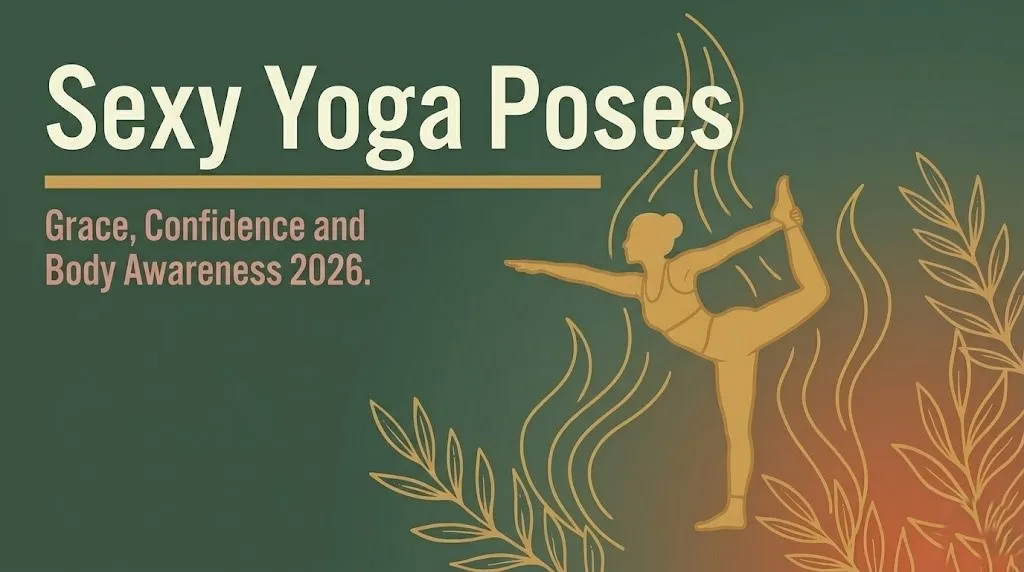
Natarajasana (Dancer’s Pose) is the most visually dramatic balance pose in Hatha yoga’s foundational repertoire. It combines a backbend, a hip flexor stretch, and single-leg balance into one shape that requires simultaneous strength, flexibility, and focused attention to maintain.
To practice Natarajasana (Dancer’s Pose):
- Stand in Tadasana (Mountain Pose).
- Shift weight onto the left foot. Bend the right knee, bringing the right heel toward the right hip.
- Reach the right hand back and grasp the inner ankle or the outer foot.
- Inhale. Extend the left arm forward and up.
- Begin to lift the right foot upward and back, pressing it into the hand.
- Let the torso lean forward slightly as the back leg rises, maintaining length through the spine.
- Hold for 3 to 5 breath cycles.
- Release slowly. Return to Tadasana. Switch sides.
Modification for balance difficulty: Practice near a wall with the fingertips of the free arm resting lightly on the wall for support. As balance improves over weeks of practice, gradually reduce wall contact.
Modification for limited shoulder mobility: Hold a strap looped around the ankle rather than grasping the foot directly. This reduces the shoulder rotation required while maintaining the hip flexor stretch.
Key Takeaway: Balance poses develop proprioception, the physical intelligence that makes movement look effortless. A wall is not cheating. It is training. Use it until the pose is stable without it.
Standing Yoga Poses for Posture and Physical Confidence
Standing yoga poses develop the erector spinae, gluteus maximus, and core stabilizers that directly determine how a person holds themselves upright in daily life, and the cumulative effect of regular standing pose practice on everyday posture is one of the most visible physical changes yoga produces.
Trikonasana (Triangle Pose) combines hip mobility, thoracic rotation, and full-body integration in a shape that is simultaneously grounding through the feet and expansive through the torso and arms. It is one of the poses that most directly translates into improved everyday posture because of how it trains the body to maintain length while opening through multiple planes simultaneously.
Virabhadrasana III (Warrior III Pose) is the standing pose that develops the posterior chain most comprehensively. The gluteus maximus, hamstrings, and erector spinae all activate isometrically to maintain the horizontal body position over the single standing leg. Practitioners who practice this pose regularly develop a noticeably more stable and upright standing posture in daily life.
Key standing poses for posture and confidence, with their primary target areas:
| Pose (Sanskrit) | Pose (English) | Primary Muscles | Posture Benefit |
|---|---|---|---|
| Trikonasana | Triangle Pose | Obliques, hamstrings, thoracic rotators | Lateral body lengthening, thoracic rotation |
| Virabhadrasana III | Warrior III | Gluteus maximus, hamstrings, erector spinae | Posterior chain and upright standing |
| Anjaneyasana | Low Lunge | Hip flexors, quadriceps, deltoids | Hip flexor length, upright torso |
| Tadasana | Mountain Pose | Core stabilizers, quadriceps, erector spinae | Foundational postural alignment |
| Vrksasana | Tree Pose | Ankle stabilizers, core stabilizers | Balance and single-leg postural control |
Modification for tight hamstrings in Trikonasana: Place a yoga block on its highest setting under the lower hand. This removes the hamstring limitation and allows the thoracic rotation and chest-opening elements of the pose to function correctly.
Yoga and Body Confidence: What Research Shows
Yoga produces documented improvements in body confidence, body satisfaction, and reduced self-objectification, with effects that grow stronger the longer a practitioner maintains regular attendance.
The research on yoga and body image is more developed than most wellness content acknowledges. According to a 2015 meta-analysis published in the journal Body Image, yoga practitioners consistently demonstrated higher body appreciation, greater body satisfaction, and lower levels of self-objectification compared to non-practitioners. This finding held across different demographic groups, including men and women of varying ages and yoga experience levels.
The mechanism behind this shift is what researchers call the difference between interoception (awareness of internal body sensations) and exteroception (awareness of the body as observed from outside). Yoga systematically trains interoceptive awareness. With every cue to “notice where the breath is moving” or “feel the contact between the foot and the mat,” the practice reinforces internal attunement over external evaluation.
According to the National Center for Complementary and Integrative Health, yoga’s mental health benefits include reduced anxiety and improved self-perception across multiple study populations. These effects are not peripheral to the physical practice. They are produced by the same breath-focused, attention-directed movement that builds strength and flexibility.
What the research does not support: the idea that yoga produces body confidence because practitioners become more physically fit or lose weight. The studies show that body confidence improvements are associated with length of practice and mindful engagement, not with body composition changes. A practitioner who comes to yoga primarily focused on appearance-related outcomes shows smaller body-confidence gains than one who engages with the internal experience of practice.
Research-supported outcomes for yoga and body confidence:
- Higher body appreciation and satisfaction documented in multiple controlled studies
- Reduced self-objectification compared to other exercise formats
- Improved interoceptive awareness directly linked to body confidence gains
- Effects grow stronger with longer-term practice engagement
Key Takeaway: Yoga improves body confidence not by changing how the body looks but by changing how practitioners relate to what the body feels like from the inside. That shift is documented in peer-reviewed research and grows stronger over time.
Yoga Poses for Sensory Awareness and Presence
Yoga poses for sensory awareness are poses that demand full, continuous attention to physical sensation throughout the hold, developing what yoga teachers call proprioceptive intelligence and what researchers call interoceptive awareness.
Yin yoga holds are the most direct training for sensory awareness because they are specifically designed to be held for 3 to 5 minutes in passive shapes that allow the practitioner’s only job to be noticing what is happening in the body. There is no muscular effort to manage, no coordination challenge to navigate. The entire experience is directed inward.
Viparita Karani (Legs-Up-The-Wall Pose) is one of the most accessible sensory awareness poses available to practitioners at any level. The supine position, with legs extended upward against a wall, removes most physical challenge from the equation entirely. The nervous system downregulates. The attention turns inward. The hamstrings and calves release passively. The lumbar spine decompresses against the floor.
To practice Viparita Karani (Legs-Up-The-Wall Pose):
- Sit sideways next to a wall, with one hip touching the wall’s base.
- Swing both legs up the wall as you lower the torso to the floor.
- Adjust until the buttocks are as close to the wall as comfortable.
- Extend the arms out to the sides, palms facing up.
- Close the eyes. Breathe naturally.
- Hold for 5 to 15 minutes.
- To release, bend the knees, roll to one side, and pause before sitting up.
Modification for tight hamstrings: Move the hips several inches away from the wall. This reduces the hamstring pull and allows the pose to be held comfortably without strain.
Safety note: Practitioners with glaucoma, uncontrolled blood pressure, or recent eye surgery should avoid inverted positions. A supported supine position with legs elevated on a bolster is an appropriate alternative.
The Most Visually Graceful Yoga Poses for Beginners
The most visually graceful yoga poses for beginners are those that develop the thoracic extension and hip mobility that produce elegant posture, without requiring the advanced flexibility or balance that more complex poses demand.
Setu Bandha Sarvangasana (Bridge Pose) is one of the most effective beginner poses for developing the posterior chain strength and hip extension that improve everyday posture and physical presence. It activates the gluteus maximus, hamstrings, and erector spinae simultaneously, producing the exact muscle engagement that counteracts the hip flexor shortening and spinal flexion of prolonged sitting.
Anjaneyasana (Low Lunge) is the beginner backbend and hip flexor opener that most directly addresses the postural changes associated with desk-based daily life. The extended front leg creates hip flexor lengthening in the back leg simultaneously with an upright torso and arm extension that develops the vertical alignment associated with graceful posture.
Beginner-appropriate graceful poses and their primary benefits:
- Setu Bandha Sarvangasana (Bridge Pose): Gluteus and hamstring strength, lumbar support, hip extension
- Anjaneyasana (Low Lunge): Hip flexor length, upright torso, thoracic extension
- Bhujangasana (Cobra Pose): Thoracic extension, erector spinae activation, chest opening
- Vrksasana (Tree Pose): Balance, core integration, focused attention
- Virabhadrasana I (Warrior I Pose): Hip extension, shoulder elevation, full-body integration
Modification note: In any pose where the spine is asked to extend, practitioners with lumbar disc herniation should limit range of motion and avoid pushing through any radiating pain. A gentler version of the same pose, with reduced extension depth, preserves the benefit without the risk.
Yoga Poses for Couples and Partner Practice
Yoga poses for couples and partner practice develop communication, trust, and proprioceptive awareness through shared movement, and they are most effective when approached as a cooperative physical activity rather than a performance.
Partner yoga does not require advanced flexibility or prior yoga experience. The most accessible partner poses use one person as a support structure for the other, or involve mirrored movements that develop breath synchronization and physical attunement. These qualities, not physical difficulty, are what make partner yoga meaningful as a shared wellness practice.
Partner Seated Forward Fold is the most commonly practiced couples yoga entry point. Both partners sit facing each other with legs extended and feet touching. Each person reaches for the other’s wrists or forearms. One partner leans back slightly while the other folds forward, using the gentle counterweight to deepen the hamstring stretch. Then the direction reverses.
Guidelines for safe and enjoyable partner yoga:
- Communicate before you move: Agree on who initiates each movement and how to signal when pressure is too much
- Move slowly: Partner yoga injuries most commonly occur from moving faster than the slower partner’s flexibility allows
- Maintain your own alignment: Your partner’s support should enhance your pose, not substitute for your own muscular engagement
- Start with the simplest poses: Build trust in each other’s body awareness before attempting anything that requires significant counterbalancing
- Skip partner inversions as beginners: Weight-bearing partner poses require both experience and specific instruction from a qualified teacher
Modification for beginners in partner work: Sit back-to-back in Sukhasana (Easy Seated Pose) and breathe together for 5 minutes before attempting any movement. This simple exercise develops breath synchronization and physical attunement without any flexibility or balance demand.
Key Takeaway: Partner yoga’s value comes from the quality of communication and attunement it develops, not from pose complexity. Start with the simplest connected positions and build from there.
Yoga for Pelvic Floor Health and Core Confidence
Yoga poses for pelvic floor health target the pelvic floor muscles, the group of muscles at the base of the pelvis that support the bladder, bowel, and in women the uterus, and that are directly connected to core stability, posture, and physical confidence.
The pelvic floor is rarely discussed in mainstream fitness contexts, yet it is one of the most important muscle groups for overall physical function. Weak or hypertonic (chronically tense) pelvic floor muscles affect posture, movement quality, and proprioception throughout the entire body. Many practitioners who have practiced yoga consistently for several months describe a newfound sense of physical groundedness that yoga teachers and pelvic floor physical therapists recognize as improved pelvic floor awareness and function.
Yoga poses that develop pelvic floor awareness include all standing balance poses, deep hip openers that stretch the pelvic floor’s external rotator muscles, and supine poses that allow the pelvic floor to fully relax. Malasana (Garland Pose or Yoga Squat) is one of the most direct pelvic floor training poses available in yoga. The deep squat position opens the hip external rotators, stretches the pelvic floor, and trains the body to find neutral pelvic alignment at the base of the movement range.
Pelvic floor-relevant yoga poses and their functions:
| Pose | Function for Pelvic Floor |
|---|---|
| Malasana (Garland Pose) | Deep stretch of pelvic floor and hip rotators |
| Eka Pada Rajakapotasana (Pigeon Pose) | Releases piriformis and pelvic floor tension |
| Viparita Karani (Legs-Up-The-Wall) | Full pelvic floor relaxation in gravity-neutral position |
| Vrksasana (Tree Pose) | Subtle pelvic floor engagement in balance |
| Setu Bandha Sarvangasana (Bridge Pose) | Pelvic floor integration with posterior chain |
Safety note: Practitioners who have been told by a pelvic floor physical therapist that they have hypertonicity (excessive tension) in the pelvic floor should focus on the release and stretch poses in this list rather than the engagement poses. A hypertonic pelvic floor does not benefit from further activation cues.
How Yoga Improves Posture and Physical Self-Awareness
Yoga improves posture through two parallel mechanisms: strengthening the posterior chain muscles that hold the body upright, and developing the proprioceptive awareness that allows the practitioner to notice and correct postural habits throughout the day.
The erector spinae, rhomboids, middle and lower trapezius, and gluteus maximus are the primary muscles responsible for upright posture. These are the muscles that counteract the forward rounding and hip flexor shortening associated with desk-based daily activity. Yoga’s backbend and standing pose work targets all of these muscle groups directly.
Research published in Complementary Therapies in Medicine found that regular yoga practice produced measurable improvements in spinal curvature, shoulder posture, and self-reported postural awareness in adults with sedentary occupational profiles. The improvement was associated with both the strengthening effect of yoga poses and the attentional training that yoga’s internal focus provides. Practitioners who paid more attention to how their body felt during poses showed greater postural improvement than those who focused primarily on achieving the correct external shape.
Physical self-awareness, the ability to notice how you are holding yourself and to make real-time adjustments, is the most transferable skill yoga practice develops. A practitioner who has spent months learning to notice the position of their shoulder blades in Bhujangasana (Cobra Pose) begins to notice those same shoulder blades rounding forward over a laptop. The attention trained on the mat follows the practitioner off it.
What yoga trains that other exercise forms typically do not:
- Spinal segment awareness: Knowing where in the back a movement is or is not happening
- Breath-posture relationship: Noticing how breath changes when posture collapses or opens
- Habitual tension patterns: Recognizing chronic gripping in the jaw, neck, or shoulders
- Pelvic alignment: Feeling the difference between anterior and posterior pelvic tilt
A Yoga Sequence for Grace and Body Confidence
A yoga sequence for grace and body confidence moves from grounding standing poses through hip openers to backbends, building physical openness and postural strength in a logical progression that prepares the body for each subsequent pose.
This sequence takes approximately 30 to 40 minutes at a deliberate pace. Each pose should feel genuinely inhabited rather than rushed through. Hold times are given in breath cycles. Breathe at a natural pace of 4 to 6 breath cycles per minute for accurate timing.
Complete grace and confidence sequence:
- Tadasana (Mountain Pose): Stand tall. 5 breath cycles of awareness.
- Vrksasana (Tree Pose): Right side, then left. 5 breath cycles each.
- Virabhadrasana I (Warrior I Pose): Right side, then left. 5 breath cycles each.
- Anjaneyasana (Low Lunge): Right side, then left. 5 to 7 breath cycles each.
- Trikonasana (Triangle Pose): Right side, then left. 5 breath cycles each.
- Eka Pada Rajakapotasana (Pigeon Pose): Right side, then left. 8 to 10 breath cycles each.
- Setu Bandha Sarvangasana (Bridge Pose): 5 breath cycles, 3 repetitions.
- Bhujangasana (Cobra Pose): 3 to 5 breath cycles, 2 repetitions.
- Ustrasana (Camel Pose): 3 breath cycles, 2 repetitions. Rest in Child’s Pose between.
- Viparita Karani (Legs-Up-The-Wall Pose): 5 to 10 minutes.
- Savasana (Corpse Pose): 5 to 10 minutes.
Modification for beginners: In the first 4 weeks of practice, reduce all backbend holds to 3 breath cycles and spend more time in the hip openers and standing poses. Add Camel Pose only after 6 or more weeks of consistent backbend practice.
Yoga for Confidence at Home: What You Need to Start
Yoga for body confidence at home requires a small amount of equipment, a consistent space, and a realistic starting frequency of two to three sessions per week.
The minimum equipment for a meaningful home yoga practice is a non-slip yoga mat and two yoga blocks. The yoga mat defines the practice space and provides grip and cushioning for floor poses. Yoga blocks are not optional extras. They are the tools that make most poses accessible regardless of flexibility level, and their absence is the most common reason home yoga practitioners abandon poses that would otherwise be achievable.
A strap is the third most useful addition. It extends the reach in seated forward folds, shoulder openers, and supine leg stretches, allowing correct pose alignment when flexibility limits would otherwise prevent it.
For a home grace and confidence practice:
- Mat: Non-slip surface, at least 68 inches long, preferably 72 inches for taller practitioners
- Two blocks: Foam or cork. Use them everywhere. There is no pose where using a block indicates insufficient ability.
- Strap: Six feet minimum length. Used in forward folds, shoulder openers, and reclined leg work.
- Bolster or firm pillow: For Restorative poses and Pigeon Pose hip support
- Blanket: For knee cushioning in low lunges and kneeling poses, and for warmth in Savasana
- Timer: Prevents clock-watching and allows full attention to the practice
- Consistent space: A cleared area of floor at least mat-plus-arm-length on all sides
Practice three times per week for the first 8 weeks. Research published in Complementary Therapies in Medicine found that practitioners attending three or more sessions per week showed greater flexibility, balance, and body confidence gains than those attending once weekly. Frequency, more than session length, drives adaptation.
Frequently Asked Questions About Sexy Yoga Poses and Graceful Practice
What yoga poses are considered the most graceful and visually beautiful?
The yoga poses most commonly described as graceful are Natarajasana (Dancer’s Pose), Ustrasana (Camel Pose), Trikonasana (Triangle Pose), and Virabhadrasana III (Warrior III Pose).
These poses share open thoracic spines, free hip movement, and full-body integration that creates the fluid, expansive appearance associated with grace in yoga.
All of them require flexibility and balance that develop over weeks of regular practice, so approach them progressively rather than attempting full depth immediately.
Does yoga actually improve body confidence and self-image?
Yoga consistently improves body confidence and body satisfaction in research, with a 2015 meta-analysis in the journal Body Image showing yoga practitioners demonstrate higher body appreciation and lower self-objectification than non-practitioners.
The mechanism is interoceptive training: yoga systematically teaches practitioners to attend to internal physical sensation rather than external appearance.
This effect grows stronger with longer practice duration and is not dependent on physical fitness improvements or body composition changes.
What are the best hip opening yoga poses for beginners?
The best beginner hip opening poses are Anjaneyasana (Low Lunge), Setu Bandha Sarvangasana (Bridge Pose), and a supported version of Eka Pada Rajakapotasana (Pigeon Pose) with a blanket under the front hip.
These three poses target the hip flexors, gluteus, and hip external rotators with manageable intensity for practitioners without prior flexibility.
Hold each pose for 5 to 8 breath cycles and use a block or blanket under the pelvis wherever the hips sit unevenly.
Can beginners do backbend yoga poses safely?
Beginners can safely practice Bhujangasana (Cobra Pose) and Setu Bandha Sarvangasana (Bridge Pose) from their first session, with appropriate alignment attention.
Deeper backbends including Ustrasana (Camel Pose) and Urdhva Dhanurasana (Wheel Pose) require 6 to 12 weeks of preparatory practice to develop the thoracic mobility and posterior chain strength they demand.
Practitioners with lumbar disc issues should discuss backbend appropriateness with a physical therapist before attempting any spinal extension beyond a gentle Cobra.
What yoga poses are good for couples to practice together?
The most accessible couples yoga poses are Partner Seated Forward Fold, back-to-back Sukhasana (Easy Seated Pose) with synchronized breath, and double Virabhadrasana I (Warrior I Pose) facing each other.
These poses develop physical attunement and breath synchronization without requiring advanced flexibility or balance from either partner.
Begin with 5 minutes of back-to-back breathing before any movement-based partner pose, as breath synchronization is the foundation of safe and connected partner practice.
Start with One Pose and One Breath
Choose one pose from this guide. Practice it today for five minutes before you do anything else. Notice what it feels like from the inside, not from the outside.
Set your mat out where you can see it. Practice three times this week. Use your blocks in every pose that asks your hand to reach something it cannot reach comfortably.
The physical grace that yoga develops is not a performance. It is what happens when a body is genuinely inhabited, consistently attended to, and regularly moved with deliberate care. That takes time. Start today.