Red Skies Yoga: 2026 Guide to Sky Poses and Practice
Red skies yoga isRed Skies Yoga: 2026 Guide to Sky Poses and Practice a practice built around the relationship between breath, movement, and natural light, whether that means finding a specific studio by that name or taking your mat outside to meet the dawn. Both paths lead to the same destination: a yoga practice that feels more alive because of its connection to the sky.
The science behind this connection is real. A study published in Environmental Health and Preventive Medicine found that time spent in natural environments reduces cortisol levels and heart rate variability in ways that indoor environments do not replicate. When yoga is layered on top of that effect, the combined benefit compounds.
This guide covers what makes outdoor and sky-connected yoga different, which poses work best at sunrise and sunset, how to build a safe and consistent outdoor routine, and what research says about the nature-yoga connection. You’ll walk away with a complete practice framework you can use from day one.
What Is Red Skies Yoga?
Red Skies Yoga refers to both a named yoga studio brand and the broader practice philosophy of connecting yoga to the natural environment, particularly during the golden and crimson light of dawn and dusk.
As a studio brand, Red Skies Yoga typically offers community-centered classes for multiple experience levels in a setting that emphasizes warmth, accessibility, and connection to natural rhythms. Studios using this name tend to draw practitioners who want yoga to feel organic and grounded rather than clinical or performance-focused.
As a practice concept, red skies yoga means taking the postures, breathwork, and mindfulness of yoga into alignment with the natural light cycle. Practicing in morning red-and-gold light or the shifting colors of a sunset sky changes the sensory experience of familiar poses. Your parasympathetic nervous system responds differently when your visual field is open and sky-filled rather than bounded by studio walls.
Quick Summary:
- Red Skies Yoga as a studio offers community yoga classes with a nature-inspired philosophy.
- Red skies yoga as a practice connects movement and breath to natural light cycles.
- Both versions center the same core idea: yoga practiced in relationship with the sky and natural world is qualitatively different from yoga practiced in enclosed, artificial light.
Red Sky Yoga: The Practice of Meeting Natural Light
Red sky yoga is the practice of structuring your session around the particular quality of light that appears at sunrise and sunset, when the sky shifts from deep indigo to crimson, gold, and amber. That light does more than look beautiful. It signals your body to adjust its hormonal and neurological state.
Morning red light exposure, specifically the low-angle, long-wavelength light of pre-sunrise and early sunrise, supports the release of serotonin and helps regulate the circadian rhythm. Your circadian rhythm governs sleep, appetite, energy, and mood. When you practice yoga during this window, you’re working with your body’s natural hormonal shift rather than against it.
According to research published in Frontiers in Psychology, morning light exposure of even 20 to 30 minutes improves mood and alertness for the following several hours. A 30-minute yoga practice performed in that same morning window delivers movement benefits simultaneously. That’s an efficient use of your morning.
Sunset red sky yoga works differently. The long-wavelength crimson and orange light of dusk signals the body to begin winding toward sleep. A Restorative or Yin yoga sequence practiced during sunset light syncs with that natural transition, preparing the nervous system for rest more effectively than indoor evening practice under artificial blue light.
Outdoor Yoga Practice: What Makes It Different
Outdoor yoga practice differs from studio yoga in three measurable ways: sensory input from the natural environment, surface variability underfoot, and the absence of the controlled conditions (temperature, lighting, sound) that studios provide.
Each of those differences creates both opportunities and challenges. The sensory richness of an outdoor environment, birdsong, wind, changing light, and the smell of soil or grass, recruits your attention in a way that empty studio walls cannot. That additional sensory engagement can deepen proprioceptive awareness because your nervous system is more fully activated.
Surface variability is the biggest practical difference. A studio floor provides a perfectly flat, consistent, non-slip surface. Grass, sand, packed earth, and wooden decks each behave differently. Your stabilizing muscles in the ankle, hip, and core work harder to maintain balance on any surface that gives slightly underfoot. That’s an asset for strength-building and a caution for anyone recovering from ankle or knee instability.
| Feature | Studio Yoga | Outdoor Yoga |
|---|---|---|
| Surface | Flat, non-slip | Variable, may shift |
| Temperature | Controlled | Weather-dependent |
| Sensory input | Minimal | Rich and dynamic |
| Balance challenge | Lower | Higher on soft ground |
| UV exposure | None | Requires management |
| Community | Structured class | Solo or informal group |
Outdoor practice rewards preparation. Bring a thicker or wider mat, check the surface for stones or wet patches, and dress in layers if the temperature will change during your session.
Key Takeaway: Red skies yoga, whether at a studio or outdoors, works best when you understand how natural light and open environments change what your body does during practice. That knowledge is what separates a generic outdoor stretch from a deliberate yoga session.
Nature Yoga Benefits: What the Research Actually Shows
Nature yoga benefits are supported by multiple research streams spanning environmental psychology, movement science, and mindfulness research, making this one of the better-evidenced wellness combinations available.
The concept of biophilia, the human tendency to seek connection with living systems and natural environments, is well-established in environmental psychology research. When yoga is practiced in natural settings, it activates this innate affinity while simultaneously engaging the body’s movement and breath systems. The effect is additive, not merely cumulative.
According to the National Center for Complementary and Integrative Health (NCCIH), yoga practiced consistently reduces perceived stress, lowers resting cortisol, and improves self-reported mental health. Layering those benefits on top of the documented stress-reduction effects of time in nature, which include lower cortisol, reduced heart rate, and improved vagal tone, creates a synergistic physiological response.
A 2019 study published in Environmental Health and Preventive Medicine found that participants who spent at least 120 minutes per week in natural outdoor settings reported meaningfully better health and well-being compared to those with no nature exposure. Even 20 to 30 minutes outdoors in a park or garden met the threshold for measurable benefit.
Key documented nature yoga benefits include:
- Reduced cortisol levels compared to identical yoga sequences practiced indoors
- Improved mood state within 10 to 15 minutes of outdoor movement exposure
- Enhanced attention and focus from the restorative effect of natural environments
- Increased vitamin D synthesis from morning and midday sun exposure during practice
- Lower perceived effort during identical physical work in natural versus indoor settings
Sunrise Yoga Poses: The Best Sequence for Morning Light
Sunrise yoga poses are energizing, opening postures that work with the body’s warming process and the rising light to create alertness, circulation, and full-body activation.
Your body temperature is at its lowest just before waking. Muscles are cooler, joints are stiffer, and connective tissue is less elastic than it will be later in the day. Sunrise yoga sequences should account for this by starting slower, warming gradually, and building intensity only after the body has been moving for 8 to 10 minutes.
Surya Namaskar (Sun Salutation) is the traditional sunrise sequence for exactly this reason. It moves through 12 linked positions in one fluid breath-synchronized flow, warming the whole body progressively. Research published in the International Journal of Yoga found that regular Surya Namaskar practice improved cardiovascular endurance, flexibility, and body strength across all age groups tested.
A complete sunrise yoga sequence:
- Begin in Tadasana (Mountain Pose). Stand tall, feet hip-width apart. Take 5 deep breaths. Set your gaze to the horizon.
- Inhale into Urdhva Hastasana (Upward Salute). Arms sweep wide, palms touch overhead. Lengthen the spine fully.
- Exhale to Uttanasana (Standing Forward Fold). Bend knees generously if hamstrings are cool. Let the head drop.
- Step back to Anjaneyasana (Low Lunge). Right foot back. Left knee over left ankle. Hips sink toward ground.
- Move to Adho Mukha Svanasana (Downward Facing Dog). Hold for 5 breaths. Press firmly through all 10 fingers.
- Lower to the mat and lift into Bhujangasana (Cobra Pose). Elbows soft. Thoracic spine extends. Hold 3 breaths.
- Return to Downward Dog. Step forward. Repeat the sequence on the opposite side.
Modification note: In cool morning conditions, keep both knees bent throughout the forward fold until muscles have warmed. Practitioners with wrist sensitivity can use fists in Downward Dog and Cobra.
Sunset Yoga Sequence: How to Wind Down Under the Sky
A sunset yoga sequence is designed around the body’s natural transition toward rest, using the long, warm light of dusk as a visual and hormonal cue to slow the nervous system and release the accumulated tension of the day.
By late afternoon and evening, your muscles are at their warmest and most pliable. Core temperature peaks in late afternoon for most adults, making this the optimal time for deeper stretches, longer holds, and poses that require sustained flexibility. A sunset practice can achieve ranges of motion that feel impossible in the morning.
The sequencing philosophy is the reverse of sunrise practice. Begin at a moderate pace, then progressively slow toward stillness. Close with Savasana (Corpse Pose) held for at least 7 to 10 minutes to consolidate the parasympathetic shift.
Recommended sunset sequence flow:
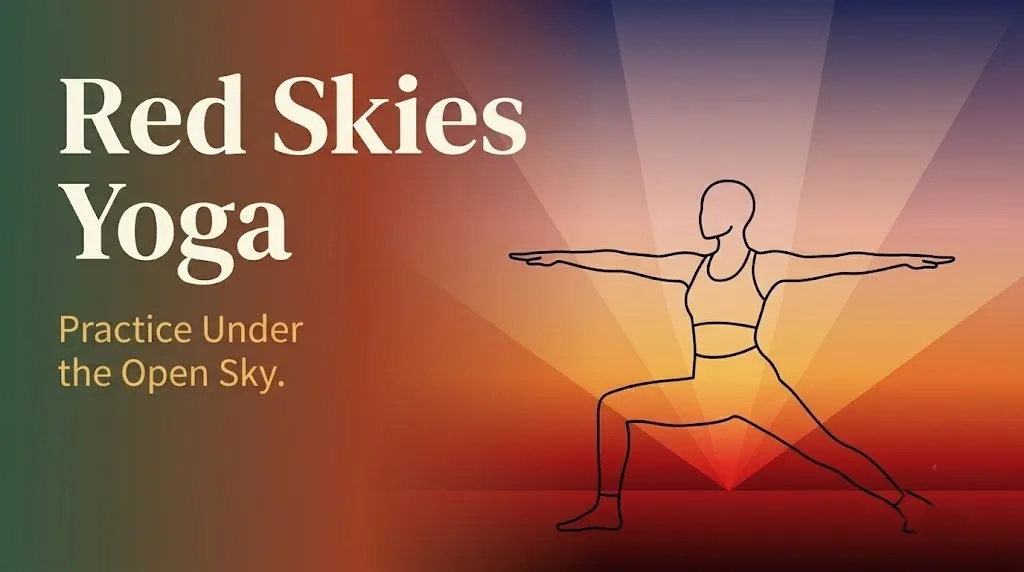
- Virabhadrasana II (Warrior II): Hold 6 to 8 breaths per side. Full hip opening and grounding.
- Trikonasana (Triangle Pose): 5 breaths per side. Lateral spine lengthening.
- Ustrasana (Camel Pose): 4 breaths. Heart opens toward the sky. Thoracic extension.
- Paschimottanasana (Seated Forward Fold): 8 to 10 breaths. Full hamstring and lumbar release.
- Supta Baddha Konasana (Reclined Bound Angle): 5 minutes. Supported hip opening. Use blocks under the knees.
- Savasana (Corpse Pose): 7 to 10 minutes. Face the sky. Let the fading light close your practice.
Modification note: In Ustrasana, practitioners with lower back sensitivity should keep hands on the lower back rather than reaching for the heels. Anyone with a recent lumbar injury should substitute a supported backbend over a bolster instead.
Key Takeaway: Sunrise and sunset yoga sequences work best when they align with your body’s actual physiological state: warming gradually at dawn and releasing deeply at dusk, matching the light rather than fighting it.
Morning Yoga Routine Outdoors: How to Build Your Practice
A morning yoga routine outdoors works when it is repeatable, weather-flexible, and built around the real conditions of outdoor practice rather than an idealized version of what outdoor yoga looks like in photos.
The biggest obstacle to morning outdoor yoga is inconsistency caused by weather, light change, and the absence of a scheduled class to anchor attendance. Solving this requires building structure into your own routine before conditions change. Choose a specific time, a specific location (even a small outdoor space), and a specific sequence length before day one.
Twenty minutes of focused outdoor morning yoga beats sixty minutes of hypothetical studio practice. Start with a time commitment you will actually keep. Three sessions per week of 20 to 30 minutes builds consistency faster than one weekly hour-long session.
Building a repeatable morning outdoor routine:
- Prepare the night before. Set your mat bag, clothing, and water bottle at the door.
- Start indoors if it’s cold. Do your first 5 minutes of warm-up inside, then move out.
- Use the same sequence for the first four weeks. Familiarity removes decision fatigue. A known sequence becomes a ritual.
- Adapt to weather without abandoning the practice. A mat on a covered porch counts. A garage with the door open counts.
- Track your streak. A simple calendar mark after each session reinforces consistency more than motivation does.
Frontiers in Psychology research on habit formation shows that attaching a new behavior to an existing anchor (like morning coffee or waking light) increases the probability of repetition by a factor of two to three. Sunrise light is one of the most reliable natural anchors available.
Sky-Facing Yoga Poses: Opening the Chest and Heart
Sky-facing yoga poses are backbends, heart openers, and supine postures where the practitioner’s face and chest orient upward toward the open sky, creating both a physical and sensory experience of expansion.
This category of poses directly counteracts the forward-flexed posture most people hold for hours at work and during commuting. The thoracic spine (the mid-upper back) gets compressed and rounded in prolonged seated positions. Sky-facing poses reverse that compression by asking the thoracic extensors and posterior shoulder muscles to activate while the chest, anterior deltoids, and pectorals stretch open.
Outdoors, with actual sky overhead rather than a ceiling, these poses add a visual dimension that supports the felt sense of opening. Your gaze naturally extends to the horizon or skyward, encouraging the cervical spine to lengthen rather than compress.
Best sky-facing poses for outdoor practice:
| Pose (Sanskrit) | Pose (English) | Primary Opening | Hold Time |
|---|---|---|---|
| Bhujangasana | Cobra Pose | Anterior chest, lumbar spine | 3 to 5 breaths |
| Ustrasana | Camel Pose | Hip flexors, thoracic spine | 3 to 5 breaths |
| Natarajasana | Dancer Pose | Anterior shoulder, quad, hip flexor | 4 to 6 breaths |
| Urdhva Mukha Svanasana | Upward Facing Dog | Chest, abdominals, wrists | 3 breaths |
| Supta Virasana | Reclined Hero Pose | Anterior thigh, hip flexors | 5 to 10 breaths |
| Savasana | Corpse Pose | Full body release, sky-facing | 5 to 10 minutes |
Modification note: In Natarajasana (Dancer Pose), beginners should practice near a wall or tree for balance support. Outdoors, any stable natural surface serves as the studio wall. Seniors or those with knee sensitivity should substitute Anjaneyasana (Low Lunge) as a comparable hip flexor and chest opener.
Yoga and the Nature Connection: Why It Works
The yoga-nature connection works through multiple overlapping biological mechanisms, not just the pleasant feeling of being outside. Understanding those mechanisms helps you use outdoor practice more deliberately.
The first mechanism is attention restoration. Natural environments engage what environmental psychologists call “involuntary attention,” a soft, effortless focus that allows the directed attention system (used for work, screens, and problem-solving) to recover. Yoga’s internal focus requirements and the natural environment’s restorative attention both work the same recovery pathway from different directions.
The second mechanism involves the autonomic nervous system. Nature exposure activates the parasympathetic branch, reducing heart rate and lowering cortisol. Yoga’s breathwork and slow movement do the same thing. When you practice yoga in a natural setting, both activators are running simultaneously, which research suggests produces a stronger and faster shift into the parasympathetic state than either intervention alone.
According to Harvard T.H. Chan School of Public Health research on nature and health, people who live near green spaces show lower rates of anxiety, depression, and stress-related physical illness. That finding applies regardless of whether those people practice yoga. For yoga practitioners, adding nature exposure to their existing practice deepens an already-evidenced benefit.
The third mechanism is purely sensory and often underestimated. Wind, temperature, texture underfoot, and the changing light of the sky all provide proprioceptive and interoceptive input that keeps your attention anchored to the present moment, which is the actual definition of mindfulness.
Key Takeaway: The nature-yoga connection is not poetic; it’s physiological. Natural environments activate the parasympathetic nervous system and restore attention through mechanisms that compound with yoga’s own documented effects, making outdoor practice more than the sum of its parts.
Grounding Yoga Practice: Connecting to the Earth Beneath You
Grounding yoga practice refers to postures, breathing techniques, and intentional awareness exercises that direct your physical and sensory attention downward, toward the earth, rather than upward or outward.
In physiological terms, grounding yoga emphasizes weight-bearing through the feet, hands, and sits bones, using the pressure of contact with the earth to activate the body’s balance and proprioception systems. Standing poses like Tadasana (Mountain Pose), Virabhadrasana I (Warrior I), and Malasana (Garland Pose) are natural grounding postures because they require the practitioner to find stability through contact with the ground surface beneath them.
There is also a growing body of research on earthing, also called grounding, the practice of direct physical contact between bare skin and the earth’s surface. A 2015 study published in the Journal of Alternative and Complementary Medicine found that earthing (standing or sitting barefoot on natural ground) reduced markers of inflammation and improved sleep quality in participants. Practicing yoga barefoot on grass or natural earth may offer these effects alongside the traditional yoga benefits.
To practice grounding yoga outdoors:
- Remove shoes and socks. Stand on grass, packed earth, or sand.
- Begin in Tadasana. Feel the ground temperature and texture beneath each foot.
- Spread all ten toes and press evenly through the four corners of each foot.
- Close your eyes for 3 breaths. Notice gravity. Notice the give of the earth.
- Move through standing poses with attention continuously returned to foot-to-earth contact.
Modification note: Practitioners with plantar fasciitis or foot sensitivity should use a thin yoga mat even on natural surfaces to protect the plantar fascia while still benefiting from the outdoor environment.
Yoga on Grass or Sand: How to Adapt Your Practice
Yoga on grass or sand requires specific adaptations to standard studio poses because both surfaces shift and compress under body weight in ways that a rigid studio floor does not.
Grass is forgiving but uneven. Even a well-maintained lawn has subtle slopes, root bumps, and patches of moisture that change the surface beneath your mat mid-sequence. Soft soil compresses under the mat during one-legged poses, reducing stability by measurable degrees. Your gluteus medius and ankle stabilizers engage more intensely to compensate, which is useful for strength but taxing if you have weak ankles.
Sand presents a different challenge. Fine sand provides no resistance under a yoga mat; the mat slips or bunches when you shift weight. Wet or compacted sand near a waterline is more stable and can actually support practice well. Dry, loose sand is best avoided under the mat; practicing directly on packed damp sand with bare feet is often more stable.
Adaptations for grass and sand practice:
- Use a wider mat (85 cm or wider) for more contact area and lateral stability.
- Avoid arm balances on soft or uneven surfaces until you know the ground well.
- Widen your stance in standing poses by 10 to 20 percent to lower your center of gravity.
- Skip inversions unless you have a firm, flat surface you’ve tested first.
- Check the surface before every session for stones, debris, wet patches, or animal activity.
Modification note: For seniors or practitioners with knee or hip instability, outdoor poses should stay at hip-width stance with a stable surface confirmed before practice. Balasana (Child’s Pose) on a soft surface can be deeply comfortable with a folded blanket under the knees.
Yoga Breathwork in Fresh Air: Why It Matters
Yoga breathwork practiced in fresh outdoor air produces measurable differences in the quality and depth of breath compared to indoor breathwork, primarily because outdoor air carries higher oxygen concentration and lower carbon dioxide buildup than recirculated indoor air in closed spaces.
Pranayama, the yogic science of breath regulation, includes techniques from slow diaphragmatic breathing to rapid, rhythmic patterns. Each technique interacts with the autonomic nervous system differently. Practiced outdoors, where air quality is typically better and the environment naturally signals relaxation, pranayama techniques tend to produce a faster and deeper shift in physiological state.
Dirga pranayama (Three-Part Breath) is particularly effective as an outdoor opening practice. It fills the lungs in three stages, starting at the belly, expanding to the ribs, and completing at the chest. Outdoors, with no ceiling above your chest and open air surrounding you, the visual and spatial experience of expansion supports the breath’s actual physiological expansion.
According to the National Center for Complementary and Integrative Health (NCCIH), pranayama practice has been shown to reduce heart rate, lower blood pressure, and decrease anxiety symptoms in multiple controlled studies. Practicing these techniques in an outdoor environment with fresh air access amplifies the baseline calming effect through the compounded nature-exposure mechanism.
Modification note: Practitioners with respiratory conditions such as asthma should check air quality before outdoor breathwork sessions, particularly in urban areas on high-pollution days. On days with poor air quality index (AQI) ratings above 100, practicing pranayama indoors near an open window is the safer choice.
Key Takeaway: Outdoor breathwork adds an environmental layer to pranayama’s documented physiological effects. Fresh air, open visual space, and natural sensory input all support deeper breath engagement and faster nervous system calming than the same techniques practiced indoors.
Outdoor Yoga Safety Tips: What to Know Before You Go
Outdoor yoga safety requires managing four main variables that studio yoga ignores entirely: UV exposure, surface stability, temperature, and insect or allergen contact.
UV exposure during outdoor yoga is the most commonly overlooked risk. A 60-minute morning yoga session in direct sunlight can deliver a significant UV dose, particularly at altitudes above 1,000 feet or in reflective environments near water or light-colored concrete. Apply a broad-spectrum SPF 30 or higher sunscreen to exposed skin at least 15 minutes before practice.
Surface stability directly affects injury risk. Sprains of the lateral ankle ligaments are the most common outdoor yoga injury, caused by rolling on uneven ground during single-leg poses. Check your surface before every session. Test it with a foot press before committing to a one-legged balance.
Temperature management matters at both extremes. Cold muscles tear more easily than warm ones. In temperatures below 60 degrees Fahrenheit, extend your warm-up to 12 to 15 minutes before attempting deep stretches. In high heat, practice in the shade, keep water within reach, and reduce hold times to avoid heat-related fatigue.
Essential outdoor yoga safety checklist:
- SPF 30 or higher sunscreen applied before practice in direct sunlight
- Insect repellent applied to skin before ground-level and lying-down poses
- Surface inspection for stones, debris, moisture, or animal activity
- Water bottle within easy reach at all times
- Phone nearby for remote outdoor locations
- Weather check within 30 minutes of starting practice
Outdoor Yoga Modifications: Adapting Poses for Uneven Surfaces
Outdoor yoga modifications adjust the standard form of studio poses to account for surfaces that give, slope, shift, or lack the grip of a yoga studio floor. The goal is maintaining the biomechanical intent of each pose while adapting to the actual conditions underfoot.
Think of outdoor surface modification like adjusting your footing on a trail versus a treadmill. The movement pattern is similar, but your stabilizers engage differently based on what the ground gives back. Your job is to use that variable feedback as useful information rather than fighting it.
Key modifications by pose type:
| Pose Category | Studio Version | Outdoor Modification |
|---|---|---|
| Standing balance poses | Standard foot placement | Widen stance by 15 to 20%, practice near a tree |
| Forward folds | Full hamstring stretch | Bend knees more; softer ground compresses unexpectedly |
| Downward Dog | Palms flat on mat | Use fists if mat slips on grass; or forearm variation |
| Backbends | Mat on flat floor | Place a folded blanket under pelvis on uneven earth |
| Savasana | Flat on smooth floor | Blanket under head and heels; check surface for moisture |
| Arm balances | Flat, firm, non-slip | Avoid on soft or loose surfaces entirely |
Modification note: Seniors practicing outdoors should bring a folding chair or stable stool for balance support in standing sequences. Using a tree trunk as a balance prop is effective, but test it for stability and smooth bark before pressing your full hand weight against it.
How to Build a Consistent Outdoor Yoga Routine
Building a consistent outdoor yoga routine depends on removing friction from the habit, not on finding the perfect weather or the perfect location. Perfection is the enemy of a practice that actually happens.
Start with a specific, non-negotiable commitment: three sessions per week, 20 to 30 minutes each, at the same time and in the same outdoor space. Specificity is what separates intention from habit. “I’ll do yoga outside sometimes when it’s nice” is not a practice. “I practice outdoor yoga Tuesday, Thursday, and Saturday at 7 a.m. on my back deck” is one.
The American College of Sports Medicine (ACSM) recommends establishing exercise habits through environmental design rather than willpower alone. That means: leave your mat rolled out in the outdoor space the night before. Keep your props in a bag by the back door. Dress in your yoga clothes before you make coffee. Remove the decision from the morning.
Progression guide for an outdoor routine:
| Phase | Duration | Frequency | Focus |
|---|---|---|---|
| Week 1 to 2 | 20 to 25 minutes | 2 to 3 times/week | Sun Salutation flow, grounding standing poses |
| Week 3 to 4 | 30 minutes | 3 times/week | Add heart openers and sky-facing poses |
| Week 5 to 6 | 35 to 40 minutes | 3 to 4 times/week | Full sunrise or sunset sequence |
| Week 7 onward | 45 to 60 minutes | 4 to 5 times/week | Seasonal adaptation, breathwork integration |
Weather interruptions are inevitable. Plan your indoor alternative before you need it. A garage, a covered porch, or a room with a window facing the sky keeps the practice alive through rain, extreme cold, or wind.
Frequently Asked Questions About Red Skies Yoga
What is Red Skies Yoga?
Red Skies Yoga is a yoga studio brand offering community-centered yoga classes with a philosophy rooted in natural environments and accessible practice.
The name connects the practice to the natural light of dawn and dusk, emphasizing the relationship between yoga, breath, and the sky.
Whether you’re looking for the studio or the outdoor practice concept, both center the same idea: yoga practiced in relationship with the natural world is more than studio yoga moved outside.
Is outdoor yoga better than practicing inside?
Outdoor yoga is not universally better than indoor yoga, but it adds documented benefits that indoor practice cannot replicate.
Research published in Environmental Health and Preventive Medicine found that natural environment exposure reduces cortisol and improves well-being in ways that indoor settings do not match.
For many practitioners, the combination of yoga’s physical benefits and nature’s restorative effects makes outdoor practice meaningfully more satisfying and effective for stress reduction.
What yoga poses are best for sunrise practice?
Surya Namaskar (Sun Salutation) is the traditional sunrise sequence, designed to warm the full body progressively as morning light rises.
Standing poses like Virabhadrasana I (Warrior I), Anjaneyasana (Low Lunge), and Tadasana (Mountain Pose) also work well because they build heat from the ground up without demanding deep flexibility from cold muscles.
Hold each pose for 4 to 6 breaths in cool morning conditions to allow adequate muscle warming before moving into deeper positions.
How do I stay safe doing yoga outside?
Apply SPF 30 or higher sunscreen before any outdoor session in direct sun, inspect your surface for unevenness and debris, and bring water within easy reach.
Uneven surfaces increase the risk of ankle sprains during single-leg balance poses, so widen your stance and practice near a stable surface for support.
Check the air quality index before outdoor breathwork sessions, particularly if you have respiratory sensitivities, and practice indoors on high-pollution days.
Can beginners do outdoor yoga without a studio?
Yes, beginners can practice outdoor yoga independently using a structured sequence and safe surface selection.
Starting with a 20 to 25 minute Hatha or Sun Salutation sequence on a flat, stable surface gives beginners a manageable foundation without requiring instructor guidance for every session.
Beginners should choose level ground, avoid arm balances and inversions until they have a consistent practice, and use a wider mat for additional stability on natural surfaces.
Take Your Practice Outside
Red skies yoga is a reminder that a mat is just a rectangle of rubber. The practice itself belongs to any space wide enough to hold your breath and your movement.
Start this week with one outdoor session. Twenty minutes. A flat surface. Your usual sequence. Notice what changes when the sky is your ceiling.
Build from there, three times a week, same time, same spot. The consistency will come faster than you expect when the practice is tied to something as reliable as the morning light.