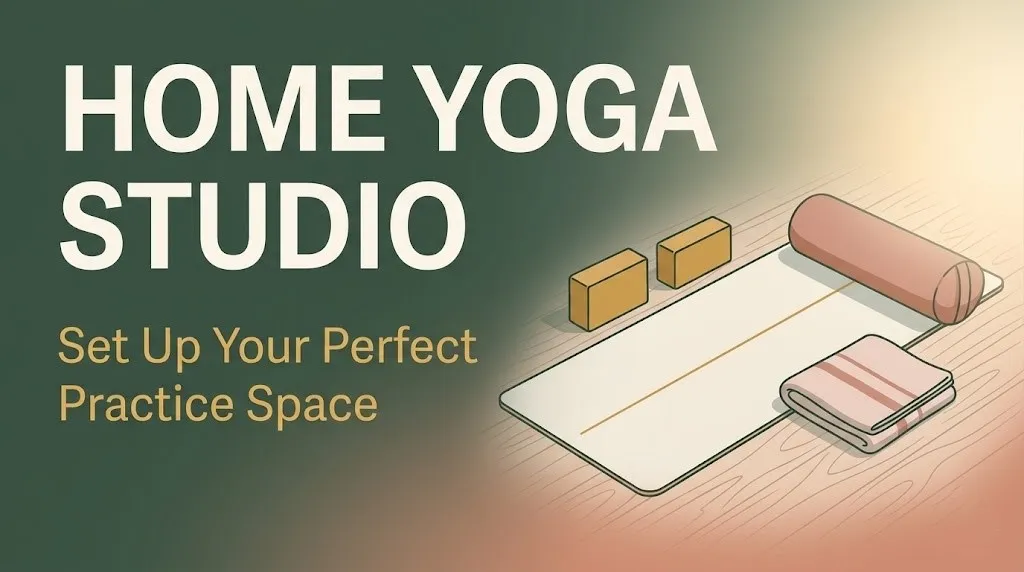
Home Yoga Studio Setup: What You Really Need in 2026
A well-designed home yoga studio does not require a spare room, a renovation budget, or a wall of expensive equipment: it requires enough clear floor space, the right surface underfoot, and a small selection of props matched to your practice style. Whether you have a corner of a bedroom or an entire basement to work with, this guide will tell you exactly what matters and what is marketing noise.
The case for a dedicated practice space is backed by behavioral science. Research in habit formation consistently shows that environment-specific cues increase the likelihood of behavior repetition. A study published in the Journal of Alternative and Complementary Medicine found that yoga practitioners who reported having a consistent home practice space maintained their practice at significantly higher rates over 12 months than those without one.
This article covers space requirements, flooring choices, essential equipment, lighting, temperature, style-specific setup needs, technology, budget planning, and how to make your home studio work for beginners, seniors, and people managing injuries or physical limitations.
Home Yoga Studio: What It Is and Why It Works
A home yoga studio is any dedicated, cleared space in your home where you practice yoga consistently, equipped with the props and environment features your specific practice requires. It does not need to be a separate room. A corner of a living room, a cleared garage bay, or a basement area all qualify when properly prepared.
The key word is “dedicated.” Clearing the coffee table every time you want to practice is the single most common reason home practices fade. When the space requires setup before every session, that friction compounds over weeks and months until the practice stops altogether. A permanently ready space removes that friction entirely.
Think of it like a kitchen that is always stocked. You cook more when the ingredients are already there. The same principle applies to your yoga practice: when the mat is down and the props are within reach, you practice more often, more consistently, and with less resistance.
What distinguishes a home yoga studio from a generic workout space:
- The floor surface is appropriate for barefoot practice and grip-dependent poses
- Props are visible and accessible, not stored in a closet across the house
- The space has enough clearance to extend arms and legs in all directions without hitting furniture
- Lighting can be adjusted to suit both energizing morning flows and quiet evening Yin sessions
- The temperature can be managed to support the style of yoga you practice
How Much Space Do You Need for a Home Yoga Studio?
The minimum usable space for a solo yoga practice is approximately 6 feet by 4 feet, which accommodates a standard yoga mat with a small buffer on each side. Most yoga practitioners find that 8 feet by 6 feet is more comfortable, providing room for wide-legged poses and arm extensions without restriction.
That said, the space calculation depends on your practice style. A Vinyasa practitioner who moves continuously through Sun Salutations needs more floor room than a Yin practitioner who holds long-duration floor poses with minimal transitions. An Iyengar practitioner who uses wall ropes and chairs needs proximity to a wall that can support equipment. Know your practice first, then measure your space.
Common home space options and their yoga suitability:
| Space Option | Typical Size | Yoga Suitability | Key Consideration |
|---|---|---|---|
| Bedroom corner | 6 x 6 ft cleared | Solo Hatha, Yin, Restorative | Furniture rearrangement may be needed |
| Living room | 8 x 10 ft or more | All styles | Clear furniture before every session unless permanent |
| Spare bedroom | 10 x 10 ft or more | Ideal for all styles | Best overall option |
| Garage (one bay) | 10 x 20 ft | All styles including hot yoga | Temperature management required |
| Basement | Variable | Excellent for insulation and sound | Check ceiling height for inversions |
| Outdoor deck or patio | Variable | Seasonal; morning and evening practice | Surface must be level and clean |
Ceiling height matters for anyone who practices inversions. Sirsasana (Headstand) requires a ceiling height of at least 9 feet for most adults, accounting for extended legs. Check yours before investing in an inversion-heavy practice.
Best Flooring for a Home Yoga Studio
The best flooring for a home yoga studio is a surface that provides grip, cushioning, and warmth underfoot without creating instability during balance poses. Cork flooring, bamboo flooring, and rubber flooring tiles are the three most commonly recommended options among yoga teachers and studio designers.
Each material has specific advantages and trade-offs:
| Flooring Type | Grip | Cushioning | Durability | Cost Range | Best For |
|---|---|---|---|---|---|
| Cork | Excellent | Moderate | Good | Moderate | All styles; naturally antimicrobial |
| Bamboo | Good | Low | Excellent | Moderate to high | Vinyasa, Iyengar |
| Hardwood | Moderate | Low | Excellent | High | Iyengar, traditional Hatha |
| Rubber tiles | Excellent | Good | Excellent | Moderate | Hot yoga, power yoga |
| Foam tiles | Good | High | Low to moderate | Low | Beginners, seniors, joint pain |
| Vinyl / LVP | Moderate | Low | High | Moderate | Budget-friendly base under mat |
| Carpet | Poor | High | Variable | Low | Not recommended for flow yoga |
Carpet is the most commonly asked-about surface and the most problematic for yoga practice. It catches mat edges during transitions, creates unstable footing in standing poses, and makes balance poses significantly harder. If carpet is your only option, a thick, grippy yoga mat (4mm or more) placed on top provides the most workable solution, but it is genuinely less ideal than any hard floor.
For practitioners setting up on a hard floor like concrete (common in garages and basements), rubber interlocking tiles over the concrete add both cushioning and thermal comfort underfoot.
Key Takeaway: The two decisions that most affect your home yoga experience are floor surface and the permanent accessibility of your mat: get both right and everything else is refinement.
Home Yoga Studio Essential Equipment
A home yoga studio’s essential equipment list is shorter than most beginners expect. The three items that every practitioner genuinely needs are a yoga mat, two yoga blocks, and a yoga strap. Everything beyond those three is useful but not immediately necessary.
The yoga mat is the most personal equipment decision you will make. Thickness, material, and grip texture all affect how different poses feel and how safe transitions are. A mat that is too thin on a hard floor creates joint discomfort during kneeling poses. A mat that is too thick reduces the proprioceptive feedback needed for balance poses.
Yoga mat selection guide by practice type:
| Practice Style | Recommended Thickness | Recommended Material | Key Feature |
|---|---|---|---|
| Vinyasa, Ashtanga | 3mm to 4mm | Natural rubber | Firm grip; floor feedback |
| Hatha, general | 4mm to 5mm | Natural rubber or PVC | Balance of cushion and stability |
| Yin, Restorative | 5mm to 6mm | PVC or TPE | Extra comfort for long holds |
| Hot yoga | 4mm with towel | Natural rubber | Moisture-wicking surface |
| Seniors or joint pain | 6mm to 8mm | PVC or TPE | Maximum cushioning |
| Iyengar | 4mm | Non-slip rubber | Stable base for precision alignment |
Yoga blocks extend your reach in standing and seated poses, bringing the floor closer to your hands when flexibility is limited. They are also used to support the pelvis in seated poses, prop open the chest in backbends, and provide a stable surface under the sacrum in restorative poses. Two blocks per practitioner is the standard recommendation.
A yoga strap allows you to hold poses without collapsing the spine to reach your feet. In Supta Padangusthasana (Reclined Hand-to-Big-Toe Pose), a strap looped around the foot extends the effective reach of your arms by 18 to 24 inches, making the pose genuinely accessible rather than a forced approximation.
Home Yoga Props Every Practitioner Needs
Beyond the mat, blocks, and strap, a well-stocked home yoga studio includes a bolster, at least one folded blanket, and a wall section kept clear for supported poses. These three additions open up the full range of Restorative and Yin practice, make seated meditation significantly more comfortable, and support safe practice for seniors and people with injuries.
A yoga bolster is a firm, cylindrical or rectangular cushion used to support the body in passive poses. It is the single most underrated prop in home yoga practice. In Supta Baddha Konasana (Reclined Bound Angle Pose), a bolster placed along the spine allows the chest to open passively while the hips release. In seated meditation, it elevates the hips above the knees, which takes significant lumbar strain out of long sitting positions.
Yoga blankets serve multiple functions:
- Folded under the sit bones to level the pelvis in seated poses
- Rolled under the neck in Savasana (Corpse Pose) for cervical support
- Draped over the body in Restorative poses for warmth during passive holds
- Placed under knees in kneeling poses to cushion the kneecap
- Used as a bolster substitute when a dedicated bolster is not yet in the budget
The wall is the most overlooked and most free prop in any home yoga studio. Adho Mukha Vrksasana (Handstand) practice, Viparita Karani (Legs Up the Wall), and supported standing poses all use the wall as a functional tool. Keeping one full wall section clear of furniture and art is a setup decision that costs nothing and adds significant practice value.
Modification: People with wrist injuries can use yoga blocks turned on their short edge to reduce wrist extension in any hands-on-floor pose. This simple change makes most weight-bearing poses accessible without aggravating existing wrist conditions.
Home Yoga Studio Lighting and Atmosphere
Lighting in a home yoga studio significantly affects both the quality of practice and the body’s physiological readiness for different types of yoga. Natural light is the best option for morning energizing flows; warm, low-intensity artificial light is better for evening Yin or Restorative sessions.
The American College of Sports Medicine notes that light exposure influences the body’s circadian rhythm, which affects alertness, coordination, and recovery rates. Morning yoga in a naturally lit space takes advantage of the body’s peak cortisol window, when physical alertness is highest. Evening practice in a dimmer environment supports the melatonin rise that aids sleep, provided harsh blue-spectrum lighting is avoided.
Practical lighting guidelines for a home yoga studio:
- Position your mat so natural light comes from the side, not directly in your eyes during forward-facing poses
- Install a dimmer switch if possible: one lighting setup rarely serves both energizing and restorative practice needs
- Avoid overhead fluorescent lighting, which creates eye strain during supine poses when you are looking directly upward
- Warm-toned LED bulbs (2700K to 3000K color temperature) approximate the light quality of candle-lit yoga spaces without the fire risk
- If the space doubles as a room for other activities, a floor lamp designated specifically for yoga sessions creates a visual cue that shifts the environment mentally before practice begins
Mirrors are frequently mentioned in home yoga studio guides. They are genuinely useful for checking alignment in standing and balance poses but are not necessary for most practice styles. Yin and Restorative yoga benefit minimally from mirrors. Iyengar and Vinyasa practitioners gain more value from them.
Key Takeaway: Adjustable warm lighting is one of the highest-impact, lowest-cost changes you can make to a home yoga space because it makes the same room feel appropriate for both an energizing morning practice and a quiet evening restorative session.
Home Yoga Studio Temperature and Ventilation
Room temperature for a home yoga studio should ideally be between 68 and 75 degrees Fahrenheit for standard yoga practices, and between 95 and 105 degrees Fahrenheit for hot yoga formats practiced at home. These ranges are not arbitrary: they correspond to the body’s optimal working temperature for the muscular and cardiovascular demands of each practice type.
For standard (unheated) yoga, a room that is too cold creates muscle resistance that increases the risk of straining cold tissues before they have warmed through movement. A room that is too warm creates dehydration risk and distracts from breath awareness. The standard 68 to 75 degree range allows the body to warm itself through practice at a natural pace.
Hot yoga at home, typically practiced in a room heated to 95 to 105 degrees Fahrenheit, requires specific ventilation planning. Sealed rooms at these temperatures accumulate carbon dioxide and moisture rapidly:
- Use an infrared panel heater or ceramic space heater rather than a steam sauna approach for more controllable temperature
- Keep a window slightly open or a ventilation fan running to maintain oxygen levels
- Use a hygrometer to monitor humidity; above 60% relative humidity in a hot room creates respiratory discomfort
- A yoga towel over the mat is not optional in hot practice: sweat makes any mat surface dangerously slippery without it
- People with cardiovascular conditions or uncontrolled high blood pressure should discuss hot yoga home practice with a cardiologist before attempting it, given the combined cardiovascular load of heat and vigorous movement
For standard home practice in a cold climate, a small space heater that can be turned off before the practice begins is often sufficient. Practicing in a space that is too cold at the start, then overheating mid-session, is the most common temperature management error in home yoga.
Style-Specific Home Yoga Studio Setup
Different yoga styles make genuinely different demands on a home studio space, and setting up with your specific practice in mind produces a far more functional result than following generic advice. What a Vinyasa practitioner needs and what a Yin or Iyengar practitioner needs are not the same thing.
Style-specific setup guide:
| Yoga Style | Floor Space Needed | Key Props | Special Equipment | Room Feature Priority |
|---|---|---|---|---|
| Vinyasa / Power | 8 x 6 ft minimum | Mat, 2 blocks, strap | Possibly mirror | Good ventilation, natural light |
| Hatha | 6 x 4 ft minimum | Mat, 2 blocks, strap, blanket | None essential | Comfortable temperature |
| Yin | 6 x 4 ft minimum | Mat, bolster, 2 blocks, 2 blankets | Sandbag optional | Warm, quiet, dim lighting |
| Restorative | 6 x 5 ft minimum | Bolster, 3 blankets, 2 blocks, eye pillow | Chair optional | Very warm, very quiet |
| Iyengar | 8 x 6 ft minimum | Mat, 3 blocks, 2 straps, bolster, blanket | Wall ropes optional | Proximity to clear wall |
| Ashtanga | 8 x 6 ft minimum | Mat | Mirror useful | Good ventilation |
| Hot yoga (Bikram/26&2) | 8 x 6 ft minimum | Mat, towel, extra water | Infrared heater | Heating and ventilation system |
| Kundalini | 6 x 4 ft minimum | Mat, blanket, cushion | Sheepskin optional | Quiet, private space |
Yin yoga practitioners should pay particular attention to bolster quality. Long-duration passive holds (3 to 5 minutes per pose) require a firm, high-density bolster that does not compress flat under body weight. A soft decorative cushion used as a bolster substitute creates misaligned body positions that accumulate into discomfort over a 60-minute session.
Home Yoga Studio Technology and Online Classes
Technology setup for a home yoga studio should prioritize screen visibility from your mat position, audio clarity, and the ability to follow the class without craning your neck or repositioning mid-pose. These are practical ergonomic concerns, not aesthetic ones.
The most common technology mistake in home yoga studios is placing the screen too high. A screen mounted at standing eye level requires you to look up during floor poses, compressing the cervical spine and distracting from the practice. The screen should be positioned so you can see it clearly while in Balasana (Child’s Pose) or Adho Mukha Svanasana (Downward Facing Dog) without lifting your head unnaturally.
Recommended technology setup for home yoga:
- A tablet or laptop on a floor stand is the most flexible option for positioning
- A smart TV works well for larger spaces but must be mounted lower than standard TV height (roughly 24 to 30 inches from the floor, centered on the mat position)
- A Bluetooth speaker improves audio significantly over built-in device speakers and allows you to position sound independently of the screen
- A ring light or softbox light positioned behind the screen (not behind you) reduces eye strain when following a dark-background class in a dim room
- For practitioners who teach or record their own sequences at home, a simple phone mount on a tripod provides adequate video quality for personal use
Modification: Practitioners with neck issues should use a tablet floor stand positioned at hip height to avoid any cervical strain during class viewing. This is a small adjustment that eliminates one of the most common home practice discomforts.
Key Takeaway: Screen height is the most overlooked technology decision in a home yoga studio: too high and your neck pays for it every class, too small and you spend the session squinting instead of practicing.
Home Yoga Studio on a Budget
A fully functional home yoga studio can be assembled for under $150, and the most expensive option is not always the most effective one for your practice needs. Knowing which items to prioritize with budget dollars makes the difference between a functional practice space and a cluttered collection of equipment you rarely use.
Budget breakdown by priority:
| Item | Budget Option | Mid-Range | Premium | Priority |
|---|---|---|---|---|
| Yoga mat | $25 to $40 (PVC, 4mm) | $60 to $90 (TPE or natural rubber) | $90 to $150 (Manduka PRO, Liforme) | First purchase |
| Yoga blocks (set of 2) | $15 to $20 (foam) | $25 to $35 (cork) | $40 to $60 (wood) | First purchase |
| Yoga strap | $8 to $12 | $15 to $20 | $25 to $35 | First purchase |
| Yoga bolster | $30 to $45 (standard) | $50 to $75 (high-density) | $80 to $120 (organic) | Second purchase |
| Yoga blanket | $15 to $25 | $30 to $50 | $60 to $100 (wool) | Second purchase |
| Flooring tiles | $30 to $50 (foam tiles) | $60 to $100 (rubber tiles) | $200 or more (cork) | If needed |
The first purchase tier (mat, two blocks, strap) provides everything needed for Hatha, Vinyasa, and beginner practice. Total cost at budget level: approximately $48 to $72.
The second purchase tier (bolster, blanket) opens up Yin and Restorative practice completely. Total cost at budget level: approximately $45 to $70.
A complete functional studio at budget pricing therefore costs $93 to $142. That is less than four studio classes in most cities.
Home Yoga Studio for Beginners
A home yoga studio for beginners requires the most forgiving version of each setup decision: a thicker mat for joint cushioning, extra blocks to bring the floor closer, and a space that feels safe enough to fall without embarrassment. Getting these foundational elements right makes the difference between a practice that grows and one that stalls.
According to the National Center for Complementary and Integrative Health, yoga beginners who practiced in a consistent, dedicated home environment reported higher rates of practice continuity at 6 months compared to those who practiced in varied locations around their home. Environment consistency creates the habit anchor that sustains the practice.
For beginners specifically, these setup priorities apply:
- Choose a 5mm to 6mm mat for extra cushioning while your body learns to manage body weight in poses like Phalakasana (Plank Pose) and Adho Mukha Svanasana (Downward Facing Dog), where wrist and knee pressure is new
- Place both foam blocks within reach before practice starts so you do not have to leave a pose to find them
- Keep the floor around your mat clear in every direction: beginners shift and step more widely than experienced practitioners
- Use a chair with a stable back positioned within arm’s reach for balance support in standing poses
- Start sessions with a brief seated breath practice to establish focus before movement begins
The single biggest beginner mistake in home yoga setup is treating it as temporary. A mat rolled out permanently in one corner, with blocks placed visibly nearby, is more likely to be used daily than a mat stored in a closet that requires a deliberate retrieval before every practice.
Home Yoga Studio for Seniors and Older Adults
A home yoga studio for seniors should prioritize floor-access ease, fall prevention, and prop abundance over aesthetic considerations or practice style ambition. The physical demands of getting up and down from the floor multiple times per session are underestimated by most setup guides and completely absent from current search results.
Research published in Complementary Therapies in Medicine found that older adults who practiced yoga in a home setting with appropriate props, including chair support and bolsters, showed greater improvements in balance confidence and self-reported mobility than those who practiced in studio settings where equipment was shared and less immediately accessible.
Specific setup considerations for seniors:
- Place the yoga mat adjacent to a wall or near a stable piece of furniture that can serve as support when standing from the floor
- A chair should always be within one arm’s reach during standing balance poses
- Use a 6mm to 8mm mat for maximum joint cushioning during kneeling and supine poses
- A bolster or two folded blankets on the mat before the session begins allows the practitioner to move between floor and supported positions without repeated prop retrieval
- Lighting should be bright enough to see clearly but not glare-producing, as older eyes take longer to adjust from bright to dim environments
- Avoid placing the mat on carpet if possible; if carpet is the only option, a non-slip rug pad under the yoga mat reduces the risk of the mat shifting during standing poses
Safety note: Seniors with osteoporosis should avoid deep forward folds that round the thoracic spine under load, and any pose requiring rapid transitions between floor and standing. A physical therapist familiar with yoga can identify specific pose restrictions based on bone density assessment results.
Key Takeaway: A senior-specific home yoga setup is not about buying the most expensive equipment; it is about positioning what you already have so that every transition in the practice is safe, supported, and unhurried.
Home Yoga Studio for People with Injuries
A home yoga studio for people managing injuries is one of the most valid reasons to invest in a dedicated home space: it allows you to practice at your own pace, modify freely without self-consciousness, and have exactly the right props positioned exactly where you need them without asking for assistance.
The most common yoga-related injury areas are the wrists, shoulders, knees, and lumbar spine. Each requires specific equipment decisions:
| Injury Area | Problematic Poses | Home Studio Solution |
|---|---|---|
| Wrist pain | Plank, Downward Dog, arm balances | Wedge prop or folded mat under heels of hands; forearm alternatives |
| Shoulder impingement | Chaturanga, overhead poses | Skip Chaturanga entirely; use Cobra instead of Upward Dog |
| Knee pain | Deep lunges, kneeling poses | Blanket under kneecap; reduce bend depth; bolster behind knee |
| Lumbar disc issues | Deep forward folds, twists | Blocks under hands in forward folds; supported supine twists only |
| Hip replacement | Pigeon Pose, deep hip flexion | Reclined Figure Four (Supta Kapotasana) as substitute |
| Neck issues | Headstand, Shoulderstand, Plow | Eliminate all weight-bearing inversions; use Legs Up the Wall |
A study published in the International Journal of Yoga found that practitioners who used props consistently during yoga sessions reported fewer acute injuries and lower joint pain scores over a 16-week study period than those who practiced without props. This finding directly supports the prop-abundance approach of a well-equipped home studio.
People managing active injuries should discuss specific pose restrictions with a physical therapist who understands yoga biomechanics before establishing a home practice. This is particularly relevant for post-surgical cases where certain joint angles are temporarily contraindicated.
Soundproofing and Privacy for a Home Yoga Studio
A quiet, private home yoga space supports both the quality of practice and the willingness to use it consistently. Noise interruptions during breath-focused practices like Yin and Restorative yoga disrupt the parasympathetic nervous system activation that makes those practices therapeutically effective. Privacy concerns prevent many practitioners from using their space for breathwork and meditation.
Practical soundproofing and privacy solutions:
- Thick rugs or interlocking foam tiles reduce impact sound transmission to rooms below, relevant for apartment dwellers doing dynamic practices
- Acoustic panels (fabric-wrapped sound-absorbing boards) reduce echo and ambient noise in a dedicated room; they also improve audio quality if you follow online classes
- A white noise machine or a simple fan creates enough ambient sound to mask household noise during quiet practices without being disruptive itself
- A room divider or curtain can visually and acoustically separate a yoga corner in a shared space, creating a sense of enclosure that supports inward focus
- A door sign or simple agreed household signal communicates that the space is in use, reducing unexpected interruptions during practice
Budget note: Professional soundproofing is rarely necessary or cost-effective for a home yoga studio. The practical goal is reducing distracting noise, not achieving recording-studio silence. A thick rug, a white noise machine at $30 to $50, and a door you can close achieves that goal for most practitioners.
Benefits of a Dedicated Home Yoga Practice Space
Having a dedicated home yoga practice space produces measurable improvements in practice frequency, duration, and long-term consistency compared to practicing in shared or variable spaces. This is not a speculative claim; it follows directly from established behavioral science on habit formation and environmental cues.
Research from the Harvard T.H. Chan School of Public Health on behavioral habit formation found that environment-specific cues reduce the cognitive effort required to initiate a behavior, making it more likely to occur regularly. Applied to yoga, a visible, ready-to-use practice space functions as a physical trigger that lowers the activation threshold for beginning practice.
The physical and mental health benefits of consistent yoga practice are among the best-documented in integrative medicine:
- The National Center for Complementary and Integrative Health has documented yoga’s consistent efficacy for reducing low back pain, improving sleep quality, lowering perceived stress, and supporting mental health outcomes across more than 50 randomized controlled trials
- Regular yoga practice reduces resting cortisol levels and activates the parasympathetic nervous system, producing measurable physiological calm
- Balance, flexibility, and muscular endurance all improve with consistent twice-weekly practice over 8 to 12 weeks, documented across multiple populations in the International Journal of Yoga
The home studio amplifies these benefits by making practice possible at times when travel to a studio is impractical: early mornings, late evenings, during illness recovery, in inclement weather, and during the time-compressed seasons of family life that make studio attendance difficult to sustain.
How to Build a Consistent Home Yoga Practice
Building a consistent home yoga practice requires two things: a space that is ready before your motivation arrives, and a schedule that treats sessions as fixed commitments rather than optional additions to an already full day.
Motivation is an unreliable practice driver. It peaks early and fades within weeks without structural support. The behavioral science on long-term habit formation is clear on this point: people who attach a new behavior to a specific time, place, and preceding anchor activity sustain it far longer than those who rely on motivation or inspiration alone.
Practical strategies for consistency in a home yoga practice:
- Schedule your sessions as calendar appointments with a specific start time
- Keep your mat unrolled and visible on the floor, not rolled up in a corner or stored in a bag
- Start with sessions that are shorter than you think you need: 15 minutes of daily practice sustains itself better than 60-minute sessions attempted three times per week
- Use the same opening sequence every session as an anchor: three rounds of Surya Namaskar (Sun Salutation) create a familiar starting ritual that signals the nervous system to shift into practice mode
- Track your practice with a simple calendar mark, not an elaborate app: visible streaks motivate continued adherence better than complex tracking systems
- Accept that some sessions will be short, unfocused, or physically uninspired. Showing up on those days is more important than the quality of any single session.
According to the American College of Sports Medicine, adults who engage in regular moderate physical activity across a six-month minimum show substantially greater long-term health outcomes than those who practice intensively for shorter periods. Consistency is the variable that matters most. Your home studio exists to make consistency possible.
Frequently Asked Questions About Home Yoga Studios
How much space do I need for a home yoga studio?
The minimum space for a solo home yoga practice is approximately 6 feet by 4 feet, enough for a standard mat with a small buffer on each side.
Most practitioners find 8 feet by 6 feet more comfortable for poses that require wide leg or arm extensions.
Style matters: a Yin practitioner needs less floor space than a Vinyasa practitioner who moves continuously through transitions.
What flooring is best for a home yoga studio?
Cork, bamboo, and rubber tiles are the three most recommended flooring options for a home yoga studio.
Cork provides excellent natural grip, moderate cushioning, and antimicrobial properties; rubber tiles offer superior grip and durability for vigorous or hot yoga formats.
Carpet is not recommended for flow-based yoga because it catches mat edges and creates unstable footing during standing and balance poses.
What equipment do I actually need to start a home yoga studio?
The three essential items for a home yoga studio are a yoga mat, two yoga blocks, and a yoga strap.
These three items support foundational poses in every yoga style and cost between $48 and $72 at budget pricing.
A bolster and blanket are the logical second-tier additions that open up Yin and Restorative practice once the basics are established.
Can I do hot yoga at home safely?
Hot yoga at home is possible with proper heating equipment, ventilation management, and hydration, but it carries higher risk than unheated practice and requires specific preparation.
Use an infrared or ceramic panel heater, keep a window slightly open for oxygen exchange, monitor humidity with a hygrometer, and use a yoga towel over your mat to prevent slipping.
People with cardiovascular conditions or uncontrolled blood pressure should discuss hot yoga home practice with a cardiologist before attempting it, given the compounded physiological load.
Is a dedicated home yoga space worth the investment?
A dedicated home yoga space is worth the investment because consistent access to a ready practice space measurably increases how often and how long people practice.
Research on behavioral habit formation shows that environment-specific cues lower the effort required to begin a practice, which directly increases frequency.
At budget pricing, a fully functional home yoga studio costs less than four studio drop-in classes, with no ongoing class fees required.
Set It Up Once. Practice for Years.
The most important decision in building a home yoga studio is making it permanent, not provisional. Roll the mat out and leave it there. Put the blocks where you can see them. Clear the wall and keep it clear.
Start this weekend with the three essentials: mat, two blocks, strap. Practice three times next week, even for 15 minutes each session. Notice how different it feels when the space is already ready.
The space does not have to be perfect to be functional. It has to be present.