Flourish Yoga: 2026 Complete Guide to Practice & Health
Flourish yoga is a practice-centered approach to yoga that prioritizes sustainable well-being over performance, flexibility goals, or keeping up with an Instagram pose. Whether you are brand new to the mat or returning after a long break, this guide covers exactly what you need to start, build, and maintain a practice that genuinely supports your body and mind.
Research from the National Center for Complementary and Integrative Health (NCCIH) confirms that yoga is one of the most widely used complementary health practices in the United States, with over 36 million Americans practicing regularly as of recent national survey data. That number continues to grow in 2026, and for good reason: the evidence base behind yoga’s health benefits has grown stronger every year for over two decades.
Here you will find everything from a clear explanation of what flourish yoga actually means, to the best beginner poses, the right props, safety guidance for seniors, and a breakdown of which yoga styles work best for specific health goals. You’ll also get research-backed context so you can trust what you are doing and why it works.
What Is Flourish Yoga?
Flourish yoga refers to an approach to yoga practice built around the idea of thriving, not just maintaining. It is not a single branded yoga style like Ashtanga or Bikram. Instead, it describes a philosophy of practice: choose poses, sequences, and styles that help your whole body and nervous system actually function better over time.
The word “flourish” carries specific meaning here. It points away from ego-driven practice, where the goal is a perfect handstand or maximum flexibility, and toward a practice that meets you where you are. Some days that means a vigorous Vinyasa sequence. Other days it means ten minutes of Restorative yoga on the floor with a bolster under your knees.
Flourish yoga also connects to the growing body of research showing that yoga’s benefits extend well beyond flexibility. A 2021 analysis published in the International Journal of Yoga found that regular yoga practice produced measurable improvements in cardiovascular health, stress hormone levels, and sleep quality across diverse adult populations. That is what a flourishing practice looks like in clinical terms.
If you have searched for Flourish Yoga Tucson, you may also be looking for information on a specific studio by that name in Arizona. This guide addresses the broader practice approach and is relevant whether you practice at home, in a studio, or both.
Key Benefits of a Flourish Yoga Approach:
- Prioritizes long-term health outcomes over short-term flexibility goals
- Adapts to your current fitness level, age, and health status
- Combines physical poses (asanas), breathing techniques (pranayama), and rest
- Accessible with minimal equipment at home or in a studio setting
What Is Flourish Yoga as a Practice Philosophy?
A flourish yoga philosophy treats your practice as a living system that grows with you, not a fixed performance standard you either meet or fail. This distinguishes it from more regimented systems like Ashtanga yoga, which follows a set sequence of poses practiced in the same order every session, or Bikram yoga (also called 26 and 2), which uses a fixed 26-pose sequence in a heated room.
The philosophy draws on classical Hatha yoga principles, where the relationship between effort (sthira) and ease (sukha) is central. You are always looking for the intersection of steadiness and comfort in a pose, not the maximum possible range of motion.
This approach works especially well for beginners, people managing chronic conditions, and older adults, because it does not require a predetermined fitness baseline. You start with what you have. You build from there.
Practice Philosophy Comparison:
| Approach | Goal | Flexibility Required | Best For |
|---|---|---|---|
| Flourish Yoga Philosophy | Sustainable well-being | None | Beginners, seniors, health conditions |
| Ashtanga | Mastery of fixed sequence | Moderate to high | Experienced practitioners |
| Bikram / 26 and 2 | Standardized heat-based practice | Low to moderate | Those who prefer structure |
| Yin Yoga | Deep connective tissue release | None | All levels, stress recovery |
| Restorative Yoga | Passive nervous system reset | None | Recovery, illness, high stress |
Pose Tip:
- You do not need to be flexible to begin. Flexibility is a result of practice, not a prerequisite for it.
- Start each session with 3 to 5 minutes of quiet breathing before any physical movement.
- Choose one simple goal per session: balance, breath, or body awareness.
Yoga for Beginners at Home
Starting a yoga practice at home is entirely practical, and most beginners actually progress faster at home because they can pause, repeat, and adjust without social pressure. All you need to begin is a non-slip mat and enough floor space to extend your arms and legs fully.
The American College of Sports Medicine (ACSM) recommends that adults engage in flexibility and mind-body activities at least two to three days per week. A 20 to 30 minute home yoga session meets that recommendation without requiring a gym membership or expensive classes.
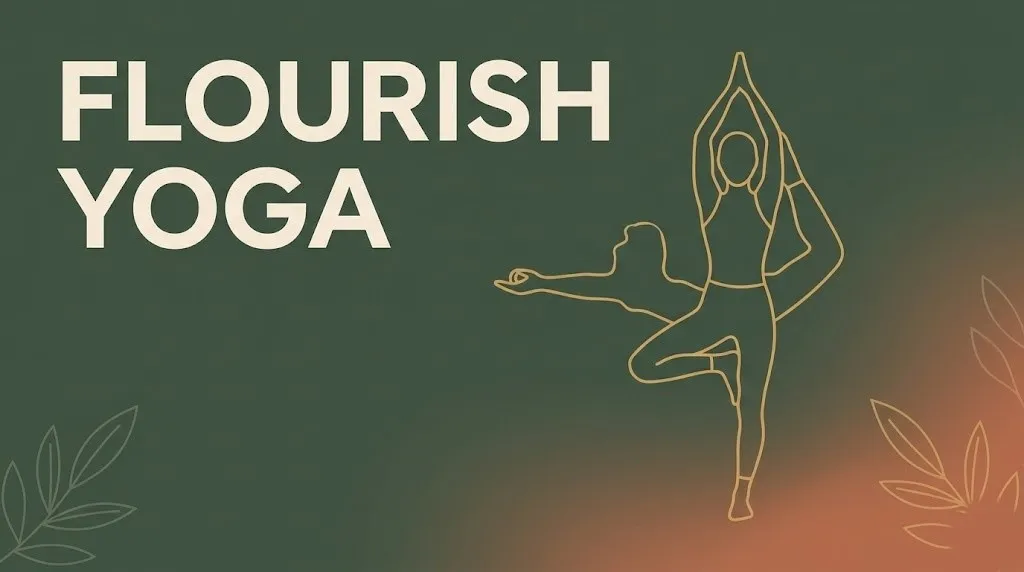
For beginners at home, structure matters. A basic session should follow this order:
A Beginner Home Yoga Session Structure:
- Start seated or lying down for 3 to 5 minutes of slow, intentional breathing
- Move through 2 to 3 gentle warm-up poses like Marjaryasana-Bitilasana (Cat-Cow Pose)
- Practice 4 to 6 standing or seated poses with full attention to alignment
- Hold each pose for 3 to 5 breath cycles, roughly 20 to 30 seconds
- Close with Savasana (Corpse Pose) for at least 3 to 5 minutes of complete rest
Common beginner mistakes at home include rushing through poses to feel like they are “getting a workout,” skipping the final rest pose, and practicing on a surface that is too soft or slippery. A firm floor with a standard 4mm to 6mm yoga mat is the ideal setup.
Modification for Limited Space: If you do not have room for a full mat, chair yoga sequences are equally effective and require only a dining chair. More on that in the seniors section below.
Best Yoga Poses for Beginners
The best yoga poses for beginners are those that teach fundamental alignment patterns, build body awareness, and are safe for a wide range of physical starting points. These eight poses form the core of most beginner sequences worldwide.
Tadasana (Mountain Pose) is the foundation of all standing work. It looks simple but teaches you how your body stacks: feet grounded, knees soft, pelvis neutral, spine tall, shoulders relaxed. Every other standing pose begins and returns to this alignment.
Balasana (Child’s Pose) is the universal rest and reset position. It gently stretches the hip extensors, thoracic spine, and latissimus dorsi muscles while calming the nervous system. People with significant knee discomfort should place a folded blanket between their thighs and calves.
Adho Mukha Svanasana (Downward-Facing Dog) strengthens the anterior deltoids, serratus anterior, and hamstrings simultaneously. For beginners with tight hamstrings, bend the knees generously. People with wrist pain should practice on their fists or forearms (Dolphin Pose) instead.
Beginner Poses at a Glance:
| Pose (Sanskrit) | Pose (English) | Primary Muscles | Beginner Modification |
|---|---|---|---|
| Tadasana | Mountain Pose | Core stabilizers, glutes | Stand near a wall for balance |
| Balasana | Child’s Pose | Hip extensors, thoracic spine | Blanket under knees |
| Adho Mukha Svanasana | Downward-Facing Dog | Hamstrings, deltoids | Bent knees, fists on floor |
| Setu Bandhasana | Bridge Pose | Glutes, hamstrings, erector spinae | Block under sacrum for support |
| Virabhadrasana I | Warrior I | Quadriceps, hip flexors, core | Shorten the stance |
| Marjaryasana-Bitilasana | Cat-Cow | Spinal extensors and flexors | Practice seated in a chair |
| Vrikshasana | Tree Pose | Glutes, hip abductors, core | Foot on ankle instead of calf or thigh |
| Savasana | Corpse Pose | Full body, nervous system reset | Blanket under knees for lower back comfort |
Pose Tip:
- Never force a pose to look like a photo. The alignment that works for your body is the correct version.
- Use a mirror or phone camera occasionally to check your own alignment. It teaches faster than guessing.
- Beginners with high blood pressure should avoid poses where the head drops below the heart until cleared by their physician.
Key Takeaway: You do not need flexibility, equipment, or a studio membership to start a flourish yoga practice. Eight foundational poses, a firm mat, and 20 to 30 minutes three times a week is genuinely enough to begin building real results.
Yoga Science and Benefits
Yoga’s health benefits are among the most thoroughly researched topics in complementary medicine, and the evidence from 2026 is more specific than the vague “reduces stress” claims you read ten years ago. The science now points to measurable changes in specific body systems.
According to the National Center for Complementary and Integrative Health (NCCIH), regular yoga practice has been associated with improvements in pain management, sleep quality, weight management, and quality of life in adults with various chronic conditions. These are not anecdotal outcomes. They are documented across multiple controlled studies.
A 2022 meta-analysis published in the Journal of Alternative and Complementary Medicine found that yoga interventions produced statistically meaningful reductions in systolic blood pressure across participants with prehypertension and hypertension. The reductions were comparable to those seen with moderate aerobic exercise in some of the included studies.
Documented Benefits Across Body Systems:
| Body System | Documented Benefit | Source Type |
|---|---|---|
| Cardiovascular | Reduced blood pressure, improved heart rate variability | Journal of Alternative and Complementary Medicine |
| Musculoskeletal | Improved flexibility, increased muscle endurance | American College of Sports Medicine |
| Nervous system | Reduced cortisol, activation of parasympathetic response | International Journal of Yoga |
| Mental health | Reduced anxiety and depression symptoms | Complementary Therapies in Medicine |
| Sleep | Improved sleep onset and sleep quality | NCCIH review data |
| Immune function | Reduced inflammatory markers in older adults | Annals of Internal Medicine |
Yoga also improves proprioception, which is your body’s internal sense of where it is in space. Better proprioception means better balance, which is one of the most clinically important outcomes for adults over 50 who face fall risk.
How Does Yoga Improve Mental Health?
Yoga improves mental health primarily by activating the parasympathetic nervous system, which is the branch of the autonomic nervous system responsible for rest, recovery, and the reduction of stress responses. When the parasympathetic system is engaged, your body lowers cortisol output, slows the heart rate, and shifts away from the fight-or-flight state most adults spend too much of their day in.
Think of your nervous system like a car with two pedals. Modern life keeps most people pressing the accelerator constantly. Yoga, especially slower styles like Yin and Restorative, teaches the body to find and use the brake pedal.
A study published in Complementary Therapies in Medicine found that eight weeks of regular yoga practice produced measurable reductions in anxiety and depression symptom scores in participants who had not previously practiced. The mechanism involved reductions in salivary cortisol and self-reported improvements in perceived stress levels.
Pranayama, the formal breath practice within yoga, is particularly effective for mental health outcomes. Nadi Shodhana (alternate nostril breathing) has been shown in research published in the International Journal of Yoga to balance activity between the left and right hemispheres of the brain and reduce anxiety symptoms within a single session.
How to Practice Nadi Shodhana for Stress Relief:
- Sit tall with your spine upright, either cross-legged or in a chair
- Rest your left hand on your left knee, palm facing up
- Bring your right hand to your face: index and middle fingers rest between your eyebrows
- Close your right nostril with your right thumb; inhale slowly through your left nostril for 4 counts
- Close both nostrils; hold for 2 counts
- Release your right nostril; exhale fully through the right for 4 counts
- Inhale through the right nostril for 4 counts; hold 2; exhale left for 4 counts
- That is one full cycle. Practice 5 to 10 cycles
Modification: If holding the breath creates discomfort, remove the retention step entirely. Simply alternate inhales and exhales without pausing.
Yoga for Health Conditions
Yoga is one of the few movement practices with peer-reviewed evidence supporting its use across a wide range of specific health conditions. The key is matching the right style and intensity level to the condition. Not every yoga class is appropriate for every condition.
According to the NCCIH, yoga has the strongest evidence base for chronic lower back pain, anxiety disorders, and general stress reduction. For conditions like multiple sclerosis, rheumatoid arthritis, and type 2 diabetes, the evidence is growing but more preliminary, and working with a yoga teacher experienced in those areas is advisable.
Health Conditions and Recommended Yoga Approaches:
| Health Condition | Recommended Style | Poses to Emphasize | Poses to Approach Carefully |
|---|---|---|---|
| Chronic lower back pain | Hatha, Iyengar, Restorative | Cat-Cow, Bridge Pose, Child’s Pose | Deep forward folds, twists with rounded spine |
| Anxiety and panic disorder | Yin, Restorative, Hatha | Reclined Bound Angle, Child’s Pose, Savasana | Vigorous Vinyasa sequences |
| High blood pressure | Gentle Hatha, Restorative | Seated poses, Savasana, gentle breathing | Inversions, hot yoga |
| Osteoporosis | Iyengar, weight-bearing Hatha | Mountain Pose, Warrior I, Tree Pose | Deep forward spinal flexion, extreme twists |
| Insomnia | Yin, Restorative, Yoga Nidra | Legs-Up-the-Wall, Reclined Bound Angle, Savasana | Vigorous evening sessions |
| Type 2 diabetes | Hatha, Vinyasa | Sun Salutations, standing poses | Hot yoga without medical clearance |
Anyone managing a diagnosed health condition should tell their yoga teacher before class. A qualified teacher will offer modifications without requiring you to explain your entire medical history publicly. For anyone newly diagnosed with a cardiovascular condition or recovering from surgery, checking with the treating physician before beginning any new physical practice is a practical step, not just a legal formality.
Key Takeaway: Yoga’s mental and physical health benefits are well-documented in peer-reviewed research, and the right style of practice matters as much as showing up consistently. Matching your approach to your actual health status is what makes flourish yoga different from generic fitness advice.
Yoga for Back Pain
Yoga is one of the most evidence-supported non-pharmaceutical approaches to managing chronic lower back pain. A landmark study published in the Annals of Internal Medicine found that yoga was as effective as physical therapy for reducing chronic lower back pain and improving function over a 12-week period.
The key mechanism is multifactorial. Yoga strengthens the erector spinae and deep core stabilizers like the multifidus, which provide structural support to the lumbar spine. It also lengthens chronically shortened hip flexors, which when tight can pull the pelvis forward and increase lumbar compression. Think of tight hip flexors like a too-short rope pulling the front of your pelvis downward, forcing your lower back to arch and strain.
Most effective poses for lower back health include Marjaryasana-Bitilasana (Cat-Cow Pose), which gently mobilizes the entire spine, and Setu Bandhasana (Bridge Pose), which strengthens the glutes and hamstrings while encouraging neutral spinal alignment.
To practice Setu Bandhasana (Bridge Pose) safely:
- Lie on your back with knees bent, feet flat on the floor, hip-width apart
- Place your arms along your sides with palms facing down
- Press through your feet evenly as you inhale; lift your hips toward the ceiling
- Hold for 5 to 8 breath cycles, roughly 30 to 45 seconds
- Exhale and lower your spine back to the floor, vertebra by vertebra
- Rest for 2 full breaths before repeating
Modification: If lifting the full hips creates pain, place a yoga block under your sacrum at its lowest height. This is a supported Bridge Pose and provides the hip-opening benefit without lumbar compression.
Safety Note: People with active herniated discs should avoid deep spinal flexion and extension without guidance from a physical therapist or spine specialist who has cleared them for yoga.
Yoga for Stress and Anxiety
Yoga addresses stress and anxiety through two distinct pathways: physical movement that releases muscular tension, and breath-led techniques that directly regulate the nervous system. Both matter, and they work better together than separately.
Restorative yoga is particularly effective for stress and anxiety because it holds poses passively for 5 to 20 minutes with full prop support, giving the nervous system extended time in a relaxed state. Unlike active yoga styles where you are building strength or endurance, Restorative yoga asks nothing of your muscles. You are simply being held by the props and the floor.
According to a review published in Complementary Therapies in Medicine, yoga interventions that included at least one Restorative or Yin element per week showed stronger anxiety reduction outcomes than practices focused exclusively on active postures.
Best Poses for Stress and Anxiety Relief:
- Supta Baddha Konasana (Reclined Bound Angle Pose): Lie on your back with the soles of your feet together; support the outer thighs with blankets or blocks; hold 5 to 10 minutes
- Viparita Karani (Legs-Up-the-Wall Pose): Swing your legs up a wall from a seated position; this mild inversion calms the nervous system and reduces lower body fatigue; hold 5 to 15 minutes
- Balasana (Child’s Pose): Rest your forehead on the floor or a block to activate the vagus nerve through gentle forehead pressure; hold 3 to 5 minutes
For anxiety specifically, Ujjayi breath (sometimes called ocean breath or victorious breath) is one of the most practically effective tools. You breathe through your nose with a slight constriction at the back of the throat, creating a soft, audible sound. This breath pattern activates the parasympathetic nervous system within a few breath cycles.
Modification: If lying down increases anxiety rather than reducing it, try seated Restorative poses on a chair with a blanket over the lap. Some people with trauma histories find floor poses activating rather than calming. A seated practice works just as well.
Yoga for Seniors
Yoga for seniors is one of the most well-supported applications of yoga practice in clinical research, particularly for balance, fall prevention, joint health, and quality of life. The key is choosing the right approach and modifying poses appropriately for changing bodies.
According to a 2020 study published in the International Journal of Yoga, older adults who practiced yoga twice weekly for 12 weeks showed significant improvements in static and dynamic balance scores compared to a control group. Balance is the most clinically relevant outcome for adults over 65, where falls are the leading cause of injury-related death according to the Centers for Disease Control and Prevention.
Yoga for seniors is most effective when it emphasizes:
- Weight-bearing standing poses to support bone density
- Balance work against a wall or chair for safety
- Hip and shoulder mobility to maintain functional range of motion
- Breathing practices to support cardiovascular and nervous system health
- Restorative or Yin elements to support joint recovery
Recommended Poses for Seniors:
| Pose (English) | Primary Benefit | Modification |
|---|---|---|
| Mountain Pose (Tadasana) | Posture, core stability | Stand near a wall |
| Warrior I (Virabhadrasana I) | Leg strength, balance, hip opening | Shorten stance, hold chair |
| Tree Pose (Vrikshasana) | Balance, proprioception | Foot on ankle, hand on wall |
| Bridge Pose (Setu Bandhasana) | Glute and back strength | Block under sacrum |
| Cat-Cow (Marjaryasana-Bitilasana) | Spinal mobility | Seated in chair |
| Legs-Up-the-Wall (Viparita Karani) | Circulation, stress reduction | Blanket under hips |
One of the most common mistakes in senior yoga is practicing on a soft surface like a thick carpet or a very thick mat. Surfaces that are too soft reduce proprioceptive feedback and actually increase fall risk. A standard 4mm mat on a firm floor is safer than a 10mm mat on carpet.
Key Takeaway: Yoga for seniors is not just gentle stretching. Done consistently with proper modifications, it produces measurable improvements in balance, strength, and stress hormone levels, all of which directly reduce fall risk and support independent living.
Chair Yoga for Seniors
Chair yoga for seniors takes every benefit of a traditional yoga practice and makes it accessible to people who cannot safely get on and off the floor, or who need stability support during standing poses. It is a fully complete practice, not a lesser version of yoga.
A chair yoga session uses a sturdy, non-rolling chair (never a wheeled office chair) as both a prop and a support structure. Seated poses address the spine, hips, shoulders, and neck. Standing poses use the chair back as a balance anchor. Even breath work and meditation are performed seated.
The Harvard T.H. Chan School of Public Health has noted that seated exercise programs, including chair yoga, can improve strength, flexibility, and mental health in frail older adults who cannot participate in standing exercise programs. This matters for adults in assisted living, those recovering from hip or knee replacement, or those with severe osteoarthritis.
Chair Yoga Sequence for Beginners:
- Seated Tadasana (Mountain Pose): Sit tall at the edge of the chair, feet flat, hands on thighs; take 5 slow breaths
- Seated Cat-Cow: Hands on knees; inhale, arch the spine and lift the chest; exhale, round the spine and tuck the chin; repeat 8 times
- Seated Spinal Twist: Place right hand on left knee; left hand behind you on the chair seat; inhale tall; exhale and rotate gently left; hold 5 breaths; repeat right
- Seated Forward Fold: Hinge at the hips and lower the chest toward the thighs; let the head hang; hold 5 to 8 breaths
- Standing Chair Pose (Utkatasana variation): Hold the chair back; stand, then lower to a half-squat; hold 3 to 5 breaths; return to standing; repeat 3 times
- Close with seated Ujjayi breath for 3 to 5 minutes
Modification: For anyone with recent hip replacement surgery, avoid crossing the legs or rotating the hip beyond 90 degrees. Stay in neutral hip alignment for all seated and standing poses until cleared for fuller range by the surgical team.
Yoga Props for Beginners
Yoga props for beginners are not training wheels you graduate away from. They are precision tools that help you access the correct alignment and benefit of a pose at your current range of motion. Even experienced teachers and advanced practitioners use props intentionally.
The three most important beginner props are the yoga block, the yoga strap, and a folded blanket. Together, these three items make nearly every pose accessible at any fitness level.
Props and Their Primary Functions:
| Prop | Primary Use | When to Use It |
|---|---|---|
| Yoga block (cork or foam) | Brings the floor closer to your hands | Forward folds, standing balance poses, supported Bridge Pose |
| Yoga strap (cotton or nylon) | Extends reach for tight muscles | Seated forward folds, shoulder stretches, Reclined Hand-to-Foot Pose |
| Folded blanket | Cushions joints, levels the hips | Under sitting bones for seated poses, under knees in Savasana |
| Bolster | Supports full body weight passively | Restorative poses, Reclined Bound Angle Pose |
| Wall | Balance anchor, alignment feedback | Tree Pose, Warrior I, Legs-Up-the-Wall |
Cork blocks are heavier and more stable than foam blocks. For beginners, foam blocks are fine. For anyone doing standing balance work or using the block as a structural support under the body (like in supported Bridge Pose), cork or wood provides more reliable stability.
You do not need to buy a bolster immediately. A firmly rolled blanket or two bed pillows stacked together works well for most Restorative poses when you are starting out.
Yoga Equipment for Home Practice
Setting up a home yoga space requires less than most people expect. The baseline equipment for a functional home yoga practice costs less than one month of studio membership fees in most cities.
The non-negotiable item is a quality yoga mat. A mat that slides on the floor or under your feet creates real fall risk. Look for mats with a minimum 4mm thickness, a grippy top texture like natural rubber or polyurethane, and dimensions of at least 68 inches long by 24 inches wide. Taller practitioners should look for 72-inch or 74-inch options.
Recommended Home Yoga Equipment List:
| Item | Recommended Spec | Approximate Cost Range (2026) |
|---|---|---|
| Yoga mat | 4mm to 6mm, non-slip, 68 to 74 inches | $30 to $90 |
| Two yoga blocks | Foam or cork | $15 to $40 for a pair |
| Yoga strap | 6 to 8 feet, D-ring or buckle closure | $10 to $20 |
| Blanket | Firm Mexican blanket or dense wool | $20 to $40 |
| Timer or app | For tracking pose hold times | Free to $15/month |
Beyond these basics, a bolster adds genuine value for Restorative and Yin practice, but it is not essential to start. A small non-slip rug under your mat is worth adding if you practice on a polished hardwood or tile floor.
One point that gets overlooked: your clothing matters more than people realize. You need fabric that moves with you without riding up or restricting circulation. Standard athletic wear works fine. Dedicated yoga pants with a higher rise prevent fabric from sliding during inversions and forward folds.
Key Takeaway: You need five items maximum to build a fully functional home yoga setup: a quality non-slip mat, two blocks, a strap, and a blanket. Everything else is optional and can be added as your practice grows.
How Long Should You Hold Yoga Poses?
How long you hold a yoga pose depends on the style of yoga you are practicing and the specific goal of the pose. There is no single universal answer, but there are clear guidelines for each context.
In Hatha yoga and most beginner classes, the standard recommendation from yoga teachers and physical therapists is 3 to 5 breath cycles per pose, which translates to roughly 15 to 30 seconds for most people. This duration builds awareness and establishes the pattern of the pose without fatiguing the muscles.
In Vinyasa yoga, poses may be held for only one breath cycle, with movement flowing continuously between postures. The shorter hold time is intentional: Vinyasa builds cardiovascular endurance and heat through movement rather than sustained static holds.
Hold Time Guide by Yoga Style:
| Yoga Style | Typical Hold Time | Goal of the Hold |
|---|---|---|
| Hatha | 3 to 5 breaths (15 to 30 seconds) | Alignment, awareness |
| Vinyasa | 1 to 3 breaths (5 to 15 seconds) | Heat, flow, endurance |
| Yin | 3 to 5 minutes per pose | Connective tissue hydration, fascial release |
| Restorative | 5 to 20 minutes per pose | Nervous system reset, deep passive release |
| Iyengar | Varies with prop support, up to 3 minutes | Precise anatomical alignment |
| Ashtanga | 5 breaths per pose (standard count) | Strength, sequence mastery |
For Yin yoga and Restorative yoga, the longer hold times (3 to 20 minutes) are specifically designed to affect the fascia and connective tissue rather than the muscles. These tissues respond to sustained, low-load stress over time, not brief active stretching.
Modification: If holding a pose for the recommended duration causes sharp, stabbing, or radiating pain, release immediately. A sensation of deep stretch or mild discomfort is normal. Sharp or electric sensations are not.
Yoga Styles Explained
There are over a dozen recognized yoga styles in regular use, and choosing the right one makes a real difference in your experience and results. The most common styles practiced in studios and at home in 2026 each serve a distinct purpose.
Hatha yoga is the broadest category and the root of most modern yoga styles. A class labeled “Hatha” typically moves at a slower pace, holds poses longer than Vinyasa, and is well-suited for beginners. If you are stepping onto the mat for the first time, a Hatha class is the most forgiving starting point.
Vinyasa yoga links breath to movement in continuous sequences. The pace is faster than Hatha, and sessions often build cardiovascular intensity. It is excellent for fitness-minded practitioners who want strength and endurance alongside flexibility.
Yin yoga targets the deep connective tissues, fascia, and joint capsules through long, passive holds. It is profoundly different from any active practice and works best as a complement to more vigorous exercise routines or as a stress management tool.
Yoga Style Comparison for Beginners:
| Style | Pace | Physical Intensity | Best For |
|---|---|---|---|
| Hatha | Slow to moderate | Low to moderate | Beginners, alignment learning |
| Vinyasa | Moderate to fast | Moderate to high | Fitness, energy, weight management |
| Yin | Very slow | Low (passive) | Stress, joint health, flexibility |
| Restorative | Stationary | Very low | Recovery, anxiety, chronic illness |
| Iyengar | Slow and precise | Low to moderate | Injury recovery, precise alignment |
| Kundalini | Variable | Moderate | Breathwork, nervous system, energy |
Iyengar yoga deserves specific mention for anyone managing an injury or health condition. It uses extensive props to achieve precise alignment, and Iyengar teachers complete one of the most rigorous certifications in the yoga world. If your goal is therapeutic and you have a specific injury or structural issue, Iyengar is worth seeking out.
Yoga Safety Tips and Modifications
Yoga is generally safe for most adults, but “generally safe” does not mean “always appropriate in every form for every body.” Specific yoga safety principles prevent the injuries that do occur in practice.
The most common yoga injuries affect the lumbar spine, hamstring tendons, rotator cuff, sacroiliac (SI) joint, and wrists. Most of these injuries result from one of three causes: overstretching beyond current tissue capacity, poor alignment that loads joints unevenly, or ignoring pain signals during a pose.
According to the American College of Sports Medicine, the principle of progressive overload applies to yoga just as it does to strength training. Your range of motion should increase gradually over weeks and months, not within a single session through forcing a pose.
Key Safety Rules for All Yoga Practitioners:
- Never force a pose: Sensation of deep stretch is expected. Sharp, stabbing, or electric pain means stop immediately.
- Work with your breath: If holding a pose causes you to hold your breath, the pose is too intense for your current level. Ease back until normal breathing resumes.
- Use props proactively: A block or strap is not a sign of weakness. It is a sign of intelligence about alignment.
- Tell your teacher about injuries before class: A qualified teacher will offer relevant modifications without you having to navigate the pose alone.
- Warm up before deep stretching: Cold muscles and connective tissue have reduced elasticity. Spend at least 5 to 10 minutes in gentle movement before any deep forward folds, hip openers, or backbends.
- People who should avoid specific poses include: Those with glaucoma (avoid inversions), uncontrolled hypertension (avoid hot yoga and inversions), late-stage pregnancy (avoid lying on the back and deep twists), recent abdominal surgery (avoid core-intensive poses), and active sciatica (avoid deep forward folds and piriformis-aggressive poses).
Modification for Wrist Sensitivity: Any pose that loads weight through extended wrists (Downward Dog, Plank, Crow) can be modified by making fists, using push-up handles, or shifting to a forearm-supported variation. Wrist pain during yoga is common and almost always modifiable rather than a reason to stop practicing entirely.
Key Takeaway: Yoga safety comes down to three habits: respect your breath as the clearest signal of your effort level, use props without hesitation, and progress your practice over weeks and months rather than forcing range of motion in a single session.
Frequently Asked Questions About Flourish Yoga
What is flourish yoga and is it good for beginners?
Flourish yoga refers to a practice philosophy focused on sustainable well-being rather than performance or flexibility milestones.
It is excellent for beginners because it prioritizes meeting the practitioner where they are, using modifications, props, and appropriate pacing from the very first session.
Most flourish-style approaches draw from Hatha, Restorative, and Yin traditions, all of which are well-suited to beginners and people managing health conditions.
How often should beginners practice yoga to see results?
Most yoga teachers and the American College of Sports Medicine recommend beginners aim for two to three sessions per week to build a foundation.
Even 20 to 30 minutes per session at this frequency produces measurable improvements in flexibility, stress levels, and body awareness within four to eight weeks.
Consistency over months matters more than session length. Shorter, more frequent practice beats occasional long sessions.
What yoga props do I actually need to start at home?
The three props that make the biggest difference for beginners are a non-slip mat, two yoga blocks, and a yoga strap.
A folded blanket doubles as a fourth prop for seated poses and Savasana support.
You do not need a bolster, special clothing, or any digital equipment to start. The four items above cover nearly every beginner need.
Is yoga safe for seniors with joint pain or arthritis?
Yoga is generally considered safe and beneficial for older adults with joint pain, with appropriate modifications and a qualified teacher.
The NCCIH notes that yoga has been studied in older adult populations with arthritis and has shown improvements in joint flexibility, pain scores, and quality of life in multiple trials.
Chair yoga is the most accessible and safest starting point for seniors with significant joint pain, mobility limitations, or balance concerns.
Which yoga style is best for stress and anxiety relief?
Restorative yoga and Yin yoga produce the strongest evidence-based outcomes for stress and anxiety reduction because their long hold times and passive support allow extended activation of the parasympathetic nervous system.
A study in Complementary Therapies in Medicine found that eight weeks of yoga practice including Restorative elements significantly reduced anxiety symptom scores compared to a control group.
For immediate stress relief in a single session, combining Ujjayi breathwork with 20 minutes of Restorative poses is one of the most effective approaches documented in yoga research.
Closing
A flourish yoga practice is not complicated. It starts with understanding that every body is a valid starting point, every modification is appropriate technique, and every slow breath counts as real practice. The research backs this up: consistent, mindful practice across months and years produces outcomes that brief, intense bursts of fitness activity do not.
Start with one pose today. Balasana (Child’s Pose) for five slow breaths is a complete beginning. Add one session per week until you reach two or three. Add props when a pose feels wrong rather than pushing through it.
That is what flourishing actually looks like: incremental, honest, and built to last.