Yoga for Constipation: Best Poses and Sequences 2026
Specific yoga poses for constipation relief work by physically compressing the abdominal organs, stimulating the vagus nerve, and encouraging peristaltic movement through the colon. This is not a placebo effect or wishful wellness thinking. The mechanical and neurological case for yoga as a digestive aid is well-documented and worth taking seriously.
Constipation affects an estimated 16 percent of adults worldwide, according to the American College of Gastroenterology, with rates rising to more than 33 percent in adults over 60. Chronic constipation reduces quality of life, increases straining, and often leads to unnecessary laxative use when movement-based approaches are available and evidence-supported.
This article covers the specific poses that work best, exactly how to do them, who should modify or avoid certain shapes, and how to build a short morning sequence you can use right now. You’ll also find guidance specific to pregnancy, IBS, and seniors, because constipation does not look the same in every body.
Does Yoga Help With Constipation?
Yes, yoga helps with constipation through at least three distinct mechanisms: physical compression of the colon, activation of the parasympathetic nervous system, and reduction of stress hormones that slow gastric motility.
The relationship between yoga and digestion is not accidental. Movement of any kind supports bowel function by increasing blood flow to the abdominal organs and reducing the tension in the smooth muscle of the intestinal wall that can slow transit time. Yoga adds targeted abdominal compression and spinal rotation that other forms of movement do not replicate.
A study published in the World Journal of Gastroenterology found that yoga-based interventions reduced symptoms in patients with functional constipation and irritable bowel syndrome, with improvements in bowel frequency and stool consistency over an eight-week period.
The stress component matters too. Cortisol, the primary stress hormone, slows gastric motility when chronically elevated. Yoga’s demonstrated ability to lower cortisol levels, noted by the National Center for Complementary and Integrative Health (NCCIH), creates a secondary pathway through which regular practice supports more consistent bowel function.
The short answer is: yes, yoga helps. But the pose you choose, the time of day, the breath you use, and the population-specific modifications you apply all determine how much.
How Yoga Stimulates Digestion and Bowel Movement
Yoga stimulates digestion primarily by applying mechanical pressure to the ascending, transverse, and descending colon through specific poses, while simultaneously activating the vagus nerve and enteric nervous system through slow, deliberate breath.
Think of your large intestine as a tube shaped roughly like an inverted U, running up the right side of your abdomen, across the top, and down the left side toward the rectum. Certain yoga poses apply targeted compression to each segment of that tube in sequence, physically encouraging waste to move in the direction of elimination.
The enteric nervous system, sometimes called the “second brain,” governs the muscular contractions of the gut wall known as peristalsis. It operates semi-independently from the central nervous system but is strongly influenced by the vagus nerve. When the vagus nerve is activated, as it is during slow diaphragmatic breathing and restorative yoga postures, the enteric nervous system receives a “rest and digest” signal that supports peristaltic activity.
Spinal twists play a specific role. When the torso rotates, the external and internal oblique muscles create a wringing pressure on the abdominal contents. That pressure changes the internal environment of the gut, temporarily increasing local blood flow and then releasing it as the twist unwinds. The release phase is often when peristaltic activity increases.
Stress is a third lever. Elevated cortisol is directly associated with slower gastric transit. According to the NCCIH, yoga practice consistently reduces salivary cortisol in study populations, which supports faster digestive transit over time.
Best Yoga Poses for Constipation Relief
The best yoga poses for constipation relief are those that combine abdominal compression, spinal twisting, or inversion of the pelvis, either alone or in combination, to stimulate the colon and support bowel motility.
Not every yoga pose works equally well. A standing balance pose like Vrksasana (Tree Pose) does nothing specific for digestion. The poses below are specifically selected because they interact directly with the abdominal organs, the lumbar spine’s relationship to the colon, or the parasympathetic nervous system.
| Pose (English) | Sanskrit Name | Primary Mechanism | Best For |
|---|---|---|---|
| Wind-Relieving Pose | Pavanamuktasana | Compresses ascending and descending colon | Gas, bloating, constipation |
| Knees-to-Chest Pose | Apanasana | Gentle abdominal compression, lumbar release | Beginners, seniors |
| Supine Spinal Twist | Supta Matsyendrasana | Wrings abdominal organs, stimulates colon | All levels, morning practice |
| Garland Pose (Squat) | Malasana | Pelvic floor release, rectal angle optimization | Active adults, regular practice |
| Seated Forward Fold | Paschimottanasana | Compresses abdomen against thighs, stimulates vagus nerve | Flexible practitioners, Yin style |
| Child’s Pose | Balasana | Gentle anterior compression, calms nervous system | All levels, restorative use |
| Legs-Up-the-Wall | Viparita Karani | Reverses pelvic orientation, stimulates lymphatic drainage | Seniors, fatigue-related constipation |
| Revolved Triangle | Parivrtta Trikonasana | Deep spinal rotation with open chain | Experienced practitioners |
Each pose listed above has its own step-by-step instructions in the sections that follow. The table above gives you the full picture before you choose where to start.
Key Takeaway: Yoga relieves constipation through three real pathways: mechanical colon compression, vagus nerve activation through breath, and cortisol reduction that removes a brake on normal digestive motility.
Yoga Twists for Constipation
Spinal twisting poses are the most directly targeted yoga shapes for constipation because they apply a sequential wringing action to the colon, mimicking and amplifying the mechanical environment that supports peristalsis.
Ardha Matsyendrasana (Half Lord of the Fishes Pose), also called a seated spinal twist, is the most commonly practiced and most accessible twist for digestive purposes. It targets the thoracic and lumbar spine simultaneously while creating direct rotational pressure on the abdominal contents.
To practice Ardha Matsyendrasana (Half Lord of the Fishes Pose):
- Sit on the floor with both legs extended. Place a folded blanket under your sitting bones if your lower back rounds immediately.
- Bend the right knee and plant the right foot on the floor outside the left thigh.
- Press the right foot firmly into the floor. Sit tall through the crown of the head.
- Inhale to lengthen the spine. Exhale to rotate the torso to the right.
- Bring the left elbow to the outside of the right knee, or place the left hand on the right knee if that is more accessible.
- Look over the right shoulder gently. Do not force the neck.
- Hold for 5 to 8 breath cycles. Inhale to lengthen. Exhale to deepen the twist slightly.
- Inhale, release the twist. Return to center. Repeat on the left side.
Modification for beginners: Keep both legs extended and simply rotate the torso with hands on the thighs.
Safety note: People with acute lumbar disc herniation, spinal stenosis, or sacroiliac joint pain should limit rotation to a comfortable range only. Forcing a twist past structural resistance causes injury, not bowel movement.
Supta Matsyendrasana (Supine Spinal Twist) offers the same twisting benefit in a fully supported, reclined position, making it appropriate for people who cannot sit upright comfortably.
Yoga Positions to Poop: The Most Effective Shapes
The yoga positions most directly associated with triggering a bowel movement are those that either compress the colon mechanically or change the anorectal angle, the physical angle between the rectum and the anal canal, to a position that makes elimination easier.
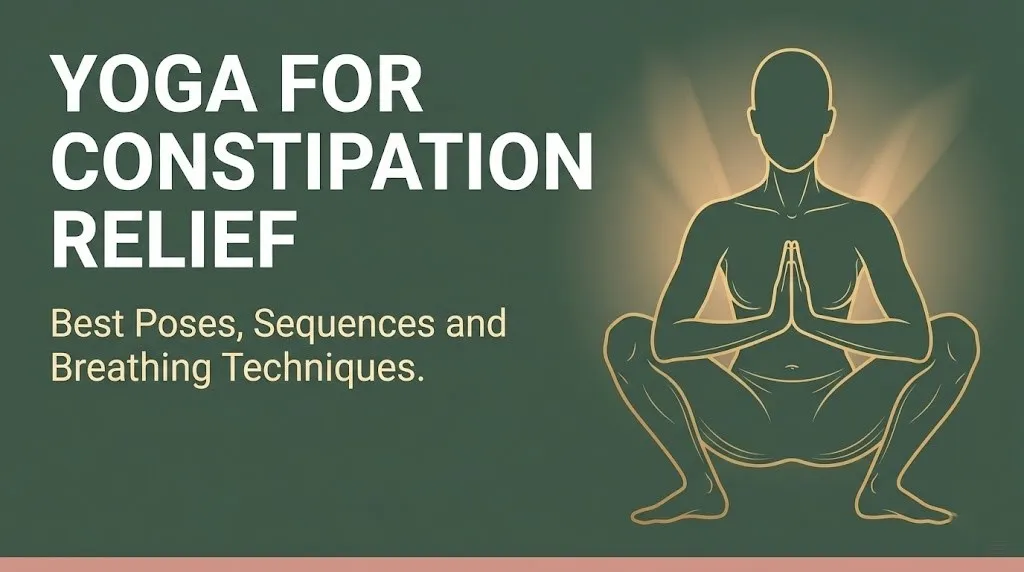
Malasana (Garland Pose), commonly called a deep yoga squat, is the most biologically direct yoga position for constipation. In a full squat, the puborectalis muscle relaxes, the anorectal angle straightens from roughly 90 degrees to closer to 135 degrees, and the pelvic floor descends slightly. That geometry makes elimination dramatically more efficient.
To practice Malasana (Garland Pose):
- Stand with feet slightly wider than hip-width apart. Turn toes out at roughly 45 degrees.
- Bend the knees and lower the hips toward the floor into a deep squat.
- Press the palms together at the heart. Use the elbows to gently press the inner thighs outward.
- Keep the spine long. Do not round the lower back.
- Breathe slowly and deliberately. Hold for 8 to 10 breath cycles.
- To come out, place hands on the floor and slowly straighten the legs.
Modification for tight ankles or knee pain: Place a folded blanket or yoga block under the heels. This allows the squat to be accessible without forcing the ankle into deep dorsiflexion.
Pavanamuktasana (Wind-Relieving Pose) adds a specific benefit by compressing the ascending colon on the right side when the right knee is drawn in, and the descending colon on the left when the left knee is drawn in. Practicing right knee first, then left, follows the natural direction of waste movement through the large intestine.
Morning Yoga for Constipation
Morning is the most effective time to practice yoga for constipation because the gastrocolic reflex, the body’s natural urge to eliminate after waking and after eating, is strongest in the early hours of the day.
The gastrocolic reflex is a physiological response in which the colon increases muscular contractions in response to the stomach filling or to body movement after sleep. Practicing yoga within 30 to 60 minutes of waking, ideally before eating, works with this reflex rather than against it.
A short morning yoga practice for constipation does not need to be long. Research suggests that even 10 to 15 minutes of targeted movement can support bowel motility. The key is choosing the right poses in the right order, not practicing for an hour.
The most effective morning sequence for constipation relief combines these poses in this order:
- Apanasana (Knees-to-Chest Pose): Begin supine. Start gentle.
- Supta Matsyendrasana (Supine Spinal Twist): Both sides. Unwind the colon from sleep.
- Pavanamuktasana (Wind-Relieving Pose): Right knee first, then left, then both.
- Malasana (Garland Pose): The squat optimizes elimination geometry.
- Uttanasana (Standing Forward Fold): Compresses the abdomen against the thighs.
Drink a glass of warm water before beginning. Warm water activates the gastrocolic reflex more effectively than cold water, according to research on hydration and gastric motility published in the Journal of Alternative and Complementary Medicine.
Key Takeaway: Practicing yoga in the morning works with the body’s natural gastrocolic reflex, making early practice specifically more effective for constipation than the same poses done at night.
Yoga Sequence for Constipation Relief Step by Step
A complete yoga sequence for constipation relief follows the anatomical logic of the colon: starting with gentle compression and nervous system calming, progressing to targeted twisting, and ending with poses that optimize the anorectal angle for elimination.
The sequence below takes approximately 15 to 20 minutes. Practice on an empty stomach or at least 90 minutes after a meal.
Complete Yoga Sequence for Constipation Relief:
- Diaphragmatic Breathing (3 to 5 minutes): Lie on your back. Place one hand on the belly. Inhale for a count of 4, letting the belly rise. Exhale for a count of 6. This activates the parasympathetic nervous system before any physical movement begins.
- Apanasana (Knees-to-Chest Pose) (1 to 2 minutes): Draw both knees toward the chest. Wrap arms around shins. Gently rock side to side. This applies mild lumbar compression and gently contacts the lower colon.
- Pavanamuktasana (Wind-Relieving Pose), right side (1 minute): Draw the right knee toward the right shoulder. Left leg extends. Hold for 8 breaths. Repeat on the left side.
- Supta Matsyendrasana (Supine Spinal Twist), both sides (2 to 3 minutes each side): From lying down, draw both knees to the chest. Let both knees fall to the right. Arms open to a T. Breathe deeply into the left side of the ribcage. Hold 8 to 10 breaths. Repeat left.
- Balasana (Child’s Pose) (2 minutes): From hands and knees, send hips back toward heels. Arms extended forward. Breathe into the back body. The gentle anterior compression of the belly on the thighs stimulates the transverse colon.
- Ardha Matsyendrasana (Half Lord of the Fishes Pose), both sides (1 to 2 minutes each side): As instructed in the twists section. Right side first.
- Paschimottanasana (Seated Forward Fold) (2 minutes): Sit with legs extended. Hinge from the hips. Let the belly fold toward the thighs. Use a strap around the feet if hamstrings are tight. This compresses the entire abdominal cavity.
- Malasana (Garland Pose) (1 to 2 minutes): The final squat. Stay here. Breathe. Let the body do what it needs to do.
- Savasana (Corpse Pose) (3 to 5 minutes): Rest completely. Allow the nervous system to integrate. Do not skip this.
Modification for the full sequence: Any supine pose can be practiced in bed if getting to the floor is difficult. The effectiveness reduces slightly but remains meaningful.
Yoga for Constipation and Bloating
Yoga addresses constipation and bloating through overlapping but distinct mechanisms, and the two conditions often benefit from the same poses even though the underlying causes differ.
Bloating typically involves trapped gas in the small intestine or colon, while constipation involves slowed transit of waste material through the large intestine. Both respond to physical movement and parasympathetic nervous system activation. Several poses address both simultaneously.
Pavanamuktasana (Wind-Relieving Pose) is named explicitly for its gas-releasing function. The name translates from Sanskrit as “wind-freeing pose,” and the sustained abdominal compression it creates physically shifts gas through the intestinal tract. For bloating specifically, slow, deliberate breathing in this pose is more effective than rushing through it.
Balasana (Child’s Pose) applies sustained, gentle anterior compression to the lower abdomen, which can help move trapped gas in the sigmoid colon and descending colon.
Poses that help both constipation and bloating include:
- Pavanamuktasana (Wind-Relieving Pose): Targets gas in ascending and descending colon directly
- Supta Matsyendrasana (Supine Spinal Twist): Moves gas and stool through rotational pressure
- Balasana (Child’s Pose): Gentle anterior compression, calms the enteric nervous system
- Uttanasana (Standing Forward Fold): Abdominal compression against thighs, standing version
- Viparita Karani (Legs-Up-the-Wall Pose): Shifts pelvic orientation, supports lymphatic flow and venous return
If bloating is accompanied by severe abdominal pain, fever, or blood in the stool, those symptoms require evaluation by a gastroenterologist before starting any yoga-based digestive practice.
Yoga Breathing Techniques for Constipation Relief
Specific pranayama techniques directly stimulate the digestive system by activating the vagus nerve, creating rhythmic pressure changes in the abdominal cavity, and shifting the body into parasympathetic dominance.
Kapalabhati pranayama (Skull-Shining Breath) is the most directly stimulating breath technique for constipation. It involves rapid, forceful exhalations through the nose with passive inhalations, creating a pumping action of the abdominal wall. Each forceful exhale contracts the rectus abdominis and obliques, applying rhythmic internal pressure to the colon.
To practice Kapalabhati pranayama:
- Sit comfortably with a tall spine. Hands rest on knees.
- Take a deep inhale through the nose.
- Begin short, sharp, rhythmic exhales through the nose, roughly one per second. Each exhale contracts the lower belly inward and upward.
- The inhales happen passively between each exhale. You do not force them.
- Begin with 20 pumping exhales, then rest and breathe normally for one minute.
- Repeat for 2 to 3 rounds.
Safety note: Kapalabhati is contraindicated during pregnancy, for people with uncontrolled hypertension, recent abdominal surgery, or active acid reflux. Those with any of these conditions should instead practice diaphragmatic breathing as described in the sequence section.
Dirgha pranayama (Three-Part Breath) works more gently by activating the parasympathetic nervous system, supporting the “rest and digest” state. Inhale fills the belly first, then the ribcage, then the collarbones. Exhale releases in reverse. Hold each breath for 4 to 5 counts at the top to increase intra-abdominal pressure briefly before releasing.
According to a review in the International Journal of Yoga, pranayama practices involving abdominal activation were associated with improvements in gastrointestinal symptom scores in adults with functional digestive complaints.
Key Takeaway: Kapalabhati breath applies a direct pumping action to the colon that no physical pose replicates, making it one of the most targeted tools available for acute constipation relief, as long as you are not pregnant or post-surgical.
Yoga for Constipation With IBS
Yoga is supported by research as a beneficial practice for people with irritable bowel syndrome (IBS), but the approach requires adjustment because some poses that relieve constipation in healthy adults may aggravate symptoms in IBS sufferers.
IBS-C refers to IBS with predominant constipation, as opposed to IBS-D (diarrhea-predominant) or IBS-M (mixed). People with IBS-C experience the same slow colonic transit as functional constipation but with additional visceral hypersensitivity, meaning the gut is more pain-sensitive to normal levels of distension and pressure.
A study published in the World Journal of Gastroenterology found that a structured yoga program reduced IBS symptom severity scores meaningfully over a 12-week period, with participants reporting reductions in pain, bloating, and bowel irregularity.
For people with IBS-C, the following adjustments to the standard constipation yoga practice are advisable:
- Avoid deep abdominal compression poses if they trigger cramping. Reduce the depth of Knees-to-Chest Pose and Child’s Pose.
- Use Restorative yoga versions of all poses. Supported Child’s Pose with a bolster, or Supta Matsyendrasana with blanket support under the knees, reduces pressure on a hypersensitive gut.
- Prioritize breathing and twists over compression poses. Spinal twists create less direct pressure than compression-based poses.
- Avoid Kapalabhati pranayama if abdominal pain is present. Use gentle diaphragmatic breathing instead.
- Practice Viparita Karani (Legs-Up-the-Wall Pose) regularly. It activates the parasympathetic nervous system without any abdominal compression.
If IBS symptoms include significant pain during or after yoga practice, working with a registered yoga therapist (C-IAYT) alongside a gastroenterologist provides the safest and most individualized approach.
Yoga for Constipation During Pregnancy
Yoga for constipation during pregnancy requires significant modification because many of the most effective constipation poses involve deep abdominal compression, strong twisting, or positions that are contraindicated after the first trimester.
Pregnancy-related constipation is extremely common. The hormone progesterone relaxes smooth muscle throughout the body, including the intestinal wall, which slows peristalsis. As the uterus grows, it also physically presses on the sigmoid colon and rectum, further impeding transit.
The following poses are generally safe during pregnancy for constipation relief, but any pregnant person with a high-risk pregnancy, placenta previa, preterm labor history, or other complications should confirm with their obstetric provider before beginning:
- Balasana (Child’s Pose): Modified with knees wide apart to accommodate the belly. Avoid pressing the belly into the thighs.
- Marjaryasana-Bitilasana (Cat-Cow Pose): Gentle spinal flexion and extension stimulates the abdominal organs without compression.
- Viparita Karani (Legs-Up-the-Wall Pose): Appropriate until late pregnancy. After 28 weeks, limit to 5 minutes and avoid lying completely flat on the back.
- Seated gentle twist: Twisting from the thoracic spine only, not the lumbar. Keep the belly soft and uninvolved in the rotation.
Poses to avoid during pregnancy for constipation:
- Deep abdominal compression poses including Pavanamuktasana (Wind-Relieving Pose) and Apanasana (Knees-to-Chest Pose)
- Kapalabhati pranayama
- Deep backbends
- Any pose requiring lying flat on the back for more than a few minutes after the second trimester
Yoga for Constipation for Seniors
Yoga for constipation in seniors works particularly well because older adults have slower gastric motility by physiology, and gentle, consistent movement is one of the most accessible and evidence-supported interventions available.
Gastric motility slows with age due to several factors: reduced colonic muscle tone, decreased physical activity, medication side effects, and lower fluid intake. Many laxatives used long-term by older adults have their own adverse effects. Yoga offers a movement-based alternative that builds body awareness and supports consistent bowel rhythm without pharmaceutical dependency.
According to a review in Complementary Therapies in Medicine, yoga interventions in adults over 60 showed improvements in gastrointestinal comfort and self-reported quality of life, with low adverse event rates when classes were appropriately adapted.
Senior-specific yoga for constipation should emphasize:
| Priority | Reason | Recommended Approach |
|---|---|---|
| Joint protection | Reduced cartilage cushioning in hips and knees | Use blankets, blocks, and chair support generously |
| Balance safety | Increased fall risk in standing poses | Avoid unsupported standing twists; use wall or chair |
| Spinal caution | Higher rates of spinal stenosis and osteoporosis | Avoid deep forward folds; use supported versions |
| Breath pacing | Reduced lung capacity common | Use slower breath counts; never hold breath |
| Duration | Fatigue tolerance lower | Begin with 10-minute sessions; build gradually |
The most senior-appropriate poses for constipation include Apanasana (Knees-to-Chest Pose) with gentle rocking, Supta Matsyendrasana (Supine Spinal Twist) with blanket support, and Viparita Karani (Legs-Up-the-Wall Pose) for its passive parasympathetic activation.
Key Takeaway: For seniors, gentle supine poses with props and slow diaphragmatic breathing deliver the digestive benefits of yoga without the fall risk and joint strain of standing or complex poses.
Seated and Chair Yoga for Constipation
Seated and chair yoga for constipation makes the same digestive mechanisms available to people who cannot get to the floor, including those recovering from surgery, living with significant mobility restrictions, or practicing in an office environment.
Chair yoga is not a watered-down version of yoga. It is a deliberate adaptation that maintains the core mechanical principles: spinal rotation, abdominal engagement, breath coordination, and parasympathetic nervous system activation. All of these remain achievable from a seated position.
To practice a seated spinal twist for constipation:
- Sit upright in a chair with both feet flat on the floor, hip-width apart.
- Place the right hand on the outside of the left knee.
- Place the left hand on the back of the chair seat or on the left hip.
- Inhale to lengthen the spine. Exhale to rotate the torso to the left.
- Hold for 5 to 8 breaths. Inhale to lengthen. Exhale to deepen slightly.
- Return to center on an inhale. Repeat to the right.
To practice seated knees-to-chest for constipation:
- Sit toward the front half of the chair seat. Spine upright.
- Lift the right knee toward the chest with both hands clasped behind the thigh.
- Hold for 5 breaths. Release. Repeat with the left knee.
- Lift both knees simultaneously for 3 to 5 breaths if comfortable.
The seated forward fold is also effective: hinge from the hips while seated, letting the belly compress gently against the thighs. Hold for 8 breaths. Place hands on the shins or the floor as flexibility allows.
Yoga for Constipation: Safety and Who Should Be Careful
Yoga for constipation relief is safe for most adults, but specific poses carry risks for specific populations, and those risks are worth knowing before you start.
The poses most likely to cause problems are deep abdominal compression poses, strong spinal twists, and inversions. The populations most likely to need modification are pregnant people past the first trimester, people with recent abdominal or spinal surgery, people with severe osteoporosis, people with uncontrolled hypertension, and people with active inflammatory bowel disease (IBD) such as Crohn’s disease or ulcerative colitis.
IBD is not the same as IBS. People with active IBD flares should not practice yoga poses that increase intra-abdominal pressure during a flare, as this can aggravate inflamed intestinal tissue. During remission, gentle yoga with a qualified yoga therapist is often appropriate, but any decision to begin yoga during IBD treatment should be made in conversation with the treating gastroenterologist.
Key safety guidance by population:
- Post-abdominal surgery: Avoid all compression poses for a minimum of 6 to 8 weeks post-operation. Begin with breath work only. Progress under guidance of a physiotherapist or yoga therapist.
- Severe osteoporosis: Avoid deep spinal flexion and strong twists. Supported extension poses and gentle supine work are safer starting points.
- Uncontrolled hypertension: Avoid Kapalabhati pranayama and inversions including Legs-Up-the-Wall in some cases. Gentle breathing and slow movement are appropriate.
- Active IBD flare: Skip all abdominal compression and twisting poses. Rest-focused Restorative yoga only, if anything.
- Pregnancy: Follow the specific modifications listed in the pregnancy section above.
No pose should cause sharp pain. Discomfort from stretching is different from pain. If any pose produces sharp, acute, or worsening pain, stop immediately.
How Long Does Yoga Take to Relieve Constipation?
Yoga can relieve acute constipation within one session for some people, particularly when the squat pose Malasana and abdominal compression poses are practiced first thing in the morning with warm water beforehand.
For chronic constipation, consistent practice over several weeks produces the most durable results. Research suggests that the digestive benefits of yoga accumulate over time as the nervous system adapts, bowel rhythm becomes more regular, and the mechanical effects of regular abdominal compression support healthier transit patterns.
The World Journal of Gastroenterology study referenced earlier showed meaningful improvements in bowel frequency and stool consistency after eight weeks of regular yoga practice, practiced approximately three to four times per week.
A practical timeline guide:
| Timeframe | What to Expect |
|---|---|
| Same session (acute relief) | Possible with Malasana, twists, and Kapalabhati in the morning |
| After 1 to 2 weeks | Improved morning bowel regularity in many practitioners |
| After 4 weeks | Reduced bloating, more consistent transit, less straining |
| After 8 to 12 weeks | Measurable improvements in chronic constipation frequency and quality of life |
Hydration and fiber intake matter alongside yoga. Yoga does not replace adequate water intake or a fiber-sufficient diet. It works best as part of a broader pattern of digestive support rather than as a standalone intervention for chronic constipation.
If constipation persists despite regular yoga practice, dietary adjustments, and adequate hydration for more than three weeks, a gastroenterologist can rule out structural causes including slow-transit constipation, pelvic floor dysfunction, or other underlying conditions.
Key Takeaway: Acute constipation can sometimes be relieved in a single morning session with the right sequence, but chronic constipation benefits most from consistent practice three to four times per week over eight or more weeks.
Frequently Asked Questions About Yoga for Constipation Relief
What is the best yoga pose to make you poop quickly?
Malasana (Garland Pose), the deep yoga squat, is the most immediately effective single pose for triggering a bowel movement.
It works by relaxing the puborectalis muscle and straightening the anorectal angle, which is the same geometry that makes squatting the most anatomically natural position for elimination.
Practice it in the morning, hold for 8 to 10 slow breaths, and pair it with a glass of warm water beforehand for best results.
How long should I do yoga before it helps with constipation?
Some people experience relief during the same session, particularly when practicing the morning sequence with Malasana and abdominal compression poses.
For chronic constipation, yoga teachers and physical therapists generally recommend consistent practice three to four times per week for at least four to eight weeks to see lasting change in bowel regularity.
The key is daily or near-daily short practice rather than occasional long sessions.
Is yoga safe for constipation during pregnancy?
Gentle yoga is generally safe during pregnancy for constipation relief, but deep abdominal compression poses including Pavanamuktasana (Wind-Relieving Pose) and Apanasana (Knees-to-Chest Pose) should be avoided.
Safe options include Cat-Cow Pose, modified Child’s Pose with wide knees, gentle seated thoracic twists, and Legs-Up-the-Wall for up to five minutes.
Anyone with a high-risk pregnancy should confirm specific pose choices with their obstetric provider before beginning any new physical practice.
Can yoga make constipation worse?
Yoga itself does not cause constipation, but practicing the wrong poses at the wrong intensity can temporarily increase abdominal discomfort in people with IBS, active IBD flares, or recent abdominal surgery.
Kapalabhati pranayama can aggravate acid reflux if practiced immediately after eating or in people with gastroesophageal reflux disease (GERD).
Choosing gentle, supported poses and slow breath work eliminates most risks for the majority of people.
Does yoga help with constipation from IBS?
Yes, yoga has research support for IBS-related constipation specifically.
A study in the World Journal of Gastroenterology found that structured yoga practice reduced IBS symptom severity over 12 weeks, including improvements in bowel frequency and abdominal discomfort.
People with IBS should favor gentle twists, supported restorative poses, and diaphragmatic breathing over deep compression poses, which can trigger visceral hypersensitivity responses.
Start With One Pose This Morning
Pick one pose from this article and do it tomorrow morning before anything else. A glass of warm water, five minutes in Malasana (Garland Pose), and a few rounds of slow diaphragmatic breathing costs nothing and has a real physiological basis.
If that works, add the supine sequence over the following week. Build the 15-minute morning practice gradually.
Consistency over days and weeks is what changes bowel rhythm. The body responds to signals it receives repeatedly, not once.