Dreaming Tree Yoga: Tree Pose Guide & Benefits 2026
Dreaming Tree Yoga is a yoga practice and community built around mindful, grounded movement, with Vrksasana (Tree Pose) at its philosophical and physical center. If you’ve been drawn to this name and want to know what the practice actually involves, this guide gives you everything: the pose mechanics, the styles, the science, and the real-world modifications that make it work for your body.
Balance-focused yoga practice is more than a studio trend. The National Center for Complementary and Integrative Health notes that yoga-based balance interventions have produced measurable improvements in stability and fall risk reduction in adults across multiple clinical trials, particularly in those over 60.
You’ll find a thorough breakdown of how tree pose works anatomically, a step-by-step instruction guide, the most common alignment errors and how to fix them, and a complete look at what the research says about balance yoga’s physical and mental benefits. Whether you’ve never stood on one leg in a yoga class or you’ve been practicing for years, there’s something specific and useful here for you.
Dreaming Tree Yoga
Dreaming Tree Yoga is a yoga practice community centered on accessible, grounded, and inclusive instruction, with tree pose serving as both the physical anchor and the symbolic heart of the approach. The name evokes rootedness, patience, and upward reach, qualities that translate directly into how balance-focused yoga is taught and experienced.
The dreaming tree concept draws from a simple and practical yoga truth: strong roots create stable growth. In Vrksasana (Tree Pose), the standing foot connects deeply to the ground while the lifted leg, extended arms, and lengthened spine reach upward. That physical relationship between grounding and extension is the foundation of most yoga balance work.
Studios and teachers operating under the dreaming tree yoga name typically emphasize community, consistency, and a non-competitive class environment. The philosophy is that every body is already capable of tree pose in some form. The question is finding which version fits your body today.
Quick Summary:
- Dreaming tree yoga centers on balance, mindfulness, and accessible movement for all levels
- Vrksasana (Tree Pose) is the signature pose and a recurring teaching metaphor
- Classes typically span multiple styles: Hatha, Vinyasa, Yin, and Restorative
- The teaching approach prioritizes individual adaptation over uniform performance
Dreaming Tree Yoga Studio Philosophy and Community
The philosophy behind dreaming tree yoga rests on three principles: grounded practice, body-neutral instruction, and sustainable consistency over short-term intensity. These ideas shape how classes are sequenced, how teachers cue students, and how the studio community is built.
Body-neutral language in yoga instruction means the teacher describes what the pose does and how to feel it, rather than what it should look like from the outside. This matters because yoga balance poses like Vrksasana (Tree Pose) vary enormously from one body to the next, based on hip anatomy, foot structure, and nervous system wiring. A teacher who understands this never tells a student that their tree pose looks “wrong.”
Community is taken seriously in dreaming tree yoga spaces. Research published in the Journal of Alternative and Complementary Medicine found that social support within a yoga group setting was independently associated with improved practice adherence and greater self-reported wellbeing compared to solo home practice. The studio format, when it prioritizes genuine connection, produces better outcomes than the practice alone.
What to expect from a dreaming tree yoga studio experience:
- Class sizes kept small enough for the teacher to offer individual alignment cues
- Props like blocks, straps, and blankets offered as standard, not optional
- Beginner-friendly language used even in mixed-level classes
- A consistent emphasis on breath awareness before, during, and after poses
- Cool-down sequences that include meaningful rest time, not just a brief Savasana (Corpse Pose)
Yoga Styles Offered at Dreaming Tree Yoga
Dreaming tree yoga studios and teachers typically offer a blend of Hatha, Vinyasa, Yin, and Restorative yoga, each serving a different physical and nervous system need. Understanding what distinguishes these styles helps you select the right class for your current body rather than a generic “yoga class.”
Hatha yoga is the most foundational. Individual poses are held for several breaths each, giving students time to find alignment before moving on. For anyone new to balance work, Hatha is the right starting point. You learn the shape of Vrksasana (Tree Pose) in Hatha before you’re expected to flow through it in a faster format.
Vinyasa yoga links breath to movement in continuous sequences. Tree pose appears in Vinyasa flows as part of standing balance sequences, often transitioning into Virabhadrasana III (Warrior III) or Ardha Chandrasana (Half Moon Pose). The pace is faster and the balance demands increase significantly because you’re transitioning between poses rather than holding one steadily.
| Yoga Style | Pace | Tree Pose Role | Best For |
|---|---|---|---|
| Hatha | Slow, held | Primary focus, long hold | Beginners, alignment learners |
| Vinyasa | Moderate to fast | Part of flowing sequence | Active students, cross-trainers |
| Yin | Very slow, passive | Not typically included | Connective tissue, joint mobility |
| Restorative | Passive, prop-supported | Not typically included | Stress recovery, nervous system rest |
| Iyengar | Slow, precision-focused | Detailed study with props | Injury rehab, precision seekers |
| Gentle | Slow, accessible | Wall-supported version | Seniors, people with balance concerns |
Key Takeaway: The style of class you choose determines how tree pose is taught and how much time you get to actually learn it. Hatha is the smartest entry point for anyone serious about building real balance skill.
Tree Pose Yoga (Vrksasana) Explained
Vrksasana (Tree Pose) is a standing single-leg balance pose in which one foot presses into the inner thigh or calf of the opposite standing leg while the arms extend overhead or rest at the chest in Anjali Mudra (prayer position). It is one of the most recognized poses in all of yoga and one of the most frequently practiced incorrectly.
The pose demands simultaneous engagement from multiple systems. The proprioceptive system, the body’s internal GPS for spatial position, is working constantly to keep you upright. The vestibular system, housed in the inner ear, contributes to orientation in space. The muscles of the standing foot, ankle, calf, and hip are all firing at once to maintain equilibrium.
Think of your standing leg in tree pose like a tent pole. The ground anchors it, the muscles are the guy-wires pulling from multiple directions, and the whole structure only holds if those wires maintain balanced tension. When one side slackens, the whole thing tilts.
Primary muscles engaged in Vrksasana:
- Gluteus medius: stabilizes the pelvis laterally, preventing the hip from dropping
- Hip external rotators (piriformis, obturator group): rotate the lifted thigh outward
- Tibialis anterior and peroneal muscles: stabilize the ankle of the standing leg
- Quadriceps: extend the standing knee without locking the joint
- Intrinsic foot muscles: distribute weight evenly across the entire sole
- Core muscles (transverse abdominis, obliques): maintain upright spinal alignment
How to Do Tree Pose Step by Step
To practice Vrksasana (Tree Pose) correctly, start from Tadasana (Mountain Pose) and build each element of the balance deliberately before lifting the foot. Rushing the setup is the most common reason students fall or strain their knees.
To practice Vrksasana (Tree Pose):
- Begin in Tadasana (Mountain Pose): feet hip-distance apart, weight distributed evenly across all four corners of each foot.
- Shift your weight slowly into your right foot. Press the entire sole firmly into the mat.
- Soften the right knee slightly. Never lock a standing joint during a balance pose.
- Lift your left foot and place the sole of your left foot against the inner right calf, below the knee. This is the beginner position.
- If your balance is stable, slide the left foot upward to press against the inner right thigh, above the knee. Never place the foot directly against the side of the knee joint.
- Rotate the left knee outward, opening the left hip. Press foot and thigh against each other with equal force.
- Bring both hands to Anjali Mudra (prayer position) at the chest, or extend arms overhead, shoulder-distance apart.
- Fix your drishti (focused gaze) on one unmoving point at eye level. This reduces vestibular demand and significantly improves balance stability.
- Hold for 5 to 8 breath cycles, roughly 30 to 45 seconds.
- To release: lower the left foot with control back to the mat. Return to Tadasana. Repeat on the left side.
Modification for absolute beginners: Keep the toes of the lifted foot on the floor, with only the heel pressed against the inner ankle of the standing leg. This “kickstand” position provides ground contact without the full balance demand.
Tree Pose Alignment Tips and Common Mistakes
The single most common error in Vrksasana (Tree Pose) is placing the lifted foot directly against the side of the standing knee joint, which applies lateral pressure to structures (the medial collateral ligament and lateral joint capsule) not designed to bear that force. The foot belongs above the knee, on the inner thigh, or below the knee, on the inner calf. The knee itself is a no-placement zone.
The second most frequent mistake is gripping the toes of the standing foot for balance. Toe-gripping tightens the plantar fascia and destabilizes the ankle, making balance worse. The goal is to spread all five toes wide and press actively through the ball of the foot and heel simultaneously.
A third common error involves the hip of the lifted leg. Many students allow the lifted-leg hip to hike upward or swing forward, which collapses the pelvis and changes the entire postural relationship. The pelvis should remain level and squared forward throughout the hold.
Pose Tip:
- Foot placement rule: above the knee on the inner thigh, or below the knee on the inner calf. Never on the knee.
- Fix your gaze on one still point before you lift your foot. Balance starts in the eyes, not the legs.
- Press the lifted foot and standing thigh against each other with equal and opposing force. This mutual engagement stabilizes both.
- Draw the lower belly gently inward to activate the deep core without holding the breath.
- Keep a micro-bend in the standing knee throughout. A locked knee reduces proprioceptive feedback from the joint.
Safety caution: Students with current ankle sprains, chronic ankle instability, or recent ligament injuries in the lower leg should practice the kickstand or wall-supported variation until the ankle has been cleared by a physical therapist for full single-leg loading.
Key Takeaway: The foot-against-knee mistake in tree pose is not just a style issue. It’s a structural one that puts real force on ligaments that aren’t built for it. Foot goes above or below the knee, never on it.
Tree Pose Modifications for Beginners and Limited Mobility
Vrksasana (Tree Pose) is fully accessible to beginners and people with limited mobility when the right modifications are applied. There is no single correct version of this pose. There are simply versions that match your body’s current capacity.
The wall-supported variation is the most practical modification for balance beginners and seniors. Stand one arm’s length from a wall. Place your fingertips lightly on the wall for steadying, rather than gripping. The wall acts as a balance reference point without removing the neuromuscular work of the standing leg. Over time, reduce wall contact from a full hand to two fingers to one fingertip as your balance improves.
Chair-supported tree pose serves students who cannot safely balance on one leg without fall risk. Stand behind a sturdy chair, hands resting on the top of the seatback. Lift one foot to the kickstand position (toes on floor, heel at inner ankle) or raise the foot to the inner calf if balance allows. The core and hip engagement is identical to the floor-based version.
| Modification | How It Works | Best For |
|---|---|---|
| Kickstand (toes on floor) | One heel at inner ankle, toes grounded | Absolute beginners, first attempt |
| Inner calf placement | Foot below the knee, above the ankle | Beginners with some balance foundation |
| Wall fingertip support | Fingertips brush wall for orientation | Balance beginners, vestibular disorders |
| Chair-supported | Hands on chair back, foot at ankle | Seniors, fall-risk individuals |
| Inner thigh placement | Foot above the knee on the thigh | Intermediate practitioners |
| Arms at chest (Anjali) | Hands at heart instead of overhead | Reduces balance demand, good entry point |
Modification for students with knee osteoarthritis: Use only the inner calf position, never pressing the foot against the thigh with force. Reduce the duration to 3 to 5 breath cycles and avoid any version that requires deep hip external rotation if the knee tracks inward under the added load.
Tree Pose Benefits for Balance and Stability
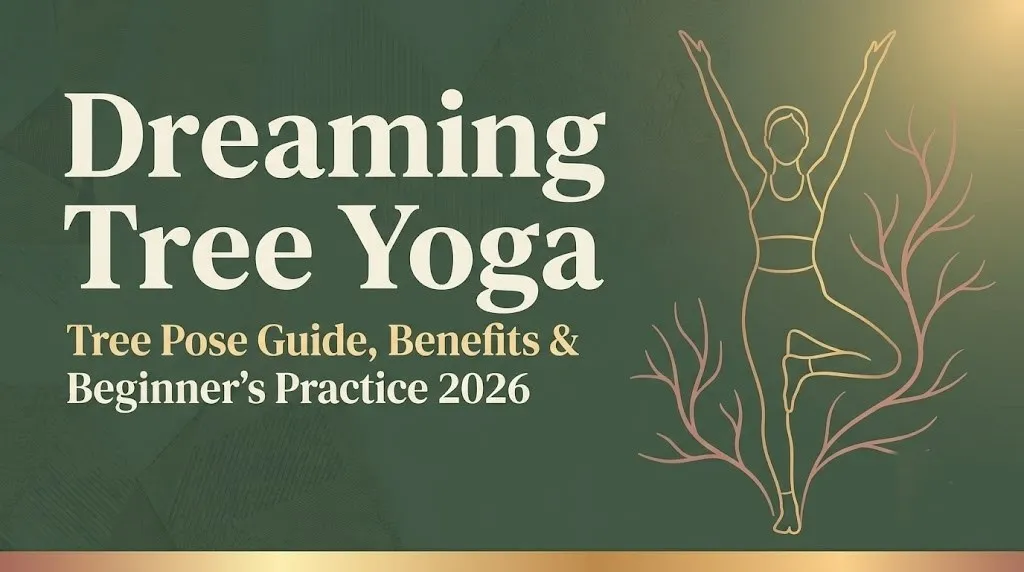
Vrksasana (Tree Pose) builds single-leg balance, hip stability, ankle strength, and proprioceptive sensitivity simultaneously, making it one of the most time-efficient standing balance exercises in any movement discipline. These are not vague wellness claims. They reflect measurable changes in the neuromuscular system that accumulate over consistent practice.
The primary physical benefit is improved proprioceptive accuracy: the body’s ability to sense its own position in space without visual input. Single-leg standing poses train the ankle and hip stabilizers to respond faster and more precisely to balance perturbations. Think of it as upgrading the body’s internal gyroscope from an old analog system to a finely calibrated digital one.
A study published in the International Journal of Yoga found that participants who practiced standing balance poses, including tree pose variations, for 12 weeks showed measurable improvements in static balance, dynamic balance, and postural sway compared to a non-yoga control group. The improvements were statistically meaningful and sustained at a 6-week follow-up.
Documented benefits of regular Vrksasana practice:
- Increased hip abductor strength, particularly in the gluteus medius
- Improved ankle joint stability through peroneal and tibialis anterior activation
- Better postural control during standing daily activities
- Reduced lateral postural sway, a key predictor of fall risk
- Strengthened foot arch and intrinsic foot musculature
- Improved concentration and task-focused attention during hold time
Yoga for Balance and Fall Prevention
Yoga is one of the most studied non-pharmacological interventions for balance improvement and fall prevention in older adults. The evidence base is particularly strong for older women over 65, a group at disproportionate risk for fall-related fractures and hospitalizations.
According to the National Center for Complementary and Integrative Health, yoga-based balance programs for older adults consistently show improvements in functional balance measures including the Berg Balance Scale, Timed Up-and-Go test, and single-leg stance duration, across multiple randomized controlled trials.
The mechanism is straightforward. Yoga balance poses force the nervous system to recruit stabilizing muscles under low-threat, controlled conditions. Repeated exposure builds the neuromuscular pathways that respond automatically when balance is unexpectedly challenged, like stepping off a curb or walking on uneven ground.
Yoga poses with the strongest evidence for fall prevention:
- Vrksasana (Tree Pose): single-leg balance, hip and ankle stabilization
- Virabhadrasana III (Warrior III): dynamic single-leg control, hip hinge strength
- Garudasana (Eagle Pose): ankle wrapping builds proprioceptive acuity
- Tadasana (Mountain Pose): postural alignment, foot pressure awareness
- Ardha Chandrasana (Half Moon Pose): lateral balance challenge, hip abductor demand
Safety note for fall-risk individuals: Practice all single-leg poses near a wall or with a sturdy chair within arm’s reach. A physical therapist with yoga training or a certified yoga therapist (C-IAYT) can design a balance sequence matched to your specific fall risk profile.
Key Takeaway: Yoga balance training works because it trains the neuromuscular system under controlled conditions, building the automatic responses you need when balance is genuinely challenged in daily life.
Yoga for Knee Pain and Hip Stability
Yoga can support knee health and hip stability when practiced with correct alignment and appropriate modifications, but it can also worsen certain knee conditions when poses are approached carelessly. The distinction matters enormously in a balance-focused practice like dreaming tree yoga, where standing poses place sustained load on the knee joint.
The hip abductors, particularly the gluteus medius, directly govern knee tracking. When the gluteus medius is weak, the knee tends to collapse inward during single-leg activities, a pattern called valgus collapse. Strengthening the hip abductors through yoga balance poses reduces this inward tracking and takes pressure off the medial knee structures.
Poses that support knee health through hip stability include Vrksasana (Tree Pose) in the modified calf position, Setu Bandha Sarvangasana (Bridge Pose) with a block between the thighs to activate the adductors, and Virabhadrasana I (Warrior I) with attention to front knee alignment directly over the second toe.
What to avoid if you have knee pain:
- Placing the lifted foot against the side of the knee in tree pose (see alignment section)
- Deep knee flexion beyond 90 degrees without adequate quad strength to control it
- Any single-leg pose where the standing knee tracks inward rather than forward
- Holding balance poses past the point of visible shaking or form breakdown in the standing knee
Modification: If knee pain appears during tree pose, return immediately to the kickstand variation with toes on the floor. Reduce hold time to 3 breath cycles and focus entirely on the quality of foot pressure and hip engagement rather than foot height.
Students managing diagnosed knee osteoarthritis, patellar tendinopathy, or post-surgical recovery should get specific guidance from an orthopedic physical therapist before progressing beyond wall-supported or chair-supported variations.
Yoga Props for Balance Poses
Yoga props are precision tools that make balance poses safer, more accessible, and more anatomically correct. In dreaming tree yoga, props are not optional extras for struggling students. They are integrated features of intelligent practice at every level.
A yoga block placed on its tallest height near the standing foot gives a student practicing Vrksasana (Tree Pose) something to rest the lifted foot against if the thigh position is not yet accessible. The block creates a stable third contact point that reduces balance demand while preserving the hip opening of the full pose. Cork blocks are more stable than foam for weight-bearing applications.
A yoga strap serves balance poses primarily as a tactile alignment tool rather than a physical support. Looping a strap around the lifted thigh in tree pose can help a student feel where the thigh is in space, improving proprioceptive learning. A wall is the most universally available balance prop and the most underused by students who see wall practice as less “real” than freestanding work.
| Prop | Use in Balance Poses | Best For |
|---|---|---|
| Cork yoga block | Third contact point for lifted foot | Beginners, hip-restricted students |
| Foam yoga block | Lightweight support under seat in chair poses | Seated modifications |
| Yoga strap | Tactile proprioceptive feedback around thigh | Learning body position in space |
| Wall | Balance reference, finger-touch support | Beginners, seniors, fall-risk students |
| Folding chair | Full physical support during standing poses | Chair yoga, severe balance disorders |
| Yoga blanket | Knee cushioning during floor transitions | Knee-sensitive students |
Yoga Sequence for Balance and Body Awareness
A well-structured balance yoga sequence starts with grounding poses that build body awareness, progresses to single-leg standing challenges, and closes with floor-based poses that allow the nervous system to consolidate the work done while upright. Rushing directly to balance poses without a warm-up produces worse results and higher injury risk.
The warm-up phase matters because proprioceptive nerve endings in the joints and fascia need activation time. Starting cold with Vrksasana (Tree Pose) is like asking a musician to perform a difficult passage without running scales first. The technical capacity exists, but the neural pathways haven’t been primed.
A complete 30-minute balance-focused sequence from dreaming tree yoga principles:
- Tadasana (Mountain Pose): 10 slow breath cycles, eyes closed after 5 breaths to challenge vestibular input
- Marjaryasana-Bitilasana (Cat-Cow Pose): 10 breath cycles to warm the spine and activate core awareness
- Utkatasana (Chair Pose): 5 breath cycles, builds quad and ankle strength before single-leg work
- Garudasana (Eagle Pose): both sides, 5 breaths each; ankle wrapping trains proprioception
- Vrksasana (Tree Pose): both sides, 5 to 8 breaths each; wall or chair nearby as needed
- Virabhadrasana III (Warrior III): both sides, 3 to 5 breaths each; most challenging element
- Balasana (Child’s Pose): 10 breaths; nervous system reset between standing and floor work
- Setu Bandha Sarvangasana (Bridge Pose): 5 repetitions; posterior chain activation and hip stability integration
- Savasana (Corpse Pose): minimum 5 minutes; neural consolidation of balance training gains
Modification: Students with balance concerns can substitute Garudasana (Eagle Pose) with a seated ankle cross in a chair. Replace Virabhadrasana III with a wall-supported single-leg hinge at a 45-degree forward angle.
Key Takeaway: Warming up the proprioceptive system before single-leg poses is not optional padding. It’s the mechanism that makes balance training actually work.
Yoga Benefits Backed by Research
The physical and mental health benefits of regular yoga practice are supported by a substantial and growing body of peer-reviewed evidence. This is not wellness marketing or anecdote. It is reproducible science across diverse populations and study designs.
A systematic review published in the Journal of Alternative and Complementary Medicine, covering 81 randomized controlled trials, found yoga produced positive and measurable outcomes across flexibility, strength, balance, pain reduction, and self-reported quality of life in adults. Balance-specific outcomes were among the most consistently replicated findings across study populations.
For balance specifically, Frontiers in Human Neuroscience published research showing that yoga practitioners demonstrated superior proprioceptive acuity and faster postural correction responses compared to matched non-practitioners, suggesting that yoga training produces lasting neurological adaptations in balance-related brain circuitry. These are not temporary effects. They reflect structural changes in how the nervous system processes positional information.
A summary of the research-backed physical and mental benefits of yoga:
- Balance and stability: improved in adults over 60 after 8 to 12 weeks of twice-weekly practice (NCCIH)
- Chronic low back pain: reduced pain intensity comparable to physical therapy over 12 weeks (Annals of Internal Medicine)
- Anxiety symptoms: reduced in adults practicing 2 or more times per week across multiple randomized trials
- Blood pressure: modest measurable reductions in resting systolic pressure in hypertensive adults
- Sleep quality: improved duration and onset time after 8 weeks of regular evening yoga practice
- Proprioception: statistically meaningful improvements in joint position sense after 10 to 12 weeks (International Journal of Yoga)
Yoga for Anxiety and Stress Relief
Yoga relieves anxiety and stress by activating the parasympathetic nervous system, the body’s physiological counterpart to the chronic stress response. The three mechanisms that drive this effect are slow controlled breathing, sustained physical attention on sensation in the body, and intentional reduction of external stimulation during practice.
In a dreaming tree yoga context, balance poses contribute to anxiety relief in a specific and interesting way. Single-leg standing requires present-moment focus. You cannot hold Vrksasana (Tree Pose) while mentally rehearsing tomorrow’s to-do list. The cognitive demand of balance automatically interrupts the rumination loops associated with anxiety and worry.
The Harvard T.H. Chan School of Public Health cites yoga as one of several mind-body practices with strong evidence for reducing self-reported anxiety and depression symptoms in non-clinical adult populations. The research base is strongest for programs that combine physical poses with breathwork and some form of focused attention or meditation, which is exactly the combination a well-taught dreaming tree yoga class provides.
Yoga poses with the strongest evidence for anxiety reduction:
- Viparita Karani (Legs-Up-the-Wall Pose): promotes venous return and parasympathetic activation; hold 5 to 10 minutes
- Supta Baddha Konasana (Reclined Bound Angle Pose): full chest opening in a supported position; hold 5 to 7 minutes with a bolster under the spine
- Balasana (Child’s Pose): abdominal pressure against the thighs activates the vagal response; hold 3 to 5 minutes
- Vrksasana (Tree Pose): present-moment focus interrupts anxious thought patterns; 5 to 8 breaths per side
- Savasana (Corpse Pose): minimum 10 minutes for measurable heart rate variability improvement
Modification for anxious students: If lying flat triggers anxiety or claustrophobia, practice Viparita Karani with the upper back elevated 20 to 30 degrees on a bolster. The restorative effect is preserved while reducing the sense of physical vulnerability.
Yoga Breathing Techniques for Focus and Calm
Pranayama, the Sanskrit term for yogic breath regulation, is the foundational tool for building the quality of attention that makes balance poses like Vrksasana (Tree Pose) possible. Breath and balance are not separate skills. They are directly linked through the nervous system.
Ujjayi pranayama, often called ocean breath or victorious breath, is the primary breathing technique used during active yoga practice. A slight constriction at the back of the throat creates an audible breath that slows the respiratory rate, warms the body internally, and gives the mind a consistent sensory anchor during challenging poses. In tree pose, synchronizing the hold duration with Ujjayi breath cycles prevents the breath-holding that typically happens when a student is concentrating hard on not falling.
Nadi Shodhana (Alternate Nostril Breathing) is the most commonly taught pre-practice calming technique. Research published in the Journal of Alternative and Complementary Medicine found that 10 minutes of Nadi Shodhana daily over four weeks produced measurable reductions in resting heart rate and self-reported anxiety in healthy adults. For students arriving at dreaming tree yoga classes with high stress or anticipatory anxiety about balance challenges, five minutes of Nadi Shodhana before class changes the nervous system state before the first pose.
To practice Ujjayi pranayama as a beginner:
- Sit comfortably, spine long, shoulders relaxed.
- Open your mouth and exhale as if fogging a mirror. Notice the gentle throat constriction.
- Close your mouth. Recreate that same throat sensation breathing entirely through the nose.
- Inhale through the nose with the slight constriction for a count of 4.
- Exhale through the nose with the same constriction for a count of 5 to 6.
- Continue for 5 to 10 breath cycles before beginning standing balance work.
Modification: Students with asthma or COPD should avoid any breath technique that creates air hunger or chest tightening. Simple, slow nasal breathing without throat constriction achieves a similar calming effect at lower physiological demand.
How Often to Practice Balance Yoga for Results
Most yoga teachers and physical therapists recommend practicing balance-focused yoga a minimum of two to three times per week to produce measurable improvement in stability and proprioceptive accuracy within the first six to eight weeks of consistent practice. Daily practice produces faster adaptation but is not required for meaningful results.
Frequency matters more than duration per session. Three 20-minute balance sessions per week outperform one 60-minute weekly session for neuromuscular adaptation, because the nervous system responds to repetition frequency rather than individual session volume. Think of it like learning a musical instrument: daily short practice produces faster skill development than infrequent long sessions.
The American College of Sports Medicine’s guidance on balance training for older adults supports twice-weekly sessions as the minimum effective dose for fall risk reduction, with measurable improvements appearing at 8 to 12 weeks. Yoga practitioners generally see similar timelines when tree pose and related single-leg work constitute a meaningful portion of each session.
| Goal | Recommended Frequency | Minimum Effective Duration | Timeline for Results |
|---|---|---|---|
| General balance improvement | 2-3 times/week | 20-30 min | 6-8 weeks |
| Fall prevention (seniors) | 2-3 times/week | 30-45 min | 8-12 weeks |
| Anxiety reduction | 3-4 times/week | 30 min | 4-8 weeks |
| Proprioceptive training | 3-4 times/week | 20 min | 6-10 weeks |
| Knee and hip stability | 3 times/week | 30-40 min | 8-12 weeks |
| Tree pose mastery | Daily or 4 times/week | 10-15 min focused | 4-6 weeks |
Safety note: Rest days between intense balance sessions are particularly important for students over 55 or those managing inflammatory joint conditions. The connective tissue and neuromuscular systems require recovery time to consolidate training gains. Every other day is a sound starting rhythm.
Key Takeaway: For balance training, how often you practice matters more than how long. Two to three sessions per week is the minimum effective dose. Daily short sessions are even better.
Frequently Asked Questions About Dreaming Tree Yoga
What is dreaming tree yoga and what does it involve?
Dreaming tree yoga is a yoga practice and studio philosophy centered on grounded, accessible movement, with Vrksasana (Tree Pose) as its signature practice and symbolic anchor.
Classes typically span multiple styles including Hatha, Vinyasa, Yin, and Restorative yoga, with an emphasis on inclusive, body-neutral instruction.
The community approach prioritizes consistency and adaptation over performance, making it accessible to beginners, seniors, and people managing specific physical conditions.
How do you do tree pose correctly as a beginner?
Beginners should start in Tadasana (Mountain Pose), shift weight into one foot, and place the opposite foot’s sole against the inner calf of the standing leg, below the knee.
Fix your gaze on one unmoving point at eye level before lifting the foot. This single adjustment improves balance immediately and consistently.
Hold for 3 to 5 slow breath cycles before switching sides, and practice near a wall until the balance feels stable without support.
Where should you place your foot in tree pose?
Place your foot either above the knee on the inner thigh, or below the knee on the inner calf of the standing leg. Never place it directly against the side of the knee joint itself.
Pressing the foot against the lateral or medial knee applies force to ligaments not designed for that type of load, which can cause strain over time.
The kickstand position, with toes touching the floor and heel at the inner ankle, is always a safe and anatomically sound option for any level.
Is tree pose safe for people with knee problems?
Vrksasana (Tree Pose) can be safe for people with knee problems when the foot is placed on the inner calf rather than against the thigh, and when the standing knee maintains a slight bend throughout the pose.
Students with diagnosed knee osteoarthritis, patellar tendinopathy, or post-surgical knees should use the wall-supported or chair-supported modification and limit hold times to 3 breath cycles until assessed by a physical therapist familiar with yoga movement.
Avoid any version where the standing knee tracks inward or where the foot presses directly against the knee joint.
How long should you hold tree pose to see balance improvements?
Most yoga teachers recommend holding Vrksasana (Tree Pose) for 5 to 8 breath cycles per side, roughly 30 to 50 seconds, for consistent practice to produce balance improvements.
Research suggests that measurable proprioceptive improvements appear after 6 to 10 weeks of practicing single-leg balance poses two to three times per week.
Longer holds are less important than consistent repetition across multiple sessions per week.
The most useful thing you can do after reading this is stand on one foot right now. Not perfectly. Just try. Fingertips on the wall, toes on the floor, and five slow breaths. That is dreaming tree yoga in its most essential form: a moment of attention, one foot on the ground, the rest of you reaching upward.
Practice two to three times per week. Use a wall until you don’t need it anymore. Hold tree pose for five breaths each side at minimum. The balance improvements won’t announce themselves dramatically. One day you’ll simply notice that you’re steady where you used to wobble