Groove Yoga: Benefits, Poses, and How to Start in 2026
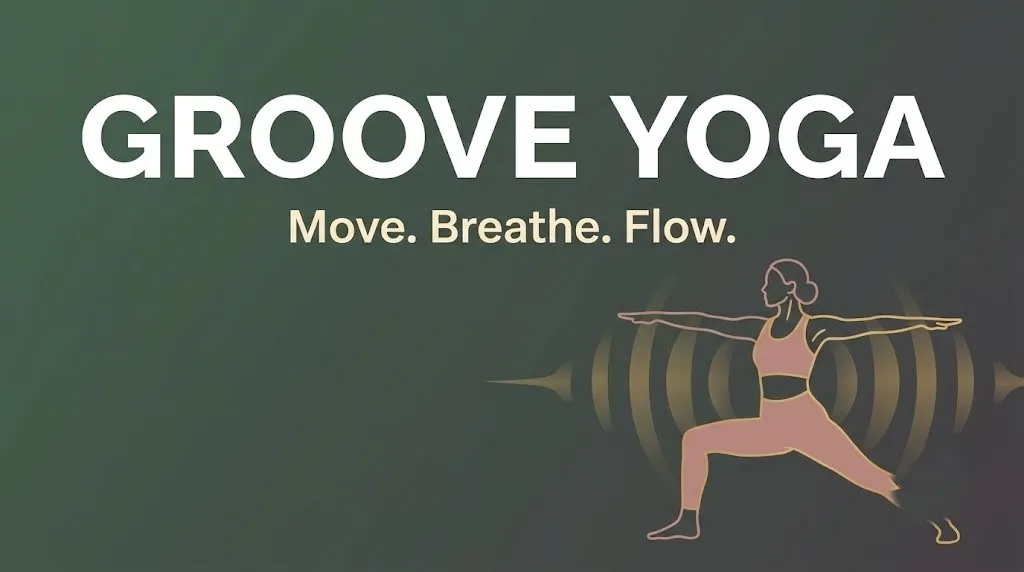
Groove yoga is a rhythm-based yoga practice that layers music, breath, and movement into one continuous, flowing session. It keeps the physical rigor of yoga intact while making the experience far more accessible, enjoyable, and yes, genuinely fun.
That combination matters more than it might seem. According to the National Center for Complementary and Integrative Health, yoga participation in the United States has grown steadily over the past decade, yet many adults still drop out within their first three months. The number one reason they cite is that traditional classes feel too rigid or too quiet for their personality.
This guide covers everything you need to actually practice groove yoga: what it is, which poses anchor the style, how music affects your body during movement, how to adapt it for different bodies and conditions, and how to build a home session from scratch.
What Is Groove Yoga?
Groove yoga is a movement practice that synchronizes yoga poses and transitions with a continuous music soundtrack, using rhythm as both a motivator and a pacing tool.
Unlike silent Hatha or breath-counted Ashtanga, groove yoga uses music at intentional tempos to guide the pace of movement. The result sits somewhere between a yoga flow class and a dance fitness session. The poses are drawn from traditional yoga. The energy is not.
The style does not belong to a single lineage. It emerged from the broader movement to make yoga more culturally accessible and emotionally inviting. Teachers like Tara Stiles and the team behind Bhangra Flow-style classes influenced this direction in the early 2010s. By 2026, groove yoga appears as a class format in community centers, online platforms, and senior fitness programs across North America.
It is not the same as yoga dance or Nia. Groove yoga keeps traditional alignment principles intact. You still enter Adho Mukha Svanasana (Downward-Facing Dog) with the same biomechanical cues. The music does not replace the form. It supports the flow.
Quick Summary:
| Feature | Groove Yoga | Traditional Hatha |
|---|---|---|
| Music | Yes, intentional BPM | Rarely or none |
| Pace | Rhythmic, moderate | Slow to moderate |
| Pose Base | Traditional yoga | Traditional yoga |
| Focus | Movement + Mindfulness | Alignment + Stillness |
| Best For | Beginners, active adults | All levels, slow practice |
Groove Yoga Benefits: What Your Body Actually Gains
Groove yoga offers the same core physical benefits as yoga broadly, with the added advantage that rhythm-driven movement tends to increase session compliance and duration.
A study published in the International Journal of Yoga found that consistent yoga practice, across multiple styles, reduced perceived stress scores by an average of 30% over eight weeks. Groove yoga, by adding music, may extend that benefit through what researchers call auditory-motor coupling, where the brain uses a rhythmic beat to organize and sustain physical effort more efficiently.
The physical benefits reported across yoga research and consistent with groove yoga practice include:
- Improved spinal mobility, particularly through thoracic extension and lateral flexion
- Increased hamstring and hip flexor length over 6 to 12 weeks of consistent practice
- Reduced resting heart rate in practitioners who attend at least three sessions per week
- Better proprioceptive awareness, especially in balance-based postures
- Reduced self-reported fatigue levels, according to a 2022 review in Complementary Therapies in Medicine
Mentally, the combination of movement, breath, and music appears to support mood regulation more consistently than yoga practiced in silence. The American College of Sports Medicine notes that any aerobic or rhythmic physical activity performed for 20 minutes or more triggers meaningful dopamine release. Groove yoga sessions typically run 45 to 60 minutes.
Groove Yoga for Beginners: Where to Start
Groove yoga is well-suited to beginners because the music provides a natural framework for when to move and when to pause, which removes some of the guesswork that overwhelms people new to yoga.
The most common beginner mistake in any yoga style is trying to match the most advanced person in the room. Groove yoga’s rhythm can make this worse. The music creates a sense of social momentum. New practitioners should give themselves explicit permission to pause, modify, or simply sway in place when a transition feels unclear.
Start with sessions of 20 to 30 minutes. According to Yoga Alliance’s 2024 practitioner guidance, shorter, more frequent sessions outperform long infrequent ones for beginners building both habit and physical capacity.
These are the core concepts beginners should understand before their first session:
- Breath leads movement. Every transition should start with an inhale or exhale. The music sets the pace; your breath is the actual engine.
- Your feet are your foundation. In standing poses, stable foot placement matters more than reaching the fullest expression of the shape.
- Modify by default. Bending knees in forward folds, using blocks under hands, or taking Balasana (Child’s Pose) whenever needed are not signs of weakness. They are signs of smart practice.
- Rhythm is a guide, not a rule. If the beat moves faster than your body, slow down. The pose always wins over the tempo.
Groove Yoga Poses: The Core Movements You’ll Use
The foundational poses in groove yoga are drawn from traditional Hatha and Vinyasa yoga, adapted for continuous rhythmic flow.
Tadasana (Mountain Pose) is the starting point and reset position in most groove yoga sequences. It is not passive. Active engagement through the legs, a lifted chest, and long arms creates the postural baseline that every other pose builds from.
Virabhadrasana I (Warrior I) appears frequently. The hip flexors, quadriceps, and glute medius of the back leg work hard to stabilize against the lunge depth. The front knee should track directly over the front ankle, not collapse inward.
Anjaneyasana (Low Lunge) allows a deeper hip flexor stretch. The iliopsoas is the primary target. For beginners or people with knee sensitivity, place a folded blanket under the back knee.
To practice Adho Mukha Svanasana (Downward-Facing Dog):
- Start in Bharmanasana (Tabletop Pose) with wrists under shoulders and knees under hips.
- Tuck toes and press palms evenly into the mat, spreading fingers wide.
- Lift hips up and back on an exhale, straightening legs as much as your hamstrings allow.
- Keep the spine long. Do not round through the upper back to reach the floor.
- Hold for 3 to 5 breath cycles, then lower knees to reset.
Safety note for Downward-Facing Dog: People with wrist injuries or carpal tunnel syndrome should place yoga blocks under their hands to reduce wrist extension angle. Those with high blood pressure or glaucoma should keep the head in a neutral position rather than fully relaxed.
Trikonasana (Triangle Pose) targets the lateral hip, hamstrings, and obliques. Place a block under the lower hand if the floor feels far away. This is not a compromise. It is the correct alignment tool.
How to Build a Groove Yoga Sequence
A groove yoga sequence follows a basic arc: activation, peak effort, descent, and integration. This mirrors the structure of any well-designed Vinyasa class but is shaped by musical phrasing rather than breath counts alone.
A complete 45-minute groove yoga sequence typically follows this structure:
| Phase | Duration | Poses and Focus |
|---|---|---|
| Warm Up | 8 to 10 min | Tadasana, gentle spinal rolls, Cat-Cow (Marjaryasana-Bitilasana), Hip circles |
| Standing Flow | 15 to 18 min | Warrior I, Warrior II, Triangle, Low Lunge, Downward Dog |
| Peak Poses | 8 to 10 min | Malasana (Garland Pose), balance work, lateral movements |
| Cool Down | 8 to 10 min | Seated twists, Supine Hip Opener, Savasana |
Each transition in a groove yoga sequence is timed to a natural beat shift in the music. Most teachers cue changes on the “1” of a musical measure, giving practitioners a predictable window to move.
Sequencing principle: never go directly from a deep backbend into a deep forward fold. Allow a neutral spine moment between opposing movement directions. Bharmanasana (Tabletop Pose) or Balasana (Child’s Pose) serve this purpose well.
For home practitioners building their own sequences, start with four to five poses max. Repeat that short loop two or three times to one song before adding new shapes.
Key Takeaway: Groove yoga works best when you treat the music as a pacer rather than a boss. Your breath and your body’s actual range of motion set the real limits of every session.
Groove Yoga Music: Why Rhythm Is Part of the Practice
Music in groove yoga is not decorative. It performs a specific physiological function by activating the brain’s motor and timing systems before movement even begins.
This process is called neural entrainment, sometimes described as rhythmic auditory stimulation. Research published in Frontiers in Psychology has found that when humans hear a steady rhythmic beat, the brain’s motor cortex synchronizes to that tempo automatically. This reduces the perceived effort of movement and extends the duration people can sustain physical activity.
For groove yoga, the practical result is that appropriate music tempo removes decision fatigue from movement. You stop wondering when to switch sides or how long to hold. The beat tells you, and your nervous system agrees.
Recommended BPM ranges by session phase:
| Session Phase | Recommended BPM | Feel |
|---|---|---|
| Warm Up | 60 to 80 BPM | Gentle, grounding |
| Standing Flow | 85 to 100 BPM | Energized, steady |
| Peak Flow | 100 to 115 BPM | Dynamic, full effort |
| Cool Down | 55 to 70 BPM | Slow, releasing |
Music genre matters less than tempo consistency. Many groove yoga teachers use a blend of acoustic soul, instrumental hip-hop, world music, and ambient electronic tracks. The key is avoiding sudden tempo changes that disrupt the rhythm of breath and movement.
Volume should allow normal speech without straining. Music that is too loud disrupts interoceptive awareness, which is the ability to sense what is happening inside your body. That internal sensing is part of what makes yoga neurologically different from pure aerobic exercise.
Groove Yoga and the Nervous System
Groove yoga directly engages both the sympathetic and parasympathetic branches of the autonomic nervous system, and its unique contribution is that it can shift between them within a single session.
The movement and music activate moderate sympathetic arousal (increased heart rate, heightened attention, elevated dopamine). The breathwork and slow transitions then signal the parasympathetic system to respond. Over a full session, this rhythmic alternation trains the nervous system to become more responsive and less reactive.
The National Center for Complementary and Integrative Health (NCCIH) has documented yoga’s measurable effect on the parasympathetic nervous system, including reduced resting cortisol levels, lower resting heart rate, and improved heart rate variability in regular practitioners.
Heart rate variability (HRV) is worth understanding here. Think of HRV like the shock absorbers in a car. Higher HRV means your nervous system can flex and recover more smoothly. Research in the Journal of Alternative and Complementary Medicine has shown that consistent yoga practice significantly improves HRV over 8 to 12 weeks, which translates to better stress response and emotional regulation.
Groove yoga may amplify this effect because it adds music’s direct neurological stimulation to the existing parasympathetic activation of breathwork. The two systems work in parallel rather than in sequence.
For practitioners managing nervous system dysregulation, including those with high-stress jobs, sleep disruption, or chronic fatigue, groove yoga three times per week offers a structured, low-risk way to begin rebalancing autonomic function. Anyone with diagnosed cardiac arrhythmia or autonomic nervous system disorders should check with a cardiologist before beginning any rhythmic movement practice.
Groove Yoga for Anxiety and Stress
Groove yoga reduces anxiety through three overlapping mechanisms: breathwork, physical movement, and music-driven mood regulation.
Each of these has independent research support. Together, they make groove yoga one of the more accessible, evidence-adjacent interventions for mild to moderate anxiety available without a clinical setting.
According to the NCCIH, yoga is among the most studied complementary approaches for anxiety, with multiple randomized controlled trials showing reductions in self-reported anxiety symptoms after 8 to 12 weeks of practice. These studies predominantly used Hatha or Vinyasa yoga. Groove yoga, as a rhythm-enhanced Vinyasa variant, likely shares these effects and may strengthen them through music’s direct action on mood-regulating neurotransmitters.
Specifically relevant for anxiety:
- Ujjayi breath (Victorious Breath): a constricted throat breath producing an audible sound, used throughout the flow. It activates the vagus nerve, which is the primary parasympathetic pathway.
- Movement repetition: returning to the same pose multiple times within a sequence builds a sense of predictability, which directly counteracts the hypervigilance pattern common in anxiety.
- Music as emotional anchor: familiar or emotionally positive music activates the brain’s reward pathways, reducing amygdala reactivity, which is the brain’s threat-detection center.
Modifications for anxiety: If prone to overstimulation, choose slower BPM tracks (60 to 80 BPM) and prioritize floor-based sequences over standing flows. Balasana (Child’s Pose) is always a safe rest position. Never force yourself to stay in an uncomfortable pose because the music is still playing.
Key Takeaway: Groove yoga’s combination of rhythm, breath, and familiar repetition addresses anxiety on multiple neurological levels simultaneously, which is why practitioners often report feeling calmer after a session than before it.
Groove Yoga for Flexibility: What to Realistically Expect
Groove yoga improves flexibility through repeated, rhythmic movement that warms the tissues gradually before any sustained stretching begins.
This differs from passive stretching in an important way. Movement-based flexibility work, sometimes called dynamic flexibility training, has shown stronger long-term gains than static holds alone in research published in the Journal of Strength and Conditioning Research. Groove yoga’s format naturally combines both: dynamic movement during the flow phase, followed by longer holds in the cool-down.
The primary areas of flexibility addressed in a groove yoga session:
| Body Region | Key Muscles | Primary Poses That Target Them |
|---|---|---|
| Hips | Iliopsoas, piriformis, glute medius | Low Lunge, Warrior II, Garland Pose |
| Hamstrings | Biceps femoris, semimembranosus | Forward Fold, Downward Dog |
| Thoracic spine | Erector spinae, multifidus | Cat-Cow, Thread the Needle |
| Shoulders | Posterior deltoid, rhomboids | Eagle arms, Downward Dog |
| Hip flexors | Iliopsoas, rectus femoris | Low Lunge, Warrior I |
Realistic timeline: most practitioners notice measurable range-of-motion improvements in the hips and hamstrings within 4 to 6 weeks of three sessions per week. Deeper structural changes in connective tissue typically require 3 to 6 months.
Think of your hip flexors like a bungee cord that has been held in a shortened position all day. Every time you sit for hours, that cord shortens. Groove yoga gives it a reason to lengthen rhythmically, repeatedly, without forcing it. That consistency is what creates lasting change.
Groove Yoga for Seniors
Groove yoga is particularly well-suited to older adults because it combines low-impact movement with social engagement, musical stimulation, and the kind of varied physical challenge that supports healthy aging.
The American College of Sports Medicine recommends that adults aged 65 and older engage in flexibility, balance, and aerobic activity at least twice weekly. Groove yoga addresses all three in a single session, without requiring separate gym equipment or high-impact effort.
A 2021 study in Complementary Therapies in Medicine found that rhythm-based movement programs improved balance, gait speed, and self-reported mood in adults over 60. Groove yoga’s seated and standing format can be adapted to match nearly any mobility level.
Specific adaptations for seniors:
- Replace Malasana (Garland Pose) with a seated hip opener in a chair if deep squatting causes knee pain.
- Shorten stance width in Virabhadrasana I (Warrior I) to reduce hip and lumbar strain.
- Use a wall for balance support during single-leg postures.
- Choose cool-down sequences that include Supta Baddha Konasana (Reclined Bound Angle Pose) for passive hip opening without floor-level difficulty.
- Keep music at moderate volume. Hearing aid users and those with vestibular sensitivity may need quieter backgrounds.
Seniors with osteoporosis should avoid deep spinal flexion, extreme rotation at the thoracic spine, or unsupported forward folds. Working with a yoga teacher trained in adaptive or therapeutic yoga is a smart step before beginning independently.
How to Start Groove Yoga at Home
Starting groove yoga at home requires three things: a clear space, a music playlist with appropriate BPM, and a short sequence you know well enough to repeat without looking up.
The home setting removes the social cues a class provides. Without a teacher’s voice or other students to follow, beginners tend to rush. Set a timer for each phase of your session rather than relying on the music to tell you when to move on.
A practical home setup:
- Space: At minimum, one yoga mat length plus arm-width on each side. About 6 by 4 feet total.
- Mat: A non-slip mat is essential. Movement-heavy sessions with rhythmic footwork require grip.
- Props on hand: Two yoga blocks, one strap, one folded blanket. These stay near your mat for every session.
- Music: Build a playlist before you start. Interrupting your practice to skip songs breaks both concentration and momentum.
- Session length: Begin with 25 minutes. Add 5 minutes per week until you comfortably reach 45 to 50 minutes.
Start-up sequence for first home session:
- Stand in Tadasana (Mountain Pose) for 5 breath cycles. Set your intention and check your breath.
- Move through 5 rounds of Marjaryasana-Bitilasana (Cat-Cow Pose) in rhythm with the music.
- Flow between Anjaneyasana (Low Lunge) and Adho Mukha Svanasana (Downward-Facing Dog) for one full song, alternating sides.
- Hold Virabhadrasana II (Warrior II) for 5 breaths on each side.
- Close with 5 to 7 minutes in Savasana (Corpse Pose) with the music fading into silence.
Key Takeaway: Setting up a groove yoga home practice takes 15 minutes the first time. After that, the structure stays the same. What changes is how deeply you move within it.
Groove Yoga Modifications and Props
Groove yoga is only as accessible as the modifications available within a session, and props are the tools that make the practice genuinely available to every body.
Props are not beginner training wheels. Iyengar yoga, one of the most technically precise styles ever developed, built its entire teaching methodology around using props to achieve correct alignment before building strength. That principle applies directly here.
| Prop | How to Use It in Groove Yoga | Who Benefits Most |
|---|---|---|
| Yoga Block (2 recommended) | Under hands in Downward Dog, under seat in Malasana, beside hip in Triangle | Beginners, tight hamstrings, wrist sensitivity |
| Yoga Strap | Around feet in seated forward folds, to keep hands connected in shoulder stretches | Limited shoulder mobility, tight hamstrings |
| Bolster | Under knees in Savasana, behind back in reclined poses | Lower back pain, pregnancy, seniors |
| Folded Blanket | Under back knee in Low Lunge, under hips in seated poses | Knee sensitivity, bony prominences |
| Folding Chair | Beside mat for balance support, or to sit on for adapted flow | Seniors, balance challenges, post-injury |
Modification principle: always prioritize a pain-free range of motion over a deeper position. In groove yoga, where the music tempts faster transitions, reminding yourself that the pose shape matters more than the beat is an ongoing practice in itself.
For prenatal practitioners: groove yoga is generally considered safe in the second trimester with modifications. Avoid deep twists, full prone poses, and any supine position held longer than 90 seconds after the first trimester. A prenatal yoga specialist should guide your practice during pregnancy.
Groove Yoga vs. Vinyasa Yoga: What’s the Difference?
Groove yoga and Vinyasa yoga share the same foundational postures and the same breath-movement linking principle, but they differ meaningfully in pace, intention, and the role of music.
Vinyasa is defined by the linking of breath to movement, where each inhale or exhale triggers a transition. The pacing is controlled by the practitioner’s breath rate. Groove yoga links movement to both breath and musical rhythm. The music acts as an external pacer that guides the speed and energy of transitions.
| Feature | Groove Yoga | Vinyasa Yoga |
|---|---|---|
| Movement Pacer | Music + Breath | Breath alone |
| Music | Always present | Sometimes used, not central |
| Rigidity of Sequence | More flexible | Often fixed sun salutation structure |
| Emotional Tone | Playful, social | Focused, meditative |
| Best Setting | Community class, home playlist | Studio, retreat, structured class |
| Accessibility | High for beginners | Moderate, breath cues can confuse beginners |
Neither style is superior. They serve different practitioners at different moments. Someone building flexibility and a movement habit may find groove yoga easier to maintain. Someone deepening a seated meditation practice may prefer the quiet internal focus of classic Vinyasa.
The structural overlap means groove yoga practitioners can move into a Vinyasa class without starting from zero. The poses are the same. The silence may take adjustment.
Groove Yoga for Back Pain: What Helps and What to Avoid
Groove yoga can support recovery from mild to moderate chronic lower back pain when practiced with appropriate modifications and a thoughtful pace.
Research in the Spine Journal and consistent physical therapy recommendations support yoga as a non-pharmacological intervention for non-specific chronic low back pain. A 2023 Cochrane Review-adjacent analysis found that mind-body movement practices, including yoga, produced moderate improvement in pain and function over 8 to 12 weeks compared to no treatment.
Poses that safely support lower back health in a groove yoga context:
- Marjaryasana-Bitilasana (Cat-Cow Pose): Mobilizes the lumbar spine through gentle segmental flexion and extension. Move slowly, one vertebra at a time.
- Balasana (Child’s Pose): Decompresses the lumbar discs by gently lengthening the posterior chain. Keep knees wide if hip tightness limits the position.
- Supta Matsyendrasana (Supine Spinal Twist): A passive lumbar rotation that releases the erector spinae and quadratus lumborum. Keep both shoulders flat on the mat.
Poses to approach carefully or skip with acute back pain:
- Uttanasana (Standing Forward Fold) with straight legs and a rounded back places compressive load on lumbar discs. Bend the knees generously.
- Malasana (Garland Pose) in deep squat position can aggravate sacroiliac joint instability. Use a rolled blanket under the heels and reduce depth.
- Any pose requiring rapid spinal rotation in rhythm with a fast beat. Slow the music or pause when your back is the priority.
If you are experiencing acute back pain with nerve symptoms such as sciatica, work with a physical therapist or a yoga teacher trained in therapeutic yoga before beginning a groove yoga practice.
Key Takeaway: Groove yoga can be a genuine tool for managing chronic back discomfort, but the modification choices you make are more important than any individual pose in the sequence.
Groove Yoga Warm Up and Cool Down: How to Frame Every Session
A groove yoga session without a proper warm-up and cool-down is a session that is doing less than it could while asking more than it should from your body.
The warm-up phase brings blood flow to the working muscles, raises tissue temperature, and prepares the joints for the ranges of motion ahead. Think of it the way you would warm up an engine before driving hard. The oil needs to circulate before you push the RPMs.
Effective groove yoga warm-up sequence (8 to 10 minutes):
- Start standing in Tadasana (Mountain Pose). Take 5 slow breaths and bring awareness to the feet.
- Gently roll the shoulders forward and back, 5 circles each direction.
- Perform 6 to 8 spinal circles: hands on hips, feet hip-width apart, rotating the torso in large slow circles.
- Move through 5 rounds of Marjaryasana-Bitilasana (Cat-Cow Pose) on the floor, synchronizing each movement with a breath.
- Walk feet wide and move through 6 to 8 slow squat pulses, keeping heels grounded.
- Rise to standing. Shake out the hands and legs briefly before beginning the flow.
Cool-down sequence (7 to 10 minutes):
- Janu Sirsasana (Head-to-Knee Pose): Seated hamstring release. Hold 5 breaths per side.
- Supta Matsyendrasana (Supine Spinal Twist): Full lumbar release. Hold 5 to 8 breaths per side.
- Supta Baddha Konasana (Reclined Bound Angle Pose): Passive inner groin and hip opening. Hold 2 to 3 minutes.
- Savasana (Corpse Pose): Full body integration. Hold a minimum of 5 minutes. Do not skip this.
According to Yoga Alliance’s published teaching standards, Savasana is not optional. It is the phase when the nervous system consolidates the physiological benefits of the practice. Ending a groove yoga session without it is like finishing a workout and skipping the cooldown entirely. The body has not yet finished its work.
Frequently Asked Questions About Groove Yoga
What is groove yoga and how is it different from regular yoga?
Groove yoga is a rhythm-based yoga practice that uses music as a continuous pacing tool throughout the session.
Unlike traditional Hatha or silent Vinyasa yoga, groove yoga syncs movement and breath to a musical beat, making transitions more intuitive and the practice more energetically engaging.
The poses come from the same classical yoga tradition, but the musical layer changes how the session feels and how long practitioners tend to sustain it.
Can complete beginners do groove yoga?
Yes, complete beginners can practice groove yoga with appropriate modifications and a willingness to move at their own pace rather than matching the music exactly.
Starting with shorter sessions of 20 to 30 minutes, using props like blocks and blankets, and choosing beginner-friendly playlists in the 70 to 85 BPM range makes entry straightforward.
Yoga Alliance and most experienced yoga teachers recommend beginners focus on breath and stability before worrying about depth or speed.
How often should you practice groove yoga to see results?
Most yoga teachers and physical therapists generally recommend three sessions per week as the minimum frequency for measurable physical benefit.
At that frequency, research from the International Journal of Yoga suggests practitioners see improvements in flexibility and self-reported stress within 6 to 8 weeks.
Consistency matters more than session length. Three 30-minute sessions per week outperform one 90-minute session in habit formation and tissue adaptation.
Is groove yoga good for people with back pain?
Groove yoga can be supportive for mild to moderate chronic low back pain when practiced with modifications and appropriate pose choices.
Poses like Cat-Cow, Child’s Pose, and Supine Spinal Twist are regularly recommended by physical therapists and yoga therapists for lumbar health and spinal mobility.
Anyone experiencing acute pain, nerve symptoms, or pain that worsens with movement should get clearance from their treating physical therapist or orthopedic specialist before starting.
What music tempo works best for a groove yoga session?
A standard groove yoga session works best with music that moves from 60 to 80 BPM during the warm-up, up to 95 to 110 BPM during the active flow, and back down to 55 to 70 BPM for the cool-down.
Consistent tempo within each phase matters more than genre. Sudden shifts in BPM disrupt the breath-movement synchrony that makes groove yoga neurologically beneficial.
Build your playlist before the session and avoid shuffle mode during practice.
Closing
Groove yoga is a style worth taking seriously, and worth actually enjoying. It removes the barriers that keep many people away from yoga: the silence, the stillness, the pressure to be perfectly quiet and perfectly flexible at the same time.
Start with one session this week. Pick a playlist, clear your floor space, and work through the warm-up sequence in this guide. You do not need to know every pose. You need a mat, some music, and 25 minutes.
Come back three times a week. The benefits in flexibility, stress response, and nervous system regulation are real, but they arrive with consistency, not with one perfect session.