Wildfire Yoga Guide: Heated Classes in Lexington 2026
Wildfire Yoga is a heated yoga studio experience designed for students of all levels, combining the physical intensity of yoga with the therapeutic effects of a warm practice environment. Whether you’re exploring yoga studios in Lexington KY for the first time or returning to a mat after years away, understanding what this style offers will help you arrive confident and prepared.
According to the National Center for Complementary and Integrative Health, yoga is practiced by an estimated 21 million adults in the United States, with participation rising steadily each year. Heated yoga studios have become one of the fastest-growing segments of that population.
This guide covers everything a new student needs: what heated yoga actually is, how hot the room gets, what poses beginners tackle first, what to bring, who should proceed carefully, and how to set up a prop kit that makes every class easier.
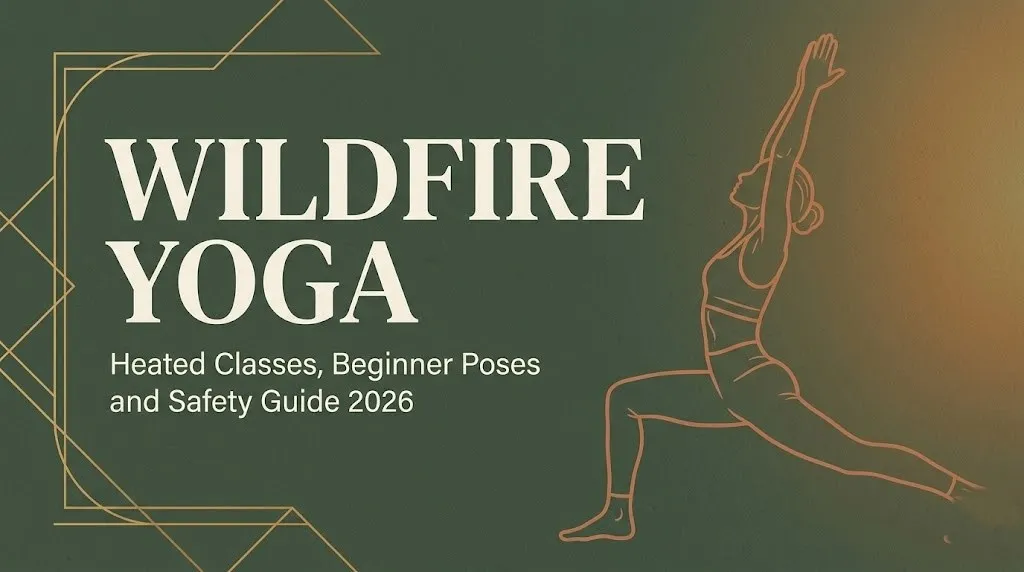
Wildfire Yoga
Wildfire Yoga is a yoga studio format built around heated practice rooms, flowing movement sequences, and classes designed to accommodate a wide range of fitness levels. The name reflects the energetic quality of the practice: dynamic, warming, and physically engaged.
Studios operating under this concept typically offer a mix of class types. You’ll find heated Vinyasa flows, slower Hatha sessions, and sometimes cooler-room Restorative classes for recovery days. The heat is a defining feature, not a gimmick.
What separates a Wildfire Yoga-style studio from a standard gym yoga class is the intentional use of environmental heat to support flexibility, increase cardiovascular demand, and encourage a focused, present-minded practice. The warm room conditions allow connective tissue, including fascia and muscle sheaths, to respond more readily to sustained stretching.
| Feature | Standard Yoga Class | Wildfire Yoga Style |
|---|---|---|
| Room Temperature | 65 to 72°F | 85 to 105°F |
| Primary Style | Hatha or Vinyasa | Heated Vinyasa or Hatha |
| Sweat Level | Low to moderate | Moderate to high |
| Best For | All levels, all seasons | Students seeking intensity and flexibility gains |
| Recovery Options | Basic cool-down | Restorative add-on classes often available |
The studio community also matters here. Wildfire Yoga-style spaces tend to attract students who are consistent, curious, and often using yoga to manage stress or maintain physical health alongside other fitness routines.
Yoga Studios Lexington KY
Lexington, Kentucky, has a growing and diverse yoga scene that reflects the city’s blend of university culture, healthcare workers, horse country outdoor enthusiasts, and a strong wellness community. Yoga studios in Lexington KY range from donation-based community spaces to premium heated studios with full amenity packages.
When evaluating any studio in Lexington, look for Yoga Alliance-registered instructors. The Yoga Alliance is the primary credentialing body for yoga teachers in the United States, requiring registered teachers to complete a minimum 200-hour training program (RYT-200) before teaching independently.
A well-run Lexington studio will offer:
- Clear class level descriptions (beginner, intermediate, all-levels)
- Introductory pricing so you can try before committing to a membership
- Props available for loan or purchase (blocks, straps, bolsters)
- Temperature information posted for heated class rooms
- Teachers who offer modifications during class without being asked
The quality of instruction varies significantly between studios. A single visit won’t always give you the full picture. Yoga teachers and physical therapists generally recommend trying at least three classes at a studio before deciding whether the teaching style and environment suit your body and goals.
Yoga in Lexington KY
Yoga in Lexington KY is widely accessible across neighborhoods, class formats, price points, and skill levels. Students in Lexington can find everything from traditional Hatha yoga (a broad category emphasizing foundational poses and breath) to Yin yoga (long-held passive stretches targeting deep connective tissue) to athletic Vinyasa flows at heated studios.
The city’s yoga culture has evolved alongside national trends. There is a noticeable shift toward therapeutic yoga offerings, including chair yoga for seniors, prenatal yoga, and yoga programs designed around chronic pain management. This mirrors findings from a study published in the International Journal of Yoga, which documented increased demand for condition-specific yoga programming across urban communities.
If you’re new to yoga in Lexington, starting with an “all-levels” or beginner-specific class is the most sensible approach. These classes move more slowly, offer more verbal instruction on alignment, and give teachers time to offer hands-on adjustments or verbal modifications without disrupting the flow of the class.
Lexington also has several free or low-cost community yoga resources, including park programs during warmer months and community classes at recreation centers. These are worth exploring before investing in a full studio membership.
Yoga Classes Lexington KY
Yoga classes in Lexington KY span multiple formats, each structured differently and suited to different goals. Knowing the difference before you book saves time and prevents discouraging mismatches between what you expected and what you encountered.
| Class Type | Duration | Temperature | Pace | Best For |
|---|---|---|---|---|
| Heated Vinyasa | 60 to 75 min | 90 to 100°F | Moderate to fast | Cardio, flexibility, heat lovers |
| Hatha | 60 min | Ambient | Slow to moderate | Alignment focus, beginners |
| Yin | 60 to 90 min | Ambient or slightly warm | Very slow | Fascia release, stress reduction |
| Restorative | 60 to 90 min | Warm | Passive | Injury recovery, nervous system reset |
| Chair Yoga | 45 to 60 min | Ambient | Slow | Seniors, limited mobility |
Most Lexington studios post their schedules online with class descriptions. Read the description carefully, not just the class name. “Flow” can mean a gentle stretch sequence or an intense 60-minute cardio workout depending on the studio’s definition.
The American College of Sports Medicine recommends that adults new to structured flexibility training start with two to three sessions per week and gradually increase frequency as tolerance builds. Yoga teachers and physical therapists echo this general guideline.
Beginner students are encouraged to arrive 10 to 15 minutes early to introduce themselves to the instructor, mention any injuries or health conditions, and get oriented to the room before other students arrive.
Key Takeaway: Yoga in Lexington KY covers a wide range of styles and temperatures; always read class descriptions before booking and arrive early to speak with your teacher if you’re new.
What Is Heated Yoga
Heated yoga refers to any yoga practice conducted in a room intentionally warmed above standard indoor temperature, typically between 85°F and 105°F, to enhance flexibility, increase sweat production, and elevate cardiovascular effort. It is not a single yoga style but rather an environmental modifier applied to existing styles like Vinyasa, Hatha, or even Restorative practice.
The rationale behind heating the room connects to basic physiology. Muscle tissue and fascia become more pliable as temperature rises, which can allow for deeper ranges of motion compared to practicing in a cool room. This does not mean the heat makes poses safer. It means the body responds differently to stretching in a warm environment, and that difference requires adjusted effort and attention.
Heated yoga differs from Bikram yoga (also known as 26 and 2 yoga), which is a specific 90-minute sequence of 26 poses and 2 breathing exercises practiced in 105°F heat with 40% humidity. Most heated yoga studios, including Wildfire Yoga-style spaces, offer heated Vinyasa or Hatha classes that do not follow the Bikram script.
Understanding this distinction matters. Bikram classes have a fixed structure. Heated Vinyasa classes vary by teacher and session. If you attend a heated class expecting one and encountering the other, the experience will feel disorienting.
How Hot Is Hot Yoga
Most heated yoga rooms operate between 85°F and 105°F, with humidity levels varying by studio from 30% to 60%. The exact temperature depends on the class format and the studio’s equipment.
Here is a practical breakdown:
| Heat Level | Temperature Range | Humidity | Sensation |
|---|---|---|---|
| Warm yoga | 80 to 89°F | 30 to 40% | Mild warmth, noticeable sweat |
| Hot yoga | 90 to 99°F | 40 to 50% | Significant sweat, elevated heart rate |
| Bikram-style | 105°F | 40% | Intense heat, maximum sweat |
The body responds to these conditions with thermoregulation: blood vessels near the skin dilate to release heat, sweat glands become highly active, and the heart works harder to maintain core temperature. This is why heart rate in a heated yoga class can mirror a moderate-intensity aerobic workout, even during slow poses.
The American College of Sports Medicine notes that exercise in hot environments increases cardiovascular demand beyond what the movement alone would produce. This is relevant information for anyone with a heart condition, high blood pressure, or heat sensitivity.
First-time students often underestimate how demanding the heat component feels. Plan to spend the first class simply staying in the room comfortably rather than pushing your poses to their maximum range.
Beginner Yoga Lexington KY
Beginner yoga in Lexington KY is genuinely approachable at most reputable studios, especially those that offer a dedicated beginner series or introductory workshop separate from all-levels drop-in classes. A true beginner class moves at a pace that allows teachers to explain pose names, demonstrate alignment, and offer modifications before the class gets moving.
The most common obstacle for beginners is not inflexibility. It is unfamiliarity with the vocabulary. Yoga teachers call out Sanskrit and English pose names, often quickly and without visual demonstration mid-class. Learning 10 to 12 foundational pose names before your first class makes a measurable difference in how much you can follow and enjoy the experience.
Ten foundational pose names worth knowing before class:
- Tadasana (Mountain Pose): standing upright, feet together or hip-width apart
- Adho Mukha Svanasana (Downward-Facing Dog): inverted V shape on hands and feet
- Balasana (Child’s Pose): kneeling rest position, hips toward heels
- Virabhadrasana I (Warrior I): deep lunge with arms overhead
- Virabhadrasana II (Warrior II): wide stance, arms extended, gaze forward
- Uttanasana (Standing Forward Fold): hinge at hips, chest toward legs
- Bhujangasana (Cobra Pose): prone backbend lifting the chest
- Savasana (Corpse Pose): final resting pose lying flat
- Sukhasana (Easy Seated Pose): cross-legged seated position
- Utkatasana (Chair Pose): deep knee bend with arms raised
Key Takeaway: Beginners who learn 10 foundational pose names before their first Lexington yoga class follow along more easily and feel less lost during instruction.
What to Expect at Your First Yoga Class
Your first yoga class will include a structured opening, a movement sequence, and a closing rest period, regardless of the studio or style. Most 60-minute classes follow a predictable arc: centering breath work, warm-up poses, a core sequence of standing or seated poses, and a final Savasana (Corpse Pose) lasting five to ten minutes.
The teacher will likely open by asking if anyone is new. Say yes. This signals the instructor to keep an eye on your alignment and offer modifications before you need to ask. Good teachers do this automatically. Great teachers make it feel seamless.
Here is what a typical 60-minute beginner class looks like:
| Time | Phase | What Happens |
|---|---|---|
| 0 to 5 min | Centering | Seated breathing, body scan, intention setting |
| 5 to 15 min | Warm-Up | Gentle movement, Cat-Cow, Downward Dog |
| 15 to 45 min | Main Sequence | Standing poses, lunges, balances, twists |
| 45 to 55 min | Cool-Down | Seated stretches, hip openers, gentle folds |
| 55 to 60 min | Savasana | Final rest in stillness |
Expect to feel uncertain. That feeling fades after two or three classes. Your body is learning a new physical vocabulary, and that takes repetition, not perfection.
One practical note: remove socks before class. Bare feet provide grip and proprioceptive feedback on the mat. Yoga socks with grip pads are an acceptable alternative if you prefer not to practice barefoot.
Yoga Poses for Beginners
The most effective beginner yoga poses target the large muscle groups that tend to shorten from prolonged sitting: the hip flexors, hamstrings, thoracic spine rotators, and shoulder girdle. Starting with poses that address these areas gives beginners the fastest functional improvements.
Adho Mukha Svanasana (Downward-Facing Dog) is one of the most fundamental poses in beginner practice. It simultaneously stretches the hamstrings, calves, and spinal extensors while building shoulder and upper-body strength.
To practice Adho Mukha Svanasana (Downward-Facing Dog):
- Start on hands and knees, wrists directly under shoulders.
- Tuck toes under and press the floor away as you lift hips toward the ceiling.
- Keep a slight bend in the knees if hamstrings are tight.
- Press through the base of each finger to protect the wrists.
- Hold for 5 breath cycles (approximately 30 seconds), then lower to Child’s Pose.
Modification for beginners or wrist sensitivity: Place hands on two yoga blocks at their tallest height, or perform the pose with hands on the seat of a sturdy chair, keeping the body at an angle rather than fully inverted.
Virabhadrasana I (Warrior I) is equally foundational. It strengthens the quadriceps, glutes, and spinal extensors while opening the hip flexors of the back leg. The arms reaching overhead adds a shoulder and chest opener that counters forward-rounded posture.
Modification for knee sensitivity: Reduce the depth of the front knee bend so the knee stays at a 90-degree angle or less, tracking over the second toe, never collapsing inward.
Vinyasa Yoga for Beginners
Vinyasa yoga is a style where poses are linked together through breath-synchronized movement, creating a flowing sequence rather than a series of static holds. The word Vinyasa translates roughly to “placing in a special way,” referring to the deliberate connection between breath and movement.
For beginners, Vinyasa feels fast at first. The teacher calls transitions on an inhale or exhale, and the class moves together. Keeping up takes practice. The most important beginner strategy in a Vinyasa class is this: your breath always matters more than matching the teacher’s exact position.
A study published in the International Journal of Yoga found that breath-synchronized movement practices like Vinyasa produced measurable reductions in resting heart rate and reported stress levels after eight weeks of regular practice, compared to control groups.
| Vinyasa Element | Beginner Approach | Why It Helps |
|---|---|---|
| Breath cues | Follow the breath first, pose second | Prevents overexertion and builds body awareness |
| Chaturanga (low plank) | Use knees down variation | Protects shoulders during strength transitions |
| Pace | Take Child’s Pose whenever needed | Regulates heart rate, prevents overheating |
| Transitions | Watch and observe first | Reduces injury risk from rushed movement |
The Chaturanga Dandasana (Four-Limbed Staff Pose), a low push-up position used to transition between poses in Vinyasa flows, is one of the most commonly performed incorrectly by beginners. The shoulders should not drop below elbow height, as this places excessive stress on the rotator cuff. Keeping the knees down removes this risk until shoulder strength is established.
Key Takeaway: In Vinyasa yoga, following your breath accurately matters more than matching every pose perfectly, especially in your first months of practice.
Heated Yoga Benefits
Heated yoga produces a distinct set of physical and psychological benefits that differ from practicing in an ambient-temperature room. The combination of yoga’s movement patterns with heat-induced physiological responses creates an experience that addresses flexibility, cardiovascular health, and mental focus simultaneously.
According to a study published in the Journal of Alternative and Complementary Medicine, participants who practiced heated yoga three times weekly for eight weeks showed improvements in flexibility, lower body strength, and cardiovascular performance compared to those who practiced yoga at room temperature.
Key benefits supported by current research and clinical observation:
- Increased range of motion: Warm connective tissue responds more readily to sustained stretching, allowing deeper access to hip openers, forward folds, and spinal twists.
- Elevated caloric expenditure: The additional cardiovascular demand of the heated environment raises energy output beyond what the poses alone would generate.
- Improved circulation: Heat causes peripheral vasodilation, increasing blood flow to muscles and joints during practice.
- Mental focus sharpening: The heat demands constant present-moment attention, which many practitioners and yoga teachers describe as a forced mindfulness effect.
- Detoxification via sweat: While the liver and kidneys are the body’s primary detox organs, sweating does eliminate some waste products through the skin. Research on this specific benefit is preliminary and should not be overstated.
Modifications for those new to heat: Begin with classes at the lower end of the temperature range (80 to 85°F) before attempting 100°F sessions. Many studios offer tiered temperature options within their weekly schedule.
Yoga for Stress Relief
Yoga reliably reduces physiological markers of stress, including circulating cortisol levels, resting heart rate, and self-reported anxiety scores, across multiple peer-reviewed studies. This is one of yoga’s most well-supported and consistently replicated benefits.
The mechanism works through the parasympathetic nervous system, the branch of the autonomic nervous system responsible for the “rest and digest” response. Sustained yoga practice, especially practices that include breath work (pranayama) and a final Savasana, has been shown to activate this system and reduce the dominance of the stress-related sympathetic response.
According to the National Center for Complementary and Integrative Health, yoga is one of the most-studied complementary practices for mental health support, with evidence supporting its use as an adjunct approach for anxiety, depression, and sleep disturbance.
Ujjayi pranayama (victorious breath or ocean breath), a breath technique common in Vinyasa and heated yoga classes, involves slightly constricting the back of the throat on both the inhale and exhale, creating an audible sound. This technique slows the breath, which directly signals the nervous system to downshift from a stress response.
To practice Ujjayi breath:
- Breathe in through the nose, slightly narrowing the throat.
- Exhale through the nose with the same gentle constriction.
- Aim for 4 to 6 counts on the inhale and 4 to 6 counts on the exhale.
- Let the sound guide you: it should resemble a soft ocean wave, not a forced wheeze.
Even two weekly yoga sessions have been shown in Complementary Therapies in Medicine studies to produce meaningful reductions in self-reported stress and improved sleep quality over a six-week period.
What to Bring to Hot Yoga
Arriving prepared for a heated yoga class makes a real difference in how comfortable and safe your practice feels. The heat component changes the standard yoga class packing list considerably.
Essential items for a hot yoga class:
- Non-slip yoga mat: A standard PVC mat becomes slippery when wet with sweat. A mat with a textured or absorbent surface, or a hot yoga mat with built-in grip, is the practical choice.
- Microfiber towel: Placed over your mat to absorb sweat during class. A second smaller towel for your face and hands is worth adding.
- Water bottle: Minimum 24 ounces. The American College of Sports Medicine recommends drinking 17 to 20 ounces of water two hours before exercise in heat and continuing to hydrate throughout.
- Moisture-wicking clothing: Synthetic fabrics or bamboo blends that pull sweat away from skin. Avoid cotton, which holds moisture and becomes heavy quickly.
- Electrolyte supplement: Optional but recommended for longer classes or individuals prone to cramping. A drink with sodium, potassium, and magnesium helps replace what sweat removes.
| Item | Standard Yoga Class | Hot Yoga Class |
|---|---|---|
| Mat | Any yoga mat | Non-slip or hot yoga-specific mat |
| Towel | Optional | Required |
| Water | Bring if desired | Required, minimum 24 oz |
| Clothing | Any comfortable activewear | Moisture-wicking, minimal layers |
| Electrolytes | Not needed | Recommended, especially for 60+ min classes |
Skip heavy meals for two to three hours before a heated class. A small snack (banana, handful of nuts) one hour before is acceptable. Practicing on a full stomach in high heat increases the risk of nausea.
Key Takeaway: For hot yoga, a non-slip mat, a microfiber towel, and adequate pre-class hydration are the three items that separate a good first class from an uncomfortable one.
Is Hot Yoga Safe for Beginners
Hot yoga is safe for most healthy beginners when approached gradually, with adequate hydration and realistic expectations about what the first few sessions will feel like. The key phrase is “most healthy beginners.” The heat component adds a layer of physiological demand that beginner yoga at room temperature does not include.
A study published in Complementary Therapies in Medicine followed sedentary adults through an eight-week heated yoga program. Participants adapted well to the heat over the course of several sessions, with cardiovascular markers normalizing as fitness improved. The first two sessions were reported as the most physically demanding, not because of the yoga poses but because of thermoregulation demands.
Signs that you are handling the heat appropriately:
- Breathing remains controlled and not panicked
- You feel warm and sweaty but not dizzy or nauseated
- You can take a brief rest in Balasana (Child’s Pose) and feel better within 30 seconds
Signs that you should leave the room immediately and cool down:
- Sudden nausea or dizziness
- Tunnel vision or light-headedness
- Rapid, shallow breathing that won’t slow down
- Feeling of confusion or disorientation
If you experience any of these symptoms, sit or lie down in a cool area and drink water slowly. Anyone managing a cardiovascular condition, using medications that affect heat tolerance or blood pressure, or currently pregnant should speak with their treating physician before attending a heated yoga class, explaining the specific temperature range of the class they plan to attend.
Who Should Avoid Hot Yoga
Certain populations face genuine health risks from practicing yoga in high-heat environments and should either avoid heated classes entirely or receive explicit clearance from a physician before attending.
Populations who should exercise strong caution or avoid heated yoga:
- People with cardiovascular conditions: The heat significantly increases heart rate and places additional demand on the circulatory system. Heart disease, arrhythmia, and uncontrolled hypertension each raise the risk profile.
- Pregnant individuals: Heat exposure in the first trimester carries documented risks to fetal development. The American College of Obstetricians and Gynecologists advises pregnant people to avoid raising core body temperature above 102.2°F during exercise.
- People with heat intolerance disorders: Including multiple sclerosis, in which elevated body temperature can temporarily worsen neurological symptoms (a phenomenon called Uhthoff’s phenomenon).
- Those on certain medications: Diuretics, beta-blockers, antidepressants, and antihistamines can each impair the body’s thermoregulatory response, making heat environments riskier than normal.
- Recent illness with dehydration: Even moderate dehydration before class significantly increases heat stress risk.
| Condition | Recommendation |
|---|---|
| Hypertension (controlled) | Get physician clearance; start with lowest-heat class |
| Pregnancy | Avoid heated yoga; choose prenatal yoga at room temperature |
| Multiple sclerosis | Avoid heated yoga; non-heated Restorative or Yin recommended |
| Cardiovascular disease | Physician clearance required; start at lowest heat |
| Currently dehydrated | Postpone class; rehydrate fully before next session |
Ambient-temperature yoga classes, including Hatha, Yin, and Restorative formats, remain appropriate for most people in these groups and offer substantial benefits without the heat-related risk.
Yoga Props for Beginners
Yoga props are tools that make poses more accessible, safer, and more effective, not indicators of weakness or inability. The six foundational props used in most yoga studios serve specific mechanical purposes that change how a pose acts on your body.
The six core beginner props:
- Yoga blocks: Firm foam or cork rectangles that raise the floor to meet your hands. Used in standing folds, balances, and seated poses where the floor is out of reach.
- Yoga strap: A long fabric belt that extends your reach in poses requiring arm or leg flexibility you haven’t yet developed. Used in seated forward folds, shoulder openers, and reclined leg stretches.
- Bolster: A firm cylindrical or rectangular cushion that supports the body in passive poses. Common in Restorative yoga and Yin practice.
- Blanket: Folded under the sit bones in seated poses, or used for warmth in Savasana and Restorative class.
- Yoga mat: The foundational surface. Non-slip, at least 3mm thick for cushioning. Standard length is 68 inches; taller practitioners benefit from 72 to 74-inch options.
- Wall: Not a purchasable prop but an underused one. The wall supports balance poses, assists inversions safely, and provides resistance for leg stretches.
| Prop | Primary Use | Cost Range |
|---|---|---|
| Yoga blocks (pair) | Floor elevation, balance support | $10 to $30 |
| Yoga strap | Reach extension in flexibility poses | $10 to $20 |
| Bolster | Passive support in Restorative/Yin | $30 to $80 |
| Blanket | Seated cushion, warmth | $15 to $40 |
| Non-slip mat | Practice surface | $25 to $120 |
Most studios provide blocks and straps on loan at no charge. For your first several classes, use what the studio offers. Buy only what you consistently reach for before investing in a full home prop kit.
Key Takeaway: Blocks and a strap are the two props that improve a beginner’s experience most immediately. Start there before buying anything else.
Frequently Asked Questions About Wildfire Yoga
What makes Wildfire Yoga different from a regular yoga class?
Wildfire Yoga classes take place in a heated room, typically between 85°F and 105°F, which raises cardiovascular demand and increases the pliability of connective tissue during poses.
This environmental difference changes how the practice feels, how much you sweat, and how you need to prepare compared to a standard ambient-temperature class.
The yoga styles practiced are similar to non-heated studios, including Vinyasa and Hatha, but the heat adds a distinct physical and mental challenge.
How many times per week should a beginner attend yoga classes in Lexington KY?
Most yoga teachers and physical therapists recommend two to three sessions per week for beginners establishing a new practice.
This frequency allows adequate recovery between sessions while building enough consistency to develop body awareness, strength, and flexibility.
After four to six weeks, you can increase to four or five sessions if your body is recovering well and you are not experiencing persistent soreness.
What should I eat before a heated yoga class?
Avoid heavy meals for two to three hours before a heated yoga class to prevent nausea in the warm environment.
A small, easily digestible snack like a banana, a handful of almonds, or a small portion of yogurt consumed one hour before class is generally well tolerated.
Prioritize hydration over food: drinking 17 to 20 ounces of water two hours before class matters more than your pre-class meal choices.
Can I do hot yoga if I have high blood pressure?
Hot yoga may be appropriate for individuals with controlled hypertension, but you should describe the specific class temperature and duration to your treating physician before attending.
The heated environment raises heart rate and places additional demand on the cardiovascular system, which requires individual risk assessment based on your current medication and blood pressure readings.
Non-heated yoga classes, including Hatha, Yin, and Restorative formats, are well-documented as safe and beneficial for cardiovascular health and may be a better starting point.
What yoga props do I actually need as a beginner?
A pair of yoga blocks and a yoga strap are the two props that most immediately improve a beginner’s experience by making poses accessible without straining for flexibility you haven’t yet developed.
A good non-slip mat is the foundational investment, particularly for heated classes where sweat makes grip essential.
Everything else, including bolsters, blankets, and specialty mats, can wait until you’ve practiced consistently for several weeks and identified what your specific body and practice style actually need.
Start Here, Stay Consistent
The most useful thing you can do after reading this guide is show up for a class. Bring water, wear something moisture-wicking, and tell the teacher you’re new. That’s all the preparation you actually need.
Pick one class on the Wildfire Yoga schedule that fits your week. Commit to three sessions before deciding whether the style is right for you. Your first class will feel unfamiliar. Your second will feel easier. By the third, you’ll have a sense of whether this is a practice worth building.
Two blocks, a strap, and a well-hydrated body will carry you further than the most expensive mat on the market.