Yoga Pointe Lakeland FL: Classes and Studio Guide 2026
Yoga Pointe is a yoga studio serving the Lakeland, Florida community with classes designed for students at every level, from complete beginners stepping onto a mat for the first time to experienced practitioners looking for a consistent local home for their practice. Whether you are searching specifically for Yoga Pointe or comparing yoga options across Lakeland more broadly, this guide gives you the practical information you need to make a confident choice.
Yoga has become one of the most widely practiced complementary health approaches in the United States. According to the National Center for Complementary and Integrative Health, approximately 21 million American adults practiced yoga in 2023, with stress reduction, flexibility, and back pain management cited as the top motivations for starting.
This guide covers what to expect at Yoga Pointe and other Lakeland studios, how to choose among styles including hot yoga, Hatha, Vinyasa, Yin, and Restorative, and specific guidance for beginners, seniors, people managing back pain, athletes, and anyone building a home practice alongside studio classes.
Yoga Pointe Lakeland FL: What It Is and What to Expect
Yoga Pointe is a yoga studio located in Lakeland, FL, offering a range of class formats for students across experience levels, from introductory sessions to more physically demanding flows and heated class options. The studio’s name and community orientation reflect a practice-first approach that emphasizes consistency and accessibility over advanced performance.
What distinguishes Yoga Pointe within the Lakeland yoga landscape is its focus on building a genuine local community around practice. Smaller class sizes mean teachers can give individual attention, which matters enormously for beginners learning alignment and for people managing specific health concerns who need modifications.
Lakeland’s warm Florida climate creates specific context for any yoga studio operating here. The outdoor heat means students often arrive already warm, which affects how the body responds to heated classes in particular. Teachers at a well-run Lakeland studio account for this by reminding students to hydrate before, during, and after class and by creating appropriate ventilation for unheated sessions.
A first visit to Yoga Pointe Lakeland follows a welcoming and organized structure. Arrive ten to fifteen minutes early. Meet the teacher before class begins. Mention any injuries, recent surgeries, or health concerns you want them to know about.
Pose Tip:
- Your first class at any studio will feel unfamiliar. That is expected and does not mean the studio or style is wrong for you.
- Balasana (Child’s Pose) is your rest position. You can take it at any point during class, for any reason, without explanation.
- If you leave your first class feeling tired but calm, that is the correct response. If you leave in pain, the class was likely not at the right level for your current body.
Yoga Studios in Lakeland FL: How to Choose the Right One
Choosing a yoga studio in Lakeland, FL means matching what the studio offers to what your body, schedule, and comfort level actually need. Not every studio is right for every student, and knowing what to evaluate before you book prevents the frustration of a first class that felt wrong for reasons you could not identify.
Teacher credentials are the first thing to check. Yoga Alliance, the primary accrediting body for yoga teachers in the United States, certifies teachers at the 200-hour (RYT-200) and 500-hour (RYT-500) levels. A teacher with a verifiable Yoga Alliance registration has completed structured training in anatomy, teaching methodology, and pose safety. You can confirm a teacher’s registration through the Yoga Alliance public directory.
Class size matters more than most beginners realize. A class of eight to twelve students gives the teacher real capacity to notice misalignment, offer you a verbal cue, and check in with each person individually. A class of thirty reduces that to broad announcements and occasional visual sweeps of the room. For your first several classes, smaller is meaningfully better.
Trial class policies are your practical evaluation tool. Most Lakeland studios offer a first class free or a discounted introductory week. Use this offer to evaluate not just the physical experience but the teacher’s communication style, the room’s environment, and how the other students in the class make you feel. No amount of website reading substitutes for thirty minutes in the actual room.
| What to Evaluate | Why It Matters | What to Look For |
|---|---|---|
| Teacher credentials | Safety and instructional quality | RYT-200 or RYT-500 from Yoga Alliance |
| Class size | Individual attention and modification | Under 15 students for beginners |
| Style offered | Matches your body and goals | Hatha or Restorative for first-timers |
| Trial class policy | Low-risk evaluation | Free first class or intro week discount |
| Schedule | Consistency builds habit | Multiple time slots per week |
| Props available | Accessibility for all body types | Blocks, straps, bolsters on site |
| Studio temperature | Especially relevant in Florida | Ask specifically about room temp |
Yoga Classes Lakeland: Styles Available and Who They Suit
The yoga classes available in Lakeland, FL include several distinct styles that produce different physical and physiological effects. Choosing the wrong style is the most common reason a new student quits after one or two classes. Knowing what each style delivers helps you pick the right starting point.
Hatha yoga is the broadest category and typically refers to slower-paced classes holding individual poses for several breath cycles. Most beginner classes are Hatha-based. If a class is labeled simply “yoga” without a style modifier, it is likely Hatha-influenced. The emphasis is on alignment, breath, and body awareness.
Vinyasa yoga links poses through breath-directed transitions. Inhale lifts you into a pose; exhale carries you to the next. The body rarely rests between shapes. Cardiovascular demand is higher than Hatha. Beginners can attend Vinyasa classes, but look specifically for classes labeled “slow flow” or “level 1 Vinyasa” as your starting point.
Yin yoga holds poses passively for two to five minutes, targeting the deep connective tissue and fascia around the joints rather than the muscles. It is physically quiet but mentally demanding. The sensation can feel unfamiliar or even uncomfortable in a productive way.
Restorative yoga fully supports the body in passive shapes using props, with zero muscular effort required. The goal is nervous system downregulation. This is the style most consistently effective for stress recovery and sleep improvement.
| Style | Pace | Physical Demand | Best For | Hold Duration |
|---|---|---|---|---|
| Hatha | Slow to moderate | Low to moderate | Beginners, all ages | 3 to 5 breaths |
| Vinyasa | Moderate to fast | Moderate to high | Active adults, cross-training | 1 to 3 breaths |
| Yin | Very slow | Low physically | Flexibility, joint health, stress | 2 to 5 minutes |
| Restorative | Stillness | None | Illness recovery, sleep, stress | 5 to 20 minutes |
| Hot Yoga | Moderate | Moderate plus heat | Heat-tolerant adults | Varies by format |
Key Takeaway: Choosing the right yoga style matters more than choosing the right studio. Hatha and Restorative are the lowest-barrier entry points for new students and people managing health conditions. Arrive knowing which style you are attending before you walk in the door.
Hot Yoga Lakeland: What You Need to Know Before You Go
Hot yoga in Lakeland, FL carries specific safety considerations that are more important here than in most other parts of the country because of the local climate. Hot yoga refers to any class practiced in a room heated to 85 to 105 degrees Fahrenheit with added humidity. Bikram yoga, also called 26 and 2 yoga, uses a fixed sequence of 26 poses in a 105-degree room. Other studios use the heated room format with different sequences.
Lakeland’s outdoor temperatures regularly exceed 90 degrees Fahrenheit during summer months. This means students arriving from a parking lot, a car, or any outdoor activity may already have an elevated core body temperature before class begins. That starting point reduces the body’s remaining thermoregulatory buffer significantly.
People with cardiovascular disease, uncontrolled high blood pressure, a history of heat stroke or heat exhaustion, pregnancy, or any condition that impairs thermoregulation should speak with their cardiologist or primary care physician before attempting hot yoga, specifically because the risk profile is materially different from unheated yoga.
According to the American College of Sports Medicine, exercising in environments above 80 degrees Fahrenheit increases cardiovascular demand measurably compared to the same exercise in thermoneutral conditions. For healthy adults, that demand is manageable with proper hydration and gradual acclimatization. For those with underlying conditions, it requires medical evaluation first.
For healthy first-timers attending hot yoga in Lakeland:
- Drink at least 16 to 20 ounces of water in the two hours before class. Arrive hydrated, not just thirsty.
- Eat a light meal no less than two hours before class. A full stomach in extreme heat causes nausea in most people.
- Sit or lie down immediately if you feel dizzy, nauseated, or lightheaded. Leaving the room is always the right choice.
- Bring a large towel and a full water bottle. Expect to sweat more than in any unheated class.
- Do not attend your first hot yoga class the day after strenuous outdoor activity or any day when you have been in the Florida sun for extended periods.
Hatha and Vinyasa Yoga in Lakeland: Key Differences
Hatha yoga and Vinyasa yoga are the two most commonly offered styles in Lakeland studios, and they differ enough in pace, physical demand, and internal experience that choosing between them is worth thinking through before your first class.
Hatha yoga gives each pose its own space. You arrive in the shape, settle your breath, feel the alignment, and hold for several counts before moving on. The teacher typically explains each pose in detail before students move into it. This pacing creates real opportunity for body awareness development, which is why most yoga teachers recommend Hatha as the primary starting point for new students.
Vinyasa yoga is movement as meditation. Poses flow continuously, linked by breath. The sequence builds heat in the body through movement rather than room temperature. The physical demand is higher because the body does not rest between poses in the way it does in Hatha. Students who enjoy a cardiovascular dimension to their movement practice tend to prefer Vinyasa once they have built foundational body awareness in Hatha.
Think of Hatha like learning individual words before you construct sentences. Vinyasa is the sentence. Showing up to a Vinyasa class before you know the individual words creates frustration rather than flow. A few weeks of Hatha first makes Vinyasa significantly more accessible and more rewarding.
The good news for Lakeland students is that most studios offering both styles allow you to attend a Hatha class and a Vinyasa class in the same week. Using one as your learning environment and the other as your movement outlet is a genuinely effective approach that experienced teachers often recommend.
Pose Tip:
- In Hatha, if the teacher offers a choice between versions of a pose, always choose the version where your breathing stays comfortable. That is the appropriate level for your current body.
- In Vinyasa, it is always acceptable to hold Adho Mukha Svanasana (Downward-Facing Dog) or Balasana (Child’s Pose) instead of completing the next transition if you need a moment to recover your breath.
- Modification for wrist pain: practice Downward-Facing Dog on fists in both styles. This reduces wrist extension load considerably.
Yin and Restorative Yoga in Lakeland FL
Yin yoga and Restorative yoga are the two quietest and most internally directed styles available in Lakeland studios, and they are frequently misunderstood as identical. They are not. Understanding the difference helps you choose the right tool for what your body needs on any given week.
Yin yoga holds poses for two to five minutes, targeting the deep connective tissue layers (fascia, joint capsule tissue, ligaments) rather than the muscles. The muscles relax as completely as possible, and the sustained duration allows the deeper tissues to experience a gentle, prolonged load. The sensation can range from mild to intense, and a degree of productive discomfort is considered appropriate in Yin practice. According to the American College of Sports Medicine, sustained low-load stretching held for more than 90 seconds produces greater long-term connective tissue adaptations than shorter, more intense stretching approaches.
Restorative yoga uses props to fully support the body in passive shapes, with the goal of producing zero muscular effort. There is no discomfort. The body is entirely held by bolsters, blankets, and blocks in positions specifically designed to activate the parasympathetic nervous system. A single Restorative session of 45 minutes can produce measurable reductions in cortisol and heart rate.
Florida’s climate makes both of these styles particularly well-suited to Lakeland students. After spending time in heat, humidity, and the low-grade physiological stress that comes with outdoor Florida summers, a Yin or Restorative class provides a genuine recovery experience for the nervous system that other styles do not replicate.
| Feature | Yin Yoga | Restorative Yoga |
|---|---|---|
| Hold duration | 2 to 5 minutes | 5 to 20 minutes |
| Sensation | Mild to intense, productive | Comfortable, no effort |
| Muscular engagement | Fully released | Zero |
| Primary target | Fascia, joint capsule | Nervous system |
| Props used | Blocks, bolsters, blankets | Extensive props throughout |
| Best for | Flexibility, joint health, stress | Recovery, illness, sleep, anxiety |
Beginner Yoga Lakeland: Your First Class Guide
Your first yoga class in Lakeland should feel welcoming, not sorted or competitive. The right beginner class does exactly that: it introduces foundational poses one at a time, explains alignment in clear language, and creates an environment where asking for help feels natural rather than embarrassing.
Look for classes explicitly labeled “beginner,” “level 1,” or “all levels welcome.” These labels are not marketing decoration. They signal that the teacher has designed the class for students who do not yet know Sanskrit pose names, who may not be flexible, and who need more time in each pose than an intermediate student does.
Before your first class, arrive ten to fifteen minutes early. Introduce yourself to the teacher and mention any physical limitations, recent injuries, or health conditions you want them to know about. A thirty-second conversation before class can completely change how a teacher approaches their instruction for everyone in the room.
According to the National Center for Complementary and Integrative Health, yoga is most consistently beneficial when practiced at an appropriate intensity for the individual student. Starting at the wrong level, too advanced or too passive, reduces both the physical benefit and the likelihood of continuing past the first few sessions.
- You do not need to be flexible to start yoga. Flexibility is a result of practice, not a requirement to begin.
- Wear close-fitting clothes that allow a full range of hip and shoulder movement. Loose fabric falls toward your face in forward folds and inversions.
- Bring your own mat if you have one. Most studios provide loaner mats, but borrowing adds a logistical step that some beginners find distracting in an already unfamiliar environment.
- Leave your phone in your bag, not on silent. Even the vibration of a notification is disruptive in a quiet yoga class.
Key Takeaway: Arriving ten minutes early, telling the teacher your name and any physical concerns, and committing to at least three classes before drawing conclusions about whether yoga is right for you are the three most practical steps any beginner can take.
Yoga Poses for Beginners to Start With at Home
The best starting poses for yoga beginners build body awareness, introduce foundational alignment, and develop functional strength without requiring pre-existing flexibility. This five-pose home sequence can be practiced any day, with or without props, and takes approximately twenty minutes.
To practice this beginner home yoga sequence:
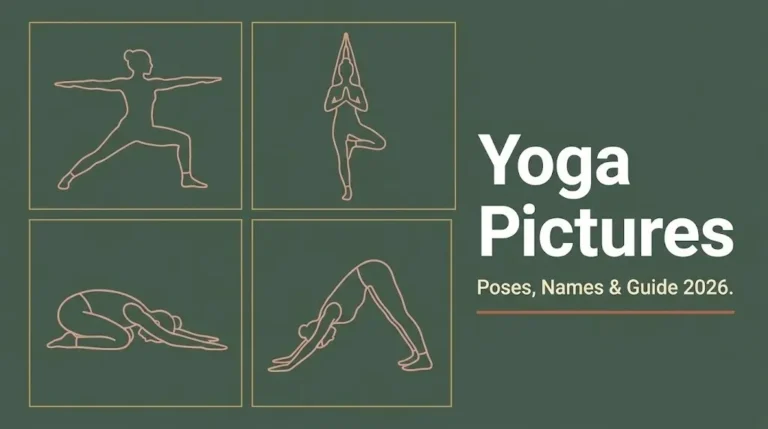
- Stand at the top of your mat in Tadasana (Mountain Pose). Feet hip-distance apart, weight distributed evenly across both feet. Stack hips over ankles, shoulders over hips. Close your eyes and take ten slow breaths. Modification: stand near a wall for balance support.
- From Tadasana, hinge at the hips and fold forward into Uttanasana (Standing Forward Bend). Bend your knees generously. Let your head hang. Hold for five breaths. Modification: place hands on yoga blocks or shins. Do not force the legs straight.
- Move to hands and knees (Table Top). Press hands firmly, spread fingers. Lift hips into Adho Mukha Svanasana (Downward-Facing Dog). Keep knees bent as needed. Hold for five breaths. Modification: practice on fists if wrists are uncomfortable.
- Lower hips toward heels in Balasana (Child’s Pose). Arms extend forward or rest alongside the body. Hold for five to ten breaths. Modification: place a folded blanket between thighs and calves if knees are sensitive.
- Lie on your back. Feet flat on the mat, knees bent. Press feet down and lift hips into Setu Bandha Sarvangasana (Bridge Pose). Hold for five breaths, then lower slowly. Modification: place a yoga block under the sacrum for supported Bridge.
- Release flat. Rest in Savasana (Corpse Pose) for three to five minutes. This is the most important pose in the sequence. Do not skip it.
Yoga for Seniors in Lakeland FL
Yoga for seniors in Lakeland, FL is both widely available and genuinely appropriate for older adults, particularly because Florida’s large and active retirement community has created real demand for yoga programming designed with aging bodies in mind. The goal is not to achieve complex poses. It is to maintain mobility, reduce fall risk, support joint health, and sustain the functional strength that makes daily life easier and more independent.
According to the National Center for Complementary and Integrative Health, research supports yoga as an effective practice for older adults managing osteoarthritis, chronic lower back pain, and balance-related fall risk. Studies indicate that consistent yoga practice over eight to twelve weeks improves balance scores and reduces fear of falling in adults over 65.
The best yoga styles for seniors in Lakeland are Hatha yoga, Restorative yoga, and Chair yoga. All three can be adapted with props, require no prior yoga experience, and are low-impact enough to accommodate common age-related conditions including osteoporosis, arthritis, reduced range of motion, and chronic pain.
Florida’s year-round warm climate is an advantage for senior yoga practitioners: the ambient warmth means muscles and joints are typically less stiff when arriving at class than they would be in colder climates. However, hydration is more important in a warm climate, and seniors should drink water before class even if they do not feel thirsty.
| Senior Concern | Recommended Style | Key Benefit | Key Modification |
|---|---|---|---|
| Balance and fall risk | Hatha or Chair Yoga | Proprioceptive training | Wall support, chair as prop |
| Arthritis in hands/wrists | Restorative | Minimal weight-bearing | Forearms instead of palms |
| Osteoporosis | Gentle Hatha | Safe bone loading | Avoid deep forward spinal flexion |
| Chronic lower back pain | Yin or Restorative | Supported muscle release | Bolster under spine, reclined poses |
| Sleep disruption | Restorative | Parasympathetic activation | Evening class or bedtime sequence |
Chair Yoga Lakeland: Accessible Yoga for Every Body
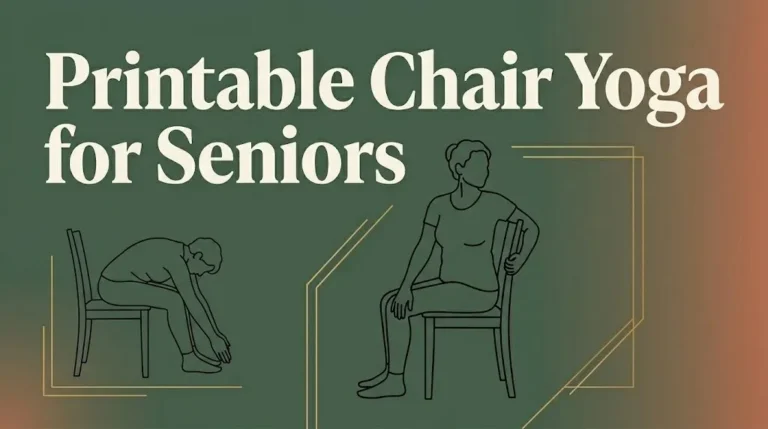
Chair yoga is a complete yoga practice adapted so that most or all poses are performed while seated in or standing beside a standard sturdy chair. It is not a simplified version of yoga. It is a purposeful adaptation that makes the full benefits of yoga accessible to people who cannot comfortably sit on the floor, bear weight on their hands and wrists, or transition between floor and standing positions repeatedly.
Chair yoga is appropriate for seniors, people recovering from surgery or injury, individuals with neurological conditions, anyone managing severe arthritis, and people who want to practice yoga at a desk or in a workplace setting without changing clothes or unrolling a mat.
According to a study published in the Journal of Alternative and Complementary Medicine, chair yoga participants over the age of 65 showed statistically meaningful reductions in pain intensity and fatigue after an eight-week chair yoga program compared to control groups receiving health education only. Participants also reported improved balance confidence after the program, which directly relates to fall risk reduction.
To practice a basic seated version of Virabhadrasana II (Warrior II) in a chair:
- Sit sideways on a sturdy chair with your right hip facing the chair back. Plant your right foot flat on the floor, toes pointing toward the chair back.
- Extend your left leg out to the side as far as comfortable, foot flat on the floor or resting on the toes.
- Open your arms wide: right arm reaching toward the chair back, left arm reaching behind you.
- Turn your gaze over your right hand. Hold for three to five breaths.
- Release arms, draw the left leg back, and repeat on the other side.
Modification: If one leg does not extend easily sideways, shorten the distance. Keep both feet parallel and simply open the arms without the leg extension as an introductory version.
Key Takeaway: Chair yoga produces measurable reductions in pain intensity and fatigue in adults over 65 after just eight weeks. It is not a beginner option that leads somewhere else. It is a complete and legitimate yoga practice in its own right.
Yoga for Back Pain and Injury Recovery in Lakeland
Yoga is one of the most well-researched complementary approaches for chronic lower back pain, and Lakeland students managing back issues have real, evidence-based reasons to include yoga in their self-care alongside any prescribed medical treatment.
Research published in the Spine Journal found that yoga-based interventions for non-specific chronic lower back pain produced improvements in pain intensity and functional disability scores comparable to standard physical therapy over twelve weeks of consistent practice. That comparison is not a reason to skip physical therapy. It is a reason to consider yoga as a meaningful complement to it.
The poses most consistently well-tolerated for lower back pain include Balasana (Child’s Pose), Setu Bandha Sarvangasana (Bridge Pose), Supta Baddha Konasana (Reclined Bound Angle Pose), and gentle supine spinal twists performed lying on the back. Poses that load the lumbar spine in flexion under body weight, including standing forward bends with a flat back, should be approached with caution if lumbar disc involvement is present.
If you are managing a diagnosed spinal condition or recovering from orthopedic surgery, describe your specific movement restrictions to the yoga teacher before class. Ask specifically: which directions of spinal movement are restricted, how much weight-bearing through hands and knees is safe, and whether there are poses to avoid entirely. A Lakeland yoga teacher who has not been given this information cannot safely modify for you.
- Start with: supported Bridge, Child’s Pose, Reclined Bound Angle, gentle supine twists
- Approach carefully: any pose requiring strong sustained core contraction after abdominal surgery
- Avoid initially: double-leg lowering, deep spinal flexion under load, any exercise that reproduces leg pain
Yoga for Stress, Anxiety, and Sleep in Lakeland FL
Yoga is one of the few physical practices with a direct, well-documented physiological mechanism for reducing stress and anxiety. It is not simply that yoga makes people feel calmer. It is that specific breathing patterns and movement qualities produce measurable changes in the autonomic nervous system.
Slow exhalation breathing, particularly the ujjayi breath used in Hatha and Vinyasa yoga, activates the vagus nerve and signals the parasympathetic nervous system to reduce cortisol, lower heart rate, and shift blood flow away from the body’s stress response. Research published in the International Journal of Yoga found that six weeks of twice-weekly yoga practice emphasizing breath-coordinated movement reduced salivary cortisol and self-reported anxiety scores in participants, with the cortisol reduction most pronounced in sessions that included at least ten minutes of passive rest.
Florida’s lifestyle context matters here. Lakeland residents face the same ambient stressors as any American city: demanding work schedules, family responsibilities, financial pressure. The additional physiological load of Florida’s heat and humidity during summer months adds a low-grade stress to the body that makes intentional nervous system recovery more, not less, important.
For sleep specifically, a Restorative yoga sequence practiced within two to three hours of bedtime produces consistent results. A sequence as simple as five minutes in Supta Baddha Konasana (Reclined Bound Angle Pose), five minutes in Viparita Karani (Legs Up the Wall), and five minutes of Savasana (Corpse Pose) measurably reduces heart rate and cortisol in most adults who practice it consistently.
Pose Tip:
- For anxiety, begin lying down rather than standing. A supine starting position activates the parasympathetic nervous system more quickly for stressed nervous systems.
- The most effective single addition to any yoga practice for stress reduction is extending the exhalation two to three counts longer than the inhalation throughout the session.
- If a heated class leaves you feeling wired rather than calm after class, switch to an unheated Yin or Restorative class for several weeks. Some anxious nervous systems respond to high heat with increased rather than decreased activation.
Yoga Benefits: What Research Says About Regular Practice
The research base supporting yoga’s health benefits has grown considerably, and it is now possible to cite specific, evidence-backed outcomes rather than vague wellness claims. Understanding what yoga reliably does, and what it does not automatically do, helps you set realistic expectations for your practice.
According to the National Center for Complementary and Integrative Health, yoga has demonstrated consistent, clinically meaningful benefits for chronic lower back pain, stress reduction, and anxiety management across multiple well-designed clinical trials. The NCCIH also notes that evidence is promising but less conclusive for conditions including multiple sclerosis, menopause symptoms, and PTSD.
A systematic review published in Complementary Therapies in Medicine found that yoga practitioners demonstrated measurably greater hamstring flexibility and shoulder range of motion than non-practitioners after twelve weeks of consistent practice, with improvements consistent across age groups from 30 to 70. A separate study in the Journal of Alternative and Complementary Medicine found that adults who practiced yoga at least three times per week over six months showed measurably lower systolic blood pressure and reduced waist circumference compared to baseline, attributed to a combination of direct physical effect, cortisol reduction, and improved body awareness.
What yoga does not do is replace medical treatment. It is most accurately described as a complement to, not a substitute for, medical care, physical therapy, or psychological treatment. The practical framing: yoga addresses the functional and physiological dimensions of conditions. It does not cure the underlying condition itself.
- Strongly supported by research: back pain reduction, stress and cortisol reduction, flexibility improvement, balance improvement in older adults
- Moderately supported: blood pressure reduction, anxiety reduction, sleep quality improvement
- Under-researched: weight loss as a primary standalone outcome, chronic disease management without adjunct treatment
Yoga Props for Beginners: What to Bring and Use
Yoga props are the tools that make poses accessible, safe, and effective for more body types and experience levels. Using them is not a sign of insufficient flexibility. It is a sign that you understand how yoga actually works and you are willing to practice accurately rather than forcefully.
The yoga block is the single most useful prop for beginners at any Lakeland studio. It brings the floor closer to you in standing poses, supports your hand in balancing positions, and provides a stable surface under the sacrum in supported backbends. Cork blocks are the most stable and durable all-purpose choice. Foam blocks are lighter and less expensive but compress under significant body weight.
A yoga strap extends your reach. If your hamstrings are tight and you cannot reach your foot in a seated forward fold, a strap loops around your foot and gives your hands something to hold without forcing your spine to round. Straps are particularly useful in Yin yoga and for students with shoulder range of motion limitations.
A bolster is a firm cushion used primarily in Restorative and Yin yoga. It supports the body in passive shapes, allowing muscles to release because they are not needed to hold the position. A firm folded blanket substitutes for a bolster in most situations and is a practical lower-cost alternative.
| Prop | Primary Use | Best For | Budget Alternative |
|---|---|---|---|
| Yoga block (cork) | Hand support, floor proximity, sacrum support | All beginners, all styles | Thick hardcover book |
| Yoga strap | Extending reach, holding foot in reclined stretches | Tight hamstrings, shoulder limits | Bathrobe tie or belt |
| Bolster | Passive body support in Restorative and Yin | Restorative, Yin, prenatal practice | Two firm folded blankets |
| Yoga blanket | Padding, warmth, seated elevation | Knee protection, Savasana warmth | Folded bath towel |
| Wall | Balance support | Standing poses, gentle inversions | Any interior wall in your home |
Yoga Teacher Training Lakeland FL
Yoga teacher training in the Lakeland area is worth considering even if you have no intention of becoming a professional teacher. Many students complete a 200-hour training program to deepen their personal practice, understand anatomy and alignment more thoroughly, and build a sustainable self-directed home practice with genuine structural knowledge behind it.
A Yoga Alliance RYT-200 program is the minimum recognized credential for yoga teaching in the United States. It covers yoga history and philosophy, anatomy and physiology applied to yoga movement, teaching methodology and sequencing, pranayama and meditation, and supervised teaching practice. The total time commitment is typically spread over several months of weekends or delivered in a three to four week intensive format.
Before enrolling in any teacher training program in or near Lakeland, verify that the program is registered with Yoga Alliance. Ask for the school’s exact Yoga Alliance registration number and check it against the public directory. A program that cannot provide this information is not accredited, and completing it will not result in a recognized teaching credential.
The financial investment is real. RYT-200 programs typically run between $2,500 and $4,500 depending on format, duration, and location. Some programs offer payment plans. Some offer scholarship or work-study arrangements in exchange for studio support work. Ask directly before assuming financing is not available.
- Training is appropriate for: students with at least six months of consistent practice, people interested in anatomy and movement science, anyone wanting a structured and thorough study of yoga philosophy and technique
- Training may not be the right timing if: you are brand new to yoga, you are managing an active health crisis, or your primary goal is physical fitness rather than a deeper understanding of the practice and its teaching methodology
- A 200-hour graduation does not make you a skilled teacher immediately. Skilled teaching develops over years of consistent practice, continued education, and teaching experience accumulated after the certification is earned
Key Takeaway: Yoga teacher training is as valuable for personal practice development as it is for teaching preparation. Six months of consistent practice before enrolling, and verified Yoga Alliance accreditation before paying, are the two non-negotiable starting criteria.
Home Yoga Practice and Online Yoga Options for Lakeland Students
A home yoga practice is a completely viable way to build consistency, particularly for Lakeland students whose studio schedule does not align with class times, who want more practice days than they can attend in person, or who prefer to begin privately before joining a group class.
The primary challenge of home practice is structure. In a studio, the class begins and ends at a fixed time. At home, it is easy to shorten the session, skip the warm-up, or abandon Savasana (Corpse Pose) in favor of moving on with the day. Setting a consistent time and duration before you begin, and treating it with the same commitment you would a scheduled class, solves this problem more reliably than any app or playlist.
For beginners building a home practice in Lakeland, twenty to thirty minutes three times per week is a more sustainable starting point than ambitious daily sessions. Research from Complementary Therapies in Medicine found that practitioners who began with moderate frequency and built gradually demonstrated better six-month adherence rates than those who started with daily ambitious goals that became difficult to sustain.
Florida’s year-round warm climate is genuinely helpful for home practice. The ambient warmth means your muscles arrive at your mat less stiff than they would in a northern climate. Morning practice before the outdoor heat intensifies is a practical choice that many Lakeland students find both comfortable and easier to sustain as a daily habit.
Pose Tip:
- Keep your mat unrolled and visible rather than stored away. Accessibility removes the small friction that causes people to skip sessions.
- A bare wall is your best free prop at home. Use it for balance poses, gentle inversions, and Viparita Karani (Legs Up the Wall).
- For online yoga, look for teachers who name poses in both Sanskrit and English, offer modifications regularly, and cue breath throughout the class. A teacher who demonstrates without verbal explanation is teaching a less accessible class.
Frequently Asked Questions About Yoga Pointe Lakeland
What yoga styles does Yoga Pointe Lakeland offer?
Yoga Pointe Lakeland typically offers a range of class formats including Hatha-based beginner classes, Vinyasa flows, and heated yoga options for students at various experience levels.
The best way to confirm the current class schedule and style offerings is to check the studio’s schedule directly, as class formats can change seasonally.
If you are a first-timer, ask the studio staff or teacher which specific class on their current schedule is most appropriate for a complete beginner.
Is hot yoga safe in Florida’s heat?
Hot yoga is safe for most healthy adults in Florida when approached with proper hydration and gradual acclimatization, but the combination of Florida’s outdoor temperatures and the heated studio environment requires specific preparation.
Drink at least 16 to 20 ounces of water in the two hours before class, avoid hot yoga on days when you have been in the outdoor sun for extended periods, and leave the room immediately if you feel dizzy or nauseated.
People with cardiovascular conditions, high blood pressure, pregnancy, or any condition that affects thermoregulation should get clearance from their cardiologist or primary care physician before attending any heated class.
What should I bring to my first yoga class in Lakeland?
Bring a yoga mat (or confirm the studio loans one), a water bottle, and close-fitting clothes that allow full hip and shoulder movement.
Arrive ten to fifteen minutes early, introduce yourself to the teacher, and mention any injuries or physical limitations before class begins.
Leave your phone in your bag rather than on silent; even vibration notifications are disruptive in a quiet yoga class environment.
Can seniors do yoga in Lakeland if they have joint pain?
Yes, yoga is well-suited for seniors managing joint pain when the right style and modifications are used.
Hatha, Restorative, and Chair yoga all require minimal joint loading, can be fully adapted for arthritis, knee pain, or hip replacements, and are available at most Lakeland studios.
According to the Journal of Alternative and Complementary Medicine, chair yoga reduced pain intensity and fatigue in adults over 65 after eight weeks of twice-weekly practice.
How often should I practice yoga to feel a real difference?
Two to three sessions per week is the minimum frequency that produces measurable changes in flexibility, balance, and stress markers over eight to twelve weeks of consistent practice.
Consistency at moderate frequency produces better long-term results than occasional intense sessions, according to research published in Complementary Therapies in Medicine.
Start with two sessions per week, add a third when the practice feels sustainable, and allow eight weeks before drawing firm conclusions about your results.
Show Up, Stay Consistent
Yoga Pointe and the broader Lakeland yoga community offer genuine options for students at every level. The first step is simpler than most people make it: pick one class, show up, tell the teacher your name and any physical concerns, and give it three sessions before deciding whether it is right for you.
If studio classes feel like too large a first step, start at home with the five-pose beginner sequence in this guide. Practice it three times this week. Notice what changes.
The yoga that works is the yoga you actually do.