
Liforme Yoga Mat Review: AlignForMe, Grip and Value 2026
The Liforme yoga mat, commonly searched as the “life form yoga mat,” is a premium natural rubber yoga mat built around a proprietary alignment guide system called AlignForMe, and it consistently earns top marks among yoga teachers and serious practitioners for grip quality, alignment support, and eco-material standards. At $150 to $200 or more, it’s one of the most expensive yoga mats on the market, and this review explains exactly what you’re paying for.
Mat quality directly affects physical safety during yoga practice. Research published in the Journal of Bodywork and Movement Therapies has found that surface instability during yoga, which includes mat slippage, directly increases the compensatory muscle activation required to stabilize joints during poses, raising injury risk over time. A mat that stays in place and supports correct foot and hand positioning is not a luxury. It’s a practical safety tool.
This guide covers every aspect of the Liforme in genuine detail: the AlignForMe system’s actual biomechanical function, material composition, grip performance across yoga styles, thickness and joint cushioning, how it compares to Manduka and Lululemon, the real cost-per-use calculation, care instructions, and which practitioner profiles are best matched to this specific mat.
What Is the Liforme Yoga Mat and Why Does It Stand Out
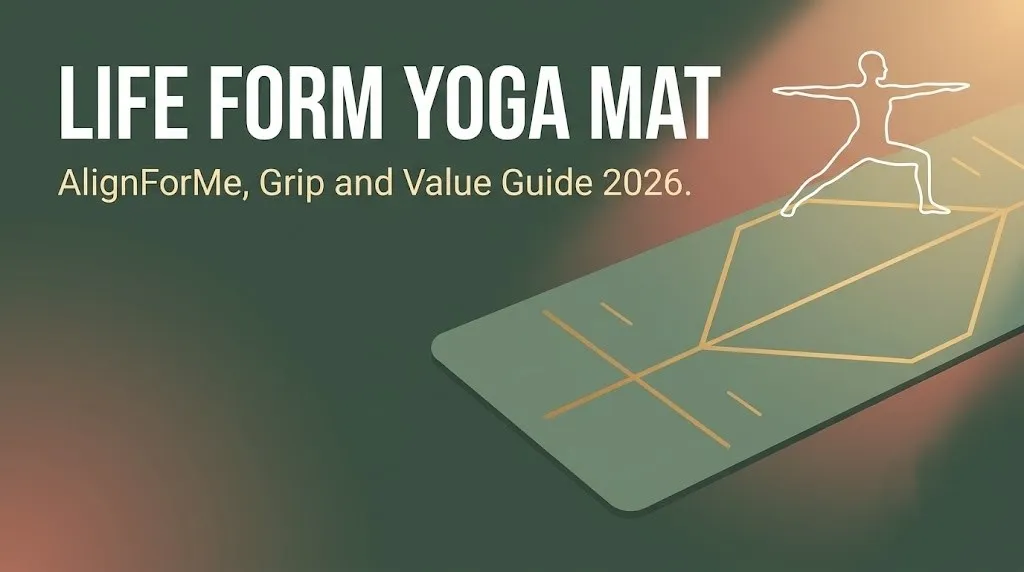
The Liforme yoga mat is a premium, natural-rubber-based yoga mat manufactured by the UK brand Liforme, distinguished from other mats primarily by its integrated AlignForMe alignment guide system, which consists of printed reference lines, markers, and geometric guides mapped to the mat’s surface that assist practitioners in positioning their feet, hands, hips, and body midline consistently and correctly across poses.
Most yoga mats are a flat, grippy surface with no reference information. The Liforme treats the mat surface as an instructional tool, embedding alignment information directly into the surface design. This is the feature that separates it from every competitor in the premium mat category.
The standard Liforme Original measures 185cm long (approximately 72 inches), 61cm wide (approximately 24 inches), and 4.2mm thick. The mat weighs approximately 2.5kg (5.5 pounds). These dimensions are slightly longer and wider than standard yoga mats (typically 68 inches long and 24 inches wide), which benefits taller practitioners and anyone who regularly extends their arms or legs to the mat’s edge during practice.
What sets the Liforme apart from other premium mats:
- AlignForMe system: A full-surface alignment guide printed under a polyurethane (PU) top layer, including a central axis line, foot markers for common standing poses, hand markers for upper body positioning, and hip-width reference points.
- Natural rubber base: Provides grip through mechanical traction rather than chemical stickiness, which means performance improves with slight moisture rather than degrading.
- PU top surface: A polyurethane coating applied over the rubber base creates the grip and sweat-absorption properties. This is the same surface technology used in many premium athletic footwear soles.
- OEKO-TEX certified materials: The mat’s materials are certified free from harmful substances, which matters for practitioners spending multiple hours per week with their face, hands, and body in direct contact with the surface.
The AlignForMe System: What Alignment Guides on a Yoga Mat Actually Do
The AlignForMe system is Liforme’s printed alignment guide network, and its practical function is giving practitioners a consistent, repeatable spatial reference for foot, hand, and body positioning across every practice session. Think of it as the difference between parking a car in an empty lot versus parking with marked spaces. The marked spaces don’t move your car for you. They give your brain a reference that makes the correct position easier to find and reproduce.
In yoga, consistent pose geometry is the foundation of both safety and progress. A practitioner who places their front foot in a slightly different position every time they enter Virabhadrasana II (Warrior II) cannot reliably track how the pose feels or whether it’s creating the correct muscle activation in the gluteus medius and outer hip. The AlignForMe guides provide a fixed reference that removes this variability.
The biomechanical case for alignment guides is strongest in standing poses where foot position determines knee tracking. In Virabhadrasana I (Warrior I), the angle of the back foot (typically 45 degrees from the mat’s front edge) directly affects whether the sacroiliac joint is loaded safely or torqued incorrectly. A printed angle reference on the mat surface allows practitioners to check and correct this angle without relying solely on proprioceptive feedback, which beginners have not yet developed.
Research published in the Journal of Physical Therapy Science found that external reference cues (visual markers, verbal alignment cues) improved joint alignment accuracy in lower-extremity movements in adults with limited movement experience. The AlignForMe system is a persistent external reference cue, available in every pose, every session.
The AlignForMe guides also benefit experienced practitioners. Even seasoned yogis develop habitual asymmetries over years of practice. Seeing a consistent spatial reference can reveal that the right foot has been landing 2 inches outside the correct position in every practice. That kind of feedback is genuinely useful at any experience level.
Modification note: Practitioners with visual impairments who cannot see the alignment guides clearly benefit from using the center axis line as a tactile reference by running a finger along it at the start of practice. The PU surface creates a slight textural variation above the printed guides that some practitioners can detect through touch.
Liforme Yoga Mat Materials: Natural Rubber, Eco-Friendly, and Latex Considerations
The Liforme yoga mat uses a natural rubber base layer topped with a polyurethane (PU) surface coating, making it a two-layer construction that combines the rubber’s mechanical grip and shock absorption with the PU layer’s sweat management and tactile surface quality. Understanding both layers is practical for any buyer evaluating this mat.
The natural rubber base is sourced from rubber trees (Hevea brasiliensis) and is a renewable, biodegradable material. Natural rubber provides grip through mechanical traction: the rubber deforms slightly under pressure, creating a large contact area with the floor surface. This is fundamentally different from how PVC yoga mats create grip (through chemical adhesion to the floor surface), which degrades over time as the PVC outgasses and loses its surface tackiness.
The polyurethane top layer is what practitioners actually contact during practice. PU is sweat-absorbent, which means the Liforme’s grip improves slightly with light moisture (like warm hand and foot perspiration) rather than becoming slippery. This is the opposite of what happens with PVC mats, which become dangerously slippery when wet.
Critical material safety note for latex allergy sufferers: Natural rubber contains latex proteins. Practitioners with a documented latex allergy should not use the Liforme yoga mat, as direct skin contact with the natural rubber base during practice poses a real allergy risk. For practitioners with latex allergies, TPE (thermoplastic elastomer) or synthetic rubber mats provide similar cushioning without latex exposure.
Environmental credentials:
- OEKO-TEX Standard 100 certified: All materials tested and certified free from harmful levels of more than 100 known substances.
- Natural rubber base is biodegradable under proper conditions.
- PU top layer is not biodegradable. End-of-life disposal is a legitimate environmental consideration.
- Liforme offers a recycling program for used mats through third-party recycling partners.
Key Takeaway: The Liforme’s AlignForMe system is a real biomechanical tool, not a marketing feature. Its natural rubber and PU construction produces grip that improves with moisture rather than degrading. Anyone with a latex allergy must avoid this mat and choose a TPE or synthetic rubber alternative instead.
Liforme Yoga Mat Grip: How It Performs Across Yoga Styles
The Liforme yoga mat provides exceptional grip across room-temperature yoga styles through its natural rubber and PU construction, and its performance in heated or high-sweat conditions is notably better than most PVC and basic rubber mats but slightly different in character from mats with a microfiber top layer. Knowing how grip performs across different yoga styles helps practitioners evaluate whether this mat matches their specific practice.
Grip in yoga mats comes from two sources: the mat’s grip on the floor (bottom grip) and the mat’s grip on the practitioner’s skin (top grip). The Liforme excels at both because the natural rubber base creates reliable floor adhesion and the PU top layer provides skin-to-surface traction that improves as the surface warms with practice.
Liforme grip performance by yoga style:
| Yoga Style | Heat Level | Sweat Level | Liforme Grip Performance | Notes |
|---|---|---|---|---|
| Hatha | Room temp | Low | Excellent | Ideal conditions for this mat |
| Vinyasa | Room temp or lightly heated | Moderate | Excellent | PU surface handles moderate sweat well |
| Ashtanga | Room temp | High | Very good | Heavy sweat may require a towel over the surface in advanced sequences |
| Hot yoga (90 to 105°F) | High | Very high | Good to very good | Best with a thin yoga towel over the surface at peak sweat volume |
| Yin yoga | Room temp | Low | Excellent | Long holds benefit from the alignment guides for consistent positioning |
| Restorative | Room temp | Very low | Excellent | Soft surface feel comfortable for extended floor contact |
| Sculpt yoga | Lightly heated | Moderate to high | Good | Resistance training intervals increase sweat; towel recommended |
Modification: For hot yoga practitioners who love the Liforme but find the PU surface saturates during extreme sweat output, placing a thin, mat-sized microfiber towel over the Liforme surface during the sweatiest portion of class maintains grip without losing the alignment guide visibility from below.
Liforme Yoga Mat Thickness: Cushioning, Joints, and What It Means for Your Practice
The standard Liforme Original is 4.2mm thick, which places it in the moderate-cushion category for yoga mats, thicker than a travel mat or a performance mat but thinner than a therapeutic or joint-support mat. Whether this thickness is appropriate for your practice depends on your yoga style, your joint health, and the floor surface you practice on.
Yoga mat thickness affects two things simultaneously: joint cushioning and balance stability. These two factors work in opposite directions. Thicker mats provide more cushioning for knees, wrists, and hips during floor poses. Thinner mats provide more floor feedback, which improves proprioception and balance during standing poses. The 4.2mm standard is a deliberate compromise that serves most practice contexts well.
For comparison:
| Mat Thickness | Cushioning Level | Balance Stability | Best For |
|---|---|---|---|
| 1 to 2mm | Minimal | Maximum | Advanced Ashtanga, travel |
| 3mm | Light | Very good | Performance practice, experienced practitioners |
| 4 to 4.5mm (Liforme standard) | Moderate | Good | Most yoga styles, general practitioners |
| 5 to 6mm | Good | Moderate | Beginners, practitioners with joint sensitivity |
| 6mm+ | High | Reduced | Therapeutic use, significant joint conditions |
The 4.2mm Liforme thickness is adequate cushioning for most practitioners’ knees during poses like Balasana (Child’s Pose) and Anjaneyasana (Low Lunge). Practitioners with severe knee osteoarthritis or significant wrist pain may find they want to place a folded yoga blanket under the knees or wrists for additional cushioning in long-held floor poses.
According to the American College of Sports Medicine, proper cushioning during floor-based exercise reduces compressive loading on joint cartilage over time. For yoga practitioners who spend significant time in kneeling and floor-based positions, mat thickness is a direct variable in joint load management.
Modification: Practitioners with significant knee or wrist joint sensitivity who love the Liforme but need more cushioning should place a folded yoga blanket (which adds approximately 10 to 15mm of padding) under any vulnerable joint during kneeling poses rather than switching to a thicker mat, which would compromise the balance feedback they value during standing work.
Liforme Yoga Mat for Beginners: Does the Alignment System Help
The Liforme yoga mat is genuinely useful for beginners, primarily because of the AlignForMe system. Beginners lack the proprioceptive feedback that experienced practitioners use to find correct alignment intuitively. Visual reference guides on the mat surface provide an external reference that begins to fill that gap from the very first session.
New practitioners struggle most with two alignment challenges: where to position the feet in standing poses and where to place the hands relative to the feet in transitions. The Liforme’s center line, foot markers, and hand reference points address both of these directly. A beginner setting up for Adho Mukha Svanasana (Downward-Facing Dog) can use the alignment guides to check that hands are positioned symmetrically and at the correct distance from the feet before entering the pose.
The investment consideration is real. At $150 to $200, the Liforme is expensive for a first yoga mat purchase. The practical answer is that most beginners who buy a budget mat eventually replace it within 12 to 18 months as their practice develops and they understand what they actually need. Practitioners who buy the Liforme as their first serious mat typically report keeping it for 5 to 7 years. Over that period, the cost-per-year is comparable to replacing a $25 to $35 budget mat annually.
The NCCIH notes that regular yoga practice produces measurable benefits in flexibility, balance, and stress reduction within 8 weeks of consistent twice-weekly practice. For a practitioner making that 8-week commitment, starting with a mat that actively supports alignment learning accelerates the quality of that adaptation.
Pose Tip for beginners:
- Use the center axis line to check that your hips and shoulders are squared forward in standing poses.
- Use the foot markers as approximate guides, not rigid rules. Every body is different. The guides give you a starting point.
- Notice the hand reference points in Downward Dog to check symmetry between your left and right sides.
Liforme Yoga Mat for Hot Yoga: Grip and Sweat Performance
The Liforme yoga mat performs well for hot yoga but requires a different approach than room-temperature practice. In a room heated to 95 to 105 degrees Fahrenheit, sweat output increases significantly, and the PU surface, while excellent at absorbing moderate moisture, can saturate during peak sweat intensity. Understanding this ahead of time prevents the common mistake of assuming a premium mat performs identically in heated and non-heated conditions.
The natural rubber base maintains its floor grip reliably in heated conditions regardless of sweat volume. The base does not slip under the mat even in high-humidity, high-heat rooms. The performance variable is the PU top surface’s response to very high sweat volumes.
At light to moderate sweat levels (typical of hot yoga during the first 30 to 40 minutes), the Liforme’s PU surface performs exceptionally. At peak sweat levels (intense Vinyasa sequences in a 105-degree room), some practitioners find that a thin mat towel over the surface improves hand and foot grip when the surface has fully saturated.
Hot yoga preparation tips for Liforme users:
- Pre-hydrate adequately. The American College of Sports Medicine recommends at least 17 to 20 ounces of water in the 2 to 3 hours before a heated class.
- Allow the mat to warm before placing your hands and feet. A cold mat pulled from a bag may feel slightly slick for the first few minutes.
- Bring a thin yoga towel. A towel is the most practical hot yoga tool regardless of which mat you own.
- Clean the mat after every heated practice. Sweat and heat accelerate bacterial growth on any mat surface. A quick wipe with a diluted tea tree oil solution after each heated session extends the mat’s lifespan and maintains surface quality.
Modification: Practitioners who exclusively practice hot yoga and produce very high sweat volumes may find that a mat with a microfiber or suede top surface (like the Manduka eKO Superlite with towel combo) performs better under extreme moisture conditions than a PU surface.
Key Takeaway: The Liforme excels in room-temperature yoga across all styles. In hot yoga, it performs very well at moderate sweat levels and requires a mat towel under extreme conditions. Its natural rubber base maintains floor grip reliably regardless of heat or humidity.
Liforme Yoga Mat for Seniors and Practitioners with Joint Pain
The Liforme yoga mat is a solid choice for seniors and practitioners with joint pain, primarily because its alignment guides help reduce the compensatory movement patterns that develop when joints are positioned incorrectly during practice. Correct alignment reduces torque on joints. The AlignForMe system supports correct alignment from the first pose of every session.
For seniors specifically, the 4.2mm thickness provides adequate cushioning for kneeling poses without creating the instability that very thick mats (6mm+) introduce during standing balance work. Balance is a primary concern for older practitioners, and maintaining floor feedback through the mat is important for fall prevention during single-leg poses like Vrksasana (Tree Pose).
The natural rubber base is also relevant for joint safety. Natural rubber provides consistent, reliable traction that reduces the micro-slips that occur on lower-quality mat surfaces. In a practitioner with arthritic hips, an unexpected foot slip during a Warrior pose can produce a jarring correction that loads the hip joint sharply. A mat that eliminates surface slippage removes that variable entirely.
A 2019 systematic review published in Complementary Therapies in Medicine found that yoga practice 2 to 3 times per week produced measurable improvements in balance and functional mobility in adults over 60. The quality of the practice environment, including equipment stability, was identified as a factor in participant safety across multiple included studies.
Modification for seniors with knee concerns: Place a folded yoga blanket under both knees during any kneeling pose. The Liforme’s 4.2mm provides baseline cushioning. The blanket adds the additional padding that arthritic knee joints often require for comfort during longer-held positions.
Modification for wrist pain: In poses like Adho Mukha Svanasana (Downward-Facing Dog) and tabletop, use the forearm variation (resting on forearms rather than hands) to remove wrist joint load entirely. The Liforme’s surface is comfortable for forearm contact.
Liforme Yoga Mat vs Manduka: Which Is Better for Your Practice
The Liforme and Manduka PRO are the two most commonly compared premium yoga mats, and both are genuinely excellent products with different strengths. The right choice depends on your specific practice type, physical priorities, and what you value most in a mat.
| Feature | Liforme Original | Manduka PRO |
|---|---|---|
| Price | Approximately $150 to $180 | Approximately $120 to $160 |
| Thickness | 4.2mm | 6mm |
| Weight | 2.5kg (5.5 lb) | 3.2kg (7 lb) |
| Surface material | Natural rubber + PU | PVC with closed-cell surface |
| Base material | Natural rubber | PVC |
| Alignment guides | Yes (AlignForMe system) | No |
| Grip character | Improves with slight moisture | Sticky; requires “breaking in” |
| Hot yoga performance | Good to very good with towel | Good; closed-cell surface resists absorption |
| Joint cushioning | Moderate (4.2mm) | High (6mm) |
| Balance feedback | Good | Moderate (extra thickness reduces floor feel) |
| Eco-credentials | Natural rubber, OEKO-TEX certified | PVC (not biodegradable); OEKO-TEX certified |
| Lifespan | 5 to 7 years with care | 8 to 10+ years (Manduka lifetime guarantee) |
| Latex risk | Yes (natural rubber) | No (PVC) |
The Manduka PRO wins on joint cushioning (at 6mm vs. 4.2mm), longevity (lifetime guarantee), and latex safety. The Liforme wins on alignment support, eco-material profile, and grip character for room-temperature practice.
For seniors or practitioners with significant knee, hip, or wrist joint pain who need maximum cushioning, the Manduka PRO’s 6mm thickness is the stronger choice. For beginners needing alignment support, practitioners with eco-material priorities, and practitioners who want a mat that works beautifully in room-temperature practice, the Liforme is the better match.
Liforme Yoga Mat vs Lululemon: A Practical Comparison
The Liforme and Lululemon The Mat 5mm are both premium mats in the $100 to $180 price range, and they serve meaningfully different practitioner profiles despite similar price points.
| Feature | Liforme Original | Lululemon The Mat 5mm |
|---|---|---|
| Price | Approximately $150 to $180 | Approximately $128 to $148 |
| Thickness | 4.2mm | 5mm |
| Surface material | Natural rubber + PU | Synthetic rubber + polyurethane |
| Alignment guides | Yes (AlignForMe system) | No |
| Grip character | Mechanical; improves with moisture | Sticky; similar PU character |
| Hot yoga performance | Good with towel | Good; similar PU behavior |
| Eco-credentials | Natural rubber, OEKO-TEX | Synthetic materials; OEKO-TEX |
| Latex risk | Yes | No (synthetic rubber) |
| Weight | 2.5kg | Approximately 2.3kg |
| Length | 185cm (72 in) | 180cm (71 in) |
| Best for | Alignment-focused practice, eco-priority | General practice, joint cushioning priority |
The Lululemon mat’s synthetic rubber base eliminates the latex allergy concern that the Liforme’s natural rubber base introduces. For practitioners with any latex sensitivity, the Lululemon is the safer choice between these two options.
The Liforme’s alignment system provides a genuine functional advantage that the Lululemon cannot match. For a practitioner whose primary goal is improving alignment accuracy and reducing injury risk through consistent positioning, the Liforme’s extra value is real.
Yoga Alliance recommends that practitioners at all experience levels work with a qualified teacher to learn alignment rather than relying solely on equipment. The AlignForMe system works best as a supplement to, not a replacement for, instruction from a registered yoga teacher.
Key Takeaway: Liforme vs. Manduka comes down to alignment support and eco-materials (Liforme) versus maximum cushioning and longevity guarantee (Manduka). Liforme vs. Lululemon comes down to alignment guides and natural rubber (Liforme) versus latex safety and similar grip performance at slightly lower cost (Lululemon).
Is the Liforme Yoga Mat Worth the Price in 2026
The Liforme yoga mat is worth the price for practitioners who practice regularly, prioritize alignment learning or refinement, and care about eco-material standards. For practitioners who practice once per week, are satisfied with basic grip, and have no specific alignment or eco-material concerns, a mid-range mat at $50 to $80 will serve the practice without the premium cost.
The cost-per-use calculation is the most rational framework for evaluating any premium yoga mat purchase:
| Practice Frequency | Sessions Per Year | Cost (Liforme at $165) | Cost Per Session |
|---|---|---|---|
| Daily practice | 365 | $165 | $0.45 per session |
| 3x per week | 156 | $165 | $1.06 per session |
| 2x per week | 104 | $165 | $1.59 per session |
| 1x per week | 52 | $165 | $3.17 per session |
Over a 5-year lifespan (a conservative estimate for a well-maintained Liforme), the cost-per-session drops significantly:
- Daily practice over 5 years: $0.09 per session
- 3x per week over 5 years: $0.21 per session
- 2x per week over 5 years: $0.32 per session
A $30 budget yoga mat replaced every 12 to 18 months because of grip degradation costs more over 5 years than a single Liforme. The math on premium mat investment is straightforward for any practitioner with a regular practice.
The Liforme’s price is least justified for complete beginners who are unsure whether they’ll maintain a consistent practice. In that scenario, starting with a mid-range mat and upgrading to a Liforme once a 3-month consistent practice is established is a financially sensible approach.
Liforme Travel Yoga Mat: What Changes and What Stays the Same
The Liforme Travel yoga mat is a compact, lightweight version of the Original that maintains the AlignForMe alignment guide system while reducing thickness and weight for portability. It is not a full replacement for the Original for regular studio practice. It is a genuinely practical travel companion or a secondary mat for practitioners who want alignment guidance while away from home.
Key differences between the Liforme Original and Travel:
| Feature | Liforme Original | Liforme Travel |
|---|---|---|
| Thickness | 4.2mm | 1.5mm |
| Weight | 2.5kg (5.5 lb) | 0.9kg (2 lb) |
| Length | 185cm (72 in) | 180cm (71 in) |
| Width | 61cm (24 in) | 61cm (24 in) |
| AlignForMe system | Yes | Yes |
| Cushioning | Moderate | Minimal |
| Best for | Regular home or studio practice | Travel, outdoor practice, secondary mat |
| Price | Approximately $150 to $180 | Approximately $100 to $120 |
The 1.5mm thickness of the Travel mat is not suitable as a primary mat for practitioners with knee, wrist, or hip joint sensitivity. It provides virtually no cushioning compared to the Original. On a carpet or studio-quality floor, the lack of cushioning is manageable for shorter sessions. On a hard tile or concrete floor, a folded blanket under sensitive joints is advisable.
The Travel mat folds flat rather than rolling, which makes it compatible with suitcase packing. It maintains the same grip character as the Original because it uses the same PU top layer and natural rubber base, simply at reduced thickness.
Modification: Practitioners who bring the Travel mat to hotel rooms or outdoor surfaces can place it over a thicker exercise mat or carpet for additional cushioning while maintaining the AlignForMe guide visibility on top.
How to Clean and Care for a Liforme Yoga Mat
Cleaning a Liforme yoga mat correctly extends its grip quality, surface integrity, and lifespan by preventing the oil, sweat, and bacterial accumulation that degrades both the PU surface and the natural rubber base over time. The cleaning method for the Liforme differs from PVC mat care because natural rubber and PU require gentler treatment than PVC’s more chemically resistant surface.
Regular cleaning (after every practice):
- Mix 1 part white vinegar or witch hazel with 3 parts water in a small spray bottle. Add 3 to 5 drops of tea tree oil for antimicrobial benefit.
- Lightly mist the mat surface after practice. Do not saturate the mat.
- Wipe gently with a clean, soft cloth in one direction rather than scrubbing.
- Allow the mat to air dry completely before rolling. Never store a damp mat.
- Hang the mat over a door or towel rack to dry. Avoid leaving it in direct sunlight for extended periods, as UV exposure degrades natural rubber over time.
Deep cleaning (monthly or as needed):
- Lay the mat flat on a clean floor or in a bathtub.
- Use a very diluted solution of mild liquid soap (a few drops in a bowl of water). Avoid dish soap concentrations or alcohol-based cleaners.
- Gently wipe the surface with a damp cloth. Rinse with clean water using a second damp cloth.
- Allow at least 3 to 4 hours for full air drying before use or storage.
What to avoid:
- Machine washing: it damages the PU layer and deforms the mat.
- Harsh chemical cleaners, bleach, or alcohol: they degrade natural rubber and strip the PU surface.
- Direct sunlight drying: UV accelerates rubber breakdown.
- Rolling before fully dry: trapped moisture between layers promotes mold.
How Long Does a Liforme Yoga Mat Last
A well-maintained Liforme yoga mat typically lasts 5 to 7 years for a practitioner using it 3 to 5 times per week, with some practitioners reporting useful life beyond 7 years through careful cleaning and storage habits. The factors that most affect lifespan are cleaning frequency, storage conditions, and whether the mat is used exclusively for yoga or also for other fitness activities.
Signs that a Liforme is approaching end of life:
- The PU surface begins to peel or flake at high-contact zones (where hands and feet land repeatedly)
- The natural rubber base shows cracking or texture loss
- Grip noticeably decreases even after thorough cleaning
- The mat surface develops areas that no longer respond to the light-moisture grip improvement
Factors that extend Liforme lifespan:
- Cleaning after every session: Sweat, body oils, and dirt accelerate surface degradation more than physical use alone.
- Storing unrolled or loosely rolled: Tight rolling creates compression creases in the PU layer over time.
- Avoiding shoes on the mat: Shoe soles carry grit that abrades the PU surface.
- Using a mat bag for transport: Protects the surface from friction against other surfaces during transport.
Factors that shorten lifespan:
- Infrequent cleaning
- Storage in direct sunlight or high-humidity environments
- Use on rough or abrasive floor surfaces without a floor cloth beneath
- Use for non-yoga fitness activities involving lateral drag (such as burpees or sliding movements)
Compared to a Manduka PRO, which comes with a lifetime guarantee and commonly lasts 10 or more years, the Liforme’s 5-to-7-year lifespan is shorter. Whether that trade-off is acceptable depends on how much value the AlignForMe system adds to your specific practice.
Key Takeaway: The Liforme is worth the price for practitioners who train 2 or more times per week and prioritize alignment, eco-materials, and grip quality. Proper cleaning after every session is the single most impactful factor in extending the mat’s lifespan to 5 to 7 years or beyond.
How to Choose the Right Yoga Mat for Your Practice in 2026
Choosing the right yoga mat in 2026 means matching five specific variables to your actual practice rather than buying based on brand reputation alone: thickness, surface material, grip character, mat dimensions, and any health condition-specific needs. The Liforme is one of the best mats available. It is not the right mat for every practitioner.
Use this framework to guide your decision:
| Your Practice Profile | Key Mat Priority | Best Match |
|---|---|---|
| Beginner needing alignment support | AlignForMe guides, moderate cushioning | Liforme Original |
| Hot yoga practitioner with heavy sweat | Microfiber or PU surface with towel | Liforme + towel, or dedicated hot yoga mat |
| Senior or practitioner with joint pain | Maximum cushioning, reliable grip | Manduka PRO (6mm) or Liforme + blanket |
| Latex allergy | Synthetic rubber or PVC construction | Lululemon, Manduka PRO, TPE mat |
| Ashtanga or advanced Vinyasa practitioner | Thin mat for floor feedback, reliable grip | Liforme Travel or Manduka eKO Lite |
| Yin or Restorative practitioner | Comfort, moderate cushioning, quiet surface | Liforme Original or Manduka PRO |
| Eco-priority practitioner | Natural rubber, OEKO-TEX certified | Liforme, Jade Harmony |
| Budget-conscious beginner | Basic grip, adequate cushioning, low cost | Mid-range TPE or entry-level natural rubber |
The Liforme is the strongest choice when your practice includes a mix of styles, you practice in room-temperature conditions most of the time, alignment accuracy is a priority, and you intend to practice consistently enough that the cost-per-use calculation works in its favor.
A final, practical point: no mat, regardless of price, teaches yoga. The AlignForMe system is a useful tool. The NCCIH consistently emphasizes that yoga’s documented health benefits derive from regular, sustained practice. The best yoga mat is the one that supports you in showing up consistently, safely, and with enough body feedback to keep improving.
Frequently Asked Questions About the Life Form Yoga Mat
What is the Liforme yoga mat and what makes it different from other mats?
The Liforme yoga mat is a premium natural rubber yoga mat with a unique printed alignment guide system called AlignForMe embedded in the mat surface.
Unlike most yoga mats, which are plain grip surfaces, the Liforme includes foot markers, hand reference points, a central axis line, and hip-width guides that help practitioners position their bodies consistently and correctly across poses.
It is manufactured from natural rubber and a polyurethane top layer, certified to OEKO-TEX Standard 100, and is the most alignment-focused premium mat available in 2026.
Is the Liforme yoga mat worth the price?
The Liforme is worth the price for practitioners who practice 2 or more times per week and value alignment support, eco-materials, and long-term grip quality.
At approximately $165 for the Original, it costs less than $0.35 per session over a 5-year lifespan for a practitioner attending 3 classes per week, which is less than the cost of replacing budget mats annually.
For once-per-week casual practitioners without specific alignment needs, a mid-range mat at $50 to $80 is a more proportionate investment.
Is the Liforme yoga mat good for hot yoga?
Yes, the Liforme performs well in hot yoga at moderate sweat levels because its PU surface absorbs light moisture and improves grip as it warms.
At very high sweat volumes (intense sequences in rooms above 100 degrees), placing a thin mat towel over the surface maintains hand and foot grip when the PU layer has fully saturated.
The natural rubber base maintains reliable floor grip in all conditions, so the mat itself does not slip, only the top surface grip changes with extreme sweat.
How do I clean my Liforme yoga mat?
Clean your Liforme after every session by lightly misting the surface with a mixture of 1 part white vinegar and 3 parts water, then wiping with a soft cloth and air drying fully before rolling.
Avoid machine washing, alcohol-based cleaners, and direct sunlight drying, all of which degrade the natural rubber base and PU surface over time.
Deep clean monthly with a very diluted mild soap solution, rinse with clean water, and allow 3 to 4 hours of air drying before use.
Is the Liforme yoga mat good for beginners?
Yes, the Liforme is particularly useful for beginners because its AlignForMe alignment guides provide a persistent visual reference for foot and hand positioning that beginners’ proprioceptive systems have not yet developed.
The cost is high for a first yoga mat purchase, but practitioners who commit to regular practice typically keep the Liforme for 5 to 7 years, making the per-year cost comparable to replacing a budget mat annually.
Beginners with a latex allergy should choose an alternative mat, such as a TPE or synthetic rubber option, since the Liforme’s natural rubber base contains latex proteins.
The Liforme yoga mat earns its reputation because it solves a real problem: most practitioners never get consistent feedback about whether their feet and hands are in the same place from session to session. The AlignForMe system addresses that directly, in every pose, in every practice.
If you practice regularly and alignment accuracy matters to your goals, start with the Liforme Original. Clean it after every session. Store it away from direct sunlight. It will last you years, and your practice will show it.