Flowy Yoga Pants Guide: Best Styles and Fits for 2026
Flowy yoga pants are wide-leg or loosely cut pants designed for yoga practice, offering unrestricted movement without the compression of standard leggings. The right pair supports your specific yoga style, body type, and mobility needs.
Clothing choice affects movement quality more than most practitioners realize. According to the American College of Sports Medicine, restrictive clothing can limit joint range of motion during exercise, which matters in yoga where hip external rotation and spinal flexion are routine demands on your body.
This guide covers everything from fabric science and waistband styles to pose-specific recommendations, beginner guidance, and options for seniors and larger-bodied practitioners. You’ll leave knowing exactly which style works for your practice, not just which brand is trending.
Flowy Yoga Pants: What They Are and Why Practitioners Choose Them
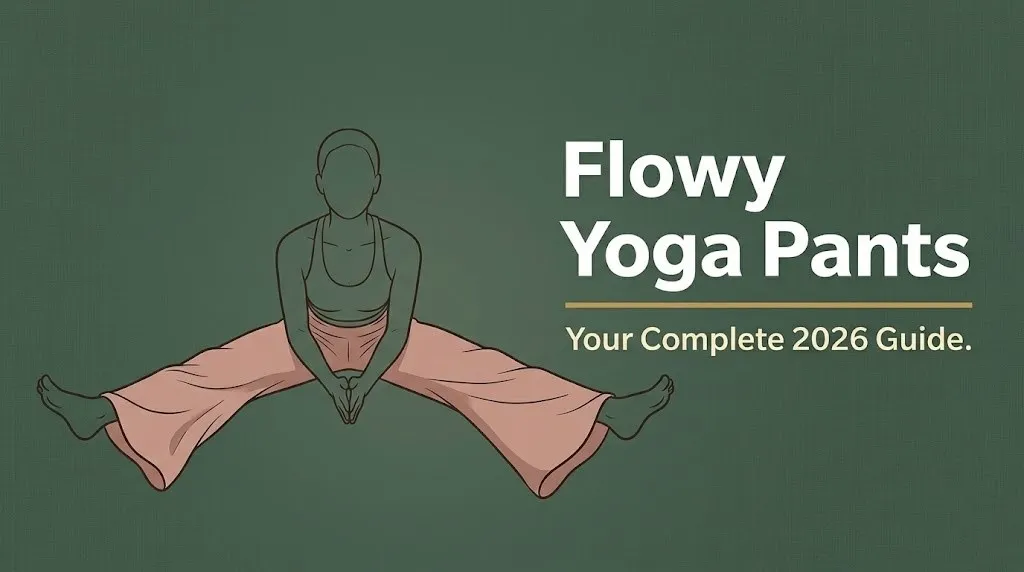
Flowy yoga pants are loose-fitting, wide-leg or palazzo-style pants made from lightweight, breathable fabric, designed specifically to move with the body during yoga without clinging or restricting circulation.
Unlike standard compression leggings, flowy styles rely on fabric drape and cut rather than elastic stretch to allow movement. This means the freedom you feel comes from silhouette, not from the fabric gripping and releasing your muscles. For many practitioners, that distinction changes how poses feel entirely.
The category includes several distinct silhouettes. True wide-leg pants have a fitted hip and thigh with a significant flare below the knee. Palazzo yoga pants are cut wide from the hip all the way to the hem. Harem-style pants gather at the ankle. Choosing between them depends on your practice type and personal preference, not just aesthetics.
Key style differences at a glance:
| Silhouette | Cut | Best Practice Type | Ankle Clearance |
|---|---|---|---|
| Wide-leg | Fitted hip, flared below knee | Hatha, Yin, Restorative | Moderate |
| Palazzo | Wide from hip to hem | Meditation, gentle flow | High |
| Harem | Dropped crotch, gathered ankle | Vinyasa, Kundalini | Low |
| Bootcut | Slight flare at hem only | Mixed practice, studio | Minimal |
The difference between those options affects how fabric behaves in poses. Palazzo styles pool around the legs in seated positions. Harem cuts stay anchored near the ankle. Neither is wrong. They serve different purposes.
What Are Flowy Yoga Pants and How Do They Differ from Standard Leggings
Flowy yoga pants differ from standard leggings in three core ways: silhouette, fabric construction, and how they interact with your body during movement.
Standard yoga leggings use four-way stretch compression fabric, typically nylon-spandex or polyester-spandex blends. That fabric hugs the body and returns to shape. It provides proprioceptive feedback, meaning you can feel where your legs are in space because the fabric tells you.
Flowy yoga pants work differently. They use lighter, less elasticated fabrics such as bamboo, modal, rayon, or woven linen blends. The fabric falls away from the body rather than adhering to it. This changes your sensory experience of movement in ways that have practical implications for your practice.
Here is the real distinction that product roundups miss: leggings give your teacher visual access to your leg alignment. Flowy pants do not. In a class-based Iyengar or Ashtanga setting where precise alignment correction matters, leggings serve a genuine instructional function. In a home Yin or Restorative practice, that function disappears.
Practical comparison:
| Feature | Standard Leggings | Flowy Yoga Pants |
|---|---|---|
| Compression | High | None to minimal |
| Proprioceptive feedback | Strong | Reduced |
| Teacher can see alignment | Yes | No |
| Breathability in heat | Moderate | High |
| Suited to seated/floor poses | Yes | Excellent |
| Suited to dynamic inversions | Yes | Requires care |
| Comfort for larger bodies | Varies | Generally high |
Neither option is universally superior. The right choice depends on your practice style, your studio setting, and your body’s preferences.
Flowy Yoga Pants vs. Fitted Yoga Pants: Which Works Better for Your Practice
The honest answer: it depends entirely on what kind of yoga you practice and where you practice it.
Fitted yoga pants excel in dynamic, fast-paced styles where fabric movement could create safety issues. In Ashtanga yoga and Vinyasa yoga, sequences move through standing poses, arm balances, and inversions in rapid succession. Loose fabric can catch on your arm in Bakasana (Crow Pose) or bunch under your thigh in a lunge. That is a real distraction, and occasionally a real hazard.
Flowy yoga pants genuinely shine in slower, floor-based, or meditative practices. Yin yoga, Restorative yoga, Hatha yoga, and Kundalini yoga all involve long holds, seated postures, and supine positions where fabric drape adds comfort without creating risk.
Practice-by-practice recommendation:
| Yoga Style | Fitted Leggings | Flowy Yoga Pants | Verdict |
|---|---|---|---|
| Ashtanga | Excellent | Not recommended | Leggings |
| Vinyasa | Excellent | Use with caution | Leggings |
| Hatha | Good | Excellent | Either |
| Yin | Good | Excellent | Flowy wins |
| Restorative | Good | Excellent | Flowy wins |
| Kundalini | Good | Excellent | Flowy wins |
| Chair yoga | Good | Excellent | Flowy wins |
| Bikram/26&2 | Good | Avoid (heat/fabric) | Leggings |
One thing worth stating directly: many practitioners own both. They choose based on the class they are attending, not a single right answer. Owning one pair of fitted leggings and one pair of flowy pants covers nearly every scenario.
Key Takeaway: Flowy yoga pants outperform leggings in slow, floor-based, and meditative practices, but fitted leggings remain safer and more practical for dynamic, fast-paced styles like Ashtanga and Vinyasa.
Best Yoga Styles for Flowy Yoga Pants
The yoga styles that pair most naturally with flowy yoga pants are those that prioritize stillness, long holds, breath awareness, and comfort over precision athletic alignment.
Yin yoga involves holding passive poses for three to seven minutes at a time. The goal is gentle stress on connective tissue, not muscular engagement. You spend most of your time on the floor, seated or supine. Flowing fabric adds warmth and softness to that experience without interfering with the practice.
Restorative yoga goes even further toward stillness. Every pose is supported by props, and sessions often involve twenty-minute holds. The practitioner is essentially resting in carefully supported positions. No amount of fabric movement creates a safety issue in Restorative yoga.
Hatha yoga sits in the middle. Classes move at a moderate pace with longer pose holds than Vinyasa but more active engagement than Yin. Flowy pants work well here for most poses. Be conscious during any standing balance work.
Kundalini yoga is distinct from other styles. It emphasizes breathwork, repetitive movement patterns, and meditation. Many Kundalini practitioners traditionally wear white or natural-fiber clothing, making flowy, natural-fabric pants genuinely style-appropriate within the tradition.
Style-to-pant compatibility summary:
| Yoga Style | Pace | Floor Time | Flowy Pants Rating |
|---|---|---|---|
| Restorative | Stillness | 100% | Ideal |
| Yin | Very slow | 90% | Ideal |
| Kundalini | Moderate | 60% | Excellent |
| Hatha | Moderate | 50% | Very good |
| Vinyasa | Fast | 30% | Use with care |
| Ashtanga | Fast to intense | 25% | Not recommended |
Flowy Yoga Pants for Yin Yoga and Restorative Practice
For Yin and Restorative yoga specifically, flowy yoga pants are not just acceptable. They may be the better choice for most practitioners.
Yin yoga works by applying gentle, sustained stress to the fascia, ligaments, and joint capsules rather than the muscles. According to a review published in the Journal of Alternative and Complementary Medicine, regular Yin practice is associated with improved connective tissue flexibility and reduced joint stiffness, particularly in the hips and lower back.
The key poses in Yin practice include Supta Baddha Konasana (Reclined Bound Angle Pose), Paschimottanasana (Seated Forward Fold), Agnistambhasana (Fire Log Pose), and Balasana (Child’s Pose). All of these are floor-based. All of them involve hip external rotation or hip flexion. Flowy fabric pools away from the joints in these positions, allowing the practitioner to fully release without fabric pulling or compressing.
Restorative yoga takes a similar approach with longer, more deeply supported holds. Practitioners often use bolsters, blankets, and blocks under the body. Loose fabric interacts beautifully with these props, allowing the practitioner to adjust positioning without pants becoming a friction point.
Yin and Restorative pose compatibility with flowy pants:
| Pose (Sanskrit and English) | Fabric Interaction | Modification Note |
|---|---|---|
| Supta Baddha Konasana (Reclined Bound Angle) | Fabric falls clear of hips | Place bolster under knees if needed |
| Paschimottanasana (Seated Forward Fold) | May bunch at lap | Roll waistband down for comfort |
| Balasana (Child’s Pose) | Drapes over knees cleanly | Wide-knee version for fuller fabric |
| Agnistambhasana (Fire Log Pose) | Fabric pools neatly | Sit on a folded blanket to tilt pelvis |
Practitioners with knee sensitivity or sacroiliac joint discomfort should always use props regardless of clothing choice. Flowy pants do not modify the therapeutic load of a pose. That work belongs to props and your teacher’s guidance.
Flowy Yoga Pants for Hot Yoga and Dynamic Movement
For hot yoga, flowy yoga pants require careful fabric selection, and for very dynamic practices, they require genuine consideration of safety.
Bikram yoga (also called 26&2) is practiced in rooms heated to approximately 105 degrees Fahrenheit with 40 percent humidity. The National Center for Complementary and Integrative Health (NCCIH) notes that exercising in extreme heat places additional demands on cardiovascular regulation and fluid balance. Heavy or densely woven flowy fabrics in this environment will feel suffocating. Lightweight, open-weave bamboo or rayon may be tolerable, but most Bikram practitioners prefer minimal, form-fitting clothing for this reason.
General hot yoga classes, often heated to a more moderate 85 to 95 degrees, are more forgiving. A lightweight palazzo or wide-leg pant in bamboo or moisture-wicking fabric can work if the fabric is genuinely thin and breathable.
For dynamic Vinyasa flows, the practical issue is not heat but fabric interference. Consider Adho Mukha Svanasana (Downward-Facing Dog): in wide-leg pants, the fabric slides toward the waist when you invert. In most cases this is annoying rather than dangerous. But in transitions between poses, extra fabric creates an unpredictability that beginners should be aware of.
Hot yoga and dynamic practice checklist for flowy pants:
- Choose fabrics under 150 GSM (grams per square meter) for heated environments
- Avoid thick woven linens in rooms above 85 degrees Fahrenheit
- Opt for harem-style pants over palazzo if attending Vinyasa classes
- Check that fabric does not fall over your feet during standing poses
- Try your pants in a practice run at home before wearing them to a studio class
Key Takeaway: Yin, Restorative, and Kundalini yoga are the strongest matches for flowy yoga pants. Hot yoga and Vinyasa require specific lightweight fabrics or a switch to fitted leggings.
How Flowing Yoga Pants Affect Range of Motion and Pose Alignment
Flowing yoga pants affect range of motion in ways that most practitioners never consciously consider, but that your body registers every time you move.
The effect is subtle but real. When you wear compression leggings, the fabric provides continuous sensory feedback about limb position. This is called proprioception, your body’s internal GPS system for tracking joint angles and movement. Flowy pants reduce that feedback because the fabric is not in contact with your skin in the same continuous way.
For experienced practitioners with strong body awareness, this change is minimal. For beginners who are still building neuromuscular patterning, the reduction in tactile feedback can make alignment cues harder to translate from instruction to body position.
The range-of-motion impact is generally positive in slow practices. Without compression across the hip joint and inguinal crease (the crease where your thigh meets your pelvis), many practitioners find that seated forward folds feel more accessible. The iliotibial band and outer hip area are not gripped by tight fabric during poses like Gomukhasana (Cow Face Pose) or Pigeon Pose (Eka Pada Rajakapotasana).
Range of motion effects by pose category:
| Pose Category | Effect of Flowy Pants | Effect of Compression Leggings |
|---|---|---|
| Seated forward folds | Often easier, less hip restriction | Can restrict inguinal crease |
| Standing hip-openers | Neutral to positive | Neutral |
| Supine hip rotations | Positive, fabric falls clear | Neutral |
| Balancing poses | Reduced proprioceptive cue | Better alignment feedback |
| Arm balances | Potential interference | Better |
| Inversions | Fabric shift, requires awareness | Optimal |
Modification note for beginners: If you are new to yoga and wearing flowy pants, pay extra attention to your teacher’s verbal alignment cues. You are receiving less tactile information from your clothing. Place extra focus on what you feel inside the pose rather than what you see.
Are Flowy Yoga Pants Good for Inversions and Balancing Poses
For most inversions and balancing poses, flowy yoga pants require thoughtfulness rather than avoidance.
The core issue with inversions is gravity. When you invert, fabric moves toward your torso. In Adho Mukha Svanasana (Downward-Facing Dog), this is barely noticeable. In Sirsasana (Headstand) or Salamba Sarvangasana (Supported Shoulderstand), wide-leg fabric will slide toward your waist, potentially exposing your lower back and creating a fabric mass around your hips. This is not dangerous in itself, but it is distracting and can interfere with thermal comfort or a teacher’s ability to observe your spine.
Harem-style flowy pants, which gather at the ankle, behave significantly better in inversions. The ankle gather keeps fabric anchored even when you are upside down.
For balancing poses like Vrksasana (Tree Pose), Virabhadrasana III (Warrior III), and Ardha Chandrasana (Half Moon Pose), the primary concern is foot clearance. Wide palazzo legs can catch underfoot if the hem is long. Before class, check that your pants hem ends at or above the ankle when you are barefoot. Standing on loose fabric in a balance pose is a genuine fall risk.
Inversion and balance safety checklist:
- Measure hem length barefoot, not in shoes
- Choose harem-style for any inversion-heavy class
- Avoid palazzo-cut pants in classes that include Sirsasana (Headstand) or Pincha Mayurasana (Forearm Stand)
- Roll pants to the knee before attempting headstand as a practical modification
- For Vrksasana (Tree Pose), a wall is always appropriate as a balance support, regardless of clothing
The Yoga Alliance recommends that teachers always advise students about clothing safety in inversion-heavy classes. If your teacher does not mention it, ask.
Best Fabrics for Flowy Yoga Pants
The fabric of your flowy yoga pants determines breathability, durability, moisture management, and how the garment moves with your body.
Bamboo fabric is the current gold standard for flowy yoga pants. It is naturally moisture-wicking, temperature-regulating, and remarkably soft against the skin. Bamboo is also hypoallergenic, making it an excellent choice for practitioners with sensitive skin or eczema. The fiber tends to drape beautifully, which suits the flowing silhouette well. It does require careful washing to avoid shrinkage.
Modal fabric is a semi-synthetic fiber made from beech tree pulp. It is softer than cotton, resists pilling better than bamboo, and holds color well through repeated washing. Modal is lightweight and has a slight sheen that gives flowy pants an elevated look. It is less moisture-wicking than bamboo but more comfortable for air-conditioned studios.
Rayon and viscose are budget-friendly options with good drape but lower durability. They wrinkle easily, require careful washing, and tend to lose shape over time. Adequate for occasional or home practice. Less suited to daily practice.
Linen blends are increasingly popular for hot climates and outdoor yoga. Pure linen is too stiff and wrinkles aggressively. A linen-cotton or linen-modal blend offers natural breathability with better drape.
Fabric comparison for flowy yoga pants:
| Fabric | Breathability | Drape Quality | Durability | Moisture Wicking | Best For |
|---|---|---|---|---|---|
| Bamboo | Excellent | Excellent | Good | Strong | All-round, sensitive skin |
| Modal | Very good | Excellent | Very good | Moderate | Studio, cool climates |
| Rayon/Viscose | Good | Very good | Fair | Low | Home practice, budget |
| Linen blend | Excellent | Good | Good | Low | Hot climates, outdoor |
| Polyester blend | Moderate | Fair | Excellent | Strong | Dynamic or hot yoga |
Avoid: 100 percent cotton for active practice. Cotton absorbs and retains sweat rather than wicking it away, becomes heavy and clingy when wet, and dries slowly. Fine for meditation or gentle movement, but not suited to flowing sequences.
Key Takeaway: Bamboo and modal are the strongest fabric choices for flowy yoga pants. They combine comfort, breathability, and drape without the durability trade-offs of rayon or the stiffness of linen.
Waistband Styles for Flowing Yoga Pants
The waistband is the structural anchor of flowy yoga pants, and it matters far more than most shoppers consider before purchasing.
Three primary waistband styles appear across most flowy yoga pant styles: drawstring waistbands, fold-over waistbands, and high-rise elastic waistbands. Each has genuine advantages and genuine limitations depending on your body and practice style.
Drawstring waistbands offer adjustable fit and work well across a range of body sizes. The drawstring itself, however, can create a pressure point at the front of the waist in deep forward folds. In Paschimottanasana (Seated Forward Fold) or Halasana (Plow Pose), a knot pressing into your abdomen is consistently uncomfortable. Choose drawstring styles with a flat-lying cord and a natural-fiber knot that lies flat when tucked.
Fold-over waistbands are a wide band of fabric that you can wear high or rolled down to a lower-rise position. These are extremely popular in yoga pants because they accommodate different torso lengths and abdominal comfort preferences. Many practitioners with diastasis recti (abdominal separation) or lower back sensitivity find fold-over waistbands the most comfortable option because there is no single band of pressure across the mid-abdomen.
High-rise elastic waistbands provide the most stability during movement. They stay in place during dynamic poses and offer mild abdominal support. Practitioners with postoperative abdominal scars or irritable bowel syndrome (IBS) sometimes find high-rise elastic bands uncomfortably restrictive. If abdominal pressure is a concern, fold-over or drawstring styles are worth prioritizing.
Waistband comparison:
| Waistband Type | Movement Stability | Forward Fold Comfort | Adjustability | Best For |
|---|---|---|---|---|
| Drawstring | Moderate | Can be uncomfortable | High | Home practice, varied sizes |
| Fold-over | Good | Excellent | Moderate | Sensitive abdomen, Yin, Restorative |
| High-rise elastic | High | Good | Low | Dynamic practice, studio |
| Wide flat elastic | Good | Good | Low | Seniors, beginners |
Flowy Yoga Pants for Beginners
For beginners, flowy yoga pants can be an excellent starting point, but a few specific choices set you up for success rather than frustration.
The most common beginner problem with flowy yoga pants is hem length. When a beginner steps onto a yoga mat for the first time, they are already managing unfamiliar balance demands, new alignment cues, and the cognitive load of following instructions. Standing on your own pants during Virabhadrasana II (Warrior II) adds an unnecessary hazard.
Check your pants hem at ankle height or slightly above when barefoot on a flat surface. If the hem drags even slightly, hem them before your first class. A yoga seamstress or tailor can do this for under fifteen dollars.
The second beginner consideration is waistband comfort during frequent transitions. Beginners in Hatha or gentle Vinyasa spend a lot of time moving between standing and floor-based poses. A waistband that shifts, rolls, or gaps during these transitions becomes a source of self-consciousness.
Beginner-specific recommendations:
- Choose ankle-length or mid-calf harem pants over full palazzo styles for first classes
- Opt for a wide flat elastic or high-rise waistband that stays put during transitions
- Pick bamboo or modal fabric for softness and ease of movement
- Try the pants on a mat at home before taking them to a studio: do a forward fold, a low lunge, and a seated cross-legged position
- If fabric bunches excessively in the inner thigh during Baddha Konasana (Bound Angle Pose), try a slightly narrower leg cut
According to the National Center for Complementary and Integrative Health (NCCIH), yoga practice is associated with reduced stress and improved functional mobility, even for complete beginners. Getting comfortable in your clothing removes one barrier between you and actually showing up to practice.
Flowy Yoga Pants for Seniors and Chair Yoga
Seniors often find flowy yoga pants genuinely more comfortable and practical than compression leggings, and the reasons are physiological, not just aesthetic.
As we age, circulation changes. Compression garments that were comfortable at 35 may feel constricting or cause discomfort around the knee or calf at 65, particularly for practitioners managing peripheral edema (lower leg swelling) or varicose veins. Flowy yoga pants exert no compression on these areas.
For practitioners using a chair for yoga, wide-leg or harem-style pants allow the thighs to spread comfortably during seated poses like Virasana (Hero Pose) adapted for chair or seated hip circles. There is no fabric resisting the natural spread of the thighs that occurs when sitting with feet flat on the floor.
A review published in the International Journal of Yoga found that chair-based yoga programs for adults over sixty significantly improved balance scores and reported wellbeing. Practitioners who feel physically comfortable in their clothing are more likely to maintain consistent practice, which is where the cumulative benefit accumulates.
Modifications for senior practitioners:
- Choose wide flat elastic waistbands over drawstrings, which can be difficult to tie with limited hand dexterity
- Avoid floor-length palazzo styles that require lifting feet over fabric when sitting down
- Mid-calf harem pants are the most practical chair yoga option: they do not interfere with seated positioning or foot placement
- Select lighter-weight bamboo or modal fabrics that do not add heat in warm studios
- If balance is a concern during standing sequences, always use a wall or chair for support, regardless of clothing choice
Seniors with osteoporosis should confirm with their physical therapist or orthopedic provider which standing poses are appropriate, as this is a health-specific consideration that goes beyond clothing choice.
Key Takeaway: For seniors and chair yoga practitioners, flowy yoga pants are often the most comfortable option because they eliminate compression pressure on the lower legs and allow thighs to spread naturally in seated positions.
Flowy Yoga Pants for Larger Bodies and Body Inclusivity
For larger-bodied practitioners, flowy yoga pants offer specific structural advantages that compression leggings do not always replicate comfortably.
The most common complaint from plus-size yoga practitioners about compression leggings is rolling or folding at the waistband during movement. When abdominal tissue pushes against an elastic band that lacks structural depth, the band rolls down. This happens repeatedly during class and becomes distracting. Flowy yoga pants with wide-panel, deep-rise waistbands or drawstring-adjustable waists largely eliminate this problem.
Thigh chafing is another real concern. Compression leggings mitigate chafing through full-length muscle coverage, but they also generate heat in the inner thigh area. Flowy pants allow airflow between the thighs during movement. In seated or standing poses where the inner thighs are not in contact, this is a significant comfort improvement.
Silhouette considerations for plus-size practitioners:
- Harem-style pants with a dropped crotch accommodate fuller thighs and seat without fabric pulling or riding up
- Palazzo pants with a high-rise wide waistband provide excellent coverage and a graceful silhouette in standing poses
- Avoid very lightweight fabrics that cling when moist, as they defeat the purpose of the non-compression design
- Look for gusset construction at the crotch seam, which adds fabric at the high-wear point and improves durability and comfort
The Yoga Alliance has publicly emphasized inclusive yoga as a core value, noting that accessible clothing and practice modifications are not accommodations but standard teaching excellence. Every practitioner deserves gear that actually fits their body in motion.
Body inclusivity modification guide:
| Consideration | Recommended Style | Why It Works |
|---|---|---|
| Waistband rolling | Wide-panel drawstring or high-rise | Deep rise resists rolling |
| Thigh chafing | Harem with dropped crotch | Airflow reduces friction |
| Fabric cling when moist | Mid-weight bamboo or polyester blend | Wicks moisture rather than retaining it |
| Hem clearance | Mid-calf length | No trip hazard, works for all poses |
How to Size and Care for Flowy Yoga Pants
Sizing and caring properly for flowy yoga pants extends their lifespan significantly and ensures they perform consistently through your practice.
Sizing: Flowy yoga pants rarely follow standard clothing size charts accurately. Because the leg is cut wide, the critical measurements are the waist, hip, and rise. Rise is the distance from the crotch seam to the top of the waistband. A short rise on a harem pant creates pulling at the crotch during low lunges. A rise that is too long creates excess fabric bunching in the seat during standing poses.
Before purchasing, measure your natural waist, hip at the widest point, and inseam. Compare to the brand’s specific size chart rather than relying on small/medium/large designations. Two brands calling a garment “medium” can differ by four inches in waist circumference.
Care instructions that protect your investment:
- Wash bamboo and modal in cold water on a gentle or delicate cycle
- Never put bamboo or modal in a dryer on high heat; lay flat to dry or tumble on the lowest heat setting
- Wash rayon and viscose by hand or on the most delicate machine cycle to prevent fraying and shape loss
- Do not use fabric softener on moisture-wicking fabrics; it coats the fiber and reduces wicking performance
- Store flowy yoga pants folded rather than hung to prevent waistband stretch over time
- Check for pilling at inner thigh seams after every six to eight washes; a fabric shaver removes pilling and extends the life of the garment
Sizing checklist before purchasing:
- Measure waist, hip, and inseam in your usual yoga undergarments
- Check rise measurement against the brand’s spec sheet
- Verify hem length against your barefoot height
- Confirm fabric weight (GSM) for your practice climate if available
- Read reviews specifically from practitioners with a similar body shape to yours
According to textile care research cited by fabric manufacturers and consistent with general garment care guidelines from the American Cleaning Institute, cold-water washing and low-heat drying reduces garment fiber breakdown by up to 30 percent compared to warm-water and high-heat drying, meaningfully extending the life of natural-fiber yoga clothing.
Frequently Asked Questions About Flowy Yoga Pants
Are flowy yoga pants good for yoga?
Flowy yoga pants are excellent for slower, floor-based yoga styles including Yin, Restorative, Hatha, and Kundalini.
They are not the best choice for fast-paced Vinyasa or Ashtanga, where loose fabric can interfere with transitions and inversions.
Choosing the right style for your specific practice type makes a significant difference in how useful they feel on the mat.
What is the difference between flowy yoga pants and regular yoga leggings?
Flowy yoga pants are wide-leg or loose-cut with non-compressive fabric, while yoga leggings use four-way stretch compression fabric that hugs the body closely.
Leggings provide strong proprioceptive feedback and allow your teacher to see your alignment; flowy pants prioritize comfort, breathability, and airflow.
Neither is objectively better: the right choice depends on your yoga style, your body, and your practice setting.
Can you do inversions in flowy yoga pants?
You can do most inversions in flowy yoga pants, but wide-leg or palazzo styles will shift toward the waist when you are upside down.
Harem-style pants with ankle gathers behave much better in inversions because the ankle gather keeps the fabric anchored.
Avoid full palazzo styles in inversion-heavy classes, or roll the legs to the knee before practicing headstands or shoulderstands.
What fabric is best for flowy yoga pants?
Bamboo fabric is the strongest all-round choice for flowy yoga pants because it is moisture-wicking, temperature-regulating, naturally soft, and drapes well.
Modal is an excellent alternative with superior durability and color retention, well suited to cooler studios.
Avoid 100 percent cotton for active practice, as it absorbs sweat and becomes heavy and clingy during movement.
Are wide-leg yoga pants good for beginners?
Wide-leg yoga pants work well for beginners practicing Yin, Restorative, or gentle Hatha yoga at home or in a studio.
The key issue is hem length: ensure your pants end at or above the ankle barefoot to avoid stepping on fabric during standing poses.
Harem-style wide-leg pants are more beginner-friendly than full palazzo styles because they stay anchored near the ankle during movement.
Making Your Practice Work in the Right Pants
The best flowy yoga pants for your practice are the ones that disappear when you put them on. They stop being something you think about and let you focus entirely on your breath and your body.
Start with one pair in bamboo or modal, in a harem or wide-leg cut that ends cleanly at the ankle. Wear them through three practice sessions before judging them. Try a seated forward fold, a low lunge, and at least one balance pose. Those three movements tell you almost everything you need to know.
Your practice is built pose by pose, session by session. Your clothing should support that work without adding friction. Choose wisely, care for your gear well, and then let it fade into the background where it belongs.