The Yoga Garden: Outdoor Practice, Poses and Studios 2026
The yoga garden is both a specific studio concept and a broader approach to yoga practice that moves movement outdoors, into natural light, fresh air, and living green spaces. Studios carrying this name, from Melbourne, Florida to Narberth, Pennsylvania, share a community-first philosophy and a teaching style built around accessibility and connection to the natural environment.
Research published in Environmental Health and Preventive Medicine found that spending time in natural environments reduces cortisol levels and lowers blood pressure more effectively than equivalent time spent in urban or indoor settings. When yoga practice combines the proven physiological benefits of movement with the documented calming effects of nature exposure, the result is more than the sum of its parts.
This article covers what the yoga garden concept means in practice, which poses work best outdoors, how to set up a garden yoga space at home, what specific studios like BG Yoga, Yoga Narberth, and Yoga Garden Melbourne FL offer, and how frequently to practice for lasting results. You’ll find beginner pose instructions, senior adaptations, and research-backed guidance throughout.
What Is the Yoga Garden Concept and Who Is It For?
The yoga garden concept refers to a philosophy of yoga practice and studio culture that prioritizes natural settings, community connection, and accessible instruction over athletic intensity or trend-driven formats.
Studios using “yoga garden” in their name typically reflect this philosophy in concrete ways. Classes tend to be smaller and more personally attended than large urban studios. Instructors often integrate nature imagery, seasonal themes, or outdoor sessions into their programming. The aesthetic is warm, green, and grounded rather than sleek and performance-oriented.
The concept attracts a wide range of practitioners. Beginners find the atmosphere less intimidating than high-intensity hot yoga or acrobatic Vinyasa studios. Seniors appreciate the pacing and the emphasis on therapeutic benefit over athletic achievement. Experienced practitioners often return to garden-style studios for the community and the mindfulness emphasis that faster-paced studios sometimes deprioritize.
Who benefits most from a yoga garden approach:
- Complete beginners who want a slower, more supported entry to yoga practice without competitive atmosphere
- Seniors and older adults who need modifications, accessible formats, and instructors who understand age-related physical changes
- People managing anxiety or stress who respond particularly well to nature-connected, breath-focused practice
- Practitioners recovering from injury who need a therapeutic pace and individualized attention
- Experienced yogis seeking a contemplative counterbalance to athletic or hot yoga formats
The yoga garden style does not require an actual outdoor space. Many studios using this name practice indoors but deliberately incorporate natural elements: plant life, natural light, earthy color palettes, and breath-led sequences that reference the body’s relationship with the natural world.
What Is Garden Yoga and How Does It Work?
Garden yoga is yoga practice performed in or inspired by a garden or outdoor natural environment, using the ground, open air, natural light, and surrounding plant life as part of the physical and sensory experience of practice.
At its simplest, garden yoga is taking your yoga mat outside. At its most intentional, it is a style of practice that uses the outdoor environment as an active ingredient: barefoot contact with grass or earth, natural proprioceptive challenge from uneven ground, fresh air breathwork, and the psychological grounding effect of natural surroundings.
The physical experience differs meaningfully from indoor yoga in several ways. Natural surfaces like grass and earth are softer but less stable than studio flooring. That instability activates the small stabilizing muscles of the ankle, foot, and lower leg more actively than flat indoor floors require. Think of your ankle stabilizers like an under-used orchestra section: indoors, they sit quietly. On grass, they are suddenly required to play.
According to the NCCIH, yoga’s benefits include reduced stress, improved flexibility, and better balance. Outdoor settings add sensory richness that appears to amplify the stress-reduction effect through additional engagement of the parasympathetic nervous system response.
Pose Tip:
- Begin barefoot garden yoga on a flat, dry surface. Wet grass increases slip risk substantially.
- Use a mat under your hands and knees for poses that require wrist or knee contact with the ground.
- Check your outdoor space for uneven ground, stones, or roots before spreading your mat.
The Science Behind Outdoor Yoga and Nature-Based Practice
Outdoor yoga produces measurable physiological and psychological effects that are distinct from the benefits of indoor practice alone, driven by the body’s neurological and hormonal response to natural environments.
The research foundation for nature-based movement draws from two parallel bodies of evidence. The first is the well-documented literature on yoga’s physical and mental health effects, extensively reviewed by the NCCIH and published across journals including the International Journal of Yoga and the Journal of Alternative and Complementary Medicine. The second is the growing evidence base for what Japanese researchers call Shinrin-yoku, or forest bathing: the measurable health effects of spending time in natural green environments.
A study published in Environmental Health and Preventive Medicine found that participants who walked in a forest environment showed significantly lower salivary cortisol concentrations, lower pulse rate, and lower blood pressure compared to those walking in an urban environment. These effects occurred without any intentional breathing practice or yoga movement. When structured yoga breathwork is layered on top of that baseline calming environment, the parasympathetic activation compounds.
Vitamin D synthesis is an additional and frequently overlooked benefit of outdoor yoga. The NCCIH notes that vitamin D deficiency is widespread among adults who exercise primarily indoors. A 30-minute outdoor session in adequate sunlight can contribute meaningfully to daily synthesis, particularly for people practicing during morning or midday hours.
The proprioceptive challenge of natural surfaces also adds a neuromuscular training component that indoor yoga does not naturally provide. Stabilizing on grass or compacted earth requires constant micro-adjustments from the ankle stabilizers, deep hip rotators, and core musculature that flat studio flooring never demands.
Key Takeaway: Outdoor yoga delivers the documented benefits of yoga practice plus the measurable neurological calming effects of nature exposure, making the garden or outdoor setting a genuine physiological advantage rather than just a pleasant backdrop.
Garden Yoga Benefits for Body and Mind
Garden yoga delivers a documented range of physical and psychological benefits that combine the effects of yoga practice with the additional physiological responses triggered by natural environments.
On the physical side, the primary benefits parallel those of any well-designed yoga program: improved flexibility in the hamstrings, hip flexors, and thoracic spine; increased joint stability through balance-based poses on natural surfaces; strengthened core musculature and posterior chain through standing and floor sequences; and improved proprioception from the uneven, responsive surface of natural ground.
The psychological benefits are where outdoor practice shows particular strength. A 2020 review published in the International Journal of Environmental Research and Public Health found that green exercise, defined as physical activity in natural settings, consistently produced greater improvements in mood, self-esteem, and anxiety reduction compared to the same exercise performed indoors.
Key benefits unique to or amplified by garden yoga:
- Reduced cortisol response from nature exposure combined with yoga’s parasympathetic activation
- Improved proprioception and ankle stability from natural surface variability unavailable in studios
- Vitamin D synthesis from outdoor light exposure during practice
- Enhanced breath quality from fresh outdoor air compared to recirculated studio environments
- Greater mindfulness engagement from the sensory richness of natural surroundings: birdsong, breeze, light variation
- Reduced performance pressure from practicing outside the competitive visual cues of a mirror-lined studio
The sensory richness point is not cosmetic. Research on mindfulness consistently identifies sensory engagement as one of the mechanisms by which present-moment attention is trained. A garden provides constant, low-intensity sensory input that keeps the mind anchored to the present more naturally than a featureless indoor wall.
Yoga in Nature: What Research Says About Outdoor Movement
Yoga in nature produces measurable improvements in mental health, stress physiology, and cardiovascular markers that exceed what indoor yoga alone or passive nature exposure alone typically produces.
The critical study to cite here is a 2022 review published in Complementary Therapies in Medicine that examined outdoor mindfulness-based movement practices including yoga, Tai Chi, and Qigong in natural settings. The review found that participants practicing these modalities outdoors showed greater reductions in perceived stress and anxiety than matched groups practicing the same activities indoors. The effect was most pronounced for participants who were already managing elevated stress or mild anxiety at baseline.
The physiological pathways driving this effect include: reduced sympathetic nervous system activation in response to natural visual stimuli; increased serotonin production associated with sunlight exposure; and the vagal tone improvement associated with controlled outdoor breathwork, particularly slow nasal breathing like Ujjayi breath practiced in a clean-air environment.
Research on earthing, sometimes called grounding, adds another dimension. Preliminary studies suggest that direct skin contact with the earth’s surface, as in barefoot outdoor yoga, produces measurable reductions in inflammatory markers and improved sleep quality in participants who practice regularly. The mechanism is thought to involve electron exchange between the body and the earth’s surface. This research is less mature than the broader nature-exposure literature, and yoga teachers and researchers generally recommend treating it as promising rather than conclusively proven.
What the research consensus does support clearly:
- Outdoor yoga reduces perceived stress more effectively than indoor yoga in most study comparisons
- Nature-based movement improves mood markers within 5 to 10 minutes of beginning practice
- Consistent outdoor practice over 8 to 12 weeks produces cumulative stress-reduction effects comparable to longer indoor programs
BG Yoga: What This Studio Style Offers Beginners
BG Yoga refers to yoga studios using this name that typically emphasize beginner accessibility, smaller class sizes, and a curriculum blending Hatha, Vinyasa, and Restorative formats in a community-oriented setting.
The “BG” designation in yoga studio names often reflects a specific geographic or founder identity rather than a distinct yoga style or methodology. In practice, BG Yoga studios tend to function as community anchor points, offering a range of class formats that serve different populations rather than specializing in a single, high-intensity discipline.
For beginners specifically, a BG Yoga-style studio typically offers structured advantages:
- Introductory class series designed to teach pose names, alignment principles, and breathwork before combining them in full sequences
- Props available throughout every class rather than reserved for specific sessions
- Instructors with Yoga Alliance RYT-200 or RYT-500 credentials who understand how to offer meaningful modifications
- A class schedule that includes gentler formats like Restorative or Hatha alongside more active Vinyasa offerings
| Class Type | Typical BG Yoga Format | Best For |
|---|---|---|
| Hatha | Slow-paced, pose-by-pose instruction | True beginners, all ages |
| Vinyasa | Flow-based, breath-led transitions | Active beginners, experienced practitioners |
| Restorative | Long-held supported poses with props | Recovery, seniors, high-stress practitioners |
| Community class | Donation-based, accessible pricing | Budget-conscious students, newcomers |
| Workshop | Deep focus on specific technique | Practitioners wanting to refine alignment |
Anyone evaluating a BG Yoga studio should verify instructor credentials through the Yoga Alliance registry and ask specifically about class size limits. Smaller classes in beginner formats mean more individual attention and safer, more personalized instruction.
Key Takeaway: The style differences between BG Yoga, Yoga Narberth, and Yoga Garden Melbourne FL matter less than the instructor’s credentials and the studio’s commitment to small class sizes and genuine beginner support.
Yoga Narberth: Community-Centered Yoga Practice Explained
Yoga Narberth is a community yoga studio serving the Narberth, Pennsylvania area with a teaching philosophy centered on accessible, inclusive yoga practice for adults of all ages and experience levels.
Narberth is a small, walkable borough on the Main Line of Philadelphia, and its yoga studio reflects the close-knit character of the community it serves. Studios like Yoga Narberth tend to distinguish themselves from large urban yoga chains through long-term teacher-student relationships, a diverse class schedule that addresses different bodies and goals, and a cultural emphasis on yoga as a sustainable long-term health practice rather than a fitness trend.
The class formats most commonly associated with community studios in the Yoga Narberth model include:
- Hatha yoga: Foundational pose instruction, longer holds, breath coordination emphasis
- Gentle yoga: Lower range of motion requirements, chair adaptations available, appropriate for seniors and people with joint conditions
- Vinyasa yoga: Flowing sequences for practitioners who want more cardiovascular engagement
- Yoga for specific needs: Back care yoga, yoga for anxiety, prenatal yoga, or senior-specific classes appear frequently in community studio schedules
The community studio model matters for health outcomes. Research on exercise adherence consistently identifies social belonging and instructor relationship quality as stronger predictors of long-term practice consistency than any specific yoga style. A studio where the teacher knows your name and your body’s history provides a fundamentally different experience than an anonymous large-format studio.
For anyone evaluating Yoga Narberth specifically, the practical questions to ask include class size policy, instructor RYT credentials, and whether a new student orientation or introductory series is available before joining regular classes.
Yoga Garden Melbourne FL: What to Expect from Florida Studios
Yoga Garden Melbourne FL refers to yoga studios in the Melbourne, Florida area that offer garden-concept practice, typically including a mix of heated and unheated formats suited to the year-round warm Florida climate.
Melbourne is located on Florida’s Space Coast, a region with a growing wellness culture shaped by its outdoor lifestyle, warm temperatures, and a diverse population of active adults and retirees. Yoga studios in Melbourne FL draw on this context, frequently integrating outdoor sessions, community events, and Florida’s natural environment into their programming in ways that mainland urban studios cannot easily replicate.
The Florida climate is a genuine asset for outdoor and garden yoga practice. Year-round temperatures support morning outdoor sessions without the cold-weather limitations that northern practitioners face. Humidity is the primary consideration: Florida’s ambient humidity, particularly in summer months, means that even unheated outdoor yoga practice can produce significant sweating and cardiovascular demand, which is worth understanding before attending an outdoor session unprepared.
What to expect from a Yoga Garden Melbourne FL class:
- A class schedule that likely includes both indoor climate-controlled sessions and outdoor garden or courtyard options during appropriate weather
- Formats ranging from hot yoga and Vinyasa for active practitioners to Restorative and gentle Hatha for seniors and beginners
- Instructors familiar with heat and humidity management in outdoor yoga settings
- A student demographic that reflects Melbourne’s mix of active young adults and health-conscious retirees
Hydration protocol for Florida outdoor yoga mirrors hot yoga preparation: at least 20 ounces of water in the two hours before an outdoor summer session, with electrolyte replacement afterward for sessions lasting 60 minutes or more.
Garden Yoga Poses for Beginners
The best beginner garden yoga poses require minimal props, carry low injury risk on natural surfaces, and use the outdoor environment’s sensory richness to deepen the mindfulness component of practice.
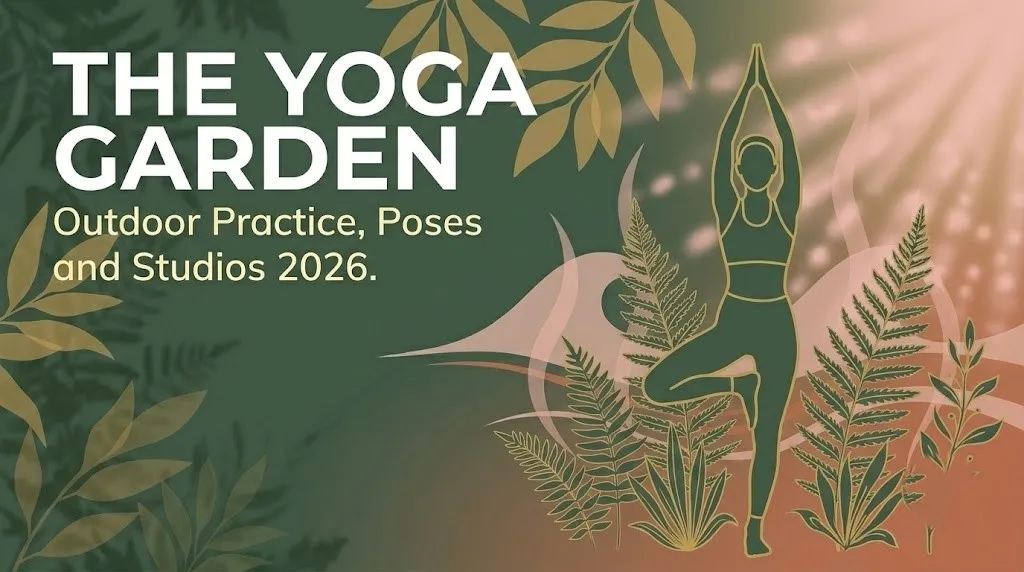
Vrikshasana (Tree Pose) is one of the most fitting poses for outdoor practice. Practiced facing a real tree, it creates a direct visual anchor for the gaze (drishti) that stabilizes balance more effectively than a fixed studio wall. It strengthens the hip abductors, ankle stabilizers, and core musculature of the standing leg while training single-leg proprioception.
To practice Vrikshasana (Tree Pose) outdoors:
- Stand in Tadasana (Mountain Pose) on a flat, dry section of ground.
- Shift your weight onto your left foot. Spread the toes for a wider base of support.
- Bring your right foot to rest against the inner left calf or inner left thigh. Never press the foot against the inner knee.
- Choose a fixed point on the tree or horizon for your gaze.
- Bring hands to heart center (Anjali Mudra) or extend arms overhead, palms together.
- Hold for 5 to 8 breath cycles, roughly 25 to 40 seconds.
- Lower the foot on an exhale. Return to Tadasana. Repeat on the right leg.
Modification: If balance is challenging on natural ground, practice near a tree and use fingertips against the trunk for stability. People with ankle injuries or vestibular conditions should keep the toes of the raised foot touching the ground rather than lifting the foot.
Safety note: Never practice Tree Pose on wet grass or uneven ground without a stable handhold nearby.
Key Takeaway: Vrikshasana practiced facing an actual tree in an outdoor garden setting is one of the most complete single poses for beginner garden yoga: it trains balance, builds ankle stability, and uses the natural environment as an active tool for the pose itself.
How to Practice Yoga in Your Garden at Home
Practicing yoga in your garden at home is fully accessible for most adults without any studio membership, special training, or expensive equipment, provided the space is prepared correctly and the session is structured appropriately for the outdoor environment.
The first practical step is surface assessment. Natural grass on level ground is the most forgiving outdoor surface for yoga. The slight give of the turf cushions the joints during seated and kneeling poses better than hard indoor flooring. However, wet or uneven grass significantly increases slip and trip risk. Checking the surface before spreading your mat and waiting for morning dew to dry are both worth the few minutes they take.
A garden yoga session at home benefits from a simple opening structure:
- Sit in Sukhasana (Easy Pose) for 3 to 5 minutes before moving. Close your eyes. Listen to the ambient sounds. Feel the temperature of the air on your skin. This is not a preamble. This is practice.
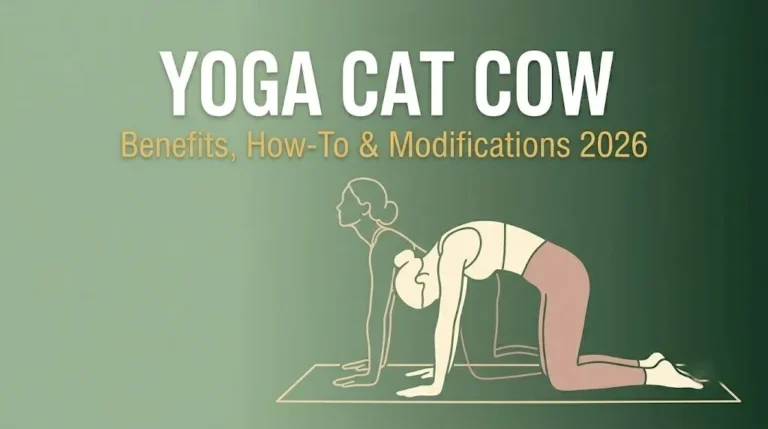
- Move through 3 to 5 rounds of Marjaryasana-Bitilasana (Cat-Cow Pose) on your hands and knees. The spinal warm-up is the same indoors and out, but the sensory environment of the garden changes its character entirely.
- Progress to standing poses, then floor work, then a closing Savasana (Corpse Pose) with eyes open or closed, face turned toward the sky or tree canopy.
Modification: If kneeling on outdoor ground is uncomfortable even with a mat, place a folded blanket under the knees for all floor-based transitions. People with wrist sensitivities should use fists rather than flat palms for hands-and-knees poses on any surface.
Setting Up a Home Yoga Garden: Space, Surface, and Props
Setting up a dedicated home yoga garden requires a flat, clear outdoor space approximately 6 feet by 10 feet, a weatherproof or outdoor-rated yoga mat, and a small selection of props adapted for outdoor conditions.
The surface is the most important consideration. Natural grass is ideal for cushioning and aesthetics. Composite decking or stone patios work well for standing sequences but feel hard under kneeling and seated poses without additional padding. Wooden decks are usable but can become slippery in humidity. Bare earth or fine gravel is not suitable for practice without a substantial mat or padding layer underneath.
Props for outdoor yoga practice require some adaptation from standard indoor options:
| Indoor Prop | Outdoor Adaptation | Why It Matters |
|---|---|---|
| Standard foam yoga block | Bring indoors between uses | Moisture exposure degrades foam quickly |
| Cork yoga block | Ideal for outdoor use | Moisture-resistant, naturally antimicrobial |
| Standard yoga mat | Use with a full-length towel over it | Outdoor mats need grip even when damp |
| Outdoor-rated yoga mat | Specifically designed for grass, sand, and deck | Better grip on natural surfaces |
| Bolster | Use inside: bring blankets outside instead | Fabric bolsters absorb moisture and mildew |
| Yoga blanket | Wool or outdoor fleece versions hold well | Use for padding knees and seating |
Sun positioning matters more outdoors than in a studio. Practicing facing east during morning sessions positions you to avoid direct sun in the eyes during standing forward-facing poses. A light canopy, pergola, or large tree provides dappled shade for summer midday sessions without blocking airflow.
Garden Yoga Sequence: A Beginner Flow for Outdoors
A beginner garden yoga sequence should move through four phases: grounding, warming, standing strength, and cooling, with the outdoor environment informing each phase through breath, gaze, and sensory awareness.
This sequence requires only a yoga mat and a stable outdoor surface. Complete each phase in order without rushing transitions. The outdoor environment itself will naturally slow your pace if you let it.
Phase 1: Grounding (5 minutes)
- Sit in Sukhasana (Easy Pose). Close your eyes for 2 minutes. Breathe naturally.
- Begin Nadi Shodhana (Alternate Nostril Breathing): 5 rounds, 4 counts inhale, hold 4 counts, 4 counts exhale through alternate nostrils.
- Open your eyes. Fix your gaze on one point in the garden. Take 3 slow full breaths.
Phase 2: Warming (10 minutes)
- Come to hands and knees. Marjaryasana-Bitilasana (Cat-Cow Pose): 8 slow rounds, syncing movement with breath.
- Press into Adho Mukha Svanasana (Downward Facing Dog). Hold 5 breaths. Pedal the heels alternately for 3 additional breaths.
- Walk feet to hands. Rise slowly to standing in Tadasana (Mountain Pose).
Phase 3: Standing Strength (15 minutes)
- Step into Virabhadrasana I (Warrior I): right foot forward, hold 5 breaths. Switch sides.
- Open to Virabhadrasana II (Warrior II): right foot forward, arms extended, hold 5 breaths. Switch sides.
- Vrikshasana (Tree Pose): right leg, hold 5 breaths. Switch to left leg.
Phase 4: Cooling (10 minutes)
- Sit in Setu Bandha Sarvangasana (Bridge Pose) preparation: lie on your back, knees bent. Lift the hips on an inhale, hold 5 breaths, lower on an exhale. Repeat twice.
- Draw knees to chest. Rock gently side to side.
- Extend into Savasana (Corpse Pose). Eyes open toward the sky or closed. Rest for 5 minutes.
Modification: Replace standing poses with seated chair versions if balance on natural ground is unsafe. Warrior I and II can both be practiced from a seated position at the edge of a garden chair.
Key Takeaway: A complete garden yoga session needs only 40 minutes and a flat outdoor space: the four-phase structure of ground, warm, strengthen, and cool works for any outdoor environment and any experience level.
Restorative Yoga Outdoors: Poses and Modifications
Restorative yoga practiced outdoors combines the therapeutic benefits of long-held, fully supported poses with the parasympathetic calming effect of natural environments, making it one of the most effective formats for stress management and recovery available to home practitioners.
Restorative yoga uses props to fully support the body in passive poses held for 5 to 20 minutes per position. The goal is zero muscular effort. The nervous system shifts into genuine rest mode when the body is fully supported, warm, and still. Outdoors, this effect is amplified by the calming sensory input of natural surroundings.
The most practical restorative poses for outdoor garden practice:
- Supta Baddha Konasana (Reclined Bound Angle Pose): Lie on your back. Bring the soles of the feet together, knees falling open. Place a folded blanket under each knee for support. Rest both arms slightly away from the body. Hold 10 minutes. Targets the hip adductors and inner groin while deeply relaxing the lower back.
- Viparita Karani (Legs Up the Wall or Tree): Lie on your back close to a garden wall or fence. Extend legs up the support. Rest for 10 minutes. Promotes venous return from the legs and activates the parasympathetic nervous system through the inversion.
- Savasana (Corpse Pose) with nature awareness: Full body on the mat, face up, eyes open toward the tree canopy or sky. No agenda. Hold 10 to 15 minutes. The visual engagement with natural movement, leaves, clouds, birds, keeps the mind anchored to the present without demanding active focus.
Modification: For anyone with hip or lower back sensitivity in Reclined Bound Angle Pose, increase the blanket height under each knee until the inner thigh feels no pull. The supported position should feel completely comfortable, not stretched.
Garden Yoga for Seniors: Adaptations and Safety
Garden yoga is particularly well-suited to older adults because the natural environment, community atmosphere, and accessible pacing of garden-style studios address several of the specific barriers that prevent seniors from maintaining consistent yoga practice.
Research published in the International Journal of Yoga found that yoga practice in adults over 60 produced meaningful improvements in balance, lower-body strength, and fall-risk reduction after 8 to 12 weeks of consistent practice. The outdoor component adds a real-world balance challenge that transfers more directly to daily-life mobility than studio floor practice alone.
The primary safety adaptations for seniors in garden yoga involve three categories:
Surface safety: Older adults with reduced ankle stability, vestibular changes, or a history of falls should practice garden yoga on a flat, fully mown grass surface or a level deck. Avoid uneven terrain, slopes, or any surface that requires constant foot adjustment.
Temperature management: Sun exposure during outdoor yoga sessions in warm climates requires awareness. Seniors are more susceptible to heat-related discomfort than younger adults. Morning sessions before 10 AM or evening sessions after 4 PM minimize direct sun exposure during summer months. A wide-brim hat for seated outdoor meditation is practical rather than excessive.
Chair adaptations for garden yoga:
| Standard Pose | Chair Adaptation | Primary Benefit |
|---|---|---|
| Virabhadrasana I (Warrior I) | Seated with front knee extended, arms raised | Hip flexor stretch, shoulder mobility |
| Vrikshasana (Tree Pose) | Seated: one foot crossed over opposite knee | Hip external rotation, proprioception |
| Savasana (Corpse Pose) | Reclined in garden chair | Full relaxation without floor transfer |
| Adho Mukha Svanasana (Downward Dog) | Hands on garden wall or chair back | Hamstring stretch, shoulder opening |
Seniors with osteoporosis should avoid deep spinal flexion in forward folds and avoid any transition that requires rolling the spine against the ground. A physician familiar with bone density findings should advise on appropriate movement range before anyone with diagnosed osteoporosis begins an outdoor yoga practice.
How Often Should You Practice Yoga in a Garden or Outdoor Space?
Practicing garden or outdoor yoga two to three times per week produces the best results for flexibility, stress reduction, and neuromuscular conditioning, though even one consistent weekly outdoor session delivers measurable mood and stress benefits when maintained over eight to twelve weeks.
The frequency recommendation for garden yoga mirrors the evidence base for yoga practice generally. A study published in the Journal of Alternative and Complementary Medicine used a three-sessions-per-week protocol and documented improvements in flexibility, balance, and stress markers by week eight. For outdoor yoga specifically, the additional benefits of nature exposure compound with each session, meaning regularity of exposure matters as much as session intensity.
Weather and seasonal variation naturally impose rest days on outdoor practice. This is not a limitation. It is a structural feature that prevents overuse and keeps the practice sustainable across the year. Most garden yoga practitioners supplement outdoor sessions with indoor practice during cold or wet weather, maintaining the movement frequency while adapting the environment.
A practical outdoor yoga schedule by practitioner profile:
| Profile | Recommended Outdoor Sessions | Suggested Indoor Supplement |
|---|---|---|
| Beginner (under 3 months) | 1 to 2 per week outdoors | 1 indoor class or home session |
| Intermediate (3 to 12 months) | 2 to 3 per week when weather allows | 1 to 2 indoor sessions |
| Senior or limited mobility | 1 per week outdoors | 1 gentle indoor or chair session |
| Stress management focus | 2 per week outdoors minimum | Meditation or pranayama daily indoors |
| Recovery or Restorative focus | 2 to 3 Restorative outdoor sessions weekly | 1 active indoor session |
Listening to seasonal light and temperature cues is itself a mindfulness practice. Outdoor yoga teaches the body to work with natural rhythms rather than against them, which experienced practitioners consistently describe as one of its underappreciated long-term benefits.
Key Takeaway: Two outdoor yoga sessions per week, maintained consistently over eight to twelve weeks, produces cumulative improvements in both physical markers and stress physiology that a single intensive session can never replicate.
Frequently Asked Questions About The Yoga Garden
What is the yoga garden style of practice?
The yoga garden refers to a community-centered yoga studio philosophy and outdoor practice approach that emphasizes natural settings, accessible instruction, and connection to the environment.
Studios using this name typically offer a range of formats including Hatha, Vinyasa, and Restorative yoga in smaller class sizes than large urban studios.
The practice style can be replicated at home by taking yoga outdoors into a garden or green space, using the natural environment as an active part of the session’s mindfulness and sensory experience.
Is outdoor yoga better than practicing indoors?
Outdoor yoga produces greater stress reduction and mood improvement than the same practice indoors, according to research comparing nature-based movement with equivalent indoor exercise.
The additional benefits of nature exposure, including reduced cortisol, improved mood, and enhanced sensory engagement, compound with yoga’s documented effects on flexibility and stress physiology.
Neither format is universally superior. Outdoor yoga excels for stress relief and mindfulness. Indoor studio yoga excels for precise alignment instruction and heated formats.
What do I need to practice yoga in my garden at home?
You need a flat outdoor surface, a yoga mat rated for outdoor use or a standard mat with a non-slip towel over it, and one or two cork blocks for support in seated and standing poses.
A folded blanket provides knee padding for ground-based poses and serves as a prop for restorative positions without requiring a full prop collection.
Sunscreen, water, and a hat for sessions in direct sun are practical additions that studio-based preparation guides consistently overlook.
What yoga styles are taught at garden yoga studios like Yoga Narberth or BG Yoga?
Community garden yoga studios like Yoga Narberth and BG Yoga typically offer a rotating schedule of Hatha, Vinyasa, Restorative, and Gentle yoga to serve a broad range of ages and experience levels.
Some studios also offer specialty formats including yoga for back care, prenatal yoga, yoga for anxiety, and senior-specific gentle classes depending on community demand.
Checking the studio’s class descriptions and instructor credentials through the Yoga Alliance registry is the most reliable way to assess whether a specific format matches your needs.
Is garden yoga safe for beginners and seniors?
Garden yoga is appropriate for most beginners and seniors when practiced on a flat, stable surface with appropriate modifications and props.
Seniors should choose level ground, practice near a stable support for balance poses, and avoid direct midday sun during warm-weather outdoor sessions.
Anyone with osteoporosis, vestibular disorders, or significant balance impairment should discuss outdoor yoga participation with their treating physician before practicing on natural ground surfaces.
Start With the Ground Beneath Your Feet
Roll out your mat outside today. Not next season. Not after you buy the right equipment. Just take what you have into the garden and sit quietly for five minutes.
From there, try Tree Pose facing an actual tree. Then lie in Savasana with your face toward the sky. That is a complete practice for a first outdoor session.
The garden does most of the work. Your job is simply to show up in it.