The Yoga Collective: Community, Classes & Guide 2026
The yoga coctive model describes a community-centered approach to yoga practice where shared values, accessible pricing, and collective participation matter as much as the physical poses themselves, and understanding what it offers is the first step to deciding whether it is the right fit for your practice. Whether you are researching an online platform, a local studio with “collective” in its name, or the broader philosophy of practicing yoga as a community rather than alone, this guide covers all of it.
Yoga’s documented benefits are real, but research consistently shows that those benefits are stronger and more lasting when practice is sustained over time. According to the National Center for Complementary and Integrative Health, yoga practiced consistently over eight weeks or more produces measurable improvements in mental health, flexibility, and stress regulation, and community accountability is one of the most reliable drivers of that consistency.
You’ll find clear definitions of what yoga collectives are, how they differ from commercial studios, what online collective platforms offer, how to evaluate teacher quality, why group practice has specific documented benefits, and practical guidance for seniors, beginners, and home practitioners building sustainable routines with community support.
The Yoga Collective
The yoga collective refers to both a specific named online yoga platform and a broader category of yoga practice models built around community participation, shared access, and values-aligned teaching rather than purely commercial fitness delivery. The term is used by multiple studios, platforms, and teacher networks, which is why search results for it return both specific business listings and broader community yoga concepts.
As a category, yoga collectives operate on a philosophy that treats yoga as a shared practice rather than a product. This shows up in structural choices: sliding-scale pricing so that income does not determine access, rotating teacher models where multiple instructors contribute rather than a single star teacher driving marketing, community-owned governance structures in some cases, and an emphasis on long-term student relationships over high-turnover membership models.
The name carries intention. “Collective” comes from the Latin “collectivus,” meaning gathered together. In yoga contexts, it signals that the practice is communal, not transactional. Students are participants in something shared, not consumers of a service.
The practical difference for students is felt in how classes are structured, how teachers are compensated, and whether the space, physical or digital, feels like it belongs to the community or to a business. Not every studio or platform using the word “collective” delivers on this promise. The section on how to evaluate a yoga community further in this guide gives you the tools to tell the difference.
Key characteristics that distinguish a genuine yoga collective:
- Community input into programming and scheduling decisions
- Pricing structures that include sliding-scale or donation options
- Multiple teachers contributing to the curriculum rather than one brand face
- Explicit commitment to accessibility and inclusion in stated values and actual class offerings
- Transparent communication about teacher pay and studio finances
What Is a Yoga Collective?
A yoga collective is a yoga practice model organized around shared community participation and values rather than profit-first business structures, typically featuring accessible pricing, multiple teaching voices, and a culture of belonging for practitioners at all experience levels. It is the organizational philosophy behind a growing number of both in-person studios and online platforms.
The concept has roots in cooperative business models and the seva (selfless service) tradition within yoga philosophy. Just as a cooperative grocery store is owned and operated for the benefit of its members rather than external shareholders, a yoga collective structures its practice and finances around the needs of its community. This does not mean the studio or platform is non-profit; it means community benefit is the organizing principle rather than revenue maximization.
In structural terms, yoga collectives often distinguish themselves from conventional studios through teacher compensation models. Commercial studios frequently pay teachers per-head (a percentage of how many students attend their class), which creates financial incentive for popularity over pedagogical quality. Many collectives pay teachers a flat hourly rate or share revenue equally, which removes that incentive misalignment.
Yoga Alliance, the primary credentialing body for yoga teachers in the United States, recognizes the collective model as an emerging practice structure and has increased its resources for cooperative and community-based teaching arrangements in recent years. This institutional recognition reflects a genuine shift in how yoga delivery is organized at the grassroots level.
| Feature | Yoga Collective | Commercial Studio | Solo Online Platform |
|---|---|---|---|
| Pricing model | Sliding scale, donation, flat membership | Class pack, premium membership | Fixed monthly subscription |
| Teacher model | Multiple rotating teachers | Star teacher model | Small curated faculty |
| Community involvement | High; student input valued | Low | Varies |
| Accessibility focus | Central to model | Marketing-adjacent | Varies |
| Governance | Often shared or cooperative | Owner-led | Corporate |
Yoga Collective Online
A yoga collective online refers to digital platforms and communities that apply the collective model to virtual yoga practice, offering live-streamed classes, on-demand libraries, teacher-student interaction, and community features that attempt to replicate the social cohesion of in-person collective practice through technology. The quality and authenticity of these platforms varies considerably.
The appeal of online yoga collectives is real. They eliminate geography as a barrier, reduce cost compared to in-person studio membership, and for practitioners with mobility limitations, health conditions, or demanding schedules, they provide the only realistic access to consistent yoga instruction. A student in a rural area, a parent with young children, or a senior with limited transportation all benefit from a well-designed online yoga community.
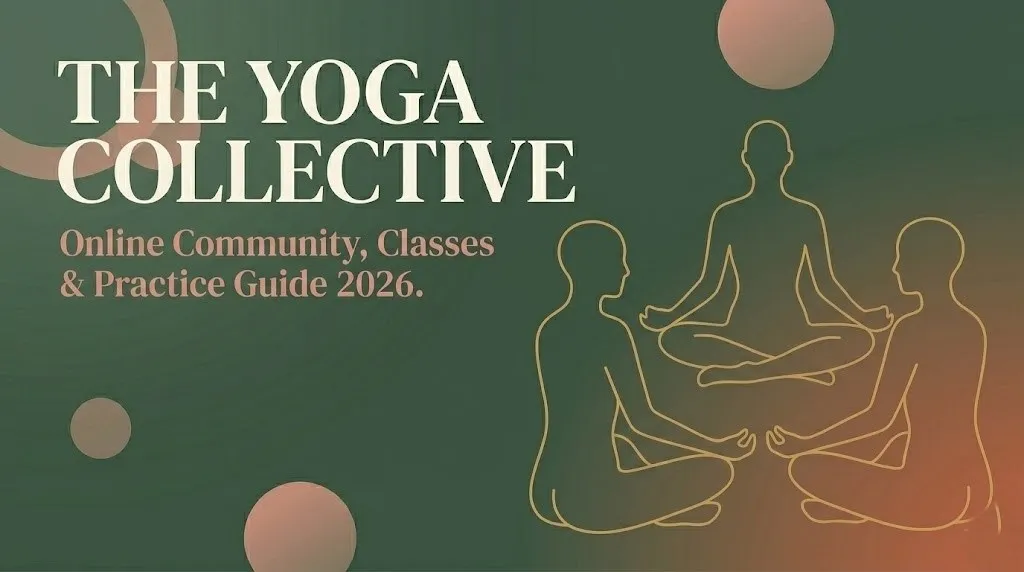
The limitation is equally real. Online platforms cannot fully replicate the physical presence of a teacher who can observe and adjust alignment in real time, the proprioceptive feedback of practicing in a room with other bodies, or the informal community-building that happens before and after in-person classes. Screen fatigue is a genuine variable for people who spend long work hours on computers.
What to evaluate in an online yoga collective:
- Teacher credentials: Look for Yoga Alliance RYT-200 as a baseline. RYT-500 indicates advanced training. Neither guarantees excellent teaching, but both confirm a formal training standard was met.
- Class variety: Does the platform offer multiple yoga styles (Hatha, Vinyasa, Yin, Restorative) rather than one format repeated endlessly?
- Live class availability: Live classes, even online, produce better community cohesion than on-demand libraries alone.
- Community features: Discussion forums, teacher Q&A, student check-in structures, and live chat during classes distinguish genuine communities from streaming libraries with a community label.
- Trial period: Any reputable online yoga collective should offer a free trial of at least one to two weeks before requiring payment.
Key Takeaway: A yoga collective, whether online or in-person, is distinguished from a commercial yoga business by its organizational commitment to community participation, accessible pricing, and multiple teaching voices rather than a single-teacher brand.
Online Yoga Community
An online yoga community is a digital network of yoga practitioners and teachers who share practice, learning, and support across geography, and the best ones actively structure their platform to create genuine connection rather than simply streaming classes into an isolated home practice. The difference between an online yoga community and an online yoga library is interaction.
Most streaming yoga platforms sell themselves as communities but function as libraries. Students watch classes, maybe rate them, and move on. A genuine online yoga community includes mechanisms for students to interact with each other and with teachers between classes: scheduled live sessions, discussion forums where teachers respond to questions, accountability check-in structures, and occasional real-time events that create shared experience.
A 2022 study published in the Journal of Alternative and Complementary Medicine found that yoga practitioners who participated in group sessions, including online group classes with live interaction, reported significantly greater reductions in loneliness, perceived social isolation, and anxiety than practitioners who completed the same yoga program through pre-recorded solo sessions. The human contact, even digital, changed the outcome.
This research reflects what experienced yoga teachers observe consistently: students who feel accountable to a community practice more frequently, ask better questions, and develop their technique more quickly than students who practice in complete isolation. The community is not decoration. It is part of the practice mechanism.
What genuine online community looks like:
- Live classes with chat: Real-time interaction during class, even text-based, changes the practice experience.
- Teacher office hours: Scheduled Q&A sessions where students can ask pose-specific questions.
- Student forums: Spaces where students discuss practice challenges with both peers and teachers.
- Shared challenges: Month-long practice challenges or themed series create shared focus and accountability.
- Small group options: Some platforms offer small-group live sessions limited to 8 to 15 students for a closer community experience.
Group Yoga Benefits
Group yoga practice produces documented psychological and physiological benefits beyond those achieved through solo practice, including stronger motivation to maintain consistency, greater reductions in anxiety and depression symptoms, and the neurological effects of synchronized movement with other bodies. These are not soft benefits. They are measurable and attributed in peer-reviewed research.
The neurological mechanism behind group practice benefits involves mirror neurons, the brain cells that activate both when a person performs an action and when they observe another person performing the same action. Practicing yoga in a room, or even on a live video call, with other practitioners creates a low-level neurological mirroring effect that solo home practice from a pre-recorded video does not produce. This is the neurological basis for why classes feel different from watching a recording, even when the content is identical.
According to the Harvard T.H. Chan School of Public Health, social connection is one of the strongest predictors of long-term health outcomes, including mental health, immune function, and longevity. Group yoga practice is a structured form of social connection that also delivers physical health benefits simultaneously, making it an unusually efficient wellness intervention.
A 2023 study published in Complementary Therapies in Medicine found that participants who practiced yoga in group settings over 12 weeks showed 32 percent greater reductions in perceived stress and 28 percent higher practice adherence than those who practiced the same program alone. The community effect on adherence is particularly important for beginners who have not yet internalized the intrinsic motivation to practice independently.
Key documented benefits of group yoga practice:
- Higher practice adherence through social accountability
- Greater reductions in anxiety and depression symptoms versus solo practice
- Neurological mirroring effects from synchronized movement with other practitioners
- Shared breath awareness that deepens pranayama practice naturally
- Reduced loneliness and increased sense of belonging with consistent group membership
Yoga Collective vs Yoga Studio
A yoga collective differs from a conventional yoga studio in governance structure, pricing philosophy, and teaching model, not necessarily in the quality or style of yoga offered, and understanding the distinction helps practitioners choose an environment that matches their values as well as their practice goals. The difference is organizational, not always experiential.
A conventional yoga studio is typically owned by one or a small number of individuals who make all decisions about pricing, scheduling, teacher hiring, and studio culture. The business model prioritizes sustainability and profit, which in a healthy studio is not inherently problematic but does create incentive structures that can conflict with accessibility and community values. Premium memberships, retail sales, and teacher training programs generate revenue beyond class fees.
A yoga collective, by contrast, distributes decision-making more broadly, often through teacher committees, member input processes, or cooperative ownership structures. Pricing reflects a commitment to access rather than market rate maximization. Teachers may have more autonomy over their class content and greater financial transparency about what their work generates.
Think of the difference like a privately owned restaurant versus a workers’ cooperative restaurant. The food might be equally good. The customer experience might be indistinguishable. But who profits, who decides, and who has accountability to whom is structurally different, and those structural differences eventually show up in the culture of the space.
| Comparison Point | Yoga Collective | Conventional Studio |
|---|---|---|
| Pricing | Sliding scale, accessible | Market rate, premium tiers |
| Decision-making | Community or teacher input | Owner-led |
| Teacher pay model | Flat rate or revenue share | Per-head or percentage |
| Accessibility focus | Core value | Variable |
| Class variety | Multiple teachers, multiple styles | Often brand-consistent style |
| Community culture | Central to model | Quality varies widely |
What this means for students: Neither model is universally superior. A well-run conventional studio with great teachers and genuine community culture outperforms a poorly organized collective. The framework above helps you ask better questions rather than assume the label guarantees the experience.
Key Takeaway: The “collective” label signals a philosophy, not a quality guarantee. Ask about pricing structure, teacher pay model, and how student feedback actually influences programming before assuming any studio or platform lives up to its collective identity.
Online Yoga Classes for Beginners
Online yoga classes for beginners work best through platforms that offer explicit beginner progressions, teacher interaction, and pose modification guidance rather than simply labeling a standard Vinyasa class as “beginner-friendly” without adjusting the content. The beginner online yoga experience fails most often because of inadequate guidance and no way to ask questions in real time.
The most common problem beginners face in online yoga is not flexibility or fitness level. It is not knowing what to do when a pose does not work for their body. In a studio, a teacher walks over, offers a cue, or demonstrates a modification. Online, in a pre-recorded class, that moment does not exist. Beginners practicing alone have no feedback loop.
This is why live class participation, even online, produces better outcomes for beginners than on-demand libraries. A live teacher can see students’ cameras (with permission), answer questions in chat, and adjust pacing based on how the group is responding. According to Yoga Alliance, beginner students who receive regular direct feedback from a teacher show faster and safer progression than those practicing from recordings alone.
What makes an online yoga class genuinely beginner-appropriate:
- Explicit modifications offered for every pose before the full expression is demonstrated.
- Slower pacing with time to set up and adjust in each posture.
- Sanskrit pose names explained in English without assuming prior knowledge.
- Teacher guidance on how to use props: yoga blocks, straps, and blankets are presented as standard tools, not exceptions.
- Breath cues integrated throughout, not just mentioned at the start.
- Clearly labeled intensity and experience level, verified by actual class content, not just marketing.
Modification for beginners with no props: A hardcover book works as a yoga block. A bathrobe belt or a necktie works as a strap. Folded blankets work as bolsters. Beginning does not require purchasing equipment first.
Yoga Collective Membership
A yoga collective membership typically offers unlimited access to a platform’s class library and live schedule for a flat monthly fee, and the value of that membership depends almost entirely on how frequently you practice and whether the community features deliver genuine connection rather than marketing language. Membership math is straightforward; community value is not.
Most online yoga collective memberships range from $15 to $50 per month for digital access, with some platforms offering sliding-scale pricing starting as low as $8 per month for students or lower-income practitioners. In-person yoga collective memberships in major cities average $80 to $150 per month, though collectives by definition tend to undercut conventional studio market rates in the same area.
The membership evaluation question that most students fail to ask before signing up is: how many times per week am I realistically going to practice? A $45 per month membership used three times per week costs approximately $3.75 per class, which is excellent value. The same membership used once per week costs $11.25 per class, which is indistinguishable from a drop-in rate. Enthusiasm before signing up does not equal adherence after.
Pose Tip:
- Use a free trial period to establish your actual practice frequency before committing to a paid membership.
- Check whether the platform allows membership pausing, which is useful during travel or illness periods.
- Review the cancellation policy before entering payment details. Monthly billing that requires 30-day notice to cancel is a significant hidden cost.
The best memberships include not just class access but community features: live sessions, teacher Q&A, and student forums that justify the monthly cost beyond what a free YouTube channel would provide.
Live Yoga Classes Online
Live yoga classes online produce meaningfully different practice experiences than on-demand recordings because the real-time presence of a teacher and fellow practitioners creates neurological and motivational effects that pre-recorded content cannot replicate, regardless of how well-produced the recording is. The live format is not a historical artifact. It is a functional advantage.
In a live online yoga class, the teacher is present and responsive. They see the room (the collective camera grid), sense the energy, adjust pacing, offer real-time encouragement, and respond to chat questions mid-class. This responsiveness is pedagogically significant. A teacher who notices that multiple students are struggling in Adho Mukha Svanasana (Downward-Facing Dog) can offer an alignment cue that would never appear in a pre-recorded class filmed before knowing who would be watching.
The social presence of other students in a live class, even visible only as small camera squares, activates the same group synchrony effects documented in in-person practice. Research published in the International Journal of Yoga found that the presence of other practitioners during live-streamed yoga sessions (even viewed on a screen) produced measurably lower self-reported stress post-class than the identical practice done with recordings of the same teacher and content.
Practical guidance for getting the most from live online classes:
- Keep your camera on if the teacher requests it and you are comfortable. The teacher can offer more targeted cues when they can see you.
- Reduce distractions: treat the live session with the same respect you would give an in-person class. No multitasking.
- Choose a consistent class time. Regular attendance at the same live session builds micro-community with recurring participants.
- Use the chat function to ask questions before or after, not during complex poses where you need both hands.
Modification for tech-shy or camera-shy students: Camera-off participation is always valid. The community benefit remains even when you are not visible; you can still see and experience the group.
Key Takeaway: Live online yoga classes are not a substitute for in-person practice. They are a different format with documented benefits of their own, including real-time teacher responsiveness and group synchrony effects that pre-recorded classes genuinely cannot produce.
On-Demand Yoga Classes
On-demand yoga classes are pre-recorded sessions available for streaming at any time, and they represent the most flexible format for home practitioners with unpredictable schedules, though their value depends heavily on whether the student has enough foundational knowledge to practice safely and effectively without real-time teacher feedback. Convenience is the benefit; isolation is the risk.
The on-demand library model works well for practitioners who have established basic pose knowledge through live instruction, either in-person or online, and are using recordings to supplement a live practice rather than replace it. For this population, a well-curated on-demand library is genuinely useful: they can practice at 6 a.m. before work, choose a 20-minute session when time is short, or revisit a teacher’s sequence they particularly responded to.
For complete beginners who have never practiced yoga before, starting with a pure on-demand library carries the risk of learning incorrect alignment without ever knowing it. A common example: a beginner watching a Bhujangasana (Cobra Pose) video may repeatedly practice with the neck cranked back rather than in neutral extension, developing a habit that eventually causes cervical discomfort. No pre-recorded video can catch and correct this in real time.
What distinguishes high-quality on-demand yoga content:
- Multiple modification options per pose demonstrated on camera, not just mentioned verbally.
- Clear format and intensity labeling that matches actual content, not just marketing categories.
- Progressive series structure that builds skills sequentially rather than randomly organized class collections.
- Production quality that shows the teacher’s full body, not cropped framing that hides foot or hand placement.
- Accompanying written cue sheets or pose breakdowns for complex poses where video alone is insufficient.
Practical suggestion: Use on-demand classes for familiar sequences and live classes for learning new styles or poses. This combination captures the efficiency of on-demand with the safety of live instruction.
Donation-Based Yoga and Accessible Yoga
Donation-based yoga is a pricing model in which students pay what they can afford rather than a fixed rate, and it represents one of the most direct expressions of the yoga collective philosophy: that access to yoga practice should not be limited by income. Accessible yoga more broadly refers to any yoga program designed to remove financial, physical, or social barriers to participation.
The yoga world has a well-documented accessibility problem. Premium boutique studios in urban centers charge $30 to $35 per drop-in class, effectively pricing out the populations who often have the most to gain from consistent yoga practice: people managing chronic stress from financial insecurity, people in physically demanding jobs, and community members without disposable income for wellness spending. Donation-based models address this directly.
Donation-based yoga classes typically set a suggested range, perhaps $5 to $20, and accept whatever the student can contribute, including nothing if nothing is available. Studios and platforms that operate this way are making a concrete financial sacrifice relative to market-rate pricing. The ones that sustain this model typically do so through combination funding: higher-income members subsidize lower-income ones, or the collective receives grant funding, community donations, or institutional partnerships.
According to the National Center for Complementary and Integrative Health, yoga is recognized as an evidence-supported practice for managing chronic stress, anxiety, and musculoskeletal pain in adult populations. Community-accessible programs that remove financial barriers extend these documented benefits to populations that conventional studio pricing excludes.
Key features of genuinely accessible yoga programs:
- Stated sliding-scale or donation option with no embarrassment or gatekeeping
- Community classes offered free or by suggested donation on a regular schedule
- Teacher training programs designed to diversify who teaches, not just who practices
- Language and marketing that does not center on aesthetics, performance, or wealth signaling
How to Find a Yoga Community
Finding the right yoga community requires matching your goals, schedule, budget, practice level, and values to a specific community’s offerings and culture, and the best way to do this is through trial participation before any financial commitment rather than choosing based on marketing materials. What a yoga community says about itself and what it actually delivers are not always the same.
Start with format. Do you want live in-person classes, live online classes, on-demand flexibility, or some combination? This single decision narrows the field considerably. If in-person community is important, your geographic options determine the next steps. If you are open to online community, the field is global.
Questions worth asking before joining any yoga community:
- What yoga styles do you offer, and are your teachers certified in those styles specifically?
- What is your pricing structure, and do you have accessible options for students with limited budgets?
- How does student feedback influence your programming?
- What is the cancellation policy, and can I pause my membership?
- How do teachers interact with students outside of class time?
Yoga Alliance’s teacher registry allows you to verify whether a teacher’s credentials are current and what training level they have achieved. An RYT-200 has completed at least 200 hours of accredited training. An RYT-500 has completed 500 hours. Neither guarantees exceptional teaching, but both confirm that a formal standard was met.
Practical approach: Attend at least three different classes or sessions from the same community before deciding. One class reveals format. Three classes reveal culture, consistency, and whether the community actually functions the way it presents itself.
Key Takeaway: The most reliable way to evaluate any yoga community is to participate in at least three sessions across different teachers and class types before committing. Marketing and actual culture diverge most visibly in that third class.
Yoga Collective Class Formats
Yoga collective class formats typically span multiple yoga styles to serve a diverse community of practitioners rather than specializing in a single style, and the breadth of formats on offer is one of the clearest indicators that a collective is genuinely serving its community rather than optimizing for a single profitable demographic. Format diversity is a values signal.
A genuine yoga collective typically offers at least four to five distinct formats, each appropriate for different practitioners, goals, and physical starting points. Hatha yoga serves beginners and students wanting slower, alignment-focused practice. Vinyasa serves students seeking dynamic, breath-linked movement. Yin yoga serves students working on connective tissue flexibility and stress reduction through long holds. Restorative yoga serves students in recovery, managing illness, or needing nervous system support.
| Class Format | Style | Who It Serves Best | Typical Hold/Pace |
|---|---|---|---|
| Hatha | Hatha | Beginners, all ages | Moderate; 5 to 8 breaths per pose |
| Vinyasa Flow | Vinyasa | Active practitioners, athletes | Dynamic; breath-linked transitions |
| Yin | Yin | Flexibility goals, stress relief | Long holds; 3 to 5 minutes per pose |
| Restorative | Restorative | Recovery, illness, nervous system | Very slow; 5 to 20 minutes per pose |
| Meditation and Breathwork | Pranayama, Meditation | All levels seeking mental practice | Seated; 20 to 45 minutes |
| Beginner Series | Hatha-based | First-time students | Slow; detailed alignment instruction |
A collective that offers only one or two of these formats is either a specialty studio or has not yet built the teacher diversity to serve a full community. The presence of a Restorative yoga offering is a particularly useful signal: it is the style that serves people in the most vulnerable physical states, and its inclusion suggests the collective is thinking beyond the able-bodied, active practitioner demographic.
Modification awareness: In any collective, ask whether each format includes explicit modification options for practitioners with injuries, limited mobility, or chronic health conditions. Format diversity without modification depth serves only the middle of the fitness bell curve.
Online Yoga for Seniors
Online yoga for seniors works best through platforms that offer chair yoga, gentle Hatha, and restorative formats with explicit senior-appropriate modifications, clear verbal instruction without assuming baseline flexibility, and live class options that provide the social connection that seniors are documented to benefit from most through group practice. Seniors have specific needs that generic online yoga platforms frequently underserve.
The National Center for Complementary and Integrative Health notes that yoga practice in adults over 65 is associated with measurable improvements in balance, flexibility, and functional independence when practiced with appropriate modifications and consistent frequency. Fall prevention starts with proprioceptive training in balance poses like Vrksasana (Tree Pose), which can be safely practiced with wall or chair support for seniors in any online class that offers this modification explicitly.
The social isolation dimension of senior wellness is particularly relevant here. According to the Harvard T.H. Chan School of Public Health, loneliness and social isolation are associated with elevated health risks in older adults equivalent to smoking 15 cigarettes per day. A live online yoga collective that creates genuine community connection addresses both the physical and social wellness needs of senior practitioners simultaneously.
What makes an online yoga collective appropriate for seniors:
- Chair yoga classes listed explicitly in the schedule, not “chair options” buried in a standard standing class
- Gentle or restorative formats at multiple times during the week to accommodate varied schedules
- Slower pacing throughout, with verbal descriptions of modifications before demonstrations
- Live teacher interaction that allows seniors to ask questions and receive real-time feedback
- Larger video display options in the interface, or clearly filmed teachers who are easy to follow on screen
- Technical support for students who are less comfortable with streaming technology
Safety note for seniors: Any senior with balance concerns, osteoporosis, or cardiovascular conditions should mention this to the online teacher before their first class. Many online teachers will adjust specific cues for individual students when they are informed of relevant health context.
Building a Home Yoga Practice With Community Support
Building a sustainable home yoga practice with community support means combining the flexibility of home practice with the accountability, feedback, and connection that community participation provides, because research consistently shows that neither isolated home practice nor community-only practice is as effective as a hybrid approach that draws on the strengths of both. Home practice without community tends to stagnate; community without home practice limits progress to class time only.
Think of community support in home practice like a scaffold around a building under construction. The building (your practice) does its own structural work. The scaffold (the community) does not do that work for you. But without it, the building grows more slowly, less accurately, and with fewer structural checks along the way.
The most effective hybrid approach for home practitioners includes:
- At least one live class per week with a consistent community, either in-person or online, to maintain social accountability and receive real-time teacher feedback.
- Two to three home practice sessions per week using on-demand content or self-directed practice to build frequency and deepen individual exploration.
- Community check-in participation, whether a forum post, a brief message to a practice partner, or a shared monthly challenge, to maintain connection between sessions.
- A consistent home practice space that is dedicated to yoga rather than shared with competing activities. Even a cleared corner of a room with a stored mat signals to the nervous system that practice is a priority.
According to a study published in Complementary Therapies in Medicine, practitioners who combined weekly group sessions with independent home practice showed 41 percent greater improvements in flexibility, stress reduction, and practice frequency compared to those who practiced only in group settings or only at home over a 16-week period.
Modification for time-limited practitioners: Even a 10-minute daily home practice between weekly community sessions produces more consistent progress than a single long session once per week. Consistency outperforms duration in building both flexibility and habit.
Key Takeaway: The most sustainable yoga practice combines consistent home sessions with at least one weekly live community session. Research shows this hybrid approach outperforms either solo or group-only practice for adherence, flexibility gains, and stress reduction over time.
Frequently Asked Questions About The Yoga Collective
What is a yoga collective and how is it different from a yoga studio?
A yoga collective is a community-centered yoga model that prioritizes accessible pricing, multiple teaching voices, and shared governance rather than profit-first studio ownership.
The practical differences show up in pricing (sliding scale is common), teacher pay models (flat rate rather than per-head), and how much student and teacher input shapes programming decisions.
Not every business using the word “collective” delivers on this philosophy; asking specific questions about pricing structure and community involvement reveals whether the label matches the reality.
Is online yoga as effective as in-person yoga?
Online yoga can be equally effective for experienced practitioners who have established foundational alignment knowledge and are using digital formats to maintain or extend an existing practice.
For beginners, research published in the Journal of Alternative and Complementary Medicine found that real-time teacher interaction, even online, produces better outcomes than pre-recorded solo practice, making live online classes a viable alternative to in-person instruction when taught well.
In-person practice has advantages for alignment correction and physical community that online formats cannot fully replicate, which is why a hybrid approach, combining both, is recommended when access to both is possible.
What should I look for in an online yoga collective?
Look for teacher credentials verified through Yoga Alliance (RYT-200 as minimum, RYT-500 for advanced practitioners), multiple yoga style offerings, live class options with real teacher interaction, and transparent pricing that includes accessible or sliding-scale options.
Community features like student forums, teacher Q&A sessions, and shared practice challenges distinguish genuine online collectives from streaming libraries with a community label applied in marketing.
Always use a free trial period of at least one to two weeks before committing to a paid membership, and attend at least three different classes across different teachers before deciding whether the community is the right fit.
Can beginners join a yoga collective online?
Yes, beginners can join an online yoga collective, provided the platform offers explicit beginner classes with detailed modification guidance, slower pacing, and opportunities for real-time teacher interaction. Beginners specifically need feedback that pre-recorded on-demand classes cannot provide.
Look for platforms that offer a dedicated beginner series or progression rather than simply labeling a standard class as beginner-appropriate without adjusting the content or pacing.
Beginning yoga without any live teacher contact, even occasional live sessions or Q&A access, significantly increases the risk of developing alignment habits that cause joint stress over time.
How much does a yoga collective membership typically cost?
Online yoga collective memberships typically range from $15 to $50 per month, with sliding-scale options at some platforms starting as low as $8 per month for students or lower-income members.
In-person yoga collective memberships in most cities range from $60 to $150 per month, generally lower than equivalent conventional boutique studio pricing in the same area due to the collective’s explicit commitment to accessible pricing.
Before joining, calculate your realistic weekly practice frequency and divide the monthly cost by your expected sessions to determine per-class cost; this comparison is more useful than comparing raw membership prices across platforms.
Start With One Session Before Deciding Anything
The best way to find your yoga collective is to show up. Not to research endlessly. One live class, in person or online, tells you more than any amount of reading.
Use free trials. Attend three sessions before committing. Notice whether the teacher sees you, whether other students acknowledge each other, and whether the pricing feels like it was designed for someone like you.
Your practice will deepen faster in a community. The community is worth finding.