Yoga Headstand Bench: Benefits, How to Use & Safety Tips
A yoga headstand bench is a freestanding prop that supports the arms and shoulders during inverted yoga poses, allowing the head and neck to remain completely free of body weight load. It makes supported inversion practice accessible to people who cannot safely bear weight on the crown of the skull, including beginners, people with neck sensitivity, and older adults.
Inversion practice has a growing evidence base. According to the National Center for Complementary and Integrative Health (NCCIH), yoga, including inversion-based practices, is among the most studied complementary health approaches in the United States, with documented effects on pain management, stress response, and circulatory function.
This article covers what a yoga headstand bench is, how it differs from inversion tables and other props, what the research says about inversion benefits, how to use one step by step, which poses work best with it, who it is most appropriate for, and when it should be avoided entirely. Buying guidance and home setup advice are included throughout.
What Is a Yoga Headstand Bench?
A yoga headstand bench is a U-shaped or arch-shaped frame with padded arm rests that allows the practitioner to hold an inverted position, such as a supported headstand, while bearing all body weight through the arms and shoulders rather than the head or neck.
The design addresses one of the most common safety concerns in traditional inversion practice: cervical spine compression. In a conventional Salamba Sirsasana (Supported Headstand), some body weight does rest on the crown of the skull and the forearms together. For practitioners with cervical disc issues, neck weakness, or simply a less-developed sense of inversion balance, this creates real risk.
The bench eliminates that risk entirely by positioning the arm rests at a height where the practitioner can insert their head between the pads, plant their forearms or hands firmly on the supports, and kick or walk the legs up into inversion without any contact between the head and the floor. The neck hangs freely in space throughout the pose.
This is not a new concept. Iyengar yoga, developed by B.K.S. Iyengar, has used rope walls, chairs, and other structural supports for inversion work for decades. The yoga headstand bench is a product-market evolution of this prop-assisted inversion philosophy, adapted for home use without a dedicated studio rope wall.
Key structural features of a standard yoga headstand bench:
- U-shaped or archway frame made of wood, bamboo, or powder-coated steel
- Padded forearm or hand rests at a height of approximately 10 to 14 inches from the floor
- Base width wide enough to provide lateral stability during inversion
- Weight capacity typically ranging from 250 to 350 pounds depending on the model
- Non-slip rubber feet to prevent sliding on hardwood, tile, or mat surfaces
Yoga Headstand Bench vs. Inversion Table: What Is the Difference?
A yoga headstand bench and an inversion table are both inversion props, but they differ fundamentally in how inversion is achieved, what body position is used, and what physical conditions each is appropriate for.
An inversion table suspends the user from the ankles in a passive, gravity-driven inversion. The body hangs straight down from fixed ankle supports. The degree of inversion is adjustable, from a slight 15-degree tilt to full 90-degree inversion. The user exerts almost no muscular effort to stay inverted. This makes it easy to access but difficult to control precisely.
A yoga headstand bench requires the practitioner to actively support themselves through the arms and core. The inversion is achieved through deliberate muscular effort, which means the shoulders, deltoids, trapezius, and core stabilizers are all working throughout the hold. This active engagement is a significant part of the practice’s physical benefit.
For most yoga practitioners, the headstand bench provides a more integrated, strength-building inversion experience than a passive inversion table, while remaining far more accessible than a freestanding handstand or unsupported headstand.
| Feature | Yoga Headstand Bench | Inversion Table |
|---|---|---|
| Inversion method | Active, arm-supported | Passive, ankle-suspended |
| Muscular demand | Moderate (arms, core, shoulders) | Minimal |
| Weight bearing | Through arms and shoulders | Through ankles and joints |
| Neck position | Completely free, decompressed | Hanging freely |
| Beginner accessibility | High with instruction | High but passive |
| Yoga integration | Strong, used with yoga poses | Separate from yoga practice |
| Cost | Lower ($50 to $200 typically) | Higher ($200 to $500+) |
| Storage size | Compact, foldable options available | Large, not easily stored |
Types of Yoga Inversion Benches and Stools Compared
Yoga inversion props come in several distinct forms, including the headstand bench, the inversion stool, the headstand chair, and the inversion chair, each with different structural designs suited to different body types, practice goals, and budgets.
Understanding the difference between these terms prevents purchasing the wrong prop for your practice. The market uses these names inconsistently, so knowing what to look for structurally matters more than the label on the product listing.
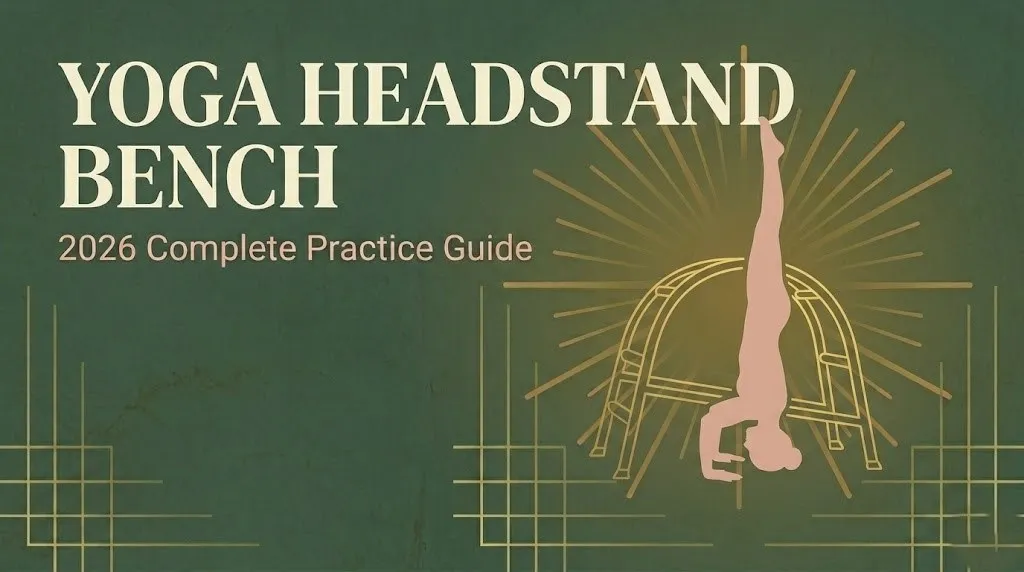
A yoga headstand bench typically refers to the arch or U-frame design where the practitioner places forearms inside the frame and the head hangs between the pads. This is the most common design and the most versatile for extended inversion holds.
A yoga headstand stool or yoga inversion stool usually refers to a smaller, lower profile prop with a padded seat and arm supports positioned closer to the floor. These are often used in Iyengar yoga for seated and semi-inverted poses as well as full inversions. They require more core strength to use safely because the lower arm position changes the body’s leverage.
A yoga headstand chair or inversion yoga chair typically describes a modified folding chair with extended legs and a padded backrest, designed for both inversion work and restorative poses. They are particularly common in therapeutic and senior yoga settings because the higher arm position requires less core strength to enter inversion safely.
| Prop Type | Frame Height | Arm Position | Best For |
|---|---|---|---|
| Yoga headstand bench | 10 to 14 inches | Forearms inside U-frame | General inversion practice, home use |
| Yoga inversion stool | 6 to 10 inches | Palms on side platforms | Iyengar-style practice, core strength |
| Yoga headstand chair | 12 to 18 inches | Forearms on chair back | Seniors, therapeutic yoga, beginners |
| Inversion yoga chair | Variable | Arms on modified chair frame | Restorative and semi-inversion poses |
Key Takeaway: The structural difference between a headstand bench, inversion stool, and headstand chair changes your arm position and leverage during inversion, which affects both the muscular demand and the ease of entry for beginners and seniors.
Yoga Headstand Bench Benefits for the Body
A yoga headstand bench provides physical benefits including active shoulder and core strengthening, spinal elongation in the inverted position, improved circulation through venous return, and the deep decompressive effect of hanging the cervical and lumbar spine in traction.
The active nature of bench-supported inversion distinguishes it from passive inversion therapy. When you hold yourself inverted using a headstand bench, the deltoids, trapezius, serratus anterior, and core stabilizers (particularly the transverse abdominis) are all engaged simultaneously. This produces a strengthening stimulus alongside the decompression benefit.
According to a study published in the International Journal of Yoga, regular inversion and supported inversion practices were associated with improved muscular endurance in the shoulder girdle and upper body, as well as subjective improvements in spinal comfort in practitioners who held inversions for consistent periods over eight weeks.
Physical benefits associated with regular yoga headstand bench practice include:
- Strengthening of the deltoid and trapezius muscles through sustained isometric load during inversion
- Decompression of the cervical and lumbar intervertebral discs as gravity reverses its usual compressive direction
- Improved venous return from the lower extremities as the legs elevate above the heart
- Enhanced lymphatic drainage from the legs, groin, and abdomen, which may reduce swelling in the lower limbs
- Improved spatial awareness and vestibular system training from the novel orientation of inversion
- Gradual improvements in shoulder stability and rotator cuff coordination with consistent practice
Modification for beginners: In your first several sessions, hold the inverted position for no more than 30 seconds. This allows the cardiovascular system and vestibular system to adapt to the inverted orientation before longer holds are attempted.
Yoga Headstand Bench and Spinal Decompression
A yoga headstand bench promotes spinal decompression by reversing the gravitational force that compresses the intervertebral discs throughout a typical day, allowing the disc space to expand slightly and the surrounding musculature to release chronic holding patterns.
Think of the spinal discs like sponges that have been squeezed all day by body weight and postural compression. Every hour of sitting, standing, or walking loads the discs in the same downward direction. Inversion reverses that direction. The gravitational pull that normally compresses the disc space instead gently separates the vertebral bodies, creating traction.
This is not the same as medical spinal traction, which applies specific measured force through clinical equipment. Yoga inversion provides a gentler, body-weight-dependent decompression that varies with how much weight the arms are supporting and how completely the practitioner relaxes into the position.
A 2019 review published in Complementary Therapies in Medicine found that inversion-based practices, including yoga inversion and mild mechanical traction, were associated with subjective reductions in lower back discomfort and improved lumbar range of motion in adults with non-specific low back complaints. The review noted that consistency of practice, defined as at least three sessions per week over four weeks, was associated with more durable outcomes than occasional practice.
Safety note for disc conditions: People with diagnosed herniated or bulging discs should discuss inversion practice with their spine-managing physician or physical therapist before using a headstand bench, as the traction effect may benefit some disc presentations and aggravate others depending on the specific location and direction of the herniation.
Yoga Headstand Bench and Mental Health Benefits
Yoga headstand bench practice supports mental health through the combined effects of physical inversion on blood flow to the brain, the calming influence of a novel physical challenge on the nervous system, and the breath-focused attention that inversion practice typically requires.
Inversions have been associated with subjective reports of mental clarity, reduced anxiety, and improved mood in yoga practitioners for centuries. The physiological basis for at least some of these effects involves increased blood flow to the prefrontal cortex and the parasympathetic nervous system response triggered by slow, deliberate breathing in an inverted position.
Research published in the Journal of Alternative and Complementary Medicine found that yoga practices including inversions were associated with measurable reductions in cortisol, a primary stress hormone, in practitioners who maintained consistent practice over a 12-week period. The researchers attributed these effects to the combination of physical effort, regulated breathing, and the relaxation response following sustained physical challenge.
The mental health benefit most consistently reported by headstand bench users is a sense of perspective shift, not a metaphor, but a literal change in visual orientation that many practitioners describe as mentally refreshing. This is consistent with what neuroscientists call “attentional restoration,” where novel physical experiences interrupt rumination and redirect focus to immediate sensation.
Modification for people managing anxiety: If inversion triggers rather than reduces anxiety in your first sessions, start with Viparita Karani (Legs Up the Wall Pose) on the floor for several weeks before introducing the bench. The partial inversion of legs-up positions provides many of the same circulatory and nervous system benefits without the full vestibular challenge of a complete headstand.
Key Takeaway: The mental shift from inversion practice is not mystical; it has identifiable physiological components involving blood flow, cortisol reduction, and attentional redirection that research is increasingly able to document and explain.
How to Use a Yoga Headstand Bench Step by Step
To use a yoga headstand bench safely, place the bench on a non-slip yoga mat, kneel in front of it, position your forearms on the pads, lower your head into the open frame, walk your feet in toward the bench, and lift your legs into inversion with a controlled kick or step.
Setting up and entering the bench correctly determines both your safety and the quality of the inversion. Rushing the entry, kicking up too hard, or positioning the arms incorrectly are the most common causes of instability and discomfort.
To use a yoga headstand bench:
- Place the bench on a yoga mat against a wall for your first several sessions. The wall provides a safety back-stop if you overbalance.
- Kneel facing the bench. Position your forearms on the arm pads, elbows approximately shoulder-width apart.
- Lower your head into the open space between the pads. Your head should hang freely without touching the floor, the pads, or the frame.
- Walk your feet in toward the bench, lifting your hips above your shoulders. Pause here and check that you feel stable through the arms.
- Bend one knee into the chest. On an exhale, press firmly through both forearms and use a controlled kick to lift both legs toward the ceiling.
- Once inverted, press the inner thighs together and engage the core. Breathe slowly and evenly through the nose. Hold for 20 to 60 seconds in your first sessions.
- To exit, lower one leg, then the other, back to the floor. Rest in Balasana (Child’s Pose) for 5 to 10 breaths before sitting up.
Modification for beginners: Practice step 4 only (hips above shoulders, feet on the floor, head hanging freely) for two to three sessions before attempting the full inversion. This acclimates the vestibular system to the partially inverted position.
Modification for people with limited shoulder stability: Keep the hands pressing firmly into the arm pads throughout the entire hold. Avoid allowing the elbows to splay outward or the shoulder blades to collapse inward.
Yoga Headstand Bench Poses and Exercises
A yoga headstand bench supports multiple inverted and semi-inverted poses beyond a basic headstand, including straddle splits in inversion, single-leg variations, core strengthening movements, and partial inversions for practitioners who are not yet ready for a full inverted hold.
The bench’s value multiplies when it is used as a platform for a full inversion practice rather than a single-pose prop. Many practitioners use the bench as a base for a short sequence of three to five exercises, moving between variations within a single session.
Poses and exercises that work well with a yoga headstand bench:
- Salamba Sirsasana (Supported Headstand) on the bench: The foundational pose. Both legs together, fully inverted, held isometrically.
- Inverted straddle variation: From a full inverted hold, open both legs wide into a wide-leg position. This targets the inner thighs and hip adductors under traction.
- Single-leg split inversion: One leg extends toward the ceiling while the other lowers toward horizontal. Targets hip flexor length and single-leg balance in inversion.
- Inverted core tucks: From the inverted position, slowly bring both knees to the chest and then extend back to straight. Targets the transverse abdominis and hip flexors under load.
- Partial inversion (pike position): Hips above shoulders, feet on the floor, spine long. This semi-inversion is accessible for beginners and seniors and provides most of the spinal decompression benefit without the full vestibular challenge.
- Shoulder openers on the bench: Sit in front of the bench, place the hands on the arm pads behind you, and gently drop the chest toward the floor. This stretches the pectoralis major and anterior deltoids.
Modification for beginners: Practice only the foundational Salamba Sirsasana (Supported Headstand) variation and the partial pike inversion for the first four to six weeks. Add single-leg and straddle variations only after full inverted holds feel stable and controlled.
How Long Should You Use a Yoga Headstand Bench?
Yoga teachers and physical therapists generally recommend beginners start with inverted holds of 20 to 30 seconds per session, building gradually to 3 to 5 minutes per session over several weeks, with a total inversion time of no more than 10 minutes per day for most practitioners.
Duration matters more than intensity with inversion practice. A short, well-controlled inversion with focused breath awareness produces more benefit than a long, tense, uncomfortable hold where the practitioner is fighting the position throughout. Quality of inversion, meaning relaxed breath, stable arm position, and attentive body awareness, determines the outcome more than time.
The progression from short to longer holds should be gradual and responsive to how the body adapts. Some practitioners notice mild headache or a feeling of pressure in the first sessions. Both typically resolve within a few minutes of returning upright. If either symptom persists, reduces total hold time and builds more gradually.
| Experience Level | Starting Hold Duration | Target Duration (After 4 to 6 Weeks) | Sessions Per Week |
|---|---|---|---|
| Complete beginner | 20 to 30 seconds | 1 to 2 minutes | 3 |
| Intermediate practitioner | 1 to 2 minutes | 3 to 5 minutes | 4 to 5 |
| Experienced inversion practitioner | 3 to 5 minutes | 5 to 10 minutes | Daily |
| Senior or therapeutic use | 15 to 20 seconds | 1 minute | 3 with rest days |
Timing note: Always come out of inversion gradually. Never stand up quickly immediately after a bench inversion. Rest in Balasana (Child’s Pose) for at least 5 breaths before sitting up, and sit quietly for another minute before standing. Blood pressure redistributes slowly when returning from full inversion, and rapid standing can cause a temporary drop in cerebral blood pressure.
Key Takeaway: Duration of inversion is less important than the quality and consistency of the practice; short daily sessions of 1 to 3 minutes build adaptation far more effectively than occasional long holds separated by days of rest.
Yoga Headstand Bench for Beginners
A yoga headstand bench is one of the most beginner-friendly inversion tools available because it eliminates the primary risk of unaided headstand practice, namely cervical spine compression, while still developing the shoulder strength, body awareness, and breathing control that make inversion practice valuable.
Most yoga beginners who want to try headstand are held back by two things: fear of falling and uncertainty about whether their neck can handle the weight. The bench removes both barriers simultaneously. There is nothing to fall from (the body exits in the same controlled way it enters), and the neck bears no load whatsoever throughout the practice.
That said, beginners using a headstand bench for the first time benefit from several preparatory steps before the first session:
- Spend at least two weeks building shoulder and core strength with Adho Mukha Svanasana (Downward-Facing Dog) held for 8 to 10 breaths per session
- Practice Viparita Karani (Legs Up the Wall Pose) for 5 to 10 minutes several times before attempting the bench, to acclimatize the body to inversion
- Ask a teacher or experienced practitioner to spot your first three to five bench sessions
- Place the bench against a wall for the first several weeks rather than practicing in open space
According to Yoga Alliance, beginners exploring inversion props benefit most from teacher-guided introduction rather than self-instruction from video or written guides alone, particularly in the first month of practice.
Modification for very new beginners: Practice the pike position (feet on the floor, hips above shoulders, head hanging in the bench frame) for two full weeks before attempting a full kick-up. This single step significantly reduces the fear and disorientation that most beginners experience when inverting for the first time.
Yoga Headstand Bench for Seniors
A yoga headstand bench is appropriate for many older adults when practiced at a conservative duration and intensity, and its ability to provide inversion benefits without cervical loading makes it considerably safer for seniors than conventional headstand practice.
Seniors who want inversion benefits face a specific challenge: bone density changes in the cervical spine from osteopenia or osteoporosis make the conventional headstand genuinely dangerous. A bench removes this risk by taking the neck entirely out of the weight-bearing equation. The arms and shoulders, which generally maintain better bone density than the cervical vertebrae in older adults, do all the work.
According to the National Center for Complementary and Integrative Health (NCCIH), yoga-based practices including gentle inversions and supported poses have been associated with improved balance, better bone density maintenance, and reduced fall risk in older adult populations. The key qualifier is “supported.” Unsupported inversions carry fall risk that the bench eliminates.
Seniors using a yoga headstand bench should:
- Start with the bench against the wall and keep it there for at least the first month
- Use the pike position exclusively (feet on floor, hips elevated) for the first several weeks before attempting full inversion
- Keep initial holds to 15 to 20 seconds maximum, focusing on breath awareness rather than duration
- Work with a yoga teacher experienced in senior yoga or therapeutic yoga for the first several sessions
- Avoid the bench entirely if they have been diagnosed with osteoporosis of the cervical or thoracic spine, uncontrolled hypertension, or glaucoma
Modification for seniors with limited shoulder strength: The headstand chair variant (higher arm rests) requires less shoulder strength to use than the standard bench design. Starting with the chair format and progressing to the lower bench as shoulder strength develops is a practical progression.
Yoga Headstand Bench Safety and Contraindications
A yoga headstand bench is not safe for everyone, and specific conditions including glaucoma, uncontrolled hypertension, retinal detachment, active ear infections, and cervical spine instability are genuine contraindications that require either full avoidance or direct physician clearance before practice.
Inversion raises intracranial and intraocular pressure. For most healthy adults, this temporary pressure increase is safe and self-limiting. For people with specific conditions, it is not.
Conditions that require full avoidance of yoga headstand bench inversion:
- Glaucoma: Inversion has been shown to measurably increase intraocular pressure. For people with glaucoma, this increase may damage the optic nerve. An ophthalmologist who understands inversion physiology should be involved in any decision about this practice.
- Uncontrolled hypertension: The cardiovascular demand of an active inverted hold plus the hydrostatic pressure changes of inversion can push blood pressure above safe levels in people with unmanaged hypertension.
- Retinal detachment or history of retinal detachment: The increased intraocular pressure of inversion poses a real risk of re-detachment or worsening in people with this history.
- Active middle ear infection or severe vertigo: Inversion dramatically alters vestibular input. Active ear infections can worsen with the fluid redistribution of full inversion.
- Recent eye or ear surgery: Any surgery within the past six months involving the eyes or ears typically precludes inversion until cleared by the operating surgeon.
- Cervical spine instability or recent cervical surgery: Although the bench removes compressive load from the neck, the muscular demand of supporting inversion through the shoulders still involves the cervical musculature. Medical clearance is required.
- Pregnancy beyond the first trimester: Full inversion is not recommended during the second and third trimesters. Partial inversion with feet elevated on a chair is a safer option that an obstetric provider can evaluate.
Warning signs to exit the bench immediately:
- Pressure or pain in the eyes or ears
- Throbbing headache during or immediately after the hold
- Persistent dizziness more than two minutes after returning upright
- Tingling or numbness in the hands or fingers
- Nausea that does not resolve quickly after exiting the inversion
Yoga Headstand Bench for Back Pain
A yoga headstand bench may help reduce certain types of back pain by providing gentle traction through the lumbar spine in an inverted position, which temporarily reduces compressive load on the intervertebral discs and surrounding musculature.
Back pain is one of the most common reasons people seek out inversion props. The appeal is logical: if gravity causes spinal compression over time, reversing gravity should provide relief. The research is supportive for some types of back pain and cautious for others.
A 2020 review published in the Journal of Alternative and Complementary Medicine found that inversion therapy, including yoga-based inversion, was associated with reductions in self-reported low back pain intensity in adults with non-specific lumbar pain, particularly when combined with core strengthening exercises. Non-specific lumbar pain refers to pain without a clearly identified structural cause, which accounts for the majority of back pain presentations.
For people with specific diagnosed spinal conditions, the picture is more nuanced:
- Lumbar disc herniation: Some presentations benefit from traction. Others are aggravated by it. The direction of the herniation determines whether inversion helps or worsens the condition. A spine specialist should evaluate this specifically.
- Lumbar stenosis: Inversion typically opens the spinal canal slightly, which may reduce stenotic symptoms in some cases. But the muscular demand of active inversion can also increase symptoms if the core engagement creates additional compressive force.
- Spondylolisthesis: Forward slippage of vertebrae is generally worsened by positions that increase lumbar extension. A spinal surgeon or sports medicine physician who knows the grade of the slip should evaluate whether inversion is appropriate.
Modification for back pain practitioners: Start with the pike position rather than full inversion. Feet on the floor, hips elevated, head in the bench frame. This partial inversion provides the majority of the lumbar traction benefit without the additional core and shoulder demands of a full inverted hold.
Key Takeaway: Inversion on a headstand bench benefits most non-specific back pain but requires specific medical evaluation before use if a structural diagnosis has been given, because some conditions improve with traction while others do not.
Choosing the Best Yoga Headstand Bench for Home Use
The best yoga headstand bench for home use is one that matches your body weight within its rated capacity, provides stable non-slip footing, has adequately padded arm rests, and is sized correctly for your arm span and head dimensions.
Buying a headstand bench without checking these four criteria is the most common purchasing mistake. A bench that works perfectly for a practitioner with a 22-inch shoulder width may be uncomfortable for someone with a 26-inch shoulder width. Arm rest spacing should ideally be adjustable or sized to your specific measurements.
Key features to evaluate when choosing a yoga headstand bench:
- Weight capacity: Always verify that the bench’s rated capacity exceeds your body weight by at least 20%. Most quality benches support 250 to 350 pounds, which covers most adult practitioners.
- Arm pad width and adjustability: Fixed-width benches work for average shoulder widths. If you have broad shoulders or a narrow frame, look for adjustable arm rests.
- Arm pad cushioning: Foam padding of at least one inch thickness prevents forearm bruising during longer holds. Memory foam padding is preferable for practitioners planning sessions of two minutes or more.
- Frame material: Hardwood (bamboo or beech) provides aesthetic appeal and sufficient strength for most users. Steel frames offer higher weight limits and longer durability.
- Non-slip feet: Rubber feet are non-negotiable if you practice on hardwood or tile. Confirm these are present before purchasing.
- Foldability: If storage space is limited, look for designs that fold flat. Many quality benches fold to a profile of approximately 4 to 6 inches depth for wall storage.
- Assembly requirements: Most benches require assembly. Check that the assembly process requires no more than basic tools and that replacement hardware is available from the manufacturer.
| Feature | Minimum Acceptable Standard | Preferred Specification |
|---|---|---|
| Weight capacity | 250 lbs | 300 to 350 lbs |
| Arm pad thickness | 0.75 inches | 1 to 1.5 inches |
| Frame material | Powder-coated steel | Hardwood or premium steel |
| Non-slip feet | Yes | Wide rubber base |
| Foldable | Optional | Preferred for home storage |
| Adjustable width | Optional | Preferred for non-average frames |
Yoga Inversion Bench Setup and Maintenance
Setting up a yoga inversion bench correctly requires placing it on a non-slip surface, positioning it at a safe distance from furniture and walls (except when using the wall as a deliberate safety backstop), and inspecting all joints and padding before each session.
Setup is not complicated, but skipping the pre-session inspection is the mistake that most frequently leads to accidents. A bench that has a loose bolt at a joint, a cracked wooden arm rest, or a non-slip foot that has worn smooth is a genuine hazard under the load of an inverted adult body.
Pre-session setup checklist:
- Place the bench on a full-size yoga mat on a flat, level surface. Avoid carpet, which can allow lateral sliding during entry or exit.
- Inspect all bolts, screws, and joints for tightness before each session. Tighten any that feel loose before proceeding.
- Check arm pad cushioning for tears, compression, or detachment. Compromised padding should be replaced before use.
- Check non-slip feet for wear. If the rubber has smoothed or the feet have separated from the frame, the bench should not be used until feet are replaced.
- For beginners and seniors, position the bench 6 to 12 inches from a wall rather than in open floor space.
- Place a folded blanket or additional mat beside the bench for resting in Balasana (Child’s Pose) immediately after exiting inversion.
Maintenance schedule:
- Check and tighten all hardware monthly for daily users, quarterly for weekly users
- Clean padded arm rests with a damp cloth and mild soap after each sweaty session to prevent foam degradation
- For wooden benches, apply a light coat of natural wood oil every six months to prevent cracking and splintering
- Store the bench in a dry location away from direct sunlight, which can degrade foam padding and wooden finishes over time
Frequently Asked Questions About the Yoga Headstand Bench
What is a yoga headstand bench and how does it work?
A yoga headstand bench is a padded frame prop that supports the arms and shoulders during inverted yoga poses, keeping the head and neck completely free of body weight.
It works by positioning the forearms on elevated pads at a height that allows the user to kick their legs overhead into inversion without any contact between the head and the floor.
Unlike a conventional headstand, the bench takes all compressive load away from the cervical spine, making inversion practice accessible to a much wider range of bodies and experience levels.
Is a yoga headstand bench safe for people with neck problems?
A yoga headstand bench is specifically designed to eliminate cervical spine compression, making it safer than conventional headstand for many people with mild neck issues.
However, people with diagnosed cervical instability, recent cervical surgery, or nerve compression conditions should have their specific situation evaluated by a spine specialist or physical therapist before using the bench, because even the indirect muscular demands of supported inversion can affect the cervical region.
Mild neck tension or general stiffness is not a contraindication; structural cervical pathology requires individualized assessment.
How long should I stay in a yoga headstand bench inversion?
Most yoga teachers recommend beginners start with holds of 20 to 30 seconds and build gradually toward 1 to 3 minutes over several weeks.
Experienced practitioners typically hold between 3 and 5 minutes per session, with some reaching 10 minutes in a single hold after years of consistent practice.
Always rest in Balasana (Child’s Pose) for at least 5 breaths before sitting up after any inversion hold, regardless of duration.
Can seniors use a yoga headstand bench safely?
Seniors can use a yoga headstand bench safely when specific precautions are followed: starting against a wall, limiting initial holds to 15 to 20 seconds, choosing the pike position before full inversion, and avoiding use if glaucoma, uncontrolled hypertension, or cervical osteoporosis has been diagnosed.
The bench is actually preferable to conventional headstand for most seniors because it removes the single greatest risk, which is cervical spine compression under body weight.
A yoga teacher experienced in senior or therapeutic yoga should guide at least the first several sessions.
What is the difference between a yoga headstand bench and an inversion table?
A yoga headstand bench requires the practitioner to actively support themselves through the arms and shoulders during inversion, while an inversion table suspends the user passively from the ankles with no muscular effort required.
The headstand bench builds shoulder and core strength alongside the inversion benefit, while the inversion table provides only passive decompression.
For yoga practitioners, the bench integrates more naturally into an existing yoga practice and is typically smaller, less expensive, and easier to store than an inversion table.
Start at the Wall. Build from There.
Set up your bench against the wall for the first month. Practice the pike position for two weeks before your first full kick-up. Keep your initial holds short, 20 to 30 seconds, and come out of the bench slowly every single time.
The bench rewards patience. The benefit is not in the duration of any single session. It’s in what consistent, well-controlled inversion does to your spine, your shoulders, and your nervous system over weeks of regular practice.
Three sessions per week, moderate holds, and a quiet moment in Balasana (Child’s Pose) after each one. That’s a complete practice.