Columbia City Yoga: Classes, Styles, and How to Start
Columbia City Yoga is a community-based yoga studio in Seattle’s Columbia City neighborhood, offering multiple yoga styles for practitioners at every experience level, and this guide gives you the specific, practical information you need before stepping onto the mat for the first time. Whether you are a complete beginner, a senior looking for gentle options, or an experienced practitioner curious about this South Seattle studio, the choices you make before class determine how well the practice serves your body.
Access to quality yoga instruction is linked to measurable health outcomes. The National Center for Complementary and Integrative Health (NCCIH) reports that yoga practice is consistently associated with reduced cortisol levels, improved balance, and lower self-reported pain across adult populations. Those benefits require showing up consistently, which starts with choosing the right class format for where you are right now.
This article covers every yoga style you’ll find at Columbia City Yoga in real anatomical terms, how to choose the right class, how to prepare as a beginner or senior, what modifications to use if you have a health condition, and how to build a practice that extends beyond the studio.
What Is Columbia City Yoga
Columbia City Yoga is an independent, community-centered yoga studio located in the Columbia City neighborhood of South Seattle, Washington, offering a diverse class schedule spanning dynamic flow formats, foundational alignment-based styles, and slow therapeutic practices. It serves as one of the primary yoga access points for the Columbia City, Rainier Valley, and surrounding South Seattle communities.
The studio operates as an independent neighborhood studio rather than a franchise. This distinction matters practically: independent studios tend to offer more style diversity and teacher autonomy than branded chain studios, and Columbia City Yoga’s schedule reflects this. Practitioners can attend a dynamic Vinyasa class in the morning and a Restorative yoga session in the evening within the same membership structure.
Columbia City neighborhood itself is one of Seattle’s most culturally diverse communities. Columbia City Yoga’s programming reflects that: the studio actively designs scheduling, pricing, and class formats to be accessible to the diverse socioeconomic and demographic range of its neighborhood. This includes tiered pricing, accessible beginner formats, and class options suitable for seniors and people managing chronic health conditions.
Key characteristics of Columbia City Yoga:
- Independent neighborhood studio (not a franchise or chain)
- Multiple yoga style offerings under one membership
- Community-focused pricing and scheduling designed for accessibility
- Located in South Seattle’s Columbia City neighborhood
- Classes available for complete beginners through advanced practitioners
- Diverse instructor roster trained in multiple yoga traditions
Columbia City Yoga Class Styles Explained
Columbia City Yoga offers multiple distinct yoga styles, and understanding how those styles differ in physical demand, pace, target tissue, and population suitability is the most useful piece of information you can have before choosing your first class. The style names on a studio schedule are not interchangeable.
Vinyasa yoga links breath to movement in a continuous flow. Classes are dynamic, sequencing changes with each teacher, and the cardiovascular and muscular demand is moderate to high. Hatha yoga holds individual poses for deliberate durations, with explicit attention to alignment, making it the most appropriate format for beginners learning the physical mechanics of each pose. These are genuinely different practices, not just different intensity versions of the same thing.
Yin yoga targets the connective tissues of the hips, pelvis, and lower spine through passive holds lasting 3 to 5 minutes. Restorative yoga uses props to fully support the body in completely passive positions, activating the parasympathetic nervous system with zero muscular effort. Both are slow, but Yin applies gentle stress to connective tissue while Restorative removes all physical effort for nervous system recovery.
| Style | Pace | Primary Target | Best For |
|---|---|---|---|
| Vinyasa | Moderate to fast | Cardiovascular, strength | Active adults, experienced practitioners |
| Hatha | Slow to moderate | Alignment, fundamentals | Beginners, technique refinement |
| Yin | Very slow | Fascia, connective tissue | Flexibility, chronic tension |
| Restorative | Stationary | Nervous system recovery | Stress, burnout, illness recovery |
| Gentle / Slow Flow | Slow | General mobility | Seniors, limited mobility, beginners |
Vinyasa Yoga at Columbia City Yoga: What to Expect
Vinyasa yoga at Columbia City Yoga is a breath-linked, continuously flowing yoga practice where poses transition in sequence with the inhale and exhale, and no two classes follow the exact same sequence. The format is instructor-creative, meaning each teacher builds their own sequence rather than following a fixed curriculum.
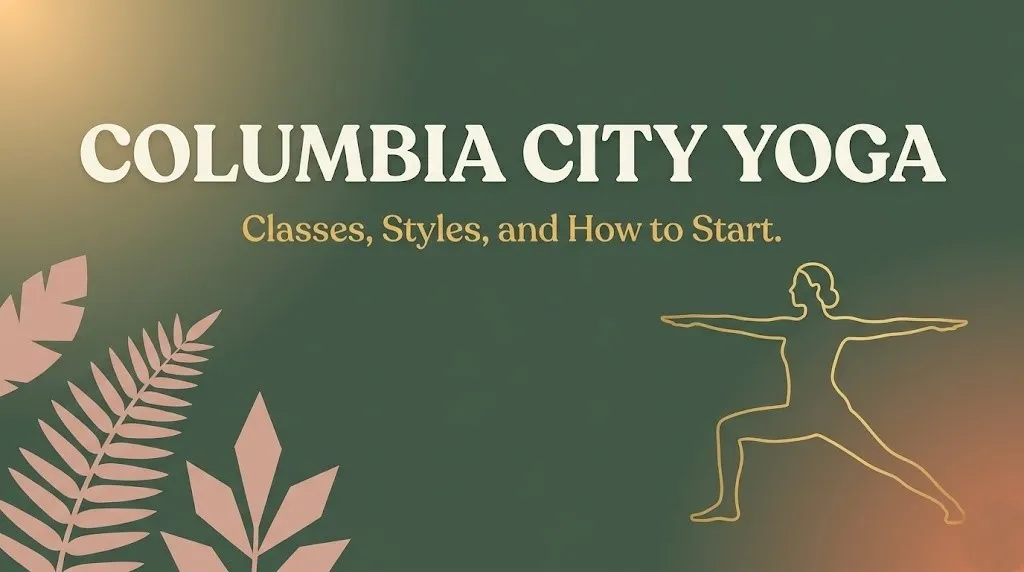
In a Columbia City Yoga Vinyasa class, you will move through standing sequences, balancing poses, floor work, and transitions that link it all together. Poses like Virabhadrasana I (Warrior I), Virabhadrasana II (Warrior II), Utkatasana (Chair Pose), and Adho Mukha Svanasana (Downward-Facing Dog) form the standing sequence backbone. The quadriceps, glutes, hamstrings, hip flexors, core, and shoulder girdle are all engaged across a typical 60-minute session.
The cardiovascular demand of Vinyasa varies by teacher and class level. Some Columbia City Yoga Vinyasa classes are explicitly labeled for beginners or all levels, which indicates a slower pace and more instruction time per pose. Others are labeled intermediate or advanced, with faster transitions and fewer alignment cues for newer practitioners. Read the class description carefully before attending.
Pose Tip for Virabhadrasana I (Warrior I):
- Ground the outer edge of the back foot firmly, keeping the heel toward the mat.
- Stack the front knee directly over the front ankle.
- Keep the torso upright rather than leaning forward into the front thigh.
- Modification: Shorten the stance by 6 to 8 inches to reduce hip flexor strain. Keep hands on hips instead of raising arms overhead if shoulder fatigue develops early in class.
Key Takeaway: Columbia City Yoga’s style offerings are genuinely distinct from each other in physical demand and purpose. Choosing Vinyasa for your first class when Hatha or a gentle format would better serve your body is the most common first-visit mistake.
Hatha Yoga at Columbia City Yoga: What to Expect
Hatha yoga at Columbia City Yoga is a foundational, alignment-focused practice that holds individual poses for deliberate durations with explicit instruction, making it the most practical starting format for beginners and the most technically precise format for experienced practitioners refining their technique. It is not slow because it is less challenging. It is slow because alignment accuracy requires time to execute.
In a Columbia City Yoga Hatha class, you will typically hold each pose for 30 to 90 seconds with verbal cues guiding your alignment in real time. The instructor describes what each pose should feel like, names the muscles engaged, and offers modifications throughout. This instructional density is what makes Hatha the best learning environment for new practitioners who are building their anatomical vocabulary.
The physical experience of Hatha yoga is muscular effort under sustained hold rather than cardiovascular demand from continuous movement. Holding Utkatasana (Chair Pose) for 10 breaths is functionally different from transitioning through it in a Vinyasa flow. The quadriceps and glutes experience isometric loading (contracting without changing length) rather than dynamic loading. Both are valid training stimuli. Hatha’s sustained holds are particularly effective for building postural muscles like the erector spinae and deep hip stabilizers.
The American College of Sports Medicine recognizes yoga as contributing to muscular endurance and flexibility when practiced at least three times per week. Hatha yoga held poses meet the ACSM definition of muscular endurance training for the lower body and core.
Modification: In Utkatasana (Chair Pose), beginners should keep the knee bend minimal (shins more vertical) and use the wall for back support. This maintains the quadriceps and glute engagement of the pose while reducing knee joint load for practitioners with osteoarthritis or knee sensitivity.
Restorative and Yin Yoga at Columbia City Yoga
Restorative yoga and Yin yoga at Columbia City Yoga are the studio’s slowest and most therapeutically oriented formats, and they serve genuinely different physiological functions that are worth understanding before choosing between them.
Restorative yoga at Columbia City Yoga uses bolsters, blankets, and blocks to fully support the body in completely passive positions. The practitioner does not engage muscles to hold the pose. The props do the structural work entirely, allowing the nervous system to shift into parasympathetic dominance (rest-and-digest mode) without the inhibiting effect of muscular effort. A typical Restorative class at Columbia City Yoga includes four to six poses held for 5 to 15 minutes each, with a closing Savasana (Corpse Pose) of 5 to 10 minutes.
Yin yoga holds poses passively for 3 to 5 minutes but specifically targets the fascia, ligaments, and joint capsules of the hips, pelvis, and lower spine rather than the muscles. The sensation in Yin is a deep, sustained stretch in connective tissue that feels distinctly different from the muscular effort of Vinyasa or Hatha. Both styles are slow, but Yin has a specific connective tissue target while Restorative has a specific nervous system target.
For practitioners attending Columbia City Yoga primarily for stress relief, sleep improvement, or recovery from intense physical training, Restorative is the more direct tool. For practitioners seeking hip flexibility, lower spine mobility, and relief from chronic tension in the pelvis, Yin delivers more targeted results.
Modification: Both Restorative and Yin yoga are appropriate for most seniors and practitioners with health conditions. Practitioners with acute lumbar disc herniation should inform the instructor before Yin class, as some long passive forward folds may need to be replaced with supported neutral spine alternatives.
Columbia City Yoga Benefits for Body and Mind
Columbia City Yoga delivers the same physical and psychological benefits as any well-taught yoga practice, and the community studio environment provides additional adherence advantages that make those benefits more likely to accumulate over the months and years it takes for yoga to produce lasting change.
The physical benefits are specific and measurable. The American College of Sports Medicine recognizes yoga as contributing to muscular endurance, flexibility, balance, and joint mobility when practiced at least three times per week. Dynamic styles like Vinyasa also meet ACSM criteria for moderate-intensity aerobic exercise. The specific muscles trained depend on the style chosen: Vinyasa loads the quadriceps, glutes, hamstrings, and shoulder girdle dynamically; Hatha loads them isometrically; Yin targets the hip flexors, adductors, and connective tissue of the sacroiliac joint region.
The psychological benefits are equally well-documented. The NCCIH reports that yoga practice is associated with reduced cortisol levels, improved heart rate variability, and enhanced parasympathetic nervous system function. These are measurable physiological outcomes that occur through deliberate breath-movement coordination and the activation of the vagal nerve during sustained yoga practice.
Physical benefits of consistent Columbia City Yoga practice:
- Spinal mobility: Forward folds, twists, and backbends maintain thoracic and lumbar range of motion
- Hip flexibility: Hip-opening poses target hip flexors, adductors, and external rotators chronically shortened by prolonged sitting
- Balance and proprioception: Single-leg poses train stabilizing muscles in the ankle, knee, and hip
- Core stability: Dynamic and held poses engage the transverse abdominis and erector spinae
- Cardiovascular conditioning: Vinyasa formats elevate heart rate into aerobic zones
What Research Says About Community Yoga Practice
Research on yoga practiced in community studio settings consistently shows better adherence, greater injury awareness, and stronger stress reduction outcomes compared to solo home practice, largely because the presence of a qualified instructor and a consistent peer group produces accountability and real-time alignment feedback that home practice cannot replicate.
A study published in the Journal of Alternative and Complementary Medicine found that social cohesion within yoga practice groups independently predicted long-term practice adherence. Practitioners who felt genuinely connected to a consistent community of fellow students were meaningfully more likely to maintain regular attendance over six and twelve-month periods. In neighborhood studios like Columbia City Yoga, where the same practitioners see each other week after week, this cohesion develops naturally and reliably.
Research published in Complementary Therapies in Medicine in a meta-analysis reviewing 49 randomized controlled trials found that yoga interventions with in-person instruction components produced stronger reductions in anxiety and self-reported stress than equivalent remote or recorded formats. The human feedback loop of an instructor observing your practice and offering real-time adjustment is an independent therapeutic variable.
The Harvard T.H. Chan School of Public Health has noted in its public health resources that yoga’s benefits for chronic lower back pain are among the most consistently replicated findings in complementary medicine. A 2017 American College of Physicians clinical guideline listed yoga as a first-line recommendation for chronic low back pain management, ahead of pharmacological intervention for many patients. Community yoga studios that offer Hatha and Restorative formats are directly relevant to that recommendation.
Key Takeaway: The research support for yoga’s health benefits is real and substantial, but those benefits require consistent practice in an environment with qualified instruction. The community studio model delivers both more reliably than solo recorded practice.
Columbia City Yoga for Beginners: How to Prepare
Columbia City Yoga is well-suited to beginners, particularly when they choose the right starting class format and arrive with realistic expectations about what the first few sessions will feel like. The most appropriate starting formats for beginners at Columbia City Yoga are Hatha, gentle flow, or any class explicitly labeled for beginners or all levels.
Your first practical challenge as a beginner will not be physical flexibility. It will be learning to coordinate movement with breath. Inhaling for the opening phase of a pose, exhaling for the deepening phase. This pairing takes three to five sessions to feel natural, and most beginners rush it by trying to keep pace with more experienced students. Resist that impulse. Your breath is the actual teacher in every yoga class, regardless of who is at the front of the room.
From a physical standpoint, expect wrist fatigue in weight-bearing poses like Adho Mukha Svanasana (Downward-Facing Dog) and lower leg fatigue in standing pose sequences during your first month. Both resolve within two to four weeks of regular practice as the relevant stabilizing muscles adapt.
What beginners should do before their first Columbia City Yoga class:
- Arrive 10 minutes early and tell the instructor it is your first class. Good teachers modify their cueing when they know a new practitioner is in the room.
- Identify where the props are stored (blocks, straps, bolsters, blankets). Using them from the start is correct technique, not an admission of limitation.
- Wear close-fitting, breathable clothing that does not bunch in forward folds or balance poses.
- Eat lightly at least 90 minutes before class. A full stomach and dynamic yoga do not mix well.
- Give the practice six consecutive sessions before evaluating whether it is working for you. One class is never enough data.
What to Bring to Columbia City Yoga
What you bring to Columbia City Yoga directly affects your safety and comfort during class, particularly during your first several sessions before the studio’s environment becomes familiar. Some items are non-negotiable. Others are worth adding once you know which class formats you use most.
A personal non-slip yoga mat is the most important item. Studio mat rentals exist but personal mats are more hygienic and more reliably non-slip. For most Columbia City Yoga class formats (Hatha, Vinyasa, gentle flow), a 4mm to 5mm natural rubber or TPE mat provides the right combination of grip, cushioning, and portability. For Restorative and Yin classes, a 6mm mat or a folded blanket under the primary mat adds meaningful joint comfort during long passive holds.
A yoga strap is the prop beginners most consistently underestimate. It bridges the flexibility gap in forward folds like Paschimottanasana (Seated Forward Bend) and allows the spine to remain long rather than rounding toward the legs. Rounding the spine to reach the feet is one of the most common beginner errors in seated poses and a consistent mechanism for lumbar disc strain.
Essential items for Columbia City Yoga:
- Non-slip yoga mat (4mm to 6mm; natural rubber or TPE preferred)
- Yoga blocks (2) for standing pose height modification and seated support
- Yoga strap for forward fold flexibility bridging
- Water bottle (for before and after class; most teachers discourage drinking during active flows)
- Small towel for any perspiration during Vinyasa or dynamic formats
- Change of clothing if attending Vinyasa or any class with significant physical demand
Note: Columbia City Yoga, like most independent studios, maintains a prop library on-site. Blocks, straps, and bolsters are generally available. Confirm availability with the studio before your first visit rather than assuming.
Columbia City Yoga Pricing and Membership Options
Columbia City Yoga offers a tiered pricing structure typical of independent neighborhood studios, with options ranging from introductory trial memberships for new students through monthly unlimited access and single class drop-in rates. Specific pricing changes seasonally and should be confirmed directly with the studio before your first visit.
Community-focused independent yoga studios in Seattle generally offer sliding scale or income-adjusted pricing as part of their accessibility commitments. Columbia City Yoga’s community orientation makes this more likely than at chain franchise studios, though the specific structure should be verified with the studio directly.
Membership options to ask about when contacting Columbia City Yoga:
| Option | Best For | Commitment |
|---|---|---|
| Introductory trial (first week or month) | Testing formats before committing | Minimal; low cost entry |
| Monthly unlimited | Practitioners attending 3 to 5x per week | Monthly recurring |
| Class packages (5 or 10 classes) | Attending 1 to 2x per week | No subscription; pay as you use |
| Drop-in single class | Occasional or visiting practitioners | No commitment |
| Sliding scale / community pricing | Income-adjusted access | Varies by studio policy |
For new practitioners who are still testing whether yoga will become a consistent habit, an introductory trial offer is always the correct starting point. Committing to a monthly unlimited membership before knowing which class formats suit your body and schedule adds financial friction to the already-challenging early phase of building a new practice.
Key Takeaway: Use Columbia City Yoga’s introductory trial offer before committing to any membership tier. Attending one Hatha class and one Restorative class in your first week gives you the direct comparative experience needed to make a membership decision based on your body’s actual response, not on what sounds most appealing in a class description.
Columbia City Yoga for Seniors and Limited Mobility
Columbia City Yoga is appropriate and genuinely beneficial for seniors when classes are chosen based on pace and physical demand, and when specific modifications are applied within those classes to match the individual body’s current capacity. The studio’s gentle flow, Hatha, and Restorative formats are the most appropriate starting points for older practitioners.
The NCCIH reports that yoga practice in adults over 60 is associated with reduced fall risk, improved balance and proprioception, better sleep quality, and lower self-reported pain levels. These benefits require consistent practice maintained over weeks and months. A studio environment with qualified instructors and a consistent peer community supports that consistency better than home-only practice for most seniors.
For seniors attending Columbia City Yoga, the practical considerations involve pace management, balance safety, and joint cushioning in floor-based poses. Any standing balance pose, including single-leg variations and Warrior sequences, should be practiced near a wall or with a chair within arm’s reach until balance confidence is established. This is not a limitation. It is correct technique for anyone whose proprioceptive confidence is still developing.
Modifications for seniors at Columbia City Yoga:
| Pose | Senior/Limited Mobility Modification | Reason |
|---|---|---|
| Adho Mukha Svanasana (Downward-Facing Dog) | Forearm variation or wall version | Reduces wrist extension load |
| Virabhadrasana I (Warrior I) | Shorten stance; hands on hips | Reduces sacroiliac stress |
| Utkatasana (Chair Pose) | Minimal bend; wall support behind back | Reduces knee joint load |
| Setu Bandha Sarvangasana (Bridge Pose) | Block under sacrum (passive) | Eliminates lumbar strain |
| Savasana (Corpse Pose) | Knees bent, bolster under knees | Reduces lumbar compression |
Seniors with osteoporosis should inform the Columbia City Yoga instructor before class. Deep spinal flexion (rounding the back in forward folds) should be replaced with flat-back alternatives to reduce vertebral compression risk.
Columbia City Yoga Modifications for Health Conditions
Columbia City Yoga classes accommodate practitioners managing specific health conditions when they communicate their situation to the instructor before class and choose the appropriate class format for their current physical state. The modifications available within any yoga class are extensive when the teacher knows what they are working with.
The most common health conditions practitioners bring to Columbia City Yoga are chronic lower back pain, knee osteoarthritis, shoulder impingement, and anxiety or depression. Each requires specific adaptation rather than a single generic “modify as needed” instruction.
For chronic lower back pain, the 2017 American College of Physicians clinical guideline recommends yoga (alongside other mind-body practices) as a first-line treatment for non-specific chronic low back pain. At Columbia City Yoga, practitioners with lower back pain should start with Hatha or Restorative formats rather than dynamic Vinyasa, and inform the instructor so they can offer specific pose substitutions that reduce compressive lumbar loading.
Modifications for common health conditions:
- Chronic lower back pain: Avoid deep forward folds with rounded spine; use flat-back alternatives; supported Bridge Pose with block under sacrum
- Knee osteoarthritis: Reduce depth in all squat and lunge poses; place folded blanket under knees in kneeling positions; avoid deep knee flexion beyond 90 degrees
- Shoulder impingement: Replace weight-bearing on extended arms with forearm variations; keep arms at sides or on hips in standing poses rather than overhead
- Wrist pain or carpal tunnel syndrome: Use fists or forearms in all weight-bearing arm poses; practice wall-based versions of Downward-Facing Dog
- Anxiety or depression: Restorative yoga is specifically indicated; NCCIH research supports its effects on cortisol reduction and parasympathetic activation
If you are managing an acute condition (recent surgery, active fracture, acute disc herniation), discussing your yoga participation with the physical therapist or specialist managing your condition before your first Columbia City Yoga class ensures you have pose-specific guidance tailored to your situation.
How to Get the Most from Your Columbia City Yoga Practice
Getting maximum benefit from Columbia City Yoga requires consistent attendance, intentional class selection across the week, and honest communication with instructors about your body’s current state. Research consistently shows that yoga frequency over time is the primary determinant of outcome, not any single session’s intensity.
The ACSM recommends yoga as part of a balanced physical activity plan practiced at minimum three times per week to produce reliable improvements in flexibility, muscular endurance, and cardiovascular health markers. For Columbia City Yoga members, a practical three-session weekly structure might combine one Vinyasa class for cardiovascular and strength work, one Hatha class for alignment refinement, and one Restorative or Yin class for nervous system recovery and connective tissue work.
Think of these three formats as three different training stimuli. A Vinyasa class is your dynamic cardiovascular session. A Hatha class is your technique and strength session. A Restorative class is your active recovery session. Treating them as interchangeable based on schedule convenience rather than physiological purpose reduces the overall benefit of your Columbia City Yoga membership.
Practical strategies for getting more from your practice:
- Tell your instructor before every class if something in your body feels different that day. Teachers adapt their cueing when they have this information.
- Stay for the full Savasana (Corpse Pose) at the end of every class. This is where the nervous system integrates the session’s physiological effects. Leaving early shortens the benefit of everything that came before.
- Practice three times per week minimum for the first eight weeks before evaluating whether the practice is producing the results you want. Four weeks is not enough adaptation time for yoga-based fitness changes.
- Use props in every class. Blocks, straps, and bolsters are not signs of limitation. They are signs that you understand how yoga actually works.
Columbia City Yoga Community and Teacher Training
The community dimension of Columbia City Yoga is one of its most functionally important features, and the teacher training component reflects the studio’s investment in developing yoga educators who understand the specific demographic and cultural context of the Columbia City neighborhood.
Research published in the International Journal of Yoga found that social cohesion within yoga groups independently predicted long-term practice adherence over six and twelve-month periods. In neighborhood studios where the same group of practitioners attends together consistently, this cohesion develops naturally. Columbia City Yoga’s neighborhood positioning, in one of Seattle’s most diverse communities, creates a practitioner community that reflects that diversity in ways that many urban yoga studios do not.
For practitioners interested in deepening their knowledge through formal training, Columbia City Yoga periodically offers or affiliates with teacher training programs following the Yoga Alliance RYT-200 framework. This 200-hour foundational training covers anatomy, alignment, sequencing, and teaching methodology and is the minimum standard for teaching yoga independently. The RYT-500 advanced training builds on this with specialized populations, therapeutic applications, and deeper teaching practicum hours.
Attending a teacher training, even without the intention of teaching professionally, gives practitioners a substantially more precise understanding of the anatomy behind the poses they practice, a clearer vocabulary for communicating with instructors and healthcare providers about their yoga practice, and a more nuanced framework for adapting their own practice as their body changes over time.
What Columbia City Yoga’s community typically offers beyond classes:
- Workshops on specific style techniques, anatomy, or philosophical topics
- Community events and collaborative practice sessions
- New student orientations and beginner series
- Potential teacher training affiliations (verify current offerings directly with the studio)
Key Takeaway: Columbia City Yoga’s community environment is not a soft benefit. Research shows it directly increases the practice consistency that determines whether yoga’s health benefits actually accumulate over time.
Columbia City Yoga vs Other South Seattle Yoga Studios
Columbia City Yoga competes primarily with other independent yoga studios in South Seattle and, to a lesser extent, with chain franchise studios that serve the broader Seattle market from locations north of the Columbia City neighborhood. Understanding where it sits in that competitive context helps practitioners make an informed choice.
Independent studios like Columbia City Yoga offer teacher-designed class sequences, style diversity, and community intimacy that chain studio franchises structurally cannot provide. The trade-off is consistency: a chain franchise delivers predictable class structure across all locations, which benefits practitioners who travel frequently or value knowing exactly what format to expect before entering a class.
Within South Seattle specifically, the independent studio landscape includes several practitioners’ collectives and wellness spaces in the Rainier Valley area. Columbia City Yoga’s neighborhood positioning, class format breadth, and community pricing structure distinguish it from both chain alternatives and smaller specialty studios that focus on a single yoga tradition.
| Feature | Columbia City Yoga | Chain Franchise Studios | Single-Style Specialty Studios |
|---|---|---|---|
| Class style diversity | High (multiple traditions) | Moderate (brand-standardized) | Low (single tradition) |
| Teacher autonomy | High | Low to moderate | High |
| Class size | Small to moderate | Moderate to large | Small |
| Community feel | Intimate neighborhood | Larger, more anonymous | Intimate but specialized |
| Pricing flexibility | Community-oriented | Fixed franchise structure | Varies |
| Beginner accessibility | High (multiple entry formats) | Moderate | Varies by specialty |
| Senior suitability | High (gentle and Restorative options) | Varies | Depends on specialty |
The honest recommendation: if style diversity, community intimacy, and neighborhood cultural alignment are your priorities, Columbia City Yoga is the stronger choice over chain alternatives. If you travel frequently and need format consistency across multiple cities, a franchise membership makes more logistical sense.
Frequently Asked Questions About Columbia City Yoga
What yoga styles does Columbia City Yoga offer?
Columbia City Yoga offers multiple yoga styles including Vinyasa, Hatha, Yin, and Restorative yoga, along with gentle flow formats suitable for beginners and seniors.
The specific class schedule and style offerings vary seasonally, so checking directly with the studio for the current schedule is recommended.
Each style serves a different physical and physiological purpose; Vinyasa builds cardiovascular fitness and strength, while Restorative targets nervous system recovery.
Is Columbia City Yoga good for beginners?
Yes, Columbia City Yoga is appropriate for beginners when they choose classes explicitly labeled for beginners, all levels, or gentle formats rather than starting with intermediate or advanced Vinyasa classes.
Arriving 10 minutes early and telling the instructor it is your first class gives them the information they need to offer relevant modifications throughout the session.
Plan to attend at least six consecutive sessions before evaluating whether the format is working for your body, as yoga adaptation requires more than one or two classes to become apparent.
What should I bring to my first Columbia City Yoga class?
Bring a personal non-slip yoga mat (4mm to 5mm), two yoga blocks, a strap, and a water bottle to your first Columbia City Yoga class.
The studio maintains a prop library on-site, so blocks and straps are generally available, but confirming this before your visit prevents surprises.
Wear close-fitting, breathable clothing that does not bunch in forward folds, and eat lightly at least 90 minutes before class.
Is Columbia City Yoga appropriate for seniors?
Yes, Columbia City Yoga is appropriate for seniors when they start with the studio’s gentle, Hatha, or Restorative formats rather than dynamic Vinyasa classes.
The NCCIH reports that yoga practiced consistently by adults over 60 is associated with improved balance, reduced fall risk, and better sleep quality, all of which are accessible through Columbia City Yoga’s slower-paced formats.
Seniors should inform the instructor of any joint sensitivity, cardiovascular conditions, or osteoporosis before class to receive appropriate pose modifications.
How much does Columbia City Yoga cost?
Pricing at Columbia City Yoga varies by membership tier, with options typically including a new student introductory offer, monthly unlimited membership, class packages, and single drop-in rates.
As an independent community studio, Columbia City Yoga may also offer sliding scale or community pricing; contacting the studio directly for current rates and any income-adjusted options is the most reliable approach.
New practitioners should always start with an introductory trial offer before committing to a monthly membership, to confirm that the studio’s style and culture fit their needs.
Closing
Columbia City Yoga works best when you match the class format to what your body needs, not just to what fits your schedule. Start with Hatha or a gentle format. Tell the instructor your level and any physical considerations. Use the props.
Give the practice three sessions per week for eight weeks before deciding whether it is doing what you need it to do. That timeline is where yoga’s documented benefits actually appear.
The mat is already there. You just have to show up.