Yoga at the Edge NYC: Sky High Yoga Guide 2026
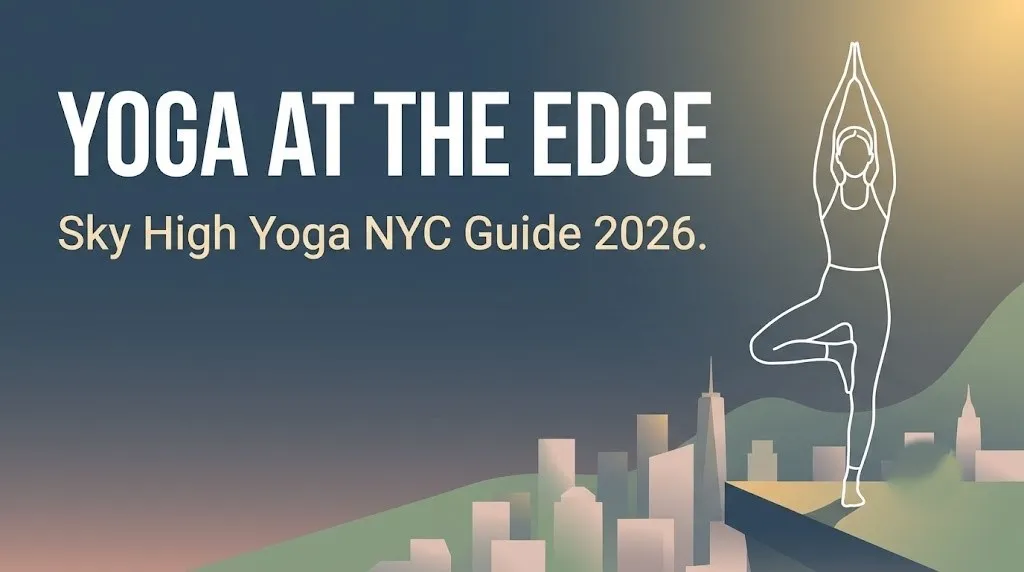
Yoga at the edge of Manhattan means practicing on The Edge, the highest outdoor observation deck in the Western Hemisphere, perched 1,131 feet above street level at 30 Hudson Yards, where the yoga class experience combines genuine physical practice with one of the most visually dramatic settings on earth. This guide covers everything event listings leave out: what the yoga actually involves, how your body responds at that height, what to do if you’re nervous about heights, and exactly how to prepare.
The National Center for Complementary and Integrative Health (NCCIH) recognizes yoga as one of the most practiced complementary health modalities in the United States. Adding the specific environmental demands of outdoor high-altitude practice creates a physiological and psychological profile that no standard studio class replicates, with unique effects on the vestibular system, proprioception, and the body’s stress response.
This guide covers the venue and experience in full, the yoga styles and poses practiced, the science of balance and height on the nervous system, practical preparation and packing guidance, breathwork techniques for managing height-related anxiety, and everything a first-time sky high yoga student should know before stepping onto the deck.
Yoga at the Edge NYC: What It Is and What to Expect in 2026
Yoga at the edge NYC refers to structured yoga classes held on The Edge, the outdoor sky deck at 30 Hudson Yards in Manhattan, offering participants a guided yoga practice with a 360-degree view of New York City from 1,131 feet above street level. It is one of the most distinctive yoga experiences available in the United States, combining the physical and mindfulness benefits of a real yoga class with the visual and psychological intensity of an extreme-height outdoor environment.
The experience is not a gimmick. A qualified yoga instructor leads the class through a structured sequence appropriate for the outdoor setting, the surface conditions, and the mixed-ability group that typically attends. The class format is generally Hatha or gentle Vinyasa, chosen for its slower pace, individual pose focus, and compatibility with participants who may be first-time or beginner yoga students attending specifically for the venue experience rather than the yoga.
Classes typically run 45 to 60 minutes and are held in small groups to maintain safety standards on the outdoor deck. Most sessions take place early in the morning, when wind conditions are most manageable and the Manhattan skyline is at its most visually striking.
What to expect at a yoga at the edge NYC class:
- A guided sequence of foundational yoga poses taught by a credentialed instructor
- A non-standard outdoor surface that requires a mat with strong grip
- Wind conditions that vary by day and season, directly affecting balance poses
- A view of Manhattan and surrounding boroughs at every angle
- Fellow students at a range of experience levels, from regular practitioners to complete beginners
- A clear option to take seated or supine modifications at any point
Sky High Yoga at The Edge Hudson Yards: The Venue Explained
The Edge is an outdoor observation deck on the 100th floor of 30 Hudson Yards in Manhattan, opened in 2020 as part of the Hudson Yards development on Manhattan’s far west side. It extends outward from the building and features tilted glass panels that allow visitors to look straight down to the street below, a feature that is visually confronting even for people without a formal fear of heights.
The deck’s physical surface is a combination of metal grating and flat panel sections. For yoga mat placement, the flat panel areas are used, but the surface is not the padded, temperature-controlled floor of a yoga studio. It is an outdoor steel and glass deck exposed to wind, temperature variation, and direct sunlight or cloud cover depending on the weather.
Understanding the venue’s physical characteristics matters for pose selection and preparation. The glass panels on the observation platform are designed to create the illusion of standing over open air. During yoga poses that involve looking down (like a standing forward fold or a deep squat), these panels significantly amplify the sense of height in a way that practitioners need to be prepared for before the class begins.
The Hudson Yards neighborhood provides easy transit access via the 7 train, with the station adjacent to the development. Arriving by transit rather than car is standard for most attendees.
Venue characteristics relevant to yoga:
- Outdoor deck exposed to weather and wind
- Non-standard yoga surface requiring a high-grip mat
- Tilted glass panels that amplify height perception during downward-facing poses
- View that changes balance cues the visual system relies on
- Temperature variation that requires appropriate layering
How High Is The Edge NYC: Yoga at 1,131 Feet Above the Street
The Edge observation deck sits at 1,131 feet (344 meters) above street level, making it the highest outdoor sky deck in the Western Hemisphere at the time of its opening. To put that in physical perspective: it is roughly 3.5 times the height of the Statue of Liberty from base to torch, and approximately twice the height of the Empire State Building’s observation deck.
At 1,131 feet, the air temperature is measurably cooler than at street level, particularly in fall and winter. Wind speed increases with altitude, and even on a calm Manhattan day, wind at the deck level can be significant enough to affect clothing choices and any poses that involve extending limbs into open air.
The height itself does not create a physiologically distinct oxygen environment. At 1,131 feet, the atmospheric difference compared to sea level is negligible. The physiological challenge of yoga at The Edge is not altitude in the mountaineering sense. It is the visual and vestibular experience of practicing movement at extreme height, which engages the body’s balance and stress-response systems in ways that sea-level studio yoga does not.
According to research published in Frontiers in Psychology, visual height exposure activates the sympathetic nervous system and increases physiological arousal (heart rate, galvanic skin response) even in people without diagnosed acrophobia. For yoga practitioners, this baseline arousal shifts the challenge profile of the class from the physical to the neurological.
What height means practically for yoga at the edge:
- Your heart rate will likely be elevated compared to a studio class at the same movement intensity
- Balance poses will feel different because the visual reference cues the brain uses are more dramatic
- Wind at deck level can be 10 to 20 mph stronger than at street level on some days
- Bring layers: temperature at 1,131 feet can be 5 to 10°F cooler than Manhattan street level
Key Takeaway: Yoga at The Edge NYC is a real yoga class at a venue 1,131 feet above Manhattan. The challenge is not altitude physiology but the vestibular and psychological effects of practicing movement with a city dropping away beneath you on every side.
What Style of Yoga Is Practiced at Sky High Yoga NYC
Sky high yoga at The Edge NYC uses a Hatha or gentle Vinyasa style sequence, specifically chosen for its slower pace, individual pose clarity, and compatibility with the mixed experience levels of participants who attend primarily for the venue experience rather than for rigorous yoga training. The format prioritizes accessibility, safety, and the moment of practicing movement at extreme height over athletic challenge.
The class structure follows a standard yoga arc: grounding and centering, warm-up, standing poses, balance poses, floor work, and closing relaxation. The specific poses selected for outdoor sky deck practice favor stability over complexity, and most aerial, inversion, or fast-flowing sequences found in advanced Vinyasa or Ashtanga classes are not appropriate for the outdoor deck surface or wind conditions.
Hatha yoga at this pace means poses are held for multiple breath cycles, transitions are deliberate, and the teacher provides detailed verbal cuing for alignment rather than simply demonstrating a continuous flow. This makes the class genuinely accessible for beginners and appropriate for participants who have never practiced yoga before.
| Yoga Style | Pace | Pose Complexity | Sky Deck Appropriateness |
|---|---|---|---|
| Hatha | Slow to moderate | Foundational | Excellent |
| Gentle Vinyasa | Moderate | Foundational to intermediate | Good |
| Ashtanga | Fast, structured | Intermediate to advanced | Not appropriate |
| Restorative | Stationary | Very low | Good for floor sections |
| Hot yoga | Moderate | Variable | Not applicable (outdoor) |
| Inversions/Aerial | Variable | Advanced | Not appropriate |
Modification note: Teachers at sky high yoga events are trained to offer simpler variations of every pose. Any participant can ask for a modification before, during, or after any pose without disrupting the class flow.
Yoga at the Edge NYC Tickets and Pricing in 2026
Yoga at the edge NYC sessions are ticketed events that typically require separate booking from a general admission visit to The Edge observation deck. Pricing reflects both the yoga class cost and, in most formats, access to the sky deck itself.
Typical pricing structure for sky high yoga NYC events in 2026:
| Ticket Type | Typical Price Range | What’s Included |
|---|---|---|
| Yoga class plus sky deck access | $45 to $75 per person | Class, deck access, instructor |
| Premium or sunrise session | $65 to $95 per person | Early access, smaller group, optimal light |
| Private group booking | $500 to $1,200+ | Exclusive deck section, private instructor |
| General admission (no yoga) | $36 to $42 per person | Sky deck access only |
Sky high yoga sessions at The Edge are typically offered on a limited schedule: specific mornings on selected weekdays and weekend days, rather than as a regular daily class. Tickets sell out significantly in advance, particularly for weekend and sunrise sessions.
Booking is managed through The Edge’s ticketing platform or through partner event platforms. Checking the official Hudson Yards or The Edge website directly is the most reliable source for current scheduling and pricing, as the yoga program runs on a seasonal or pop-up basis rather than year-round daily availability.
Practical booking tips:
- Book 2 to 4 weeks in advance for weekend sessions
- Sunrise classes (6:00 to 7:00 AM) sell out fastest and offer the smallest class sizes
- Cancellation policies vary; confirm before booking if weather is a concern
- Many sessions are weather-dependent and may be rescheduled if conditions are unsafe
What to Wear and Bring to Yoga at The Edge NYC
Dressing for yoga at The Edge requires thinking about two simultaneous demands: yoga mobility and outdoor exposure at 1,131 feet in New York City’s variable weather. Getting this right on your first visit makes the experience dramatically more comfortable.
Clothing essentials:
- Base layer: Fitted moisture-wicking fabric that allows full range of motion. Standard yoga attire (fitted leggings, fitted top) works as the base.
- Mid layer: A lightweight, fitted jacket or long-sleeve layer that can be removed before the class begins. At deck level, early mornings can be 10 to 15°F cooler than street level.
- Wind protection: A fitted windbreaker in your bag if you’re attending a fall, winter, or early spring session. Wind at deck level can be enough to make flowing fabric uncomfortable during movement.
- No loose or flowy layers during class: Loose fabric at that height becomes a wind problem during poses, particularly in standing sequences.
Equipment to bring:
- Your own yoga mat: The deck surface requires a high-grip mat. A natural rubber mat or a mat with a strong grip coating performs better than standard PVC mats on outdoor surfaces.
- Yoga mat towel: Place over the mat surface if the deck is damp from dew or morning mist.
- Yoga blocks: Bring your own if you use them regularly. The venue may or may not supply them.
- Water bottle: The combination of outdoor air, wind, and physical activity increases dehydration risk compared to studio practice.
- Sunglasses: For morning sessions when the sun is at a low angle over the skyline.
What to leave at home:
- Bulky bags (secure storage is limited on the deck)
- Loose jewelry that could become dangerous in wind
- Any clothing that restricts movement at the shoulder, hip, or ankle
Key Takeaway: Success at yoga at The Edge comes down to three things: appropriate layering for outdoor altitude temperatures, a high-grip yoga mat for the non-standard deck surface, and knowing that every pose has a modification you can take without disrupting anyone else’s class.
Is Yoga at the Edge NYC Good for Beginners
Yoga at the edge NYC is accessible for beginners, primarily because the class format is designed for mixed ability groups that include participants with zero yoga experience. The classes are taught as Hatha or gentle yoga, which means slow pace, verbal alignment instruction, and modifications offered throughout.
That said, the unique challenge of sky high yoga for beginners is not the yoga itself. It’s the environment. A beginner who has never been on an outdoor observation deck at extreme height will be managing two simultaneous new experiences: learning yoga poses and processing the visual and physiological experience of 1,131-foot exposure. Both are manageable. Knowing this in advance reduces the surprise factor considerably.
A 2021 study published in the International Journal of Yoga found that yoga beginners demonstrated measurable improvements in balance, proprioception, and self-reported wellbeing after 8 weeks of twice-weekly practice regardless of starting fitness level. The specific challenge of an outdoor high-altitude environment actually accelerates proprioceptive learning because the vestibular system is engaged more actively than in a standard studio setting.
Practical guidance for beginners attending sky high yoga at The Edge:
- Research 5 to 10 basic yoga poses (Mountain, Warrior I and II, Child’s Pose, Downward-Facing Dog) before attending. Recognizing the shapes means you can focus on the experience rather than the instruction.
- Tell your teacher you’re a beginner before class begins.
- Plan to take seated or floor-based modifications during any balance pose that feels uncomfortable at height.
- Give yourself permission to spend part of the class simply seated and breathing. That is a complete, valid yoga practice.
Modification: For beginners who feel overwhelmed during standing balance poses, immediately lower to a kneeling or seated position and focus on ujjayi pranayama (ocean breath). This activates the parasympathetic nervous system and reduces the arousal response that height triggers.
How Wind and Outdoor Conditions Affect Yoga at The Edge
Wind is the most significant environmental variable that distinguishes sky high yoga at The Edge from any indoor yoga class, and its effects on specific poses are worth understanding before you arrive. At 1,131 feet, wind speed is consistently higher than at street level, and wind direction can shift during a single class session.
The effect of wind on yoga is not primarily about physical force. In moderate wind conditions, standing balance poses become measurably more challenging because the wind creates unpredictable lateral forces that the body must continuously compensate for. Balance works by integrating information from three systems: the vestibular system (inner ear), the proprioceptive system (muscle and joint sensors), and the visual system. Wind disrupts the proprioceptive component by adding an external force that varies in timing and direction, requiring continuous micro-adjustment that indoor practice never demands.
For poses like Vrksasana (Tree Pose) and Virabhadrasana III (Warrior III), wind creates a specific challenge that experienced practitioners find stimulating and beginners may find destabilizing. The correct response in both cases is the same: lower the lifted limb closer to neutral, widen the base of support, and use a wall or railing for hand support rather than forcing the full expression of the pose in challenging conditions.
Outdoor condition variables to expect at The Edge:
- Wind speed: typically 5 to 25 mph at deck level, varying by season and time of day
- Temperature differential: 5 to 15°F cooler than street level
- UV exposure: direct sun with no shade, particularly during morning sessions
- Dew: morning sessions may have damp deck sections requiring a mat towel
Modification for wind: In any wind above 15 mph, skip single-leg balance poses entirely and practice the seated or bilateral standing version of every pose. Teacher discretion applies; most sky high yoga instructors will adapt the sequence to current conditions on the day.
Yoga and the Vestibular System: How Height Changes Balance Poses
The vestibular system is the inner ear’s balance and spatial orientation system, and it is the primary neurological component affected by practicing yoga at extreme height. Understanding how it works explains why balance poses that feel stable in a studio feel distinctly different on a sky deck.
The vestibular system functions by detecting head position, linear acceleration, and rotational movement. In a standard yoga studio with solid walls and a floor at eye level, the visual system provides consistent environmental reference points that supplement vestibular information. At 1,131 feet on an open outdoor deck, the visual reference points available to the brain are the Manhattan skyline extending hundreds of feet below and in every direction, rather than a stable near-distance wall or floor.
Think of the visual system and the vestibular system as two instruments in an orchestra. In a studio, they play the same note. On an outdoor sky deck, the visual instrument is suddenly playing a dramatically different score, sending the brain conflicting spatial information. This is why balance poses that feel automatic in a studio require conscious effort at The Edge.
The good news is that this challenge is also the practice’s primary neurological benefit. Research published in the Journal of Physical Therapy Science has found that balance training on unstable or novel surfaces produces greater proprioceptive adaptation than balance training on standard surfaces. The visual-vestibular conflict of practicing yoga at height is, in functional terms, a premium version of balance training.
Pose Tip for vestibular management at height:
- Fix your gaze (drishti) on a single fixed point at or above eye level, never at the ground below.
- Widen your stance by 2 to 4 inches beyond your normal standing width to increase base of support.
- In any balance pose, keep a finger or hand in contact with a stable surface until the visual system has adjusted to the new environment.
Key Takeaway: Height affects yoga balance poses not through altitude physiology but through vestibular-visual conflict. Fixing your gaze at eye level and widening your stance are the two most effective on-mat adjustments for managing this effect.
Yoga for Fear of Heights: What the Science Says
Practicing yoga at extreme height with a fear of heights is possible, but it requires specific preparation and realistic expectations. Acrophobia (fear of heights) is one of the most common specific phobias, affecting approximately 5% of the population according to epidemiological data published in the Journal of Anxiety Disorders. A much larger proportion of people experience height discomfort that doesn’t meet the clinical threshold for acrophobia but still affects their behavior and comfort at extreme heights.
Yoga’s documented effect on anxiety operates through several well-researched physiological mechanisms. The primary one is activation of the parasympathetic nervous system through breath-linked movement, which reduces the activity of the sympathetic nervous system responsible for the “fight or flight” response that heights trigger in susceptible people. A 2018 meta-analysis published in Frontiers in Psychology found that yoga-based interventions produced measurable reductions in anxiety across multiple populations, with the breath component identified as the most active therapeutic variable.
For people with height discomfort considering yoga at The Edge, several practical points apply:
- The yoga class provides a structured, teacher-led activity to focus on, which research on anxiety management consistently shows reduces the cognitive load available for fear processing.
- The breath techniques practiced in class (ujjayi, diaphragmatic breathing) are the same techniques used in evidence-based exposure therapy for phobias, creating a genuine therapeutic overlap.
- The option to practice in a seated position for the entire class, without any single-leg balance poses, is always available and always appropriate.
Safety guidance: Anyone with severe acrophobia, a diagnosed anxiety disorder, or a history of panic attacks in height situations should discuss attendance at sky high yoga specifically with a mental health professional familiar with exposure therapy principles before booking.
Sky High Yoga Poses: What to Expect and How to Modify
The poses practiced at sky high yoga at The Edge follow a grounded, stability-first sequence that works with the outdoor environment rather than against it. Knowing which poses appear and how they’re modified for outdoor high-altitude conditions removes the element of surprise that is the biggest barrier for nervous first-timers.
Core poses in a typical sky high yoga sequence:
| Pose | Sanskrit Name | Outdoor Modification | Why It’s Included |
|---|---|---|---|
| Mountain Pose | Tadasana | Feet wider, toes spread | Grounding; baseline stability |
| Warrior I | Virabhadrasana I | Back foot firmly grounded | Hip flexor opening, focus |
| Warrior II | Virabhadrasana II | Shorter stance; gaze forward | Lateral stability, strength |
| Tree Pose | Vrksasana | Foot to ankle, wall support | Balance training |
| Warrior III | Virabhadrasana III | Minimal lift; railing support | Posterior chain, proprioception |
| Eagle Pose | Garudasana | Both feet on ground, arms only | Core activation, focus |
| Child’s Pose | Balasana | Mat with bolster support | Rest, grounding |
| Seated Pose | Sukhasana (Easy Seated) | On mat, eyes closed | Breath practice, centering |
| Corpse Pose | Savasana | Eyes closed, supine | Integration, parasympathetic |
To practice Tadasana (Mountain Pose) at sky high yoga:
- Stand at the center of your mat with feet hip-width apart, slightly wider than studio practice.
- Press all four corners of both feet firmly into the mat surface.
- Spread your toes wide to maximize the contact area and grip.
- Engage the quadriceps gently without locking the knees.
- Fix your gaze at the horizon or at a fixed building feature at eye level. Do not look down.
- Inhale slowly for 4 counts, exhale for 4 counts. Hold for 5 to 8 breath cycles.
- Feel the breath rather than the height.
Modification: If wind is significant, step the feet slightly wider and place both hands on a stable railing for the first few minutes of the class to acclimatize before releasing into freestanding poses.
How to Prepare Your Body for Sky High Yoga at The Edge
Physical preparation for yoga at The Edge is not about becoming an advanced yoga practitioner. It is about developing the baseline balance, body awareness, and breath control that makes the experience manageable and enjoyable rather than overwhelming.
The most relevant physical skill to develop before attending sky high yoga is single-leg balance. Poses like Vrksasana (Tree Pose) and Virabhadrasana III (Warrior III) will feel substantially more challenging on an outdoor sky deck than in a studio. Practicing these poses at home for 2 to 4 weeks before the class creates enough neuromuscular familiarity that height becomes the variable to manage rather than the pose shape itself.
A four-week preparation routine:
- Week 1: Practice Tadasana (Mountain Pose) for 5 minutes daily. Focus on foot grounding, breath, and gaze stability. Close your eyes for 30-second intervals to challenge the vestibular system without visual input.
- Week 2: Add Vrksasana (Tree Pose) at 5 breaths per side daily. Use a wall for support. Progress to without wall support by day 5.
- Week 3: Add Virabhadrasana I and II (Warrior I and II) held for 8 breaths per side. Focus on the back foot’s outer edge pressing firmly into the floor.
- Week 4: Practice the full standing sequence without a wall, and add 2 minutes of ujjayi pranayama at the beginning and end of each session.
According to the American College of Sports Medicine, balance training practiced 3 or more days per week over 4 to 6 weeks produces measurable improvements in postural stability and single-leg balance performance. This directly applies to preparation for sky high yoga.
Modification: Practitioners with knee or ankle instability should focus on bilateral poses (Warrior II, Mountain) rather than single-leg balance poses. Discuss any chronic joint conditions with a physical therapist before a session that will challenge balance in an outdoor high-altitude environment.
Yoga for Anxiety at Height: Breath Techniques That Work
Breathwork is the most immediately accessible tool for managing anxiety during sky high yoga at The Edge, and the techniques are both simple enough for a complete beginner to use and supported by research on anxiety reduction and nervous system regulation. Knowing these before you arrive means you have a concrete physiological tool for any moment when the height feels overwhelming.
Ujjayi pranayama (ocean breath): This is the standard breathing technique in most Hatha and Vinyasa classes. It involves a slight constriction at the back of the throat during both inhalation and exhalation, creating a soft audible sound. Research published in the Journal of Alternative and Complementary Medicine has found that ujjayi breathing reduces heart rate, lowers self-reported anxiety, and activates the vagus nerve, which directly stimulates the parasympathetic system. Practicing this breath throughout class provides a continuous anxiety buffer.
Box breathing (4-4-4-4): Inhale for 4 counts, hold for 4 counts, exhale for 4 counts, hold for 4 counts. This technique is used by the US Navy SEALs and documented in multiple peer-reviewed studies as effective for acute stress reduction in high-arousal environments. If a moment of height anxiety strikes during class, three rounds of box breathing will measurably reduce it within 60 to 90 seconds.
Nadi Shodhana (alternate nostril breathing): Close the right nostril with the right thumb, inhale through the left for 4 counts. Close the left nostril with the ring finger, release the right, exhale for 4 counts. Switch. Research published in the International Journal of Yoga found that Nadi Shodhana reduced anxiety scores and improved heart rate variability in participants after a single 10-minute session. This technique is most useful before the class begins or during seated sections.
To practice ujjayi breath for anxiety management at height:
- Sit in Sukhasana (Easy Seated Pose) on your mat.
- Close the mouth. Breathe through the nose.
- On the inhale, slightly narrow the throat as if fogging a mirror. A soft sound emerges.
- On the exhale, maintain the same gentle constriction.
- Let the breath become the primary point of focus. When the height enters your awareness, return to the sound of the breath.
- Practice for 3 to 5 minutes before the class sequence begins.
Outdoor Yoga in New York City: Sky High and Rooftop Options
Yoga at the edge NYC represents the most dramatic end of the outdoor yoga spectrum in New York City, but the city offers a range of outdoor yoga experiences across different heights, settings, and price points. Understanding the options helps practitioners find the right challenge level for their experience and comfort.
| Outdoor Yoga Option | Location | Height | Price Range | Best For |
|---|---|---|---|---|
| Sky High Yoga at The Edge | 30 Hudson Yards, 100th floor | 1,131 feet | $45 to $95 | Unique experience seekers, adventurous practitioners |
| Rooftop yoga (hotel, club) | Various Manhattan rooftops | 20 to 50 stories | $20 to $50 | Moderate height, urban setting |
| Bryant Park yoga | Ground level, Midtown | Street level | Free to $15 | Beginners, community practice |
| Central Park yoga | Ground level, Upper Manhattan | Street level | Free to $20 | Outdoor calm, nature setting |
| Brooklyn Bridge Park yoga | Ground level, Brooklyn | Street level | Free to $15 | Waterfront, community-focused |
| Pier 17 rooftop yoga | South Street Seaport, 4 floors up | Approximately 50 feet | $15 to $35 | Moderate height, river views |
For someone who wants to work up to yoga at The Edge, a practical progression is: start with ground-level park yoga to establish a baseline practice, then try a hotel rooftop class at 20 to 30 stories, then attempt The Edge. This staged approach acclimatizes the vestibular system gradually to practicing yoga at increasing heights.
According to the NCCIH, outdoor and nature-based physical activities produce greater psychological wellbeing benefits than equivalent indoor activities, with research consistently showing reduced stress hormone levels and improved mood after outdoor exercise sessions. Combining outdoor yoga’s documented benefits with the specific neurological challenge of sky high practice creates a genuinely distinctive wellness experience.
Benefits of Practicing Yoga at Extreme Height Backed by Science
Practicing yoga at extreme height produces documented wellness benefits through several distinct physiological and psychological mechanisms, each of which is supported by research on its component parts even where specific sky deck yoga research is limited.
Enhanced proprioceptive and vestibular training: The visual-vestibular conflict of practicing balance poses at 1,131 feet creates a richer neurological training stimulus than studio practice. Research published in the Journal of Physical Therapy Science found that balance training on challenging or novel surfaces produces greater improvements in postural control and proprioception than standard-surface training over equivalent practice periods.
Accelerated mindfulness: The heightened environmental arousal of sky high yoga makes distracted practice effectively impossible. The brain’s attention resources are fully engaged with the immediate present: the breath, the body, the deck, the sky. This forced present-moment awareness is functionally identical to the mindfulness state that meditation research consistently links to reduced anxiety, lower cortisol, and improved emotional regulation.
Cardiovascular engagement: The sympathetic nervous system activation that height exposure produces raises resting heart rate at the beginning of class. As the yoga practice and breath regulation reduce this elevation, the cardiovascular system experiences a form of stress-reduction training that research on yoga and heart rate variability supports as beneficial for long-term autonomic nervous system balance.
Documented benefits of the yoga component specifically, per the NCCIH:
- Reduced cortisol and anxiety markers after consistent practice
- Improved balance and fall prevention, particularly relevant for the balance demands of sky high yoga
- Better sleep quality and emotional regulation over 8 weeks of twice-weekly practice
- Enhanced body awareness and proprioception, which transfers directly to sky deck conditions
The combined effect of yoga’s documented benefits and the specific neurological demands of extreme-height outdoor practice is a wellness experience that is more than the sum of its parts. The height is not just scenery. It is part of the practice.
Key Takeaway: Yoga at extreme height produces genuine benefits through enhanced proprioceptive training, forced present-moment attention, and the autonomic nervous system effects of managing height arousal through breath and movement. These are real, physiologically grounded outcomes, not tourism marketing.
Frequently Asked Questions About Yoga at the Edge NYC
What is yoga at the edge NYC and where does it take place?
Yoga at the edge NYC is a structured yoga class held on The Edge, the outdoor observation deck at 30 Hudson Yards in Manhattan, at 1,131 feet above street level.
The class is taught by a qualified yoga instructor and typically follows a Hatha or gentle Vinyasa format designed for mixed ability groups.
Sessions are ticketed events held on a limited schedule, generally in the early morning hours on selected days throughout the year.
Is yoga at The Edge NYC good for people afraid of heights?
Yoga at The Edge is manageable for many people with mild to moderate height discomfort, primarily because the yoga class itself provides a structured, breath-focused activity that reduces anxiety’s cognitive grip.
Breathwork techniques including ujjayi breath and box breathing, both practiced during class, activate the parasympathetic nervous system and measurably reduce the anxiety response that height triggers.
Anyone with severe acrophobia or a history of panic attacks at height should discuss attendance with a mental health professional familiar with exposure therapy before booking.
How much do sky high yoga tickets at The Edge NYC cost?
Sky high yoga tickets at The Edge typically cost $45 to $75 for a standard session including sky deck access.
Premium sunrise sessions or smaller-group bookings range from $65 to $95 per person.
Private group sessions are available from approximately $500 to $1,200 or more depending on group size and session length.
What should I wear to yoga at The Edge NYC?
Wear fitted yoga clothing as your base layer, with a lightweight windproof jacket in your bag for pre-class temperature at deck level.
Avoid loose or flowy clothing, which becomes difficult to manage in wind at 1,131 feet and can interfere with pose alignment.
Bring layers: temperature at deck level is typically 5 to 15°F cooler than Manhattan street level, particularly for early morning sessions.
What yoga poses are practiced at sky high yoga at The Edge?
Sky high yoga at The Edge typically includes foundational standing poses such as Tadasana (Mountain Pose), Virabhadrasana I and II (Warrior I and II), Vrksasana (Tree Pose), Garudasana (Eagle Pose), and floor poses including Balasana (Child’s Pose) and Savasana (Corpse Pose).
Advanced inversions, fast-flowing sequences, and single-arm or complex balance poses are generally not used in the outdoor sky deck context.
Modifications are always offered, and practitioners can take seated or bilateral alternatives for any pose that feels challenging at height.
Yoga at the edge of Manhattan is a genuine yoga class in an extraordinary setting. The height will challenge your nervous system in ways a studio never will. The breath practice will be the most useful tool you bring to the deck.
Prepare your balance over the four weeks before your session. Practice Tadasana (Mountain Pose) daily with your eyes closed. Learn one breath technique, whether ujjayi or box breathing, and practice it enough that it’s automatic before you arrive.
Show up curious rather than certain. The city will be below you. The practice will hold you.