Amazing Yoga: Poses, Benefits & How to Start in 2026
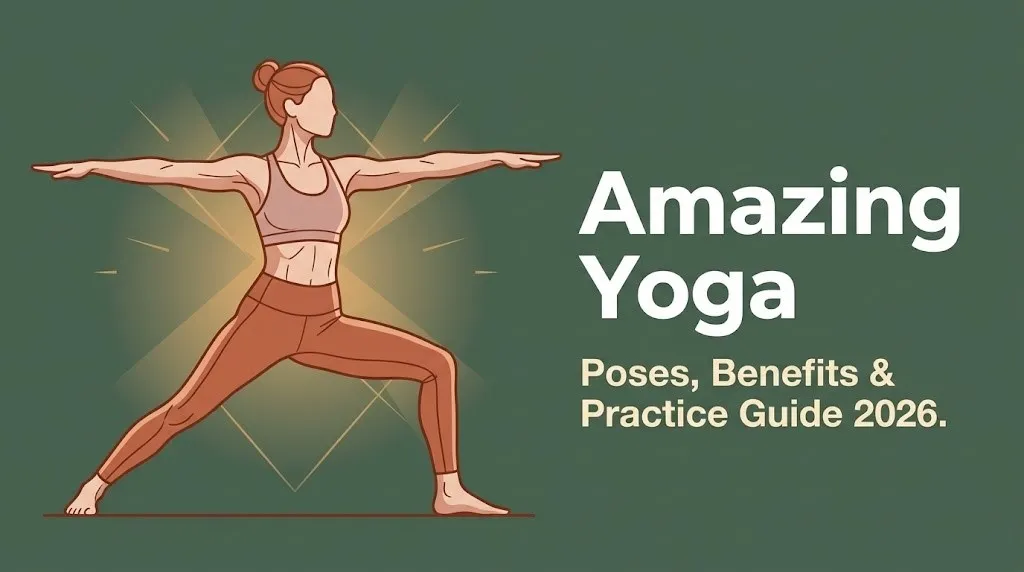
Amazing yoga is not a single style or a set of impossible poses. It is any consistent practice that meets your body where it is and produces measurable results in how you move, feel, and recover.
The National Center for Complementary and Integrative Health reports that yoga is one of the most widely used complementary health approaches in the United States, with over 21 million adults practicing regularly. That number keeps growing because the evidence keeps accumulating.
This article covers the most effective yoga styles, the best beginner poses with real alignment guidance, what research says about yoga’s physical and mental benefits, how to build a home practice, and how to modify everything for your actual body in 2026.
What Is Amazing Yoga and Why Does It Work
Amazing yoga is any yoga practice grounded in breath, movement, and body awareness that consistently produces physical or mental change over time. The word “amazing” here is not hyperbole. It describes what happens when a practice is matched well to a person’s needs and done with enough regularity to create adaptation.
Yoga works through several biological mechanisms. Slow, controlled movement paired with breath activates the parasympathetic nervous system, the part of your nervous system responsible for rest, repair, and digestion. This is not a metaphor. Research published in the International Journal of Yoga has documented measurable reductions in cortisol, the primary stress hormone, following sustained yoga practice.
The second mechanism is mechanical. Yoga poses place muscles, connective tissue, and fascia under controlled tension. Over time, this improves both the length and the functional strength of those tissues.
The third mechanism is neuromuscular. Yoga trains proprioception, your body’s ability to sense its own position in space. This is why longtime practitioners tend to have better balance and fewer injuries, even outside the studio.
Pose Tip:
- You do not need flexibility to start yoga. Yoga builds flexibility.
- The breath is the primary tool. If you lose the breath, slow down the movement.
- Yoga is not pain-free by default. Mild discomfort during a stretch is normal. Sharp or joint pain is not.
Best Yoga Styles for Different Goals and Bodies
There is no single best yoga style. The right style depends on your body, your goals, and how much physical intensity you can currently handle.
Hatha yoga is the broadest category. Most modern yoga styles fall under its umbrella. Classes labeled Hatha are typically slower-paced, focused on individual poses with holds, and well-suited to beginners.
Vinyasa yoga links movement to breath in a continuous flow. Poses transition quickly from one to the next. It builds cardiovascular endurance and is better for people who want more dynamic movement.
Yin yoga targets the deep connective tissue and fascia around joints. Poses are held for 3 to 5 minutes, sometimes longer. It is particularly useful for people with tight hips, a compressed lumbar spine, or high stress.
Restorative yoga uses props to fully support the body in passive shapes. There is almost no muscular effort. It is appropriate for recovery, illness, postpartum bodies, and severe stress or burnout.
Iyengar yoga emphasizes precise alignment, uses props extensively, and is excellent for people managing injuries or chronic conditions. A trained Iyengar teacher will know how to adapt every pose.
Ashtanga yoga follows a fixed sequence of poses performed in the same order every practice. It is physically demanding and not typically recommended for beginners.
| Yoga Style | Intensity Level | Best For | Props Used |
|---|---|---|---|
| Hatha | Low to Moderate | Beginners, all ages | Blocks, strap |
| Vinyasa | Moderate to High | Cardio, flow lovers | Mat, blocks |
| Yin | Low | Tight hips, stress, joints | Bolster, blanket, blocks |
| Restorative | Very Low | Recovery, burnout, illness | Bolster, blanket, chair |
| Iyengar | Low to Moderate | Injury rehab, precision | Blocks, strap, wall, chair |
| Ashtanga | High | Experienced practitioners | Mat only |
| Kundalini | Low to Moderate | Nervous system, breathwork | Mat, blanket |
Science-Backed Yoga Benefits for Body and Mind
Yoga produces documented, measurable benefits across multiple body systems. This is not wellness marketing. These are findings from peer-reviewed research.
According to the National Institutes of Health’s NCCIH, yoga has been shown to reduce low back pain, improve sleep quality, support mental health, and reduce symptoms of anxiety and depression in multiple clinical trials.
A review published in the Journal of Alternative and Complementary Medicine found that yoga participants showed meaningful reductions in perceived stress and improvements in heart rate variability, a marker of how well the autonomic nervous system regulates the body under pressure.
The American College of Sports Medicine acknowledges yoga as a valid form of flexibility and balance training. It has also been studied as a complement to cardiac rehabilitation and chronic disease management.
Key documented benefits include:
- Flexibility: Documented gains in hamstring length and thoracic mobility in as little as 8 weeks of regular practice.
- Strength: Sustained holds in weight-bearing poses like Virabhadrasana I (Warrior I) and Adho Mukha Svanasana (Downward-Facing Dog) build functional muscular endurance.
- Mental health: Significant reductions in self-reported anxiety scores across multiple randomized controlled trials.
- Sleep: A 2019 meta-analysis in Complementary Therapies in Medicine found yoga improved sleep quality across diverse adult populations.
- Blood pressure: Research suggests consistent practice may reduce systolic blood pressure in adults with prehypertension.
- Pain management: Particularly strong evidence for chronic low back pain, neck pain, and fibromyalgia-related symptoms.
Key Takeaway: Yoga works through real biological mechanisms, and the research behind its benefits is broad, consistent, and published in credible peer-reviewed journals.
Amazing Yoga Poses for Beginners to Start Today
The best beginner yoga poses are stable, accessible, and teach fundamental movement patterns that carry into every other pose you will ever learn.
Start with Tadasana (Mountain Pose). It teaches you what neutral posture actually feels like in your body. Most people have never stood with conscious alignment. This pose is your baseline.
Balasana (Child’s Pose) is the most important reset in yoga. It decompresses the lumbar spine, quiets the nervous system, and is available to you at any point during a practice when you need a break.
Adho Mukha Svanasana (Downward-Facing Dog) is the foundational pose of most Vinyasa and Hatha sequences. It stretches the hamstrings, calves, and thoracic spine while building shoulder and wrist strength.
Setu Bandha Sarvangasana (Bridge Pose) strengthens the gluteus maximus, hamstrings, and erector spinae while gently opening the chest and hip flexors. It is one of the most therapeutically useful poses for people with low back tightness.
To practice Balasana (Child’s Pose):
- Start on hands and knees with wrists under shoulders, knees under hips.
- Bring big toes together and widen knees to hip-width or wider.
- Exhale and lower your hips back toward your heels.
- Extend arms forward on the mat or rest them alongside your body.
- Rest your forehead on the mat. Breathe here for 5 to 10 breaths.
- To release, press hands into the mat and slowly rise back to all fours.
Modification: If your forehead does not reach the mat, place a folded blanket or yoga block under your forehead. If knees are uncomfortable, place a rolled blanket between your thighs and calves.
People with recent knee surgery or severe knee arthritis should skip Child’s Pose and substitute Supta Baddha Konasana (Reclined Bound Angle Pose) instead.
How to Build a Home Yoga Routine That Actually Sticks
A home yoga routine works when it is short enough to start, structured enough to repeat, and honest about what your body needs on any given day.
The biggest mistake new practitioners make is planning a one-hour practice. Twenty minutes practiced four times a week beats sixty minutes practiced once. Research in behavioral science consistently shows that shorter, more frequent habits are far easier to sustain.
A practical beginner home routine looks like this:
- 5 minutes: Arrive. Lie down in Savasana (Corpse Pose). Three to five slow breaths through the nose.
- 5 minutes: Gentle warm-up. Cat-Cow (Marjaryasana-Bitilasana), seated spinal twists, neck rolls.
- 10 minutes: Three to four standing or floor poses held for 5 to 8 breaths each.
- 5 minutes: Cool-down. One forward fold. One supine hip stretch. Final Savasana.
You do not need a class video every time. Pick three poses you know. Do them well. Build from there.
The environment matters more than most people expect. A consistent spot in your home, even a small one, signals to your nervous system that it is time to slow down and focus. Think of it like a mental anchor.
Pose Tip:
- Practice at the same time each day for the first four weeks. Consistency beats intensity every time.
- Keep your mat unrolled. The fewer barriers between you and the practice, the more often you will do it.
- Silence is fine. Music is fine. A guided class is fine. Do what keeps you on the mat.
Yoga Breathing Techniques That Change How Your Body Feels
Breath is not an add-on in yoga. It is the primary tool. Without conscious breathing, yoga is just stretching.
The breath directly regulates the autonomic nervous system. Slow, nasal exhales stimulate the vagus nerve, which activates the parasympathetic nervous system and lowers your physiological stress response. This is the mechanism behind why yoga feels different from other forms of exercise.
Ujjayi pranayama, sometimes called “ocean breath” or “victorious breath,” is the most commonly taught breath in Hatha and Vinyasa yoga. You breathe in and out through the nose while gently constricting the back of the throat, creating a soft, audible sound.
To practice Ujjayi breath:
- Inhale through the nose for a count of 4.
- At the top of the inhale, briefly hold for 1 count.
- Exhale slowly through the nose for a count of 6, making a soft “haaa” sound in your throat.
- The exhale should be slightly longer than the inhale. This is deliberate.
- Repeat for 5 to 10 cycles before or during your pose practice.
Nadi Shodhana (Alternate Nostril Breathing) is a calming breathwork technique used to balance the nervous system. A study published in the International Journal of Yoga found Nadi Shodhana practice significantly reduced heart rate and blood pressure in healthy adults compared to a control group.
Modification: If full Ujjayi breath feels uncomfortable or creates dizziness, simply breathe slowly through the nose without the throat constriction. The slow nasal breath alone produces measurable parasympathetic benefit.
Key Takeaway: The breath is the engine of yoga. Learning one or two pranayama techniques before anything else will improve every single practice session you have from that point forward.
Yoga for Flexibility: Poses and Progressions That Deliver Results
Yoga builds flexibility through regular, sustained exposure to stretch stimuli applied to muscles and the surrounding connective tissue. It is not magic. It is repeated mechanical input over time.
The hamstrings, hip flexors, thoracic spine, and shoulder girdle are the areas where most adults carry the most restriction. These are also the areas where yoga tends to produce the most noticeable change.
According to a study published in the Journal of Alternative and Complementary Medicine, adults who practiced yoga three times a week for 10 weeks showed improvements in spinal flexibility and balance scores compared to a control group.
Poses that specifically target common areas of tightness:
| Body Area | Pose (English) | Pose (Sanskrit) | Hold Duration |
|---|---|---|---|
| Hamstrings | Standing Forward Fold | Uttanasana | 5 to 8 breaths |
| Hip flexors | Low Lunge | Anjaneyasana | 5 to 8 breaths per side |
| Thoracic spine | Thread the Needle | Parsva Balasana | 5 breaths per side |
| Shoulders | Eagle Arms | Garudasana Arms | 5 breaths per side |
| Inner hips/groin | Reclined Bound Angle | Supta Baddha Konasana | 2 to 5 minutes |
| IT band/outer hips | Reclined Pigeon | Supta Kapotasana | 1 to 3 minutes |
Think of tight hip flexors like a rubber band left in a shortened position all day. Sitting for eight hours tells those muscles to hold a contracted state. One yoga session will not fully undo that. But 20 minutes of consistent hip-opening three to four times a week? Over 6 to 8 weeks, most practitioners feel a noticeable difference.
Modification: For Uttanasana (Standing Forward Fold), anyone with tight hamstrings or a sensitive lower back should bend the knees generously and place hands on blocks. The flat back is more important than straight legs.
Yoga for Stress and Anxiety: What the Research Actually Shows
Yoga reduces stress by directly intervening in the body’s stress response system, not just by encouraging you to relax.
The hypothalamic-pituitary-adrenal (HPA) axis controls your body’s cortisol output. Chronic stress keeps this axis over-activated. Yoga, specifically slow breathwork and parasympathetic-activating poses, appears to downregulate this system over time.
According to the NCCIH, yoga is one of the most thoroughly researched complementary approaches for anxiety and stress-related conditions. Multiple randomized controlled trials have found reductions in self-reported anxiety, depression symptoms, and perceived stress in adult populations who practiced yoga regularly.
A 2023 review in Complementary Therapies in Medicine looked at 19 randomized controlled trials and found that yoga interventions produced measurable reductions in anxiety symptoms, with longer programs (8 weeks or more) producing stronger effects than shorter ones.
The most effective yoga styles for stress and anxiety tend to be Restorative yoga, Yin yoga, and Hatha yoga with a strong pranayama component. High-intensity styles like Ashtanga or hot yoga may not produce the same calming effect and can actually temporarily elevate cortisol in stressed or over-trained individuals.
Poses that specifically support stress reduction:
- Savasana (Corpse Pose): The complete surrender of muscular effort signals safety to the nervous system.
- Supta Baddha Konasana (Reclined Bound Angle Pose): Opens the chest and groin passively while the supported spine allows full muscular release.
- Balasana (Child’s Pose): The forward-folding shape quiets visual input and activates the vagal brake on the stress response.
- Viparita Karani (Legs-Up-the-Wall Pose): Passive inversion that improves venous return and is widely used by yoga therapists for anxiety management.
Modification: Anyone with severe anxiety or PTSD-related sensitivity to body sensation should work with a trauma-informed yoga teacher. Not all yoga classes are built with this population in mind.
Yoga for Back Pain: Safe Poses and Movements That Help
Yoga is one of the most studied non-pharmacological approaches for chronic low back pain, and the evidence is stronger than most people realize.
A 2017 clinical practice guideline from the American College of Physicians included yoga as a recommended first-line treatment option for chronic low back pain, alongside other mind-body approaches. This was not a fringe finding. It appeared in mainstream clinical medicine.
The mechanisms are well-established. Yoga strengthens the erector spinae, multifidus, and deep core stabilizers that support the lumbar spine. It also gently mobilizes the thoracic spine and hips, reducing the compensatory strain that tight surrounding tissue places on the low back.
Helpful poses for low back pain:
- Setu Bandha Sarvangasana (Bridge Pose): Strengthens glutes and hamstrings, which are commonly weak in people with low back pain.
- Balasana (Child’s Pose): Provides traction and decompression to the lumbar spine.
- Supta Matsyendrasana (Supine Spinal Twist): Gently mobilizes the lumbar vertebrae without axial load.
- Marjaryasana-Bitilasana (Cat-Cow): Warm-up movement for spinal extensors and flexors.
To practice Setu Bandha Sarvangasana (Bridge Pose):
- Lie on your back with knees bent, feet flat on the mat, hip-width apart.
- Place feet about 8 to 10 inches from your hips.
- Press feet evenly into the mat and inhale.
- On the exhale, press down through the feet and lift the hips toward the ceiling.
- Keep knees tracking over the middle toes. Do not let them splay outward.
- Hold for 5 breaths. Lower slowly on an exhale. Repeat 3 times.
Safety caution: Anyone with a herniated disc, spinal stenosis, or sacroiliac joint instability should get guidance from a physical therapist or spine-informed yoga teacher before practicing Bridge Pose. The pose is generally safe for muscular low back pain but requires modification for structural spinal conditions.
Key Takeaway: Yoga is clinically supported for chronic low back pain. The key is using the right poses for your specific type of back pain, not just doing whatever a beginner class happens to include.
Yoga for Seniors: Modifications, Benefits, and What to Avoid
Yoga is genuinely suitable for older adults, but the approach needs to be different from a standard beginner class.
Adults over 65 face specific concerns: reduced bone density, joint changes from osteoarthritis, decreased proprioception, and a higher fall risk. These are not barriers to yoga. They are exactly what thoughtful yoga practice can address.
According to the NCCIH, yoga has shown measurable improvements in balance, lower-limb strength, and fear of falling in adults over 60 in multiple clinical studies. A 2021 review in Complementary Therapies in Medicine found that yoga was associated with reduced fall risk in community-dwelling older adults.
Chair yoga, which adapts poses so that participants remain seated or use a chair for balance support, is the most accessible entry point for seniors with limited mobility or significant fall risk. Every standing pose in yoga has a chair-supported equivalent.
Poses well-suited to seniors:
| Pose (English) | Pose (Sanskrit) | Why It Helps Seniors | Chair Version Available? |
|---|---|---|---|
| Mountain Pose | Tadasana | Postural alignment, body awareness | Yes |
| Chair Forward Fold | Seated Uttanasana | Hamstring release without floor work | Yes (always) |
| Seated Twist | Parivrtta Sukhasana | Spinal mobility, digestion | Yes |
| Bridge Pose | Setu Bandha Sarvangasana | Glute strength, lumbar support | Modified (blanket under hips) |
| Tree Pose | Vrksasana | Balance, lower leg strength | Yes (wall or chair for support) |
| Legs Up the Wall | Viparita Karani | Circulation, ankle swelling, rest | Modified (bolster under hips) |
Poses seniors should avoid or modify with guidance: full inversions like Sirsasana (Headstand) or Sarvangasana (Shoulderstand) are contraindicated for those with glaucoma, cervical spine issues, or osteoporosis affecting the neck and shoulders.
Yoga for Better Sleep: An Evening Sequence That Works
Yoga improves sleep quality by reducing physiological arousal before bed, not just by tiring you out.
A 2019 meta-analysis published in Complementary Therapies in Medicine analyzed 19 studies and concluded that yoga produced consistent, measurable improvements in subjective sleep quality across adult populations, including older adults and people with chronic conditions.
The mechanism is the same one that makes yoga useful for stress. Slow, supported poses with long exhales shift the nervous system away from sympathetic dominance (alert, activated) toward parasympathetic dominance (calm, ready for sleep).
An evening yoga sequence for better sleep:
- Supta Baddha Konasana (Reclined Bound Angle Pose): Lie on your back. Bring the soles of the feet together, knees wide. Support the outer thighs with a blanket or rolled towel. Stay 3 to 5 minutes.
- Supta Matsyendrasana (Supine Spinal Twist): From your back, draw the right knee to the chest, then cross it over to the left. Arms wide. Hold 1 to 2 minutes per side.
- Viparita Karani (Legs-Up-the-Wall Pose): Sit sideways against a wall, then swing legs up. Place a folded blanket under the lower back for comfort. Stay 5 to 10 minutes.
- Savasana (Corpse Pose): Full relaxation on the back. Eyes closed. No effort. 5 minutes minimum.
Modification: If getting to the floor is difficult, Supta Baddha Konasana can be practiced on a firm bed. Place pillows under each knee for joint support.
This sequence takes 15 to 20 minutes. Most people who practice it consistently for two weeks notice a difference in how quickly they fall asleep and how rested they feel in the morning.
Key Takeaway: A short, consistent evening yoga sequence targets the same biological systems that sleep medication does, with none of the side effects and a growing body of research to support it.
Yoga Equipment and Props: What You Actually Need
You need very little to start yoga. One mat, flat floor space, and a willingness to begin. Everything else helps, but nothing else is required on day one.
That said, props make yoga more accessible, safer, and more therapeutically useful. They are not cheating. Iyengar yoga, one of the most anatomically sophisticated styles in existence, built its entire teaching philosophy around props.
Here is what each prop does and who benefits most:
| Prop | Purpose | Best For |
|---|---|---|
| Non-slip yoga mat | Grip, cushioning, boundary | Everyone. Start here. |
| Yoga blocks (set of 2) | Brings the floor closer to your hands | Tight hamstrings, beginners, older adults |
| Yoga strap | Extends reach in forward folds and shoulder stretches | Limited shoulder or hamstring flexibility |
| Bolster | Supports the body in Restorative and Yin poses | Restorative yoga, seniors, injury recovery |
| Yoga blanket | Cushioning for knees, hips; warmth in Savasana | Knee sensitivity, Savasana, seated meditation |
| Yoga wheel | Back bending support, thoracic extension | Intermediate to advanced practitioners |
| Chair | Full support for standing and seated poses | Seniors, chair yoga, injury rehab |
A standard non-slip mat costs between $25 and $80. Two foam blocks cost under $20. Those two items cover 95% of what a beginner needs.
Do not buy a yoga wheel before you have practiced for at least six months. It is not a beginner tool, regardless of how it is marketed.
Yoga Modifications for Beginners and People With Limited Mobility
Every yoga pose has a version that works for your body right now. If a pose feels inaccessible, the pose needs to be modified, not your body forced.
This is the single most important thing to understand about yoga. The shape on the outside is not the point. The physical and physiological experience inside the body is the point.
Common modifications for high-frequency poses:
| Pose | Standard Version | Beginner Modification | Limited Mobility Version |
|---|---|---|---|
| Downward-Facing Dog | Straight legs, flat back | Bent knees, heels lifted | Table-top (hands and knees only) |
| Standing Forward Fold | Straight legs, hands to floor | Bent knees, hands on blocks | Seated forward fold in a chair |
| Warrior I | Full lunge, arms overhead | Shorter stance, hands on hips | Chair-supported version |
| Bridge Pose | Full hip lift, feet flat | Lower lift, block under sacrum | Supported Bridge with block |
| Child’s Pose | Hips to heels, forehead down | Blanket between thighs and calves | Seated forward fold instead |
| Downward Dog | Full inversion shape | Wall Downward Dog (hands on wall) | Table-top or puppy pose |
Anyone managing rheumatoid arthritis should avoid prolonged weight-bearing on the wrists during flare-ups. Fist-grip modifications (making a fist instead of flat palm) reduce wrist joint stress significantly.
Anyone with osteoporosis affecting the spine should avoid deep forward folds that flex the thoracic or lumbar spine under load. A physical therapist familiar with yoga can help identify which poses are safe for a specific bone density profile.
Modification is not a beginner stage to graduate from. Elite athletes and longtime practitioners use props and modifications deliberately to get more out of each pose, not less.
Yoga for Strength: Can It Replace or Complement Weight Training
Yoga builds functional strength, but whether it can fully replace resistance training depends on your specific fitness goals.
According to the American College of Sports Medicine, muscle strength development requires progressive overload: consistently increasing the demand placed on a muscle over time. Yoga can provide this within its format, but with important limitations.
Yoga builds strength effectively in the shoulder girdle, deep core stabilizers, gluteal muscles, and hip stabilizers. Poses like Chaturanga Dandasana (Low Plank), Adho Mukha Vrksasana (Handstand), and Navasana (Boat Pose) require and develop real muscular strength.
Where yoga has less to offer is in the lower body’s primary movers: the quadriceps and hamstrings under heavy load. A single-leg squat or a loaded Romanian deadlift creates a level of mechanical stimulus that yoga poses generally do not match.
Research suggests yoga and resistance training are not opposites. They are complements:
- Yoga improves the joint mobility needed to train safely with weights.
- Resistance training builds the muscle mass that yoga helps maintain in functional ranges.
- A 2021 study in the International Journal of Yoga found that combining yoga with resistance training produced greater improvements in functional strength and flexibility than either approach alone.
For general health, yoga two to three times a week alongside two resistance training sessions is a well-supported combination. For athletes, yoga serves recovery, mobility, and injury prevention more than primary strength development.
Pose Tip:
- To build upper body strength in yoga, slow down the transitions. A 5-second lowering from Plank to Chaturanga Dandasana (Low Plank) is far more demanding than a quick drop.
- Hold Virabhadrasana II (Warrior II) for 90 seconds on each side. Your quadriceps will tell you this is strength training.
Key Takeaway: Yoga builds real strength in specific muscle groups and works best as a complement to resistance training for people with general fitness goals. For older adults or those prioritizing mobility and pain reduction, yoga alone is highly effective.
How Often Should You Do Yoga to See Real Results
Most yoga teachers and physical therapists recommend practicing yoga three to five times per week for 8 to 12 weeks to see consistent, measurable physical change.
That does not mean every session needs to be an hour. Research in exercise adherence consistently shows that frequency matters more than duration for most people. Three 20-minute sessions produce more adaptation than one 60-minute session when it comes to flexibility, nervous system regulation, and habit formation.
A practical framework based on goal:
| Goal | Recommended Frequency | Session Length | Style Suggestion |
|---|---|---|---|
| Stress reduction | 4 to 5 times per week | 15 to 30 minutes | Yin, Restorative, Hatha |
| Flexibility improvement | 3 to 4 times per week | 20 to 45 minutes | Hatha, Yin |
| Strength building | 3 times per week | 30 to 60 minutes | Vinyasa, Ashtanga |
| Back pain management | 4 to 5 times per week | 20 to 30 minutes | Hatha, Iyengar-informed |
| Better sleep | Daily (evening) | 15 to 20 minutes | Restorative, Yin |
| General health | 3 times per week | 30 minutes | Any style |
The most common mistake is practicing intensely for two weeks and then stopping when life gets busy. A 15-minute practice on a hard day is not a compromise. It is the practice.
According to the Harvard T.H. Chan School of Public Health, regular yoga practice (defined in most studies as two or more sessions per week over at least 8 weeks) is associated with measurable improvements in cardiovascular markers, inflammatory markers, and self-reported quality of life.
Give yourself 8 weeks before evaluating whether yoga is “working.” The changes happening in your fascia, nervous system, and muscular endurance are real but gradual.
Frequently Asked Questions About Amazing Yoga
What is the best yoga for complete beginners?
Hatha yoga is the most widely recommended starting point for beginners.
It uses slower pacing, individual pose holds, and foundational alignment cues that help new practitioners understand each shape before moving on.
Look for classes labeled “Hatha,” “Gentle,” or “Yoga Basics” when starting out.
How long does it take to get flexible from yoga?
Most practitioners notice improved flexibility within 6 to 8 weeks of practicing yoga three or more times per week.
Research published in the Journal of Alternative and Complementary Medicine found measurable flexibility gains in adult beginners after 10 weeks of consistent practice.
Individual results depend on your starting baseline, which poses you practice, and how consistently you practice them.
Can yoga help with back pain?
Yes. Yoga is one of the most clinically supported non-pharmacological approaches for chronic low back pain.
A 2017 guideline from the American College of Physicians listed yoga as a recommended first-line treatment option for chronic low back pain.
The best results come from poses that strengthen the glutes and core while gently mobilizing the thoracic spine, practiced consistently over 8 to 12 weeks.
What do I need to start yoga at home?
You need a non-slip yoga mat and enough floor space to lie down flat.
Two foam yoga blocks and a strap add significant value for flexibility-limited beginners and cost less than $30 combined.
A reliable free or paid online video platform for guided classes helps beginners learn proper form from the start.
How many times a week should I practice yoga?
Three times per week is the most commonly cited minimum for producing consistent physical and mental results.
Yoga teachers and researchers generally recommend building toward four to five shorter sessions weekly once the habit is established.
For stress reduction and sleep improvement, daily short sessions (15 to 20 minutes) tend to outperform less frequent longer ones.
Start Where You Are
Yoga does not require a studio membership, an advanced practice, or a particular body type. It requires a mat, a few square feet, and a decision to begin.
Pick one pose from this article. Practice it today for five minutes. Do it again tomorrow. Then add one more pose the week after.
The practitioners who get the most out of yoga are not the ones who started with the most flexibility or strength. They are the ones who started and kept going. Three times a week, a year from now, you will not recognize how your body moves or how your nervous system handles stress. That is not a promise. That is what consistent yoga practice does.