Yoga 101: Your Full Beginner’s Guide and Tips for 2026
Yoga 101 covers the complete foundation of yoga practice for absolute beginners: what yoga is, how to breathe, which poses to start with, which style suits your goals, and how to stay safe from your very first session. Whether you are searching for the Yoga 101 studio in Evansville, Indiana, or trying to understand yoga from scratch, this guide gives you everything you need without jargon or vague inspiration.
The National Center for Complementary and Integrative Health (NCCIH) recognizes yoga as a practice with documented evidence supporting stress reduction, anxiety management, and chronic pain relief across diverse adult populations. More than 21 million Americans practice yoga, according to data cited by Yoga Alliance, and the majority report beginning with no prior experience.
This guide covers the foundational breathing techniques every beginner must learn, the six most important beginner poses with step-by-step instruction, how to choose between styles like Hatha, Vinyasa, and power yoga, what to bring to your first class, and how to build a home practice that keeps you progressing between sessions.
Yoga 101: What It Is and Why It Works
Yoga 101 refers to the foundational level of yoga practice, covering the essential skills every beginner needs: how to breathe consciously, how to perform basic poses with correct alignment, and how to connect movement and breath into a coherent practice.
Yoga is a physical, mental, and respiratory discipline with origins in ancient India. Its modern Western form focuses primarily on physical poses (asana) and breathing techniques (pranayama), though meditation and philosophical study form part of a complete practice. What distinguishes yoga from general stretching or fitness is the integration of breath with movement and the emphasis on present-moment awareness during practice.
The physiological reasons yoga works are increasingly well-documented. Slow, nasal breathing activates the parasympathetic nervous system, which reduces circulating cortisol and adrenaline. Physical poses lengthen shortened muscles, improve joint mobility, and build functional strength. The combination of breath and movement produces outcomes that neither produces alone.
Why yoga 101 works for beginners specifically:
- Low barrier to entry: No prior fitness level is required
- Immediate stress response: Even one session produces measurable autonomic nervous system changes
- Scalable difficulty: Every pose has beginner modifications that preserve safety and effectiveness
- Progressive development: Skills build logically over weeks and months
- No competitive element: Progress is individual; there is no comparison baseline
Modification note: If you have any health conditions including cardiovascular disease, osteoporosis, or a recent injury, inform your yoga teacher before your first class. A qualified teacher will provide specific modifications rather than a generic disclaimer.
What Is Yoga 101 and Who Is It For
Yoga 101 is specifically designed for people who have never practiced yoga before, covering foundational poses, basic breathing, class etiquette, and the vocabulary of yoga practice so that everything you encounter in your first class feels familiar rather than confusing.
As a class format, Yoga 101 typically moves slower than a standard beginner class. Teachers spend more time explaining the name and purpose of each pose, offering modifications at the start rather than as an afterthought, and introducing breath awareness as the session’s central theme rather than an add-on.
As an informational concept, yoga 101 means starting from zero. It means learning why you breathe through the nose rather than the mouth. It means understanding that Child’s Pose (Balasana in Sanskrit) is a resting pose you return to whenever you need a break, and that this is not failure; it is practiced.
Yoga 101 serves a genuinely wide demographic:
| Practitioner Type | What They Need From Yoga 101 | Recommended Starting Style |
|---|---|---|
| Complete beginners | Orientation, vocabulary, pose basics | Hatha, beginner Vinyasa |
| Adults over 50 | Slower pace, joint-safe modifications | Gentle Hatha, Iyengar |
| Athletes cross-training | Flexibility, mobility, recovery | Yin, power yoga |
| People with anxiety | Breathing techniques, nervous system regulation | Restorative, Hatha |
| People with chronic pain | Therapeutic modifications, gentle movement | Iyengar, Restorative |
| Fitness beginners | Low-intensity entry, movement patterns | Hatha, slow Vinyasa |
Modification for people who are nervous about their fitness level: Yoga 101 does not require flexibility, strength, or prior exercise experience. The poses adapt to your body as it is today, not as you think it should be.
Yoga 101 Evansville: Finding the Right Studio
Yoga 101 in Evansville, Indiana is a local yoga studio offering classes for all levels with an emphasis on accessible instruction and a community-oriented environment, serving the greater Evansville area across beginner, intermediate, and power yoga formats.
Evansville’s yoga community is smaller than major metros but genuinely active. The city’s mix of families, university students from the University of Southern Indiana and University of Evansville, and health-conscious adults supports a studio market that rewards quality and accessibility over boutique pricing.
When evaluating Yoga 101 Evansville or any Evansville-area studio, these are the specific questions to ask:
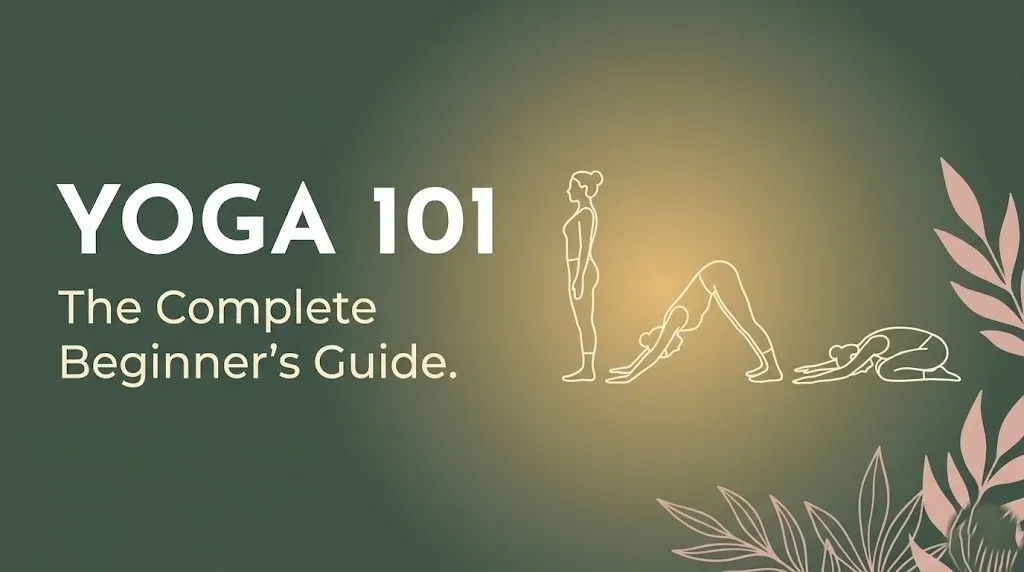
- Is there a class specifically labeled for beginners or foundations? This signal matters. A studio that lumps all students into a single “yoga class” makes the beginner experience harder than it needs to be.
- What teacher credentials are listed? Look for Yoga Alliance registered teacher status: RYT-200 is the baseline, RYT-500 indicates advanced training.
- What is the drop-in pricing or first-class offer? Indiana yoga studios typically offer introductory packages. Avoid studios requiring a long-term commitment before you have attended a single class.
- Are props included? Blocks, straps, and blankets should be provided without extra cost in any studio that serves beginners genuinely.
According to Yoga Alliance, registered studios and teachers meet standardized training minimums that provide a reliable baseline for instructional quality. Checking a teacher’s or studio’s Yoga Alliance registration is a two-minute quality check.
Safety note: Before attending your first Evansville yoga class, arrive 10 to 15 minutes early. Introduce yourself to the teacher, mention your experience level, and note any physical limitations. A qualified teacher will give you specific guidance before class begins.
Key Takeaway: The first question to ask any yoga studio is whether they have a class specifically designed for absolute beginners. “All levels” and “beginner” are not the same thing, and the distinction matters enormously for your first experience.
Evansville Power Yoga: What to Expect
Power yoga in Evansville refers to vigorous, athletically-oriented yoga classes that move through challenging sequences at a pace requiring cardiovascular endurance, functional strength, and a foundational pose vocabulary that absolute beginners typically need four to six weeks to develop.
Studios in Evansville offering power yoga typically run classes in the 60 to 75 minute range. The format is not heated in all studios (unlike Bikram or hot yoga), but the pace of movement creates internal heat through sustained muscular effort. Expect to sweat. Expect to feel challenged from the first sequence.
What to prepare before your first Evansville power yoga class:
- Attend two to four beginner or gentle Hatha classes first. Power yoga assumes you know your way around foundational poses. Arriving without this foundation makes the class more difficult and increases injury risk.
- Hydrate thoroughly the day before. Power yoga generates significant fluid loss through sweat. Pre-hydration beginning the morning of class makes a real difference.
- Bring a non-slip yoga mat. Studio mats are available for rent, but your own mat provides better grip. Power yoga sequences require reliable hand and foot contact.
- Arrive 10 minutes early. Tell the teacher it is your first power yoga class specifically.
- Expect to modify. No beginner should push into the full expression of every pose in a power yoga sequence. The teacher should cue modifications; if they do not, ask.
Safety caution: Power yoga is not appropriate as a first yoga experience for people with unmanaged hypertension, active joint injuries, or cardiovascular conditions without medical clearance. The muscular demand and cardiovascular load are comparable to moderate aerobic exercise.
What Is Power Yoga
Power yoga is a physically vigorous, athletically-oriented yoga style derived from Ashtanga yoga that emphasizes strength, cardiovascular fitness, and continuous movement through challenging pose sequences, without following a fixed sequence like traditional Ashtanga.
The term “power yoga” was popularized in the 1990s by teachers including Beryl Bender Birch and Bryan Kest, who adapted the intensity and sequencing logic of Ashtanga yoga for Western fitness audiences. Unlike Bikram/26&2, which uses a fixed sequence, or Iyengar yoga, which uses precision alignment with props, power yoga is teacher-designed. The sequence changes with each class and each teacher.
Power yoga vs. other styles:
| Feature | Power Yoga | Hatha Yoga | Vinyasa Yoga | Yin Yoga |
|---|---|---|---|---|
| Pace | Fast to very fast | Slow to moderate | Moderate to fast | Very slow |
| Physical demand | High | Low to moderate | Moderate to high | Low |
| Sequence | Teacher-designed, varies | Structured, consistent | Teacher-designed | Fixed long holds |
| Sweat level | High | Low to moderate | Moderate | Low |
| Best for | Athletes, active adults | Beginners, all levels | Intermediate practitioners | Flexibility, recovery |
| Heated | Sometimes | Rarely | Sometimes | Never |
| Beginner-appropriate | With 4 to 6 weeks prior yoga | Yes | After beginner foundation | Yes |
Modification for beginners curious about power yoga: Take a gentle or beginner Hatha class for the first month. Once you can identify poses by name and perform them with reasonable comfort, a beginner power yoga class becomes genuinely accessible rather than overwhelming.
Yoga Styles Explained for Beginners
The most beginner-appropriate yoga styles are gentle Hatha yoga, Iyengar yoga, and Restorative yoga, because they move at a pace that allows instruction, explanation, and individual modification without the movement complexity of flow-based styles.
Choosing the wrong style as a beginner is the single most common reason people decide yoga is not for them. A first-time student in an advanced Vinyasa class is not experiencing yoga at an appropriate level. They are experiencing yoga at the wrong level, and the confusion and frustration that result are about mismatched expectations, not about yoga itself.
Here is how the major styles compare for beginner decision-making:
| Style | Pace | Intensity | Best Beginner Use | Avoid First If… |
|---|---|---|---|---|
| Hatha | Slow to moderate | Low to moderate | First yoga class; foundation-building | Rarely contraindicated |
| Restorative | Still | Very low | Stress relief, trauma support, recovery | Rarely contraindicated |
| Yin | Very slow | Low | Flexibility, hip and spine mobility | Active joint inflammation |
| Iyengar | Slow with precision | Moderate | Therapeutic use, alignment focus | You want faster pace |
| Vinyasa (gentle) | Moderate | Moderate | After 4 to 6 weeks of Hatha | You have no pose vocabulary |
| Power yoga | Fast | High | After 4 to 6 weeks of prior yoga | No prior experience |
| Ashtanga | Moderate to fast | High | Established practitioners | You are a beginner |
| Bikram/Hot yoga | Moderate | High (heat adds demand) | Only with established heat tolerance | Any beginner without prior yoga |
Modification for seniors choosing a style: Gentle Hatha and Restorative are the two most appropriate starting points for practitioners over 60, particularly those managing joint conditions, cardiovascular concerns, or balance challenges. Chair yoga is a legitimate subset of Hatha that removes floor access barriers entirely.
Key Takeaway: Choosing the right yoga style for your starting point is more important than finding the right studio. Start with gentle Hatha or Restorative for your first month, then expand from there.
Yoga 101 Breathing Techniques
The foundational yoga breathing technique every beginner must learn is nasal breathing with an extended exhalation, where the exhale is longer than the inhale, because this specific pattern activates the parasympathetic nervous system and produces the calming, clarifying effect that yoga is known for.
Breathing in yoga is not automatic. It is a learned skill. Most people breathe shallowly through the upper chest for most of their lives, using only a fraction of their lung capacity. Yoga practice, starting with yoga 101, teaches practitioners to breathe differently and to use that breath as the primary tool for managing both the physical and mental demands of practice.
The two beginner breathing techniques most commonly introduced in a Yoga 101 class:
Technique 1: Extended Exhalation Breathing (no formal name needed)
- Sit comfortably in Sukhasana (Easy Pose) or lie on your back.
- Close the mouth. Breathe only through the nose for the entire practice.
- Inhale slowly for 4 counts, allowing the belly to expand first.
- Exhale slowly for 6 to 8 counts, letting the belly fall completely.
- Practice 8 to 10 cycles before beginning any movement.
Technique 2: Ujjayi Pranayama (Victorious Breath)
- Sit tall with the spine long.
- Inhale slowly through both nostrils.
- On the exhale, gently constrict the back of the throat, producing a soft ocean-wave sound.
- Apply the same gentle throat constriction on the inhale.
- The sound should be soft, smooth, and audible only to you.
The International Journal of Yoga published research in 2021 confirming that slow nasal breathing at fewer than 10 breaths per minute produces measurable reductions in blood pressure and cortisol within a single session. The exhale-longer-than-inhale ratio is the mechanism.
Safety note: If conscious breathing practice increases rather than decreases anxiety, shift attention to the physical sensation of your hands in your lap instead. Sensory grounding achieves a similar nervous system effect without the cognitive demands of breath-counting.
Yoga 101 Poses Beginners Need to Know
Every beginner should learn seven foundational poses before attempting any other yoga class: Tadasana, Balasana, Marjaryasana-Bitilasana, Adho Mukha Svanasana, Virabhadrasana I, Setu Bandhasana, and Savasana, because these seven appear in virtually every yoga class regardless of style.
Knowing these seven removes most of the confusion and self-consciousness of a first class. You are not performing them; you are recognizing them. That recognition frees your attention for the breath, the alignment cues, and the physical sensations that produce the actual benefit.
Here is a quick-reference guide to each:
| Pose (Sanskrit) | Pose (English) | Primary Target | Hold Time |
|---|---|---|---|
| Tadasana | Mountain Pose | Posture, grounding | 5 to 8 breaths |
| Balasana | Child’s Pose | Rest, hip release | 5 to 10 breaths |
| Marjaryasana-Bitilasana | Cat-Cow | Spinal mobility warm-up | 5 to 10 cycles |
| Adho Mukha Svanasana | Downward-Facing Dog | Full body lengthening | 5 to 8 breaths |
| Virabhadrasana I | Warrior I | Leg strength, hip opening | 5 breaths each side |
| Setu Bandhasana | Bridge Pose | Glutes, lower back strength | 5 breaths, 2 rounds |
| Savasana | Corpse Pose | Full nervous system rest | 5 to 15 minutes |
Modification for Adho Mukha Svanasana (Downward-Facing Dog): Bend the knees generously to protect tight hamstrings. The priority is a long, neutral spine. Straight legs are secondary and only matter once the spine can remain neutral without them.
Modification for Virabhadrasana I (Warrior I): Shorten the stance length if the lower back compresses. Place the back heel against a wall for stability if balance is difficult. Never allow the front knee to collapse inward; it should track directly over the second toe.
Yoga 101 Sequence for Your First Practice
A complete Yoga 101 sequence for absolute beginners takes 25 to 35 minutes and moves through five phases: centering breath, gentle warm-up, standing poses, floor poses, and final rest.
Here is a complete first-practice sequence you can follow at home or use to prepare for your first studio class:
Phase 1: Centering (3 to 5 minutes)
- Sit in Sukhasana (Easy Pose) or on a chair with feet flat.
- Close the eyes. Take 10 extended exhalation breaths: inhale 4 counts, exhale 6 to 8 counts.
- Notice where tension is held in the body without trying to change it.
Phase 2: Warm-Up (5 minutes)
- Move to hands and knees. Perform Marjaryasana-Bitilasana (Cat-Cow): inhale to arch the spine (Cow), exhale to round it (Cat). Repeat 8 slow cycles.
- Press back into Balasana (Child’s Pose). Hold 5 breaths. Arms extended forward or alongside the body.
Phase 3: Standing (8 to 10 minutes)
- Rise to Tadasana (Mountain Pose). Take 5 breaths. Press all four corners of each foot into the mat.
- Move into Adho Mukha Svanasana (Downward-Facing Dog). Hold 5 to 8 breaths. Bend knees as needed.
- Step the right foot forward to Virabhadrasana I (Warrior I). Hold 5 breaths. Switch sides.
- Return to Adho Mukha Svanasana for 3 breaths, then walk the feet toward the hands for Uttanasana (Standing Forward Fold). Hold 8 breaths.
Phase 4: Floor (7 to 8 minutes)
- Lie on the back. Lift the hips into Setu Bandhasana (Bridge Pose). Hold 5 breaths. Lower slowly. Repeat once.
- Hug the knees to the chest for 3 breaths. Release feet to the floor.
Phase 5: Savasana (5 to 10 minutes)
- Lie flat. Arms alongside the body, palms up. Close the eyes.
- Breathe naturally. Stay for the full time. Do not leave early.
Modification: Perform the entire sequence in a chair by adapting each pose to a seated position.
Key Takeaway: Your first yoga sequence should end with a minimum of five full minutes in Savasana. This is where the nervous system integrates everything that happened during the active portion. Skipping it is the most common beginner mistake.
Yoga Class Etiquette and What to Bring
The most important yoga class etiquette rule is to arrive 10 minutes early for any first class so you can introduce yourself to the teacher, disclose any physical limitations, and set up your mat without the pressure of entering a room already in session.
Most yoga class awkwardness comes from not knowing the unspoken norms. None of these are difficult. They are just worth knowing before you arrive.
Key class etiquette for beginners:
- Remove shoes at the studio entrance. Yoga is practiced barefoot. Shoes stay outside the practice room.
- Silence your phone completely. Not on vibrate. Silent. The ambient sound of yoga practice is intentional.
- Do not arrive late. Studio doors typically close at the start of class to protect the practice environment.
- Take a position in the back or middle for your first class. Front-row positions are typically used by experienced students who need less visual reference.
- Never leave before Savasana. If you genuinely must leave early, tell the teacher before class and exit quietly before the final resting pose, not during it.
- Stay on your mat. Your mat is your practice space. Adjust it before class, not during.
What to bring to a yoga 101 class:
- Your own yoga mat if you have one (most studios also rent or lend mats)
- Comfortable, stretchy clothing that allows full hip and shoulder range of motion
- A small towel for sweat if the class is active
- A water bottle for after class, not typically used during
Safety note: Remove any jewelry that could press into the skin during floor poses. Rings, bracelets, and necklaces that dangle can interfere with practice and create pressure points in poses like Adho Mukha Svanasana (Downward-Facing Dog).
Yoga Equipment for Beginners
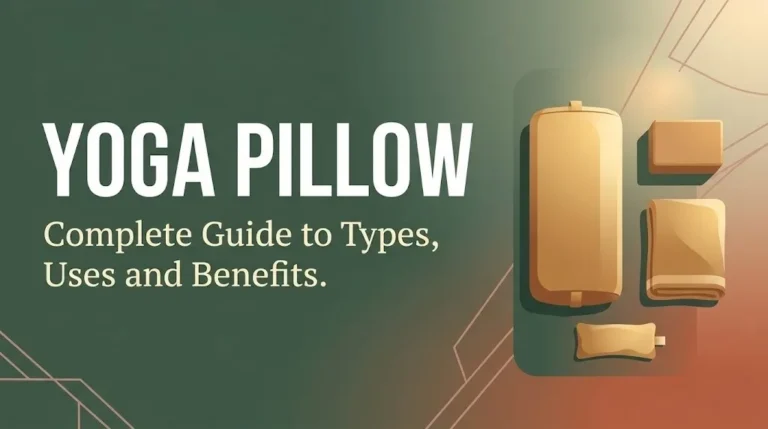
The four items every beginner needs for yoga are a non-slip mat, two yoga blocks, a yoga strap, and a folded blanket, and using all four from your first session makes every pose safer, more accessible, and better aligned than attempting full versions without support.
Props are not remedial tools. They are precision instruments that allow your body to experience correct alignment before developing the flexibility or strength to achieve it independently. The Iyengar yoga tradition systematized this insight: every pose has a supported version that is equally valid and often more educationally valuable than the unsupported version.
| Prop | Purpose | First Use Case |
|---|---|---|
| Yoga mat | Non-slip surface, spatial boundary, cushioning | All poses; non-negotiable |
| Yoga block (2) | Height adjustment for hands and hips | Uttanasana (hands to blocks); Supported Bridge |
| Yoga strap | Extends reach for tight hamstrings and shoulders | Seated forward folds, shoulder stretches |
| Blanket | Padding under knees; support under head in Savasana | Balasana (under knees); Savasana (under head) |
| Bolster | Full body support in restorative poses | Supported Supta Baddha Konasana |
| Chair | Full weight support for standing and seated poses | Chair yoga adaptations, senior practice |
Budget modification: A firm hardcover book substitutes for a yoga block. A bathrobe belt works as a yoga strap. A beach towel folds into a blanket substitute. These household items let you practice at home before purchasing dedicated equipment.
The American College of Sports Medicine notes that proper equipment and surface support during physical activity reduces injury risk through improved biomechanical alignment. In yoga, this principle applies directly: a practitioner whose hands do not reach the floor in Uttanasana (Standing Forward Fold) without rounding the spine will strain the lower back. Blocks under the hands solve this immediately.
Key Takeaway: Yoga props are not optional for beginners. They are the tools that make correct alignment accessible before you have developed the flexibility to achieve it without support. Using blocks and straps from day one is the professional approach.
Yoga 101 for Seniors
Seniors beginning yoga 101 should prioritize balance training, gentle joint mobility, seated and supine poses, and conscious breath practice, because these four components directly address the physical changes of aging that most affect functional independence and fall risk.
Yoga is one of the most well-studied physical practices for older adults. A 2015 study published in the International Journal of Yoga found that adults over 60 who practiced yoga twice weekly for 12 weeks showed measurable improvements in balance, functional mobility, and lower extremity strength compared to age-matched controls who did not practice.
Senior-specific yoga 101 considerations:
- Use a chair as a standard prop, not a last resort. Chair yoga is not easier yoga. It is yoga adapted for a different set of physical parameters. All foundational poses have chair versions that preserve their essential benefits.
- Transitions must be slow. Moving from lying down to standing too quickly increases orthostatic hypotension risk, particularly for people on blood pressure medications.
- Balance poses near a wall or chair. Vrksasana (Tree Pose) practiced with one hand touching a wall is equally beneficial neurologically and significantly safer.
- Shorter sessions more frequently. Three 20-minute sessions per week produce comparable long-term benefits to one 60-minute session with far less fatigue and recovery demand.
- Communicate medications to the teacher. Beta-blockers affect heart rate response to exercise. Diuretics increase dehydration risk. Blood pressure medications increase orthostatic hypotension risk during position changes.
Modification for practitioners with osteoporosis: Avoid deep spinal flexion and aggressive rotational twists. Poses that load the spine in neutral alignment, such as Tadasana (Mountain Pose) and standing lunge variations, support bone density maintenance without fracture risk.
Yoga 101 Benefits and What the Science Says
Regular yoga practice produces documented improvements in flexibility, stress markers, cardiovascular function, and mental health outcomes across diverse adult populations, with the strongest evidence for these benefits accumulating after 8 to 12 weeks of practice at a frequency of at least three sessions per week.
This is where the research earns its place alongside the experience. The benefits attributed to yoga are not anecdotal. They are studied, measured, and published in peer-reviewed journals by researchers across multiple disciplines.
A 2021 meta-analysis published in Complementary Therapies in Medicine analyzed 49 randomized controlled trials examining yoga and anxiety in adult populations. Yoga produced consistent, statistically meaningful reductions in trait anxiety and state anxiety across all study populations. This is not “yoga feels relaxing.” It is a specific, measured, reproducible physiological response.
Benefits with the strongest research support:
- Anxiety and stress reduction: Through parasympathetic nervous system activation and cortisol reduction; documented across multiple study populations
- Flexibility: Consistent gains across all beginner populations; most pronounced in hamstrings, hips, and thoracic spine
- Chronic low back pain: The NCCIH specifically identifies yoga as a practice with evidence supporting low back pain management
- Blood pressure: A 2019 meta-analysis in Complementary Therapies in Medicine found yoga reduced systolic blood pressure by an average of 5 to 10 mmHg in adults with mild to moderate hypertension
- Sleep quality: Multiple studies link regular yoga practice to improved sleep onset latency and duration
- Balance and fall prevention: Documented in older adult populations with yoga practiced twice weekly
What is genuinely overhyped: yoga as weight loss. While yoga burns calories (approximately 180 to 460 calories per hour depending on style and individual factors), it is not a primary weight loss intervention. Its benefits in stress reduction and sleep quality support healthy weight management indirectly, but marketing yoga primarily as a weight loss tool misrepresents the evidence.
Yoga 101 Safety Tips and Common Mistakes
The most important yoga 101 safety principle is to never push past pain in any pose, because pain is the nervous system’s signal that a tissue boundary has been reached, and yoga practice should work at the edge of sensation, not past it.
This sounds obvious. In practice, it requires active attention in every session. Beginners frequently confuse productive discomfort (the sensation of a gentle stretch in tight tissue) with pain (the sensation of tissue stress or joint compression). The distinction: productive discomfort dissipates gradually during the hold; pain intensifies or remains acute.
The most common beginner mistakes in yoga 101:
- Holding the breath: The most universal beginner error. If you are holding your breath in a pose, back off slightly and re-establish your breath before re-entering.
- Looking around the room: Gaze (drishti) in yoga is intentional. Watching other students disrupts your own balance and pulls attention out of your body.
- Forcing flexibility: Range of motion increases gradually over weeks. Forcing a deeper stretch bypasses the neuromuscular protective mechanisms that prevent injury.
- Skipping Savasana: The final resting pose is physiologically active. The parasympathetic recovery that happened during practice consolidates during Savasana.
- Comparing to other students: Every body has a different skeletal structure, muscle length, and joint mobility. What another student’s pose looks like has no relevance to what your pose should look like.
- Practicing on a full stomach: Wait at least 2 hours after a full meal before a yoga session. Inversions and twisting poses with a full stomach cause genuine physical discomfort.
Safety note for people with specific medical conditions: If you have been told you have a herniated disc, osteoporosis, glaucoma, or are pregnant, inform your yoga teacher before every class. These conditions have specific pose contraindications that a qualified teacher should address individually.
How Often Should a Beginner Do Yoga
Beginners should practice yoga two to three times per week for the first eight to twelve weeks to develop body awareness, build pose familiarity, and allow adequate recovery between sessions while establishing a sustainable habit.
Frequency is the variable that research most consistently associates with yoga’s documented benefits. A single class per week produces some benefit and is a reasonable starting point. Three classes per week is where the evidence is strongest.
The International Journal of Yoga reviewed multiple study protocols and found that yoga interventions showing the strongest improvements in flexibility, anxiety, and wellbeing used a minimum of three sessions per week over at least eight consecutive weeks. That is the research-backed starting recommendation.
A practical progression framework:
| Weeks | Frequency | Session Length | Focus |
|---|---|---|---|
| 1 to 2 | 2x per week | 20 to 30 minutes | Breath and pose recognition |
| 3 to 4 | 2 to 3x per week | 30 to 40 minutes | Adding the full beginner sequence |
| 5 to 8 | 3x per week | 40 to 60 minutes | Style exploration; adding Yin or Restorative |
| 9 to 12 | 3 to 4x per week | 45 to 60 minutes | Deepening practice; refining alignment |
Rest days between yoga sessions matter more for beginners than for experienced practitioners. Connective tissue adaptations require recovery time. Soreness that lasts more than 48 hours after a session indicates too much intensity or too little recovery.
Modification for people with unpredictable schedules: A consistent 15-minute home practice three times per week produces better long-term results than an irregular schedule of longer sessions. Frequency matters more than duration for building the habit and the physiological adaptations that sustain it.
How to Build a Yoga 101 Home Practice
To build a yoga 101 home practice, start with the beginner sequence from this guide practiced twice per week for four weeks before adding any additional content, and set a consistent time of day for practice rather than fitting it into leftover time.
Home practice is where studio learning becomes genuinely embodied. Class teaches you the forms. Home practice is where you feel them in your own body at your own pace, without the social pressure of keeping up with a group.
A practical home practice framework:
Equipment minimum:
- One yoga mat
- Two yoga blocks
- A timer
Session structure (25 minutes to start):
- 5 minutes: Extended exhalation breathing in Sukhasana (Easy Pose)
- 10 minutes: Cat-Cow, Downward Dog, Warrior I (each side), Standing Forward Fold
- 5 minutes: Bridge Pose (two rounds), knees-to-chest release
- 5 minutes: Savasana
Progression over six weeks:
- Week 1 to 2: The 25-minute sequence above, practiced twice per week
- Week 3 to 4: Add Ujjayi breathing to the movement section; practice three times per week
- Week 5 to 6: Add a 5-minute seated forward fold section and Legs Up the Wall for the closing rest
Home practice pitfalls to avoid:
- Practicing when already fatigued: A rested 15-minute practice is more beneficial than an exhausted 45-minute one
- Using phone screens for instruction while practicing: Glancing at a screen disrupts the inward focus that produces yoga’s cognitive benefits
- Skipping the warm-up: Cold connective tissue has less extensibility. Cat-Cow before Downward Dog is not optional.
Modification for people new to any exercise: Begin with just the breathing and Savasana components for the first week. Add movement in week two. Adding breath practice alone before any physical component is a legitimate starting point that produces measurable nervous system benefits.
Frequently Asked Questions About Yoga 101
What exactly is yoga 101 and what does a class cover?
Yoga 101 is a foundational yoga class designed for absolute beginners that covers basic pose names, proper alignment, conscious breathing, class structure, and yoga etiquette in a supported, unhurried format.
Most Yoga 101 classes introduce five to eight beginner poses, one or two breathing techniques, and the use of props like blocks and straps, with the teacher offering individual modifications throughout.
The goal is not performance; it is orientation. You leave a Yoga 101 class knowing how to breathe, recognize the foundational poses, and feel comfortable in any subsequent beginner yoga session.
Is power yoga good for beginners with no experience?
Power yoga is not recommended as a first yoga experience for people with no prior practice, because its fast pace assumes a working knowledge of pose names and transitions that beginners have not yet developed.
After four to six weeks of beginner Hatha or gentle Vinyasa practice, a beginner-level power yoga class becomes genuinely accessible and provides an excellent cardiovascular and strength challenge.
Evansville power yoga studios typically offer both beginner and regular power yoga formats; choose the beginner-specific option for your first several sessions.
What should I bring to my very first yoga class?
Bring comfortable stretchy clothing that allows full hip and shoulder movement, a water bottle for after class, and a small towel if the class is active.
Most studios, including Yoga 101 Evansville, provide mats and props for beginners at no extra charge or for a small rental fee; confirm this before your first class.
Arrive 10 minutes early, introduce yourself to the teacher, and mention that it is your first yoga class so they can offer you appropriate modifications and guidance.
How long before I see results from yoga as a beginner?
Most practitioners notice improvements in how they feel during and immediately after sessions from the very first class, including reduced tension and calmer mood.
Physical changes, such as measurable flexibility improvements and reduced chronic muscle tension, typically appear within four to six weeks of consistent practice at two to three sessions per week.
Research published in the International Journal of Yoga supports an eight to twelve week timeline for the most consistent and lasting improvements in flexibility, stress markers, and overall wellbeing.
What is the most important thing to learn in yoga 101?
The single most important skill in yoga 101 is nasal breathing with an extended exhalation, because this specific breath pattern activates the parasympathetic nervous system and produces the calming, clarifying effect that makes yoga different from ordinary stretching.
Every other benefit of yoga, from flexibility gains to stress reduction to improved balance, is amplified by conscious breathing rather than breath-holding or shallow chest breathing.
If you leave your first yoga class having learned only one thing, make it this: inhale through the nose for 4 counts, exhale through the nose for 6 to 8 counts, and do this throughout every pose.
One Pose. One Breath. Right Now.
Start with Balasana (Child’s Pose) tonight. Kneel on your mat or on a folded blanket, sit back toward your heels, extend your arms forward, and breathe slowly for five minutes with your forehead resting on the mat or a folded blanket.
That is a complete yoga practice. Not a preparation for yoga. Actual yoga, right now, requiring nothing except your willingness to get on the floor and breathe.
Come back to the full beginner sequence this week. Twice. That is all. The habit forms from repetition, not ambition.