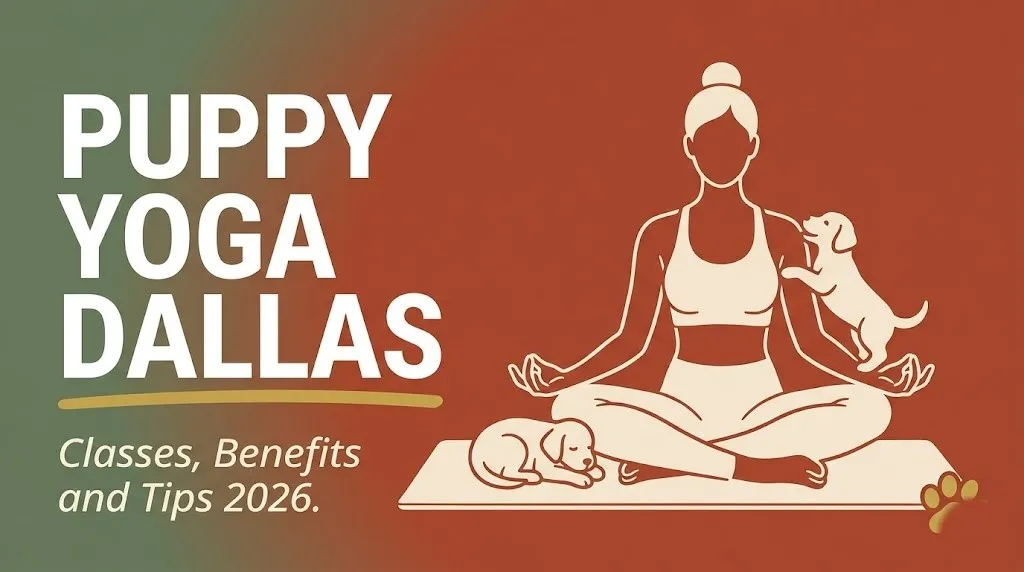
Puppy Yoga Dallas: Classes, Benefits, and Tips 2026
Puppy yoga Dallas is a real, bookable experience that combines a beginner-friendly yoga flow with structured time spent surrounded by and interacting with young puppies, and in 2026 the DFW Metroplex has more options for it than ever before. Whether you are brand new to yoga, a seasoned practitioner looking for something genuinely fun, or planning a group outing, this guide covers everything you need to make a smart, informed booking.
The science behind why this combination works is not just cute marketing. Research from the Human-Animal Bond Research Institute (HABRI) has found that human-animal interaction measurably reduces cortisol levels and increases oxytocin production, the same neurochemical responses activated by social bonding and touch. Add a deliberate breathwork and movement practice, and you have a session specifically designed to calm an overstressed nervous system.
This guide walks through what puppy yoga actually is, where to find it in Dallas and across the Metroplex, what the yoga component involves on a pose-by-pose level, how much classes cost, who can attend, and how to spot an ethical operator before you book. There is a lot to cover. Let’s get into it.
Puppy Yoga Dallas: What You Need to Know in 2026
Puppy yoga Dallas refers to yoga classes held in studios or pop-up venues across the Dallas-Fort Worth Metroplex where attendees practice a beginner-friendly yoga flow while a litter of young puppies roams freely around the room. Classes run year-round, offered primarily on weekends, across multiple Dallas neighborhoods and surrounding suburbs.
In 2026, the Dallas puppy yoga market has matured considerably from the pop-up novelty events of a few years prior. Multiple dedicated providers now operate regular weekend classes at fixed locations. Studios in central Dallas, Plano, Southlake, and Frisco serve different neighborhoods of the Metroplex. Pop-up events at local breweries, yoga studios, and community spaces add additional options throughout the calendar year.
The format is consistent across most providers: a guided yoga session lasting 30 to 45 minutes, followed by 20 to 30 minutes of dedicated puppy cuddle and play time. Sessions start with approximately 45 minutes of all-level flow yoga, surrounded by playful puppies in the studio. Then it is puppy time: 30 minutes of cuddles, pictures, and playtime with the puppies.
| Feature | Detail |
|---|---|
| Typical Session Length | 60 to 75 minutes total |
| Yoga Portion | 30 to 45 minutes |
| Puppy Interaction Portion | 20 to 30 minutes |
| Class Days | Primarily Saturday and Sunday |
| Booking Method | Online, advance purchase required |
| Minimum Age | 5 to 10 years old (varies by provider) |
What Is Puppy Yoga?
Puppy yoga is a structured wellness experience that combines a guided, all-levels yoga class with the presence of young, vaccinated puppies who roam the room freely during the session. It is not a traditional yoga style in the lineage of Hatha, Vinyasa, or Restorative yoga. It is a hybrid wellness event that borrows the physical and breath-focused elements of yoga and layers animal-assisted interaction on top.
The yoga instruction in a puppy yoga session is typically drawn from Hatha or gentle Vinyasa flow traditions. Classes include poses like Balasana (Child’s Pose), Adho Mukha Svanasana (Downward-Facing Dog), Marjaryasana-Bitilasana (Cat-Cow Stretch), seated stretches, and light twists. Instructors keep it accessible, focusing on breath, relaxation, and gentle movement rather than intense power yoga or advanced poses.
The puppies add a dimension no standard yoga class replicates. Their unpredictability, climbing on mats, licking faces, or chasing tails mid-pose, is the magic that turns a structured session into something genuinely fun. This is the key difference between puppy yoga and a regular gentle yoga class: the unplanned moments are the point, not the disruption.
The National Center for Complementary and Integrative Health (NCCIH) recognizes yoga broadly as a mind-body practice supporting physical and psychological well-being. Puppy yoga extends that framework by adding documented animal-assisted interaction benefits to the yoga practice, creating a session that addresses stress through two distinct biological pathways simultaneously.
Puppy Yoga DFW: Locations and Providers
Multiple established providers operate regular puppy yoga sessions across the DFW Metroplex in 2026, each with slightly different formats, locations, and pricing structures. Understanding who operates in your area saves time and helps you match a provider to your specific preferences.
Puppies & Yoga operates in Dallas proper as well as Plano, running classes every Saturday and Sunday. The operation holds yoga sessions with puppies every Saturday and Sunday in Dallas and Plano. Puppy breeds are usually announced approximately 4 days before each session via Instagram stories and on the booking website.
Puppy Yoga Club offers sessions in Southlake, extending the experience to the western suburbs of DFW. Sessions begin with a 30-minute all-level yoga session surrounded by puppies, followed by 30 minutes of cuddles, photos, and playtime.
Pop-up events provide additional variety throughout the year. Dallas Pets Alive has partnered with local venues like Community Beer Co. for all-levels yoga sessions joined by adoptable pups. A portion of proceeds from these events is donated to Dallas Pets Alive, supporting their mission to save companion animals through rescue and advocacy across North Texas.
| Provider | Location | Format | Weekend Schedule |
|---|---|---|---|
| Puppies & Yoga | Dallas / Plano | 45-min yoga + 30-min puppy time | Every Sat and Sun |
| Puppy Yoga Club | Southlake | 30-min yoga + 30-min puppy time | Selected weekends |
| Satya Yoga Dallas | Central Dallas | Pop-up monthly events | Monthly, varies |
| Community Beer Co. (Dallas Pets Alive) | Dallas (brewery) | All-levels yoga + adoptable puppies | Periodic events |
| On Rotation Brewery | Dallas | Rescue puppy yoga pop-up | Periodic events |
Key Takeaway: Dallas and DFW offer multiple dedicated puppy yoga providers in 2026, from fixed studio sessions in Plano and Southlake to rescue-driven pop-up events at local breweries. Checking each provider’s booking page or Instagram is the fastest way to find upcoming dates.
Puppy Yoga Dallas Classes and Formats
The class format for puppy yoga in Dallas follows a consistent three-part structure across most providers, though the length and emphasis of each portion vary. Understanding the structure helps you arrive with realistic expectations rather than surprises.
The standard experience is split into two main parts: a 45-minute puppy yoga session that blends restorative flow yoga with puppy interaction, followed by 30 minutes of puppy chill time. Some providers shorten the yoga portion to 30 minutes and keep the puppy time at 30 minutes, resulting in a 60-minute total session. Others extend to a 75-minute adventure with both portions lengthened.
Every session includes a guided yoga flow and meaningful time with the puppies. The yoga portion is a guided all-level flow designed to help participants slow down, breathe, and reconnect. Depending on their energy, the puppies may join the flow, wander around, or rest nearby.
The closing portion of the class is often the highlight for attendees who are less confident about the yoga component. Puppies roam freely for petting, cuddling, play, lap naps, and spontaneous interruptions that spark joy and laughter during the dedicated interaction time. Most sessions end with Savasana (Corpse Pose) or a guided relaxation, often with puppies settling nearby.
| Session Format | Yoga Portion | Puppy Time | Total Duration |
|---|---|---|---|
| Standard Session | 45 minutes | 30 minutes | 75 minutes |
| Short-Form Session | 30 minutes | 30 minutes | 60 minutes |
| Extended Adventure | 45 minutes | 30+ minutes with wind-down | 90 minutes |
For beginners: The yoga portion moves slowly and is designed for all fitness levels. No experience is required. You will not be the only person in the room who is new to yoga. The puppies make everyone a beginner at managing distraction.
Puppy Yoga Benefits
Puppy yoga delivers measurable wellness benefits that combine the documented effects of yoga practice with the equally documented effects of human-animal interaction. These are not separate benefits stacked loosely together. They work through overlapping biological systems.
Key benefits documented across yoga research and animal-interaction research include:
- Stress reduction: Yoga activates the parasympathetic nervous system, lowering heart rate and reducing the production of stress hormones. Animal contact independently reduces cortisol and increases oxytocin. In puppy yoga, both mechanisms activate simultaneously.
- Mood elevation: The Human-Animal Bond Research Institute (HABRI) has found that human-animal interaction improves mood, reduces feelings of loneliness, and supports emotional well-being across multiple population groups.
- Flexibility and mobility: The gentle yoga flow component engages the hamstrings, hip flexors, thoracic spine, and shoulder girdle, improving range of motion even at a beginner pace.
- Mindfulness and present-moment focus: Puppies are exceptionally effective at commanding full attention. The combination of breath-linked movement and unpredictable animal interaction creates a state of focused presence that is difficult to achieve in a standard class.
- Social connection: Classes build instant community; strangers bond over puppy antics, making this ideal for Dallas’s mix of transplants and busy professionals seeking easy socialization.
- Low-barrier physical activity: The session is low-impact and accessible to nearly all fitness levels, making it one of the most genuinely inclusive wellness experiences available.
Puppy Yoga and Stress Relief
Puppy yoga reduces stress through two distinct physiological mechanisms working at the same time, which is what makes it more effective than either yoga or puppy interaction practiced alone. This is not wellness-speak. It reflects how the autonomic nervous system responds to two specific types of healthy stimulation.
Yoga activates the parasympathetic nervous system through breath-linked movement and deliberate physical pacing. Slow, deliberate inhalation and exhalation, practiced through ujjayi pranayama (victorious breath) in most gentle yoga sessions, signals the nervous system to downshift from a stress-alert state toward a calmer baseline. The Human-Animal Bond Research Institute (HABRI) has documented that interacting with animals, particularly through touch, lowers cortisol levels and raises oxytocin in humans across multiple controlled studies.
Think of cortisol as your internal alarm system. When it is chronically elevated, which is common for people managing demanding work schedules, traffic, and urban life, the body stays in a low-level stress response even during rest. Physical touch with an animal interrupts that pattern faster than most other interventions short of sleep.
Puppy contact spikes oxytocin, the bonding hormone, and drops cortisol, easing anxiety and boosting mood. In Dallas’s high-energy environment, with traffic on I-35 and demanding jobs, these sessions provide an instant reset, fighting loneliness and encouraging mindfulness.
For people managing chronic workplace stress: Two to three puppy yoga sessions per month, used consistently alongside other stress management strategies, may support a meaningful reduction in baseline perceived stress. Yoga teachers and wellness researchers generally note that consistent attendance, rather than single sessions, produces the most lasting benefit.
Key Takeaway: Puppy yoga reduces stress faster than yoga alone because it activates two overlapping neurochemical pathways simultaneously: the parasympathetic calming effect of yoga breath and the oxytocin release triggered by animal contact.
Puppy Yoga and Anxiety
Puppy yoga addresses anxiety through mechanisms that research on both yoga and animal-assisted therapy has documented separately, and that appear to compound when combined. For people who find conventional yoga classes anxiety-provoking due to performance pressure or body consciousness, puppy yoga removes those barriers almost entirely.
The anxiety-reducing effect of yoga is well established. A review of studies published in the Journal of Psychiatric Research found that yoga-based interventions reduced anxiety scores across multiple populations, with effects comparable to other active anxiety management strategies. The breath regulation component, specifically slow exhalation, is the primary driver of this response: it activates the vagus nerve and increases heart rate variability, both markers of a well-regulated nervous system.
Animal-assisted therapy adds a complementary layer. Puppy yoga sessions are designed to support mental well-being by blending beginner-friendly yoga with intentional puppy time. The unpredictable, playful behavior of puppies creates involuntary moments of laughter and delight. Laughter has measurable effects on cortisol and on the sympathetic nervous system’s state of activation: a genuine laugh is physiologically incompatible with a sustained anxiety response.
Attendees often leave calmer, happier, and more connected, supported by animal-assisted therapy research.
Note for people with dog allergies or dog phobias: Puppy yoga is not appropriate for anyone with a dog allergy or a significant fear response to dogs. The puppies roam freely and contact is not avoidable once the session begins. People with mild anxiety around dogs may find that the controlled, structured environment of a puppy yoga class is actually a gentle exposure experience, but this is a personal decision and not a therapeutic recommendation.
Puppy Yoga for Beginners
Puppy yoga is one of the most beginner-friendly yoga experiences available in Dallas, and not just because the instructors slow the pace. The presence of puppies creates a class atmosphere where nobody is performing, nobody is watching anyone else’s form, and the whole room is laughing too much to feel self-conscious.
Puppy yoga is open to all levels. Sessions are designed to be accessible to everyone, with a focus on relaxation and enjoyment rather than performance. The yoga instruction in most Dallas sessions follows a gentle Hatha or slow Vinyasa structure. Instructors cue modifications throughout the session, and no one is expected to match a specific depth or duration in any pose.
For people who have never set foot on a yoga mat, puppy yoga provides a low-stakes entry point. The attention naturally divides between the instructor and the puppies, which paradoxically reduces the self-monitoring that makes many beginners anxious in a regular class. You are far less likely to fixate on whether your Adho Mukha Svanasana (Downward-Facing Dog) looks “right” when a puppy is investigating your shoe.
Modification for complete beginners: If the floor-based transitions feel uncomfortable or unfamiliar, most instructors will happily cue a seated version of any pose. Bringing a folded blanket to sit on raises the hips and makes seated poses like Sukhasana (Easy Seated Pose) much more comfortable for people with tight hip flexors or limited ankle mobility. No special yoga experience is required to have a genuinely good time.
Puppy Yoga Poses
The yoga component of a puppy yoga Dallas class draws primarily from the Hatha and gentle Vinyasa traditions, using poses that are accessible to all body types and fitness levels while still engaging the major muscle groups of the upper body, core, and hips.
Common poses in a Dallas puppy yoga session include:
- Tadasana (Mountain Pose): The foundational standing pose. Engages the quadriceps, gluteus medius, and postural muscles of the spine. Used as a reset between transitions.
- Adho Mukha Svanasana (Downward-Facing Dog): Stretches the hamstrings, calves, and thoracic spine while building shoulder stability. One of the most popular poses in any yoga class, and also the most likely to attract a puppy to your lower back.
- Marjaryasana-Bitilasana (Cat-Cow Stretch): A breath-linked spinal mobilization sequence. Engages the erector spinae, transverse abdominis, and neck flexors. Calming and accessible for all experience levels.
- Balasana (Child’s Pose): A resting pose that stretches the lumbar spine, hips, and shoulder blades. Relieves lower back tension. Puppies frequently curl up next to practitioners in this pose.
- Virabhadrasana I (Warrior I): Builds leg strength in the quadriceps and gluteus maximus while opening the hip flexors and thoracic spine.
- Savasana (Corpse Pose): Final relaxation. The most likely moment for a puppy to wander over and fall asleep on your chest.
Modification for Downward-Facing Dog: If the wrists feel strained, come onto fists or onto forearms in Ardha Pincha Mayurasana (Dolphin Pose). This removes wrist extension entirely and keeps all the spinal and hamstring benefits of the pose. Be aware that puppies climbing onto your back during this pose can shift your weight suddenly toward the wrists. Lower to the knees immediately if this happens.
Pose Tip:
- In Balasana (Child’s Pose), widen the knees to create more room and allow a puppy to nestle between your arms comfortably.
- Keep water nearby. Puppy yoga is warmer than you expect due to the combined body heat of people and animals in a small space.
- Modification for knee sensitivity: place a folded blanket between the thighs and calves in kneeling poses.
Key Takeaway: The yoga in a puppy yoga class is genuinely functional. It engages the hamstrings, hip flexors, thoracic spine, and shoulder stabilizers through real poses with real alignment principles, even if the puppies make it feel more like play than practice.
Puppy Yoga: What to Expect
A puppy yoga Dallas class follows a predictable arc, and knowing the structure in advance makes the experience significantly more comfortable, especially for first-timers who are managing both yoga-newness and puppy-related excitement simultaneously.
Arrive 15 minutes early for a smooth start. Entry is not allowed 20 minutes after the session begins. This is a firm rule across most providers, because late arrivals disturb the puppies and disrupt the class’s opening calm. Most studios also require you to sign a liability waiver before the session starts.
Here is the typical timeline of a 75-minute puppy yoga Dallas session:
- Arrival and waiver signing (15 minutes before class): Set up your mat, receive any prop guidance from the instructor, and get your first glimpse of the puppies.
- Yoga flow begins (minutes 0 to 45): The instructor leads a slow, breath-linked sequence through standing, kneeling, and floor poses. Puppies roam freely. They will wander onto mats, investigate props, and occasionally interrupt poses. This is expected and welcomed.
- Puppy interaction time (minutes 45 to 75): The structured yoga portion ends. Puppies are the main event. Sit, cuddle, photograph, and play freely.
- Wind-down and close: Most sessions end with a gentle guided relaxation or Savasana (Corpse Pose) variation, often with puppies settling nearby.
Note that participating in a class with puppies carries risks like scratches or bites. Since puppy wellness is the first priority, interaction with the puppies is not guaranteed. Most providers make this clear in their booking materials.
Puppy Yoga: What to Wear and Bring
What you wear and bring to a puppy yoga Dallas class affects your comfort more than it would in a standard yoga session, because puppies change the physical demands of the experience in specific ways.
What to wear:
- Fitted leggings or shorts that allow full range of motion. Avoid loose, flowing fabric that puppies can grab or chew.
- A fitted top rather than a draped or oversized shirt. Puppies often investigate dangling hems and sleeves.
- Avoid jewelry that might snag on a puppy or scratch them. Keep accessories minimal.
- Go barefoot or in grip socks. Most studios require shoes off in the practice space.
- Wear clothes you are comfortable getting dirty. Puppy paws, drool, and the occasional accident are part of the experience.
What to bring:
- Your own yoga mat. Most studios have loaners, but a personal mat is always preferable.
- A small hand towel.
- A water bottle. The room gets warmer than a standard yoga class due to extra bodies, both human and canine.
- Breath mints or gum to put away before class. Strong scents can agitate puppies.
- Your phone for photos, kept out of the way during the yoga portion.
What to leave at home:
- Strong perfume or cologne. Puppies have sensitive noses and strong scents cause agitation.
- Your own dog. You cannot bring your own dog. The puppies for sessions come from breeder and rescue partners.
Puppy Yoga Cost in Dallas
Puppy yoga in Dallas and across the DFW Metroplex ranges in price depending on the provider, session length, and venue type. Understanding the pricing tiers helps you plan appropriately and avoid surprises at checkout.
Some sessions, such as those offered by Puppy Sphere during their Dallas run, are priced at $60 per person. Membership pricing through providers like Puppy Yoga Club can reduce the per-class cost to $39 or lower for regular attendees.
Pop-up events at local breweries and community venues often carry lower price points, sometimes between $25 and $40, and may include a complimentary beverage or donation component.
| Provider Type | Typical Price Per Session | Includes |
|---|---|---|
| Dedicated studio (Puppies & Yoga, Puppy Yoga Club) | $45 to $65 | Yoga instruction, puppy interaction, mat sometimes provided |
| Pop-up brewery/venue event | $25 to $45 | Yoga, puppy time, sometimes a complimentary drink |
| Rescue-partnered charity event | $20 to $40 | Yoga, puppy time, portion donated to rescue org |
| Corporate or private group booking | $60 to $100+ per person | Exclusive class, customized format |
Most providers sell out on popular weekends well in advance. Booking two to four weeks ahead is standard practice for Saturday morning sessions, which are the most in-demand time slots in the Dallas market.
Budget note: All ticket sales are generally final and non-refundable across most providers, though most offer the option to reschedule up to three days before the event. Read the cancellation policy carefully before completing your booking.
Puppy Yoga Age Limit and Kids
Age policies for puppy yoga Dallas sessions vary by provider, and the differences matter if you are planning to bring a child or organizing a family outing.
Children must be at least 10 years old at some providers, such as Puppies & Yoga. Children under 15 must be accompanied by an adult. Other providers, like Puppy Yoga Club, open classes to children aged 5 and up, but they must be accompanied by an adult who also holds a ticket.
The rationale behind age restrictions is practical. Young puppies between 8 and 12 weeks old are in a sensitive developmental period. Sudden loud noises, rough handling, or startling movements can create negative experiences that affect their behavioral development. Well-run puppy yoga events apply age minimums to ensure the puppies are protected as much as the participants.
For families planning a child-friendly outing, calling ahead to confirm the current age policy and asking whether the instructor has experience working with younger participants is a worthwhile step. Not every instructor who teaches adult classes has the same skills for managing a room that includes very young children alongside small animals.
Safety note for children: Brief children before the session on gentle touch, calm voices, and not chasing or grabbing the puppies. This preparation takes five minutes and dramatically improves the experience for both children and animals. Children who are initially afraid of dogs or who have not spent time around puppies should be informed of what to expect rather than surprised by the session’s physical contact with animals.
| Provider | Minimum Age | Parent Ticket Required |
|---|---|---|
| Puppies & Yoga Dallas / Plano | 10 years old | Yes, for under 15 |
| Puppy Yoga Club Southlake | 5 years old | Yes, adult with own ticket |
| Pop-up rescue events (varies) | Varies by event, 8 to 10 years common | Yes |
Key Takeaway: Age policies differ meaningfully between Dallas puppy yoga providers. Always check the specific policy before booking, especially if bringing children under 12, and prepare kids in advance for the experience of gentle animal interaction.
Puppy Yoga Ethics and Animal Welfare
The ethics of puppy yoga is a legitimate concern that deserves a direct, substantive answer rather than reassuring marketing language. The practice is not inherently unethical. Poorly run events can be. Knowing the difference before you book is the responsible approach.
The primary animal welfare consideration is the age and socialization stage of the puppies involved. The American Veterinary Medical Association (AVMA) identifies the period between approximately 8 and 16 weeks of age as the critical socialization window for puppies, during which positive exposure to diverse human interactions, sounds, and environments shapes long-term behavioral health. Puppy yoga classes offer a way to socialize puppies before they meet their new families. Gentle interactions with humans during this period reduce the stress puppies experience when joining their new homes.
Well-run events use puppies within this window intentionally, treating the class as a beneficial socialization experience for the animals, not just an entertainment product. Reputable providers partner with local breeders within approximately one hour of the city. Puppies in quality classes are between 8 and 12 weeks old. They are vaccinated and participate in the class right before joining their new homes.
Questions to ask before booking any puppy yoga event:
- Where do the puppies come from? Reputable local breeders or rescue partners are the standard.
- Are the puppies vaccinated? This should be non-negotiable for both human and animal safety.
- How many puppies are in each session? Sessions should host between 6 to 12 puppies. Numbers may vary depending on the litter and availability. For the health and safety of the puppies, reputable operators do not mix different litters.
- Is there a limit on session duration for the puppies? Puppies tire quickly. A session longer than 75 to 90 minutes may be excessive for their age and developmental stage.
- Does the operator monitor the puppies during the session and allow them to rest?
Puppy Yoga for Bachelorette and Group Events in Dallas
Puppy yoga has become one of the most popular alternative bachelorette party and group activity options in Dallas, and for practical reasons: it is unique, it requires no prior yoga experience, it is highly photogenic, and it is genuinely fun for a diverse group of people with different fitness levels and social styles.
Most Dallas puppy yoga providers accommodate group bookings with advance notice. Private sessions, in which your group has the space exclusively, are available through Puppies & Yoga and similar operators for groups of 10 to 20 people. Private sessions allow your group to set the mood, choose preferred session times, and enjoy the puppy interaction without sharing the room with strangers.
For bachelorette groups specifically, the combination of a low-key wellness experience with plenty of photo opportunities makes puppy yoga a popular choice compared to high-energy nightlife activities. The 75-minute format allows time for yoga, puppy cuddles, and post-class plans without the commitment of a full-day itinerary item.
Planning tips for group bookings:
- Book at least 3 to 4 weeks in advance for weekend sessions. Popular weekend slots fill quickly.
- Confirm the cancellation and reschedule policy for the full group at the time of booking.
- Ask the provider about breed availability if your group has preferences, though breeds are not guaranteed and are announced only a few days before the event.
- Check whether the venue offers a post-class gathering space. Some brewery and taproom venues allow your group to stay and socialize after the session.
- Assign one person to coordinate the group ticket purchase to avoid seat allocation issues.
Corporate wellness events are a growing segment of the Dallas puppy yoga market. Companies have begun booking private sessions for team wellness days, using the yoga and animal interaction combination to support morale, reduce workplace stress, and create a shared positive experience outside the office environment.
Puppy Yoga vs Goat Yoga in Dallas
Both puppy yoga and goat yoga are animal-yoga hybrid experiences available in the Dallas area, and they attract overlapping but distinct audiences. Knowing the difference helps you choose the one that better matches your goals and tolerance for unpredictability.
Goat yoga is almost always held outdoors or in a barn-style setting. The yoga practice takes place on the ground while Nigerian Dwarf goats (the most commonly used breed) roam the area and may climb onto practitioners’ backs during poses like Balasana (Child’s Pose) or Adho Mukha Svanasana (Downward-Facing Dog). The yoga instruction is typically secondary to the animal experience. Sessions are often held at farm venues in suburban DFW areas including Frisco and McKinney.
Puppy yoga is almost always held indoors in a studio or venue setting. The yoga component tends to be more structured and instructor-led. The animals are smaller and lighter, which changes the physical experience of having them on your body during poses. The emotional register of the two experiences also differs: goat yoga is comedic and unpredictable in a robust physical way, while puppy yoga skews toward warmth, calm, and nurturing affect.
| Feature | Puppy Yoga | Goat Yoga |
|---|---|---|
| Setting | Indoor studio or venue | Outdoor or barn-style |
| Animal Size | Small (8 to 12 week puppies, 2 to 10 lbs) | Medium (Nigerian Dwarf goats, 40 to 80 lbs) |
| Yoga Instruction | Structured, instructor-led | Often secondary to animal experience |
| Physical Contact | Gentle; puppies wander and cuddle | Goats climb on backs; heavier contact |
| Weather Dependence | None; indoor | Seasonal; heat and rain are factors in DFW |
| Primary Audience | Stress relief, group events, beginners | Novelty seekers, outdoor enthusiasts |
| DFW Availability | Year-round, multiple providers | Seasonal, primarily suburban farms |
| Allergies | Dog allergies are a disqualifier | Outdoor allergens, goat dander relevant |
| Price Range in DFW | $39 to $65 per session | $30 to $55 per session |
Neither experience is superior. They serve different moods. Puppy yoga tends to feel more calming and emotionally connective. Goat yoga tends to feel more physically comedic and energetically social. Both are worth trying if the Dallas wellness scene is your playground.
Frequently Asked Questions About Puppy Yoga Dallas
How much does puppy yoga cost in Dallas?
Puppy yoga in Dallas typically costs around $60 per person for a 75-minute session from dedicated providers.
Membership pricing through some providers, like Puppy Yoga Club, can reduce the per-class cost to $39 or less for regular attendees.
Pop-up events at local breweries and rescue partner venues may offer sessions between $25 and $45, sometimes with a portion donated to animal rescue organizations.
Can kids come to puppy yoga in Dallas?
Age policies vary by provider: some require children to be at least 10 years old, while others accept children aged 5 and up when accompanied by a ticketed adult.
Always confirm the specific age policy with your chosen provider before booking, as these rules are enforced to protect the wellbeing of both children and puppies.
Brief children in advance on gentle handling so the session is positive for everyone in the room.
Is puppy yoga good for anxiety and stress?
Yes. Puppy yoga reduces anxiety and stress through two overlapping mechanisms: yoga’s breath regulation activates the parasympathetic nervous system, while animal contact independently lowers cortisol and raises oxytocin.
Research from the Human-Animal Bond Research Institute (HABRI) has found that human-animal interaction measurably improves mood and reduces stress hormone levels.
Consistent attendance produces more lasting benefits than a single session, though most participants report leaving the first class in a noticeably calmer state.
What should I wear to puppy yoga in Dallas?
Wear fitted, comfortable athletic clothing that allows full range of motion and will not be grabbed by curious puppies.
Avoid loose, flowing fabric, dangling jewelry, and strong perfume or cologne, as these can agitate young puppies or become unintentional chew toys.
Go barefoot or in grip socks, and choose clothes you are comfortable getting slightly dirty from puppy paws and enthusiasm.
Are the puppies in Dallas puppy yoga classes treated ethically?
The most reputable Dallas providers source puppies from local breeders within one hour of the city or from rescue partners. Puppies are typically between 8 and 12 weeks old, vaccinated, and participating in the class as part of a socialization program right before joining their new homes.
Before booking any event, ask where the puppies come from, whether they are vaccinated, whether litters are kept separate, and how the session is monitored for puppy welfare.
Events partnered with rescue organizations like Dallas Pets Alive add an adoption mission to the wellness experience, directing proceeds toward animals in need.
Book one class. Not a membership. Not a private group event to start. One class on a Saturday morning at whichever Dallas or DFW provider is most convenient.
Arrive 15 minutes early, sign the waiver, set up your mat, and give yourself permission to be completely distracted by puppies the moment the yoga portion ends. That is the point. You will be calmer by the time you walk out the door than you were when you walked in.
The yoga is real. The puppies are real. The reset is real.