Up Yoga Guide: Aerial Flying Yoga Benefits and Tips 2026
Up yoga, also called aerial yoga or flying yoga, is a suspension-based practice where a fabric hammock supports the body through yoga poses, inversions, and strength sequences above the ground. It delivers genuine physical benefits, including spinal decompression, core strengthening, and improved proprioception, and it is far more accessible to beginners than most people assume.
The National Center for Complementary and Integrative Health reports that yoga participation in the United States has grown by more than 50 percent over the past decade, with aerial and specialty formats accounting for a growing share of new student enrollment. That growth reflects a real appetite for practices that feel different from conventional mat work while still delivering measurable health results.
This guide covers exactly what up yoga involves, how the hammock works with your body rather than against it, what the research says about specific benefits, which poses work well for beginners, how to set up a safe practice at home, and who should approach this format with specific caution before starting.
Up Yoga: What the Practice Actually Is
Up yoga is a hybrid movement practice that suspends the practitioner in a soft fabric hammock hung from a ceiling anchor, allowing yoga poses, stretches, and strength exercises to be performed partially or fully off the ground.
The hammock typically hangs between 12 and 36 inches from the floor in most studio settings. That range lets you use it as a prop for supported standing poses, a cradle for reclined and restorative positions, and a suspension device for full aerial inversions. No single class format uses the hammock the same way across all these positions. The variation is what makes the practice adaptable.
What separates up yoga from other suspended fitness methods is its foundational relationship to traditional yoga principles. Breath, alignment, and the connection between movement and attention remain central. The hammock adds support and a different gravitational relationship with the body, but it does not replace the need for mindful technique.
Think of the hammock like a responsive training partner. It gives when you need give and resists when you need resistance. That dynamic exchange is what makes up yoga productive for building both flexibility and functional strength simultaneously.
| Up Yoga Feature | Description |
|---|---|
| Hammock height from floor | 12 to 36 inches typical in studios |
| Class duration | 45 to 75 minutes |
| Practice origin | Combines traditional yoga with aerial arts and circus techniques |
| Primary tools | Silk or nylon hammock, ceiling anchor, carabiner clips |
| Experience required | None for beginner formats; modifications available throughout |
What Is Aerial Yoga and How Did It Begin
Aerial yoga is a movement practice that uses a suspended fabric hammock to support and challenge the body through yoga-derived poses, and it traces its modern roots to the early 2000s in New York City. Performer and yoga teacher Christopher Harrison is widely credited with developing the AntiGravity Yoga method around 2007, though suspended movement practices existed in theatrical and circus traditions well before that formalization.
The practice draws from Hatha yoga, Vinyasa yoga, Pilates, calisthenics, and aerial acrobatics. It is not a single codified system with a governing body like Ashtanga or Iyengar yoga. Studios and teachers adapt it freely, which means class quality and safety protocols vary considerably depending on the instructor’s training.
Yoga Alliance, the largest yoga credentialing organization in the United States, does not currently offer a separate aerial yoga certification standard. Teachers who specialize in aerial yoga typically hold a foundational yoga certification (200-hour RYT or higher) combined with specialized aerial training from programs like AntiGravity Yoga, Unnata Aerial Yoga, or similar formats.
This background matters for practitioners choosing a studio. Ask about your instructor’s specific aerial training before your first class. A strong vinyasa background without specific aerial safety training is not the same as a qualified aerial yoga credential.
Bold finding: The Journal of Alternative and Complementary Medicine has published multiple reviews noting that mind-body practices combining strength, flexibility, and breath work produce measurably broader health effects than flexibility-only or strength-only approaches. Aerial yoga’s hybrid structure positions it well within that research framework.
Up Flying Yoga vs Regular Yoga: Key Differences
Up flying yoga differs from mat-based yoga primarily in gravitational relationship, load distribution, and the proprioceptive demand placed on the body’s balance and orientation systems.
In regular mat yoga, the body works against or into the ground. Gravity provides the resistance and the reference point. In up flying yoga, the hammock redistributes that gravitational load, allowing joints to decompress that cannot decompress in mat-based practice. The lumbar spine and cervical spine in particular benefit from this redistribution during hanging and inverted positions.
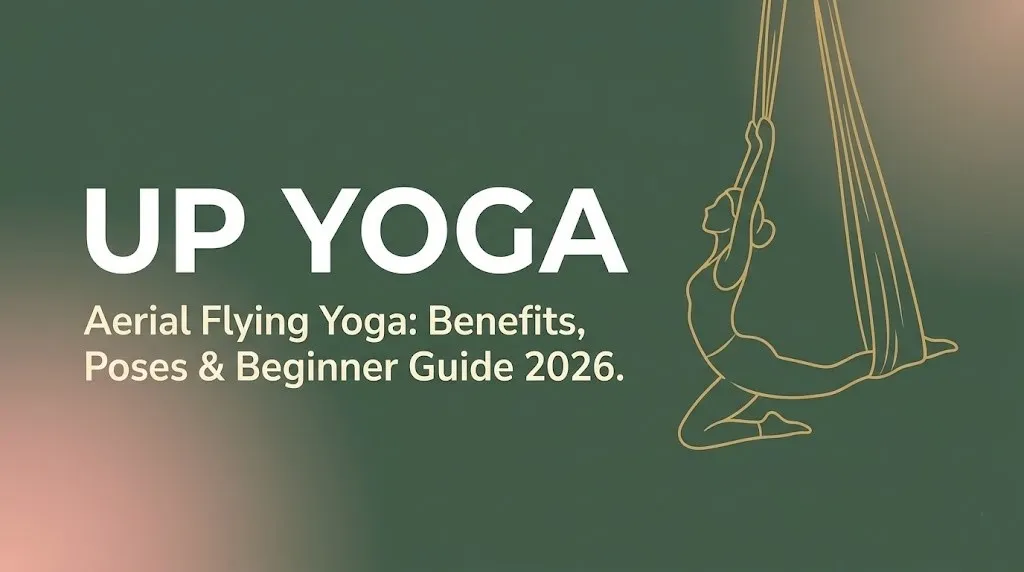
The proprioceptive challenge is also meaningfully different. Your brain is constantly recalibrating your body’s position in space when part of you is suspended. This activates the vestibular system more actively than floor-based yoga typically does, which builds a different quality of body awareness over time.
| Feature | Regular Mat Yoga | Up Flying Yoga |
|---|---|---|
| Gravitational relationship | Working with the ground | Partially or fully suspended |
| Spinal load | Weight-bearing in most poses | Decompressed in hanging positions |
| Proprioceptive demand | Moderate | High, due to suspension instability |
| Inversion accessibility | Difficult for beginners | Supported by hammock weight |
| Core engagement | Consistent throughout | Constant and often higher |
| Modification options | Blocks, straps, blankets | Hammock height and body position adjustments |
For people who have struggled to access inversions in traditional yoga, the hammock is genuinely helpful. Supported inversion in the hammock removes the load from the wrists and shoulders that headstands and handstands require on the mat.
Key Takeaway: Up flying yoga is not a gimmick version of regular yoga. The hammock changes the gravitational equation in ways that benefit spinal health, proprioception, and inversion access in ways mat practice alone cannot replicate.
Aerial Yoga Benefits: What Research Shows
Aerial yoga produces documented benefits across flexibility, core strength, cardiovascular conditioning, spinal health, and psychological wellbeing, and the evidence base has grown steadily since 2015.
A 2017 study published in Complementary Therapies in Medicine examined the effects of 12 weeks of aerial yoga practice on a group of adults with overweight and obesity. Researchers found measurable reductions in body fat percentage, improved cardiovascular endurance, and improved flexibility scores compared to a control group. The study noted that the novelty and engagement factor of aerial formats may support greater adherence than conventional exercise programs.
According to the American College of Sports Medicine, activities that combine cardiovascular effort, resistance through body weight, and flexibility work within a single session produce broader conditioning effects than single-mode exercise. Most aerial yoga classes meet all three criteria simultaneously.
Beyond the physical, aerial yoga delivers neurological benefits through its inversion component. When the body is inverted, blood flow to the brain increases temporarily. This circulatory shift has been associated with improved alertness, reduced mental fatigue, and positive mood effects, though researchers note these effects are short-term and do not substitute for cardiovascular exercise as a long-term brain health strategy.
Key documented benefits of aerial yoga include:
- Improved spinal flexibility: The hammock facilitates safe spinal traction without compressive load
- Core strength gains: Constant stabilization demands during suspension builds deep core musculature
- Cardiovascular conditioning: Active flow sequences in the hammock elevate heart rate to moderate-intensity thresholds
- Balance and proprioception: Suspension instability trains the vestibular and proprioceptive systems simultaneously
- Stress reduction: Inversion and supported reclined positions activate the parasympathetic nervous system
- Improved mood: Short-term mood elevation following practice, consistent with broader yoga research findings
What Muscles Does Aerial Yoga Work
Aerial yoga engages the core stabilizers, latissimus dorsi, trapezius, rhomboids, hip flexors, hamstrings, quadriceps, and shoulder girdle as its primary muscle groups, with the specific emphasis shifting based on the pose and hammock position.
The core is the constant. Every moment in the hammock, whether upright, reclined, or inverted, requires the transverse abdominis and obliques to manage the instability of a suspended surface. This is not the same as doing floor crunches. The stabilization demand is three-dimensional and continuous, more similar to Pilates reformer work than traditional yoga core exercises.
The upper body carries a different load than in mat yoga. Hanging positions ask the latissimus dorsi and trapezius to work as active stabilizers rather than just postural muscles. In aerial poses where the arms reach into the fabric, the rhomboids and posterior deltoids receive consistent engagement that mat yoga rarely produces with equivalent intensity.
The lower body engagement depends heavily on which poses are being practiced. Standing sequences using the hammock as a balance support primarily target the quadriceps, glutes, and hip stabilizers. Inverted and semi-inverted positions shift emphasis to the hamstrings and spinal erectors as the body manages its orientation.
Pose Tip:
- In any hanging position, engage the core before shifting your weight into the hammock. Think of “zipping up” from the lower belly before moving.
- Keep the shoulder blades gently drawn together and down to protect the shoulder joint from impingement during overhead grips.
- For beginners, keep the hips symmetrically placed in the hammock. Asymmetrical loading creates lateral spinal strain over time.
Modification: People with rotator cuff injuries should avoid overhead grip positions. Keep the hands lower on the fabric, at chest or waist height, to reduce shoulder girdle load while still engaging the core and lower body.
Aerial Yoga Poses for Beginners
The most accessible aerial yoga poses for beginners are those that keep the body close to the ground, use the hammock as support rather than full suspension, and do not require inversions.
Starting with supported standing poses gives new practitioners time to understand how the hammock responds to body weight before attempting any off-ground sequences. The fabric has more give than a mat or wall, so the nervous system needs a few sessions to calibrate.
Five beginner-appropriate aerial yoga poses:
- Supported Tadasana (Mountain Pose with hammock): Stand with the hammock at hip height. Rest both hands lightly on the fabric for balance. Practice rooting through the feet while the hammock provides light steadying support.
- Aerial Utkatasana (Chair Pose): Sit back into the hammock as if into a swing at hip height. The fabric cradles the hips. Hold for 3 to 5 breaths. Targets the quadriceps and glutes.
- Hammock Adho Mukha Svanasana (Downward-Facing Dog): Loop the hammock around the hips at mid-thigh height. Walk the feet back and press the hips up and back. The hammock decompresses the lumbar spine while the pose strengthens the shoulders and hamstrings.
- Supported Balasana (Child’s Pose): Drape the torso forward over a low hammock. Let the spine release downward with gravity. Excellent for lumbar decompression without any load.
- Hammock Savasana (Corpse Pose): Lie back in the hammock with it supporting the full back body. This reclined cocoon position is one of the most restorative positions in the aerial practice.
Modification for absolute beginners: Practice all of these with the hammock set lower, within 12 inches of the ground, so that you can place a foot down immediately if you feel unstable. Never practice inversions in your first session.
A Beginner Aerial Yoga Sequence to Try
A structured beginner aerial yoga sequence should run 30 to 45 minutes, begin with ground-level hammock familiarization, build through standing and seated supported poses, and close with restorative hammock recline.
Never rush the warm-up in aerial yoga. The vestibular system needs time to adjust to a suspended surface. Instructors and physical therapists generally recommend spending at least 5 to 8 minutes in supported upright positions before attempting any tilt or incline work.
To practice a beginner aerial yoga sequence:
- Begin standing. Set the hammock at hip height. Place both hands on the fabric. Take 5 slow Ujjayi pranayama (ocean breath) cycles.
- Move into Supported Tadasana (Mountain Pose). Press feet firmly into the floor. Relax the grip on the hammock gradually.
- Shift into Aerial Utkatasana (Chair Pose in the hammock). Sit the hips back into the fabric. Hold for 5 breaths.
- Stand and walk the feet back into Hammock Adho Mukha Svanasana (Downward-Facing Dog). Hold for 5 breaths. Walk feet forward and return to standing.
- Step one foot into the hammock at shin height. Practice Supported Vrksasana (Tree Pose). Hold 5 breaths each side.
- Lower the hammock slightly. Fold forward over it into Supported Balasana (Child’s Pose). Hold 8 to 10 breaths.
- Sit in the hammock. Lean back slowly until the fabric supports the full spine. Reach arms overhead if comfortable.
- Settle into Hammock Savasana (Corpse Pose). Stay for 5 to 10 minutes. Let the hammock hold all the body’s weight completely.
Modification for seniors or those with balance concerns: Keep both feet on the ground through steps 1 to 4. Only lift one foot in step 5 if you feel fully stable, and keep the hammock within arm’s reach at all times.
Key Takeaway: A beginner aerial yoga sequence works best when you spend the first third of class getting comfortable with how the hammock moves before attempting anything that takes both feet off the floor.
Spinal Decompression Yoga: How the Hammock Helps Your Spine
Spinal decompression in aerial yoga refers to the reduction of compressive load on the intervertebral discs and facet joints of the spine during hanging and inverted hammock positions. This is one of the most discussed and scientifically interesting aspects of up yoga practice.
Throughout most of the day, the spine is loaded. Sitting, standing, and walking all compress the vertebral column under body weight. The intervertebral discs act as hydraulic cushions between vertebrae, but sustained compressive load reduces their hydration and height over hours of activity. This is why most adults are measurably shorter at the end of the day than in the morning.
Hanging positions in the aerial hammock temporarily reverse this compressive pattern. When the hips are supported in the hammock and the legs hang freely, the lumbar spine receives traction force. When the body inverts partially or fully, the thoracic and cervical regions also experience this decompressive effect.
Research on inversion therapy more broadly (using inversion tables) suggests that lumbar traction reduces self-reported back pain in adults with disc-related lower back issues. A study published in the Journal of Alternative and Complementary Medicine found that combined yoga and traction-based approaches reduced lumbar pain scores more effectively than either intervention alone. Aerial yoga’s hammock decompression follows a similar mechanical principle, though the research specific to aerial formats is still developing.
Bold finding: The Spine Journal has noted that non-surgical spinal decompression techniques, including traction-based methods, can reduce intradiscal pressure significantly in carefully selected patient populations. Aerial yoga’s hanging positions create a comparable mild traction effect through body weight.
Safety note: People with spinal stenosis, spondylolisthesis, or recent disc surgery should discuss traction-based activities with a spine specialist before using a hammock for decompression work. The same caution applies to anyone with diagnosed vertebral fractures.
Aerial Yoga for Back Pain: What Actually Helps
Aerial yoga can reduce certain types of chronic lower back pain by decompressing the lumbar spine, strengthening the core stabilizers that support spinal posture, and reducing the muscular tension patterns that often underlie non-specific back pain. The key word is “certain types.”
Mechanical lower back pain, the kind caused by muscular tightness, postural stress, or mild disc compression, responds well to the combination of decompression and gentle strengthening that aerial yoga provides. The erector spinae, multifidus, and transverse abdominis all receive targeted engagement during hammock sequences, building the muscular corset that spines need for long-term stability.
The American College of Physicians’ 2017 clinical practice guidelines recommended non-pharmacological movement-based interventions, including yoga, as first-line treatments for chronic low back pain. Aerial yoga’s decompressive component adds a dimension that mat-based yoga alone does not provide.
Aerial poses that specifically help lower back pain:
- Hammock Adho Mukha Svanasana (Downward-Facing Dog with hammock hip support): Creates lumbar traction while engaging the posterior chain
- Supported Balasana (Child’s Pose draped over the hammock): Passively lengthens the lumbar erectors without compression
- Hammock Setu Bandha Sarvangasana (Bridge Pose): Strengthens the gluteus maximus and hamstrings, reducing load on lumbar extensors
- Partial inversion hang (hips in hammock, legs hanging): Produces gentle lumbar traction through lower body weight
Critical modification: For people with acute herniated discs or sciatica, full inversions in the hammock may worsen nerve compression, particularly if the inversion increases pressure on an already irritated disc. Staying in semi-reclined or gently traction positions rather than full inversions is generally the safer approach, and input from a physical therapist familiar with your specific diagnosis matters here.
Aerial Yoga and Anxiety: The Research Behind the Calm
Aerial yoga reduces anxiety through the same parasympathetic nervous system activation pathways documented in mat-based yoga, with the addition of novelty, play, and mild vestibular stimulation that appear to amplify mood-related outcomes. The combined effect is more than just relaxation.
According to a meta-analysis published in Frontiers in Psychiatry, yoga-based interventions produced statistically meaningful reductions in anxiety scores across multiple controlled trials. The effect was most pronounced in practices that combined breathwork with physical movement, both of which are foundational to aerial yoga sequences.
The inversion component adds a specific neurological element. Supported inversions increase blood circulation to the cerebral cortex temporarily. Research in Frontiers in Physiology has associated mild increases in cerebral blood flow with improved alertness, reduced fatigue, and short-term mood elevation. The hammock makes these positions accessible to people who could never safely practice mat-based headstands.
The “play” element of aerial yoga should not be dismissed. Psychological research consistently links novelty, mild challenge, and physical play with reduced cortisol levels and improved mood. The hammock triggers a playful physical curiosity in most practitioners that standard yoga formats rarely produce, particularly for adults who associate play primarily with childhood.
For people using aerial yoga specifically for anxiety management:
- Practice Ujjayi pranayama (ocean breath) throughout the entire session, especially during challenging or unfamiliar positions
- Prioritize the Hammock Savasana (Corpse Pose) cool-down. This is where parasympathetic consolidation happens.
- Three sessions per week produces more consistent nervous system regulation effects than one weekly class, based on general yoga and stress research patterns
- If anxiety is severe or related to a diagnosed condition, aerial yoga works best as a complement to treatment, not a replacement for it
Key Takeaway: Aerial yoga’s anxiety benefits come from three directions at once: the breathwork, the mild vestibular stimulation of suspension, and the play-like novelty of hammock movement. That combination is more than any single factor alone.
Is Aerial Yoga Safe for Beginners?
Aerial yoga is safe for most healthy beginners when practiced in a properly equipped studio with a qualified instructor, appropriate hammock height settings, and a structured introduction to the equipment before attempting any off-ground poses.
The safety profile differs from mat yoga in one important way. The consequences of an alignment error in a hammock are different from the same error on a mat. On the mat, a poorly executed pose strains a muscle. In the hammock, a poorly placed body position can result in a fall or a twisting load on the spine. This is why beginner classes in reputable studios keep the hammock low and the instructor close.
According to Yoga Alliance guidelines on specialty yoga formats, teachers working with suspended equipment should hold specific training that includes rigging knowledge, load-bearing assessment, and hands-on spotting technique. Before your first class, it is worth asking whether your instructor holds a 200-hour RYT credential plus specific aerial training from a recognized program.
What beginners can do to maximize safety in their first aerial yoga classes:
- Arrive early and ask the instructor to walk you through hammock adjustment
- Choose beginner-designated classes, not general level classes, for your first three sessions
- Never attempt an inversion without verbal instruction and physical spotting from the teacher
- Wear fitted clothing with no zippers, hardware, or exposed skin on the shoulders or hips. Exposed skin in the hammock creates friction burns. Hardware damages the silk.
- Tell the instructor about any neck, shoulder, or back issues before class starts
Bold safety note: The American College of Sports Medicine recommends that any new physical activity involving balance challenges and elevated positions be introduced gradually and under qualified supervision. This applies directly to aerial yoga.
Aerial Yoga Contraindications: Who Should Approach with Caution
Aerial yoga has specific contraindications rooted in physiology, not just general caution, and understanding why each condition matters helps practitioners make genuinely informed decisions.
The most frequently cited contraindication is glaucoma. During inversions, intraocular pressure (the fluid pressure inside the eye) increases. In healthy eyes, this temporary increase is inconsequential. In eyes with glaucoma, where the optic nerve is already under elevated pressure, inversion-induced pressure spikes can cause progressive damage. This is not a theoretical risk. Ophthalmologists consistently advise glaucoma patients against yoga inversions of any kind.
Other conditions that require caution or specific modification:
- Uncontrolled high blood pressure: Inversions increase cerebral blood pressure temporarily. If blood pressure is not well-managed medically, this spike warrants avoidance of full inversions. Semi-reclined hammock positions remain accessible.
- Pregnancy (second and third trimester): Full inversions are contraindicated. The growing uterus changes abdominal pressure dynamics, and falls risk increases with altered center of gravity. First-trimester participation should involve individual medical input.
- Vertigo or labyrinthine disorders: The vestibular system is strongly engaged in aerial practice. Active vestibular conditions may be aggravated by suspension and inversion.
- Recent surgeries: Any abdominal, spinal, or hip surgery within the past 12 months requires surgical clearance before aerial yoga participation.
- Osteoporosis (severe): Spinal loading in awkward positions carries fracture risk. Mild osteoporosis with qualified instructor guidance may be manageable; severe osteoporosis is a contraindication for most aerial formats.
- Carpal tunnel syndrome or wrist injuries: Overhead grip positions in the hammock load the wrists. Modify by keeping hands lower on the fabric or avoiding grip positions entirely.
| Condition | Aerial Yoga Risk | Recommended Approach |
|---|---|---|
| Glaucoma | Intraocular pressure spike during inversions | Avoid all full inversions |
| Uncontrolled hypertension | Cerebral blood pressure increase | Avoid inversions; upright and reclined positions accessible |
| Pregnancy (2nd and 3rd trimester) | Fall risk, abdominal pressure | Avoid inversions; seek specialist-led prenatal aerial class |
| Vertigo | Vestibular aggravation | Avoid aerial practice during active episodes |
| Recent surgery (within 12 months) | Wound stress, structural integrity | Obtain surgical clearance before participation |
| Severe osteoporosis | Fracture risk | Generally contraindicated in active aerial formats |
Aerial Yoga Equipment: What You Actually Need
The equipment for aerial yoga practice centers on three elements: the hammock itself, the rigging system that suspends it, and the anchor point that carries the load. Getting any of these wrong creates a genuine safety risk.
The aerial yoga hammock (also called aerial silk or yoga swing) is typically made from high-density nylon tricot or parachute nylon. The fabric must be rated for at least 450 to 600 pounds of dynamic load, not just static weight. Dynamic load ratings account for the sudden forces generated when a body shifts weight quickly, which regularly exceeds simple static body weight calculations.
The rigging system includes carabiners, daisy chains or extension straps, and sometimes spreader bars. Every component must carry a matching weight rating. A carabiner rated for static weight only is not appropriate for aerial yoga. Aerial-specific hardware carries a minimum rating of 2,000 pounds (approximately 900 kg) in most professional rigging standards.
| Equipment Item | Minimum Specification | Why It Matters |
|---|---|---|
| Aerial hammock fabric | 450 to 600 lbs dynamic load rating | Safety under dynamic body weight shifts |
| Carabiners | 2,000 lbs rated, aerial or climbing-grade | Prevents hardware failure under dynamic load |
| Daisy chain or straps | Matching load rating to carabiners | Full system is only as strong as the weakest point |
| Ceiling anchor (bolt) | Professional installation, structural engineer assessed | Carries all dynamic load from practice |
| Yoga mat | Standard non-slip mat beneath hammock | Provides landing surface for any dismount |
Never purchase cheap hammock kits without verified load ratings. The price difference between an adequately rated kit and an underrated one is small. The safety difference is not.
How to Set Up a Yoga Hammock at Home
Setting up a yoga hammock at home safely requires assessing your ceiling structure, using appropriate hardware, and understanding that not every ceiling can safely anchor an aerial hammock without professional assessment.
The first step is structural assessment. Standard residential drywall ceilings cannot support an aerial hammock without anchoring into a structural beam (joist). A ceiling joist assessment requires locating joists with a stud finder, confirming their span and depth, and ideally having a structural engineer or licensed contractor confirm they can handle dynamic loads of 400 to 600 pounds, which is the real load range when accounting for movement.
To set up a basic aerial yoga hammock at home:
- Use a reliable stud finder to locate ceiling joists in the room you plan to use.
- Confirm the joist material and depth. Standard residential lumber joists (2×8 or larger) in good condition can typically support hammock loads when properly anchored.
- Install two eye bolts with load-rated threads directly into the center of two parallel joists. Space them 18 to 24 inches apart for standard hammock width.
- Attach load-rated carabiners to the eye bolts.
- Connect the daisy chains or extension straps through the carabiners and adjust to your target hammock height (hip height for beginners).
- Attach the hammock to the straps according to the manufacturer’s rigging instructions. Each hammock brand uses a specific knot or loop system.
- Test the setup with gradual static weight before full practice. Sit in the hammock at low height for several minutes before any dynamic movement.
- Place a non-slip yoga mat directly beneath the hammock as a landing zone.
Safety requirement: If you have any doubt about your ceiling’s structural capacity, hire a licensed contractor or structural engineer to assess and install the anchor points. This is not optional caution. It is the minimum acceptable standard for any suspended practice.
Key Takeaway: The quality of your aerial hammock setup determines your safety absolutely. Never skip the structural assessment. A ceiling anchor failing mid-practice is not a minor inconvenience.
Aerial Yoga for Seniors: How to Adapt the Practice
Seniors can practice aerial yoga safely and with real benefit by adapting the format to prioritize low-height work, supported positions, and gradual progression rather than inversions or dynamic swinging movements.
The documented benefits of yoga for older adults are substantial. A study published in the Journal of Alternative and Complementary Medicine found that twice-weekly yoga practice for 12 weeks improved balance, flexibility, and self-reported quality of life in adults over 60. Aerial yoga can extend these benefits by adding spinal decompression and proprioceptive training that ground-based yoga does not provide with the same efficiency.
The specific adaptations that make aerial yoga appropriate for seniors include:
- Keep the hammock at hip height or just below. This allows one or both feet to touch the ground at any point during practice, eliminating fall risk.
- Avoid full inversions. Semi-reclined positions in the hammock deliver many of the circulatory and decompressive benefits without the blood pressure and intraocular pressure changes that full inversions produce.
- Prioritize the restorative hammock cocoon position. Lying fully supported in the hammock is deeply beneficial for joint recovery and nervous system regulation without any physical demand.
- Use slower transitions. Seniors with reduced vestibular sensitivity need more time between position changes to recalibrate. Rushing transitions is the primary fall risk in aerial yoga for older practitioners.
- Practice with a dedicated instructor who has specific experience with senior populations and aerial formats. This combination is rarer than standard aerial classes. It is worth seeking out.
Bone density considerations apply directly to seniors in aerial practice. People with diagnosed osteoporosis should avoid positions that apply sudden lateral or rotational loads to the spine. The hammock itself is not the risk; rapid position changes that twist the torso under load are.
Up Flying Yoga at Home Without a Hammock
You can replicate the core physical benefits of up flying yoga at home using ground-based yoga poses that produce comparable spinal decompression, core engagement, and proprioceptive challenge without any suspended equipment.
This is genuinely useful information for home practitioners who either cannot install a hammock or are not yet ready to invest in one. The hammock is a tool, not the practice itself. The physical outcomes it delivers are the goal.
Ground-based poses that replicate aerial yoga’s primary benefits:
- Viparita Karani (Legs-Up-the-Wall Pose): Produces mild circulatory inversion and lumbar decompression by elevating the legs. Hold 5 to 10 minutes. Place a folded blanket under the hips for deeper lumbar release.
- Supta Baddha Konasana (Reclined Bound Angle Pose) over a bolster: Mimics the chest-opening recline of hammock Savasana. The bolster lifts the thoracic spine, producing thoracic extension similar to the supported back-arch position in the hammock.
- Adho Mukha Svanasana (Downward-Facing Dog) with hips elevated on a yoga block: Creates a partial lumbar traction effect by shifting the pelvis higher than the shoulders. Use two blocks under the hands or one under the hips.
- Core plank variations on an unstable surface (yoga block under one hand): The instability mimics the proprioceptive demand of the hammock by requiring constant three-dimensional stabilization.
- Passive hanging from a pull-up bar (if available): Pure spinal traction for 20 to 30 seconds at a time is the closest ground-free analog to hammock decompression.
The National Center for Complementary and Integrative Health notes that yoga practiced consistently at home produces comparable long-term outcomes to studio-based practice for many health parameters. The equipment matters less than the consistency and quality of the movement itself.
Props for a home aerial yoga alternative setup:
- Yoga mat (essential)
- Two yoga blocks (cork preferred)
- One bolster or two rolled blankets
- One yoga strap
- A wall (free and infinitely adjustable)
Frequently Asked Questions About Up Yoga
What is up yoga and is it the same as aerial yoga?
Up yoga is a common informal name for aerial yoga, a practice where a suspended fabric hammock supports the body through yoga poses, stretches, and inversions above the ground.
The terms “up yoga,” “flying yoga,” and “anti-gravity yoga” are used interchangeably across different studios and regions, though AntiGravity Yoga is a specific branded system developed by Christopher Harrison.
All versions share the core feature of a suspended fabric prop that changes the gravitational relationship during practice.
Is aerial flying yoga good for beginners with no yoga experience?
Aerial yoga is accessible to beginners when the class is specifically structured for newcomers and the instructor provides individual guidance throughout.
Starting with a beginner-designated class, keeping the hammock at hip height, and avoiding inversions in the first few sessions makes the practice manageable and genuinely safe for most healthy adults.
Prior yoga experience helps but is not required. Learning how the hammock responds to body weight is the first skill, and it typically takes two to three sessions to feel comfortable.
What muscles does aerial yoga work the most?
Aerial yoga primarily works the core stabilizers, latissimus dorsi, trapezius, rhomboids, hip flexors, hamstrings, and quadriceps, with core engagement being constant throughout every position.
The degree of upper body versus lower body emphasis shifts based on the specific pose and whether the body is upright, inclined, or inverted in the hammock.
Because the hammock surface is unstable, the deep stabilizing muscles of the core and shoulder girdle are engaged at a higher level than in most mat-based yoga formats.
Can I set up an aerial yoga hammock safely at home?
You can set up a yoga hammock at home safely when ceiling joists are confirmed as load-bearing, hardware is properly rated for dynamic loads, and anchors are installed directly into structural framing rather than drywall.
A licensed contractor or structural engineer should assess any ceiling you are not certain about before installation, because hammock practice generates dynamic forces well beyond simple body weight.
The hammock fabric and all hardware should carry a minimum dynamic load rating of 450 to 600 pounds, and every component in the rigging system must meet the same standard.
Who should not do aerial yoga or up flying yoga?
People with glaucoma, uncontrolled high blood pressure, active vertigo, second or third trimester pregnancy, recent abdominal or spinal surgery, or severe osteoporosis should avoid aerial yoga inversions or the practice as a whole until cleared by an appropriate medical professional.
Glaucoma is a particular concern because inversions increase intraocular pressure, which can worsen optic nerve damage even from brief or repeated elevation.
Those with these conditions who still want to participate in a yoga practice should look for restorative or chair-based formats that keep the body upright and eliminate inversion entirely.
Your Next Step on the Mat (or in the Hammock)
The single most practical thing you can take from this guide is this: up yoga is not as intimidating as it looks and not as effortless as it appears on social media. It is real work that rewards consistency, patience, and respect for the equipment.
If you are ready to try it in a studio, book a beginner class, arrive early, and tell your instructor your experience level and any physical concerns before class starts. If you are practicing at home without a hammock, start with Viparita Karani (Legs-Up-the-Wall Pose) for ten minutes daily. It is the most accessible entry point to everything aerial yoga offers.
Give it three sessions before deciding whether it’s for you. The first is disorienting. The second starts to click. The third is where the practice actually begins.