Portland Yoga Project: Classes, Pricing & Guide 2026
The Portland Yoga Project is Portland, Maine’s most community-focused yoga studio, offering Vinyasa, Yin, Restorative, Barre, and specialty classes at two locations for all experience levels. If you want real, research-backed information about what PYP offers, who it serves best, and what to expect when you walk through the door, this guide covers all of it.
Research from the National Center for Complementary and Integrative Health consistently shows yoga’s benefits for stress, chronic pain, and nervous system function. But finding a studio where the teaching philosophy matches what the science supports is rarer than you’d think. The Portland Yoga Project has built its model around exactly that alignment.
This guide walks through every class type, the tiered pricing system, free community offerings, teacher training, online access, and specific guidance for beginners. You will leave with a clear picture of whether PYP fits your practice, your schedule, and your budget.
What Is the Portland Yoga Project?
The Portland Yoga Project is a yoga and movement studio in Portland, Maine, with two locations: 129 Newbury Street (PYP Downtown) and 449 Forest Avenue (PYP Forest). It operates with an explicit community mission: to make yoga accessible to real people, with imperfections, varying budgets, and diverse identities.
PYP describes its mission directly: to create a safer movement experience for real people, by real people. That phrase isn’t marketing language. It shapes every operational decision, from how teachers are paid to which community classes are offered at no cost.
The studio has been recognized as “Best of Portland” in 2019, 2021, 2023, and 2025, an independent measure of its standing in the local wellness community.
| Studio Detail | Information |
|---|---|
| Locations | 129 Newbury St (Downtown) and 449 Forest Ave |
| Class Styles | Vinyasa, Hatha, Yin, Restorative, Barre, Prenatal, Katonah, Grief, Queer, Trauma-Informed |
| Membership Tiers | Community, Standard, Support |
| Intro Offer | 30 days for $30 |
| Online Access | PYP Ondemand (on-demand library) |
| Free Classes | Monthly, every Wednesday at 7pm |
Both locations have amenities designed to fit practice into a regular day. Validated parking at Ocean Gateway Parking Garage is available near the Newbury Street location.
What Classes Does the Portland Yoga Project Offer?
The Portland Yoga Project offers ten or more distinct class formats, spanning active flow practices, deep stretch, functional strength, and emotionally restorative work. No two class types serve the same purpose, and PYP is intentional about distinguishing them.
This range matters. A study published in the International Journal of Yoga found that different yoga styles produce measurably different physiological outcomes: active styles like Vinyasa raise heart rate and build muscular endurance, while passive styles like Restorative yoga activate the parasympathetic nervous system and reduce cortisol levels more effectively.
Knowing which class you need on a given day is part of building a sustainable practice.
Class offerings include:
- Vinyasa flow: breath-linked dynamic movement sequences
- Hatha yoga: alignment-focused, slower-paced posture work
- Yin yoga: passive long-hold poses targeting fascia and connective tissue
- Restorative yoga: fully supported, prop-heavy relaxation and recovery
- Barre: ballet-inspired functional strength training
- Gentle flow: modified, lower-intensity movement for all bodies
- Rolling and mobility yoga: foam roller and movement integration
- Prenatal yoga: adapted sequences for pregnant practitioners
- Katonah yoga: geometric alignment system combining Hatha and Taoist principles
- Yoga Nidra: guided body-scan meditation, practiced lying down
All class formats welcome students from beginner through advanced. Teachers are trained to cue both entry-level and experienced students within the same session.
Vinyasa Yoga at the Portland Yoga Project
Vinyasa yoga is a style where breath and movement are synchronized, with each inhale and exhale linked to a specific transition or pose. It is the most active class format at PYP and the one most students start with.
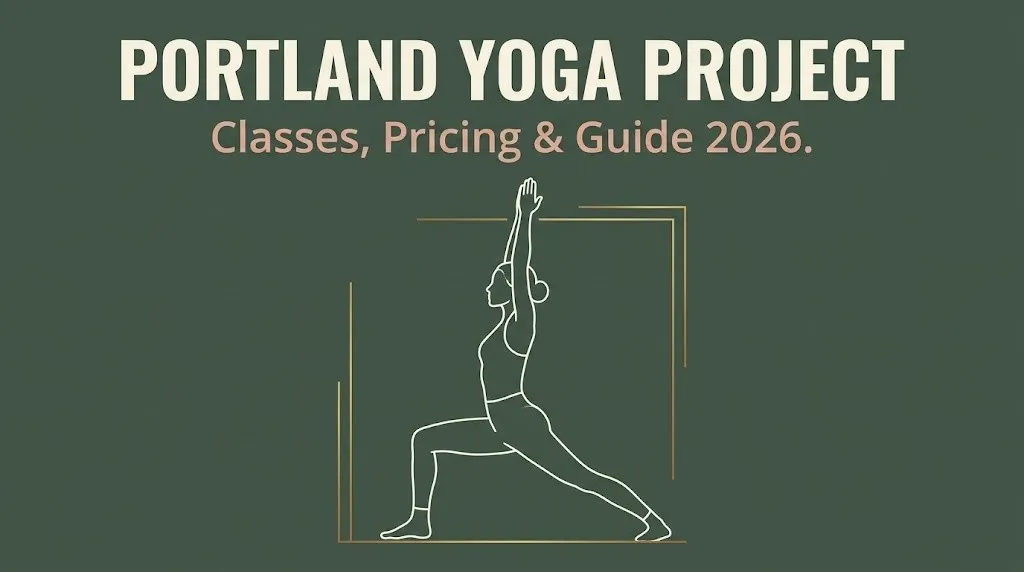
In a Vinyasa class, you will typically move through sequences that include Adho Mukha Svanasana (Downward-Facing Dog), Chaturanga Dandasana (Four-Limbed Staff Pose), Virabhadrasana I and II (Warrior I and II), and Bhujangasana (Cobra Pose). The primary muscles engaged are the hip flexors, hamstrings, deltoids, core stabilizers, and erector spinae.
The Harvard T.H. Chan School of Public Health notes that regular Vinyasa-style yoga practice can improve cardiovascular flexibility, muscular endurance, and respiratory efficiency in as little as 8 weeks.
To prepare for a Vinyasa class at PYP:
- Arrive 5 to 10 minutes early and introduce yourself to the teacher as a beginner if you are new.
- Set up your mat with one block on each side for support during standing poses.
- During Chaturanga Dandasana (Four-Limbed Staff Pose), keep the elbows tracking back along the ribs, not flaring out. This protects the rotator cuff.
- Move at your own pace. Child’s Pose, Balasana, is always available as a rest option.
- Stay for Savasana (Corpse Pose) at the end. This is not optional padding. It is where nervous system integration happens.
Modification note: Practitioners with wrist pain should perform weight-bearing transitions on fists or forearms to reduce wrist extension load.
Pose Tip:
- Lead with your breath, not your body. Movement follows the inhale or exhale, not the other way around.
- If you lose the breath, you’ve moved too fast. Slow down.
- Beginners: take one fewer Vinyasa per round than the teacher cues until your wrists and shoulders adapt.
Yin Yoga and Restorative Yoga at PYP
Yin yoga and Restorative yoga both involve stillness and long holds, but they are distinct practices with different physical targets. Yin yoga applies mild stress to fascia and connective tissue through passive, floor-based poses held for 3 to 7 minutes. Restorative yoga uses props to fully support the body and has no stress goal at all.
In Yin, poses like Supta Baddha Konasana (Reclined Bound Angle Pose) and Eka Pada Rajakapotasana (Sleeping Pigeon) work into the hips, thoracic spine, and inner thigh connective tissue. The National Center for Complementary and Integrative Health identifies passive stretching practices like Yin as beneficial for chronic low back pain and joint mobility in adults over 40.
In Restorative yoga, the same Supta Baddha Konasana is set up with a bolster under the spine, blocks under the knees, and a blanket over the body. The pose now stimulates the parasympathetic nervous system rather than stressing tissue. Heart rate drops. Cortisol decreases. Think of it like a reset switch for your nervous system after a high-demand week.
| Feature | Yin Yoga | Restorative Yoga |
|---|---|---|
| Hold duration | 3 to 7 minutes | 5 to 20 minutes |
| Physical target | Fascia, connective tissue | Nervous system, rest response |
| Prop use | Light (block, blanket) | Heavy (bolster, strap, blocks, blanket) |
| Intensity | Mild sustained stretch | Fully passive, no effort |
| Best for | Flexibility, joint health | Recovery, stress, illness, burnout |
Modification note: Yin yoga is not recommended during acute inflammatory arthritis flares. Restorative yoga is generally appropriate for almost all bodies, including those with chronic illness, postpartum recovery needs, or significant fatigue. If you have osteoporosis, inform your teacher before class, as some forward folds require modification.
Key Takeaway: Vinyasa builds strength and cardiovascular capacity; Yin targets fascia and joint health; Restorative activates the parasympathetic nervous system. Choosing the right class on a given day is its own form of body literacy.
Barre Classes at the Portland Yoga Project
Barre at PYP is a functional strength training class drawing from ballet technique, Pilates principles, and low-impact conditioning. It is not yoga in the traditional sense, but it shares PYP’s core value: all bodies, all levels, no performance pressure.
A typical barre class works the gluteus medius, gluteus maximus, quadriceps, gastrocnemius (calf), and deep hip rotators through small, isometric movements held at the point of fatigue. Unlike yoga, barre does not primarily target flexibility. It builds muscular endurance and postural stability.
The American College of Sports Medicine notes that low-impact strength training modalities like barre improve bone density markers and balance in women over 40, with particular benefit for those seeking joint-friendly conditioning alternatives.
Barre at PYP welcomes total newcomers. There is no ballet background required. No special footwear. Just a mat and, for some exercises, a chair or wall as support.
Modification note: Those with anterior knee pain or patellofemoral syndrome should avoid deep pliés (bent-knee holds) and instead perform shallower ranges of motion. Inform the teacher before class. They will cue a modification directly.
Portland Yoga Project Free Community Classes
The Portland Yoga Project offers free classes every Wednesday at 7pm, rotating through a monthly schedule that prioritizes underserved and underrepresented groups. These are not promotional introductions. They are genuine classes taught by PYP’s regular teaching staff at no charge.
The monthly free class rotation includes:
- 1st Wednesday: Queer Movement class
- 2nd Wednesday: Not Your Average Barre Class
- 3rd Wednesday: Trauma-Informed Yoga for Women
- 4th Wednesday: BIPOC Yoga
- Last Friday (by donation): Movement for Grief and Sound Bath and Nidra
This structure is part of PYP’s active commitment to economic and social access. The studio also offers yoga in Spanish and grief-specific programming, recognizing that barriers to yoga practice are often linguistic and emotional as well as financial.
These sessions are open to non-members. You do not need a membership, a class pass, or any prior relationship with the studio to attend a free class. Showing up is the only requirement.
Research published in Frontiers in Psychiatry found that community-based yoga programs reduce feelings of isolation and improve mental health outcomes in socially marginalized populations, with effects comparable to individual therapeutic interventions.
Queer Yoga and Grief Yoga at the Portland Yoga Project
Queer yoga and grief yoga are two of PYP’s most distinctive offerings, and both deserve a real explanation rather than a line in a class list.
Queer Movement at PYP is a class designed specifically to affirm LGBTQ+ practitioners. This matters because research from the Journal of Alternative and Complementary Medicine has found that LGBTQ+ individuals experience higher rates of anxiety, depression, and physical tension patterns related to minority stress. A class environment that actively centers queer identity, rather than simply “tolerating” it, changes the experience of the practice physiologically. When the nervous system feels safe, the body can actually release.
Grief yoga, offered monthly at PYP in partnership with sound bath and Yoga Nidra, uses breath, movement, and somatic awareness to support people experiencing bereavement, loss, or chronic grief. It is not therapy, and PYP does not position it as such. But the connection between unprocessed grief and physical tension patterns in the chest, throat, and hip flexors is well-documented in somatic medicine.
Modification note: Grief yoga is appropriate for anyone experiencing loss, including loss of a relationship, identity, health, or a person. You do not need to be in acute bereavement to benefit. Practitioners who become emotionally overwhelmed during class are always welcome to lie in Savasana (Corpse Pose) for the remainder of the session. No explanation is needed.
Key Takeaway: Free community classes at PYP are not a marketing tactic. They are a structural commitment to access, and they represent some of the most clinically supported class formats on the schedule.
Trauma-Informed Yoga in Portland, Maine
Trauma-informed yoga is a teaching methodology that modifies standard yoga instruction to avoid inadvertently triggering stress responses in people with trauma histories. At PYP, the third Wednesday free class specifically uses this approach.
What makes yoga “trauma-informed” is not the poses. It is the language the teacher uses and how they manage physical space. Trauma-informed teachers offer choices rather than commands. They say “you might consider” instead of “now do.” They do not touch students without explicit consent. They explain what is coming before it happens, so nothing feels abrupt or confusing.
Research published in Frontiers in Psychiatry found that trauma-sensitive yoga programs reduced PTSD symptom severity in survivors of interpersonal violence, with effects maintained at 6-month follow-up. The study noted that standard yoga instruction, without trauma-informed modification, could sometimes worsen symptoms in this population.
Key elements of trauma-informed instruction at PYP:
- Invitational language (no commands)
- Consent-based hands-on adjustment (teachers ask before touching)
- Predictable class structure (no surprise transitions)
- Always-available exits (Child’s Pose, Balasana, or rest are presented as legitimate choices, not failures)
- No performance expectation or visible comparison
Modification note: If you have a trauma history and are new to yoga, trauma-informed or restorative classes are generally recommended as a starting point. Vigorous Vinyasa classes can feel activating rather than calming when the nervous system is dysregulated.
Portland Yoga Project Tiered Pricing
The Portland Yoga Project uses a three-tier pricing model where you choose what to pay based on your own financial situation. There is no means testing. No proof required. You assess your circumstances and select accordingly.
The three tiers are:
- Community tier: slightly below the local industry standard. PYP suggests this for people who are under-employed, disabled, or otherwise face financial barriers to access.
- Standard tier: the local market rate for yoga and barre classes. For people who are securely employed, can afford occasional travel, and have financial safety nets.
- Support tier: slightly above standard cost. For people with greater financial resources who want to subsidize access for community members.
This is a sliding scale model with a trust-based structure. It is relatively uncommon in the yoga industry, where most studios charge a flat rate or offer periodic “scholarship” spots as exceptions rather than policy.
Pricing notes:
- Drop-in sessions expire after 14 days.
- 5-class passes expire after 2 months. Unused classes are forfeited.
- Unlimited monthly memberships auto-renew. You need to cancel using the studio’s cancellation form, with at least 14 days notice.
- Membership is valid at both locations.
An intro special of 30 days for $30 is available for new students. This is one of the most accessible entry points of any yoga studio in Maine and worth considering before committing to a monthly membership.
Key Takeaway: PYP’s tiered pricing is one of the more genuinely ethical pricing models in the local wellness industry, designed to let each person self-select fairly rather than treating reduced rates as charity.
Portland Yoga Project Membership Options
A Portland Yoga Project membership gives you unlimited class access at both locations, access to the PYP Ondemand library, and partner discounts with local businesses including Jibe and Evo. Membership is structured in two formats: unlimited monthly (auto-renewing) and class packs (5-class passes).
Both formats use the same three-tier pricing structure. The only difference between tiers is the dollar amount. All members receive identical access to classes, events, amenities, and perks regardless of which tier they select.
| Option | Best For | Expiration |
|---|---|---|
| Unlimited Monthly Membership | Practicing 3+ times per week | Monthly, auto-renews |
| 5-Class Pass | Occasional or mixed schedules | 2 months from purchase |
| Drop-In | Visitors or irregular schedules | 14 days from purchase |
| Intro Special (30 days / $30) | New students only | 30 days |
Membership perks include discounted massage services, botanical wellness discounts, and the ability to bring one guest who has never visited PYP before (one guest pass per person per membership period).
Members who want to add PYP Ondemand (the on-demand library) should email the studio directly to have access set up. It is not automatically included with all membership types. Confirming this detail before purchase saves confusion later.
Portland Yoga Project Beginner Guide
The Portland Yoga Project is genuinely beginner-friendly, not just in stated policy but in practice design. Every class format explicitly welcomes students who have never practiced before.
What to bring to your first class at PYP:
- A yoga mat (mats are available to borrow or rent if you don’t have one yet)
- Comfortable, non-restrictive clothing
- A water bottle
- No prior experience or flexibility required
Before your first class:
- Book online through the Mindbody app or PYP’s scheduling page. Popular classes fill quickly, especially evenings.
- Arrive 10 minutes early. This gives you time to speak with the teacher before class starts.
- Tell the teacher you are new. This is the single most useful thing a beginner can do.
- Choose a spot where you can see the teacher clearly. Middle of the room, slightly off-center works well.
- Set up two yoga blocks beside your mat. Even if you don’t think you’ll use them, having them available removes one decision during class.
Modification note: You will not be expected to match every pose the teacher or other students demonstrate. Balasana (Child’s Pose) is always available as a resting option between sequences. Using it is a sign of body awareness, not a sign of weakness.
The National Center for Complementary and Integrative Health recommends that new yoga students start with slower-paced classes before moving to vigorous flow, particularly those with any existing joint concerns, high blood pressure, or spinal conditions. Yin, Gentle Flow, or Restorative are often better entry points than Vinyasa for those with these concerns.
Portland Yoga Project Teacher Training 2026
The Portland Yoga Project offers both 200-hour and advanced 300-hour yoga teacher training programs, with 2026 dates running from January through the year. The 200-hour training covers pose mechanics, yoga philosophy, historical and cultural roots, teaching methodology, and the social context of yoga practice, including an explicit focus on decolonization within the yoga industry.
The 300-hour advanced training, co-facilitated by Kelley Voegelin and Victoria Rutledge with support from PYP’s full teaching staff, is designed for graduates of any 200-hour program who want to deepen their personal practice and teaching confidence. It runs September 9 through December 13, 2026.
Both programs use PYP’s tiered pricing model:
- Support tier: $395
- Standard tier: $350
- Community tier: $305 (per event/module, depending on format)
Yoga Alliance registration is a component of the training pathway. PYP’s training is framed as a deeply experiential program: you will move, discuss, and practice within each session. It is not primarily a lecture program.
Modification note: The advanced training requires a completed 200-hour foundation. It is not suitable as a first-time training. Students who have completed a different studio’s 200-hour program are eligible to apply.
Key Takeaway: PYP’s teacher training is one of the more philosophically substantive 200-hour programs available in Maine, with explicit attention to cultural roots, justice, and the lived experience of yoga, not just anatomy and sequencing.
Portland Yoga Project On-Demand Classes
PYP Ondemand is the Portland Yoga Project’s digital class library, accessible through a separate platform at pypondemand.com. It gives members and subscribers access to recorded Vinyasa, Yin, Restorative, Barre, and specialty classes from PYP’s teaching staff.
On-demand access is not automatically bundled with standard memberships. Members need to contact the studio directly by email to have their Ondemand account activated. This is worth doing at the start of a membership rather than discovering later.
Benefits of PYP Ondemand include:
- Flexibility to practice outside studio hours
- Access to the same class formats as in-studio
- Ability to repeat or revisit specific classes
- Useful for travel, illness, or weather-related scheduling conflicts
PYP’s class hours in-studio run Monday through Friday from 6:30am to 8pm, Saturday 8:30am to 12pm, and Sunday 8:30am to 7pm. Ondemand fills gaps outside those windows or for practitioners who work variable schedules.
Research from the Journal of Alternative and Complementary Medicine found that home-based and on-demand yoga programs produce comparable stress-reduction and flexibility outcomes to studio-based instruction when practiced with equivalent frequency. Consistency matters more than location.
Is the Portland Yoga Project Right for You?
The Portland Yoga Project is the right fit for students who want a technically sound, community-grounded practice in a studio that takes both yoga science and social justice seriously. It is particularly strong for beginners, for LGBTQ+ practitioners, for people using yoga to manage grief, stress, or chronic tension, and for those who have felt unwelcome in more performance-driven studio environments.
It may not be the best fit for you if you are specifically seeking a practice-focused Ashtanga or Bikram style, a studio with a strict classical Sanskrit-lineage approach, or a very large facility with extensive on-site amenities.
| Who Benefits Most | Why PYP Fits |
|---|---|
| Beginners | All-levels design, no judgment culture |
| LGBTQ+ students | Explicit affirmation, queer-specific classes |
| Grief or trauma survivors | Monthly free specialty classes, trauma-informed instruction |
| Budget-conscious practitioners | Tiered pricing, intro special, free Wednesday classes |
| Intermediate Vinyasa students | Multiple flow classes weekly, skilled teaching staff |
| Those wanting online access | PYP Ondemand library available |
| Teacher training aspirants | 200-hour and 300-hour programs, Yoga Alliance-aligned |
The studio’s Best of Portland recognition across four separate years reflects consistent community trust. For most Portland-area residents beginning or returning to a yoga practice, PYP offers the most accessible, well-rounded, and ethically structured option available in 2026.
Key Takeaway: PYP stands out not because of a single class type but because of the coherence between its philosophy, its pricing model, its community offerings, and the quality of its teaching staff across all formats.
Frequently Asked Questions About the Portland Yoga Project
What yoga styles does the Portland Yoga Project offer?
The Portland Yoga Project offers Vinyasa, Hatha, Yin, Restorative, Gentle Flow, Barre, Prenatal, Katonah, Yoga Nidra, Rolling and Mobility, and specialty formats including grief yoga and trauma-informed yoga. Most classes run 45 to 75 minutes and welcome all experience levels. You can view the full schedule and register through the Mindbody platform linked on PYP’s website.
How much does it cost to take classes at the Portland Yoga Project?
The Portland Yoga Project uses a three-tier pricing model where you choose what to pay based on your financial situation: Community (below standard), Standard (local market rate), and Support (above standard). New students can access the 30-day intro special for $30, which is one of the lowest entry points in Maine’s yoga studio market. Drop-in sessions, 5-class passes, and unlimited monthly memberships are all available with tiered pricing applied to each.
Is the Portland Yoga Project good for beginners?
Yes, the Portland Yoga Project is well-suited for beginners at every class level, with teachers trained to offer modifications and all-levels cueing within each session. Gentler starting points like Yin, Gentle Flow, or Restorative yoga are often recommended for those with joint concerns, limited mobility, or anxiety around a first class. Arriving 10 minutes early and telling the teacher you are new is the single most effective step a first-time student can take.
What are the free community classes at the Portland Yoga Project?
Free classes at PYP run every Wednesday at 7pm on a rotating monthly schedule, covering Queer Movement, Barre, Trauma-Informed Yoga for Women, and BIPOC Yoga. A by-donation Movement for Grief and Sound Bath and Nidra session also runs on the last Friday of each month. No membership or prior booking is required for most free classes. These are open to the public.
Does the Portland Yoga Project offer online yoga classes?
Yes, PYP Ondemand provides access to a recorded class library covering Vinyasa, Yin, Restorative, Barre, and specialty formats. Online access is separate from standard studio membership and requires email activation through the studio. Research indicates that on-demand yoga practice produces comparable outcomes to in-studio sessions when practiced with similar frequency and intentionality.
Choosing a yoga studio is simpler than most people make it. Ask two questions: does the teaching quality match your needs, and does the culture feel like somewhere you can actually show up? For a wide range of students in Portland, Maine, the Portland Yoga Project answers both.
Start with the 30-day intro special. Use a Wednesday free class first if you want to try before committing to anything. Pick the class format that fits where you are right now, not where you think you should be. That might be a beginner Yin session on a Thursday evening or a free grief yoga night on a Wednesday.
The practice meets you where you are. PYP’s job, and its consistent track record, is to make that entry point as wide as possible.