Yoga Wheel: Full Guide to Benefits, Uses and Sizes 2026
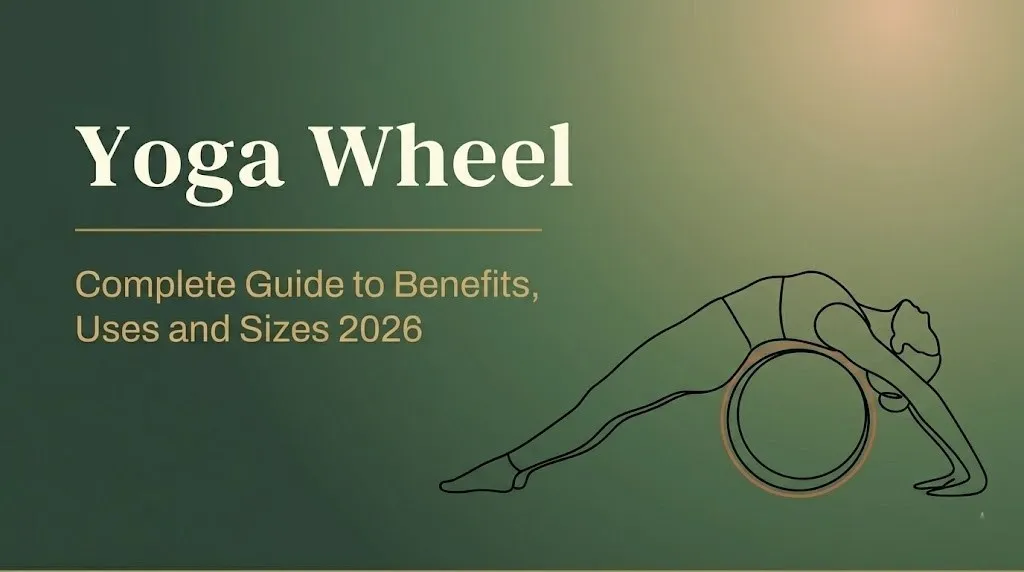
A yoga wheel is a circular, hollow prop made from rigid materials like ABS plastic or cork, typically 10 to 15 inches in diameter, used to support and deepen backbends, improve thoracic mobility, stretch the hip flexors, and assist practitioners in poses that require spinal flexibility they have not yet developed. It is one of the most functionally specific yoga props available, and it genuinely works differently from a block or bolster.
Back pain affects a large portion of the adult population. According to the National Center for Complementary and Integrative Health (NCCIH), lower back pain is one of the most common conditions for which adults seek complementary approaches, including yoga. Prop-assisted spinal extension work, of which the yoga wheel is one application, is supported by physical therapy frameworks including prone extension protocols for thoracic and lumbar mobility.
This guide covers what the yoga wheel actually is and how it works mechanically, the specific benefits backed by evidence, step-by-step exercises for beginners through advanced practitioners, how to choose the right size and material, how it compares to a foam roller, who should avoid it, and how to use it safely if you are a senior or have back concerns.
Yoga Wheel: What It Is and How It Works Mechanically
A yoga wheel is a hollow circular prop designed to be placed under the spine, hands, or feet during yoga practice, providing curved surface support that promotes gradual, segmental spinal extension.
The key word is segmental. A flat prop like a yoga block creates a single-point fulcrum that concentrates spinal extension at one level. The yoga wheel’s curved surface distributes the extension load across multiple vertebral segments simultaneously. Think of it like the difference between bending a garden hose over a sharp edge versus draping it over a smooth rounded rock. The rounded surface creates a gradual, controlled arc rather than a concentrated bend.
This mechanical principle is the reason yoga teachers and physical therapists find the wheel useful for thoracic spine mobilization. The thoracic spine, comprising the middle twelve vertebrae, tends to become stiff in people who sit for long hours. The wheel’s curve gently coaxes the thoracic segments into extension position without forcing a single level to do all the work.
The wheel is hollow, which affects how it performs under body weight. Most quality wheels support between 300 and 500 pounds of load when manufactured from ABS plastic or similar materials. The outer surface is typically wrapped in TPE foam or cork for grip and cushioning.
Pose Tip:
- Start with the wheel positioned in the mid-thoracic region (approximately the middle of the shoulder blades) rather than the lower back for your first session.
- Move slowly. The wheel rolls, and your nervous system needs time to trust the surface beneath you.
- Have a yoga mat beneath the wheel at all times to prevent it from sliding on hard floors.
What Is a Yoga Wheel Used For?
A yoga wheel is used to support and progressively deepen backbends, stretch the thoracic spine, open the chest and shoulder girdle, lengthen the hip flexors, assist in inversion preparation, and provide a balance challenge for core strengthening.
That is a broader range of applications than most people expect from one prop. The wheel is not a single-use tool. Its usefulness depends heavily on how the practitioner positions it and what they are trying to achieve.
The most common uses, from most to least frequent in yoga practice:
- Thoracic spine extension support: Lying over the wheel to open the mid-back and reverse thoracic kyphosis (forward rounding of the upper back).
- Backbend deepening: Supporting the spine during Ustrasana (Camel Pose), Matsyasana (Fish Pose), and preparation for Urdhva Dhanurasana (Wheel Pose/Full Backbend).
- Hip flexor stretching: Placing the wheel behind the back foot in a low lunge position to increase the range of hip extension.
- Shoulder opening: Rolling the hands or shoulders over the wheel to increase overhead mobility.
- Core engagement: Placing the shins or feet on the wheel during plank variations to create instability that challenges the transversus abdominis and obliques.
- Inversion preparation: Using the wheel as a foot support during wall-assisted handstand prep.
Modification for beginners: The thoracic extension drape is the safest and most immediately accessible use for first-time practitioners. No balance challenge, no arm strength required, and the benefit is tangible within minutes.
Yoga Wheel Benefits: What the Research and Practice Support
The documented benefits of regular yoga wheel use include improved thoracic mobility, reduced thoracic kyphosis, increased chest wall flexibility, lengthened hip flexors, and enhanced proprioceptive awareness during balance training.
Peer-reviewed research on the yoga wheel specifically is limited, but the underlying physiological principles are well supported. A study published in the Journal of Bodywork and Movement Therapies found that thoracic spine manipulation and mobilization interventions produced measurable improvements in thoracic range of motion and reduced upper back stiffness in sedentary office workers over a six-week protocol. The yoga wheel produces a passive thoracic mobilization effect through a similar mechanical pathway.
The NCCIH has published multiple reviews noting that yoga broadly reduces self-reported back pain and improves functional mobility in adults with chronic lower back discomfort. Prop-assisted yoga that supports spinal extension without requiring the practitioner to generate the force independently is particularly relevant for beginners and people with pain-related movement avoidance.
Documented benefits of yoga wheel practice:
- Increased thoracic spine extension range of motion over consistent use
- Reduced forward head posture and thoracic kyphosis in office workers and sedentary populations
- Lengthened pectoralis major and anterior shoulder girdle from chest-opening drapes
- Greater hip flexor and psoas length from supported lunge positions
- Improved core stability through balance-challenged plank and pike variations
- Reduced reported lower back stiffness through segmental spinal extension work
- Better body confidence in approaching deeper backbends for intermediate practitioners
Modification: Practitioners who cannot yet tolerate the full weight of their spine on the wheel can begin with a partially inflated or padded wheel alternative, or practice thoracic extension over a rolled yoga mat before transitioning to the wheel.
Key Takeaway: The yoga wheel works through a biomechanical principle no flat prop replicates: its curved surface distributes spinal extension across multiple vertebral segments simultaneously, making it genuinely different from a block, bolster, or foam roller for thoracic mobilization.
Yoga Wheel for Back Pain: How It Works and What to Expect
A yoga wheel can provide relief for upper and mid-back stiffness by gently mobilizing the thoracic spine through supported extension, but it is not appropriate for all types of back pain and should be used carefully by anyone with lumbar spine conditions.
The back pain most likely to respond well to yoga wheel use is thoracic stiffness and upper back tightness, particularly in people who spend long hours seated at a desk. This type of discomfort typically comes from a combination of thoracic kyphosis, shortened pectoralis major and anterior shoulder muscles, and weak thoracic erector spinae. The wheel addresses all three through supported passive extension.
Lower back pain is more complex. For practitioners with lumbar disc herniation that is extension-tolerant, gentle wheel-supported thoracic extension can be beneficial by distributing movement load away from the lumbar spine and into the more restricted thoracic region. For practitioners with lumbar spinal stenosis, spondylolisthesis, or extension-intolerant disc presentations, any prop that encourages spinal extension, including the yoga wheel, can worsen symptoms. A physical therapist can assess directional preference before a practitioner begins extension-based exercises.
To use the yoga wheel for thoracic back tension:
- Sit on your mat with the yoga wheel positioned horizontally behind you, touching the back of the pelvis.
- Place both hands behind your head or cross your arms over your chest.
- Gently lean back so the wheel contacts the mid-thoracic region, roughly between the shoulder blades.
- Let gravity slowly extend the thoracic spine over the wheel. Breathe slowly and allow the extension to deepen over 5 to 8 breath cycles.
- To move the wheel to a different spinal level, press your feet into the floor and slightly roll forward or backward.
- When finished, press the feet into the floor, engage the core, and roll to one side before sitting up.
Safety note: Never roll the wheel under the lumbar spine (lower back) as a first approach. The lumbar curve is not designed for this load distribution pattern without thorough warm-up and practitioner experience.
How to Use a Yoga Wheel: Step-by-Step Exercises for Beginners
The best starting point for yoga wheel beginners is the supine thoracic drape, followed by a supported fish pose, and then a standing backbend with the wheel between the hands and a wall.
These three exercises require no prior yoga experience, no balance skill, and no significant strength. They are appropriate for the first session with the wheel and build the familiarity and body awareness needed for more dynamic applications.
Exercise 1: Supine Thoracic Drape
To practice the thoracic drape:
- Sit in front of the wheel with it directly behind your lower back.
- Lean back and position the wheel at mid-thoracic level (between the shoulder blades).
- Extend both arms out to the sides or overhead, palms facing up.
- Allow your head to relax back if the neck feels comfortable.
- Breathe slowly for 5 to 10 breath cycles. Let the weight of the arms and head deepen the extension passively.
- Roll gently to one side to exit. Never sit straight up from this position.
Exercise 2: Supported Matsyasana (Fish Pose)
To practice supported Fish Pose with the wheel:
- Sit with your legs extended. Place the wheel behind you at the level of the lower shoulder blades.
- Lie back over the wheel. The wheel supports the thoracic spine and the back of the head rests on the mat or on a folded blanket.
- Arms rest alongside the body or extend overhead.
- Hold for 5 to 8 breath cycles. Exit by rolling to one side.
Exercise 3: Standing Backbend Against a Wall
To practice standing backbend:
- Stand facing away from a wall, approximately one foot from it.
- Hold the yoga wheel with both hands and lift it overhead.
- Press the wheel against the wall behind you. Lean gently into the wheel with the upper back.
- Hold for 3 to 5 breath cycles. Stand upright slowly on an exhale.
Modification for all three exercises: Practitioners with neck sensitivity can place a folded blanket under the head during any supine exercise to prevent cervical hyperextension.
Yoga Wheel Poses for the Thoracic Spine and Chest Opening
The yoga wheel’s most clinically meaningful application is in thoracic spine mobilization and chest opening, addressing the forward rounding and anterior shoulder tightness common in sedentary adults.
Thoracic kyphosis is the clinical term for excessive rounding of the upper back. According to a review in the Spine Journal, increased thoracic kyphosis is associated with reduced respiratory capacity, greater risk of vertebral fractures in older adults, and decreased shoulder mobility. Exercises that encourage thoracic extension address this pattern directly.
The yoga wheel allows passive thoracic extension because the practitioner’s body weight creates the opening force. The practitioner does not need to actively generate the backbend through muscular effort. This makes it accessible to people who cannot yet perform Urdhva Dhanurasana (Full Wheel Pose) or strong Ustrasana (Camel Pose) independently.
Key chest and thoracic opening exercises with the yoga wheel:
- Supine thoracic drape (as described in the previous section): Targets mid-thoracic segments, C7 to T6 region approximately.
- Supported Matsyasana (Fish Pose): Targets upper thoracic and cervicothoracic junction with appropriate prop placement.
- Supported Ustrasana (Camel Pose): Hold the wheel between both hands while kneeling in the camel position. The wheel provides stability as you lean back, reducing the balance demand.
- Pectoralis stretch over wheel: Lie prone with the wheel under the chest, arms extended forward. Allow the chest to sink toward the floor over the wheel.
Modification for tight chest and rounded shoulders: Begin with the wheel placed higher toward the upper thoracic region rather than the mid-back. Upper thoracic extension is typically less restricted and more comfortable as a starting point.
Key Takeaway: The yoga wheel’s primary evidence-backed application is thoracic spine mobilization for people with desk-related upper back stiffness and forward rounding. Start there before attempting any dynamic or balance-based wheel exercises.
Yoga Wheel Exercises for Hip Flexors and Lower Body Flexibility
The yoga wheel is an effective tool for lengthening the hip flexors, specifically the psoas and iliacus, through supported lunge positions that allow a deeper, more stable hip extension stretch than floor-based lunges typically provide.
The hip flexors are among the most chronically shortened muscle groups in people who sit for long hours. Think of the psoas like a rubber band that has been held in a compressed position for eight hours every workday. It does not simply spring back to full length during a short evening stretch. It needs sustained, supported lengthening over time. The yoga wheel provides a stable prop that allows the practitioner to sink deeper into hip extension without needing the balance and strength a freestanding deep lunge requires.
To practice a supported hip flexor lunge with the wheel:
- Come to a low lunge position with the right knee on the mat, right shin resting on the wheel behind you.
- The wheel rolls gently under the shin, allowing the right hip to extend further than a standard floor lunge.
- Keep the left foot flat on the mat, left knee tracking over the left ankle.
- Maintain an upright torso. Place hands on the left thigh or extend arms overhead.
- Hold for 5 to 8 breath cycles. The hip extension sensation should be in the front of the right hip, not the lower back.
- Carefully step the right foot forward to exit. Repeat on the other side.
Primary muscles lengthening: psoas, iliacus, rectus femoris, anterior hip joint capsule.
Modification for knee sensitivity: Place a folded blanket under the knee on the mat before beginning. The wheel under the shin remains in place. This reduces direct knee pressure on the mat significantly.
Modification for balance difficulty: Place one hand on a wall beside you throughout the hold.
Yoga Wheel for Shoulder Opening and Upper Body Mobility
The yoga wheel supports shoulder opening by providing a stable curved surface against which the practitioner can extend the arms overhead, creating passive lengthening of the pectoralis major, anterior deltoid, and biceps brachii without requiring active overhead strength.
Shoulder tightness in the anterior compartment is one of the most common complaints in yoga practitioners and sedentary adults alike. When the chest is chronically shortened, the glenohumeral joint’s internal rotation tendency increases, reducing available overhead range of motion and contributing to the forward head posture pattern.
To practice shoulder opening with the yoga wheel:
- Kneel on the mat and place the yoga wheel on the floor directly in front of you.
- Extend both arms and place the hands on the top of the wheel, shoulder-width apart.
- Allow the hips to shift back toward the heels while the arms remain on the wheel, creating a prayer-stretch variation that opens the thoracic spine and anterior shoulder.
- Hold for 5 to 8 breath cycles. The sensation should be across the upper chest and the front of the shoulders.
- Walk the hands back and sit upright on an exhale to exit.
An alternative: Place the wheel against a wall. Stand facing the wall and place both forearms on the wheel. Hinge forward from the hips to create a shoulder and thoracic opening stretch. This variation is particularly effective for the latissimus dorsi and thoracic extensors simultaneously.
Modification for rotator cuff sensitivity: Reduce the forward reach of the arms. A smaller range of motion still delivers the anterior shoulder lengthening effect without loading the rotator cuff at its end range.
Best Yoga Wheel for Back Pain: What to Look for When Buying
The best yoga wheel for back pain is one with a diameter matched to your torso height, a load capacity above your body weight, a non-slip outer surface, and a core material rigid enough to not deform under spinal load.
These criteria matter more than brand name. A yoga wheel that bends or wobbles under your spine is both uncomfortable and unsafe. A wheel that is too large for your torso will not position correctly under the thoracic spine. A slippery surface makes every exercise harder and less controlled.
| Feature | What to Look For | Why It Matters |
|---|---|---|
| Diameter | 10 to 15 inches (matched to torso) | Affects where the wheel sits on the spine |
| Core material | ABS plastic or polycarbonate | Must not deform under body weight |
| Outer surface | Cork or TPE foam (non-slip) | Prevents sliding; provides cushioning |
| Load capacity | 300 to 500 pounds minimum | Safety under full body weight |
| Width | 5 to 6 inches | Wider wheels provide more lateral stability |
| Padding thickness | 0.5 to 1 inch minimum | Reduces pressure on spinous processes |
| Price range | $30 to $80 for quality options | Budget wheels often lack rigid core |
Cork wheels are the premium option. Cork is naturally non-slip, temperature-neutral, and sustainable. They are also heavier, which some practitioners find more stable.
PVC or ABS wheels with TPE foam covering offer a lighter weight option at lower cost. These are appropriate for most beginners and intermediate practitioners.
Modification: Practitioners with highly prominent vertebral spinous processes (the bony bumps you feel along the center of the back) may find that additional padding over the wheel is needed. A thin yoga mat folded once over the wheel adds cushioning without significantly changing its functional diameter.
Key Takeaway: Wheel diameter matters more than any other buying criterion. A wheel that does not match your torso length will not sit at the right spinal level regardless of how high-quality its materials are.
What Size Yoga Wheel Do I Need?
The right yoga wheel size depends on your height and torso length: 10-inch wheels suit shorter practitioners or targeted upper thoracic work, 12-inch wheels are the standard size for most adults, and 15-inch wheels accommodate taller practitioners or those seeking deeper whole-spine backbend support.
Most adults in the 5-foot-3-inch to 5-foot-10-inch height range will find a 12-inch diameter wheel the most versatile choice. It sits comfortably beneath the mid-thoracic spine when the practitioner reclines, allows the feet to reach the floor with knees bent, and works for the majority of the exercises described in this article.
| Height Range | Recommended Diameter | Best Application |
|---|---|---|
| Under 5’3″ | 10 inches | Upper thoracic work; targeted backbend support |
| 5’3″ to 5’10” | 12 inches (standard) | All-purpose: thoracic drape, hip flexor, shoulder opening |
| Over 5’10” | 15 inches | Full-spine backbends; deeper supported chest opening |
| Any height, advanced | 10-inch secondary wheel | Targeted foot or hand support in advanced poses |
The width of the wheel (its depth from side to side, typically 5 to 6 inches) affects lateral stability. Wider wheels feel more stable under the spine for beginners. Narrower wheels create more of a balance challenge, which is appropriate for intermediate core work.
Modification: Beginners uncertain about size should start with the 12-inch standard and add a 10-inch wheel later if targeted work is desired. A single 12-inch wheel handles the majority of yoga wheel applications adequately for the first year of practice.
Yoga Wheel vs Foam Roller: Which One Is Better for Back Pain?
A yoga wheel and a foam roller both address back and thoracic tightness through a curved surface extension mechanism, but they serve different primary purposes and are not interchangeable.
The foam roller is a myofascial release tool. It works by applying sustained pressure to the soft tissue surrounding the spine, breaking up trigger points and reducing tension in the thoracic erector spinae and thoracic fascia. Rolling is dynamic: you move over the roller repeatedly to cover different tissue sections.
The yoga wheel is a yoga prop. It works by supporting the body in sustained static positions that allow passive spinal extension and joint mobility. It is used for holds, not rolling.
| Feature | Yoga Wheel | Foam Roller |
|---|---|---|
| Primary mechanism | Passive joint extension via curved support | Myofascial pressure release |
| Movement pattern | Static holds (5 to 10 breath cycles) | Dynamic rolling (30 to 60 seconds per area) |
| Spinal effect | Segmental extension across multiple levels | Soft tissue pressure and tension release |
| Pose support | Yes: supports yoga poses directly | No: not designed as a pose prop |
| Core training | Yes: balance challenge applications | Limited |
| Hip flexor stretching | Yes: wheel under shin in lunge | No |
| Shoulder opening | Yes | Limited |
| Best for | Back stiffness, flexibility, yoga progression | Muscle tightness, post-workout recovery |
| Price range | $30 to $80 | $15 to $50 |
The honest answer is that for a practitioner dealing with thoracic stiffness and wanting to improve backbend range, the yoga wheel provides more targeted and sustainable benefit. For someone with acute muscle soreness and tissue tension, the foam roller is the more appropriate tool.
Many practitioners benefit from owning both. Use the foam roller before practice to release tissue tension. Use the yoga wheel during practice for supported extension and pose progression.
Yoga Wheel Safety: Who Should Avoid It and Key Precautions
The yoga wheel is contraindicated for practitioners with active spinal fractures, diagnosed lumbar spondylolisthesis, uncontrolled osteoporosis, or an acute herniated disc presenting with neurological symptoms including leg numbness, radiating pain, or weakness.
These contraindications relate to the spinal load the wheel creates during extension. For conditions where the structural integrity of the spine is compromised, an unsupported curved surface beneath the spine can worsen existing damage or provoke nerve compression.
Additional precautions:
- Pregnancy: Prone and supine positions over a wheel are not appropriate as pregnancy progresses. The second trimester onward generally contraindicates floor-based backbend prop work.
- Recent spinal surgery: Clearance from a spine surgeon and specific physical therapist guidance are needed before any spinal loading prop exercise.
- Significant osteoporosis: The wheel creates point load pressure on the spinous processes and vertebral bodies. Reduced bone density lowers the tolerance for this type of load. A physician familiar with bone density measurements should advise on exercise appropriateness.
- Wrist injuries: Several wheel exercises load the wrist joint in dorsiflexion. Anyone with wrist tendinopathy, carpal tunnel, or a recent wrist fracture should modify or avoid hand-bearing wheel exercises.
- Dizziness or vestibular disorders: The rolling nature of the wheel and the reclined position create an unstable surface that can worsen dizziness in susceptible individuals.
Safe alternative for contraindicated practitioners: A standard yoga bolster provides supported spinal extension without the rolling instability of the wheel and with less concentrated pressure on individual vertebral segments. It is the appropriate substitute for most of the contraindicated populations listed above.
Yoga Wheel for Seniors: Safe and Effective Modifications
Seniors can use the yoga wheel effectively for gentle thoracic extension, hip flexor lengthening, and chest opening, provided the exercises are modified to eliminate rolling instability and reduce spinal load.
The most important modification for older adults is to prevent the wheel from moving during use. Placing the wheel against a wall, in a corner, or on a non-slip yoga mat with the practitioner’s body weight holding it in place eliminates the most common balance and fall risk associated with the prop.
According to the American College of Sports Medicine, adults over 65 benefit substantially from regular thoracic mobility work, as thoracic kyphosis is associated with increased fall risk, reduced respiratory capacity, and compromised shoulder function in this population. Gentle, supported thoracic extension with the yoga wheel addresses all three.
| Exercise | Modification for Seniors | Safety Rationale |
|---|---|---|
| Supine thoracic drape | Place wheel against wall to prevent rolling | Reduces fall and roll-away risk |
| Hip flexor lunge | Hand on chair or wall for balance | Prevents unsteady lunge position |
| Standing wall backbend | Increase distance from wall to reduce extension depth | Smaller range of motion is safer |
| Supported Fish Pose | Add blanket under head; exit by rolling to the side | Protects cervical spine; prevents sudden sit-ups |
| Core plank on wheel | Skip for most seniors; substitute wall plank | Eliminates fall risk from wheel instability |
Bone density note: Seniors with diagnosed osteoporosis should receive specific clearance from a physician who has reviewed their bone density measurements before placing the spine over a curved rigid surface, as the mechanical load pattern of the yoga wheel differs from standard exercise and warrants individual assessment.
Modification: A partially deflated exercise ball can substitute for a yoga wheel in the supine thoracic drape for seniors. The softer surface distributes load more broadly and eliminates the hard-edge spinous process pressure associated with a rigid wheel.
Key Takeaway: Seniors benefit most from yoga wheel exercises that are wall-anchored, held in static positions, and paired with a partner or spotter nearby for the first several sessions until confidence and familiarity with the prop develop.
Yoga Wheel Set: What Comes in a Complete Set and What You Actually Need
A yoga wheel set typically includes one or more wheels of different diameters, sometimes packaged with yoga blocks, a strap, or a carrying bag, but the majority of practitioners genuinely need only one wheel to begin.
The concept of a yoga wheel “set” is partly a marketing construct. Most practitioners use a single 12-inch wheel for the vast majority of their practice. The situations where a second, smaller wheel adds genuine value are relatively specific: advanced hand-balancing work, targeted ankle or wrist stretching, or dual-wheel backbend configurations that require two contact points simultaneously.
What most practitioners actually need:
- One 12-inch yoga wheel (standard): Covers thoracic extension, hip flexor stretching, shoulder opening, and core training.
- One yoga mat (standard): Non-slip surface to keep the wheel in place during practice.
- One yoga strap (optional but useful): Helps in shoulder-opening exercises and provides security in backbend positions.
- One folded blanket (optional): Adds cushioning when the wheel contacts bony areas.
What most people do not need immediately:
- A second smaller wheel (useful only for advanced practice after 3 to 6 months of regular wheel use).
- A carrying bag (useful only if traveling with the wheel regularly).
- Matching branded blocks (standard yoga blocks work identically alongside any wheel brand).
The International Journal of Yoga notes in reviews of yoga prop use that practitioner adherence and long-term practice consistency are higher when equipment investment is manageable and equipment is actually used. Buying an elaborate multi-piece set before establishing a regular wheel practice is a common and avoidable waste of money.
Budget recommendation: A quality single yoga wheel in the $40 to $60 range from a reputable yoga equipment company will serve most practitioners for years of regular use without the added cost of a set.
Frequently Asked Questions About Yoga Wheels
What is a yoga wheel used for?
A yoga wheel is used to support backbends, mobilize the thoracic spine, stretch the hip flexors, open the chest and shoulders, and challenge core stability through balance-based exercises.
It is most commonly used in a supine thoracic drape position, where the practitioner lies back over the wheel to passively extend the mid-back.
The wheel also assists practitioners in approaching deeper backbend poses like Ustrasana (Camel Pose) and Urdhva Dhanurasana (Full Wheel Pose) with more support and control.
Is a yoga wheel good for back pain?
A yoga wheel can be beneficial for thoracic and upper back stiffness caused by prolonged sitting and forward rounding of the spine.
It is not appropriate for all back pain: extension-intolerant conditions like lumbar spinal stenosis and spondylolisthesis can worsen with spinal extension exercises, including yoga wheel use.
Anyone with a diagnosed spinal condition should discuss whether extension-based exercise is appropriate for their specific presentation with a physical therapist before using the wheel.
What size yoga wheel should I buy?
Most adults between 5 feet 3 inches and 5 feet 10 inches tall should begin with a 12-inch diameter yoga wheel, which is the standard size and the most versatile for general use.
Shorter practitioners or those focused on upper thoracic work may prefer a 10-inch wheel. Taller practitioners benefit from a 15-inch wheel for whole-spine backbend support.
When in doubt, the 12-inch standard wheel handles the large majority of yoga wheel exercises effectively.
Can beginners use a yoga wheel?
Yes, beginners can use a yoga wheel, starting with the supine thoracic drape, which requires no balance skill, flexibility, or prior yoga experience.
The wheel feels unfamiliar at first because it is a rolling, unstable surface, and the nervous system takes one to three sessions to relax into the prop.
Beginners should practice on a non-slip mat, start with the wheel braced against a wall, and avoid dynamic rolling exercises until they are fully comfortable with static positions.
What is the difference between a yoga wheel and a foam roller?
A yoga wheel is a yoga prop designed for sustained position holds that support spinal extension and yoga pose progression. A foam roller is a myofascial release tool designed for dynamic rolling over soft tissue.
They create similar spinal extension shapes but work through different mechanisms: the wheel produces passive joint mobilization, while the roller produces soft tissue pressure release.
For overall back care, many practitioners benefit from using both: the foam roller before practice to release tissue tension, and the yoga wheel during practice for supported extension and flexibility work.
One Exercise, Done Today
Put the wheel on your mat, sit in front of it, and lean back over the mid-thoracic region for five slow breaths. That is the entire starting point.
You do not need a complex sequence for your first session. One well-executed thoracic drape, practiced for three sessions in a week, will tell you more about how this prop works for your body than reading any amount of content.
From there, add the hip flexor lunge in week two and the shoulder opening exercise in week three. Build the practice one application at a time.