Yoga Classes Near Me: Complete Beginner’s Guide 2026
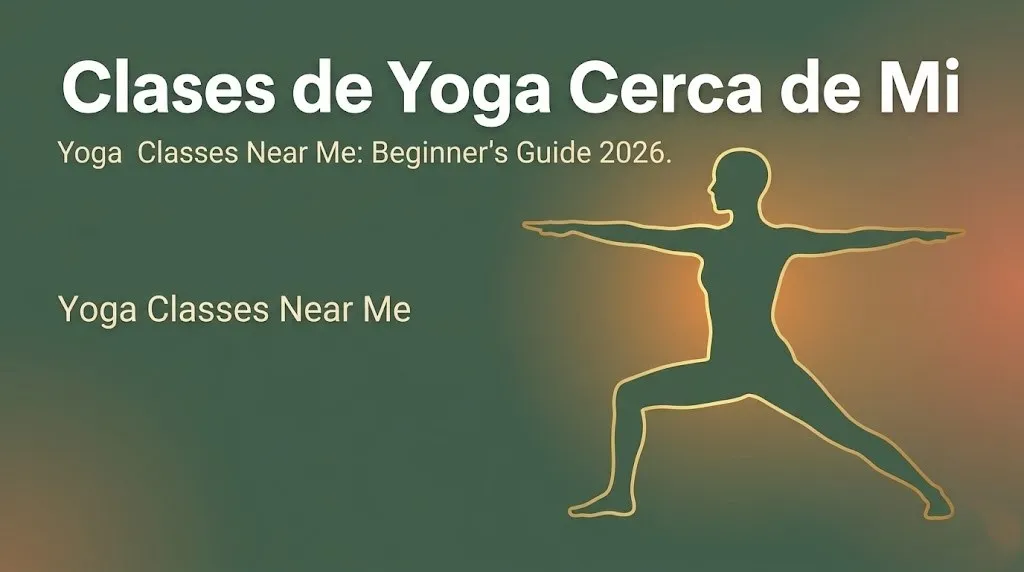
Searching for clases de yoga cerca de mi, or yoga classes near you, puts you one good decision away from one of the most researched wellness practices available to adults of any age or fitness level. This guide will help you find the right class, the right style, and the right studio without wasting time on a booking platform that gives you ratings but no real guidance.
According to the National Center for Complementary and Integrative Health, more than 21 million adults in the United States practice yoga, and the fastest-growing segments include adults over 50 and first-time practitioners from communities that have historically had limited access to studio-based yoga. That growth is real, and the options available in cities like Pembroke Pines, Florida and coastal communities like Provincetown, Massachusetts reflect it.
Here you will find style-by-style breakdowns, local market notes, free and affordable class options, joint health guidance, and practical beginner preparation. Whether your goal is stress relief, joint mobility, weight management, or simply showing up and breathing, this guide covers what you actually need to know.
Clases de Yoga Cerca de Mi: Finding the Right Class for You
Finding yoga classes near you requires more than a quick Google search. The label “yoga class” can describe a gentle 60-minute stretch session for seniors or a 90-minute heated room at 105 degrees Fahrenheit. Knowing what each option actually involves helps you choose the one your body is ready for.
The first practical filter is class format. Studios typically offer multiple formats under one roof. A single Pembroke Pines studio might offer Hatha, Vinyasa, Yin, and hot yoga on the same weekly schedule. Each of those is a distinct physical experience.
The second filter is your starting point. Are you managing joint stiffness, high stress, or a desire to build strength? Your goal determines your style. A beginner with knee pain belongs in a different class than a beginner who wants cardio conditioning.
Use these filters when evaluating any local studio:
- Class temperature: Room temperature ranges from unheated (68 to 72 degrees) to warm (80 to 90 degrees) to hot (95 to 105 degrees)
- Pace: Slow-hold styles like Yin and Restorative differ completely from flowing Vinyasa
- Level labeling: Look for explicit beginner, foundations, or intro labels, not just “all levels”
- Teacher credentials: Yoga Alliance RYT 200 or RYT 500 certification indicates standardized foundational training
- Class size: Smaller classes allow more individualized alignment guidance
What Type of Yoga Is Best for Beginners Near You?
Hatha yoga is the most widely recommended starting point for beginners, offering a slower pace, clear alignment instruction, and manageable physical demand in an unheated or gently warmed room.
That said, “best” depends on your body and your goal. Someone managing chronic stress might respond better to Restorative yoga, which uses props to support the body completely and activates the parasympathetic nervous system through stillness. Someone who wants to build muscle and burn calories might prefer heated Vinyasa, provided they prepare adequately for the heat.
The styles you will most commonly find in local studios near you, and what distinguishes each:
| Style | Pace | Heat | Best For | Avoid If |
|---|---|---|---|---|
| Hatha | Slow to moderate | Usually none | Beginners, alignment learners | Seeking intense cardio |
| Vinyasa | Moderate to fast | Optional | Active beginners, flow seekers | Unstable joints, first week |
| Yin | Very slow | None to warm | Joint mobility, stress relief | Hypermobility without guidance |
| Restorative | Still | None to warm | Recovery, anxiety, chronic pain | Those needing movement stimulation |
| Hot / Bikram | Moderate | 95 to 105°F | Experienced beginners, heat-tolerant | Cardiovascular conditions, pregnancy |
| Iyengar | Slow, precise | None | Injury recovery, precision learners | Those wanting flow or music |
| Kundalini | Varied | None | Breathwork, spiritual seekers | Those uncomfortable with chanting |
For most adults beginning near a local studio with no prior yoga experience, Hatha or a beginner-labeled Vinyasa class at a moderate temperature offers the best combination of accessibility and skill development.
How to Find a Yoga Studio Near You That Actually Fits
Finding a good yoga studio near you means evaluating teaching quality, not just convenience and price. A studio three blocks from your home is worth nothing if the teacher cannot offer a modification when your knees hurt.
Start by searching specifically for studios that list teacher credentials on their website. Any quality studio in 2026 will display their teachers’ Yoga Alliance registration, whether RYT 200, RYT 500, or E-RYT status. Teachers who have invested in advanced training show up differently on the mat.
Next, look for trial offers. Most established studios offer a first class free or a reduced-rate introductory week. This is standard practice and gives you real information that no review can provide.
Practical steps to find the right studio near you:
- Search for studios within a 10 to 15 minute drive or walk. Commute friction is the number one reason people stop attending yoga.
- Filter by class type. If you need beginner-friendly options, confirm before booking that the class is labeled “beginner” or “foundations,” not just “all levels.”
- Call the studio before your first visit. Ask the teacher-to-student ratio and whether the instructor walks the room during holds.
- Read reviews with a specific lens. Look for comments about how teachers handle modifications and whether newcomers feel welcomed.
- Confirm room temperature and humidity if any class is labeled “heated” or “hot.”
Key Takeaway: The best yoga studio near you is the one whose teachers offer modifications without being asked, whose room temperature matches what you booked, and whose commute does not become the reason you stop going after week two.
Yoga Studio Pembroke Pines: What to Know Before You Book
Yoga studio options in Pembroke Pines, Florida reflect the city’s diverse population, which includes a large Latino and Caribbean community, a substantial senior demographic, and a growing young professional base. Studios in the area range from boutique heated yoga spaces to community fitness centers with yoga on the group class schedule.
Pembroke Pines is part of the South Florida metro area, which means the yoga market is competitive and varied. You will find traditional Hatha and Vinyasa offerings alongside hot yoga formats, chair yoga for seniors, prenatal classes, and culturally specific programming that reflects the Spanish-speaking community’s presence in the area.
When evaluating Pembroke Pines yoga studios specifically:
- Check whether any studio offers Spanish-language instruction or bilingual teachers. This is more common in South Florida than in most other U.S. metro areas.
- Look for studios affiliated with community fitness centers or parks departments, which often offer subsidized or free programming.
- Morning and midday classes tend to have better availability and smaller class sizes than evening sessions in this market.
- Many South Florida studios offer outdoor or semi-outdoor class spaces, which is practical given the climate but means humidity can be a factor even in “unheated” classes.
The Pembroke Pines yoga scene is accessible and beginner-friendly if you know where to look beyond the boutique studio model. Community centers and park programs frequently run low-cost beginner yoga with certified teachers.
Hot Yoga Pembroke Pines: South Florida’s Heated Class Scene
Hot yoga in Pembroke Pines is practiced in dedicated heated studios and within larger fitness centers that offer heated class rooms. The South Florida heat and humidity outside mean most residents have reasonable baseline heat tolerance, but a yoga room at 105 degrees Fahrenheit with 40 percent humidity is a controlled and distinctly different experience from outdoor warmth.
Heated yoga studios in the Pembroke Pines area most commonly offer heated Vinyasa and Bikram / 26&2 formats. Room temperatures typically range from 90 to 105 degrees depending on the format. Infrared-heated studios, which use panels rather than forced hot air, are also present in the broader South Florida market.
One consideration specific to hot yoga in South Florida: arriving to a 105-degree room after spending the morning in air conditioning at 68 degrees creates a thermal shock. Give your body 5 to 10 minutes to begin temperature adjustment before you start moving through sequences.
Safety Note: South Florida’s heat and humidity year-round means that dehydration risk is elevated for hot yoga practitioners in this region. Drink at least 16 to 20 ounces of water in the two hours before class, and add an electrolyte supplement for any session over 60 minutes.
For beginners in Pembroke Pines approaching hot yoga for the first time, look specifically for studios offering a “Hot Hatha” or “Warm Yoga” format. These run between 85 and 95 degrees rather than the full 105-degree Bikram standard, and they provide a genuine introduction to the heat experience without the maximum physiological demand.
Modification for newcomers: in any hot yoga class, Balasana (Child’s Pose) is your reset pose. Drop into it any time dizziness, nausea, or lightheadedness begins. Stay in the room but rest on your mat until you feel steady.
Key Takeaway: Hot yoga beginners in Pembroke Pines should start with heated Hatha at 85 to 95 degrees rather than jumping directly into a 105-degree Bikram format. Your heat tolerance builds gradually, not in a single session.
Yoga Provincetown: Cape Cod’s Welcoming Yoga Community
Yoga in Provincetown, Massachusetts operates within one of the most distinct community cultures in the northeastern United States. Provincetown is a small, seasonal coastal town with a large LGBTQ population, a strong arts community, and a wellness culture that values inclusion, self-expression, and body acceptance.
Studios and instructors in Provincetown tend to offer yoga with an explicitly welcoming stance toward all bodies, identities, and experience levels. The yoga culture here is less achievement-oriented than urban studio culture. That distinction matters if you have ever felt intimidated by a competitive or performance-focused yoga environment.
Class formats in Provincetown yoga tend toward Hatha, Yin, and Restorative styles, though heated classes are available. The seasonal nature of the town means studio schedules shift significantly between summer and off-season months. If you are visiting in peak summer, classes fill quickly. Book at least 24 to 48 hours in advance.
Outdoor yoga near the dunes and waterfront is a feature of Provincetown’s warm-weather schedule. These classes typically run in the early morning before summer heat builds. Bring a mat, a light layer for ocean breeze, and sunscreen.
For visitors searching “yoga Provincetown” or “Provincetown yoga” as a first-time student, the town’s studios are genuinely among the most beginner-accessible in New England. Teachers here are accustomed to working with seasonal visitors who have varying levels of experience, body types that differ from typical studio demographics, and physical conditions that require thoughtful modification.
Free Hot Yoga Classes Near Me: Where to Look First
Free hot yoga classes near you exist in more places than most people realize, but they require knowing where the access points actually are. Studios offer free classes through several predictable channels.
The most common source is the introductory free-class offer. Nearly every established hot yoga studio offers a first class free to new students, regardless of format. This is not a discount: it is a standard business practice in the yoga studio industry, and it is your right as a consumer to use it.
Beyond individual studio offers, free hot yoga access comes from:
- Studio anniversary events: Many studios offer a free class day annually to their local community.
- Teacher training practice sessions: Studios running 200-hour or 500-hour teacher training programs frequently need practice students. These sessions are free to the public and led by trainee teachers under a senior instructor’s supervision.
- Community class programs: Some studios offer one free community class per week, often on Saturday or Sunday morning, as a service to the neighborhood.
- Corporate wellness partnerships: Companies and organizations sometimes negotiate free class access for employees or members at local studios.
- Park district programs: Public park districts in larger metro areas like South Florida and Cape Cod sometimes offer free yoga classes in parks, including heated-style classes in community centers during winter months.
When searching specifically for free hot yoga near you, call studios directly and ask. “Do you offer a free first class or any community class program?” is a direct question that gets a direct answer faster than reading through a studio website.
Free Hot Yoga Near Me and Hot Yoga Free Trial Options
Free hot yoga near you most reliably comes through studio introductory trial programs, which in 2026 are standard across the industry. Most studios offering heated yoga formats structure their trials as either a single free class, a discounted first week, or an unlimited two-week introductory package at a significantly reduced rate.
The difference between a free class and a trial week matters strategically. A single free class tells you whether you survive the heat and like the teacher. A two-week trial tells you whether the practice works for your body and fits your schedule.
How to evaluate a hot yoga free trial offer:
- Confirm what the trial actually includes. Does “free class” mean any class on the schedule, or only designated intro sessions?
- Ask whether the trial requires a credit card. Some studios charge a card at signup and refund it if you do not continue. Others simply register you with no financial obligation.
- Use the trial strategically. Attend at least three classes in different formats if the trial allows it. Try the format at different times of day to see how your body responds.
- Note whether the teacher adjusts their instruction for newcomers during the trial class. A studio that treats trial students as full members of the class is the one worth paying for.
According to the American College of Sports Medicine, three to four weeks of consistent aerobic and strength-focused activity are generally required before the body adapts measurably to a new exercise format. A two-week hot yoga trial is enough to feel the difference. It is not enough to judge the full benefit.
Modification for trial beginners: if the free class is a standard open-level session rather than a beginner-specific class, arrive early, tell the teacher you are new, and ask where to set up your mat for the best sight lines and easiest access to props.
Community Yoga Classes and Affordable Yoga Near Me
Community yoga classes and affordable yoga options near you represent a genuinely different access model than boutique studio membership. They exist in parks, community centers, libraries, churches, senior centers, and hospital wellness programs, often at no cost or at a sliding-scale rate.
For the Spanish-speaking community specifically, community yoga programs in cities like Pembroke Pines have grown meaningfully. Many Latino community centers now include yoga in their fitness programming, sometimes with Spanish-language instruction. Hospital systems with large Hispanic patient populations have also developed yoga-based wellness programs as part of chronic disease management initiatives, particularly for adults managing diabetes, hypertension, and obesity.
According to a study published in the Journal of Alternative and Complementary Medicine, community-based yoga programs showed comparable adherence rates to studio-based programs when classes were geographically accessible and culturally relevant to participants. This finding matters for anyone who has assumed that community yoga is a lesser substitute for studio yoga. The practice itself is identical.
Affordable yoga near you can also come from:
- Yoga app subscriptions: Monthly costs of 10 to 20 dollars provide access to full libraries of beginner, Yin, and Restorative content for home practice.
- Library digital programs: Many public libraries provide free access to streaming fitness platforms including yoga content.
- University wellness centers: Students and often community members can access yoga through university recreation programs at low cost.
- Fitness chain memberships: Large fitness chains that include yoga in their group class schedules often cost less per month than a single boutique studio drop-in class.
Key Takeaway: Free and affordable yoga is accessible in most communities if you look beyond studio storefronts. Community centers, park programs, library digital access, and hospital wellness initiatives are all legitimate entry points with certified instruction.
Joint Yoga: Yoga for Joint Pain and Mobility
Joint yoga refers to yoga practiced with the specific intention of improving joint mobility, reducing stiffness, and supporting the synovial fluid circulation that keeps cartilage healthy. It is not a trademarked style but rather a functional category that includes Hatha, Yin, Restorative, and Iyengar yoga when practiced with joint health as the organizing principle.
Joints move through two primary mechanisms: active muscular effort and passive stretching of surrounding connective tissue. Yoga addresses both. Dynamic poses like Virabhadrasana II (Warrior II) work the hip abductors and quadriceps actively through their range of motion. Passive poses like Supta Baddha Konasana (Reclined Bound Angle Pose) allow the hip joint to open gradually through gravity-assisted release without muscular effort.
The Arthritis Foundation has formally recommended yoga as a beneficial practice for adults managing arthritis and joint inflammation. Their guidance specifically notes that yoga can reduce joint pain, improve range of motion, and decrease fatigue in adults with osteoarthritis and rheumatoid arthritis when practiced consistently.
To practice Virabhadrasana II (Warrior II) for hip and knee joint mobility:
- Stand with feet wide apart, approximately one leg-length distance.
- Turn the right foot out 90 degrees and the left foot in 15 degrees.
- Bend the right knee over the right ankle, tracking toward the second toe.
- Extend arms parallel to the floor, shoulders relaxed, gaze over the right hand.
- Hold for 5 to 8 breath cycles, approximately 30 to 45 seconds.
- Straighten the right leg on an exhale. Repeat on the left side.
Modification for joint sensitivity: reduce the depth of the front knee bend to 20 to 30 degrees rather than a full 90-degree bend. Stand near a wall for hand support if balance is unstable.
Yoga for Arthritis and Age-Related Joint Stiffness
Yoga for arthritis and age-related joint stiffness works primarily by maintaining and gradually expanding the range of motion in affected joints, reducing the inflammatory response through stress regulation, and building the muscular support around vulnerable joints to reduce load on cartilage.
Morning joint stiffness, particularly in the knees, hips, and lumbar spine, is one of the most common reasons adults over 50 search for yoga classes near them. Think of joint cartilage like a sea sponge. It needs compression and decompression through movement to absorb synovial fluid and stay nourished. Long periods of stillness, like overnight sleep, reduce that fluid exchange. Gentle yoga in the morning is literally restoring fluid circulation to your joints.
A study published in the International Journal of Yoga found that adults with knee osteoarthritis who practiced yoga twice per week for 12 weeks reported reduced pain scores, improved knee flexion range of motion, and better self-reported functional ability compared to a control group receiving standard care.
Poses most effective for arthritis-related joint stiffness:
- Balasana (Child’s Pose): Gently compresses and then releases the knee joint; opens the hip flexors and lumbar spine
- Setu Bandha Sarvangasana (Bridge Pose): Activates gluteus maximus and hamstrings to support the knee joint from above; gently mobilizes the lumbar spine
- Pavanamuktasana (Wind-Removing Pose): Draws the knee toward the chest to release sacroiliac joint and hip flexor tension
- Tadasana (Mountain Pose): Activates the full lower-body muscle chain to redistribute load away from passive joint structures
Modification for severe arthritis: all floor poses can be adapted to a chair. Balasana (Child’s Pose) becomes a forward fold seated in a chair with arms resting on thighs. The hip and lumbar benefit remains present.
Yoga for Seniors Near Me: What Makes a Class Right for Older Adults
Yoga classes appropriate for seniors near you share specific characteristics: slower transitions between poses, explicit modification guidance in every session, options to practice from a chair, and teachers trained to work with age-related physical changes in balance, bone density, and cardiovascular response.
Not every yoga class labeled “all levels” is appropriate for older adults. The pace of a standard Vinyasa class, with rapid transitions and frequent floor-to-standing sequences, can create fall risk for seniors with balance limitations or joint instability.
The most senior-appropriate class formats are Chair Yoga, Restorative yoga, Gentle Hatha, and Yin yoga. Each of these formats can accommodate reduced range of motion, lower bone density (relevant for spinal flexion limits), and cardiovascular caution.
According to the American College of Sports Medicine, older adults benefit most from yoga programs that include:
- Balance training components (single-leg poses with wall or chair support)
- Gentle spinal mobility work (not deep forward folds or unsupported backbends)
- Breath awareness and relaxation practice to support cardiovascular regulation
- Consistency of at least two sessions per week to maintain gains in flexibility and balance
When searching for yoga for seniors near you, ask studios specifically:
- Does the teacher have training in yoga for older adults or adaptive yoga?
- Is chair yoga available as an option within the class?
- What is the average age of students in the class?
- Are props provided, including chairs, blocks, straps, and bolsters?
A well-run senior yoga class uses props not as accommodations but as standard tools. Every student in a quality senior class has access to a block and a strap, whether or not they need them.
Key Takeaway: Senior yoga is not gentle yoga for people who cannot do “real” yoga. It is precisely calibrated yoga that addresses the specific physical realities of aging: balance, bone density, joint stability, and cardiovascular response. It requires more teacher skill, not less.
Yoga for Stress Relief and Mental Health Benefits
Yoga for stress relief works through a well-documented physiological mechanism: sustained physical practice with breath focus activates the parasympathetic nervous system, the body’s rest-and-recover state, and reduces circulating cortisol, the primary stress hormone.
According to the National Center for Complementary and Integrative Health, yoga practice has demonstrated consistent reductions in perceived stress, anxiety symptoms, and depression markers across multiple clinical trials. The evidence base is strongest for Hatha and Restorative yoga formats, though Vinyasa also shows stress-reduction effects after the class ends and the parasympathetic rebound occurs.
The breath component is not decorative. Ujjayi pranayama (victorious breath), the audible nasal breath used in most Hatha and Vinyasa classes, directly stimulates the vagus nerve. The vagus nerve is the primary pathway through which the parasympathetic nervous system communicates with the heart, lungs, and digestive organs. Slowing and lengthening the breath is not symbolic relaxation. It is direct neurological intervention.
A study published in Complementary Therapies in Medicine found that participants in a 12-week yoga program showed measurable reductions in cortisol awakening response, a standard biomarker of chronic stress load, compared to a control group.
For stress relief specifically, these class formats deliver the strongest evidence base:
- Restorative yoga: Props support the body completely; poses held 5 to 10 minutes each; parasympathetic activation is the primary goal
- Yin yoga: Long passive holds of 3 to 5 minutes; targets connective tissue and promotes deep physical and mental stillness
- Hatha yoga: Slower pace allows breath focus; structured sequences reduce decision fatigue
- Yoga Nidra: Guided relaxation practice; not movement-based; research shows effects comparable to 4 hours of sleep in some studies
What to Expect at Your First Yoga Class Near You
Your first yoga class near you will feel unfamiliar for about the first 10 minutes, and then your body will start to orient. That is normal and worth knowing in advance.
Most beginner-appropriate yoga classes follow a predictable structure: a brief grounding or breathing opening, a warmup sequence of gentle movements, a main pose sequence, and a closing Savasana (Corpse Pose), which is a final rest lasting 5 to 10 minutes. You will not be doing handstands on your first day.
Here is the realistic first-class experience, step by step:
- Arrive 10 to 15 minutes early. Tell the teacher it is your first class. This is the single most useful thing you can do.
- Set up your mat near the middle or back. You will be able to follow other students as visual references.
- Take props before class starts. Grab a block, a strap, and a blanket even if you think you will not need them. You probably will.
- Follow the teacher’s verbal cues. You do not need to match what the student next to you is doing. Your version of each pose is valid.
- Rest in Balasana (Child’s Pose) whenever needed. This is never giving up. It is intelligent self-regulation.
- Stay for Savasana (Corpse Pose). Skipping the final rest deprives your nervous system of the integration period where much of the benefit consolidates.
- Drink water after class. Your muscles have been working and your body has been regulating temperature, even in an unheated room.
Modification for first-class anxiety: if a pose feels inaccessible, hold the shape that gets you closest to the intention of the pose. A standing forward fold with bent knees is the same pose as one with straight legs. Your spine is still lengthening. Your hamstrings are still responding.
How Often Should a Beginner Do Yoga?
Beginner yoga practitioners see the clearest physical and mental benefits when they practice two to three times per week, with at least one rest day between sessions. This is the frequency consistently recommended by yoga teachers, physical therapists, and the research literature.
Once per week is enough to maintain a basic familiarity with poses. It is generally not enough to build the flexibility, balance, and body awareness that make yoga feel genuinely different in your daily life. Three times per week, even short 30-minute home sessions between studio classes, accelerates that development considerably.
According to a study published in the International Journal of Yoga, participants who practiced yoga three times per week showed measurably greater improvements in flexibility, balance, and perceived stress reduction after eight weeks compared to those who practiced once per week. The difference was consistent across age groups.
Practical weekly framework for beginners:
| Day | Practice Type | Duration | Goal |
|---|---|---|---|
| Monday | Studio beginner Hatha | 60 min | Alignment and instruction |
| Wednesday | Home Yin or Restorative | 30 to 40 min | Recovery and flexibility |
| Friday | Studio or home Vinyasa | 45 to 60 min | Strength and breath connection |
| Weekend | Rest or gentle walk | N/A | Recovery |
For seniors or those managing joint conditions, two sessions per week with one being a restorative or Yin format is an appropriate and sustainable starting rhythm.
Modification note: if two or three sessions per week feels like too much, start with one. A consistent single session each week builds a foundation. Frequency can increase gradually as the practice becomes a routine rather than an effort.
Key Takeaway: Two to three yoga sessions per week, mixing studio instruction with shorter home practice, produces the clearest beginner progress. One session per week builds familiarity. Three builds real change.
Frequently Asked Questions About Yoga Classes Near Me
Are there free yoga classes near me I can try before buying a membership?
Yes, free yoga classes near you are available through studio introductory offers, community center programs, park district events, and teacher training practice sessions.
Most established yoga studios offer a free first class to new students as standard practice.
Community centers and hospital wellness programs in cities like Pembroke Pines frequently offer free or sliding-scale yoga as part of public health programming.
Is yoga good for joint pain and arthritis?
Yes, yoga is well-supported for joint pain and arthritis management. The Arthritis Foundation specifically recommends yoga for reducing joint pain, improving range of motion, and decreasing fatigue in adults with osteoarthritis and rheumatoid arthritis.
Gentle Hatha, Yin, and Restorative yoga are the most appropriate formats for people managing joint inflammation or stiffness.
A doctor familiar with your specific joint condition can help you identify which poses or formats to approach carefully, particularly if you have had joint replacement surgery.
What type of yoga is best if I have never done it before?
Hatha yoga is the most consistently recommended starting point for absolute beginners because of its slower pace, clear alignment instruction, and manageable physical demand.
Beginner-labeled Vinyasa classes are also appropriate if you prefer a more dynamic practice and have basic fitness.
Avoid hot yoga formats at maximum temperature (105 degrees Fahrenheit) until you have at least four to six weeks of regular yoga practice and understand how your body responds to heat.
How do I find a yoga class in Pembroke Pines or Provincetown?
To find yoga in Pembroke Pines, search for studios within the South Florida metro area that offer bilingual programming, beginner-specific classes, and community center-based options for lower-cost access.
Provincetown yoga studios are concentrated near the town center and operate on seasonal schedules, filling quickly in summer months; book at least 24 to 48 hours in advance during peak season.
For both locations, calling the studio directly and asking about teacher credentials, class size, and modification availability gives you more useful information than any online review.
How many times a week should a beginner do yoga?
Most yoga teachers and physical therapists recommend beginners practice two to three times per week to build consistent progress in flexibility, balance, and body awareness.
A study published in the International Journal of Yoga found that three sessions per week produced measurably greater improvements in flexibility and stress reduction after eight weeks compared to once-per-week practice.
Start with two sessions if three feels like too much, and add a shorter home practice session between studio classes as your routine settles.
Your Next Step Is Simpler Than You Think
Pick one format from this guide that matches your current physical starting point. If you have joint pain, search specifically for a Yin or Gentle Hatha class near you. If stress is the driver, look for a Restorative session at a studio offering a free first class.
Call the studio. Ask one question: “Is this class appropriate for someone who is completely new?” The answer tells you everything you need to know about how that studio treats beginners.
Show up with a mat, a towel, a water bottle, and ten minutes early. That is enough. The rest unfolds in the room.