Spirit Lab Yoga: Full Practice & Benefits Guide 2026
Spirit lab yoga is an approach to practice that intentionally integrates the physical, mental, and inner dimensions of yoga, combining poses, breathwork, meditation, and self-inquiry into a structured personal practice. It differs from a standard fitness yoga class in that the inner experience of practice matters as much as the physical shapes you make on the mat.
According to the National Center for Complementary and Integrative Health (NCCIH), yoga is one of the most widely used complementary health approaches in the United States, and the evidence for its mental health benefits is growing faster than for almost any other mind-body practice. A spirit-centered yoga approach puts those mental and emotional benefits at the center, not the periphery.
This guide covers what spirit lab yoga actually involves at the technique level, which yoga styles it draws from, what the research says about its effects on stress and emotional health, how to build a home practice, and how to adapt everything for beginners and seniors in 2026.
What Is Spirit Lab Yoga and How Does It Work
Spirit lab yoga is a practice framework that treats yoga as a tool for developing self-awareness, emotional regulation, and inner steadiness, not just physical fitness. The “lab” in the name reflects an experimental, observational approach: you practice, you notice what arises, and you use that information.
This framework draws on the classical understanding of yoga as defined in Patanjali’s Yoga Sutras, where the physical poses (asana) are one of eight interconnected limbs of practice, not the whole of it. The other limbs include breath regulation (pranayama), sensory withdrawal (pratyahara), concentration (dharana), meditation (dhyana), and states of integration (samadhi). A spirit lab approach keeps all of these in view, even in a single session.
In practical terms, a spirit lab yoga session might begin with several minutes of stillness and breath observation. Poses are held longer than in a standard class. Transitions are slow and deliberate. The practitioner is consistently invited to notice what is happening internally, not just physically. Sessions often end with yoga nidra or extended Savasana (Corpse Pose).
What makes this approach distinct from generic “mindful yoga” is structure. There is a method here. Each element of the session, the poses, the breath, the silence, serves a specific function in building the capacity for self-awareness and nervous system regulation.
Quick Summary:
- Spirit lab yoga integrates poses, breathwork, and meditation in a structured way.
- It treats inner experience as the primary object of practice.
- Sessions tend to be slower, longer-held, and more inwardly focused than standard classes.
- It draws from Kundalini yoga, Restorative yoga, Yin yoga, and classical yoga philosophy.
- No prior spiritual background or belief system is required to benefit.
How Spirit Lab Yoga Differs From Regular Yoga Classes
Spirit lab yoga differs from a standard yoga class primarily in intention: the goal is inner awareness and nervous system cultivation, not physical performance or calorie expenditure.
In a typical Vinyasa yoga class, the emphasis is on dynamic sequencing, flowing movement linked to breath, and physical challenge. Poses are held briefly and transitions are continuous. The focus is outward: shape, alignment, effort, and pace.
In a spirit lab yoga context, the same poses might appear, but the practitioner’s attention is redirected inward throughout. What does this hip stretch feel like from the inside? What mental patterns arise during a long hold? What happens to the breath when discomfort appears? The pose is a vehicle for self-observation, not a destination.
The session structure itself reflects this difference. Standard yoga classes often follow a preset sequence. A spirit lab session is more likely to begin with an inquiry or an intention, allowing the practitioner to select poses and practices that address their current inner state.
| Feature | Standard Yoga Class | Spirit Lab Yoga Approach |
|---|---|---|
| Primary goal | Physical fitness, flexibility, strength | Self-awareness, emotional regulation, nervous system balance |
| Pace | Moderate to fast | Slow, deliberate |
| Pose hold duration | 5 to 10 breaths typical | 1 to 5 minutes or longer |
| Breath emphasis | Movement rhythm cue | Primary tool for inner state regulation |
| Meditation | Optional, brief | Integral to session structure |
| Session structure | Preset sequence | Inquiry-based, adaptable |
| Styles drawn from | Vinyasa, Hatha, Ashtanga | Kundalini, Yin, Restorative, yoga nidra |
The Yoga Styles That Form the Foundation of Spirit Lab Yoga
Spirit lab yoga draws from four distinct yoga traditions, and understanding each one helps you choose the right approach for your current needs.
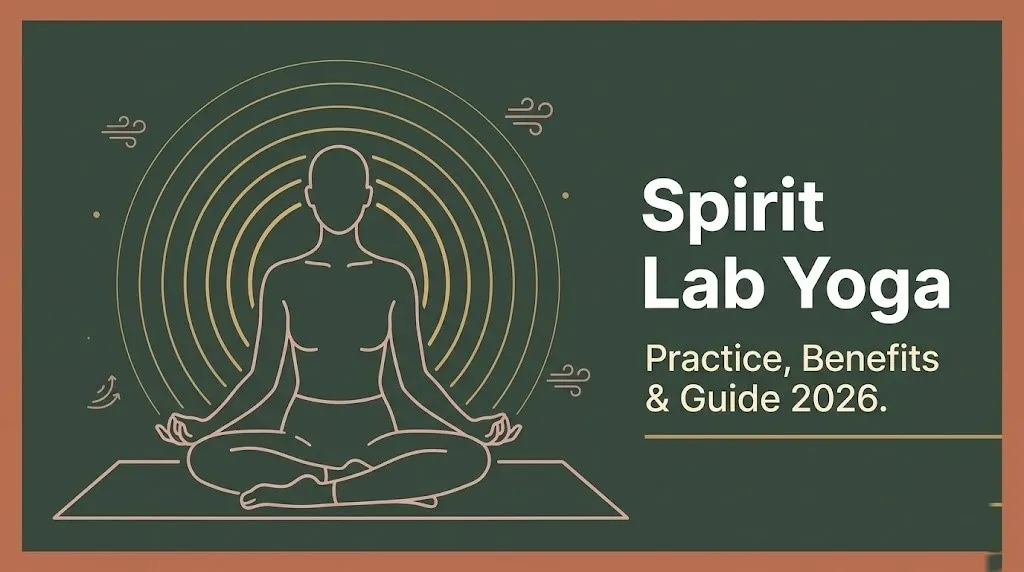
Kundalini yoga is perhaps the most explicitly spiritual of the classical styles. It uses a combination of dynamic and static poses, breathwork patterns (called pranayama), mantra, and meditation. A 2017 review published in the Journal of Alternative and Complementary Medicine found Kundalini yoga practice produced measurable reductions in anxiety and improvements in emotional regulation in clinical populations.
Yin yoga targets the deep connective tissue and fascia around joints by holding passive poses for 3 to 5 minutes. The long holds create space for interoceptive awareness, noticing what is happening inside the body with attention and equanimity. This makes it a natural fit for spirit lab practice.
Restorative yoga uses props to fully support the body in passive shapes, removing muscular effort entirely. With nothing physical to do, the practitioner’s attention naturally turns inward. This is intentional. Restorative yoga is arguably the most accessible entry point into spirit lab practice for beginners and people managing physical limitations.
Yoga nidra is a systematic guided meditation practiced in a lying-down position. It is not a movement practice. It is a technique for accessing deeply relaxed, aware states that contemporary research associates with measurable reductions in anxiety and improved sleep quality.
| Style | Primary Tool | Spirit Lab Application | Best For |
|---|---|---|---|
| Kundalini yoga | Breathwork, mantra, movement | Energetic activation, emotional clearing | Practitioners open to structured spiritual technique |
| Yin yoga | Long passive holds | Interoception, connective tissue, deep stillness | Hip tightness, chronic stress, self-inquiry |
| Restorative yoga | Props, full passive support | Nervous system recovery, deep relaxation | Burnout, illness, anxiety, seniors |
| Yoga nidra | Guided awareness meditation | Deep rest, subconscious inquiry, sleep improvement | Anyone, regardless of physical ability |
Key Takeaway: Spirit lab yoga is not one style. It is a thoughtful blend of Kundalini, Yin, Restorative, and yoga nidra traditions, each contributing a specific dimension to the practice of inner awareness and nervous system health.
Science-Backed Benefits of Spirit Lab Yoga for Mental and Emotional Health
The benefits claimed by spirit-focused yoga practices are not faith-based assertions. They are documented in peer-reviewed research across multiple populations and study designs.
According to the NCCIH, yoga shows consistent, documented benefits for anxiety, depression, stress, and sleep quality across multiple randomized controlled trials. These effects are most pronounced in practices that emphasize breath regulation and meditation alongside physical movement, which is the defining structure of a spirit lab approach.
A review published in Frontiers in Psychology found that yoga interventions combining physical postures with breathwork and meditation produced stronger reductions in anxiety and depressive symptoms than physical-only yoga interventions. The spirit layer is not incidental. It appears to be the active ingredient for mental health outcomes.
Documented benefits with research attribution:
- Cortisol reduction: Multiple studies confirm yoga practice lowers salivary cortisol, particularly when sessions include pranayama and meditation components.
- Heart rate variability improvement: Research in the Journal of Alternative and Complementary Medicine documents improved HRV markers after sustained yoga practice. Better HRV reflects a more adaptive, resilient autonomic nervous system.
- Anxiety reduction: A 2020 meta-analysis found yoga interventions consistently reduced self-reported anxiety across diverse adult populations, with longer programs producing stronger effects.
- Sleep quality: A 2019 meta-analysis in Complementary Therapies in Medicine confirmed yoga improved subjective sleep quality, with yoga nidra showing particularly consistent effects.
- Emotional regulation: Studies suggest yoga enhances interoception, the ability to accurately perceive internal body states, which is a foundational capacity for emotional self-regulation.
- Burnout recovery: Research indicates Restorative and Yin yoga practices reduce perceived burnout in healthcare workers and other high-stress professional groups.
Spirit Lab Yoga Poses for Beginners to Start Today
The foundational poses in a spirit lab yoga practice are selected not for their physical complexity but for their capacity to turn attention inward while the body is supported and the nervous system is calm.
Supta Baddha Konasana (Reclined Bound Angle Pose) is one of the most used poses in spirit lab practice. Lying on the back with the soles of the feet together and knees wide, the body opens passively across the chest, inner groin, and hip external rotators. With nothing to physically achieve, the practitioner’s awareness naturally settles on the breath and internal sensation.
Viparita Karani (Legs-Up-the-Wall Pose) brings the legs vertical against a wall while the back rests on the floor. This gentle inversion promotes venous return, reduces perceived fatigue, and creates an internal state that most practitioners describe as quietly alert. It is one of the most accessible poses in the spirit lab repertoire for people of all experience levels.
Balasana (Child’s Pose) offers a forward-folded, ground-level shape that quiets visual input and reduces sensory stimulation. In a spirit lab context, it is used as a refuge: a shape to return to whenever the practice needs to settle.
To practice Supta Baddha Konasana (Reclined Bound Angle Pose) in a spirit lab context:
- Lie on your back on your mat. Place the soles of your feet together and allow the knees to fall wide.
- If the inner knees feel strained, place a folded blanket or yoga block under each thigh.
- Rest your arms wide with palms facing up. This opens the chest passively.
- Close your eyes. Take 3 slow nasal breaths to arrive in the pose.
- Stay for 3 to 5 minutes. Notice what the body feels. Notice what the mind does.
- To release, use your hands to draw the knees together gently. Roll to one side and pause before rising.
Modification: Anyone with sacroiliac joint sensitivity should place a rolled blanket under the sacrum for support. Skip this pose entirely if supine positions are contraindicated by your healthcare provider managing a current spinal condition.
Yoga Breathwork in Spirit Lab Practice: Techniques and Effects
Breathwork is the most direct tool in spirit lab yoga for regulating the nervous system and creating the internal conditions that make self-awareness possible.
The breath is the only autonomic function you can control voluntarily. That makes it a unique bridge between the conscious and the unconscious. Slow, extended exhalation through the nose activates the vagus nerve, which in turn signals the parasympathetic nervous system to downregulate the body’s stress response. This is the physiological basis for why pranayama changes how you feel, not just how you breathe.
Nadi Shodhana (Alternate Nostril Breathing) is the most commonly used pranayama in spirit lab practice. You breathe in through one nostril, close it, and breathe out through the other, alternating rhythmically. A study published in the International Journal of Yoga found Nadi Shodhana produced measurable reductions in heart rate and systolic blood pressure compared to normal breathing in healthy adults.
To practice Nadi Shodhana:
- Sit in Sukhasana (Easy Seated Pose) with a tall, relaxed spine.
- Rest the left hand on the left knee. Bring the right hand to the face.
- Use the right thumb to close the right nostril. Inhale through the left nostril for a count of 4.
- Close both nostrils. Hold for a count of 4.
- Release the right nostril. Exhale slowly for a count of 8.
- Inhale through the right nostril for a count of 4. Hold. Exhale through the left for 8.
- This is one complete cycle. Practice 5 to 10 cycles before or during a spirit lab session.
Kapalabhati (Skull-Shining Breath) is an activating pranayama used in Kundalini yoga contexts to clear the respiratory system and shift energetic states. It uses rapid, forceful exhalations through the nose. Safety caution: Kapalabhati is not appropriate for people with uncontrolled high blood pressure, vertigo, recent abdominal surgery, or pregnancy.
Modification: Anyone new to pranayama should start with simple slow nasal breathing (4 counts in, 6 counts out) before attempting Nadi Shodhana or Kapalabhati.
Yoga Nidra: The Spirit Lab Practice for Deep Rest and Self-Awareness
Yoga nidra is a systematic guided awareness practice performed lying down that produces states of deep physiological rest while maintaining a thread of conscious awareness. It is arguably the most accessible and most researched spirit lab practice available.
Unlike meditation, which often asks the practitioner to actively concentrate, yoga nidra uses a structured rotation of awareness through body sensations, breath, emotions, and images. The practitioner is not trying to do anything. They follow the guidance and notice what arises. This makes it particularly accessible for people who find sitting meditation frustrating or difficult.
Research on yoga nidra is growing. A study published in the International Journal of Yoga found that regular yoga nidra practice produced measurable improvements in anxiety, depression, and overall psychological wellbeing in adult participants. The effects appeared with as little as 30 minutes of practice per session, three times per week.
Contemporary neuroscientists, including researchers affiliated with Stanford University, have studied yoga nidra under the term non-sleep deep rest (NSDR). They have documented measurable recovery of dopamine levels and cognitive performance following NSDR sessions, suggesting the practice does something distinct from both sleep and standard relaxation.
To practice yoga nidra at home:
- Lie flat on your back in Savasana (Corpse Pose). Use a blanket under the knees and an eye pillow if available.
- Set a soft intention (sankalpa): a simple, present-tense statement of what you are cultivating.
- Follow a guided body scan: move awareness slowly from feet to crown, noticing each body part without judgment.
- Notice sensations, breath, emotional tone, and images without trying to change or hold onto any of them.
- Practice for 20 to 45 minutes. The depth of the state is not directly related to session length.
- Before rising, return awareness to the breath and the physical room around you. Take time. Sit up slowly.
Modification: Yoga nidra is accessible to virtually all bodies regardless of physical ability. If lying flat is uncomfortable, practice with the knees bent or a bolster under the knees. The practice can be done in a reclining chair for people with severe back conditions.
Key Takeaway: Yoga nidra is the most research-supported, most universally accessible component of spirit lab yoga, and 30 minutes three times a week is enough to produce documented mental health improvements.
Spirit Lab Yoga for Stress: What the Research Actually Shows
Spirit lab yoga addresses stress through multiple biological pathways simultaneously, and the research on each pathway is consistent.
The primary mechanism is HPA axis regulation. The hypothalamic-pituitary-adrenal axis controls the body’s cortisol production in response to perceived threat. Chronic psychological stress keeps this axis in a state of sustained activation, producing elevated cortisol, disrupted sleep, reduced immune function, and emotional dysregulation. Yoga, specifically practices that include pranayama and meditation, appears to downregulate this system with consistent, sustained practice.
A 2023 review published in Complementary Therapies in Medicine analyzed 19 randomized controlled trials and found that yoga interventions produced measurable reductions in anxiety symptoms, with programs lasting 8 weeks or longer showing the strongest effects. The review noted that programs combining physical practice with breathwork and meditation outperformed physical-only yoga for anxiety reduction.
Restorative yoga is the spirit lab style with the most direct evidence for acute stress reduction. A single Restorative yoga session has been shown in multiple studies to produce measurable parasympathetic activation, reflected in reduced heart rate and increased heart rate variability, within one practice session. This makes it one of the fastest-acting evidence-based stress interventions available without medication.
Think of a chronically stressed nervous system like a car alarm that is stuck in the “on” position. Standard exercise often adds more noise to the system. Spirit lab yoga, particularly Restorative and Yin approaches, provides the specific input that tells the alarm it is safe to turn off.
Poses used in spirit lab yoga for stress relief:
- Viparita Karani (Legs-Up-the-Wall Pose): Reduces lower body tension and activates the parasympathetic system.
- Supta Baddha Konasana (Reclined Bound Angle Pose): Passive chest opener that quiets the fight-or-flight response.
- Balasana (Child’s Pose): Forward-folded shape that reduces sensory input and activates the vagal calming response.
- Savasana (Corpse Pose): Complete muscular release that signals safety to the nervous system.
Chakra-Informed Yoga: How Spirit Lab Yoga Addresses Energy Centers
Chakra-informed yoga is a framework within spirit lab practice that uses the classical map of seven energy centers along the spinal axis to guide pose selection, breathwork, and attention placement.
The chakra system originated in the Tantric yoga tradition and is described in classical Sanskrit texts. In contemporary spirit lab practice, the chakra model functions primarily as a map for psychological and somatic inquiry, not as a literal physiological claim. Each center corresponds to a region of the body, an emotional theme, and a set of poses and practices.
| Chakra | Location | Emotional Theme | Associated Poses |
|---|---|---|---|
| Muladhara (Root) | Base of spine | Safety, grounding | Tadasana, Balasana, Virabhadrasana I |
| Svadhisthana (Sacral) | Pelvis | Creativity, flow | Baddha Konasana, Anjaneyasana |
| Manipura (Solar Plexus) | Navel | Confidence, will | Navasana, Phalakasana |
| Anahata (Heart) | Chest | Connection, compassion | Setu Bandha Sarvangasana, Supta Baddha Konasana |
| Vishuddha (Throat) | Throat | Expression, truth | Matsyasana, Sarvangasana (modified) |
| Ajna (Third Eye) | Forehead | Intuition, clarity | Balasana, seated meditation |
| Sahasrara (Crown) | Top of skull | Awareness, presence | Savasana, yoga nidra |
In a spirit lab yoga session, a practitioner working with the heart center (Anahata) might practice Setu Bandha Sarvangasana (Bridge Pose) to open the chest and anterior shoulders physically, while using the breath to cultivate a sense of spaciousness in that region. The pose has physical value regardless of whether the practitioner holds any view about chakras as literal structures.
The framework is a practical attention-directing tool. It is not a diagnostic system and should not be used as one.
Spirit Lab Yoga for Seniors: Accessible Spiritual Practice Options
Spirit lab yoga is exceptionally well-suited to older adults because its most effective components, yoga nidra, Restorative yoga, breathwork, and seated meditation, require minimal physical exertion and can be practiced from a chair or bed.
Many seniors come to spiritual yoga practice after decades of physical activity and find that the inward dimension of yoga offers something their earlier fitness practice never did: a structured relationship with their own inner life, emotional patterns, and sense of equanimity. This is not a minor benefit. It is one of the most frequently cited reasons older adults sustain a yoga practice longer than any other form of exercise.
According to research compiled by the NCCIH, yoga practice in adults over 60 shows consistent benefits for balance, fall risk reduction, sleep quality, depression symptoms, and self-reported quality of life. Spirit lab practices, specifically yoga nidra and Restorative yoga, are low-risk entry points for seniors with physical limitations.
Accessible spirit lab practices for seniors:
| Practice | Physical Requirement | Chair Option | Duration |
|---|---|---|---|
| Yoga nidra | Lying or sitting still | Full chair version available | 20 to 45 minutes |
| Restorative yoga | Passive floor-based holds | Chair adaptations for most poses | 30 to 60 minutes |
| Nadi Shodhana pranayama | Seated, minimal movement | Fully accessible in chair | 5 to 15 minutes |
| Seated meditation | Upright sitting | Chair or sofa fully viable | 5 to 20 minutes |
| Yin yoga (adapted) | Passive long holds | Wall-supported adaptations | 20 to 45 minutes |
Safety caution: Seniors with glaucoma should avoid full inversions like Sirsasana (Headstand) or Sarvangasana (Shoulderstand). Viparita Karani (Legs-Up-the-Wall Pose) should be practiced with feet propped on a chair rather than a wall if getting to the floor is difficult.
Key Takeaway: Spirit lab yoga offers seniors its most beneficial components without requiring physical performance. Yoga nidra and Restorative yoga alone provide documented sleep, anxiety, and wellbeing benefits that are fully accessible regardless of physical condition.
How to Build a Spirit Lab Yoga Practice at Home
A home spirit lab yoga practice is built around a specific inner question: what does this body, breath, and mind need right now? That question determines every element of the session.
Unlike a fitness routine, a spirit lab home practice does not require consistency of format. Some days it might be 30 minutes of yoga nidra lying on the floor. Other days it might be a Yin sequence with four long-held hip poses and a pranayama practice at the end. The throughline is intentional inward attention, not a fixed sequence.
The practical minimum for a home spirit lab practice is a quiet space, a mat or comfortable surface, and 15 uninterrupted minutes. A bolster and two blankets add significant comfort and therapeutic value but are not required to begin.
Building your practice:
- Start with 3 to 5 minutes of stillness. Sit or lie down. Observe the breath without changing it. Notice where the body holds tension.
- Set a simple sankalpa (intention). One word or phrase. Present tense. Not a wish, but a recognition.
- Choose 2 to 3 poses based on where the body is today. Hold each for at least 90 seconds. Extend to 3 to 5 minutes if the position is comfortable.
- Follow poses with 5 minutes of pranayama. Nadi Shodhana is a reliable choice.
- End with 10 to 20 minutes of yoga nidra or silent meditation.
- Transition out slowly. No rushing to the next task. Give yourself 2 to 3 minutes to integrate before standing.
Pose Tip:
- Keep your mat visible and unrolled. A visible mat is practiced more than a stored one.
- A 15-minute practice done consistently outperforms a 60-minute practice done occasionally.
- Write one sentence in a journal after each session. Patterns become visible within weeks.
Spirit Lab Yoga Props and Equipment: What Supports the Practice
Props are not optional extras in spirit lab yoga. They are the structural elements that make deep, prolonged passive holds possible without physical strain or mental resistance.
The yoga bolster is the most important prop for spirit lab practice. It supports the body fully in Restorative and Yin poses, allowing complete muscular release. Without a bolster, most practitioners unconsciously hold residual tension in poses that require complete surrender. A firm, cylindrical bolster is the single most useful investment for a home spirit lab practice.
Yoga blankets serve as cushioning for bony prominences (knees, ankles, sacrum), as warmth during long Savasana or yoga nidra sessions, and as height for seated practitioners whose hips sit lower than their knees. A folded blanket under the sitting bones in cross-legged poses makes a measurable difference in spinal length and comfort.
What you need and why:
| Prop | Primary Use | Priority Level | Cost Range (2026) |
|---|---|---|---|
| Yoga mat | Non-slip surface foundation | Essential | $25 to $80 |
| Bolster (firm, cylindrical) | Full body support in Restorative and Yin | High | $45 to $90 |
| Yoga blanket (2 recommended) | Cushioning, warmth, height for seated poses | High | $25 to $50 each |
| Yoga blocks (2) | Hand support, prop substitution | Moderate | $15 to $30 |
| Yoga strap | Extended reach in forward folds | Moderate | $10 to $20 |
| Eye pillow | Darkness and weight for yoga nidra | Moderate | $15 to $30 |
| Meditation cushion | Seated practice support | Optional | $30 to $70 |
If purchasing a bolster is not immediately possible, a firm pillow inside a rolled blanket creates an adequate substitute for most Restorative poses. Two folded blankets can replace a bolster in Supta Baddha Konasana (Reclined Bound Angle Pose) and Viparita Karani (Legs-Up-the-Wall Pose).
Spirit Lab Yoga Modifications for Beginners and Limited Mobility
Every element of spirit lab yoga has an accessible version. The practice is not less effective when modified. It is simply properly calibrated to the body that is showing up today.
Beginners often approach spirit lab yoga expecting to feel peaceful immediately. The reality is more interesting. When you slow down and turn attention inward, you may first notice restlessness, mental chatter, or physical discomfort that normally stays beneath awareness. This is not failure. It is the practice working. Beginners benefit from shorter sessions (15 to 20 minutes) to build tolerance for stillness gradually.
People with limited mobility benefit most from the spirit lab components that require the least physical range: yoga nidra, seated pranayama, and chair-based Restorative adaptations. The spiritual depth of the practice is not diminished by the use of a chair.
Common modifications for spirit lab yoga poses:
| Pose | Standard Version | Beginner Modification | Limited Mobility Version |
|---|---|---|---|
| Reclined Bound Angle (Supta Baddha Konasana) | Supine, soles together, knees wide | Blankets under each knee | Semi-reclined in chair, feet flat |
| Legs Up the Wall (Viparita Karani) | Supine, legs vertical on wall | Bolster under hips, feet on wall | Feet on chair seat, hips on floor |
| Child’s Pose (Balasana) | Hips to heels, forehead down | Blanket between thighs and calves | Seated forward fold in chair |
| Savasana (Corpse Pose) | Flat on back, arms wide | Blanket under knees for lumbar ease | Reclined in chair or on sofa |
| Nadi Shodhana | Seated on floor | Seated on blanket or block | Seated in chair, back supported |
Safety note: Anyone with a diagnosed anxiety disorder, PTSD, or trauma history involving body-focused experience should approach prolonged body-scan practices like yoga nidra with gradual exposure. Working with a trauma-informed yoga teacher for the first several sessions gives practitioners the tools to navigate difficult sensations before they encounter them alone.
Spirit Lab Yoga Sequences: How to Structure a Spiritual Yoga Session
A spirit lab yoga sequence is built around an arc that mirrors the nervous system’s natural capacity to shift states: from ordinary waking activity, through deepening layers of physical and mental release, toward integrated stillness, and then back out gently.
This arc has a name in yoga philosophy. It is not a concept borrowed from fitness science. Classical texts describe it as the movement from bahiranga (outer limb) practice toward antaranga (inner limb) practice within a single session. Physical poses are the outer limbs. Breathwork, sensory withdrawal, and meditation are the inner limbs.
A practical 45-minute spirit lab sequence structure:
- Arrival and sankalpa (3 to 5 minutes): Seated or supine stillness. Three rounds of slow nasal breath. Set a one-word intention.
- Gentle opening movement (5 to 7 minutes): Marjaryasana-Bitilasana (Cat-Cow), neck rolls, seated hip circles. Warming the spine without effort.
- Yin or Restorative holds (20 minutes): Two to three poses held for 4 to 6 minutes each. Example: Supta Baddha Konasana, supported Setu Bandha Sarvangasana (Bridge Pose) with block, Viparita Karani.
- Pranayama (5 minutes): Nadi Shodhana or simple extended exhale breathing (4 counts in, 8 counts out).
- Yoga nidra or Savasana (10 to 15 minutes): Guided body scan or simple silent lying-down rest.
- Transition (2 to 3 minutes): Slow roll to the side. Seated pause. Return to ordinary awareness without rushing.
Modification: Beginners can compress this to 25 minutes by shortening the Yin holds to 2 minutes each and the closing Savasana to 5 minutes. The arc remains intact. The depth deepens with time and repetition.
Spirit Lab Yoga Safety: Who Benefits Most and Who Should Go Carefully
Spirit lab yoga is among the safest wellness practices available for most adults, primarily because its core elements require minimal physical exertion. That said, specific components and populations warrant careful consideration.
Kundalini yoga, particularly practices involving rapid breathing (Kapalabhati or Breath of Fire), is contraindicated for people with uncontrolled hypertension, cardiovascular conditions, glaucoma, active vertigo, epilepsy, or pregnancy. These breathwork techniques create rapid shifts in blood pressure and oxygen saturation. Anyone with these conditions should work with the breathwork-free components of spirit lab yoga, which remain fully accessible.
Prolonged body-scan meditation and yoga nidra occasionally surface uncomfortable emotions or sensory memories in practitioners with trauma histories. This is not universal, and for many people with trauma histories, these practices are deeply supportive. The safety measure is gradual exposure with a qualified guide, not avoidance.
Who benefits most from spirit lab yoga:
- Adults managing chronic stress, burnout, or anxiety.
- People who feel disconnected from their inner life and want a structured practice for self-inquiry.
- Anyone recovering from illness or injury who cannot engage in high-intensity practice.
- Seniors seeking a sustainable, inwardly rich practice that does not depend on physical capacity.
- People who practice physical yoga but want to develop the meditative and philosophical dimensions of the tradition.
Who should approach specific elements carefully:
- Hypertension, glaucoma, or cardiovascular conditions: avoid activating pranayama like Kapalabhati.
- Trauma history: introduce body-scan and yoga nidra practices gradually, ideally with a trauma-informed teacher.
- Severe depression with dissociative features: inward-focused practice may require additional support. A mental health professional familiar with yoga therapy can advise on appropriate pacing.
- Recent abdominal or spinal surgery: Restorative and yoga nidra are generally safe, but specific pose choices should be discussed with the surgeon or physical therapist managing recovery.
Key Takeaway: Spirit lab yoga is safe for most adults and can be adapted for nearly any physical condition. The only components requiring specific caution are activating breathwork techniques, which are easily set aside while the rest of the practice remains fully intact.
Frequently Asked Questions About Spirit Lab Yoga
What is spirit lab yoga and is it different from regular yoga?
Spirit lab yoga is a practice framework that integrates poses, breathwork, meditation, and self-inquiry to cultivate inner awareness alongside physical health.
It differs from a standard yoga class in that the inner experience of practice, what arises emotionally, mentally, and physically during slow, sustained holds, is treated as the primary subject of attention.
It draws from Kundalini yoga, Yin yoga, Restorative yoga, and yoga nidra, rather than from the flow-based Vinyasa or strength-based Ashtanga traditions.
Is spirit lab yoga good for anxiety and mental health?
Yes. Research published in Frontiers in Psychology and reviewed by the NCCIH consistently shows that yoga combining physical practice with breathwork and meditation reduces anxiety and depressive symptoms more effectively than physical-only yoga.
Yoga nidra in particular has been studied for anxiety with measurable improvements appearing in programs as brief as three sessions per week over eight weeks.
Spirit lab yoga’s emphasis on slow practice and long holds is specifically aligned with the components research identifies as most effective for mental health outcomes.
Can beginners do spirit lab yoga without prior yoga experience?
Yes. Spirit lab yoga’s most accessible and most researched components, yoga nidra and Restorative yoga, require no physical ability, no prior yoga knowledge, and no particular flexibility.
Beginners can start with a 20-minute yoga nidra session lying down, which requires nothing except the willingness to follow guided awareness.
Physical poses can be introduced gradually, always with modifications and props, as comfort and curiosity grow.
What equipment do I need to start spirit lab yoga at home?
A yoga mat and one firm bolster or large firm pillow cover the basics for a home spirit lab practice.
Two folded blankets and a yoga strap add significant comfort and make longer passive holds more accessible.
A downloaded or streamed yoga nidra recording completes the home setup for under $100 in total equipment cost.
How often should I practice spirit lab yoga to notice a difference?
Research cited in the International Journal of Yoga supports three sessions per week over at least eight weeks as the threshold for measurable mental and emotional health improvements.
For yoga nidra specifically, studies have shown benefits with three 30-minute sessions per week.
Shorter daily sessions, even 15 minutes of pranayama and stillness, tend to build the habit faster and produce cumulative nervous system benefits that compound over time.
Your Practice Starts With One Breath
The most useful next step is not finding the perfect class or buying the right bolster. It is lying down on your mat right now for 20 minutes and following a yoga nidra recording. That single act introduces you to the core of what spirit lab yoga is: the practice of conscious, inward attention.
Try three sessions of yoga nidra this week. Notice what you feel before each one and how you feel afterward. That observation, that gap between before and after, is the practice beginning to do its work.
Come back to the poses, the breathwork, and the sequences when you are ready. They will still be here.