Puppy Yoga Minneapolis: Your Complete Guide for 2026
Puppy yoga Minneapolis classes combine a gentle yoga session with supervised time around young dogs, creating an experience that delivers measurable stress relief alongside real physical movement. This guide gives you everything you need: what actually happens in a class, what the research says, how to prepare your body, and how to find reputable events in the Twin Cities in 2026.
The Human-Animal Bond Research Institute reports that 74% of pet owners surveyed reported mental health improvements from pet interaction. Published studies in Frontiers in Psychology have documented measurable reductions in cortisol and self-reported stress after brief human-animal contact sessions, which is exactly the mechanism behind why puppy yoga events have grown so consistently across American cities.
You’ll find a practical breakdown of the yoga practice itself, real guidance for beginners and seniors, allergy and safety information, what to wear, and how to get the most out of both the puppies and the poses.
What Is Puppy Yoga and How Does It Work
Puppy yoga is a structured wellness event that combines a guided, beginner-friendly yoga session with supervised interaction with young dogs, typically 8 to 16 weeks old, who roam freely among participants during the practice.
A typical session lasts 45 to 75 minutes. A certified yoga instructor leads the class through a gentle sequence. The puppies, supervised by handlers, move freely throughout the space. Participants practice poses, interact with the dogs between movements, and experience the combined physiological effects of gentle yoga and animal contact.
The yoga component is usually drawn from Hatha yoga or Restorative yoga traditions. These styles use slower pacing, longer holds, and accessible poses that keep the practice manageable for beginners. This is deliberate. High-intensity styles like Vinyasa or Ashtanga would conflict with the stop-and-start nature of puppy interactions.
The puppies used in these events are typically sourced from shelters, foster networks, or responsible breeders. Reputable events partner with organizations prioritizing the welfare of the animals. The puppies are not forced to interact. They sleep, explore, and approach participants on their own terms.
Quick Summary:
- Sessions typically run 45 to 75 minutes.
- The yoga base is gentle: Hatha or Restorative style.
- Puppies roam freely and interact voluntarily with participants.
- Handlers are present throughout to supervise the animals.
- No prior yoga experience is expected or required.
Puppy Yoga Minneapolis: What to Expect in 2026
Puppy yoga Minneapolis events in 2026 are typically held at yoga studios, event spaces, or community wellness venues across the Twin Cities metro area. Sessions are organized by local studios, pop-up wellness event companies, and animal rescue organizations.
Most Minneapolis puppy yoga events sell out quickly. Class sizes are intentionally kept small, usually 12 to 20 participants per session, to ensure both a manageable yoga experience and appropriate supervision of the animals. Booking in advance is standard practice. Same-week availability is rare for popular events.
Pricing in Minneapolis generally falls between $25 and $55 per person for a single session. Fundraiser events organized in partnership with local shelters sometimes charge a flat donation instead of a ticket price. Some studios offer occasional discounted early-bird rates or group booking options.
What the physical space typically looks like:
- A cleared yoga studio floor or open event space with mats pre-set.
- Mats spaced wide enough for puppies to move freely between participants.
- A small gated area or designated puppy zone where dogs can retreat if overwhelmed.
- Handler stations along the perimeter for supervision.
- Temperature-controlled space, since puppies regulate body heat differently than adult dogs.
The level of yoga instruction varies by event. Some are led by experienced Hatha or Restorative yoga teachers who integrate breathwork and alignment cues throughout. Others prioritize the puppy experience and offer minimal yoga instruction. Reading event descriptions carefully before booking helps you find the right format for your goals.
The Science Behind Puppy Yoga Benefits for Mental Health
The mental health benefits of puppy yoga are not marketing claims. They are grounded in two separate bodies of research: animal-assisted activity science and yoga physiology.
According to the Human-Animal Bond Research Institute (HABRI), multiple studies confirm that brief contact with animals produces measurable reductions in self-reported stress and anxiety. One mechanism is the release of oxytocin, a neuropeptide associated with social bonding, trust, and calm. Physical contact with a dog, including petting and holding, triggers oxytocin release in both the human and the animal.
A study published in Frontiers in Psychology found that university students who participated in a 10-minute animal-assisted activity session showed measurable reductions in negative mood and self-reported stress compared to a control group. These effects appeared even when the interaction was brief and unstructured.
Yoga contributes its own distinct physiological pathway. Slow, nasal breathing in yoga activates the parasympathetic nervous system via the vagus nerve. This reduces heart rate and decreases cortisol output. When combined with positive animal contact, the two mechanisms reinforce each other.
The result is not simply feeling good. It is a measurable, documented shift in your body’s stress hormone profile and nervous system state. That is why people reliably report feeling genuinely calmer after puppy yoga than after a standard wellness class.
Key Takeaway: Puppy yoga works because animal contact and slow yoga breathing target your body’s stress response through two separate, well-documented biological pathways, and both work at the same time.
Yoga Poses Typically Used in Puppy Yoga Classes
The yoga component of a puppy yoga class typically uses gentle, floor-based, or low-standing poses that keep the body accessible and the space manageable for roaming animals.
Balasana (Child’s Pose) is among the most common poses in puppy yoga. It places the practitioner close to the ground, creates a calm, forward-folded shape, and often becomes a natural resting spot for puppies who climb onto the practitioner’s back. In yoga terms, this pose targets the hip rotators, gluteus maximus, and thoracic spinal extensors in a lengthened position.
Adho Mukha Svanasana (Downward-Facing Dog) is practiced with some frequency in puppy yoga, partly for its obvious thematic connection and partly because it is a foundational Hatha pose that most beginners can attempt. It stretches the hamstrings, calves, and shoulder girdle while providing an inverted perspective that puppies often find intriguing.
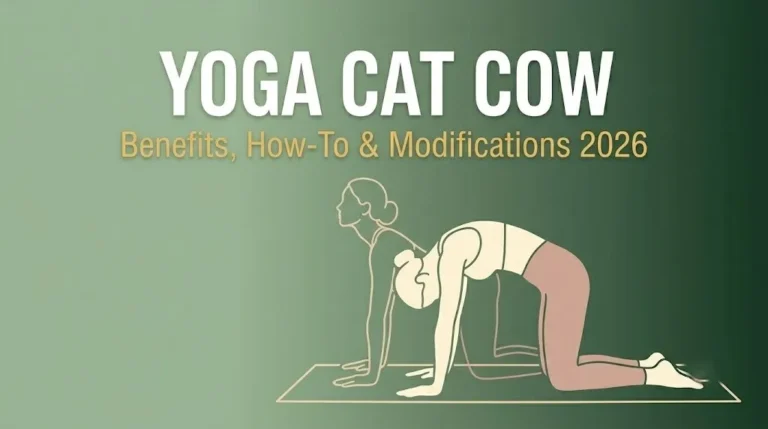
Marjaryasana-Bitilasana (Cat-Cow) is a warm-up movement sequence used in most puppy yoga sessions. It mobilizes the entire spinal column from cervical to lumbar and uses breath synchronization. Tadasana (Mountain Pose) and Virabhadrasana I (Warrior I) are standing options when handlers move puppies briefly to a designated rest area.
| Pose (English) | Pose (Sanskrit) | Why Used in Puppy Yoga | Muscles Engaged |
|---|---|---|---|
| Child’s Pose | Balasana | Ground-level, calm, welcoming to puppies | Hip rotators, gluteus maximus |
| Downward-Facing Dog | Adho Mukha Svanasana | Foundational Hatha pose, accessible | Hamstrings, calves, shoulder girdle |
| Cat-Cow | Marjaryasana-Bitilasana | Spinal warm-up, breath coordination | Spinal extensors and flexors |
| Mountain Pose | Tadasana | Postural awareness, standing baseline | Full kinetic chain |
| Warrior I | Virabhadrasana I | Standing strength, brief puppy break | Quadriceps, gluteus maximus, shoulder stabilizers |
| Corpse Pose | Savasana | Final relaxation, puppy cuddle time | Full body release |
Modification: In Balasana (Child’s Pose), anyone with knee sensitivity should place a folded blanket between the thighs and calves. If full hip flexion is uncomfortable, widen the knees generously and rest on forearms rather than extending the arms forward.
How to Prepare for Your First Puppy Yoga Class
Preparing for your first puppy yoga class in Minneapolis involves both physical and practical preparation, and the practical side matters more than most first-timers expect.
On the physical side, no prior yoga experience is required. That said, spending even 10 to 15 minutes doing gentle movement before you arrive makes a real difference in your comfort during the session. Light neck rolls, seated hip circles, and a few rounds of Marjaryasana-Bitilasana (Cat-Cow) warm up the spinal column and make the floor-based portions of the session more accessible.
On the practical side, arrive 10 to 15 minutes early. Most puppy yoga events do a brief orientation about how to handle the animals, what to expect from the puppies, and basic class structure. Missing this orientation puts you at a disadvantage and can disrupt the other participants when you arrive after it has begun.
To prepare your body and your mindset:
- Eat a light meal or snack 1 to 2 hours before the class. A heavy meal makes floor poses uncomfortable.
- Hydrate well the day before and morning of the event.
- If you take any medications affecting heart rate or blood pressure, and your doctor has advised awareness during physical activity, bring any relevant items you may need.
- Set realistic expectations. This is a wellness experience, not a rigorous yoga class. The puppies will interrupt poses. That is the point.
- Let the organizer know in advance if you have any relevant health conditions or mobility needs. Good events accommodate this.
- Leave valuables and large bags at home or in your car. The studio floor needs to stay clear for animals and participants.
What to Wear and Bring to Puppy Yoga in Minneapolis
Wear comfortable, form-fitting athletic clothing that you do not mind getting pawed, licked, or briefly sat on. Puppies are unpredictable. Loose, flowing fabric is more likely to be grabbed, chewed, or tripped over than fitted leggings and a close-fitting top.
Avoid strong perfumes, scented lotions, or heavily scented laundry products on the day of your session. Dogs have a highly developed sense of smell. Strong artificial scents can cause mild agitation or avoidance behavior in some puppies, particularly younger ones still learning to navigate new environments.
Leave dangling jewelry at home. Long necklaces, hoop earrings, and dangling bracelets are chewing hazards for curious puppies and uncomfortable for the participant if a puppy grabs them mid-pose.
What to bring:
- Your own yoga mat: Most events provide mats but bringing your own ensures cleanliness and familiar grip. Choose one you can wash afterward.
- A small hand towel: For puppy licks, nose wipes, or general cleanup during the session.
- A hair tie: Long hair pulled back keeps it out of reach of playful paws and mouths.
- Water bottle: Hydration matters even in a gentle class. Keep it capped and off the mat when puppies are present.
- A change of shirt (optional but appreciated): Puppy yoga is genuinely adorable and occasionally a little messy.
Pose Tip:
- Wear layers if Minneapolis temperatures are cold. Studios hosting puppy events are sometimes kept warmer than usual for the young animals.
- Avoid slippery socks. Bare feet or grip socks are safer on studio floors.
- No flip-flops or open-toed shoes in the studio area.
Puppy Yoga for Stress and Anxiety: What Research Shows
Puppy yoga reduces stress and anxiety through a combination of animal-assisted activity benefits and the physiological effects of gentle yoga breathing, and the research supporting both sides of this is consistent.
The Human-Animal Bond Research Institute has compiled evidence from dozens of studies showing that animal-assisted activities measurably reduce self-reported stress, lower blood pressure, and improve mood in diverse adult populations. These effects are not confined to long-term pet owners. Even brief contact with unfamiliar animals produces measurable physiological changes.
A 2019 study published in Frontiers in Psychology specifically examined brief, unstructured interactions with cats and dogs in a university setting. Participants showed measurable reductions in cortisol and self-reported negative affect after just 10 minutes of animal contact. A 10-minute segment of puppy contact embedded in a yoga class produces a similar or greater effect.
Yoga adds its own independent contribution. According to the National Center for Complementary and Integrative Health (NCCIH), yoga has been shown to reduce anxiety symptoms across multiple randomized controlled trials. The slow nasal breathing used in yoga practice activates the vagus nerve and downregulates the hypothalamic-pituitary-adrenal (HPA) axis, the system that controls cortisol output.
For people managing mild to moderate anxiety, the combination of animal contact and gentle yoga is a genuinely well-supported wellness option. It is not a clinical treatment. But it is more than entertainment.
Modification: Anyone managing a diagnosed anxiety disorder or trauma-related sensitivity to touch or unpredictable stimuli should consider starting with a standard gentle yoga class first. The unpredictability of puppies is part of the charm for most participants but can be overstimulating for some.
Key Takeaway: The stress-reducing effects of puppy yoga are backed by two separate research traditions: human-animal bond science and yoga physiology. When combined, the effects are additive, not redundant.
Puppy Yoga for Beginners: What You Need to Know
Puppy yoga is one of the most beginner-accessible yoga formats available because the presence of puppies naturally reduces performance pressure and self-consciousness for first-time practitioners.
Most puppy yoga instructors design their sequences specifically for people who have never practiced before. Expect foundational poses only: Balasana (Child’s Pose), Adho Mukha Svanasana (Downward-Facing Dog), Tadasana (Mountain Pose), and seated or supine stretches. No inversions. No complex balance poses. No sequences requiring prior body awareness.
The beginner’s real challenge in puppy yoga is not the yoga. It is staying present enough during the poses to benefit from the physical practice while puppies are climbing on you. Experienced teachers in this format give clear, simple cues that require minimal interpretation. They also build in frequent natural breaks as the puppies move through the space.
What beginners should know before attending:
- You will not be judged on your form. The puppies ensure this. Nobody is watching your alignment when a Labrador mix is sitting on the mat next to you.
- It’s fine to skip any pose that feels uncomfortable. Puppy yoga instructors consistently offer this permission explicitly.
- The floor work is the bulk of the class. Getting up and down from the mat multiple times is normal. If floor transitions are difficult, let the organizer know when booking.
- Arrive with an open, flexible attitude toward the session structure. A puppy falling asleep in your lap mid-sequence means you hold that pose a little longer. That is not a problem.
Modification: Beginners with difficulty getting to and from the floor should contact the event organizer before booking. Many Minneapolis puppy yoga events can provide a chair for participants who need an elevated starting position for seated and gentle standing poses.
Puppy Yoga for Seniors: Accessibility and Modifications
Puppy yoga is genuinely accessible to many older adults, but some practical considerations make the difference between a wonderful experience and an uncomfortable one.
The floor-based nature of most puppy yoga sessions is the primary accessibility factor for seniors. Getting down to a yoga mat and back up requires hip, knee, and lumbar mobility that not every older adult has without assistance. This is not a reason to avoid puppy yoga. It is a reason to communicate your needs to the organizer in advance.
According to research compiled by the National Center for Complementary and Integrative Health, animal-assisted activities have shown particular benefit for older adults, including measurable reductions in loneliness, depression symptoms, and blood pressure. For seniors living independently or in community settings, a puppy yoga event offers social connection, gentle physical movement, and animal contact in one setting.
Accessible modifications for seniors in puppy yoga:
| Pose | Standard Version | Senior Modification | Chair Option Available? |
|---|---|---|---|
| Child’s Pose (Balasana) | Hips to heels, forehead down | Blanket between thighs and calves; forehead on block | Seated forward fold instead |
| Downward-Facing Dog (Adho Mukha Svanasana) | Full inversion from mat | Bent knees, shorter hold | Wall-supported version |
| Cat-Cow (Marjaryasana-Bitilasana) | On hands and knees | Hands on chair seat, same spinal motion | Full chair version |
| Mountain Pose (Tadasana) | Free standing | Near wall or chair for balance | Seated version in chair |
| Corpse Pose (Savasana) | Flat on mat | Pillow under knees, blanket for warmth | Reclined in chair |
Safety caution: Seniors with knee replacements or hip replacements within the past 12 months should check with their orthopedic surgeon or physical therapist before participating in a floor-based puppy yoga event. The unpredictability of puppies around recovering joints warrants this precaution.
Puppy Yoga Safety: Allergies, Animal Welfare, and Who Should Skip It
Puppy yoga is safe for most healthy adults, but specific conditions and considerations warrant attention before booking a session.
Dog allergies are the most common safety concern. Pet dander, specifically the Can f 1 protein found in dog saliva and skin cells, is the primary allergen. A closed studio space during a puppy yoga session concentrates this allergen significantly. People with mild dog sensitivities may manage with antihistamines, but anyone with a history of asthma triggered by pet dander should evaluate this carefully with their allergy specialist before attending, not after.
Animal welfare is a legitimate concern with puppy yoga events. Reputable organizers limit session duration for the animals, provide designated rest and retreat spaces, employ trained handlers throughout, and never force puppies to interact with participants. Before booking any Minneapolis puppy yoga event, ask the organizer directly about their animal welfare protocols. Responsible events welcome this question. Events that deflect or dismiss it are a warning sign.
Who should approach puppy yoga with caution or skip it:
- Anyone with confirmed dog allergies or pet-dander-triggered asthma.
- Individuals with open wounds or compromised skin integrity, since puppy saliva carries bacteria.
- People with severe immunocompromise, who should discuss animal contact risks with the physician managing their condition.
- Individuals with significant anxiety triggered by unpredictable movement or sudden noise. Puppies yelp, tumble, and run unexpectedly.
- Anyone recovering from recent lower-body joint surgery who cannot safely manage floor transitions.
Zoonotic disease transmission from healthy, vetted puppies is extremely low but not zero. Reputable events require health documentation for their animals.
Key Takeaway: Check animal welfare protocols before booking and assess your allergy and mobility situation honestly. Puppy yoga is safe for most people, but the small number of real risks are worth knowing about in advance.
Puppy Yoga and the Nervous System: The Oxytocin and Cortisol Connection
The physiological story behind puppy yoga is more specific than “it makes you feel good.” Two measurable hormonal shifts are involved, and both are well-documented.
Oxytocin is a neuropeptide released during positive social contact, including contact with animals. Research published in Frontiers in Psychology has documented oxytocin increases in both humans and dogs during mutual gaze and physical contact. This is not a metaphor for connection. It is a measurable blood-level change. Oxytocin promotes calm, reduces fear responses, and counteracts the physiological effects of stress.
Cortisol is the body’s primary stress hormone, produced by the adrenal cortex in response to psychological or physical threat. The same study literature confirms that brief, positive animal contact measurably reduces salivary cortisol in humans, an effect that appears within 10 minutes of interaction onset.
Yoga’s contribution to this hormonal picture is through the parasympathetic nervous system. Slow, nasal exhalations, particularly those where the exhale is longer than the inhale, directly stimulate the vagus nerve. This produces a cascade of calming physiological effects including reduced heart rate and inhibition of the HPA axis that drives cortisol production.
Think of these two systems like two separate braking mechanisms on the same vehicle. Animal contact applies one brake through the oxytocin pathway. Slow yoga breathing applies a second brake through the vagal-parasympathetic pathway. Both work simultaneously, and both work faster than either alone.
According to the International Journal of Yoga, yoga interventions consistently reduce salivary cortisol markers across diverse adult populations, with effects appearing within a single session and compounding with regular practice.
Puppy Yoga for Kids and Families in Minneapolis
Puppy yoga is a genuinely family-friendly activity in Minneapolis, but age appropriateness varies by event and requires some advance research.
Most puppy yoga events set a minimum age of 6 to 8 years old. Below this age, the unpredictability of puppies paired with the challenge of following a yoga sequence is typically more overwhelming than enjoyable for the child. Some events specifically designate family or all-ages sessions, which are structured differently from adult-only classes and tend to be shorter and more playful in format.
The yoga component of a family puppy yoga session is even more relaxed than a standard session. Instructors use animal-themed poses and playful language. Balasana (Child’s Pose) becomes “puppy pose.” Adho Mukha Svanasana (Downward-Facing Dog) needs no rebranding. Cat-Cow is universally popular with children regardless of the yoga context.
Research supports animal-assisted activities for children specifically. Studies reviewed by the Human-Animal Bond Research Institute found that structured animal interaction reduced anxiety and improved social engagement in children across multiple settings. A family puppy yoga session offers these benefits in a genuinely fun, low-pressure format.
Practical considerations for families:
- Book family-specific sessions, not adult-only events.
- Prepare children in advance. Show them photos of what the session looks like. Explain that the puppies may climb on them.
- Bring a change of clothing for younger children.
- Teach basic animal handling beforehand: gentle touch, no grabbing tails or ears, let the puppy come to you.
- Sit near the exit if a child needs a break. Puppy yoga works best when nobody feels trapped.
Modification: Children with sensory processing sensitivities may find the combination of unpredictable movement, animal sounds, and physical contact overstimulating. For these children, a shorter session or a one-on-one introduction to a calm, adult dog in a quieter setting is a better starting point.
How to Get the Most Out of the Yoga Practice in a Puppy Yoga Class
The yoga practice in a puppy yoga class is real. You will get more out of it if you treat it that way, even while a puppy is sitting on your lower back during Balasana (Child’s Pose).
The biggest mistake participants make is fully abandoning the yoga the moment a puppy approaches. The better approach is to stay in the pose, breathe consciously, and let the animal contact layer on top of what you are already doing. You can pet a puppy resting on your back while maintaining Balasana without losing the hip and thoracic stretch the pose is creating.
Breath is the part most people drop first. When something surprising or adorable happens, the natural response is to hold the breath. Ujjayi pranayama (Victorious Breath), slow in-and-out breathing through the nose with a slight throat constriction, helps you stay physiologically present even when attention is split between the practice and the puppies.
To maintain a useful yoga practice during a puppy yoga session:
- Set a personal intention before the class begins. One specific physical goal: hip release, spinal mobility, or simply sustained nasal breathing throughout.
- Return your attention to the breath after every puppy interaction. It is like a reset button.
- Use puppy contact in passive poses deliberately. A puppy resting on your lower back during Balasana adds gentle weight that increases the hip flexor stretch.
- Do not rush poses to reach the puppies. The poses are part of the value. Treat them as such.
- In Savasana (Corpse Pose), stay as still as possible. This is when puppies most often fall asleep on participants. Remaining still maximizes both the relaxation and the animal contact.
Modification: If the puppy activity becomes genuinely overstimulating, return to Tadasana (Mountain Pose) with eyes closed and three slow nasal breaths. This resets the nervous system in under 30 seconds.
Key Takeaway: You will get significantly more from a puppy yoga session if you stay connected to the breath and the poses even while the puppies are around. The yoga is not the backdrop. It is half the medicine.
Puppy Yoga Etiquette: Dos and Don’ts Every Participant Should Know
Puppy yoga etiquette exists to protect both the animals and the other participants. Good events review this at orientation. Knowing it in advance makes you a better participant from the first minute.
The animals come first in every etiquette guideline. Puppies in these events are young, sometimes very young. They tire quickly. They can be startled by sudden movement or loud noise. Treating them gently is not just kindness. It is a responsibility.
The yoga practice is shared space. Disrupting other participants’ poses or concentration by moving through the studio erratically, talking loudly during held poses, or pulling puppies away from people who are engaging with them is inconsiderate and affects the quality of the experience for everyone.
Etiquette dos:
- Do allow puppies to approach you. Do not reach, grab, or pull them toward you.
- Do use a calm, quiet voice throughout the session.
- Do return to your mat after puppy interactions. The mat is your home base.
- Do follow handler instructions immediately if a puppy needs to be redirected or rested.
- Do wash hands before and after the session if hand-washing facilities are available.
Etiquette don’ts:
- Do not pick up a puppy without handler approval. Many events have specific rules about lifting.
- Do not wake a sleeping puppy. Let them rest. A rested puppy is a happier, safer animal.
- Do not use flash photography during poses without asking. Flash can startle young dogs.
- Do not bring food into the studio area. Even well-behaved puppies will crowd anyone holding food.
- Do not arrive late. Late arrivals disrupt both the orientation and the opening poses of the class.
How to Find Puppy Yoga Events in Minneapolis in 2026
Puppy yoga events in Minneapolis in 2026 are organized through several distinct channels, and knowing which channels are most reliable saves time and ensures you book a well-run event.
Local yoga studios are the most consistent source. Studios with established Hatha, Restorative, or community-focused programming occasionally partner with animal shelters or rescue organizations to host puppy yoga fundraisers. These events tend to have the most experienced yoga instruction and the clearest animal welfare protocols.
Event ticketing platforms list puppy yoga events in Minneapolis regularly. Search specifically for “puppy yoga Minneapolis 2026” on general event platforms. Filter for events with detailed descriptions that mention the yoga instructor’s credentials, the puppy source (shelter partnership or rescue organization), and handler presence. Events that do not mention handlers or animal welfare standards are worth approaching cautiously.
Animal rescue organizations in the Twin Cities metro area periodically host puppy yoga events as fundraisers. These events directly benefit shelter animals and often feature foster puppies available for adoption. They tend to sell out fastest because of the adoption appeal combined with the wellness experience.
Practical checklist for evaluating any Minneapolis puppy yoga event before booking:
- Is the yoga instructor named and credentialed (Yoga Alliance registration or equivalent)?
- Is the source of the puppies disclosed (shelter, foster network, or rescue)?
- Are trained animal handlers mentioned explicitly in the event description?
- Is class size capped at a number that ensures appropriate supervision?
- Is there a clear refund or rescheduling policy?
- Are allergy and health accommodation options mentioned or available on request?
Events that answer yes to all six questions are worth booking. Events that answer fewer than four should prompt additional research before you commit.
Frequently Asked Questions About Puppy Yoga Minneapolis
What is puppy yoga and what happens during a class?
Puppy yoga is a guided yoga session during which young dogs roam freely among participants in a supervised studio setting.
A certified yoga instructor leads the class through a gentle sequence, typically 45 to 75 minutes long, while handlers supervise the animals throughout.
Participants practice poses, interact with puppies during natural breaks, and experience the combined effects of gentle movement and animal contact.
Is puppy yoga good for anxiety and stress?
Yes. Research published in Frontiers in Psychology documents measurable cortisol reductions after brief animal contact sessions, and yoga’s slow breathing independently activates the parasympathetic nervous system.
The Human-Animal Bond Research Institute has compiled consistent evidence showing animal-assisted activities reduce self-reported anxiety and improve mood in diverse adult populations.
The combination of both approaches in one session produces additive, not redundant, stress-relief effects.
Can I do puppy yoga if I have never done yoga before?
Yes. Puppy yoga classes are specifically designed to be beginner-accessible, using foundational poses and simple verbal cues.
No prior yoga experience is expected, and instructors consistently encourage participants to skip any pose that feels uncomfortable.
The presence of puppies naturally reduces the performance pressure that sometimes makes beginners self-conscious in standard yoga classes.
What should I wear to a puppy yoga class in Minneapolis?
Wear comfortable, form-fitting athletic clothing you do not mind getting pawed or licked.
Avoid strong perfumes, loose dangling jewelry, or flowing fabric that puppies might grab or trip over.
Bare feet or grip socks are recommended over slippery socks, and dressing in layers is practical for Minneapolis studios that keep spaces warmer for young animals.
Is puppy yoga safe if I have a dog allergy?
Puppy yoga poses a real allergy risk for people sensitive to pet dander and the Can f 1 protein found in dog saliva and skin cells.
Anyone with mild dog sensitivity should take a tested antihistamine before attending and monitor their response. Anyone with pet-dander-triggered asthma should evaluate the decision with their allergy specialist before booking.
Reputable event organizers will confirm the venue’s ventilation setup and can advise on whether the space is suitable for people with mild sensitivities.
Ready to Book Your Mat
The simplest next step is to search for upcoming puppy yoga events in Minneapolis, read the event description carefully using the six-question checklist from this guide, and book a session that uses an experienced yoga instructor and discloses its animal welfare protocols.
If you are new to yoga, do not let that stop you. Ten minutes of Marjaryasana-Bitilasana (Cat-Cow) and a few rounds of slow nasal breathing the morning of the event is more than enough preparation.
Go for the puppies if you want. Stay for the yoga. The research suggests both will do you genuine good.